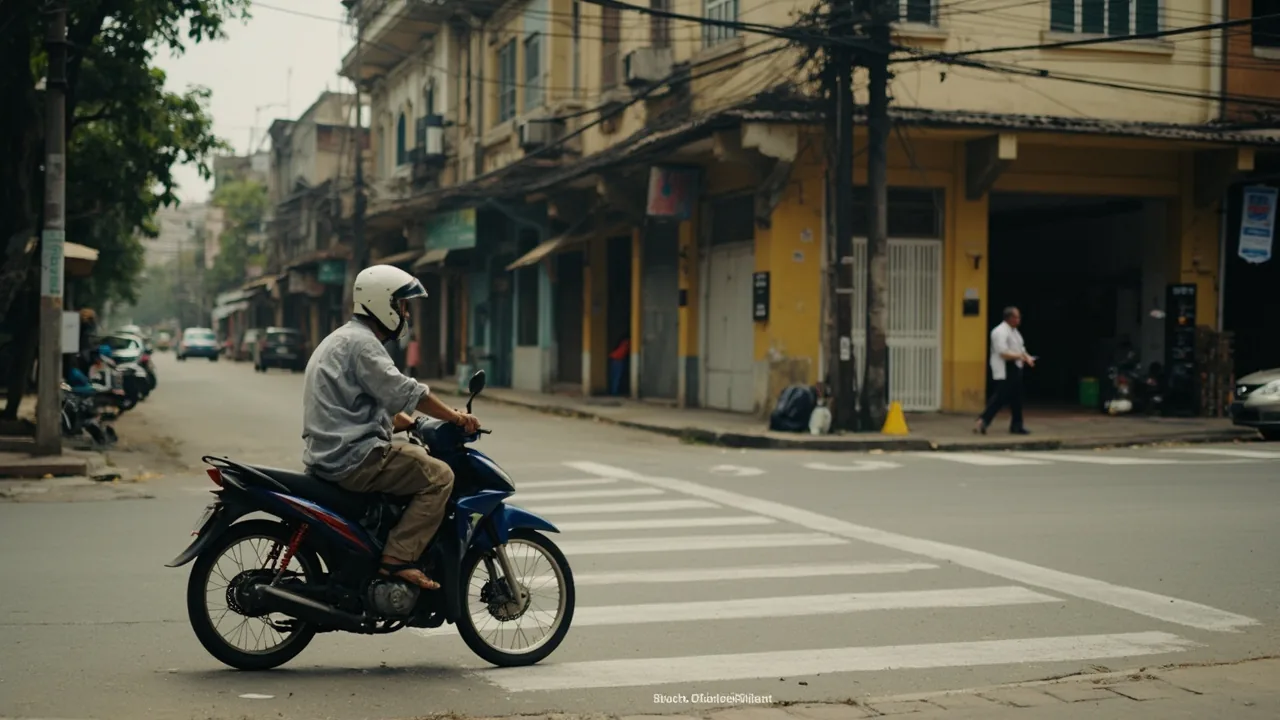
Vietnam Motorbike Laws for Tourists (2026): Helmet Rules, Speed Limits, Fines, and the License Question
Vietnam runs on two wheels. If you spend more than three days here, you’ll be sitting on one, whether as a rider, a Grab passenger, or someone weaving through Hanoi’s Old Quarter on the back of a scooter with a stranger’s helmet smelling like someone else’s hair. This article is the plain-English briefing on what the law says, what tourists get fined for in practice, and the one question every foreigner Googles before they touch a handlebar: do you even need a license, and if so, what kind. For related planning, see our guides on Sea Backpacking Hub and Ho Chi Minh City.
I’m writing this from the perspective of an Indian backpacker with an Indian driving license, which is the exact scenario most of you are in. The rules below apply nationwide, with city-specific notes for Hanoi, Ho Chi Minh City, and Da Nang where the enforcement picture differs. You may also find Ha Long Bay useful for this trip.
Quick Answers
| What | Answer | Price (INR) |
|---|---|---|
| Is a motorbike license required for tourists? | Yes, technically. An International Driving Permit (IDP) endorsed for motorcycles is the safest bet. | ₹4,500 (~$46.71) |
| Helmet required for rider and passenger? | Yes, both. Rental helmets are almost always available. | Free with rental |
| Legal blood-alcohol limit for riders? | 0 mg/L (zero tolerance). | — |
| Speed limit inside city centres? | 50 km/h unless signs say otherwise. | — |
| Typical fine for riding without a helmet? | ₹367-₹734 (~100,000-200,000 VND or ~$3.81-$7.62) on the spot. | ₹330-₹660 (~$3.43-$6.85) |
The License Question (Read This First)
This is where most guides fudge the answer, so let me be specific.
Vietnam’s traffic law requires a valid license for any motorbike over 50cc. For Indian travelers, that means you need a license with motorcycle endorsement, in one of three forms: See also: Ninh Binh.
- Your Indian driver’s license with motorcycle class (most Indian licenses cover MC/2-wheeler if you took the test with a geared bike or scooter).
- An International Driving Permit (IDP) issued by the Indian Automobile Association (AAA), with the motorcycle category stamped. This is the document Vietnamese traffic police want to see.
- A Vietnamese license, which requires a residency permit and is not realistically available to tourists on a 30-90 day trip. For related planning, see our guide on Da Nang.
Here’s the reality on the ground, and where every “Vietnam motorbike law” guide either lies or hedges: enforcement varies wildly. In Hoi An, Da Nang, and most tourist beach towns, police rarely stop foreign tourists to check licenses. The traffic camera net focuses on Vietnamese riders. In Ho Chi Minh City and Hanoi, especially during the monthly safety checkpoints, foreign riders without paperwork get fined. Travellers report that the typical on-the-spot fine for “no license” runs ₹734-₹1,836 (~200,000-500,000 VND or ~$7.62-$19.06), and you can pay it directly without a receipt.
If you’re planning to ride more than twice during your trip, get the IDP before you leave India. It costs around ₹4,500 (~$46.71) at your regional RTO, takes 3-7 working days, and a 1968-format IDP is what Vietnam recognises. The 1949 Geneva format (some countries issue both) is technically not valid here. Carry your Indian license plus the IDP, plus a colour photocopy of both.
Subodh’s Pro Tip: A Vietnam IDP exchange program technically exists at the Department of Transport, but it requires a Vietnamese sponsor or work permit. Don’t waste a day of your trip trying to convert your Indian license officially. The IDP + Indian license combo is what works in practice.
Helmet Rules: Both Riders, Every Time
Vietnam’s helmet law is unambiguous on paper: every rider and every passenger must wear a helmet that meets Vietnamese Technical Standard (TCVN) or an equivalent international standard (DOT, ECE, or ISI). On the street, the enforcement picture is messier.
The police target two things: riding without a helmet at all, and wearing a helmet that’s a fake (the cheap foam half-shell tourist helmets sold on the street for ₹110-₹184 (~30,000-50,000 VND or ~$1.14-$1.91) are technically legal for passengers but won’t save your skull in a crash). For riders, a proper full-face or open-face helmet with a chin strap is the practical bar.
Ho Chi Minh City enforces hardest. Travellers report checkpoints near tourist exits (Bui Vien, District 1 hotels) where helmetless foreign tourists get pulled over, often on rental bikes they just picked up. Hanoi is similar in the Old Quarter. Da Nang and Hoi An are noticeably more relaxed, but the law is the same.
Fines:
- Riding without a helmet: ₹367-₹734 (~100,000-200,000 VND or ~$3.81-$7.62)
- Passenger without helmet: ₹367-₹734 (~100,000-200,000 VND or ~$3.81-$7.62)
Safety Alert: The helmet you wear matters more than the helmet law. Half-shell “rental helmets” protect you against the fine, not against the road. If you’re doing more than a 5-minute Grab hop, ask the rental shop for a full-face or at minimum a three-quarter helmet with a chin guard. Most decent shops have them.
Speed Limits and How They’re Enforced
Vietnam’s default speed limits (from the 2024 Road Traffic Law update):
| Zone | Cars/Motorbikes |
|---|---|
| Built-up urban areas | 50 km/h |
| Outside built-up areas | 60-80 km/h |
| Expressways | 100-120 km/h |
In practice, almost no Vietnamese rider obeys these. The Hanoi-HCMC expressway has fixed cameras, but city speed enforcement is almost entirely manual police checkpoints, not automated nets. The speed that gets you pulled over in a city is more about context (weaving aggressively, running a red light in front of a cop) than a specific km/h reading.
Where you will get caught:
- Running red lights at major intersections in HCMC (District 1, Binh Thanh border)
- Riding on the pavement/sidewalk, which tourists do because the footpath looks empty
- Speeding in school zones, which are marked and actively patrolled
- Riding the wrong way down a one-way street, which the Old Quarter is full of
City-specific notes:
- Hanoi: The Old Quarter has 30 km/h zones near schools and markets. Enforcement is patchy but real.
- Ho Chi Minh City: Nguyen Hue Walking Street is closed to two-wheelers entirely. District 1 has the strictest enforcement, including camera boxes on Le Loi and Pasteur.
- Da Nang: The beach road has 40 km/h zones strictly enforced, especially on weekends. The Han River bridge area sees frequent checks.
Fines for speeding: ₹367-₹1,469 (~100,000-400,000 VND or ~$3.81-$15.25) for tourist-class motorbikes, typically capped around ₹2,203 (~600,000 VND or ~$22.87) for more serious cases.
Blood Alcohol Limit: Zero, Not “Almost Zero”
Vietnam’s drink-driving law has been at full zero tolerance since 2020. There is no legal blood-alcohol level above zero for any motorbike rider, period. The previous 0.05 g/dL threshold for cars was scrapped for motorbikes entirely.
Enforcement:
- Random breathalyser checkpoints exist in all three major cities, especially on weekend nights (Friday and Saturday, 9 PM to 2 AM).
- Tourists are checked more frequently than locals in tourist districts like Bui Vien and Ta Hien.
- A “positive” reading, even from one beer 90 minutes earlier, can lead to immediate license retention and a fine.
Fines:
- On the spot: ₹7,344-₹14,688 (~2,000,000-4,000,000 VND or ~$76.23-$152.46) if under 0.25 mg/L (light), much higher above that
- Detention up to 7 days for refusal or repeat offence
- Vehicle impound for the night, which means a separate fine for retrieval
Safety Alert: This is the single most enforced law against foreign tourists. If you drink in HCMC’s Bui Vien or Hanoi’s Ta Hien beer street, do not ride back. Grab is cheap (₹37-₹92 (~10,000-25,000 VND or ~$0.38-$0.95) for a short hop) and the consequences of a DUI charge include visa-level trouble, not just a fine.
Mobile Phone Use While Riding
Vietnam banned handheld phone use while riding in 2020. The law covers texting, calling, watching video, anything that takes your hands off the bars or eyes off the road. Hands-free Bluetooth is technically allowed but rarely distinguishes you in practice.
Enforcement: rare for tourists, but it does happen at the same checkpoints that catch helmetless riding. Fines are ₹367-₹734 (~100,000-200,000 VND or ~$3.81-$7.62). Google Maps mounted on the handlebars is fine and common.
Lane Splitting and Lane Discipline
This is the bit of Vietnamese traffic law that’s most unlike anywhere else in Southeast Asia, and it’s where Indian riders in particular get tripped up.
Lane splitting (riding between lanes of slower or stopped traffic) is technically illegal. The law says one lane, one direction, no exceptions. In practice, every Vietnamese rider does it, especially at red lights, and traffic police turn a blind eye to it 95% of the time.
What gets you in trouble:
- Splitting at high speed relative to the surrounding cars (more than 20 km/h faster than the lane you’re passing)
- Filtering past a stopped truck on the inside, where the driver can’t see you
- Riding against the flow of a lane to skip a queue
- Riding on the pavement/sidewalk, which is where tourists get caught most often because the road looks too busy
Subodh’s Pro Tip: Treat lane splitting as a defensive skill, not a legal right. The police won’t ticket you for normal filtering, but if they want to ticket you, they can. Save the aggressive moves for taxis you can see, not for buses with blind spots.
Passenger Rules
Tourists riding on the back of a Grab or a friend’s rental need to know:
- One passenger is the legal maximum for a 100-125cc scooter, two for larger touring bikes.
- Children under 14 are not allowed as passengers unless the bike is designed for it (almost no rental bike is).
- Pregnant passengers are technically discouraged by law, though in practice everyone rides.
- The passenger is liable for their own helmet-fine, separate from the rider’s. If you’re on the back of a Grab without a helmet, the Grab driver can be fined on your behalf.
What Happens When You Get Pulled Over
The actual process, as reported by travellers across all three cities:
- Police wave you down at a checkpoint or on a street corner. They will be in uniform. If they aren’t, you’re being scammed, not fined.
- Documents asked: passport (carry it, not a copy), IDP, rental contract. If you don’t have all three, don’t argue, ask what the fine is.
- Fine quoted: usually between 100,000 and ₹1,836 (~500,000 VND or ~$19.06) for the typical first offence (no helmet, no license, phone use, wrong way).
- Payment: you pay the officer directly, they hand you a receipt. If they don’t offer a receipt, insist on one. Without a receipt, you have no proof of payment and risk being fined again the next block.
- No points system: Vietnam doesn’t use a points-based license like Singapore or Malaysia. Repeat offences just mean repeat fines.
Rental Shop Realities
Almost every motorbike rental in Vietnam, from Hanoi’s Old Quarter shops to Hoi An’s riverside stalls, will hand you a bike without checking your license. This is not legal protection. If you crash without a license, the rental shop’s insurance (if any) will not cover you, and you’ll be on the hook for the bike, the third party, and the fine.
What to confirm at the rental counter:
- That the bike has third-party insurance (most rentals include it; check the green card in the storage compartment).
- That the brakes work on both wheels, especially the rear (Vietnam rental bikes are notorious for weak rear brakes).
- That the headlight and tail light work. Daytime running lights are required by law.
- That you get a helmet, ideally a full-face, not the foam half-shell.
City-Specific Enforcement Summary
| City | Helmet | License | DUI | Phone | Notes |
|---|---|---|---|---|---|
| Hanoi | Strict in Old Quarter, moderate elsewhere | Checkpoints common on weekends | Heavy weekend enforcement | Low | Old Quarter 30 km/h zones |
| Ho Chi Minh City | Strict in District 1 | Heavy during safety drives | Highest in Vietnam | Moderate | Nguyen Hue no-go zone |
| Da Nang | Moderate | Light | Moderate on weekends | Low | Beach road cameras |
| Hoi An | Light | light | Light | low | Most relaxed in country |
Common Mistakes Tourists Make
Renting the biggest bike in the shop because it looks cool. A 150cc scooter is plenty for city use. Anything bigger is more expensive to rent, harder to handle in traffic, and harder to recover if it falls on you.
Not photographing the rental bike at pickup. Every scratch, dent, and worn tyre should be on your phone before you leave the lot. Disputes at return are common.
Leaving your passport as a deposit. Most reputable shops accept a cash deposit (₹7,344-₹18,360 (~2,000,000-5,000,000 VND or ~$76.23-$190.58)) or a photocopy of your passport. If they insist on the original, find another shop.
Riding after sunset on the first day without practising. Vietnamese traffic at night, especially in HCMC, is a different animal. Spend your first day on quieter roads before tackling District 1.
Skipping the IDP because “nobody asked last time.” Enforcement is random and increases around national holidays (April 30, September 2, Tet). If your trip overlaps one of these, the chance of a checkpoint doubles.
FAQ
Can I ride a motorbike in Vietnam with just my Indian license?
Technically no. Practically, yes, most of the time. The safest option is an IDP from the Indian Automobile Association with the motorcycle category, plus your Indian license. Without the IDP, you risk a fine at any checkpoint and zero insurance coverage if you crash.
What if I don’t have a helmet and the rental shop is closed?
Any Grab or Be driver will have one on the back of their bike. You can borrow a passenger helmet at the curb, but you’re better off buying a half-shell at the next convenience store for ₹110-₹184 (~30,000-50,000 VND or ~$1.14-$1.91). It’s not great, but it beats the ₹734 (~200,000 VND or ~$7.62) fine.
Is there a way to get a Vietnamese motorbike license as a tourist?
In theory, yes. In practice, the conversion program requires either a Vietnamese residency permit, a work permit, or a local sponsor, none of which a tourist visa allows. Travellers report spending a full day at the Department of Transport in HCMC only to be turned away. If you’re in Vietnam for 3+ months on a business visa, ask a local sponsor to write you an introduction letter.
What happens to my motorbike if I crash and I’m not licensed?
The bike is impounded. You pay a fine (typically ₹734-₹1,836 (~200,000-500,000 VND or ~$7.62-$19.06)) plus a daily storage fee (~50,000 VND/day). The third party’s medical costs come out of your pocket. Rental insurance is void without a license.
Are electric scooters (VinFast, YADEA) subject to the same rules?
Yes, with one exception: scooters under 50cc with a top speed under 25 km/h are treated as bicycles in some interpretations. The VinFast Klara and YADEA G6 are over 50cc equivalent and follow the full motorbike rule set, including license, helmet, and registration.
Can I refuse to pay a fine on the spot?
You can, but the police will keep your passport or your bike. The fine is almost always cheaper than the cost of a missed flight, so pay it, get the receipt, and move on.
Subodh’s Take
Vietnam’s motorbike law is a polite fiction: written down, mostly ignored, occasionally enforced against foreign tourists with paperwork problems. The single best thing you can do before your trip is get an IDP with motorcycle endorsement. It costs you a week and ₹4,500 (~$46.71) in India, and it saves you every awkward conversation at every checkpoint for the next year. After that, the law is simple. Helmet on, phone down, no drinking, and treat lane splitting as a survival skill, not a right. Do that, and the only fines you’ll pay are the ones you chose to pay.
