Visiting the Philippines in January: Weather, Crowds, Prices & Events (2026 Guide for Indian Travelers)
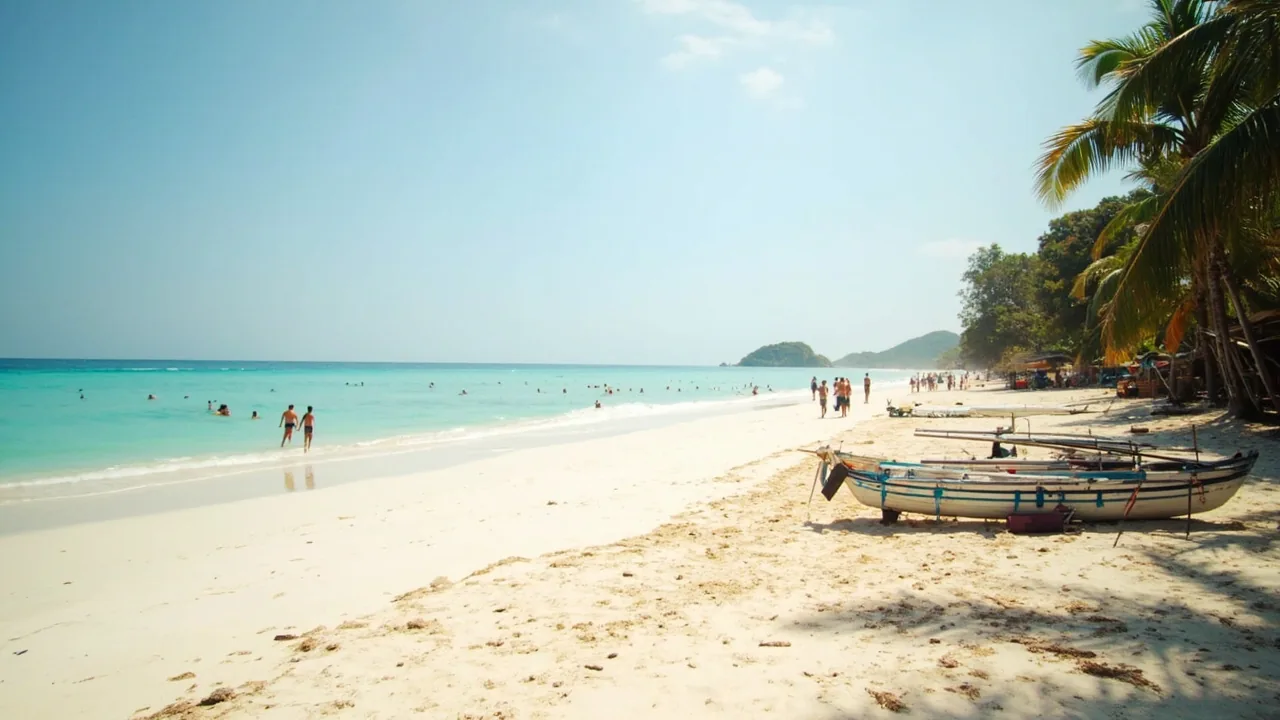
Is the Philippines good to visit in January? January sits at the heart of the dry season, and for Indian travellers coming out of a North Indian winter, it is the single easiest month of the year to land here without a typhoon warning disrupting the trip. Boracay, Cebu, Palawan, Siargao: all running peak conditions, all dry, all warm (28-32°C days, 24-26°C nights). What you give up is price and quiet. For related planning, see our guides on Sea Backpacking Hub and Monsoon Travel Guide for Indian Backpackers June October Deals Trends Tips.
If you want the honest version: January is the best month for weather, the worst month for crowd-averse travellers, and one of the more expensive months to fly from India. Book flights by November or accept paying 30-40% more than shoulder months. Skip it only if you hate peak pricing and packed beaches, or if your dates are flexible into February or November. You may also find Visiting Philippines in June From India Weather Crowds Prices What to Expect useful for this trip.
Quick Answers
| What | Answer | Price (INR) |
|---|---|---|
| Is January a good time to visit? | Yes, peak dry season, best weather across all islands | PHP 0 (no extra cost) |
| What’s the temperature like? | 28-32°C days, 24-26°C nights, low humidity | PHP 0 (no extra cost) |
| Will it rain? | Almost zero, occasional short showers | PHP 0 (no extra cost) |
| Are flights from India expensive? | Peak season, book 6-8 weeks ahead | PHP 18,000-32,000 round trip |
| Any major festivals? | Yes, Ati-Atihan (Kalibo), Sinulog (Cebu), Feast of the Black Nazarene (Manila) | PHP 0 (no extra cost) |
Subodh’s Pro Tip: Sinulog falls on the third Sunday of January, and Cebu City accommodation books out 2-3 weeks before. If Sinulog is on your list, lock your Cebu hotel the moment your flight is confirmed. See also: Visiting the Philippines in March Weather Crowds Prices Events 2026 Guide.
Month-by-Month Breakdown
The Philippines has a fairly clean weather rhythm. Dry season (roughly December to May) and wet season (June to November, with typhoons peaking August to October). Within dry season, January sits right in the sweet spot. For related planning, see our guide on Visiting Philippines in May Weather Crowds Prices Events India Travel Guide.
| Month | Weather | Crowds | Cost Level | Verdict |
|---|---|---|---|---|
| November | Drier, occasional rain, post-monsoon calm | Medium | Medium (₹₹) | Good shoulder option, cheaper than January |
| December | Dry, slightly cooler, Christmas peak | high | High (₹₹₹) | Christmas/New Year crowds spike prices |
| January | Peak dry, warm, calm seas | high | High (₹₹₹) | Best weather, highest crowds |
| February | Dry, slightly hotter | High | High (₹₹₹) | Almost as good as January, slightly fewer crowds |
| March | Hot, 32-34°C, dry | High | Medium (₹₹) | Hot but workable |
| April | Hottest, dry, Holy Week | High | Medium (₹₹) | Holy Week (April 13-19, 2026) is a major domestic travel rush |
| May | Hot, rain starts late month | Medium | Medium (₹₹) | Last month of dry season |
| June | Wet season starts, daily showers | Low | Low (₹) | Cheapest, expect afternoon rain |
| July | Wet, humid, typhoon risk begins | Low | Low (₹) | Monsoon rates, but typhoons start appearing |
| August | Wet, typhoon risk high | Low | Low (₹) | Cheapest month, but risky |
| September | Wet, typhoon peak | Low | Low (₹) | Highest typhoon frequency |
| October | Wet, typhoon risk fades late | Low | Low (₹) | Good shoulder option late in month |
If January is locked and the budget works, go. If dates are flexible, February gives you 90% of January’s weather with slightly thinner crowds and marginally lower flights. If the budget is the priority, late November is the best shoulder compromise, dry enough for most beach plans, cheaper than peak.
January Pros and Cons
Pros:
- Best weather of the year: dry, warm, calm seas across Boracay, Palawan, Cebu, Siargao, Bohol
- Almost no typhoon risk (the typhoon season peaks August to October)
- Three major festivals: Ati-Atihan (Kalibo, second week of January), Sinulog (Cebu, third Sunday), Feast of the Black Nazarene (Manila, January 9)
- Calm seas make island-hopping in El Nido and Coron reliable, ferries don’t cancel as often as in monsoon months
- Coming out of North Indian winter, the warm tropical weather is a relief
Cons:
- Peak crowds: beaches in Boracay, El Nido, and Cebu are at their busiest
- Flight prices from India run 30-40% higher than shoulder months (October, late November)
- Accommodation in Sinulog-week Cebu books out 2-3 weeks in advance and prices spike
- Manila’s Feast of the Black Nazarene brings 1-2 million devotees to Quiapo, transport grinds to a halt that day
January is not a budget month. The trade-off is real: you pay more, deal with more people, and get the best weather window of the year. If your trip hinges on Boracay being swimmable or El Nido island-hopping boats running, January is the month that delivers. For Indian travellers timing this around Republic Day holidays or a quick winter escape, that’s usually worth it.
What to Pack Specifically for January
January in the Philippines is hot and dry by day, mild and sometimes surprisingly cool by night in mountain areas like Tagaytay, Sagada, or Benguet. Bring:
- Reef-safe sunscreen (SPF 50+, the tropical UV is stronger than Goa in winter)
- Light cotton/linen clothes, one light rain jacket in case of an unexpected shower
- Sandals plus sneakers for city walking and jeepney rides
- Insect repellent for evening beach hours (no malaria risk in most islands, but dengue is present year-round)
- Power adapter: Philippines uses Type A and Type B, same as the US, different from India
- A light hoodie if your itinerary includes Baguio, Sagada, or Tagaytay (night temps can drop to 16-18°C)
If you’re heading to Sinulog, pack something you don’t mind getting paint-splashed with. The street festival is colourful, and most attendees come back covered in body paint.
Season Costs Comparison
The prices below are baseline ranges for January, the peak of peak season. For comparison, shoulder (October or late November) typically runs 25-35% cheaper on flights and 15-20% cheaper on accommodation.
| Item | Peak Season (Dec-Feb) | Shoulder (Nov, Mar) | Low (Jun-Sep) |
|---|---|---|---|
| Flight from India (round trip) | PHP 18,000-32,000 | PHP 13,000-20,000 | PHP 9,000-15,000 |
| Manila dorm bed (per night) | PHP 270-600 | PHP 220-450 | PHP 180-300 |
| El Nido dorm bed (per night) | PHP 400-940 | PHP 320-700 | PHP 250-450 |
| Cebu dorm bed (per night) | PHP 270-530 | PHP 220-400 | PHP 180-280 |
| Siargao dorm bed (per night) | PHP 330-800 | PHP 270-600 | PHP 220-400 |
| Island-hopping tour (El Nido, full day) | PHP 1,400 | PHP 1,200 | PHP 900 |
| Budget meal (carinderia) | PHP 80-150 | PHP 80-150 | PHP 80-150 |
| Beer (San Miguel, local bar) | PHP 70-100 | PHP 70-100 | PHP 60-80 |
1 INR = 0.65 PHP at time of writing, useful for mental math when converting hostel prices on Hostelworld or Agoda.
Festival Calendar for January 2026
Three festivals dominate the month, and each one changes how you should plan travel.
Ati-Atihan (Kalibo, second week of January, January 13-19, 2026): Held in Kalibo on Panay Island, the same region that contains Boracay. Three days of street dancing, tribal costumes, drumbeats, and body paint. Crowds are heavy, accommodation in Kalibo and Caticlan (the Boracay gateway) is tight. If you time Boracay with Ati-Atihan, fly into Caticlan a few days before the festival starts. From Manila, budget around PHP 1,500-2,500 for a one-way flight to Caticlan.
Sinulog (Cebu City, third Sunday of January, January 18, 2026): The biggest festival in the Visayas, a massive street parade in Cebu City with hundreds of thousands of attendees, dancers in elaborate costumes, drum and trumpet competitions. Cebu City accommodation is fully booked by mid-December for Sinulog week. If you want to attend, book by early December at the latest. Plan to stay in Cebu City proper, Mactan accommodation is too far from the parade route.
Feast of the Black Nazarene (Manila, January 9, 2026): A Catholic procession that draws 1-2 million devotees to Quiapo district in Manila. The image of the Black Nazarene is carried through the streets, and the barefoot crowd is intense. Transport around Quiapo is shut down for the day. If you’re not attending specifically for the religious event, avoid central Manila that day, jeepneys and Grab are nearly impossible to get, and walking distances balloon.
Where to Stay
The Philippines has a solid hostel network, and January rates are at their yearly peak. Book early if you have a fixed itinerary. Browse current availability and prices on Hostelworld or Agoda for each city below.
| Hostel | Location | Price (PHP/night) | Book |
|---|---|---|---|
| Z Hostel | Makati, Manila | PHP 600-900 | Check prices |
| Mad Monkey Hostel Cebu | Cebu City | PHP 400-700 | Check prices |
| The Beach House Cebu | Moalboal | PHP 500-800 | Check prices |
| Frendz Resort Boracay | Boracay (Station 2) | PHP 800-1,400 | Check prices |
| Spin Hostel El Nido | El Nido, Palawan | PHP 600-1,200 | Check prices |
| Kermit Siargao | General Luna, Siargao | PHP 700-1,200 | Check prices |
Safety Alert: Boracay requires a separate environmental fee (PHP 150-300) and a terminal fee at Caticlan jetty port. Manila has a similar terminal fee (PHP 50-150). These are not included in your flight or hostel price. Don’t budget a flat PHP 0 for “extras,” pad at least PHP 500-1,000 for fees on arrival.
Getting Connected
Philippine SIMs are cheap and reliable. Globe and Smart are the two main carriers. At Cebu or Manila airport, tourist SIMs run PHP 200-400 for 7-15 days with data. In any 7-Eleven or sari-sari store, the same SIM is PHP 50-100 cheaper. For real-time weather alerts and typhoon tracking, an eSIM with regional Asia data is the cleanest option: Get Nomad eSIM. Network coverage drops fast on Siargao and remote parts of Palawan, pick up a local SIM as backup if your itinerary is heavy on off-grid islands.
Daily Budget for January
For a mid-range Indian backpacker in the Philippines during January:
- Dorm bed: PHP 400-900 per night
- Meals (mix of carinderia + one restaurant meal): PHP 400-600 per day
- Local transport (jeepney + Grab): PHP 150-300 per day
- Activities (island-hopping, entrance fees): PHP 800-1,500 per day on active days
- Beer (San Miguel at local bar): PHP 70-100
Daily total: PHP 1,800-3,500, or roughly ₹3,000-₹5,500 (~$31.14-$57.09) per day excluding accommodation. January sits at the high end of this range because of peak demand. In June-September, you can run 30-40% cheaper across all categories.
Getting There from India
Direct flights from Delhi, Mumbai, and Bengaluru to Manila or Cebu are limited. Most Indian travellers route through Bangkok, Kuala Lumpur, or Singapore.
- Delhi to Manila: PHP 18,000-32,000 round trip, usually via Bangkok or Kuala Lumpur. Air India, Thai Airways, Malaysia Airlines all have options.
- Mumbai to Manila: PHP 16,000-28,000 round trip, slightly cheaper than Delhi. Cebu Pacific and Philippine Airlines run some routes with one stop in Singapore.
- Bengaluru to Manila: PHP 17,000-26,000 round trip, often routed through Singapore.
For internal flights, Cebu Pacific, Philippine Airlines, and AirAsia dominate. Manila to Cebu is PHP 1,500-3,500 one-way, Manila to Boracay (Caticlan) is PHP 1,800-3,800, Manila to Siargao is PHP 2,500-4,500. Book internal flights 3-4 weeks ahead in January.
Visa for Indian Passport Holders
Indians are visa-free for 30 days on arrival in the Philippines. The 30 days can be extended at any Bureau of Immigration office for an additional 29 days, bringing the maximum stay to 59 days; the extension fee is PHP 3,030. You will also pay a terminal fee at the airport, PHP 550-850, separate from any visa. Bring proof of onward travel (return ticket or onward flight booking) and a hotel reservation for at least the first few nights. Immigration officers sometimes ask.
For short Indian trips, the standard 30 days plus one 29-day extension covers most itineraries.
Safety Notes for January
January is the calmest month for natural-disaster risk, no typhoon season, no monsoon flooding. The main risks are petty theft (pickpocketing in crowded festival areas, especially Sinulog in Cebu City), drink spiking in tourist bars (Boracay Station 2 has had reports), and traffic accidents on scooters.
- Keep your passport in the hotel safe, carry a photo copy
- Don’t ride scooters without a license, Philippine roads are chaotic
- Avoid the Black Nazarene procession area unless you’re specifically there for the event
- Ferry cancellations are rare in January but check the morning of departure during northeast monsoon (“amihan”) wind surges
For current travel advisories before departure, check the Indian Ministry of External Affairs travel page at mea.gov.in and the Philippine Department of Tourism advisories.
Subodh’s Take
January is the easy answer for weather and the hard answer for budget. If your Indian travel calendar is fixed around Republic Day, Pongal, or a winter break, it’s a great month to come: dry, warm, festivals, calm seas. If your dates are flexible, February gives you 95% of the same weather at 15-20% lower cost and slightly fewer tourists. Late November is even better for budget. The honest version is that the Philippines is good year-round for different reasons, but January is what you book when you don’t want to gamble on weather.
FAQ
Is January typhoon season in the Philippines? No. The typhoon season peaks August to October. January is well outside the typhoon window. The worst weather risk in January is occasional northeast monsoon rain (“amihan”), which brings brief showers and cooler temperatures to the eastern seaboard, but it rarely disrupts travel.
Which festival should I plan around in January? For most Indian travellers, Sinulog in Cebu (third Sunday, January 18, 2026) is the standout. Ati-Atihan in Kalibo (January 13-19) is also excellent, especially if you’re already routing through Boracay. The Feast of the Black Nazarene is for those with a specific cultural or religious interest, it is intense, crowded, and logistically difficult for casual visitors.
How much does a one-week Philippines trip from India cost in January? For one week, budget PHP 65,000-90,000 all-in (flights + dorms + food + activities). That’s roughly ₹45,000-₹65,000 (~$467.10-$674.70). Flights are the biggest variable: Delhi-Manila-Cebu round trip runs ₹18,000-₹32,000 (~$186.84-$332.16), leaving ₹30,000-₹50,000 (~$311.40-$519) for 6 nights and 7 days on the ground. January sits at the high end; June-September can drop the same trip to ₹30,000-₹45,000 (~$311.40-$467.10).
Can I do Boracay, Cebu, and Palawan in one January trip? Yes, but it’s tight. One week is enough for two islands comfortably (Boracay + Cebu, or Cebu + Palawan). To do all three, plan 10-12 days minimum. Internal flights between islands are PHP 1,500-4,500 each way, and each transfer eats half a day.
Is the Philippines cheaper than Thailand or Vietnam for Indian travellers? Roughly comparable. Dorm beds are similar (PHP 400-900 = ₹600-1,400, similar to Thailand), food is slightly more expensive than Vietnam (a carinderia meal runs PHP 80-150 vs Vietnam’s PHP 50-100 equivalent), flights from India are more expensive (no direct Manila flights, mostly routed through Bangkok/KL/Singapore). The Philippines costs roughly 10-15% more than Vietnam and is on par with Thailand for budget travellers.
