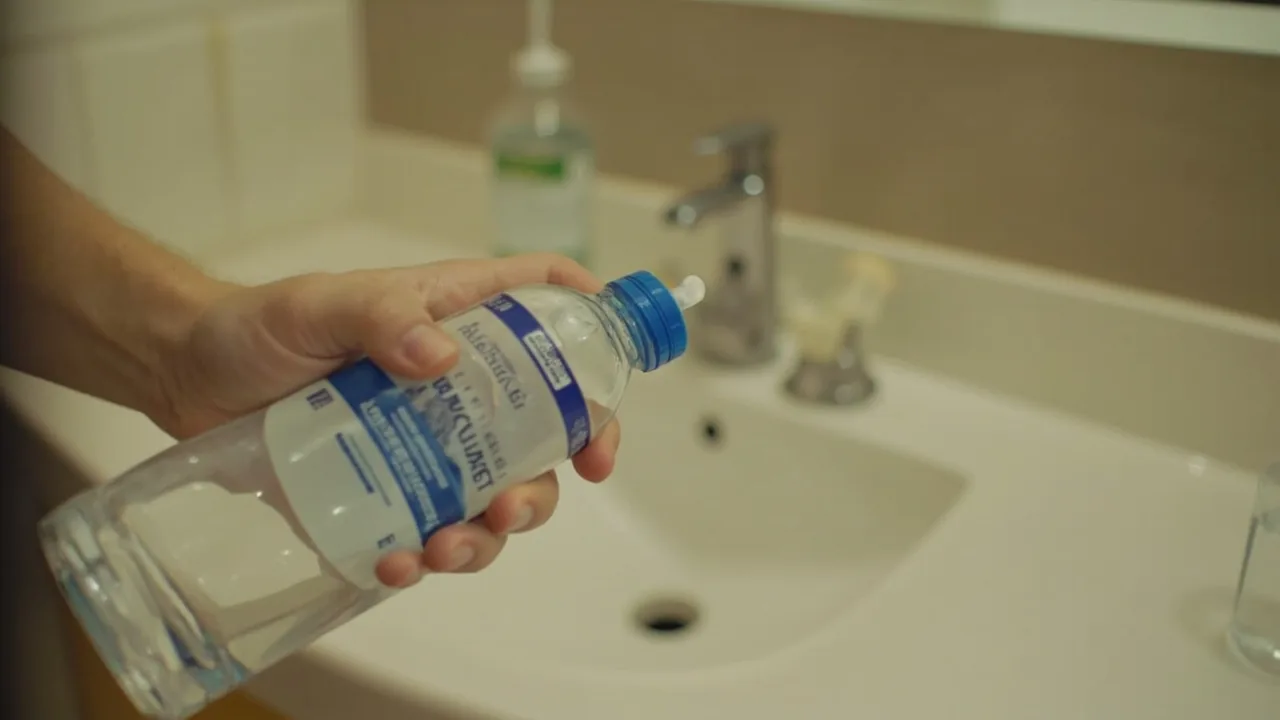
Water Safety Guide for Southeast Asia: Bottled, Filtered & Ice Rules Every Backpacker Needs
Your first day in Bangkok, Hanoi, or Phnom Penh, somebody hands you a small plastic bottle of water with the seal still on it. By your third week, you are sipping filtered water out of a metal bottle at a guesthouse, brushing your teeth with tap water you would not dream of drinking, and turning down ice in a roadside stall because the vendor looked at you wrong. That is the curve every backpacker goes through, and this guide gets you to the comfortable end of it before your first stomach bug. For related planning, see our guide on Sea Backpacking Hub.
Southeast Asia’s water rules are not complicated, but they are also not one-size-fits-all. Singapore’s tap water is genuinely safe. Cambodia’s tap water is genuinely not. Bangkok sits somewhere in the middle, where the pipes are treated but the old plumbing in your guesthouse might not be. The good news is that once you know the 5 basic rules of water safety for travelers, you stop thinking about it and start enjoying the trip.
At current rates, 1 THB = ₹2.87, 1 VND = ₹0.0037, 1 LAK = ₹0.0043, 1 USD = ₹96.53. Prices below are written in the local currency of each country, so you can compare directly with what you see at a 7-Eleven or roadside stall.
Quick Answers
| What | Answer | Price (INR) |
|---|---|---|
| Is tap water safe to drink in Southeast Asia? | No, in most of the region. Only Singapore is fully safe. Boiling or filtering is required elsewhere. | , |
| Cheapest safe drinking water option? | Large 6L refill jugs at convenience stores and refill stations, or a personal filter bottle. | ₹57 (~20 THB or ~$0.59), ₹37 (~10,000 VND or ~$0.38), ₹13 (~3,000 LAK or ~$0.13) |
| Can I trust ice in drinks? | Yes, if it is “tube” or “cylinder” ice from a commercial supplier. Hollow, hand-cracked ice is riskier. | , |
| Is bottled water always safe? | Yes, if the seal is unbroken. Check the cap and the ring pull before you sip. | ₹20 (~7 THB or ~$0.21), ₹18 (~5,000 VND or ~$0.19), ₹9 (~2,000 LAK or ~$0.09), ₹48 (~0.50 USD) |
| Can I brush my teeth with tap water? | Yes in Singapore and most of Malaysia. Elsewhere, use bottled or filtered. | , |
The 5 Basic Rules of Water Safety (Every Backpacker Follows These)
These five rules are the whole game. Print them, screenshot them, or just keep this tab open.
- If you cannot verify the source, do not drink it. That means no tap water in Thailand, Vietnam, Laos, Cambodia, Indonesia, or the Philippines, even at a “nice” hotel. Singapore and most of Malaysia are the exceptions.
- Bottled water is safe only if the seal is intact. Always check the cap ring. A loose cap, a torn label, or a refillable bottle re-capped by a vendor is not safe.
- Use a filter or purifier for anything beyond bottled. A personal filter bottle (LifeStraw, Grayl, Katadyn) or purification drops (Aquatabs, Potable Aqua) handle refill stations, hostel taps, and emergency situations.
- Ice safety depends on the shape, not the size. Tube ice (hollow cylinders) and large commercial blocks are made with treated water. Hand-cracked, irregular, or cloudy ice from a roadside vendor is the riskier kind.
- Brush your teeth, wash fruit, and rinse your mouth with the same standard. If you would not drink it, do not let it sit in your mouth. Bottled water for brushing is cheap insurance.
Subodh’s Pro Tip: A metal refillable bottle plus a SteriPen or a LifeStraw is the backpacker combo. You buy a 6L jug once (₹57 (~20 THB or ~$0.59) in Thailand, ₹37 (~10,000 VND or ~$0.38) in Vietnam), refill your bottle every morning, and skip the daily plastic bottle pile. It also saves you ₹2,000 (~$20.76) to ₹3,000 (~$31.14) over a two-week trip.
Bottled Water: When It Is Safe, When It Is Not
Bottled water is the default for most first-time visitors, and rightly so. It is cheap, it is everywhere, and a sealed bottle is genuinely safe. The trick is making sure it is sealed.
In Thailand, a 0.5L bottle runs about ₹20 (~7 THB or ~$0.21) at a 7-Eleven and ₹29 (~10 THB or ~$0.30) at a roadside stall. A 1.5L bottle is ₹51-₹71 (~18-25 THB or ~$0.53-$0.74) at the same places. In Vietnam, a 500ml bottle is ₹18-₹37 (~5,000-10,000 VND or ~$0.19-$0.38) at convenience stores and ₹37-₹55 (~10,000-15,000 VND or ~$0.38-$0.57) at tourist-area stalls. Cambodia uses USD pricing for water: ₹48 (~0.50 USD) for a 1.5L bottle is standard. Laos charges ₹9-₹21 (~2,000-5,000 LAK or ~$0.09-$0.22) for 500ml at a minimart. Malaysia is cheapest of the bunch at RM0.80 to RM1.50 for 1.5L, and Singapore sits at SGD ₹96 (~1 USD) to SGD ₹193 (~2 USD) for the same.
Now the parts that catch backpackers out:
- Seal check is non-negotiable. Look at the plastic ring under the cap. If it is broken, missing, or looks re-seated, hand the bottle back. Vendors who refill bottles with tap water exist, mostly in busy bus stations and a few sketchy guesthouses.
- Big jugs are better value. A 6L refill jug at a convenience store or water-refill station runs ₹57 (~20 THB or ~$0.59) in Thailand, ₹37 (~10,000 VND or ~$0.38) in Vietnam, ₹13 (~3,000 LAK or ~$0.13) in Laos, and ₹145 (~1.50 USD) to ₹241 (~2.50 USD) in Cambodia. That is your hostel’s drinking, cooking, and brushing water for a day or two.
- Hotel-room bottles are usually fine. Mid-range and luxury hotels stock sealed bottles daily. Use them.
- Avoid “filtered water” offered in unmarked jugs. Some guesthouses do this honestly, others do not. Stick to bottles or your own filter.
If you are not in Singapore, you will be buying or filtering water every day. Plan for it.
Filtered Water: The Backpacker Setup That Works
If you want to stop throwing plastic into the bin and stop carrying five bottles a day, a personal filter is the answer. There are three main options, and each has a sweet spot.
Filter bottles (LifeStraw, Brita, GRAYL GeoPress) are the most popular. They cost ₹3,000 (~$31.14) to ₹12,000 (~$124.56) depending on brand and model, last for thousands of liters, and turn refill-station tap water into something you can drink. They do not handle viruses (hepatitis A, rotavirus), but in Southeast Asia the bigger risk is bacteria and parasites, which the filters catch well. Pair one with a purification tablet for full coverage.
SteriPens use UV light to kill bacteria, viruses, and protozoa. They cost ₹7,000 (~$72.66) to ₹10,000 (~$103.80), need a USB charge, and work fast. They do not remove sediment or improve taste, so most people pair a SteriPen with a filter bottle.
Purification drops (Aquatabs, Potable Aqua) are the cheapest fallback. A strip of tablets costs ₹200 (~$2.08) to ₹400 (~$4.15) and treats 20 to 50 liters. They taste faintly of chlorine but they work. Travellers report keeping these as a backup when the filter breaks or the bottle runs dry.
For most backpackers, the combo is filter bottle for daily use, Aquatabs in the daypack for emergencies. Total spend under ₹5,000 (~$51.90) for the whole trip, and it pays for itself in bottled water savings within a week.
Subodh’s Pro Tip: Refill stations exist in most tourist towns. Look for the “RO” or “Drinking Water Refill” signs outside small shops, pharmacies, and minimarts. The water is filtered through reverse osmosis, usually cheaper than bottled (₹29-₹43 (~10-15 THB or ~$0.30-$0.45) per liter), and far less wasteful. Bring your own bottle and ask the shopkeeper to fill it.
Ice Safety: The Shape Rule
This is the question that comes up more than any other: “Is the ice safe?” The answer is: usually yes, but it depends on the shape.
Tube ice (also called “cylinder” ice) is the hollow, tube-shaped ice you see in drinks at 7-Eleven, Thai cafes, Vietnamese coffee shops, and most mid-range restaurants. It is made by commercial ice machines using treated water. Travellers report this is universally safe.
Cube ice (the solid rectangular kind) is also safe in most cases. Hotels, convenience stores, and franchise restaurants use commercial ice. It is the same treated water, just frozen differently.
Hand-cracked, irregular, cloudy ice is the one to be careful with. You will see this at roadside stalls, fresh markets, and a few rural guesthouses. Vendors often make it from tap water in a chest freezer. Travellers report stomach issues after this kind of ice more than any other single source.
A few practical rules:
- Franchise and chain restaurants are safe. 7-Eleven, Amazon Cafe, The Coffee Club, Highlands Coffee, Lotteria, Jollibee, and similar chains all use commercial ice.
- Mid-range local restaurants are usually safe. They buy ice by the bag from commercial suppliers.
- Roadside stalls and fresh markets are higher risk. The ice might be fine, but you have no way to verify the source.
- Avoid “shaved ice” or “crushed ice” in unmarked containers. Street vendors in Cambodia and Laos sometimes scoop ice from open coolers.
- If you want to be cautious, order drinks “no ice” (เครื่องดื่มไม่ใส่น้ำแข็ง in Thai, “khong đá” in Vietnamese, “baw sai nam keng” in Lao).
The good news is that, in tourist areas at least, ice quality has improved a lot over the last decade. Most backpackers drink iced coffee and iced tea throughout the trip with no issues.
Drinking Water Safety by Country
Water safety varies by country. Here is the regional breakdown so you know what to expect before you land.
Thailand: Tap water is treated but old pipes mean you should not drink it. Bottled water is everywhere (₹20 (~7 THB or ~$0.21) for 500ml at 7-Eleven). Filter bottles work well. Ice is safe at all chain and mid-range restaurants.
Vietnam: Same rule. Tap water is not for drinking. Bottled water is ₹18-₹37 (~5,000-10,000 VND or ~$0.19-$0.38) for 500ml. Refill stations are common in Hanoi, Ho Chi Minh City, and Da Nang. Ice is generally safe at cafes and restaurants.
Laos: Tap water is unsafe everywhere, including Vientiane. Bottled water is ₹9-₹21 (~2,000-5,000 LAK or ~$0.09-$0.22) for 500ml. Outside Vientiane and Luang Prabang, carry your own bottle and refill at the guesthouse.
Cambodia: The weakest water infrastructure in the region. Bottled water is the default (₹48 (~0.50 USD) to ₹145 (~1.50 USD) for 1.5L). Ice quality varies more than anywhere else, so order no-ice at roadside stalls. Refill stations are rare outside Phnom Penh and Siem Reap.
Malaysia: Mostly safe. Tap water in Kuala Lumpur, Penang, and most urban areas is treated and chlorinated. Travellers report drinking it without issues. Bottled water is cheap at RM0.80 to RM1.50 for 1.5L.
Singapore: Tap water is genuinely safe and arguably the cleanest in the region. Drink from the tap freely. Bottled water is sold but is mostly a tourist habit.
Indonesia: Tap water is unsafe, including Bali. Bottled water is ₹16-₹27 (~3,000-5,000 IDR or ~$0.17-$0.28) for 600ml. Ice is safe at chain cafes and restaurants, less so at remote warung.
Philippines: Tap water is unsafe in most areas, including Manila and Cebu. Bottled water is 15 to 30 PHP for 500ml. Refill stations exist in malls and convenience stores. Order no-ice at roadside carinderias.
Brush Your Teeth, Wash Your Face, Rinse the Fruit
This is where most backpackers slip up. They drink bottled water all day, then brush their teeth with the bathroom tap and wonder why they have an upset stomach.
In Singapore and most of Malaysia, brushing with tap water is fine. Everywhere else, you have two options:
- Bottled water for brushing. Cheap and obvious. A 500ml bottle by the sink handles brushing and rinsing for one person.
- Filtered water for brushing. If you already have a filter bottle, refill it from the tap and use that.
The same applies to fruit. Bananas come with their own wrapper, so they are fine. Apples, grapes, strawberries, and any fruit with a skin you eat need a rinse in bottled or filtered water. Travellers report that fruit rinsed in tap water is one of the top three causes of “Bali belly” and “Hanoi gut.”
For washing hands, soap is the bigger factor than water source. Wash your hands before eating, after using the bathroom, and after touching money. A small bottle of hand sanitizer in your daypack is a ₹200 (~$2.08) investment that pays off.
Common Mistakes Indian Backpackers Make With Water
Drinking water from a “trusted” hotel bathroom tap. Five-star hotels sometimes have filtered taps, but most mid-range and budget hotels just pipe in municipal water. Treat every tap the same: do not drink it.
Refilling a personal bottle from a sink tap without filtering. You buy the bottle to filter water, not just to carry it. Run the tap water through the filter every time, or refill only from refill stations.
Assuming ice is unsafe everywhere. Missing out on an iced Vietnamese coffee or a cold Thai beer because you are scared of the ice is a real loss. Ice at cafes and restaurants is almost always commercial and safe. Order no-ice only at roadside stalls and questionable spots.
Buying water from a vendor with bottles in the sun. Bacteria grow faster in warm water. If your bottle has been sitting on a stall in 35°C heat for hours, buy a fresh one from the cooler at the back.
Trusting the seal by sight alone. A clever vendor can re-cap a bottle and re-seal the ring. Always check the cap before you open it. If it spins freely, hand it back.
Skipping water because they think it causes diarrhea. Some backpackers drink so little water in the heat that they end up with constipation, headaches, or heat exhaustion. Dehydration is a bigger risk than the bottled water itself. Drink 2 to 3 liters of clean water a day, especially in Thailand, Cambodia, and Vietnam during the dry season.
What to Do If You Get Sick Anyway
Even with perfect water discipline, you can pick up a stomach bug from food, ice at a sketchy stall, or just the stress of travel. Here is what to do:
- Rehydrate aggressively. Oral rehydration salts (ORS) are sold at every pharmacy in the region. In India, you already know them as Electral or ORS-WHO sachets.
- Eat plain food. Bananas, plain rice, plain toast. Avoid dairy, spicy food, and caffeine.
- Avoid anti-diarrheal pills unless you need to fly. Loperamide (Imodium) stops the symptoms but traps the bacteria inside. Travellers report it makes the illness last longer.
- See a doctor if it lasts more than 48 hours, you have blood in the stool, or you cannot keep water down. Bangkok, Singapore, and Kuala Lumpur have excellent private clinics with English-speaking staff. Most pharmacies can also recommend an over-the-counter treatment.
- Skip the ice and stick to bottled or filtered water until you recover. Your stomach is more sensitive right now.
If you want a more complete packing checklist, the laundry-on-the-road guide covers what else to pack alongside your water kit.
SIM Cards & Connectivity
For staying in touch with home and using Google Maps while you figure out where the next refill station is, you will need a local SIM or an eSIM.
For Thailand, AIS, dtac, and TrueMove all sell tourist SIMs at the airport (₹855 (~299 THB or ~$8.87) for 8 days with 15GB, around the same at 7-Eleven). Vietnam uses Viettel and Mobifone, with tourist SIMs at ₹551-₹918 (~150,000-250,000 VND or ~$5.72-$9.53) for 10 to 30 days. Cambodia’s Cellcard and Smart are around ₹482 (~5 USD) for a week. Laos uses Unitel, Lao Telecom, and Tplus, with SIMs at ₹129-₹215 (~30,000-50,000 LAK or ~$1.34-$2.23).
If you prefer not to swap physical SIMs, Get Nomad eSIM for the region works in Thailand, Vietnam, Cambodia, Malaysia, Singapore, and Indonesia. It activates on landing, so you do not need to find the airport counter at 11pm after a delayed flight.
Subodh’s Pro Tip: A working data connection is part of your water safety kit. Google Maps shows you the nearest 7-Eleven, Grab shows you the nearest pharmacy, and WhatsApp lets you call your guesthouse to ask if their tap water is filtered. Skip the eSIM activation on arrival and you spend your first day figuring that out instead.
For more on staying safe as a tourist, see the Thailand safety guide and the Cambodia scams and safety guide.
FAQ
Is tap water safe to brush teeth in Bangkok?
Not reliably. Bangkok’s municipal water is treated, but old plumbing in guesthouses and budget hotels can contaminate it. Use bottled or filtered water for brushing.
Can I drink the water from a hotel kettle after boiling?
Yes, once it has boiled for at least one minute at a rolling boil. Boiling kills bacteria, viruses, and parasites. Travellers report this works well in hotels where the kettle is clean.
What is the safest ice in drinks?
Tube ice (hollow cylinders) and large commercial cubes are the safest. They are made with treated water by commercial suppliers. Avoid hand-cracked, irregular, or cloudy ice from roadside stalls.
Are water refills at refill stations safe?
Most refill stations use reverse osmosis or UV filtration and test their water regularly. Look for a “RO” sign, a “drinking water” certification, and a clean dispensing area. Refill only into your own bottle, never into a hotel-provided bottle you cannot verify.
Is it safe to drink tap water in Singapore?
Yes. Singapore’s tap water is among the cleanest in the world and meets WHO standards. Drink from the tap freely.
Can I use the same water bottle for hot tea and cold water?
Yes, but rinse the bottle and the filter between uses. If you pour hot tea into a bottle that just had cold water in it, the temperature shock can damage some filter membranes. Let the bottle cool first.
What should I do if I run out of bottled water and my filter breaks?
Boil your tap water for at least one minute, or use Aquatabs or Potable Aqua purification tablets. Both are sold at pharmacies and outdoor stores across the region. As a last resort, bottled drinks from a sealed can or bottle (soda, beer, juice) are safe alternatives for hydration.
Subodh’s Take
Water safety in Southeast Asia is mostly common sense once you see the regional pattern. Singapore and most of Malaysia drink from the tap. Everywhere else, you buy or filter. The backpacker kit is simple: a filter bottle, Aquatabs as backup, a habit of checking seals, and a basic rule about ice shape. With that, you stop worrying about water and start spending your attention on the good stuff: the food, the temples, the night markets, and the kind of conversations you only have when you are traveling light. If you want a solid street-smart primer beyond water, the street food safety guide covers what to eat and what to skip.
