Cambodia Scams, Tuk-Tuk Ripoffs & Drug Laws: The Safety Guide Every Tourist Must Read
Southeast Asia is friendly, but Cambodia has its own street rules. If you’re planning a trip across the region, check out our SEA backpacking hub for country-by-country guides. This article covers the common scams in Cambodia tourists how to avoid, from airport tuk-tuk overcharges to fake Angkor passes. For a full rundown on SIM cards, vaccinations, and money, see our Cambodia travel essentials guide.
Quick Answers
| What | Answer | Price (INR) |
|---|---|---|
| Is the death-penalty drug rumor true? | False for tourists in normal cases; small possession rarely carries capital punishment, but smuggling large quantities can. Don’t risk it. | ₹0 |
| What’s the airport tuk-tuk scam? | Drivers quote ₹1,446 (~15 USD) for a ₹386 (~4 USD) ride into town. Walk past the queue, flag a PassApp or Grab, or insist on meter. | ₹1,300 (~$13.48) vs ₹340 (~$3.53) |
| Can I rent a scooter without an International Driving Permit? | Yes, but your travel insurance won’t cover you. Get an IDP before flying, it costs under ₹1,000 (~$10.37) in India. | ₹800 (~$8.30) |
| Is tap water safe to drink in Cambodia? | No. Bottled water is ₹48 (~0.50 USD) at any minimart. | ₹40 (~$0.41) |
| What does a tourist SIM cost at the airport? | ₹289 (~3 USD) for 7 days with ~10GB. Same price at any Cellcard shop in town if you skip the airport kiosk. | ₹250 (~$2.59) |
Local Scams to Watch Out For
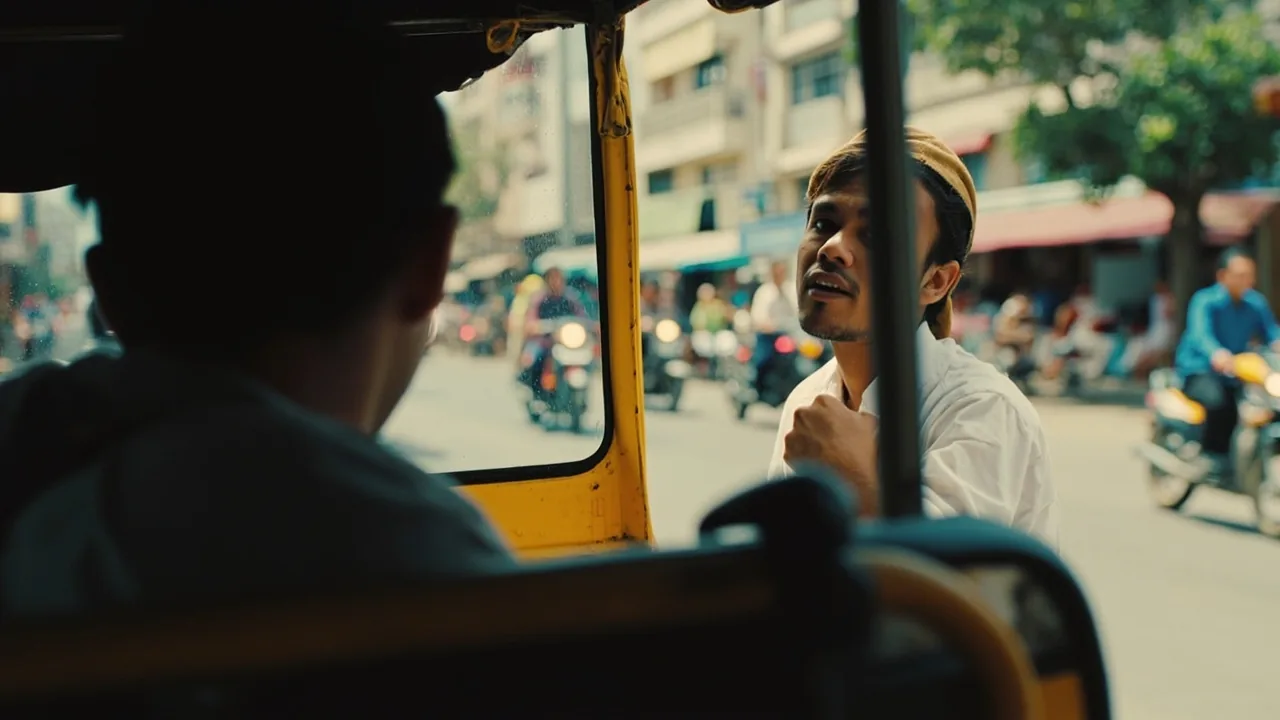
1. The airport tuk-tuk “fixed price” trick. This is the single most common scam in Cambodia. You walk out of Phnom Penh or Siem Reap arrivals and a sea of drivers shouts “Tuk-tuk! Tuk-tuk! Hotel?” They quote ₹964-₹1,446 (~10-15 USD) for what should cost ₹193-₹386 (~2-4 USD). Travellers report that walking 50 metres past the queue to the main road, or opening the PassApp/Grab app on your phone, drops the price to the local rate instantly. The driver at the front of the queue is paying a porter fee; that fee isn’t your problem. For more on getting around safely, read our Cambodia transport safety guide.
2. The “temple is closed for a Buddhist holiday” lie. A tuk-tuk driver tells you the Royal Palace or a specific Angkor temple is closed today and offers to take you to “another special place” (a gem shop, a silk outlet, his cousin’s restaurant). The temple is open. He’s getting a ₹1,928 (~20 USD) commission if you walk in. Politely decline and verify yourself on Google Maps or the official ticket counter.
3. The passport-as-deposit scooter rental. This one has a real bite to it. You rent a scooter, the shop keeps your passport “for safety,” and then blames you for a scratch that was there when you took delivery. If you don’t return the bike, they keep your passport. The fix: leave a photocopy plus a ₹4,820-₹9,640 (~50-100 USD) cash deposit instead, or use a rental shop that takes a photo of your passport. Better yet, only rent from places that explicitly accept a cash deposit. Check the bike together on video before driving off.
4. The baby milk / charity school shake-down. Usually in tourist-heavy areas like Pub Street (Siem Reap) or the riverside (Phnom Penh). A local asks you to buy baby formula or schoolbooks for an “orphanage,” gives you a list of shops, and those shops pay him commission. The orphanage may not exist, the formula may be sold back to the shop within hours. Real charities have websites and bank accounts; give there if you want to help.
5. Bag-snatching from passing motorbikes. Most common in Phnom Penh, especially near the riverfront at night. A scooter rides past, the passenger grabs a phone or shoulder bag. Wear your daypack on the front in crowded markets, keep your phone in your front pocket, and don’t walk along the riverside alone after 10pm.
Subodh’s Pro Tip: Cambodia runs on the US dollar in practice. Carry small USD notes (1, 2, 5) for tuk-tuks and entry fees, and riel for small change. If someone hands you back USD change and claims “no change, only riel,” that’s the actual riel equivalent at the same rate, accept it. The exchange rate is fixed at roughly 4,000 KHR per USD.
Haggling & Market Etiquette
Haggling is expected at markets (Phsar Thmei in Phnom Penh, the Old Market in Siem Reap, the Psar Chas in Kampot) and at most tuk-tuk rides that aren’t metered. It is NOT expected at convenience stores (7-Eleven, Circle K), supermarkets, restaurants with printed menus, or anywhere with a barcode scanner.
For souvenirs, start at 50% of the asking price. For a tuk-tuk, ask the price, counter at 50 to 60%, settle around 70 to 80%. For food at markets (grilled meat skewers, fresh fruit shakes), the price is usually fixed and small, just pay it. Haggling over ₹48 (~0.50 USD) on a ₹72 (~0.75 USD) snack makes you look like a beginner.
Smile when you haggle. Cambodians respect warmth more than aggression. A “too expensive, my friend” (tuk krola, klang prouyea) with a smile gets you 20% off. Raised voices and visible anger get you nothing and ruin the next person’s welcome too.
Safety Alert: The fixed-price Angkor Wat pass is sold only at the official Apsara Authority counter. Anyone selling tickets on the street, especially at “discounted” prices, is selling a fake. Travellers report losing money on fake passes.
SIM Cards & Connectivity
The airport tourist SIM (Smart or Cellcard, 7 days, ~10GB data) costs ₹289 (~3 USD), which is about ₹250 (~$2.59). This is the same price you’ll find at any official Smart or Cellcard shop in Phnom Penh or Siem Reap, so don’t feel pressured to buy at the kiosk on arrival. The in-town shops will also help you set up the APN properly; airport staff sometimes skip this step.
If you want data from the moment you land, or if your phone is eSIM-compatible, eSIM plans from regional providers start around ₹482 (~5 USD) for 5GB over 7 days and can be activated before you board the flight from India. No passport scan, no airport queue.
For most Indian travellers, the Cellcard tourist SIM at the airport is the right choice: cheap, fast, and you walk out with working 4G in 5 minutes.
Drug Laws, Tattoos & the Death-Penalty Rumor
This one deserves its own section because every Indian backpacker I know has heard a version of it.
Cambodia does have capital punishment on the books for serious drug trafficking. The Law on Control of Drugs (2012) lists death as the maximum penalty for manufacturing or trafficking large quantities of narcotics. “Large quantities” means kilograms for methamphetamine or heroin, not a joint.
What happens to tourists caught with small amounts of marijuana: detention, a fine (typically ₹19,281-₹144,606 (~200-1,500 USD)), deportation, and a lifetime entry ban. For harder drugs, even small possession can mean years in a Cambodian prison with conditions Indian travellers describe as harsh. Cambodia’s prison system is not like Thailand’s tourist-friendly police stations.
The short version: don’t buy drugs in Cambodia. The risk-to-reward is terrible, and the legal system does not treat foreign tourists the way Thai or Vietnamese courts do. The Pub Street weed sellers in Siem Reap have been raided repeatedly; getting caught near them is enough to get you detained.
Subodh’s Pro Tip: Cambodia is conservative on tattoos in two settings: government offices (long sleeves required) and certain wats (temples). A small Buddha tattoo on your forearm has gotten travellers turned away from the Royal Palace ticket check. Cover up before entering official buildings.
Essential Language & Cultural Taboos
Cambodians are warm and forgiving with tourists who try. Five phrases cover 90% of daily interactions:
- Suosdey (hello)
- Akun (thank you, slightly informal)
- Or-kun (thank you, more polite)
- Tuk krola, klang prouyea (too expensive, expensive, your haggling phrase)
- Som dtoh (sorry / excuse me)
The cultural lines that matter:
- Head and feet etiquette: Same rules as Thailand. Don’t touch anyone’s head, don’t point your feet at people or at Buddha statues, don’t step over food or people sitting on the floor.
- Temple dress code: Shoulders and knees covered. Most major temples (Angkor Wat, the Royal Palace) require this strictly and check at the gate. Carry a sarong in your daypack. See our full Cambodia cultural etiquette guide for dress-code details and temple dos and don’ts.
- Royal family and monk respect: Don’t sit with your back to a Buddha image. Monks and the royal family are deeply respected; casual jokes about either are read as rude, not funny.
- Anger in public: Cambodians avoid open confrontation. Losing your temper with a tuk-tuk driver doesn’t get you a discount, it gets you reported. Smile, walk away, find another driver.
Common Street Mistakes Indians Make
Mistake 1: Handing over the passport for a scooter rental. Travellers report losing access to their passport for days over a ₹4,820 (~50 USD) deposit dispute. Leave a photocopy plus cash.
Mistake 2: Buying a “cheaper” Angkor pass on the street. It’s fake. Buy at the official Apsara Authority counter, full stop. Three-day pass: ₹5,977 (~62 USD), seven-day pass: ₹6,941 (~72 USD). The official counter is the only legitimate seller.
Mistake 3: Drinking tap water. Don’t. Brushing teeth with boiled or bottled water is the safe move. Bottled water at any minimart: ₹48 (~0.50 USD).
Mistake 4: Carrying all cash in one wallet. Split it: ₹4,820 (~50 USD) in your front pocket for the day, the rest in the hotel safe or a hidden pouch. If a bag-snatcher hits you, you lose a wallet, not your whole trip.
Mistake 5: Trusting “free” walking tours that end at gem shops. The tour is free because the gem shop pays ₹1,446-₹2,410 (~15-25 USD) commission per head. You’ll sit through a 45-minute sales pitch. If you want a real walking tour, book a paid one in advance through a reputable operator.
Solo Female Travellers
Cambodia is generally safe for solo women, but the usual precautions apply: don’t walk alone after 10pm in unfamiliar areas of Phnom Penh, dress modestly outside the beach towns (Koh Rong, Kampot), and use PassApp or Grab at night instead of street tuk-tuks. For a deeper look, read our solo female travel in Cambodia guide. There have been isolated reports of harassment in Pub Street late at night and around the riverfront; the safer move is to take a metered tuk-tuk home and avoid walking alone past midnight.
The Khmer people are warm and curious. Many solo female travellers describe Cambodia as friendly for solo trips, with locals often going out of their way to help with directions and restaurant recommendations.
FAQ
Is the death-penalty drug rumor true? Capital punishment exists for large-scale trafficking. Casual possession cases for tourists can end in detention, a fine, deportation, and a ban. Either way, don’t risk it. Cambodia’s prisons are no joke.
What should I do if a tuk-tuk driver overcharges me? Pay the agreed amount, walk away, and use PassApp or Grab next time. Confronting them rarely helps and escalates quickly. If you genuinely feel cheated, the tourist police in Phnom Penh (located near Wat Phnom) will mediate. For more Phnom Penh-specific survival tips, see our Phnom Penh guide.
Can I use WhatsApp and FaceTime in Cambodia? Yes, Voice over WiFi and WhatsApp calls work fine on any local SIM. Most hostels and cafes have reliable WiFi. For video calls, use WiFi rather than mobile data, it saves your data pack.
Is tap water safe to brush teeth? Bottled or boiled water only. Even a small sip of tap water can ruin 48 hours of your trip. The ₹48 (~0.50 USD) bottle is the cheapest insurance you’ll buy.
How do I get a tuk-tuk without getting scammed? Download PassApp (the local Grab equivalent) before you fly. It works in Phnom Penh and Siem Reap, shows the meter rate, and means no haggling. Outside those cities, agree on a price before you get in.
Should I get an International Driving Permit for scooter rental? Yes. Without one, your travel insurance won’t cover you in an accident, and Cambodian police occasionally set up checkpoints to check foreign licenses. An IDP from the Regional Transport Office in any Indian state costs under ₹1,000 (~$10.37) and takes one day.
What happens if I lose my passport? Go to the Indian Embassy in Phnom Penh (Street 214) with a police FIR, two passport photos, and a copy of your original. Emergency certificates are issued same-day for Indian nationals. Keep a digital scan in your email and a photocopy in your bag.
Cambodia rewards travellers who arrive informed. The scams here are softer than Vietnam’s shoe polishers or Bangkok’s jet-ski shakedowns, but they add up. With tuk-tuk prices under control, the right SIM in your phone, and an honest read on the drug-laws rumor, the rest of your trip is just temple-hopping and river swims.
Travel Insurance: Travel insurance is essential for any Southeast Asia trip. Standard plans for Indian travelers run from around $62/month (~₹5,900) and typically include COVID, trip interruption, and medical evacuation across the region. Compare plans from established providers before you fly.