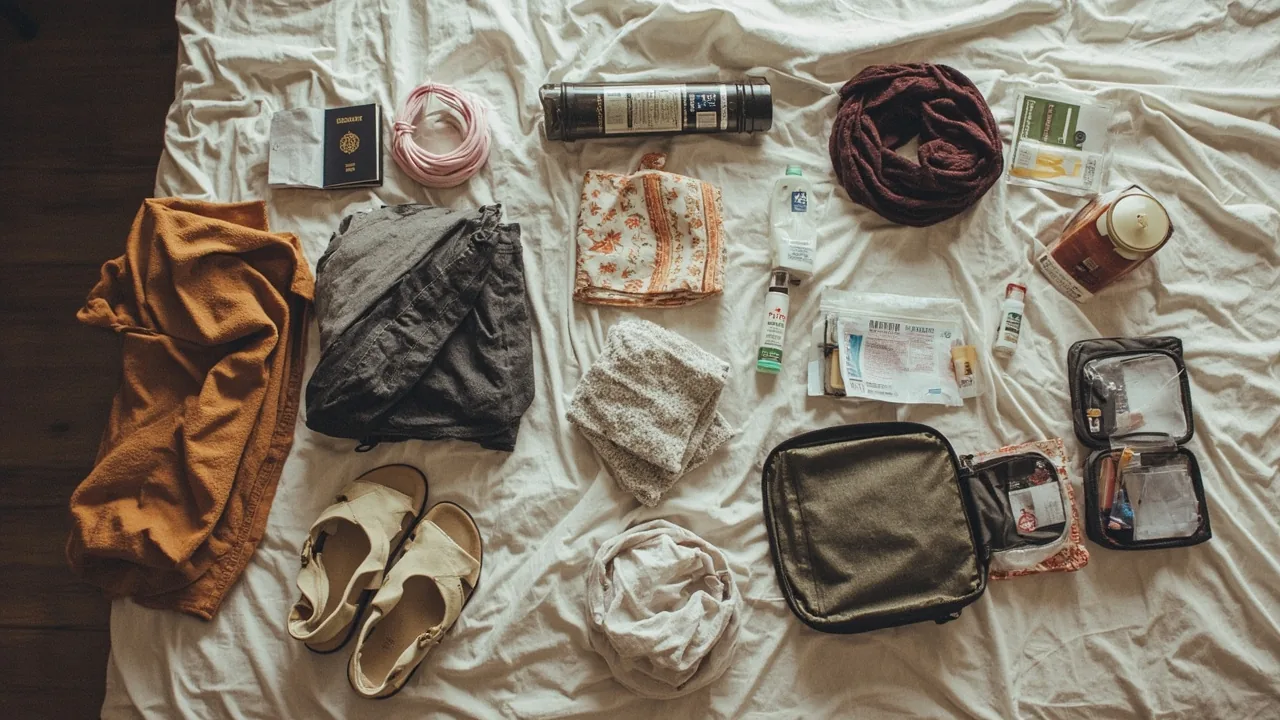
Myanmar Packing List for Indian Backpackers
Packing light is the rule everywhere in Southeast Asia, but Myanmar is where it pays off. Buses are cramped, taxis are small, and e-Visa processing means you’ll be walking through Yangon airport at 1 AM with all your luggage on your back. A 40 to 50L backpack is enough; everything else you can buy in Yangon or Bagan for a quarter of what it costs at home. Bring the right things, leave the rest. For related planning, see our guides on Sea Backpacking Hub and Cat Ba Temple Etiquette Guide How to Respect Local Customs.
One detail most Indian travellers miss: Myanmar’s electrical situation is unique. Power cuts are common outside Yangon and Mandalay, and rural guesthouses sometimes run a single shared socket per room. A small universal adapter with surge protection isn’t optional here, it’s the difference between a charged phone and a dead camera at sunrise over Bagan.
Quick Answers
| What | Answer | Price (INR) |
|---|---|---|
| Best backpack size for Myanmar? | 40 to 50L backpack, no suitcase | ₹2,500 (~$25.95) to ₹5,500 (~$57.09) |
| Is sunscreen cheap in Myanmar? | No, it’s expensive; bring from India | ₹350 (~$3.63) |
| Do I need a power bank under 100Wh? | Yes, anything above gets confiscated at Indian airports | ₹1,200 (~$12.46) to ₹2,800 (~$29.06) |
| Do I need a power adapter? | Myanmar uses C/D/F/G plugs, India adapters partially work | ₹350 (~$3.63) to ₹700 (~$7.27) |
| How much does a tourist SIM cost? | ₹289 (~3 USD) for 7-day MPT/Ooredoo at Yangon airport | ₹250 (~$2.60) |
The Ultimate Packing Checklist
Here’s the full kit, broken down by category. Everything fits in a 45L bag if you’re disciplined.
Clothing (pack for 7 days, do laundry every 2-3 days)
- 4 quick-dry t-shirts (2 plain for layering, 1 graphic for night, 1 backup)
- 2 pairs of light, quick-dry shorts
- 1 pair of light travel trousers or zip-offs (for temples, buses, mosquitoes)
- 7 pairs of underwear, 3 pairs of socks
- 1 compact rain jacket (your monsoon poncho if travelling May to October)
- 1 light hoodie or fleece (for hill stations like Kalaw and Inle in December-January)
- 1 long-sleeve shirt (sun and temple coverage)
- 1 pair of quick-dry swim shorts
Footwear
- 1 pair of broken-in walking shoes or trail runners (Bagan temple marathon is no joke)
- 1 pair of sturdy sandals or Chacos (hostel showers, beach, daily wear)
- 6 pairs of socks (you’ll wash more often than you think)
Toiletries (travel-size, under 100ml each)
- Toothbrush, toothpaste, floss
- Travel soap (Dove or similar; Myanmar pharmacies also stock Sunsilk shampoo sachets for ~500 MMK each)
- Small sunscreen (50ml minimum, SPF 50)
- Mosquito repellent with DEET (malaria zones exist in border areas)
- Razor and a few blades
- Small quick-dry towel (hostels rarely provide them)
- Lip balm with SPF
- Hand sanitiser (a 50ml bottle goes further than wet wipes in Myanmar’s humidity)
First Aid
- Paracetamol (Dolo 650 strips from India; cheaper and the same Crocin you pay triple for abroad)
- ORS sachets (5-6 minimum; dehydration hits hard in Bagan’s dry zone)
- Loperamide (Imodium) for stomach issues
- Antacid (ENO sachets if you prefer liquid relief)
- Antihistamine (Avil or Cetrizine)
- Band-aids and a small roll of medical tape
- Your personal prescriptions (and a copy of the prescription, in English)
Documents and Money
- Passport with at least 6 months validity
- Printed e-Visa approval letter (apply at the official portal, ₹4,817 (~50 USD) fee)
- Travel insurance document (digital + printed copy)
- Passport-size photos (2 spares, for SIM registration and any on-the-spot permits)
- USD cash (must be crisp, unfolded bills; Myanmar banks reject torn notes and are strict about series 2006+)
- A few emergency rupees in case of transit delays in Bangkok or Kolkata
The “Almost Forgot” Essentials
- Padlock for hostel lockers (combination type, TSA-approved)
- Headlamp or torch (rural Myanmar has frequent load-shedding)
- Reusable water bottle with filter (LifeStraw or similar; tap water isn’t safe)
- Earplugs and sleep mask (monastery roosters at 4 AM are real)
- Quick-dry laundry bag (separates dirty clothes from clean)
- Small daypack (15-20L) for temple visits and bus stations
Monsoon vs. Dry Season Packing
Myanmar’s seasons flip the packing list more than in any of its neighbours.
Monsoon (May to October): Rain comes in sheets, often sideways. Pack one heavy-duty poncho (the cheap 1,000 MMK ones from Yangon markets rip by day three), quick-dry everything (no cotton, ever), a dry bag for phone and documents, waterproof sandals, and ziplock bags for your passport and electronics. Synthetic trousers dry overnight if you hang them in a hostel fan. A small microfiber towel becomes your best friend: regular towels stay wet and smell.
Dry season (November to February): Almost no rain, but temperatures in Bagan hit 38°C by 2 PM. Pack lightweight linen or cotton shirts, a wide-brim hat or cap, sunglasses (UV is intense), a sarong for both temple coverage and shaded lunch breaks, and stronger sunscreen than you think you need. Nights in the highlands (Kalaw, Hsipaw, Pyin Oo Lwin) drop to 8°C in December, so that hoodie earns its space.
Shoulder months (March-April): The hottest, driest period with temperatures regularly above 42°C in central Myanmar. Pack a bandana you can wet and wear, twice as much sunscreen as you’d normally bring, and electrolyte sachets. Many Indian travellers underestimate this heat because it doesn’t feel like the high humidity of monsoon; the dryness is what bites.
Subodh’s Pro Tip: Myanmar’s electricity is more erratic than India. Carry a 10,000 mAh power bank over a 20,000 mAh one; it fits in your daypack pocket, and you don’t have to leave it behind when flight rules require larger banks in checked luggage.
Electronics and Tech Setup
Universal Adapter: Myanmar uses Type C, D, F, and G sockets, all of which are physically different from India’s Type C and D. A universal adapter with surge protection is essential. Type C Indian plugs physically fit some Myanmar sockets, but the fit is loose and you’ll get sparks on older hotel wiring. Budget ₹350 (~$3.63) to ₹700 (~$7.27) for a solid one from Amazon India or a Decathlon store; the cheap ₹150 (~$1.56) ones fail within a week.
Power Bank Rules: Carry banks under 20,000 mAh or 100 Wh only. Anything above can be confiscated at Indian departure airports or refused at Yangon arrival. Bring the specifications printed on the device, and keep it in your cabin bag, never checked luggage.
Cables and Charging: Bring two short USB-C cables and one micro-USB. Myanmar’s voltage is 230V at 50Hz, same as India, so your Indian chargers work without a converter (just the plug-shape issue). A 3-port USB wall charger lets you charge phone, power bank, and headlamp from one hostel socket.
Offline Maps: Download Myanmar’s regions on Google Maps or Maps.me before you land. Mobile data is patchy outside Yangon and Mandalay, and you’ll be navigating rural Bagan by temple coordinates more than once. Save your hotel’s location in both apps, plus the bus station and the nearest hospital.
SIM and eSIM: MPT and Ooredoo tourist SIMs are sold at Yangon and Mandalay airports for ₹289 (~3 USD) for 7 days with around 5GB. ESIM support is limited in Myanmar, so this is one country where a physical SIM is still the practical move. If your phone gets you for eSIM and you want a backup, Get Nomad eSIM covers regional SEA packages including Myanmar.
For more on registration, IMEI rules, and which operator is best in 2026, see our Myanmar SIM card guide for Indian travellers and the Myanmar SIM card pricing breakdown.
Cultural Dress Codes: Temples vs. Beach
Myanmar’s Buddhist sites enforce modest dress more strictly than Thailand. The famous Shwedagon Pagoda in Yangon, Mahamuni in Mandalay, and the temple complexes in Bagan all require covered knees and shoulders, with shoes and socks removed at every entrance.
Pack:
- One long-sleeve loose shirt (linen or thin cotton) you can throw on for temple visits
- Travel trousers or long skirt that reaches mid-calf
- A large scarf or sarong (1.5m x 1m minimum) for shoulder coverage and to sit on hot temple floors
- Slip-on shoes or sandals you can remove and carry in a small daypack
The sarong trick: most Indian travellers forget how often it doubles up. It covers shoulders in Shwedagon lines, becomes a pillow on overnight buses, a shade on Inle boat rides, and a beach towel at Ngapali. Carry one, even if you’re “not a sarong person.”
Footwear: most pagodas have polished marble or stone floors that get dangerously hot in dry season. Thick socks (cheap temple socks from any Yangon market) save your feet from the 60°C surface.
If you’re planning to visit Sagaing’s hilltop monasteries or HSipaw’s Shan villages, read the temple etiquette guide for Kanchanaburi for the cultural basics that apply everywhere, even across borders.
Trail Laundry and Toiletries
Hostel laundry in Myanmar costs 1,500 to 3,000 MMK per kilogram (roughly ₹67 (~0.70 USD) to ₹145 (~1.50 USD)), same-day if you drop it off by 9 AM. Most travellers do laundry every three days and end up doing two loads over a two-week trip. You can also hand-wash quick-dry items in the hostel sink for free; bring a small universal plug or stopper.
Convenience stores in Yangon and Mandalay stock everything else you forgot, including sunscreens at inflated prices (always bring your own from India), mosquito coils, soap, shampoo, toothbrushes, and basic meds. Pharmacies carry Indian-brand paracetamol and Crocin at fair prices. Bringing 50 ml travel bottles covers you for a two-week trip; anything larger is dead weight.
Safety Alert: Myanmar’s safety situation changes frequently. Before booking, check the Indian MEA travel advisory page (mea.gov.in) for the current Myanmar situation. Many areas, especially border states and Rakhine, Chin, Kachin, and Shan States, see active conflict. Stick to Yangon, Bagan, Mandalay, Inle, and Hsipaw unless you have specific, current guidance.
Common Packing Mistakes Indians Make
Mistake 1: Bringing a suitcase or trolley bag. Myanmar buses don’t have luggage holds like in Thailand. Your bag gets thrown into a pile with everyone else’s, and you’ll see hardshell suitcases arrive with cracked corners by the second bus. Even mid-range travellers here use backpacks; the pavements in Bagan are sand and the Shwedagon entrance has long stairways.
Mistake 2: Packing jeans and heavy hoodies. Blue jeans weigh 700g, take 24 hours to dry in monsoon humidity, and turn into leg-trap sauna chambers in Bagan’s 38°C heat. Same for Indian-style thick cotton kurtas. Replace with one pair of travel trousers and a thin fleece; everything else can be a quick-dry synthetic.
Mistake 3: Forgetting the power bank capacity rule. Indian airports have started enforcing the 100Wh cabin limit strictly. Some 20,000 mAh banks (74Wh) are fine; 30,000 mAh banks (111Wh) are confiscated. Check the Wh printed on your bank before you fly, not just the mAh. Carry the spec sheet or original packaging to be safe.
Mistake 4: Skipping a headlamp. Load-shedding is normal in Myanmar’s countryside. Your phone’s flashlight is okay for finding your hostel key, but a ₹250 (~$2.60) headlamp lets you walk uneven temple steps, find a bus toilet at 3 AM, and still have phone battery for the morning.
Mistake 5: Carrying two pairs of shoes. Most Indian backpackers can manage Myanmar in one pair of running shoes plus sandals. A third pair (sneakers, trainers, dress shoes) only adds weight. If you need formal footwear for one Mandalay dinner, borrow from your hotel or wear the cleanest sandals you own.
Mistake 6: Bringing too many medications. Five full strip packs of Paracetamol, Crocin, Imodium, and Cetrizine each is plenty. You can buy more at any pharmacy in Yangon or Mandalay at fair prices, often under 1,000 MMK per strip. Over-the-counter rules are lax.
What to Eat in Myanmar (Even With the Heat)
After you’ve packed the right gear, you’ll need food that handles the climate. A few real spots from our Myanmar tour notes:
Burmese and regional restaurants (where locals eat): Unique Myanmar Restaurant in Yangon does mohinga (fish-noodle soup) for around 3,000 MMK, the national breakfast and a personal favourite after overnight buses. Kyal Sin Thit is a favourite with travellers for shan noodles around 2,500 MMK. Elodie Restaurant near Mandalay Palace covers Shan, Burmese, and a few Indian-leaning dishes from 4,000 MMK. Nourish Cafe Yangon is a quieter breakfast spot, salads and smoothies from 5,500 MMK. MadameEm’s in Mandalay is good for tea-leaf salad (lahpet thoke) at around 4,000 MMK.
When you need a dal-chawal fix: The Moon Vegetarian Restaurant in Yangon serves North and South Indian thalis from 5,500 MMK. Unique Mandalay Tea Room in Mandalay has light samosas and chai at fair prices, plus a few Burmese-Chinese veg options. Izakaya AKIMOMI Mandalay Branch is Japanese-Myanmar fusion with veg-friendly sets from 6,500 MMK; pricier but a strong choice for a splurge meal.
Our full Myanmar tour guide covers Bagan, Inle, and Mandalay itineraries with more food stops and temple timings.
FAQ
Can I bring a suitcase instead of a backpack?
You can, but you’ll regret it on every bus and every temple staircase. Backpacks are the standard in Myanmar and across Southeast Asia.
Are power banks allowed in cabin baggage?
Yes, under 100Wh. Anything between 100 and 160Wh requires airline approval and is generally refused by Myanmar carriers. Always carry in cabin, never checked.
Is sunscreen that expensive in Myanmar?
Yes, locally made sunscreen is hard to find and imports are pricey. A basic 50ml SPF 50 tube costs 12,000 to 15,000 MMK. Bring yours from India.
What’s the best backpack size for Myanmar?
45L is the sweet spot. 40L forces you to wash more often; 50L is fine if you don’t over-pack. Aim to hit 8 to 10kg total, no more.
Should I bring USD or exchange in India?
Carry USD, but only crisp 2009-series or newer bills. Torn, written-on, or older notes are rejected at Yangon airport exchange counters. Exchange only at official counters or your hotel, never with roadside money-changers.
Subodh’s Line
Pack one-third clothes, one-third tech and medical, one-third empty space for things you’ll buy in Yangon. That’s the formula. Your bag should feel suspiciously light when you fly out of Delhi. If it doesn’t, you’ve overpacked.
