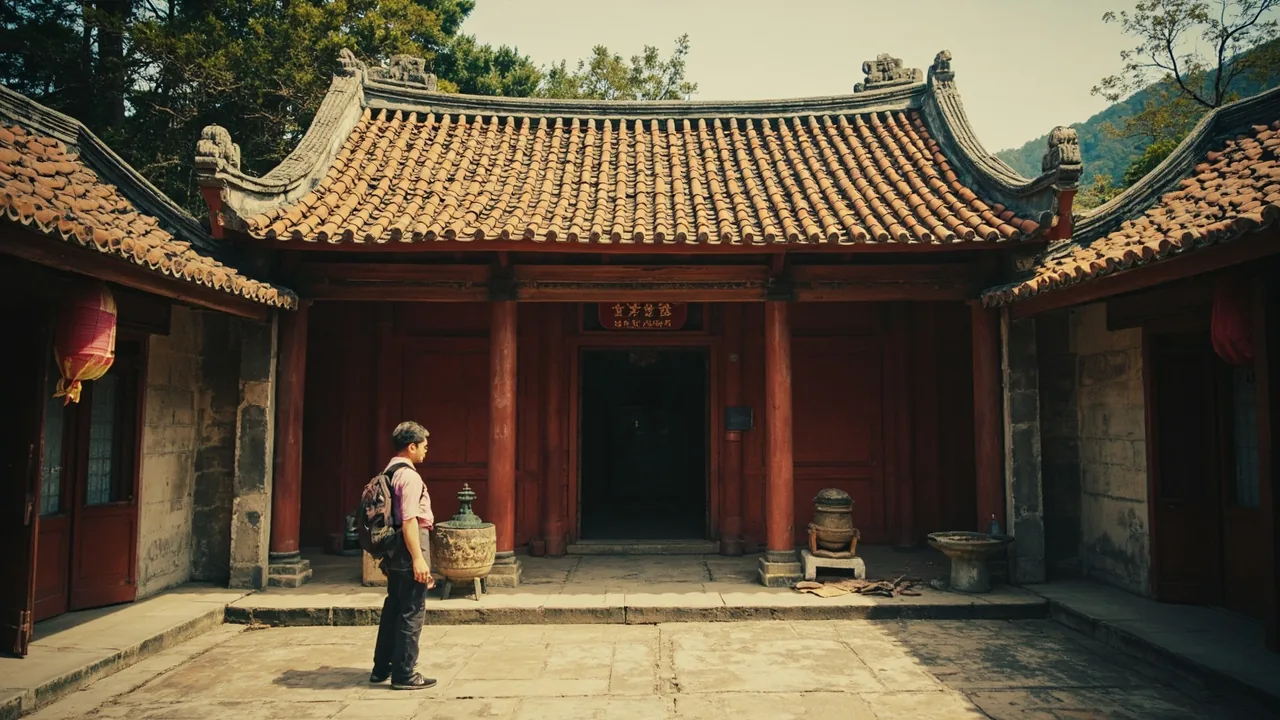
Cat Ba Temple Etiquette Guide: How to Respect Local Customs (2026)
What Is a Vietnamese Temple?
A Vietnamese temple (chùa, đền, or miếu depending on whether it is Buddhist, folk-religion, or ancestral) is an active place of worship, not a museum. Monks or caretakers live on site, offerings are made daily, and the altar is sacred. Treat every building with incense, statues on altars, or red-and-gold calligraphy as a temple, even without an English sign.
Quick Answers
| What | Answer | Price (INR) |
|---|---|---|
| Dress code | Shoulders + knees covered | Free |
| Shoes | Off before entering any prayer hall | Free |
| Photos | Ask first; never point camera at altars or monks praying | Free |
| Donation | Optional; ₹74 (~20,000 VND or ~$0.76) is a polite amount | ~₹74 |
| Best time to visit | Early morning (6-8 AM) or late afternoon (4-6 PM) | Free |
| Incense offered to you | Accept with both hands, place in burner | Free |
Step-by-Step: Entering a Cat Ba Temple the Right Way
Step 1: Sort your outfit before you leave the hostel
Vietnamese temples require shoulders and knees covered for everyone, men included, same rule as other Southeast Asian temples covered in our hostel etiquette guide. The two safest outfits:
- Light long-sleeve shirt + long trousers or ankle-length skirt
- T-shirt with sleeves past the shoulder seam + long bottoms
Carry a sarong or scarf in your daypack; our Southeast Asia packing list has a full breakdown of what works in temple climates.
Step 2: Remove shoes, helmet, and sunglasses at the threshold
The line where tiled floor becomes raised wooden floor is where footwear comes off. Flip-flops, sandals, sneakers, all of it.
Sunglasses and helmets come off too. The temple is not a runway.
Step 3: Walk in slowly, eyes forward
Do not point your feet at the altar or at any monk when sitting. Feet are considered the lowest, dirtiest part of the body in Vietnamese Buddhist tradition, same as in Thai temples. When you sit on the wooden benches, tuck your legs under you or sit cross-legged. Never stretch your legs out toward the main statue.
Step 4: Speak at half volume, phone on silent
Cat Ba’s temples are quiet by design, quieter than the mainland temples covered in our Vietnam cultural etiquette guide. If you get a call, walk back outside to take it.
Step 5: Photography rules
- Statues and altars: most temples allow no flash photography of the main altar. Some ban photos entirely.
- Monks: never photograph a monk without asking. The polite way is to gesture at your camera, smile, and wait for a nod.
- Other worshippers: never. Don’t even raise the phone.
- Exterior architecture, courtyards, incense spirals: fine, no permission needed.
Step 6: How to behave around monks
If a monk speaks to you, bow slightly and respond in short Vietnamese phrases if you can. “Cảm ơn” (thank you) and “Chào thầy” (hello, teacher) are the two that matter. Do not touch a monk’s head or shoulders. Do not stand higher than a seated monk. Do not hand things to a monk with one hand; use both, or your right hand only.
Women should not sit next to or touch a monk in any public way. This is conservative Vietnamese Buddhist practice, not a personal comment on you.
Step 7: If you light incense
Offerings of three incense sticks are standard. Light them from the candle at the burner, not a lighter if you can avoid it. Hold them vertically between both palms, bow once, then place them upright in the sand bowl. Do not play with the sticks or wave them to extinguish. Do not stick them in and walk away immediately: stay bowed for five to ten seconds.
Step 8: If a monk or caretaker offers you food or tea
Accept with both hands. Refusing outright is rude. You don’t have to finish it, but take at least one sip or one bite.
Common Mistakes Indians Make
Mistake 1: Wearing shorts and a sleeveless top because “it’s just a small shrine”
The shrine at the trailhead inside Cat Ba National Park is small. The dress code is the same as a major pagoda. The fix is the sarong in your daypack, takes two seconds to put on.
Mistake 2: Pointing feet at the altar while sitting
Habit from home where you stretch out on a sofa. In a Vietnamese temple it reads as disrespectful. Sit cross-legged or kneel. The bench cushions on the floor are there for a reason.
Mistake 3: Photographing monks in prayer
Even a quick phone shot. Some monks will not say anything, but their community notices, and it makes future visitors unwelcome.
Mistake 4: Taking the donation box as entry fee
The small printed “donation” sign at the entrance of Cai Vien is not a ticket booth.
Mistake 5: Stepping over the threshold instead of stepping on it
Many Vietnamese temples have a raised wooden sill at every doorway. Step over it, do not step on it. The threshold is where spirits cross; you walk around, not on.
What Most Guides Don’t Tell You
The temple donation box goes to the monks, not the building
This sounds obvious but it changes how much you give. At Cai Vien Pagoda, the box feeds the resident monks and funds basic upkeep. ₹74 (~20,000 VND or ~$0.76) is the going polite amount. Less is fine. More is welcome but not expected.
Monks will sometimes ask where you are from
This is small talk, not an interrogation. A short answer works. “Ấn Độ” (India) gets a smile. Follow-up questions about vegetarian food are common because Vietnamese Buddhists know Indians often don’t eat meat. If you mention you are vegetarian, monks at Cai Vien may offer you tea or food at the temple; accept graciously and follow the caretaker’s lead.
The shrine near the harbour is not a temple
The little red structure at Ben Beo with the incense spirals is a miếu (folk shrine), not a Buddhist temple. Different rules: still remove shoes, still no shorts, but the etiquette around monks doesn’t apply because there are no resident monks. Don’t transfer temple behaviour to a shrine, or vice versa.
Subodh’s Pro Tip: Cat Ba’s temples are quieter than Hanoi’s. That is the whole point of going there.
What to Eat Near the Temples
Most of Cat Ba’s pagodas sit within walking distance of the town centre, which is where the real food is. If you are worried about street food hygiene, our street food safety guide for Southeast Asia covers what to watch for.
Vegetarians and anyone needing a break from fish sauce can head straight to LIKE COFFEE - Vegetarian Food CatBa, one of the best dedicated veg restaurants on the island. They do a daily menu of plant-based Vietnamese dishes plus good coffee. For more options, see our Cat Ba vegetarian food guide.
Currency note: All prices on Cat Ba are in Vietnamese đồng (VND). At current rates, ₹1 ≈ 270 VND.
Getting Around Cat Ba to the Temples
Cai Vien Pagoda is a 10-minute walk from the main harbour. The shrines inside Cat Ba National Park need a motorbike rental (around 150,000 VND/day from shops near the harbour). For a full island breakdown, see our Cat Ba complete guide. If you are doing the temple + national park combo in one day, check Catba Wander tours on GetYourGuide for a guided option;
None of these will handle the temple etiquette for you, so read the steps above before you board.
Safety and Cultural Context
Vietnam is one of the safer Southeast Asian countries for Indian travellers, but Cat Ba is a small island with its own rhythms. For broader context, see our Southeast Asia backpacking hub.
Safety alert: Before any trip, check the Indian Ministry of External Affairs travel advisory at mea.gov.in and Vietnam’s official tourism site for current advisories.
FAQ
Can I wear jeans to a Cat Ba temple?
Yes. Jeans are fine, as long as your shoulders are covered and your knees are. The problem with jeans in Vietnam’s climate is heat, not temple rules.
Do I need to remove my hat inside?
Yes, hats come off at the door along with shoes and sunglasses. Keep it with your shoes at the threshold.
Is there an entry fee for Cai Vien Pagoda?
No. Entry is free. The small “donation” sign at the entrance is a voluntary contribution box, not a ticket booth. ₹74 (~20,000 VND) is a polite amount if you choose to give.
Can women enter every part of a Vietnamese temple?
On Cat Ba, yes. Women can enter all parts of the pagodas and shrines. The only restriction is interacting physically with monks, which conservative Vietnamese Buddhist practice discourages for both genders in different ways.
What if I don’t speak any Vietnamese?
You don’t need much. Xin chào (hello), cảm ơn (thank you), and a small bow cover 90% of temple interactions. Many monks on Cat Ba speak basic English due to the tourist foot traffic.
Can I bring my own incense?
You can, but the temple provides it for free at the burner. Bringing your own is fine if you have a specific prayer intent; otherwise use what is on site.
Subodh’s Take
Temple etiquette on Cat Ba is lighter than in Hanoi or Ho Chi Minh City, partly because the island sees fewer tourists and partly because most pagodas here are small, locally run, and not set up for crowds. That is a feature, not a bug. Most of what people call “etiquette rules” is just one thing, said twelve different ways: slow down, lower your voice, and treat the building like someone still lives there. Because they do.
