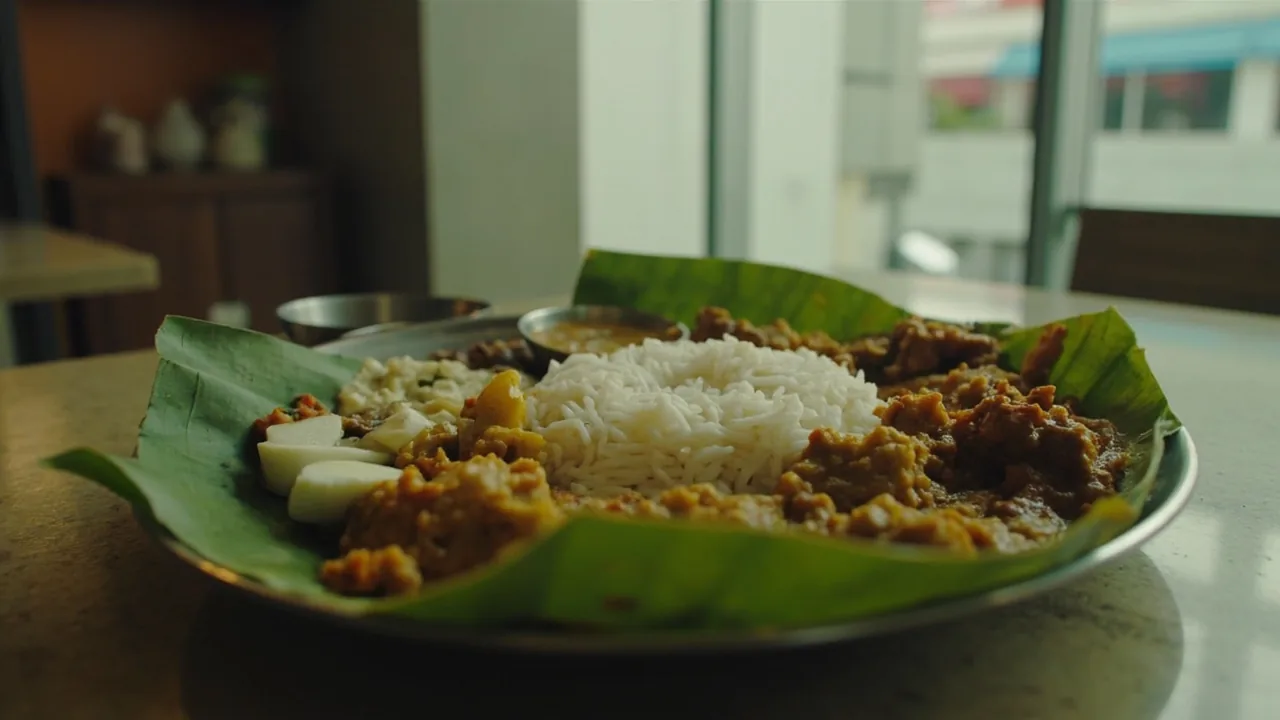
Where to Eat Indian Food in Ipoh: Restaurants, Food Courts & Catering Options
Ipoh’s ipoh indian food scene is small but unusually well-set-up for travellers. Most of the action clusters around the Old Town, Greentown, and the area near the railway station, with prices noticeably cheaper than KL or Penang. For related planning, see our guide on Sea Backpacking Hub.
Quick Answers
| What | Answer | Price (INR) |
|---|---|---|
| Average sit-down banana leaf meal | One full banana leaf with rice, 2 veg curries, dhal, rasam, papad, pickle | ₹225 (~$2.34) |
| Roti canai + dhal at a mamak | Standard breakfast at any mamak stall, available from early morning | ₹60 (~$0.62) |
| Thali set at a North Indian restaurant | Comes with naan/roti, paneer or dal, rice, salad, dessert | ₹300 (~$3.11) |
| Indian catering per pax for events | For 30+ pax, basic North Indian or banana leaf | ₹350 (~$3.63) |
| Famous restaurant opening hours | Most open by 7-8 a.m. For breakfast, close by 10 p.m. | , |
Note on rates: 1 MYR ≈ ₹23.58 (~$2.44) at time of writing, so prices shift slightly with the rupee.
The Local Culinary Landscape
Malaysian Indian food is its own thing, and Ipoh is one of the best places to eat it outside of KL. You’ll run into three distinct styles on the same street: mamak stalls (Indian-Muslim, lots of roti canai, teh tarik, murtabak), banana-leaf rice South Indian spots (rice served on a plantain leaf with dhal, curries, rasam, papad), and a smaller number of North Indian restaurants serving thalis, butter chicken, tandoor items, and palak paneer. The mamak category is the one Indian vegetarian travellers will lean on hardest because the menu is flexible, prices are low, and almost every location in Ipoh is halal.
The one gotcha: most Malaysian-Indian eateries default to “vegetarian” meaning no meat, but dairy and eggs are usually still in play. North Indian restaurants are closer to what you get at home. Banana-leaf places serve the same dishes you’d see in Chennai, just with Malaysian-Tamil small tweaks. Both styles use ghee freely, so if you’re strict about that, ask before ordering.
Subodh’s Pro Tip: When you walk into a banana-leaf place and they ask “curry or sambar?”, the safe answer for vegetarians is “sambar, no egg” and they’ll load up dhal, rasam, two veg curries, and papad on the leaf. Replenishment is usually unlimited.
Key Phrases in Bahasa Malaysia
This section matters less than it does in Thailand or Vietnam. Malay is the lingua franca, but Indian restaurant staff in Ipoh speak Tamil or English at the counter, and almost every mamak menu is in English. Still, two phrases help when you want to confirm something specific.
| English Phrase | What it Means | Local Script | Pronunciation |
|---|---|---|---|
| Saya vegetarian (say ah veg-e-tair-ee-an) | I am vegetarian | Saya vegetarian | sah-yah veg-e-tair-ee-an |
| Tanpa daging ayam, tanpa telur (tuhn-pah dah-geng ah-yam) | No meat, no chicken, no egg | Tanpa daging ayam, tanpa telur | tuhn-pah dah-geng ah-yam |
| Tambahkan sayur (tahm-bah-han sah-yoor) | Add more vegetables | Tambahkan sayur | tahm-bah-han sah-yoor |
| Tidak pedas (tee-dak peh-dahs) | Not spicy | Tidak pedas | tee-dak peh-dahs |
| Boleh kurang minyak? (bo-leh koo-rang mee-nyak) | Less oil? | Boleh kurang minyak? | bo-leh koo-rang mee-nyak |
In practice, just saying “vegetarian” and pointing at what you want works. The level of English at Indian-run eateries in Ipoh is high.
Recommended Sit-Down Indian Restaurants
1. Thean Chun Old Street Coffee Shop (adjacent Indian stalls)
The famous “Cave” of Ipoh coffee culture is not the Indian spot itself, but the row of hawker stalls next door and across the road has cheap, dependable Indian breakfast hits. Roti canai with dhal, idli with sambar, and masala dosa show up here from 7 a.m. Limited seating, local, cash only.
What to order: Roti canai + dhal (₹45 (~$0.47)/ ~₹47 (~2 MYR or ~$0.49)), masala tea, half-boiled egg (skip if you don’t want egg).
Vibe: Old-school hawker, plastic stools, fast turnover, walk in before 10 a.m. To avoid the worst crowds.
2. Saravanan Theppakulam-style Banana Leaf Restaurant
A classic banana-leaf South Indian setup, this style of restaurant in Ipoh serves unlimited rice with sambar, rasam, and a rotating set of veg curries. The standard protocol is: walk in, choose veg or non-veg, sit down, they’ll fill the leaf and keep refilling as long as you keep eating.
What to order: The full banana leaf (₹120-₹180 (~$1.25-$1.87)/ ~₹118-₹177 (~5-7.50 MYR or ~$1.22-$1.83)), with extra curd rice if available. If you want North Indian items, this isn’t the right place.
Vibe: Family-run, vegetarian-friendly by default, busy at lunch on weekends.
3. North Indian Tandoor & Thali Restaurants in Greentown
Greentown has a few of the heavier, butter-chicken-and-naan style places aimed at families and tourists. Menus typically include paneer butter masala, dal makhani, naan, butter naan, biryani, and a thali set that fills you up for the whole afternoon.
What to order: Thali set (₹300 (~$3.11)/ ~₹306 (~13 MYR or ~$3.18)) which gives you 2-3 curries, rice, roti/naan, raita, papad, and a sweet at the end. Single dishes like palak paneer or dal makhani run ₹200-₹280 (~$2.08-$2.91)/ ~₹200-₹283 (~8.50-12 MYR or ~$2.08-$2.93) with one roti.
Vibe: Air-conditioned, family-friendly, slightly more “restaurant” feel than the hawker joints.
4. Mamak Stalls Around the Railway Station and Little India-adjacent Areas
Mamak stalls are the 24-hour backbone of Malaysian Indian food. In Ipoh, the densest cluster is around the railway station and along Jalan Yang Kalsom. These are the “open now” places when you’ve just arrived on a late bus from KL or Penang.
What to order: Roti canai (plain or with egg), teh tarik, murtabak (folded roti with filling), nasi goreng (fried rice, ask for vegetarian), and the occasionally brilliant maggi goreng (instant noodles fried Indian-Muslim style, deeply unhinged in a good way).
Vibe: Bright fluorescent lights, men watching football, plastic chairs, the best/worst people-watching in the city.
Safety Alert: Mamak stalls open late, and that means they’ve had a long day of equipment use. The ones with the highest turnover (look for crowds, especially around 8-10 p.m.) are safer than the quiet ones with the same hours. Trust the crowd.
5. Indian Food at Ipoh’s Food Courts
Ipoh has several food courts (kedai makan) with permanent Indian stalls. Examples to look for: the food court on Jalan Sultan Idris Shah near the old town, and the larger ones attached to AEON and Mydin malls on the outer ring. The Indian stall will almost always serve a vegetarian rice set, chapati with dhal, or vegetarian fried noodles.
What to order: Vegetarian rice set (₹60-₹120 (~$0.62-$1.25)/ ~₹59-₹118 (~2.50-5 MYR or ~$0.61-$1.22)), chapati + dhal combo, vegetarian noodles.
Vibe: Self-serve seating, pay at the stall counter, fast service.
Indian Food Court and Breakfast Options
Breakfast is where Indian food in Ipoh genuinely shines. The combination of South Indian idli, dosa, vada, and the ubiquitous roti canai+dhal means you can grab a hot, satisfying vegetarian breakfast for under ₹118 (~5 MYR or ~$1.22). Most hawker centres and Indian restaurants open by 7 a.m.; the early window (6:30-8:30 a.m.) is the cleanest because turnover is highest and the equipment is freshly fired up.
Two practical pointers for breakfast specifically:
- South Indian breakfast spots close early, often by 11 a.m. Once you hit noon, the same place transitions into a lunch-focused operation.
- Mamak stalls are open all day, but the breakfast quality is best in the morning window before 10 a.m. After that, the chapati tends to dry out and the kitchen attention shifts to lunch rice plates.
For a quick decision: if you want roti canai + teh tarik, any mamak; if you want idli or dosa, find a South Indian stall.
Indian Catering in Ipoh
Group catering in Ipoh for Indian weddings, religious functions, or tourist groups is widely available, mostly via the same banana-leaf restaurants and a handful of dedicated caterers. For Indian backpackers, the most relevant catering scenario is a small group (15-30 pax) running an event, a family occasion while travelling, or a yoga/trekking group wanting a community meal.
Practical expectations:
- Pricing: For 30+ pax, basic banana-leaf vegetarian catering runs ₹350-₹500 (~$3.63-$5.19) per head (~15-21 MYR), North Indian thali catering runs slightly higher at ₹450-₹700 (~$4.67-$7.27) per head (~19-30 MYR).
- Lead time: 5-7 days minimum for proper vegetarian catering. Same-day requests are sometimes possible for smaller orders but expect a menu compromise.
- Halal status: Most Indian catering in Ipoh is halal by default (the Malaysian Indian community is majority Muslim). Confirm beforehand if your group requires strict veg without any meat-prep proximity.
- Delivery range: Most caterers will deliver within Ipoh city limits free for orders above a certain value; outside the city, expect a distance-based fee.
For a small backpacker group, ordering banana-leaf rice by the container (each leaf feeds 1-2 people, surplus curries packed separately) is cheaper and easier than full catering, around ₹130-180 (~$1.35-$1.87, ~5.50-7.50 MYR) per leaf.
Food Safety & Hygiene
Malaysian food-safety standards at established Indian eateries are high, but travellers still need to use their head.
- Drink bottled or filtered water. Tap water in Ipoh is technically safe by Malaysian standards, but if your stomach isn’t accustomed, stick to bottled.
- Pick busy stalls. The crowd tells you the food is fresh and turning over. An empty stall at 8 p.m. With the same kadai from 6 a.m. Is a yellow flag.
- Skip raw chutneys when in doubt. Coconut and mint chutneys at banana-leaf places are usually fine, but if the colour or smell looks off, skip.
- Watch the heat index. Ipoh is hot, and dairy-heavy North Indian dishes (butter chicken, paneer dishes) sitting in a hot display case are a common trap.
- Wash hands or use sanitizer before meals. The roti canai / banana leaf / your hands chain is a vector.
Subodh’s Pro Tip: If you have a weak stomach, eat your first two meals at the bigger restaurants in Greentown (air-conditioned, refrigerated storage, high turnover) before you start experimenting at the smaller stalls. Build tolerance gradually.
Getting Connected
Having data on your phone matters in Ipoh for more than Instagram. Google Maps is genuinely useful here, as Indian restaurants tend to be on small side lanes that don’t always signpost well, and you’ll want a translation app if you end up somewhere Tamil-only.
If you’d rather skip the SIM card queue entirely and have data the moment the plane lands, Get Nomad eSIM lets you top up from India before departure and activate on landing, no passport swap at the counter.
Common Food Mistakes Indians Make
- Assuming “no meat” means fully vegetarian: Most mamak and banana-leaf places default to “vegetarian” meaning veg-or-egg. If you want strict veg, say “no egg” too. Without that clarification, scrambled egg or a boiled egg often lands on the plate as a “free extra”.
- Trusting the same dish back home: A “palak paneer” in a Malaysian North Indian restaurant is rarely identical to the one in Delhi or Mumbai. Coconut milk, less spice, more oil, sometimes boneless chicken accidentally added. Always confirm the ingredients before assuming.
- Eating at empty late-night mamaks: The 24-hour “open now” promise of mamak stalls can hide a kitchen that’s been open for 12+ hours. Pick the ones still busy at 2 a.m., not the quiet ones with stained tables.
- Underestimating portion sizes: A banana-leaf meal is genuinely unlimited rice and refill curries. Plan accordingly, this is not the place to “just have a small bite” for ₹150 (~$1.56).
- Skipping hydration: Ipoh’s heat is sneaky. The food is rich, oily, and salty; the body’s sodium load in a single banana-leaf meal can be high. Drink more water than usual.
FAQ
Is there an Indian restaurant in Ipoh open late at night?
Yes. Several mamak stalls around the railway station and on Jalan Yang Kalsom run 24 hours. The North Indian restaurants in Greentown typically close around 10 p.m., and the banana-leaf places close by 9-10 p.m.
Can I get a North Indian thali for breakfast in Ipoh?
Rarely at breakfast, but yes by lunch. For breakfast, the standard is South Indian (idli, dosa, vada) or roti canai + dhal at mamaks. Some hotels with Indian restaurants open by 10 a.m. And serve lighter North Indian breakfast like poori-bhaji or chole.
Is Indian food in Ipoh halal-friendly?
Yes. Almost every Indian restaurant in Ipoh, including the banana-leaf South Indian places, is halal. This is the default for Malaysian Indian eateries because the community is majority Muslim. Alcohol is rarely served, and pork is never on the menu.
How much does Indian catering cost in Ipoh for a group of 25?
For a vegetarian banana-leaf catering for 25 pax, expect ₹350-₹500 (~$3.63-$5.19) per head (~15-21 MYR). For a North Indian thali catering with a few non-veg dishes, expect ₹450-₹700 (~$4.67-$7.27) per head (~19-30 MYR). Prices include delivery within Ipoh city limits. Confirm the lead time (5-7 days) and halal certificate when booking.
Can I find Jain-friendly Indian food in Ipoh?
It’s hit or miss. Strict Jain (no onion, no garlic, no root vegetables) is hard at mainstream places because sambar, rasam, and most curries start with onion-garlic. Some North Indian restaurants can do a custom “no onion, no garlic” thali if you call ahead, and a few pure-veg South Indian spots run a parallel Jain menu. Call before going.
Is food expensive in Ipoh compared to Kuala Lumpur?
No. Ipoh is roughly 15-25% cheaper than KL for Indian food. A banana-leaf meal runs ₹120-180 (~$1.25-$1.87, ~5-7.50 MYR) here versus ₹180-250 (~$1.87-$2.60, ~7.50-10 MYR) in KL. North Indian thali sets are around ₹250-330 (~$2.60-$3.43, ~10-14 MYR) here versus ₹330-450 (~$3.43-$4.68, ~14-19 MYR) in KL. See our Malaysian vegetarian food guide for more breakdowns.
Do I need to book for dinner at the famous Indian restaurants in Ipoh?
Most Indian restaurants in Ipoh don’t require bookings and operate walk-in. The banana-leaf places might have a short wait on weekend lunch hours (12:30-1:30 p.m.), but for the rest of the day, walk in and grab a table.
Subodh’s Take: Ipoh is one of the most underrated food cities in Malaysia, and the Indian food specifically punches well above its size. Three to four solid meals here, with at least one banana-leaf lunch and one North Indian thali dinner, and you’ll walk away impressed without spending much. Just don’t expect KL-tier variety or Penang-level refinement, Ipoh’s magic is the everyday-eats quality, not the headline-chasing.
Closing Resources
- Food Tour Option: If you want a guided crawl through Ipoh’s hawker stalls and Indian side of the food scene, book a food tour on GetYourGuide, half-day tours run around ₹1,800 (~75 MYR) per person and cover more ground in three hours than you’ll cover in a day solo.
- Related reading: Ipoh vegetarian food guide.
- Street food safety in Southeast Asia.
- Where to eat Indian food in Chiang Dao.
