Ipoh Vegetarian Food Guide: Best Spots from Su Sum to Old Town
Prices and operating hours shift quickly in Malaysia, so always cross-check on Google Maps before you go.
Ipoh punches well above its weight for vegetarian food. Malaysian Chinese Buddhists run a serious chunk of the city’s vegetarian stalls, and the result is surprisingly diverse for a city its size. Most spots are cheap, some run as buffets by weight, and a handful have been doing the same thing for two decades. The trick is knowing which one is closest to where you are staying and what time they close. If you are new to Ipoh, start with our Ipoh travel guide for the basics on getting around and where to stay.
A quick heads up before we start: “vegetarian” in Malaysia (素, su) usually means no meat, no seafood, and no eggs, but a lot of stalls do use garlic, onion, and dairy. If you need strict Jain food (no onion, no garlic, no root vegetables), you will have a tougher time. The spots below are mostly Buddhist-vegetarian, with notes on which ones are easier on the no-onion-garlic side.
Quick Answers
| What | Answer | Price (INR) |
|---|---|---|
| Best all-rounder vegetarian spot in Ipoh | Su Sum Vegetarian (Jalan Yang Kalsom / near Old Town) | ~120 (~5 MYR) |
| Where to find Indian vegetarian meals in Ipoh | Restoran Gandhi, Sri Devi’s, Banana Leaf Ipoh | ~150 (~7 MYR) |
| Average price of a vegetarian rice plate | Mixed rice (chap fan) at any Buddhist stall | ~100 (~4 MYR) |
| Most convenient mall option | Ipoh Parade food court has at least 2 veg stalls | ~110 (~5 MYR) |
| Typical closing time for veg buffets | Most close by 9 pm, some by 8 pm | Free |
The Local Vegetarian Landscape
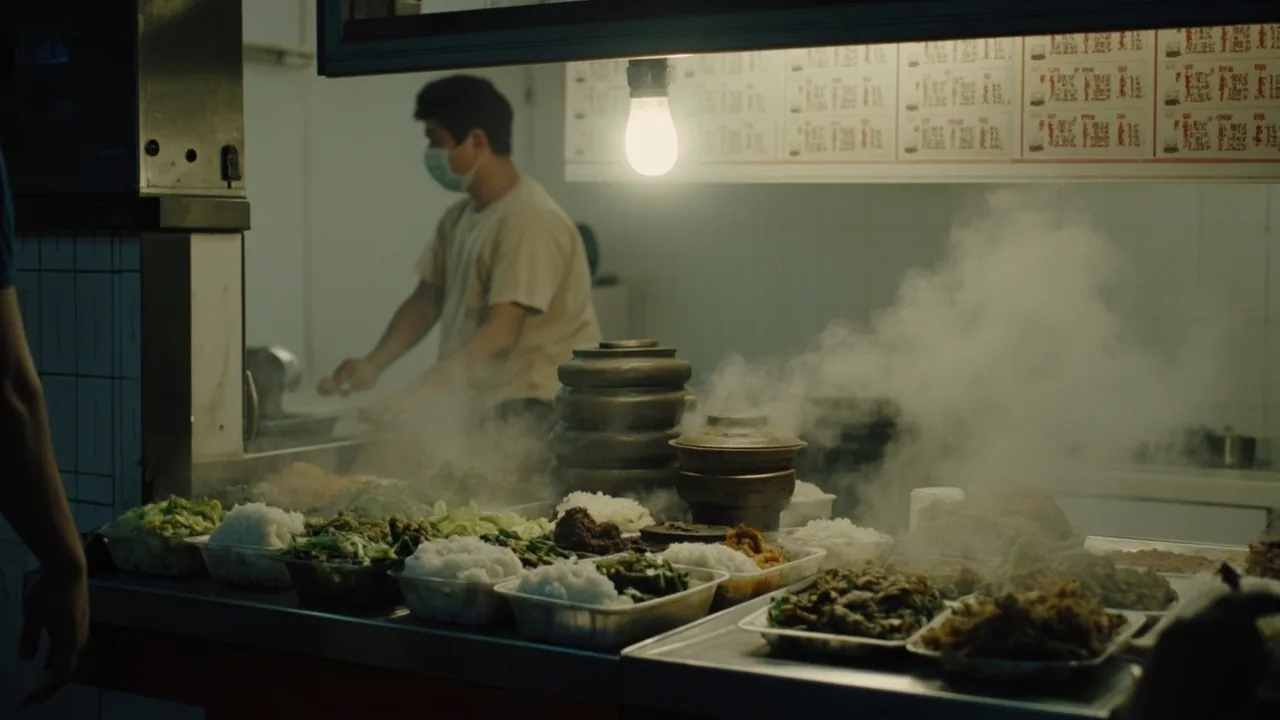
Ipoh’s vegetarian scene is built on three layers. First, the Chinese Buddhist vegetarian stalls (su cai pu / 素菜铺), which dominate the Old Town, Jalan Yang Kalsom, and the residential neighbourhoods around Ipoh Garden. These usually operate as “mixed rice” (chap fan, 杂饭): you point at what you want, the aunty piles it on a plate, and you pay by weight or by dish. Second, the dedicated vegetarian restaurants, which have full menus and tend to be the spots travellers search for (Su Sum is the textbook example). Third, the Indian vegetarian restaurants, mostly clustered around Little India in the old town and along Jalan Keliling, serving banana-leaf thalis, dosa, and North-South Indian plates.
A note on hidden ingredients at the Chinese stalls. Most are honest Buddhist-vegetarian: no meat, no seafood, no eggs. Garlic and onion, however, are common in the sauces and stir-fries. If you want Jain-friendly, ask for “no garlic, no onion” in English (most of the older aunties understand) or “bù yào suàn, bù yào cōng”. A few stalls go full-Jain already, and the dedicated restaurants often have a separate no-onion-no-garlic section.
Watch out for “vegetarian” dishes that borrow Malaysian flavour shortcuts. Some char siu (BBQ pork) imitations use oyster sauce for depth. Some soups use anchovy or chicken stock as a base. The stall-only mixed-rice places are safer than the malls here because the staff can tell you what is in the dish. At the bigger vegetarian restaurants, ask once, politely, when you sit down.
Subodh’s Pro Tip: When you walk into a Chinese mixed-rice (chap fan) stall in Ipoh, point at four to five dishes, hold up your fingers and say “no garlic, no onion, no oyster sauce”. Ask politely and most aunties will switch to a non-allium section without a fuss.
Key Phrases in English (and Mandarin, for the chap fan stalls)
Most Ipoh vegetarian stall holders are elderly Chinese aunties who understand English better than you would expect, but a few phrases help when the line is long.
| English Phrase | What it Means | Mandarin Script | Pronunciation |
|---|---|---|---|
| I am vegetarian | No meat, no seafood, no egg | 我吃素 | Wǒ chī sù |
| No meat or seafood | Just to be doubly clear | 不要肉和海鲜 | Bù yào ròu hé hǎi xiān |
| No egg | Skip the egg dishes | 不要蛋 | Bù yào dàn |
| No onion or garlic | Jain-friendly request | 不要洋葱和大蒜 | Bù yào yáng cōng hé dà suàn |
| No oyster sauce | Common hidden shortcut | 不要蚝油 | Bù yào háo yóu |
| Mixed rice | The build-your-own plate | 杂饭 | Zá fàn |
| Less oil please | Standard request | 少油 | Shǎo yóu |
| Not spicy | Standard request | 不要辣 | Bù yào là |
For Indian restaurants, English is universal. For Tamil-speaking aunties, “saappaadu maatten” (no garlic) works at banana-leaf spots.
The Big Hitters: Su Sum and the Other Famous Names
If you have read anything about Ipoh vegetarian food, you have read about these places. Here is what they serve and what to order.
Su Sum Vegetarian Restaurant (素食馆)
Address: 79, Jalan Yang Kalsom, 30250 Ipoh (a few minutes’ walk from the Old Town train station). Hours: Roughly 8 am to 9 pm, daily. Call ahead or check Google Maps; hours can vary.
This is the one that shows up on every “Ipoh vegetarian” list, and it earns the hype. The menu runs about 80 dishes: imitation meat (chicken, fish, mutton, belly pork), stir-fried greens, claypot tofu, tom yam, curry, and a long dessert list of tong sui. The mixed-rice section is on the left, the full-menu à la carte is on the right. Most dishes are ₹118-₹284 (~5-12 MYR / ~$1-3). A full plate with rice, two veggie sides, soup, and a drink lands around ₹284-₹355 (~12-15 MYR / ~$3-4).
What to order: their signature belly pork (it is gluten, soy, and sugar, sliced thin and fried) is genuinely good. The curry mixed vege is comfort food. For Jain-friendly eating, the chap chye (mixed vegetable stew) and plain stir-fried kai-lan are usually safer, but ask for the no-allium version when you order.
Subodh’s Pro Tip: Su Sum’s à la carte prices look low, but if you order the mixed rice you get a calmer, faster lunch. If you are eating alone, mixed rice is the right call.
Restoran Yun Yi (允义素食馆)
Address: 51, Jalan Leong Boon Swee, off Jalan Sultan Idris Shah (Old Town). Hours: Roughly 7:30 am to 8:30 pm. Closed days can vary; double-check before you walk over.
Yun Yi is quieter than Su Sum but the cooking is cleaner, with less reliance on deep-fried gluten. The mixed-rice (chap fan) section is the move here. Average plate runs ₹166-₹213 (~7-9 MYR / ~$1.70-2). The claypot tofu and the lemongrass tofu are worth ordering à la carte. Travellers who want less oil and more whole food tend to prefer Yun Yi over Su Sum.
Wang Ye Si (王爷祠素食)
Address: 30, Jalan Theatre (Old Town, near the heritage trail). Hours: Roughly 7 am to 7 pm, daily.
A smaller stall that does a brisk trade at breakfast (congee and yau char kway) and lunch (mixed rice). Less of a destination, more of a stop if you are doing the Old Town walk. A plate of congee plus two sides is around ₹118-₹166 (~5-7 MYR / ~$1-1.50).
Ipoh Parade and the Mall-Based Options
If you are staying near the Ipoh Parade mall or the Greentown area, you have vegetarian options without crossing into Old Town.
Ipoh Parade food court (ground floor) has at least two vegetarian stalls, including a small mixed-rice counter and a noodle stall. The mixed-rice stall typically charges ₹189-₹284 (~8-12 MYR / ~$2-3) for a plate with rice. Quality is “mall food court,” meaning a notch below the dedicated veg restaurants but convenient for a fast lunch.
For more variety, AEON Mall Kinta City (about a 15-minute Grab ride from the Old Town) has a Buddhist mixed-rice stall on its food-court level. It is a franchise of the Jalan Yang Kalsom chain, so the dishes taste similar and the prices are ₹24-₹47 (~1-2 MYR / ~$0.25-0.50) higher to cover the rent. If you are already at the mall, this is the easiest option.
If you want to try Indian vegetarian around Ipoh Parade, the mall’s food court usually has a small South Indian stall serving mee goreng, thosai, and a few dhal dishes. Plate prices run ₹189-₹284 (~8-12 MYR / ~$2-3).
Ipoh Garden and the Suburban Vegetarian Stalls
Ipoh Garden is the leafy residential area east of the Old Town, popular with locals but rarely on the tourist map. Worth a detour if you want a quieter lunch.
The vegetarian options here are mostly mixed-rice stalls inside the residential kopitiams. Two stand out:
- Kedai Makanan Dan Minuman Vegetarian Hock Bee (Ipoh Garden South): a small stall inside a regular coffee shop, mixed-rice only, ₹166-₹237 (~7-10 MYR / ~$1.70-2.50) for a plate.
- Vegetarian Stall at Restoran Tatt Cheah (Jalan Canning, edge of Ipoh Garden): another mixed-rice inside a kopitiam, open roughly 7 am to 4 pm.
Both are clean, busy with locals at lunchtime, and run by families who have done this for years. If you have a kitchenette-free hostel room in Ipoh Garden and want a 10-MYR lunch, these are your spots.
Indian Vegetarian Spots for When You Want Dal-Chawal
After a few days of mock-meat Buddhist fare, most Indian travellers want a proper thali. Ipoh has fewer Indian veg restaurants than Penang or KL, but the ones that exist are solid. For a deeper dive, see our Indian restaurants in Ipoh guide.
Restoran Gandhi (Jalan Keliling, Little India area) is a long-running favourite. Banana-leaf meals at lunch (around ₹284-₹355 (~12-15 MYR / ~$3-4) with unlimited veg curries), full North Indian menu at dinner. Strict veg, no eggs.
Sri Devi’s (Jalan Yau Tet Shin) is another banana-leaf spot, slightly more South-Indian leaning. Thosai, idli, vada, and a few North Indian dishes for variety. Plate prices ₹189-₹331 (~8-14 MYR / ~$2-3.40).
Banana Leaf Ipoh (Greentown area) is a newer chain-style option, with AC and a wider menu (curry leaf meen mock, butter mock-chicken, paneer dishes). A full Indian veg meal here runs ₹355-₹592 (~15-25 MYR / ~$4-6).
What to Eat at a Mixed-Rice Stall (Without Picking the Wrong Dish)
Mixed-rice (chap fan) is the most common vegetarian format in Ipoh, and the rules are simple once you see them:
- The trays are laid out buffet-style. Point at what you want, the aunty piles it on, you pay by plate or by weight.
- Greens are almost always safe. Look for kai-lan, siew pak choy, and bean sprouts. Ask for “less oil” if you are watching your stomach on day one.
- Tofu dishes vary. Plain steamed tofu is safest. The deep-fried tofu pockets often come with a sweet sauce that hides a lot of oil.
- Mock meats (char siu, belly pork, drumstick) are the fun part. They are gluten or soy-based, fried and sauced. Great taste, heavy on the stomach. Eat these at lunch, not at 10 pm.
- Curries at vegetarian stalls use coconut milk and curry leaves, not fish sauce. They are usually safe.
- Avoid the “bee hoon” (rice noodles) if you can see it has been sitting out for hours. The turnover varies by stall.
A safe plate: rice + one green + one tofu + one curry = ₹189-₹284 (~8-12 MYR / ~$2-3). Add a soup (often free) and you are fed for half an hour.
Common Food Mistakes Indian Travellers Make in Ipoh
-
Assuming “vegetarian” automatically means Jain-friendly. It does not. Buddhist-vegetarian in Ipoh almost always includes garlic and onion. If you need strict Jain, specify “no garlic, no onion” every time.
-
Walking into Su Sum at 8:30 pm expecting a full dinner. Su Sum and similar veg spots run lean teams in the evening and start closing the kitchen around 8:30. Aim for lunch (12 to 2 pm) for the full menu, or come by 7:30 pm at the latest.
-
Ordering “vegetarian noodles” without specifying “no egg”. The default mee goreng and char kuey teow recipes include egg. Ask for “vegetarian, no egg” in English, or order the mee sua soup version which is egg-free by default.
-
Skipping the mixed-rice stalls because they look “too local”. The dedicated veg restaurants are great, but the in-kopitiam mixed-rice stalls are often cleaner, fresher, and cheaper. Do not over-romanticise the famous spots.
-
Not checking the day off. Many Chinese veg stalls close on a fixed weekday (often a Buddhist holiday or a rest day that varies by year). Google Maps hours are wrong about 20% of the time. If you have a place you want to eat at, drop a quick message to the stall via WhatsApp the day before. Response times vary.
Food Safety Notes
Ipoh tap water is not drinkable for tourists. Stick to bottled water (air mineral) or the boiled-water kettles in your hostel. For ice, look for the hollow-tube ice (ais kiub) that comes from a factory bag, not the opaque cone ice (ais batu) that vendors crack off a block with a metal pick.
For street food, the usual rule applies: eat at stalls with high turnover, where the food is cooked in front of you and the queue does not die. Ipoh’s food is generally safer than Bangkok’s because the climate is drier and the stalls turn over quickly at lunch. If you have a sensitive stomach, start with the dedicated vegetarian restaurants (Su Sum, Yun Yi) and add the mixed-rice stalls once you have acclimatised.
For the broader Southeast Asia context, our street-food safety guide is worth a read before you cross over to Penang or Bangkok. Our Malaysia food guide covers more must-try dishes across the country.
Getting Connected
Having data on your phone in Ipoh matters less for food than in bigger cities, because Google Maps is reliable here and most stalls are clustered in a small area. Still, having an eSIM before you land saves the SIM-card queue. If you would rather have a local SIM, Maxis and Celcom have tourist packs at the airport for around ₹710 (~30 MYR / ~$7) for 15 GB.
For an eSIM that activates before you fly, Get Nomad eSIM has Malaysia coverage starting at 482 (~5 USD) for 5 GB, and it works on arrival with no paperwork.
FAQ
Is Su Sum vegetarian food in Ipoh fully vegan?
Most of the menu is vegan by default (no eggs, no dairy in the sauces), but a few dessert items use milk. Ask once when you sit down.
Where is the Ipoh vegetarian food centre most tourists ask about?
There is no single “vegetarian food centre” in Ipoh. Travellers usually mean either Su Sum on Jalan Yang Kalsom or the dedicated mixed-rice section of a specific stall. Both are covered above.
Can I get Jain food (no onion, no garlic) in Ipoh?
Yes, but it requires asking. Su Sum has a small Jain-friendly section if you request it. Indian veg restaurants (Gandhi, Sri Devi’s) can also do no-onion-no-garlic thalis on advance notice. See our Malaysia food guide for more Jain-friendly tips across the country.
Are the vegetarian stalls in Ipoh open on Monday?
Most are. The day off varies by stall and shifts on Buddhist holidays. Always check Google Maps or call before walking over.
What is the average meal cost at an Ipoh vegetarian restaurant?
Mixed-rice plate: ₹166-₹284 (~7-12 MYR / ~$1.70-3). Full à la carte at Su Sum: ₹284-₹592 (~12-25 MYR / ~$3-6) per person. Indian veg thali: ₹284-₹426 (~12-18 MYR / ~$3-4.40).
How do I get to Su Sum from the Old Town?
It is a 5 to 10-minute walk from the Old Town train station. Just head southeast on Jalan Sultan Idris Shah, turn onto Jalan Yang Kalsom, and look for the green sign. A Grab from the Old Town to Su Sum is around ₹142 (~6 MYR / ~$1.50).
Are food tours in Ipoh worth it?
Yes, especially the morning heritage-and-food walks through Old Town. They cover Chinese vegetarian stalls, coffee shops, and the Indian quarter. Check Ipoh food tours on GetYourGuide for current options and prices.
Subodh’s Take
Ipoh is one of the easiest cities in Southeast Asia for a vegetarian traveller. You will not go hungry, you will not pay much, and you will eat well. The flip side is that almost every spot is a tiny mixed-rice counter inside a bigger kopitiam, so you have to step off the main tourist strip to find the best ones. Plan one or two big meals at Su Sum or Yun Yi, fill the rest with mixed-rice plates, and add one banana-leaf thali at Gandhi. You will leave Ipoh having eaten more plants than you do at home. For more across the region, browse our Southeast Asia backpacking hub.
