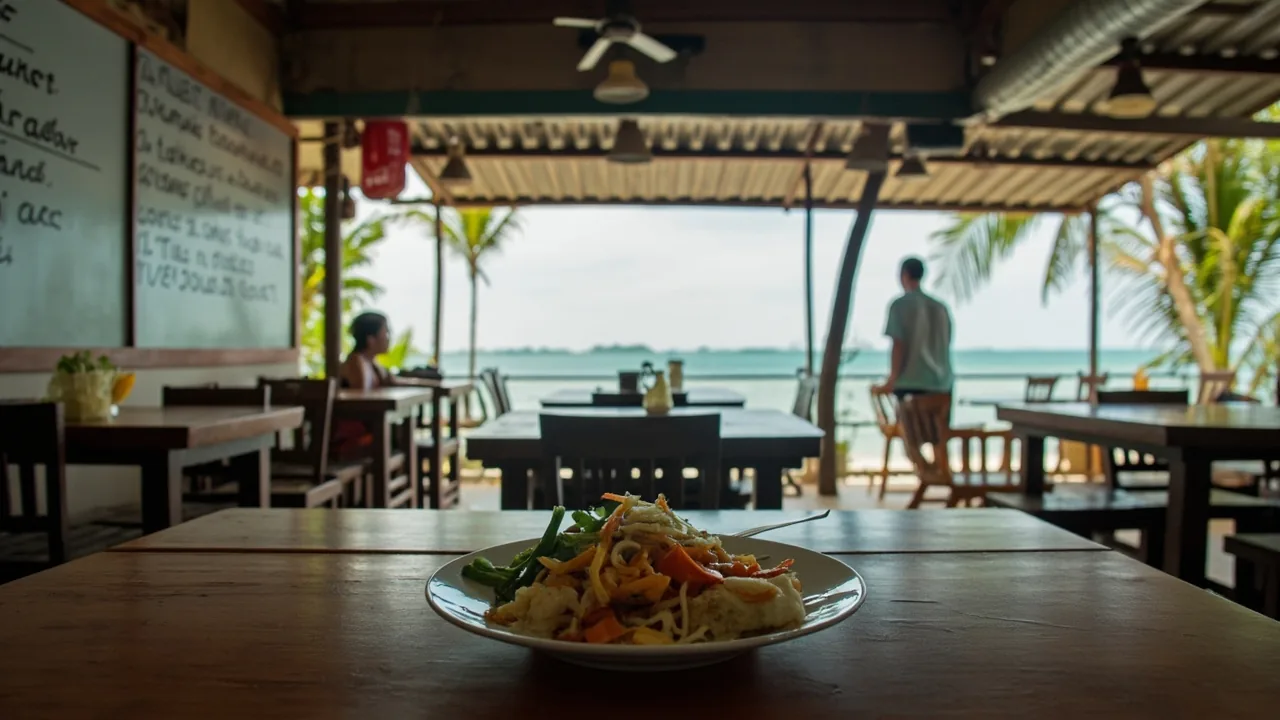
Where to Eat Vegetarian on Koh Yao Yai: A Quiet Island Food Guide
Koh Yao Yai is what Phuket was thirty years ago, before the beach clubs and the speedboats and the buffet lines. The roads are empty, the beaches are long, and the food scene is honest Thai home cooking. That last part is good news and bad news for plant-based eaters. Good: the local spots cook fresh, from scratch, and most are willing to adjust. Bad: there is no fully-veg café on the island, no Jay-marked stalls, and almost no menu item is plant-based by default. If you arrive without a plan, you’ll eat fried rice every meal. For related planning, see our guide on Sea Backpacking Hub.
This guide fixes that. Here is how vegetarians, vegans, and Jains eat well on Koh Yao Yai, what to order, what to skip, and where to look when the island runs out of options (answer: the smaller sister island, Koh Yao Noi, has better plant-based choices).
Subodh’s Pro Tip: Koh Yao Yai’s small kitchen teams make “Jay” (เจ) ordering harder than in Bangkok or Chiang Mai. Stock phrase to memorize: “Gin Jay, mai sai nam pla, mai sai khai, mai sai krueang” (I eat vegan, no fish sauce, no egg, no MSG). On Koh Yao Yai specifically, also add “mai sai nam som” (no shrimp paste) because the local southern-Thai style leans on it.
Quick Answers
| What | Answer | Price (INR) |
|---|---|---|
| Is there a fully vegetarian restaurant on Koh Yao Yai? | No, but most local spots adjust dishes if you say “Jay” | ~₹900 (~$9.34) |
| Average price of a plant-based Thai meal at a local restaurant | ₹343-₹515 (~120-180 THB or ~$3.56-$5.34) | ~₹344 (~$3.57) |
| Cheapest safe vegan meal on the island | Pad Pak Ruam (mixed veg stir-fry), specify no oyster sauce | ₹229 (~80 THB or ~$2.37) |
| Best island nearby for plant-based variety | Koh Yao Noi (15-min boat), more vegan options | ₹172 (~60 THB or ~$1.78) |
| Should you bring snacks from Phuket? | Yes, for the first day if arriving late | ~₹600 |
Exchange rate at time of writing: 1 THB = ₹2.87. (₹2,869 per 1,000 THB.) Budgets below use this rate.
The Local Culinary Landscape
Southern Thai food, the style of the Andaman coast, runs on four pillars: fish sauce (nam pla), shrimp paste (kapi or nam som), palm sugar, and lime. The first two are non-negotiable in most recipes, and they’re invisible in a finished plate. A pad pak ruam (mixed veg stir-fry) might taste clean and look green, but it’s almost always finished with a tablespoon of oyster sauce and a splash of nam pla. Same with tom yum, tom kha, and most curries. Local cooks here don’t think of these as “meat” because they’re seasoning, not protein.
Vegans and Jains should also watch for egg noodles in noodle dishes (the yellow strands often carry egg), lard brushed onto grill grills for satay, and oyster sauce as the standard “vegetable seasoning.” Even tofu can be fried in the same oil as pork or fish, so ask. Locals on Koh Yao Yai are friendly and accommodating. Muslim-Thai families run many of the smaller restaurants, which means halal practices are common, so you can ask for that angle as a route to fully clean prep.
Vegetarianism as a concept exists in Thailand, but it usually means Buddhist “Jay” eating during festivals (the yellow flag tradition), not everyday lifestyle. Some Thais treat “vegetarian” as “no red meat” and assume chicken, fish, or seafood is fine. Be specific. Always.
Safety Alert: Hidden shrimp paste (kapi) is the most common contaminant on Koh Yao Yai. It’s pounded into som tam (papaya salad) and most stir-fries. If you’re strict vegan, som tam is a high-risk dish on this island. Order it, but specifically say “mai sai kapi, mai sai nam pla” and watch the prep.
Key Phrases in Local Script
| English Phrase | What it Means | Local Script | Pronunciation |
|---|---|---|---|
| I am vegetarian (vegan Thai style) | Tells the cook to make it Jay-style | เจ | Jay |
| I eat vegan, no animal products | Triggers the strict Jay prep | กินเจ | Gin Jay |
| No fish sauce | Critical for any stir-fry | ไม่ใส่น้ำปลา | Mai sai nam pla |
| No shrimp paste | Critical for som tam and curries | ไม่ใส่กะปิ | Mai sai kapi |
| No oyster sauce | Critical for veg stir-fries | ไม่ใส่น้ำมันหอย | Mai sai nam man hoi |
| No egg | Critical for pad thai and fried rice | ไม่ใส่ไข่ | Mai sai khai |
| No meat or seafood | General safety phrase | ไม่เอาเนื้อ ไม่เอาอาหารทะเล | Mai ao nuea, mai ao ahan ta-le |
| No onion, no garlic | For Jains | ไม่ใส่หัวหอม ไม่ใส่กระเทียม | Mai sai hua hom, mai sai kratiam |
| Spicy is fine, but mild please | Adjusts chili level | เผ็ดน้อย | Phet noi |
| Thank you | Standard polite close | ขอบคุณ | Khob khun |
A 30-second phrase card with these on your phone is worth more than any guidebook. Show the Thai script to staff, not the romanization. Thai cooks read their own script faster than they parse English.
Safe Local Street Food Dishes
Koh Yao Yai doesn’t have a famous street food district. Most eating happens at small family restaurants, beach shacks, and the night market at the main pier (Tha Khao). These dishes work for plant-based eaters if you order with the right phrases.
Pad Pak Ruam (ผัดผักรวม). Mixed vegetable stir-fry with morning glory, cabbage, broccoli, and carrot. The default seasoning is oyster sauce and fish sauce. Order it as “Pad Pak Ruam Jay” with “mai sai nam man hoi, mai sai nam pla.” Expect a glossy, salty, slightly sweet result. Around ₹229-₹343 (~80-120 THB or ~$2.37-$3.56) at most local spots. This is your safest daily dish.
Pad Kana Makhua (ผัดคะน้ามะเขือ). Stir-fried Chinese broccoli with garlic and soy. A short ingredient list makes it easier to vet. Order “mai sai khai, mai sai nam pla.” Around ₹200-₹286 (~70-100 THB or ~$2.08-$2.97). Common across Koh Yao Yai’s local restaurants.
Tom Yam Het (ต้มยำเห็ด). Mushroom tom yum, the vegan cousin of the classic shrimp soup. The broth still uses nam pla and shrimp paste by default. Ask for “Tom Yam Het Jay” with “mai sai nam pla, mai sai kapi.” Expect a clear, sour-spicy broth with straw mushrooms. Around ₹286-₹429 (~100-150 THB or ~$2.97-$4.45).
Pad Thai Jay (ผัดไทยเจ). The famous pad thai, made without egg and without dried shrimp. Order it specifically as “Pad Thai Jay.” Most Koh Yao Yai kitchens can make it. Add tofu (เต้าหู้, “tao hu”) for protein. Around ₹286-₹400 (~100-140 THB or ~$2.97-$4.15).
Khao Pad Jay (ข้าวผัดเจ). Vegan fried rice, the reliable backup when nothing else works. Specify “mai sai khai, mai sai nam pla, sai tao hu” (no egg, no fish sauce, add tofu). Around ₹229-₹286 (~80-100 THB or ~$2.37-$2.97). Sold almost everywhere on the island.
Mango Sticky Rice (ข้าวเหนียวมะม่วง). Dessert that’s plant-based. Coconut milk, sticky rice, fresh mango. Around ₹172-₹286 (~60-100 THB or ~$1.78-$2.97). One of the few dishes you can order safely without modifications. See mango sticky rice spots in Phuket for reference, since the dish uses the same recipe across the Andaman coast.
Subodh’s Pro Tip: Don’t order “vegetable curry” or “vegetable soup” by default on Koh Yao Yai. Both usually start with a chicken or pork broth base. If you want curry, order “Gaeng Jay” (Thai word for curry, made Jay-style, no meat) and confirm the broth.
Recommended Vegetarian-Friendly Restaurants
Koh Yao Yai does not have a dedicated vegetarian or vegan restaurant. What it has is a handful of family kitchens and one or two resort restaurants that understand plant-based prep and will adjust dishes. The shortlist below mixes the best-known spots on the island with the most reliable Jay options.
Mama Ann. A family-run Thai kitchen in the central part of the island, one of the highest-rated local spots at 4.9. Mama Ann cooks southern Thai home food. She understands “Jay” requests and her stir-fries can be made without fish sauce and oyster sauce. Order the pad kana makhua (Chinese broccoli stir-fry) or pad pak ruam with the modifications above. Around ₹229-₹343 (~80-120 THB or ~$2.37-$3.56) per dish.
Pure Vegan Heaven. Despite the name and 4.8 rating, this isn’t on Koh Yao Yai proper. It’s a Thai plant-based spot that appears on several Andaman-area food searches and is worth knowing about if you take a day trip to nearby Koh Yao Noi or Phuket. Mention it as a same-region option, not a Koh Yao Yai stop.
Food Lab. Another Andaman-area name with a 4.8 rating, “new” plant-based options. Same caveat as Pure Vegan Heaven: this is a regional listing, not a Koh Yao Yai address. Useful context if you’re expanding your search to Koh Yao Noi.
The beach shacks along Loh Paret and Tha Khao Beach. Not formal restaurants, but many will do a “khao pad Jay” or vegetable stir-fry if you explain. Cash only. ₹229-₹343 (~80-120 THB or ~$2.37-$3.56) per dish. Skip the seafood shacks unless you confirm the kitchen can do a clean veg plate.
Reality Check: Koh Yao Yai has about 15-20 sit-down eating places that show up on Google Maps. Maybe three of them are consistently Jay-friendly. Plan to repeat meals rather than expect variety.
For Indian food specifically, the only Indian restaurants on Koh Yao Yai are the kitchens attached to the bigger resorts (Santhiya, Anantara, Six Senses). They’re not walk-in spots, and you usually need to be a guest. If you’re craving dal-chawal, your best move is to catch the 15-minute boat to Koh Yao Noi or the 40-minute ferry to Phuket.
Subodh’s Pro Tip: If you’re arriving from Phuket, stop at a 7-Eleven or a Tesco Lotus in Phuket Town and pick up snacks: nuts, dried fruit, instant noodle cups (Tom Yum flavour is veg but check the back for “shrimp extract”, surprisingly common), plant-based milk cartons if you take chai. Koh Yao Yai has limited convenience stores.
Common Food Mistakes Indians Make
Mistake 1: Assuming “vegetable” means “vegetarian-safe”
What people do wrong: Order “vegetable stir-fry” or “mixed vegetables” off the menu and assume it’s safe.
What happens: The dish is seasoned with oyster sauce (made from oysters), finished with a splash of nam pla (fish sauce), and often cooked in a wok that just left pork or chicken.
How to avoid it: Order “Pad Pak Ruam Jay” with the explicit exclusions. Better, ask “Gin Jay” and let the cook walk you through what they can make.
Mistake 2: Trusting “no meat” without specifying sauce
What people do wrong: Say “no meat” and stop there.
What happens: The cook still adds fish sauce, shrimp paste, and oyster sauce. They don’t think of these as meat. The dish arrives looking fine but isn’t vegetarian.
How to avoid it: Always include “mai sai nam pla, mai sai kapi, mai sai nam man hoi” in your order.
Mistake 3: Eating som tam without checking
What people do wrong: Order green papaya salad thinking it’s a safe veg dish.
What happens: Traditional som tam is pounded with a generous spoonful of kapi (shrimp paste) and dried shrimp. It tastes incredible and isn’t vegetarian.
How to avoid it: Order “Som Tam Jay” specifically, with “mai sai kapi, mai sai kung.” Most Koh Yao Yai kitchens can do it. Cost is similar to the standard version, around ₹172-₹286 (~60-100 THB or ~$1.78-$2.97).
Mistake 4: Skipping the language barrier
What people do wrong: Rely on English menus or English-speaking staff.
What happens: English is limited on Koh Yao Yai. Many places have no menu at all. You point at what the next table is having or guess.
How to avoid it: Have the Thai phrases above ready on your phone. Show the script. Carry a small translator app screenshot for backup.
Mistake 5: Not bringing backup food
What people do wrong: Assume the island will have enough variety for a week.
What happens: The first two days are fine. By day three, you’re tired of pad pak and fried rice, and you start craving comfort food.
How to avoid it: Stock up on snacks from Phuket: roasted nuts, dried mango, plant-based instant noodles, protein bars. Pack a few Indian snack packets if you have space (the Bombay mixture, roasted chana, khakra all travel well).
Food Safety & Hygiene
Koh Yao Yai’s food is generally safe, but the island runs on small kitchens, not industrial hygiene. A few habits keep your stomach clean.
Eat where locals eat. Busy spots on Koh Yao Yai, the pier market, the family restaurants near Tha Khao village, turn over ingredients fast. If five locals are eating there, the food is fresh.
Avoid pre-cut fruit at room temperature. Sticky rice mango is safe because the mango is cut to order. Pre-cut watermelon sitting on ice for hours is a common cause of traveller’s stomach issues. Order fruit sliced fresh.
Drink bottled or filtered water only. Tap water on Koh Yao Yai isn’t potable. Most restaurants serve bottled water. Refill your bottle at your hotel or ask for “nam plao” (bottled water) at restaurants.
Watch the ice. Most established restaurants use commercial ice that’s safe. Beach shacks sometimes use small block ice from unclear sources. If you’re being careful, ask “nam keng thao rai” (where’s the ice from) or stick to bottled drinks.
Be cautious with leafy greens. Local morning glory and Chinese broccoli are usually washed in treated water. But raw salads and herb garnishes are riskier than cooked veg. Skip the lettuce wraps and go for cooked dishes.
Wash your hands or use sanitizer before eating. Easier than tracking every kitchen’s hygiene.
The standard traveller’s stomach triggers are the same here as anywhere in Southeast Asia: contaminated water, raw vegetables washed in tap water, undercooked seafood, unwashed fruit. Most Koh Yao Yai restaurants will be fine if you follow the basic rules.
Getting Connected
A working SIM is useful on Koh Yao Yai for Google Maps (the island’s roads aren’t well-signposted), the Thai-English translator when ordering food, and Grab/Bolt for the occasional motorbike taxi. The local AIS and TrueMove tourist SIMs both work well on the island.
For most short stays (3-5 days), a ₹855 (~299 THB or ~$8.87) AIS tourist SIM with 15 GB lasts the trip. Buy it at the Phuket airport before taking the ferry, since Koh Yao Yai has no proper SIM shop.
If you’d rather skip the airport counter and have data working the moment you land in Phuket, Get Nomad eSIM covers Thailand with 1-5 GB plans starting around ₹482 (~5 USD), and you activate it from your phone before boarding the plane.
What to Eat on Nearby Koh Yao Noi (When Variety Runs Out)
If you’re staying a week or more, you’ll get tired of pad pak ruam. The smaller sister island, Koh Yao Noi, has more plant-based options and is a 15-minute longtail boat ride from Tha Khao pier. The boat leaves when full and costs around ₹172-₹286 (~60-100 THB or ~$1.78-$2.97) per person.
Koh Yao Noi has more restaurants overall, several with vegetarian or vegan options, and a small expat community that’s pushed the food scene slightly forward. See the full breakdown: Vegetarian and vegan food on Koh Yao Noi.
If you’re willing to take the ferry to Phuket for a day trip, the variety jumps another order of magnitude. The same goes for ferries to Krabi, which is also an option from Koh Yao Yai’s east coast.
Subodh’s Pro Tip: A day on Koh Yao Noi for food, then back to Koh Yao Yai for the quiet beaches, is a better split than trying to force variety on a single small island. Most travellers end up doing this anyway.
Daily Vegetarian Budget on Koh Yao Yai
A plant-based traveller can eat well on Koh Yao Yai for around ₹715-₹1,144 (~250-400 THB or ~$7.42-$11.87) per day if you stick to local spots and order smart.
| Item | Cost (THB) | Cost (INR) |
|---|---|---|
| Breakfast: Khao Pad Jay (vegan fried rice) at a beach shack | 80-100 | ~₹230-₹287 (~$2.39-$2.98) |
| Lunch: Pad Pak Ruam Jay (veg stir-fry) at Mama Ann | 100-120 | ~₹287-₹344 (~$2.98-$3.57) |
| Snack: Fresh fruit (mango, pineapple, watermelon) | 30-50 | ~₹86-₹144 (~$0.89-$1.49) |
| Coffee or tea (Thai-style, sweetened) | 30-50 | ~₹86-₹144 (~$0.89-$1.49) |
| Dinner: Tom Yam Het Jay (mushroom soup) or curry at a resort | 150-250 | ~₹430-₹717 (~$4.46-$7.44) |
| Daily total | ~390-570 | ~₹1,120-₹1,635 (~$11.63-$16.97) |
Resort restaurants charge more (₹1,144-₹2,001 (~400-700 THB or ~$11.87-$20.77) for a main), but most locals eat at family kitchens. Plan your splurges.
FAQ
Is there a fully vegan restaurant on Koh Yao Yai?
No. The island has no 100% plant-based restaurant. You can eat vegan at most local spots if you use the Jay phrases above, but variety is limited compared to bigger Thai destinations. For more on Thai veg dining generally, see Vegetarian food in Thailand: what to eat, where to eat, how to ask.
Can I get Jain food (no onion, no garlic) on Koh Yao Yai?
It’s hard. Most Thai dishes use garlic as a base, and asking for “no onion, no garlic” is more restrictive than most local cooks are used to. Your best bet is simple steamed dishes, plain rice with a side of stir-fried morning glory (no garlic), and tropical fruit. For a broader Thai-vegetarian overview that touches on Jain considerations, see Thailand vegan food tour.
Is fish sauce used in everything on Koh Yao Yai?
Almost. It’s the default seasoning in stir-fries, fried rice, soups, and curries. The few exceptions are dessert (mango sticky rice), fresh fruit, and some steamed veg dishes. Always specify “mai sai nam pla” when ordering.
Should I cook at my hotel on Koh Yao Yai?
Most budget stays don’t have shared kitchens. The few resorts with kitchens won’t appreciate outside cooking. Skip the self-catering plan and use the local restaurants. For the daily cost picture across Thailand, see Thailand food cost per day in Indian rupees.
Is the food on Koh Yao Noi better for vegetarians?
Yes. Koh Yao Noi has more restaurants, more expat influence, and at least one fully plant-based café. It’s a 15-minute boat ride from Koh Yao Yai and worth a day trip. See Vegetarian and vegan food on Koh Yao Noi for details.
What about Indian food on Koh Yao Yai?
There’s no walk-in Indian restaurant on the island. A few resorts (Santhiya, Anantara) serve Indian dishes to guests, but you typically need to be staying there. Your fallback is Phuket for a proper Indian meal or to stock up on snacks before the ferry.
Will the phrase “I’m vegetarian” work in English on Koh Yao Yai?
Sometimes. Many local spots, especially the family kitchens, have limited English. Carrying the Thai phrases on your phone and showing the script is faster and more reliable than speaking.
Subodh’s Take
Koh Yao Yai isn’t a vegetarian destination, and pretending otherwise sets you up for a week of fried rice. What it is, is a quiet, beautiful island with friendly cooks who’ll make you something good if you show them the right Thai phrases. Pad pak ruam with the right exclusions, mushroom tom yum, mango sticky rice for dessert: that’s a fine three days. For longer stays, hop to Koh Yao Noi for the variety and come back to Yai for the silence. Most Indian travellers who do this end up loving the island more than they expected, because nothing forces you to slow down like a place with seven restaurants and no menu in English.
Before you travel, check your government’s official advisory for Thailand (MEA: mea.gov.in) and the Thai government’s own advisory site for the current safety picture.
