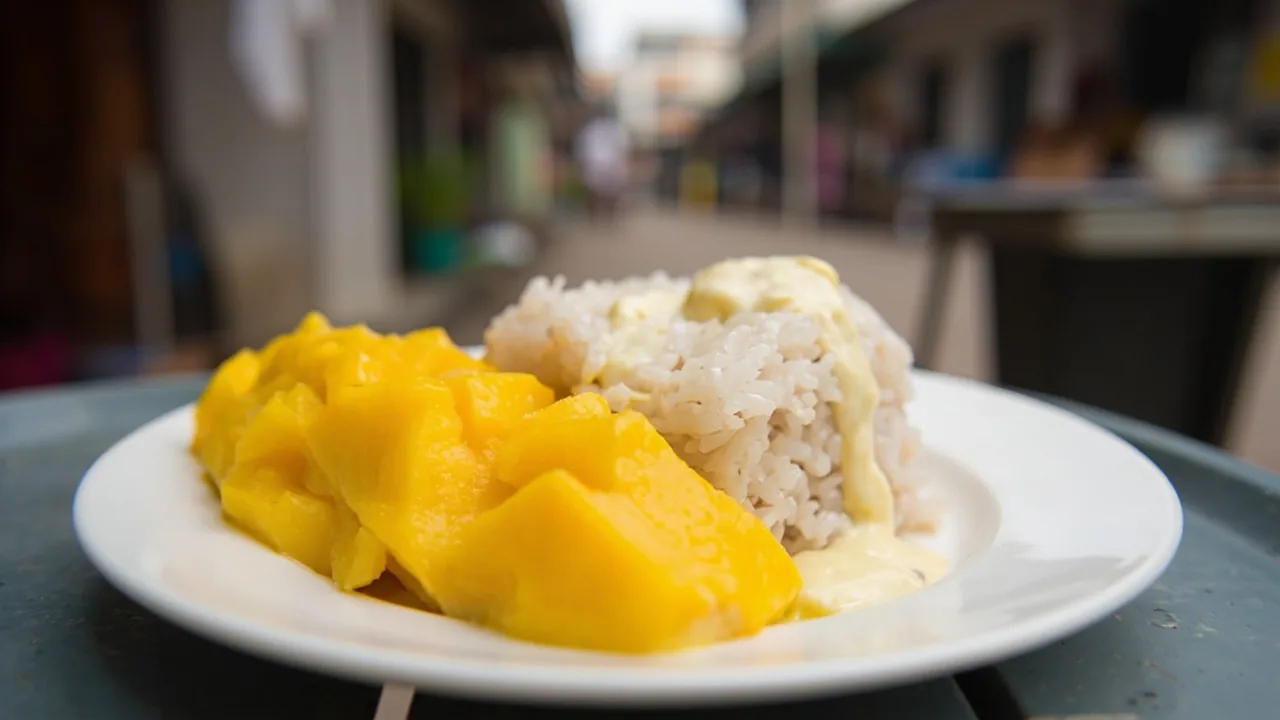
Mango Sticky Rice in Phuket: Where to Eat & What to Skip (2026)
Mango sticky rice is one of the few desserts in Thailand a strict vegetarian can eat without thinking. No gelatin, no egg, no animal broth. Just coconut milk, sticky rice, sugar, salt, and a ripe mango. Phuket does it well, and the price swings are wild: I’ve paid ₹143 (~50 THB or ~$1.48) at a Phuket Old Town stall and ₹515 (~180 THB or ~$5.34) at a Patong beachside place for the same dish. Both were fine, but they were not the same value. Here is where the good ones are, when the mangoes are sweet, and which beachside versions you should skip. For related planning, see our guides on Sea Backpacking Hub and Chiang Dao Vegetarian Food Guide Best Restaurants for Plant Based Travelers.
Quick Answers
| What | Answer | Price (INR) |
|---|---|---|
| Average mango sticky rice price in Phuket | ₹143-₹229 (~50-80 THB or ~$1.48-$2.37) at markets and Old Town stalls, ₹343-₹515 (~120-180 THB or ~$3.56-$5.34) at beachside restaurants | ₹143-₹515 (~50-180 THB or ~$1.48-$5.34) |
| Best mango months in Phuket | March to June (peak), secondary in October-November after rains | Season: Mar-Jun |
| Mango sticky rice at Phuket Airport | Sold at most cafe counters in the international terminal, ₹343-₹515 (~120-180 THB or ~$3.56-$5.34) a portion | ₹343-₹515 (~120-180 THB or ~$3.56-$5.34) |
| Is mango sticky rice vegetarian/vegan? | Yes, traditionally vegan (coconut milk, rice, sugar, salt, mango). Just confirm no egg or condensed milk. | Vegan-friendly |
| Best area for cheap mango sticky rice | Phuket Old Town (Thalang Road and Dibuk Road area) and local canteens outside the beach zones | ₹143 (~50 THB or ~$1.48) |
Phuket is one of the easier places in Thailand to eat vegetarian as an Indian traveller. Coconut-milk desserts like mango sticky rice are plant-based and don’t need the “Jay” (เจ) translation step that savoury food does. For an overview of how to navigate Thai food as a vegetarian, see our Thailand vegetarian food guide. You may also find Kanchanaburi Vegetarian Food Guide Best Restaurants What to Eat useful for this trip.
What Mango Sticky Rice Is
This is a short dish. Sticky rice (also called glutinous rice or sweet rice, despite not containing gluten) is soaked for at least an hour, steamed until tender, then mixed while hot with a coconut milk sauce made from coconut cream, palm sugar, and a pinch of salt. The rice is plated warm, sliced ripe mango goes on the side, and the whole thing is topped with a drizzle of thickened coconut cream and sometimes toasted sesame seeds or yellow mung beans.
The few common variants you will see:
- Khao Niao Mamuang (ข้าวเหนียวมะม่วง): the standard version, yellow from pandan or a touch of turmeric
- With coconut ice cream: a touristy add-on, usually +₹86-₹143 (~30-50 THB or ~$0.89-$1.48)
- With condensed milk drizzle: sweeter, more caloric, common at street stalls
- Black sticky rice version: not mango sticky rice, but a related dessert worth trying once
The good ones balance three things: the rice is chewy but not gummy, the coconut sauce is salty-sweet (not just sweet), and the mango is ripe. A sour or under-ripe mango is the fastest way to ruin the dish, and it’s the main reason a beachside version can taste worse than a ₹143 (~50 THB or ~$1.48) stall version, even when the recipe is identical.
When Mango Sticky Rice Is at Its Best
The mangoes make the dish. Phuket mango season runs roughly March through June, with a secondary, smaller window in October and November after the monsoon rains. If you want the sweetest, most fragrant Namdokmai mangoes (the local variety), plan your Phuket trip for April or May.
Outside those months, mangoes are still sold year-round but they lean sour. Cheaper stalls sometimes use under-ripe fruit to mask a thin coconut sauce, so during off-season you want to either:
- Eat at places with high turnover where mangoes don’t sit
- Order a version with coconut ice cream (the cold sweetness compensates for sour fruit)
- Skip mango sticky rice and try black sticky rice instead, which is more forgiving year-round
Subodh’s Pro Tip: If the mango at the front of the stall looks pale green or has visible white latex beads on the skin, walk past. The fruit was picked early and will not ripen properly no matter how long the vendor has had it. The good mangoes are yellow-orange with a slight give when you press the stem end.
Where to Eat Mango Sticky Rice in Phuket Old Town
Old Town is the cheapest, most consistent part of Phuket for this dessert. Vendors here buy from local markets daily, and the customer base is a mix of Thai families and tourists who know food, so quality stays high.
Lao Pa Sat Phuket Town is the most reliable starting point. This traditional market in the Old Town area has multiple dessert stalls competing on price, and mango sticky rice is one of their hero items. Expect ₹143 (~50 THB or ~$1.48) a portion during peak season, sometimes ₹172-₹200 (~60-70 THB or ~$1.78-$2.08) off-season. The mangoes here are usually Namdokmai, which is the variety you want. It’s a sit-and-point situation, no English menu, so just walk up, point at the rice, and they’ll plate it.
TAPAS Cafe & Restaurant in Phuket Old Town and Cafe Delight Phuket Old Town both serve a more polished version if you want to sit down with air conditioning. Prices run ₹229-₹343 (~80-120 THB or ~$2.37-$3.56), presentation is better, and the mango portions are larger. They are tourist spots, but tourist-friendly does not mean bad here, the kitchen staff know the dish.
Local Canteen Phuket is the most underrated option in the Old Town area. It’s a true local canteen with affordable Thai dishes, but their mango sticky rice is famously generous, often ₹172-₹229 (~60-80 THB or ~$1.78-$2.37) for what other places charge ₹286 (~100 THB or ~$2.97) for. The vibe is canteen-style, plastic stools, fast turnover, zero pretence.
Foodee’s Phuket and Phuket Thailand (the restaurant, not the island) both have mango sticky rice on their dessert menu. Foodee’s leans international-Thai fusion and tends to plate it with a small scoop of coconut ice cream by default, which is a plus if it’s off-season.
Where to Eat Mango Sticky Rice Near the Beaches
This is where prices jump and quality often does not.
Patong, Kata, Karon, and Kamala beaches have endless restaurants with mango sticky rice on the menu, and the price ranges are brutal for what you get:
- Beach shack on Patong: ₹286-₹429 (~100-150 THB or ~$2.97-$4.45), often pre-made and sitting in a tray under a fan. Skip this version unless you can see them plate it fresh.
- Mid-range Thai restaurant on Patong Beach Road: ₹343-₹457 (~120-160 THB or ~$3.56-$4.75), comes with presentation, mango quality varies wildly
- Upscale beachfront hotel restaurant: ₹515-₹715 (~180-250 THB or ~$5.34-$7.42), plated nicely but the rice is often from a chafing dish and the mango is one slice instead of a generous portion
The honest truth: the beachside versions are not 3x better than Old Town. You’re paying for the sea view, and mango sticky rice does not improve with a sea view. The mango is the same mango.
If you are staying near a beach and want a beach-area option, Our Nomad Boutique & Cafe Phuket is one of the few cafes away from Old Town that makes it fresh to order. They lean Thai-Western and source locally. Price is ₹257-₹372 (~90-130 THB or ~$2.67-$3.86).
If you want the most picturesque version with a sunset, take a 15-minute grab or tuk-tuk ride from Patong into Old Town for dessert, eat it there, and come back. The whole detour is cheaper than the beachside markup.
Mango Sticky Rice at Phuket Airport
This is one of the most-Googled questions, so let’s be direct. Yes, you can buy mango sticky rice at Phuket Airport, and most cafe counters in the international terminal have it. Price: ₹343-₹515 (~120-180 THB or ~$3.56-$5.34) a portion, sometimes more if they add a premium coconut ice cream scoop.
Honest assessment:
- The convenience factor is real, you have a 3-hour flight, you want dessert, it’s there
- The mango quality is inconsistent, airport cafes get one delivery a day, whatever’s left at 8 PM is what you get
- It’s a better buy than a packaged Thai snack for the same price
- It’s not the best mango sticky rice you’ll have in Thailand
If you want a great airport version, stop at one of the local cafes in the town on your way to the airport rather than buying at the terminal. A ₹143-₹229 (~50-80 THB or ~$1.48-$2.37) Old Town portion eaten at a cafe beats a ₹429 (~150 THB or ~$4.45) airport portion eaten at a plastic chair every time.
Mango Sticky Rice at Indian Restaurants in Phuket
Strict vegetarians and Jains will be glad to know: mango sticky rice is one of the safest desserts in Thailand for your dietary rules. It is vegan, no gelatin, no egg, no honey, no animal-derived ingredients. Just confirm with the vendor that they are not using condensed milk (some stalls do, condensed milk is dairy and not vegan). The traditional version uses coconut milk and palm sugar only.
If you want a guaranteed Indian-friendly setting with mango sticky rice available as part of a broader menu, several Indian restaurants in Phuket serve it:
- Amritsr Restaurant Patong (the main one, near the beach): Punjabi dishes, aloo kulcha with chole is the must-try, mango sticky rice when in season
- Amritsr Restaurant Patong Beach Road and Amritsr Restaurant Kalim Beach: same brand, two locations, similar menus, mango sticky rice on the dessert list
- PAPAJI BANGKOK in Phuket: North Indian and Arabic cuisine on Patong Beach Road, biryani is the main draw, but they serve mango sticky rice
- Highway Curry at My Front Yard, Phuket: Indian and vegan-focused, their tawa sizzler is the signature
- Vrindavan - Indian Vegetarian Restaurant: strict vegetarian North Indian, upscale setting, mango sticky rice is on the dessert menu during peak season
These are not the cheapest places to eat mango sticky rice, but if you are already eating a meal there, the dessert is convenient, the kitchen understands vegetarian restrictions, and there’s no risk of hidden fish sauce or shrimp paste.
How Mango Sticky Rice Is Made (If You Want to Try at Home)
This is one of those Thai dishes Indian cooks can replicate well because the ingredients are easy to source on Amazon or at any Indian supermarket abroad.
You need:
- 1 cup Thai sticky rice (also sold as glutinous rice or sweet rice; do not substitute basmati)
- 1 cup thick coconut milk
- 1/2 cup coconut cream (the top layer of a can of full-fat coconut milk, or buy a separate can of coconut cream)
- 1/3 cup palm sugar (substitute jaggery, the flavour is close enough)
- 1/2 tsp salt
- 1 ripe Namdokmai or Alphonso mango
- Optional: 1 tbsp toasted white sesame seeds or 1 tbsp yellow mung beans (look for them at an Indian grocery)
Method:
- Soak the sticky rice in cold water for at least 1 hour, ideally 4 hours or overnight. The soaking is not optional, it is the difference between chewy and crunchy raw rice.
- Drain and steam the rice over boiling water for 25-30 minutes until tender. Use a bamboo steamer if you have one, a metal steamer works fine.
- While the rice steams, heat the coconut milk with palm sugar and salt in a small saucepan over medium heat. Stir until the sugar dissolves. Do not boil, just warm it through.
- When the rice is done, transfer it to a bowl and pour the warm sweetened coconut milk over it. Stir gently. Let it sit for 20-30 minutes so the rice absorbs the sauce.
- Heat the coconut cream separately in a small saucepan with a pinch of salt until it thickens slightly, this is your topping sauce.
- Plate the rice, fan-slice the mango on the side, drizzle with the coconut cream topping, sprinkle sesame seeds or mung beans.
The dish is served warm or at room temperature in Thailand, never hot and never cold. If you’re reheating leftovers, steam for 5 minutes, do not microwave, the rice goes gummy.
Common Mistakes Indians Make With Mango Sticky Rice
Buying it from beach vendors who pre-make trays at 10 AM: By evening the rice is dry, the coconut sauce has soaked in, and the mango has oxidized. A ₹143 (~50 THB or ~$1.48) Old Town portion at 6 PM beats a ₹429 (~150 THB or ~$4.45) Patong portion at 6 PM.
Paying 200+ THB for the “hotel version”: The hotel version is plated by someone who took it out of a chafing dish. It is the same dish as the ₹229 (~80 THB or ~$2.37) version down the road.
Eating it as a main: It is a dessert. It is calorie-dense (coconut milk + sugar + rice), and even a small portion will fill you up. Eat it after, not before, your Thai meal.
Assuming it has condensed milk: Most traditional versions do not, but some stalls do, especially the ones targeting tourists. If you are strict vegan or Jain, ask “no condensed milk?” or look at the rice, if it’s pale yellow and glossy, condensed milk is likely in there.
Skipping it in off-season: November-February mangoes are sour, but the dish still works if the coconut sauce is well-made. Don’t write off mango sticky rice entirely outside peak months, just expect a sour-er mango.
Daily Budget: How Mango Sticky Rice Fits Your Phuket Spend
For a sense of how the dessert fits into a full Phuket day, the relevant prices in Thai Baht (THB), with 1 THB = approximately ₹2.87 at time of writing (so 50 THB ≈ ₹143 (~$1.48), ₹286 (~100 THB or ~$2.97) ≈ ₹287 (~$2.98), ₹429 (~150 THB or ~$4.45) ≈ ₹430 (~$4.46)):
| Item | Price (THB) |
|---|---|
| Mango sticky rice at Old Town market | ₹143-₹229 (~50-80 THB or ~$1.48-$2.37) |
| Mango sticky rice at mid-range Old Town cafe | ₹229-₹343 (~80-120 THB or ~$2.37-$3.56) |
| Mango sticky rice at beachside restaurant | ₹343-₹515 (~120-180 THB or ~$3.56-$5.34) |
| Mango sticky rice at Phuket Airport | ₹343-₹515 (~120-180 THB or ~$3.56-$5.34) |
| Coconut ice cream add-on | ₹86-₹143 (~30-50 THB or ~$0.89-$1.48) |
| Whole Namdokmai mango from market | ₹172-₹286 (~60-100 THB or ~$1.78-$2.97) |
| Pad Thai (your main meal) | ₹172 (~60 THB or ~$1.78) |
| Bottle of water | ₹20 (~7 THB or ~$0.21) |
For a full Phuket day budget including meals, transport, and accommodation, see our Thailand daily cost breakdown.
Getting Connected in Phuket
You’ll want Google Maps and a translation app to navigate Old Town’s unmarked dessert stalls. Get a local SIM at the airport (AIS tourist SIM is the standard for most travellers) or use an eSIM before you fly.
Subodh’s Take
Mango sticky rice is the dessert where Phuket’s markup culture shows up the most clearly. The same dish that costs ₹143 (~50 THB or ~$1.48) in Old Town costs ₹515 (~180 THB or ~$5.34) on a Patong beach chair, and the Patong version is not better, sometimes it’s worse because the mango has been sitting. Eat it where locals eat, eat it when the mangoes are ripe (March to June, ideally April-May), and skip the hotel chafing-dish version. If you’re in Phuket outside peak mango months, don’t write the dish off entirely, just order it with coconut ice cream to compensate for the sourer fruit. And for the love of all that is holy, do not eat it at Phuket Airport for ₹429 (~150 THB or ~$4.45) when you could have had the same dish in Old Town three hours earlier for ₹143 (~50 THB or ~$1.48).
FAQ
Is mango sticky rice vegetarian and Jain-safe? Yes, the traditional recipe is coconut milk + sticky rice + palm sugar + salt + mango, no animal products. Confirm no condensed milk if you want it fully vegan. The rice is not a grain conflict for Jains, it’s rice. No onion, no garlic, no root vegetables involved.
When is peak mango season in Phuket? March through June is peak, with April-May as the sweet spot. A smaller secondary season runs October-November after the monsoon. Outside those months, mangoes are sold but they lean sour.
How much should I pay for mango sticky rice in Phuket? ₹143-₹229 (~50-80 THB or ~$1.48-$2.37) is the local price at markets and Old Town stalls. ₹229-₹343 (~80-120 THB or ~$2.37-$3.56) at mid-range cafes. ₹343-₹515 (~120-180 THB or ~$3.56-$5.34) at beachside restaurants. Anything above ₹572 (~200 THB or ~$5.94) is the hotel markup, not the dish’s actual value.
Can I get mango sticky rice at Phuket Airport? Yes, most cafe counters in the international terminal have it for ₹343-₹515 (~120-180 THB or ~$3.56-$5.34). The quality is inconsistent because the mangoes sit out all day. If you want a great airport version, eat it in Old Town before heading to the airport.
Which Phuket Old Town spot has the best mango sticky rice? Lao Pa Sat Phuket Town market is the most reliable starting point, multiple vendors, competitive pricing, fresh mangoes. For sit-down, Cafe Delight and TAPAS Cafe both plate it well. Local Canteen Phuket has the most generous portions for the price.
Can strict vegetarians eat mango sticky rice in Thailand without worry? Yes, this is one of the safest Thai desserts for strict vegetarians. It contains no fish sauce, no shrimp paste, no oyster sauce, no egg, no gelatin, no honey. The only ingredient to verify is condensed milk, which some tourist-targeted stalls use instead of coconut milk.
How is mango sticky rice made at home? Soak sticky rice 1+ hour, steam 25-30 min, mix with coconut milk warmed with palm sugar and salt, plate with sliced ripe mango, top with thickened coconut cream. Full recipe above. The hardest ingredient to source in India is Namdokmai mango, Alphonso works as a substitute though the flavour profile is different.
Ready for the Trip? Check These Bangkok & Old Town Food Tours
If you want a guided version of Phuket’s food scene (mango sticky rice included in most Old Town food tours), here are some options to browse:
