Where to Stay in Hoi An: Best Areas & Neighborhoods for Every Budget
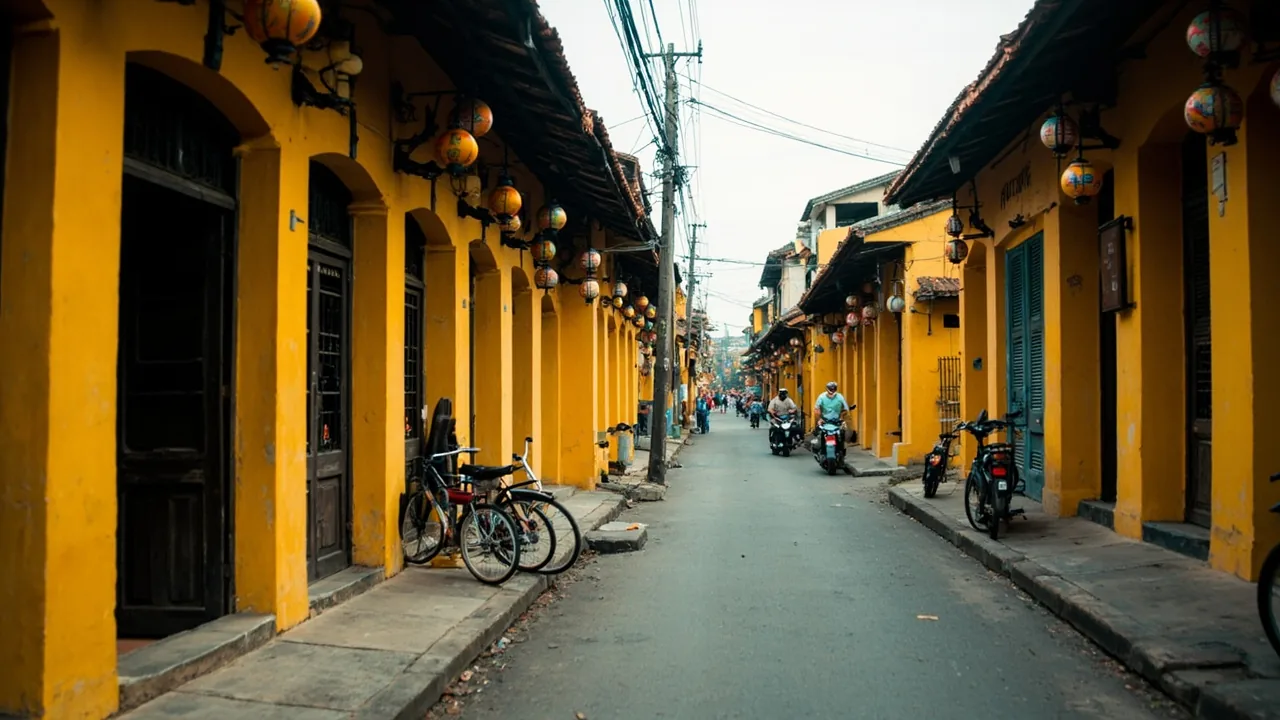
Hoi An is a 400-year-old trading port frozen in lantern-light and yellow plaster, and the whole point of staying here is to be inside that picture when the lanterns come on. Most travellers ask one wrong question first (“how far is my hostel from the beach?”) when the real question is whether to sleep inside the Old Town, across the bridge in An Hoi, or out in Cam Chau where the dorms are cheaper and the rice paddies start. The wrong answer costs you a ₹330 (~90,000 VND or ~$3.43) Grab each way, every night, and a lot of lost sleep when the lanterns light up at 7 pm and you’re still on the wrong side of the river. For related planning, see our guides on Sea Backpacking Hub and Hoi an.
I’ll break down the three real neighbourhoods backpackers stay in, give you specific hostels with current dorm prices, and flag the one time of year I’d skip Hoi An entirely. You may also find Ipoh on 1 500 a Day the Realistic Budget Breakdown for Backpackers useful for this trip.
Quick Answers
| What | Answer | Price (INR) |
|---|---|---|
| Best overall area | An Hoi (across the river, 5-min walk to Old Town) | ₹200 (~67,000 VND or ~$2.00) |
| Cheapest area | Cam Chau / rice-paddy belt | ₹160 (~53,000 VND or ~$1.60) |
| Closest to Old Town lanterns | Inside the Ancient Town (limited supply) | ₹430 (~143,000 VND or ~$4.50) |
| Best for party crowd | An Hoi / Phố Đống | ₹250 (~83,000 VND or ~$2.60) |
| Best for quiet | Cam Nam Island (south of Old Town) | ₹200 (~67,000 VND or ~$2.00) |
The Three Real Neighbourhoods (and Why Old Town is Mostly a Daytime Visit)
Most Hoi An guides pretend there are five or six “areas” to stay in. There aren’t. Backpackers end up in one of three, and the differences matter for your wallet and your sleep.
1. Inside the Ancient Town (the yellow-walled old quarter)
This is the UNESCO-protected core where every guidebook photo was taken. Sleeping inside it is a real option, but only for a handful of hostels and small guesthouses converted from old merchant houses. The upside: you step out of your dorm into the lantern-lit streets at 6:30 am before the day-trippers arrive from Da Nang, and again at 7 pm when they leave. The downside: rooms are small, walls are thin (the buildings are 200+ years old), and prices run 30 to 50 percent higher than the same standard across the river.
For one or two nights as a treat, it’s worth it. As your base for a week, you’ll feel the noise and the cramped plumbing.
2. An Hoi / Phố Đống (across the bridge)
This is where most of the hostels on the Banana Pancake Trail are, and for good reason. An Hoi is the strip on the west bank of the Thu Bon, connected to the Ancient Town by the painted pedestrian bridge you see in every photo. Walk time to the lantern-streets: five minutes, including the bridge. Walk time to the backpacker bars on Phố Đống: zero minutes, you’re already there.
This is where I’d book if it’s your first time in Hoi An and you want the full picture. You get Old Town access without the Old Town price, plus the night market on the riverfront and a dozen hostels within a 200-metre radius so you can compare rooms on the spot.
3. Cam Chau / rice-paddy belt (1.5 km west)
This is the cheap-and-quiet zone. Hostels here sit between rice paddies and tailoring shops, with the Old Town a 15 to 20-minute walk or a short Grab away. The trade: a dorm bed at ₹477-₹661 (~130,000-180,000 VND or ~$4.96-$6.86) versus ₹661-₹918 (~180,000-250,000 VND or ~$6.86-$9.53) in An Hoi, plus actual quiet at night. The catch: you’ll need transport or a bicycle for everything, and the closest beer is a five-minute ride.
Pick this if you’re staying four or more nights and want somewhere to sleep, or if you’re the type who writes in cafés in the morning instead of stumbling out for the sunrise.
Honourable mentions
Cam Nam Island (south of Ancient Town, across the smaller bridge): ten hostels, much quieter than An Hoi, 10-minute walk to Old Town. Best for couples and slow travellers.
Cua Dai / beach strip (4 km east): beachfront resorts, almost no hostels. Skip unless you’ve got a $40/night beach budget.
Da Nang side: don’t. It’s a different city 25 km north. If you’re reading a Hoi An accommodation guide, you want to be in Hoi An.
Where to Stay
| Hostel / Guesthouse | Cost/night | Vibe | Book |
|---|---|---|---|
| Lynk Stay | ₹734 (~200,000 VND or ~$7.62) | Modern dorms, rooftop, social common room | Check prices |
| SnapStay Hoi An | ₹808 (~220,000 VND or ~$8.39) | Clean, quiet, central An Hoi, 4-bed dorms | Check prices |
| Cheerful Hoi An Hostel | ₹918 (~250,000 VND or ~$9.53) | Lively bar downstairs, walking distance to everything | Check prices |
| Backhome Hostel and Bar | ₹734 (~200,000 VND or ~$7.62) | Party-leaning, late-night crowd, free pub crawl | Check prices |
| The Cuckoo’s Nest Hostel and Bar | ₹845 (~230,000 VND or ~$8.77) | Mid-sized social hostel, mixed dorms and privates | Check prices |
| Gito Hostel | ₹661 (~180,000 VND or ~$6.86) | Smaller, calmer, near Cam Chau rice fields | Check prices |
| Subodh’s pick: Lynk Stay for first-timers who want one foot in the Old Town and one in the bar scene. Gito Hostel if you’re staying longer than four nights and want somewhere the staff know your name. Both are an easy walk to the lantern-lit bridge. |
Subodh’s Pro Tip: Don’t book a “Hoi An” hostel without checking the actual map pin. Anything labelled “Hoi An Beach Resort” or “Hoi An Riverside Resort” is in Cua Dai, 4 km east of the Ancient Town, and you’ll burn ₹220 (~60,000 VND or ~$2.29) on a Grab every time you want dinner.
How to Get Here (From Da Nang, the Most Common Entry)
Almost every backpacker reaches Hoi An via Da Nang, which is where the international airport is. Da Nang sits 25 km north and the road down is flat, fast, and cheap.
| Mode | Duration | Cost | Book |
|---|---|---|---|
| Public bus #1 | 50 minutes | ₹110 (~30,000 VND or ~$1.14) | Buy at Da Nang bus station |
| Shared minivan (hotel pickup) | 45 minutes | ₹441 (~120,000 VND or ~$4.57) | Book on 12go |
| Private Grab car | 40 minutes | ₹1,028 (~280,000 VND or ~$10.67) | Grab app |
| Taxi from DAD airport | 45 minutes | ₹1,395 (~380,000 VND or ~$14.48) | Avoid the airport taxi desk, walk 200m outside and Grab |
The bus is genuinely fine. It runs every 30 minutes, costs ₹110 (~30,000 VND or ~$1.14), drops you on the edge of the Old Town, and the Vietnamese word for “Hoi An” sounds similar enough that the driver will point you off at the right stop. If you’re carrying a big backpack after a flight, spring for the minivan pickup.
From Hanoi or Ho Chi Minh City, fly to Da Nang first. Da Lat and Mui Ne also have sleeper bus services listed on 12go, but the 16+ hour ride is a hard sell when flights are ₹3,372 (~35 USD) to ₹5,780 (~60 USD).
What to Eat
Hoi An has four signature dishes, and you should eat all of them at least once. Three are pork-based (Cao Lầu, bánh mì Hội An, white-rose dumplings), but the veg-friendly version is just as good here as anywhere in Vietnam, and the city has some of the best Indian-veggie fallbacks on the coast.
Cao Lầu: the noodle dish Hoi An claims as its own. Thick yellow noodles, sliced pork, greens, a few croutons of toasted rice crackers, all swimming in a broth that uses water from the local Bá Lễ well. Nhan’s kitchen near the Old Town does a solid pork version at ₹184 (~50,000 VND or ~$1.91), and the vegetarian version (no pork, mushroom broth) is the same price. This is the dish I’d eat twice.
White-rose dumplings (bánh bao vạc): translucent shrimp dumplings shaped to look like rose petals, only made in Hoi An. Grandma Kitchen - Hoi An serves them at ₹294 (~80,000 VND or ~$3.05) for a plate of eight, and they melt on the tongue.
Bánh mì: the Vietnamese baguette sandwich, and Hoi An has a dozen late-night stalls claiming to be the best. A Little Kitchen Restaurant - Bếp Nhỏ does a stuffed vegetarian version with pickled carrot, egg, and tofu at ₹92 (~25,000 VND or ~$0.95). That’s the same price as a 7-Eleven sandwich, so don’t eat a 7-Eleven sandwich.
Cơm gà (chicken rice): Hoi An’s answer to biryani, less spiced, more herb-driven. The Soul Restaurant does a ₹257 (~70,000 VND or ~$2.67) plate that’s plenty for two small appetites.
Mì Quảng: turmeric-tinted noodles, fewer than Cao Lầu, eaten at lunch. Nhan’s kitchen has it for ₹165 (~45,000 VND or ~$1.72).
Vegetarian / Indian fallback: MẸT Hội An runs two locations (one inside the Old Town, one on Phố Đống) and is the closest thing in Hoi An to a proper veg thali. Their vegetarian menu runs the full Cao Lầu, white-rose, and curried-rice lineup for ₹294-₹441 (~80,000-120,000 VND or ~$3.05-$4.57) a dish. If you’ve been eating Cao Lầu for three days and want a clean break, this is where you go. Le Petit Bistro Hội An also does solid French-veggie options if you’re a brown-bread-and-cheese vegetarian rather than a spice-and-dal vegetarian.
What to Do
Most of what people do in Hoi An is walk around the Ancient Town at golden hour with a ₹55 (~15,000 VND or ~$0.57) beer. That’s free, it’s the best activity, and you should budget two evenings for it. Beyond that:
Walk the Pagoda Bridge at sunrise. It’s the 17th-century Japanese covered bridge in the middle of every Hoi An photo, and at 6 am there are no tourists on it. See Pagoda Bridge tours on GetYourGuide. Entry to the Ancient Town is 120,000 VND ($4.65), which gets you into five heritage sites plus the bridge.
Release a lantern on the Thu Bon river. Every night, small boats at the Bến thuyền thả hoa đăng trên sông Hoài dock sell floating lanterns at ₹37-₹73 (~10,000-20,000 VND or ~$0.38-$0.76). Push it out, make a wish, take the photo. Check Bến thuyền thả hoa đăng trên sông Hoài availability. Travellers report it’s touristy but still beautiful; budget 30 minutes and skip the “boat tour” upsell.
Cycle the rice paddies at sunset. Rent a bike from any hostel for ₹110-₹184 (~30,000-50,000 VND or ~$1.14-$1.91) a day and ride west into the Cam Chau fields. The Hoi An Rice Fields-Cycling&Sunset route is a guided alternative at ₹1,285 (~350,000 VND or ~$13.34). See Hoi An Rice Fields-Cycling&Sunset tours on GetYourGuide. Solo is fine, the routes are flat and the rice is waist-high by September.
Basket-boat ride in Cam Kim or Cam Nam island. A coconut-forest spin in a round bamboo boat, ₹734 (~200,000 VND or ~$7.62) for 40 minutes. See Basket Boat Hoi An tours on GetYourGuide. Fun, photogenic, and you get a free boat-spinning show at the end.
Make your own lantern. The Vietnamese Foldable Lantern Making Class is a 90-minute workshop in the Old Town, ₹918 (~250,000 VND or ~$9.53) including a lantern you take home. See Vietnamese Foldable Lantern Making Class tours on GetYourGuide. It’s the best rainy-day activity, and the lantern folds flat into your bag.
Sunrise at Cam Nam or Cam Kim island. The Hoi An Sunrise View Point on the south side is 15 minutes by bike, and at 5:45 am you have the river, the mountains, and the lantern reflections all to yourself. See Hoi An Sunrise View Point tours on GetYourGuide. Free, bring a coffee.
Skip: the Hoi An Memories Land show at ₹2,203 (~600,000 VND or ~$22.87). It’s a 90-minute open-air cultural spectacle, Check Hoi An Memories Land Entry Ticket with Show availability, but most travellers say it’s heavy on stagecraft and light on actual Hoi An history.
Getting Connected
Vietnam has three main carriers and Hoi An has good 4G coverage across all of them, including inside the Old Town alleys where you’d expect a dead zone.
Viettel: the largest, most reliable, best rural coverage. A tourist SIM at the Da Nang airport counter is ₹661 (~180,000 VND or ~$6.86) for 30 days, 3 GB/day, free Viettel-to-Viettel calls. The same SIM at any Hoi An Viettel store or post office is ₹551 (~150,000 VND or ~$5.72). Ask for “SIM du lịch 30 ngày.”
Mobifone: same price tier, slightly weaker in the rice paddies but fine inside town.
Vinaphone: cheapest, ₹441 (~120,000 VND or ~$4.57) for the same data pack, but you have to find a Vinaphone store, which is rarer.
If you’d rather not swap your Indian SIM out, Get Nomad eSIM keeps your WhatsApp number live and tops up over data roaming, no Vietnamese ID needed.
WiFi at hostels is reliable, cafés in the Old Town offer free WiFi with a coffee order, and the backpacker bars on Phố Đống run fast enough to video call home.
Daily Budget Breakdown
| Category | Budget/day |
|---|---|
| Dorm bed (An Hoi) | ₹808 (~220,000 VND or ~$8.39) |
| Food (3 meals + 1 snack) | ₹661 (~180,000 VND or ~$6.86) |
| Local transport (bicycle or 2 Grabs) | ₹184 (~50,000 VND or ~$1.91) |
| Activities (Ancient Town ticket + lantern) | ₹551 (~150,000 VND or ~$5.72) |
| Misc / drinks | ₹294 (~80,000 VND or ~$3.05) |
| Total | 680,000 VND |
That’s about ₹2,500 at current rates (1 INR ≈ 270 VND right now). Add 220,000 VND ($8.55) for a Cao Lầu-and-cocktails dinner and you’re at ₹3,305 (~900,000 VND or ~$34.30). Travellers staying four-plus nights in Cam Chau come in closer to 550,000 VND/day by skipping the Grab rides.
For an Indian traveller carrying rupees, the cleanest move is a forex card loaded in USD, withdrawn at any Vietcombank or Agribank ATM in ₹7,344 (~2,000,000 VND or ~$76.23) chunks. The bank fee is ₹202 (~55,000 VND or ~$2.10) per withdrawal, which beats the 8 to 12 percent hit you’d take at a money changer on Phố Đống.
When to Skip Hoi An (Flooding, Crowds, Weather)
Most Hoi An guides end with “come any time.” That’s bad advice. Three windows genuinely hurt:
October to mid-November: typhoon and flood season. The Thu Bon breaks its banks roughly every other year and the Old Town floods knee-deep for a week. 2024’s storm caused a 10-day shutdown. The lanterns still come on when the pumps run, but half the tailors and hostels close for the month. If your dates are fixed and they fall here, consider skipping Hoi An and basing yourself in Da Nang instead.
Tet (Vietnamese New Year, late January or early February): most of the Old Town shuts for a week. Tailors, cafés, even some hostels close for family travel. Travellers report it’s “atmospheric” but also that nothing is open.
Full-moon nights in summer (June to August): the Old Town becomes a lantern festival. It’s beautiful and it’s also shoulder-to-shoulder, the hostels double their prices, and the Thu Bon boats get so packed you can barely float a lantern.
Best window: February to April (post-Tet, pre-rainy) and September (rainy tail-end, cheap, still sunny mornings). December to early January is also good except for the Christmas-New Year crowd spike from Da Nang.
Common Mistakes
Mistake 1: Booking a “Hoi An” hostel in Da Nang or Cua Dai without checking the map. A quarter of the hostels listed on booking sites as “Hoi An” are 4 to 25 km from the Ancient Town. Always paste the address into Google Maps and confirm the pin is on the river, not on a beach.
Mistake 2: Exchanging money at the gold shops on Phố Đống. They advertise 0 percent fee. They don’t advertise that the VND count comes out 5 to 8 percent short of the rate. Use a bank ATM with a forex card instead. You save roughly ₹2,938 (~800,000 VND or ~$30.49) on a ₹38,536 (~400 USD) cash-out.
Mistake 3: Buying a full Ancient Town pass when you’ll only use one or two sites. The ₹441 (~120,000 VND or ~$4.57) ticket covers five sites. If you’re only here for the lanterns and the bridge, the bridge is included with no ticket on weekdays, and the lanterns cost ₹55 (~15,000 VND or ~$0.57). The pass only pays off if you visit three-plus sites.
Where to Go from Here
| Destination | Mode | Duration | Cost | Book |
|---|---|---|---|---|
| Hue | bus | 3h 20m | ₹1,638 (~17 USD) | Book on 12go |
| Da Nang | bus | 1h | ₹1,541 (~16 USD) | Book on 12go |
| Hanoi | bus | 13h 15m | ₹3,757 (~39 USD) | Book on 12go |
| Ho Chi Minh City | flight | 1h 35m | ₹9,056 (~94 USD) | Book on 12go |
| Da Lat | sleeper | overnight | varies | Book on 12go |
| Mui Ne | sleeper | overnight | varies | Book on 12go |
Most travellers go north: Da Nang (1 hour bus, 1 day in Da Nang is enough), then Hue (3 days in Hanoi is the standard stop after Hue if you’re heading up the coast), and Hanoi for the flight home. If you’re heading south, the sleeper bus to Da Lat is the romantic choice but it’s 16 hours; a flight from Da Nang (1 hour north) is faster and often cheaper.
Safety & Practical Notes
Hoi An is one of the safest cities in Vietnam for Indian travellers. Petty theft is rare, the locals are used to foreign tourists, and the river walk is well-lit after dark. The real safety categories to flag here are generic: traffic on the small streets is two-way and locals drive fast, so step aside at junctions rather than trusting them to stop for you; the night-time beer cycle (“brewery tour by bicycle”) is popular but drunk cycling on the wrong side of the road has been the cause of every hospital visit I’ve heard of from backpackers here; and the rainy-season floods, when they hit, rise fast and the river current is strong, so don’t wade in even if you see other tourists doing it.
Before you fly, check the Indian Ministry of External Affairs travel advisory at mea.gov.in for any current notes on Vietnam, and the Vietnamese government’s own tourism advisory portal for local flood or storm warnings during typhoon season.
FAQ
Which part of Hoi An is best to stay for first-time visitors? An Hoi, across the pedestrian bridge from the Ancient Town. You walk to the lanterns in five minutes, you’re in the backpacker bar strip, and the dorms cost 30 to 50 percent less than staying inside the Old Town walls.
Is it worth staying inside the Old Town? For one or two nights, yes. For a full week, no. The rooms are smaller, the walls are thinner, and you’re paying 30 to 50 percent more for the privilege of hearing the night market close at 11 pm.
What is the cheapest area to stay in Hoi An? Cam Chau and the rice-paddy belt 1.5 km west of the Old Town. Dorms run ₹477-₹661 (~130,000-180,000 VND or ~$4.96-$6.86) versus ₹734-₹918 (~200,000-250,000 VND or ~$7.62-$9.53) in An Hoi. You’ll need a bicycle or Grab for the evenings.
How many days do you need in Hoi An? Two full days covers the Old Town, a cooking class or lantern workshop, the rice-paddy cycle, and a beach hour. Three days lets you add a day trip to My Son Sanctuary. A week is for slow travellers and tailors ordering custom suits.
When should I avoid Hoi An? October to mid-November (typhoon flooding), late January to early February (Tet shutdown), and the summer full-moon lantern festivals if you hate crowds.
Can I get Indian vegetarian food in Hoi An? Yes. MẸT Hội An has two locations, both with a full vegetarian Vietnamese menu that covers Cao Lầu, white-rose dumplings, and curried rice. Pure Indian restaurants are rare; most “Indian” spots in Hoi An are generic, so the MẸT veggie menu is the better fallback.
Subodh’s Take
Hoi An is the one Vietnamese city I’d tell a first-time Southeast Asia backpacker to put at the top of their list, and the one I’d tell a third-time visitor to slow down in. Stay in An Hoi, eat Cao Lầu twice, get a custom suit or two made, and don’t try to see Da Nang and Hoi An in the same day. The lanterns at 7 pm are the only reason this town made the UNESCO list, and the only reason it sticks with you after you leave.