Wildlife on Koh Samui: What Animals You Can See (and What to Watch For)
✅ Last verified on-the-ground: 2026-07-17
When it comes to wildlife in Koh Samui, the island doesn’t match the jungle-heavy, elephant-everywhere image most travellers carry. What you’ll realistically encounter is a short list: sea turtles, monitor lizards, the odd cobra, and a lot of stray dogs. If you’re new to the region, our Southeast Asia backpacking hub covers the basics across all countries, and our Thailand travel guide for Indian backpackers breaks down islands, transport, and safety in detail.
Quick Answers
| What | Answer | Price (INR) |
|---|---|---|
| Are there dangerous animals on Koh Samui? | Yes, but serious incidents are rare. Monocled cobras and Malayan pit vipers live in the interior; stray dogs are the most common bite risk. | |
| Can you see sea turtles here? | Yes. Green and hawksbill turtles nest on quiet beaches; Koh Tao (90 min by ferry) has the region’s best reliable sightings. | |
| Are there sharks? | Blacktip reef sharks are occasionally seen by snorkellers around Koh Tao and Ang Thong. Attacks near Samui are not reported. | |
| Rabies risk on Koh Samui? | Real. Stray dogs and monkeys are the main carriers. Pre-exposure vaccine costs around ₹4,307 (~1,500 THB or ~$44.68) at private clinics. | |
| Best wildlife activity? | Ang Thong Marine National Park day trip for marine life, or a 4WD jungle safari for monitor lizards and birdlife. | |
| Cheapest way to see wildlife? | Walk the quieter western beaches at sunrise for monitor lizards and shore birds. Free. |
What Kinds of Wildlife Live on Koh Samui?
Koh Samui sits in the Gulf of Thailand, surrounded by shallow coral-rich water and covered mostly by coconut palms and patchy rainforest. The wildlife you’d realistically see falls into four buckets: marine life (turtles, reef fish, occasional reef sharks), reptiles (monitor lizards, geckos, the rarer cobras and pit vipers), mammals (macaques, feral dogs, the odd wild boar), and birds (sea eagles, herons, sunbirds).
This isn’t Borneo. You’re not walking into a national park where you’ll spot gibbons from the road. Most of your “wildlife sightings” will happen on the beach, at dinner (geckos on the wall), or in unfortunate proximity to a dog that didn’t appreciate you passing.
Cobras and Snakes: What the Hype Is About
There are monocled cobras (Naja kaouthia) and Malayan pit vipers (Calloselasma rhodostoma) on Koh Samui. Both are medically significant. A cobra’s neurotoxic bite can kill an adult in hours without antivenom; a pit viper’s hemotoxic bite causes tissue damage and coagulopathy.
That said, traveller incidents are genuinely rare. The snakes live deeper in the forest interior, around waterfalls like Hin Lat and Na Muang, and they’re not aggressive unless cornered or stepped on. Most bites reported on Koh Samui are to plantation workers, not tourists.
Practical advice:
- Wear closed shoes on jungle trails (Na Muang waterfall, Khao Pom peak). Sandals are fine on beaches and main roads, risky in leaf litter.
- Don’t reach under rocks, into hollow logs, or into piles of palm fronds without looking first.
- If you see a snake, stop, back up slowly, and let it move on. Snakes don’t chase people.
- If bitten, go to Bangkok Hospital Samui or Samui International Hospital. Both stock antivenom. Don’t waste time trying to suck the venom out.
- Don’t walk the jungle at night without a torch. Most snake encounters happen after dark.
If you’re spending more than a week in the island’s interior (which most backpackers don’t), consider the pre-exposure rabies vaccine for dogs and monkeys, and look up the closest stock of antivenom in case.
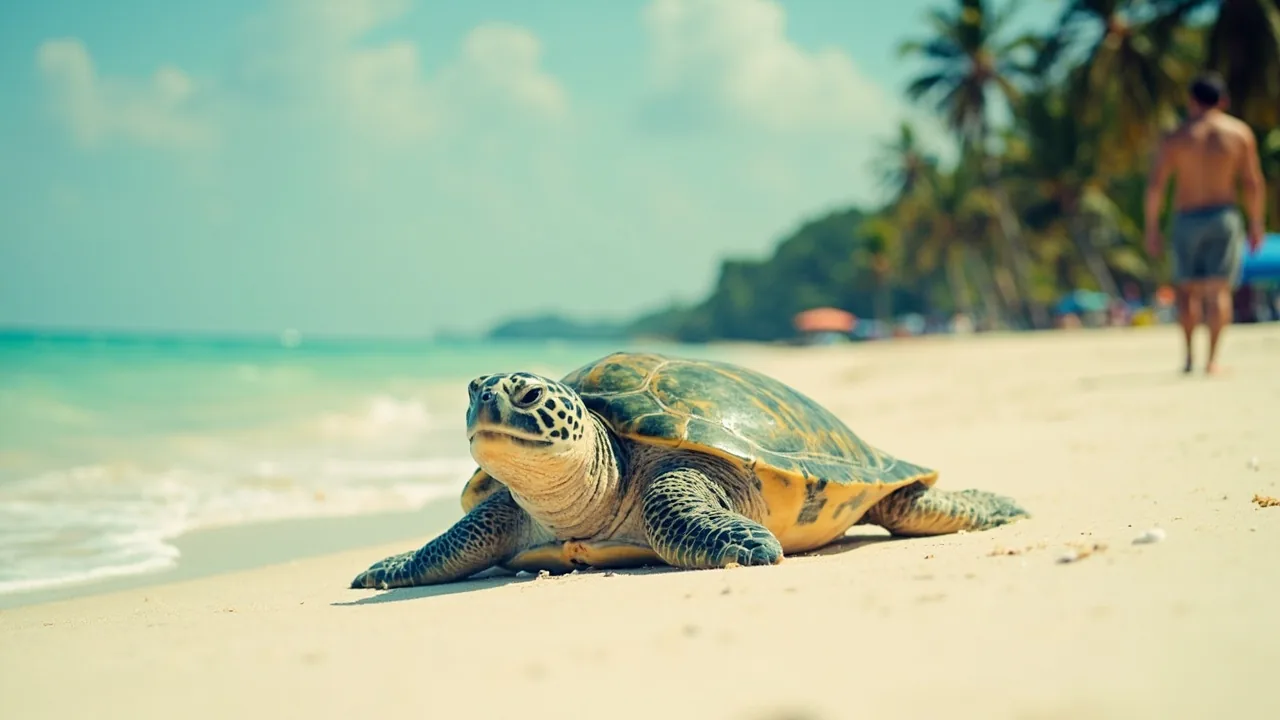
Sea Turtles: Where You Can See Them
Green turtles (Chelonia mydas) and hawksbill turtles (Eretmochelys imbricata) both nest around the Gulf islands. On Samui itself, nesting happens on the quieter western and southern beaches, particularly around Taling Ngam and the Five Islands area, but sightings are seasonal (roughly November to March) and you should not approach or torch a nesting female.
Realistic options:
- Ang Thong Marine National Park day trip. Sea turtles are seen by snorkellers in the right season. Book a tour from Nathon or Bophut. Our best day trips from Koh Samui guide lists operators and costs.
- Koh Tao (1.5 hours by ferry). Better coral, more reliable turtle encounters. Many backpackers do Koh Tao as a 3-4 night side trip from Samui. Check our Koh Tao travel guide for ferry times and diving spots.
- Koh Phangan (30 minutes by ferry). Some sightings around the quieter beaches, less reliable than Koh Tao. Compare all three islands in our Koh Samui vs Koh Phangan vs Koh Tao breakdown.
- Snorkel around Coral Cove or Chaweng Noi at the right tide. Green turtles are reported but uncommon.
Turtle Code: never touch, never chase, never stand on coral. Fines under Thai marine park law reach ₹287,150 (~100,000 THB or ~$2,978.62) and include jail time. Use reef-safe sunscreen.
Monkeys: Cute, But the Bite Risk Is Real
Pigtail macaques (Macaca nemestrina) live on Koh Samui. You’ll see them most often around the waterfalls in the interior (Hin Lat, Na Muang) and at a few temple sites. They’re bolder than the long-tailed macaques in Bali or Phuket. Travellers report monkeys snatching water bottles, sunglasses, phones, and food directly from hands.
Two practical problems:
- Macaques can carry herpes B virus and, less commonly, rabies. Any bite or scratch needs immediate medical attention.
- Once a monkey grabs your stuff, don’t try to retrieve it. You will get bitten. The monkeys have learned that tourists carry snacks and shiny things.
If you’re cycling or hiking to the waterfalls, keep food sealed and bags closed. Don’t make eye contact. Don’t feed them, even once.
Stray Dogs and Rabies: The Actual Risk
This is the wildlife issue Indian backpackers on Koh Samui most often underestimate. For a full breakdown of health risks including dengue, rabies, and hospital options, see our Thailand health risks guide for Indian travellers. Stray dogs are everywhere on Koh Samui. They hang out near 7-Eleven, on beach access paths, outside bars, and especially on the smaller roads in the south and west at night. Most are fine. Some are territorial, especially at night, and bites do happen.
Rabies is endemic in Thailand. The WHO classifies it as a high-risk country for canine rabies. Post-exposure prophylaxis (PEP) on Koh Samui is available but costs real money:
- First dose at Bangkok Hospital Samui: ₹4,307-₹8,614 (~1,500-3,000 THB or ~$44.68-$89.36) per injection, four doses over 14 days for a full course.
- Without insurance, full PEP for an unvaccinated person runs ₹17,229-₹34,458 (~6,000-12,000 THB or ~$178.72-$357.43).
- The pre-exposure vaccine (2 doses, 7 and 21 days apart) costs ₹4,307-₹7,179 (~1,500-2,500 THB or ~$44.68-$74.47) per shot.
What to do:
- Don’t pet stray dogs. Especially not puppies, and especially not the friendly-looking ones near beach bars at night.
- If a dog approaches you on a scooter or bike, stop. Don’t try to outrun it.
- Any bite or scratch: wash with soap and running water for 15 minutes, then go to hospital the same day. Don’t wait to see if symptoms appear.
- Travel insurance with rabies PEP coverage: read your policy before you travel.
Monitor Lizards, Geckos, and Other Things You’ll See
The most common “wow, what is that” moment on Koh Samui is the Asian water monitor lizard (Varanus salvator). They’re 1.5 to 2 metres long, look like small crocodiles, and live in drains, near beaches, and around water features. They’re harmless unless cornered. Don’t feed them; they’re part of the island’s rat control and need to stay that way.
Geckos (Hemidactylus and Gekko species) are inside every restaurant and bungalow. They eat mosquitoes. Leave them alone. They don’t bite, don’t carry disease to humans, and their poop is annoying but harmless.
Other things you’ll see without trying: house sparrows, myna birds, sunbirds, common kingfishers near the coast, monitor lizards crossing the road at dusk, the occasional reticulated python in plantation areas. Pythons are non-venomous but a 4-metre constrictor in your bungalow is a Bangkok Hospital Samui visit you don’t want.
Best Wildlife Activities on Koh Samui
The shortlist has a few solid ways to go looking:
- Koh Samui: Mr.Ung’s 4WD Wild Jungle Safari Tour with Lunch is the most direct wildlife-focused activity in the shortlist. You go off-road into the interior, hit waterfalls, and have a real chance of seeing monitor lizards, macaques, and the island’s birdlife. Book Mr.Ung’s 4WD Wild Jungle Safari Tour with Lunch tour.
- Koh Samui: Elephant Sanctuary & Jungle Adventure with Lunch is the ethical way to see elephants. No riding, no performances. Book Koh Samui: Elephant Sanctuary & Jungle Adventure with Lunch tour.
- Samui Elephant Conservation is a conservation-only option if you want to see elephants in a sanctuary context, not a tourist attraction. Book Samui Elephant Conservation tour.
- For marine wildlife, the Ang Thong Marine National Park day trip is the standard. Book a tour through any Nathon operator, around ₹4,307-₹7,179 (~1,500-2,500 THB or ~$44.68-$74.47) including park fee and lunch.
- Free option: walk the beach at dawn around Taling Ngam or the western coast. Monitor lizards, shore birds, and the occasional sea turtle nest in season.
Subodh’s Pro Tip: Most “wildlife tours” on Koh Samui are boat trips or 4WD adventures that happen to pass through habitat. If your real goal is seeing animals, go at dawn (5:30-7:00 am) and stay quiet. Animals are not active at noon.
Common Mistakes Indian Travellers Make
- Petting the friendly stray at the beach bar. The dog is friendly until it’s not. A bite means a hospital visit, 4 doses of rabies vaccine, and ₹17,229-₹34,458 (~6,000-12,000 THB or ~$178.72-$357.43) out of pocket. Don’t.
- Walking to waterfalls in flip-flops. Closed shoes matter. Pit vipers don’t announce themselves.
- Feeding the macaques “just once.” Once is enough to teach a whole troop to mug hikers. They’ll go through your bag.
- Skipping travel insurance for a rabies course. Standard Indian travel insurance policies often cover rabies PEP, but read yours. Some exclude “high-risk destinations.” Thailand is on the WHO list.
- Touching a sea turtle “just for a photo.” Illegal, harmful to the animal, and a fine you’ll still be paying when you’re back in India.
- Going barefoot on Koh Samui’s interior trails at dusk. Mosquitoes carry dengue on Koh Samui. Wear shoes, wear DEET, and consider a dengue-tested repellent.
What Most Guides Don’t Tell You
- The 24-hour hospital rule for any animal bite. Thai medical protocol for any mammal bite, scratch, or even a lick on broken skin is post-exposure prophylaxis starting within 24 hours. Waiting 48 hours reduces efficacy. The hospital will not let you skip doses. If you travel to a smaller island without a stock hospital (Koh Phangan’s smaller clinics sometimes run out), get back to Samui or Bangkok same-day.
- The pre-exposure rabies vaccine is worth it if you’re doing 3+ months in Thailand. Two doses, 7 days apart, then a third at 21 days. Total around ₹12,922 (~4,500 THB or ~$134.04). After that, any bite just needs 2 booster doses instead of the full 4-course PEP. Indian travellers often skip this and regret it after a beach-bar incident.
- Koh Samui’s “jungle” isn’t primary forest. The interior is mostly coconut plantations, secondary growth, and rubber tree farms. Wildlife density is genuinely lower than mainland national parks like Khao Sok. If seeing wild animals is the actual goal of your trip, Khao Sok (on the mainland, 3 hours from Surat Thani) has wild elephants, gibbons, hornbills, and leopards with real sightings. Koh Samui’s wildlife is incidental.
FAQ
Are there sharks around Koh Samui?
Blacktip reef sharks are occasionally seen by snorkellers around Ang Thong and Koh Tao. Unprovoked attacks near Samui are not reported in current Thai marine incident logs. Reef sharks are not aggressive; just don’t spear fish near them.
Is it safe to swim at Koh Samui beaches?
Generally yes. The bigger risks are rip currents on the northwest beaches during low season (October-December) and the standard tropical sea hazards (stingrays in shallow sand, sea urchins on reef flats). Wear reef shoes if you’re walking in from a rocky entry.
Do I need the rabies vaccine before going to Koh Samui?
Pre-exposure vaccine is optional but recommended for stays over 2 weeks or any trip involving rural or northern Thailand. Get it in India before you fly; it’s cheaper (₹1,500-₹2,500 (~$15.56-$25.93) for both doses at most private hospitals) and avoids clinic-hunting in Thailand.
Are there mosquitoes and dengue on Koh Samui?
Yes. Dengue cases are reported year-round on Koh Samui. Use DEET-based repellent (20-30%), wear long sleeves at dawn and dusk, and consider a permethrin-treated shirt if you’re doing jungle hikes. There’s no dengue vaccine recommended for short-stay Indian travellers.
Are there snakes in the resorts and bungalows?
Rarely inside air-conditioned concrete hotels. Common in wooden bungalows, especially those backed by forest. Most bungalow snakes are non-venomous rat snakes or keelbacks, but call the front desk if you see one. Don’t try to handle it.
Is it safe to go to Koh Samui with kids, given the wildlife?
The bigger risk with kids is stray dogs, not snakes. Keep them away from unknown dogs, don’t let them feed monkeys, and have travel insurance that covers rabies PEP. Most resorts are safe; the risks are on jungle hikes and quiet beaches after dark.
What to Eat After Your Wildlife Adventures
If you’ve just come back from Hin Lat waterfall or a 4WD safari covered in mud, you need food. Here are some spots from the shortlist:
- Secret Oven for a sit-down meal that handles Thai comfort food well. Worth the stop if you’re in the Chaweng area.
- The Corner Samui restaurant for a wider menu if you’re travelling with non-spice-tolerant friends.
- Penne Vegan Restaurant Samui if you’re vegetarian and need a break from pad thai.
For a proper Indian meal:
- Giant Summit Restaurant has mountain views (yes, on Koh Samui) and a real Indian section. Travellers report solid dal and biryani.
- Zazen is the upscale option, with Thai and Indian flavours in the same kitchen.
- Woodland Park View Restaurant is the casual park-view fallback when you just need a reliable thali.
Connectivity Note
If you’re heading into the jungle interior, download offline maps and carry a working SIM. AIS and TrueMove both cover Koh Samui well, but signal drops in the western interior. As a backup, you can Get Nomad eSIM before you fly, which lands data on your phone within minutes of arrival and avoids the airport SIM queue.
Getting There
Koh Samui has its own airport (USM) with flights from Bangkok, but it’s pricier than flying into Surat Thani. Budget travellers can fly or take a sleeper train to Surat Thani, then ferry to Koh Samui (around 2.5 hours total, ₹700-₹1,200 (~250-430 THB or ~$8.40-$14.40)). Our 3 days in Koh Samui guide covers transport options in detail.
From the airport to Chaweng or Lamai, songthaews run ₹150-₹250 (~55-90 THB or ~$1.80-$3.00). Scooter rental costs ₹200-₹300/day (~70-105 THB or ~$2.40-$3.60). Read our getting around Koh Samui guide for SIM cards, taxis, and local transport tips.
Subodh’s Take
Koh Samui’s “wildlife risk” is mostly manageable if you accept one rule: dogs and monkeys are the actual problem, snakes are the theoretical one. Get your pre-exposure rabies vaccine in India before flying (cheaper, faster), don’t pet strays, and don’t feed the macaques at waterfalls. The cobras and pit vipers live deeper than most backpackers go. Sea turtles are a real bonus if you time it right (Nov-March, west coast beaches, Koh Tao side trip). If seeing actual wild animals is the goal, swap Samui for Khao Sok, but if you’re on Samui for the beach-and-bungalow trip that most backpackers are, the wildlife is a background detail, not a planning problem.