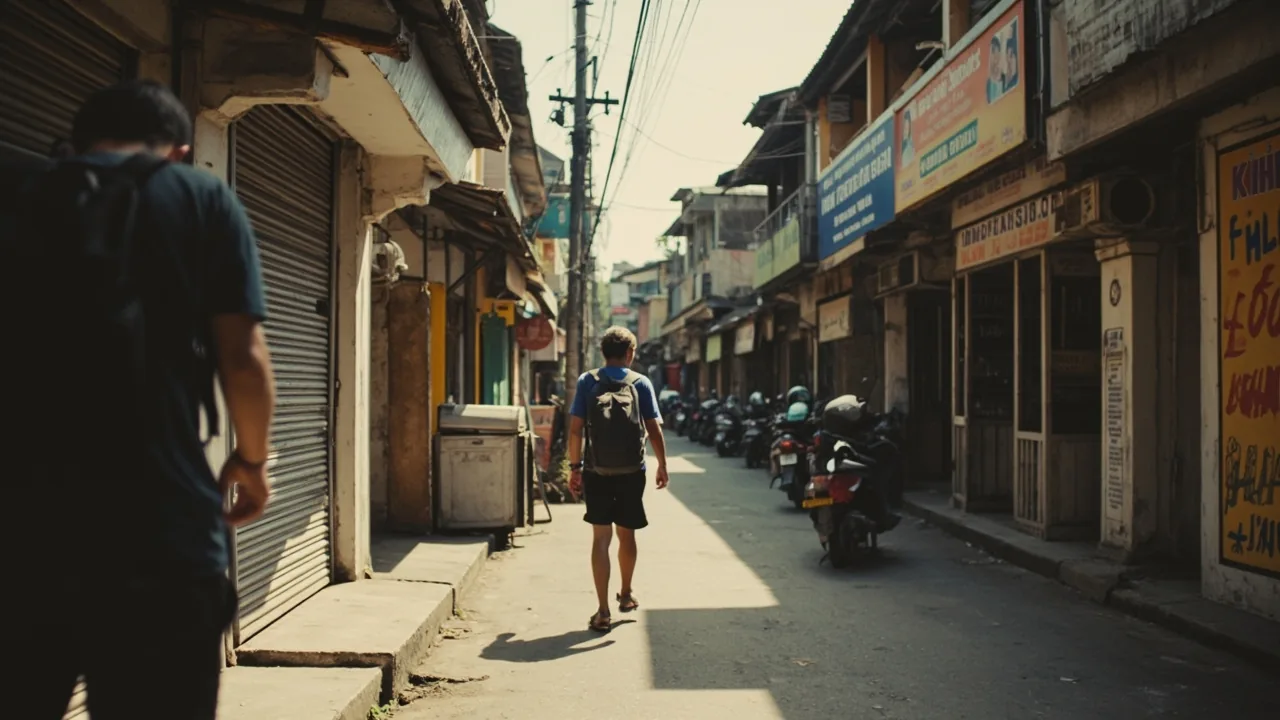
Is Cambodia Safe for Backpackers? Night Buses, Solo Female Travel & Tourist Scams Explained
Quick note from Subodh: This guide is built from traveller reports from June 2026 and cross-checked against official advisories including mea.gov.in and the Australian Smartraveller update from July 2026. Cambodia is generally safe for backpackers, but the small handful of specific risks below are the ones that bite people, and they are avoidable.
📍 Region: Mainland Southeast Asia ⏱️ Trip duration typical: 2 to 4 weeks 💰 Daily budget: ₹2,408 (~25 USD) ✅ Best for first-timers: Siem Reap + Phnom Penh + Sihanoukville
Quick Answers
| What | Answer | Price (INR) |
|---|---|---|
| Is Cambodia safe for tourists right now? | Yes, generally safe. Watch for tuk-tuk overpricing and bag snatching in Phnom Penh. | ₹0 |
| Is Cambodia safe for solo female travellers? | Yes, with standard precautions. Avoid walking alone in unfamiliar Phnom Penh alleys after midnight. | ₹0 |
| Are night buses safe? | Yes, on reputable operators with working websites and fixed addresses. Avoid no-name companies with no website. | ₹670 (~$6.96) |
| What about landmines? | Risk is real but localised to rural border provinces (Pailin, Battambang outskirts, Oddar Meanchey). Stick to marked trails. | ₹0 |
| Common scams to watch for | Overpriced tuk-tuks, “closed today” temple lies, fruit market rip-offs. | 0 USD |
| Visa on arrival fee (Indian passport) | ₹2,890 (~30 USD) on arrival, ₹3,468 (~36 USD) for the e-visa, both give 30 days single entry. | ~₹2,890 (~$30) |
| SafetyWing travel insurance | ~62 USD/month, covers medical evacuation and theft. | ~₹5,900 (~$61.25) |
Should You Worry?
The honest answer: Cambodia is safe enough that tourists outnumber incidents by a wide margin, but it is not a place where you switch your brain off. Most problems fall into a few buckets, and all of them are well-documented and avoidable.
For Indian travellers specifically, the risk profile is similar to Thailand or Vietnam with one Cambodia-specific twist: the country is poorer than its neighbours and the scam economy leans harder on naive foreign faces. That is not a reason to avoid it. It means knowing the playbook before you land. The good news is the playbook is short and simple.
The biggest non-crime reality check is the landmine question, which Australians, British, and Americans all ask before booking. Demining teams have cleared the vast majority of contaminated land since the 1990s, but the remaining risk sits in remote rural provinces along the Thai border, not on the Siem Reap to Phnom Penh highway, and not anywhere a backpacker would normally wander. Stay on marked trails, don’t go off-road in jungle areas without a local guide, and you are not going to step on anything that was put in the ground forty years ago.
Solo Female Travel: How It Feels
Reports from Indian women who have travelled solo through Siem Reap, Phnom Penh, and Kampot since 2024 are broadly positive. Hostel staff go out of their way to help, group tours make it easy to find travel buddies, and harassment levels are noticeably lower than northern India. That said, certain patterns come up again and again.
The most common nuisance is dress-related attention from local men, particularly around Pub Street in Siem Reap after 11pm. Modest clothing during the day is fine; shoulders and knees covered at temples is mandatory and cuts down almost all unwanted attention. Walking alone at night on quiet roads is also worth avoiding, take a tuk-tuk or rideshare when the streets thin out.
Sexual assault is rare but not zero. Two cases made it into English-language news from Phnom Penh in the first half of 2026, both involving solo women who had been drinking with strangers they met at bars. Standard Southeast Asia advice applies: do not leave drinks unattended, do not go home with someone you met an hour ago, and share your location with someone back home.
The wild card is Cambodia’s drinking culture. Happy hour whiskey sours are about ₹144 (~1.50 USD), several times cheaper than Thailand, and backpackers report this leads to lapses in judgment that do not happen when a drink costs ₹578 (~6 USD). Travellers report that nights that felt unsafe all started with a “free” shot from a promoter.
Night Buses: Reputable vs Avoid
The Phnom Penh to Siem Reap overnight bus is a rite of passage, and it is genuinely fine if you book the right operator. The two types of operators that come up clean across every traveller forum from r/solotravel to the Cambodia subreddit are the ones with working websites and fixed addresses.
Book through a reputable booking platform or directly on the operator’s own website. Tickets run ₹771-₹1,445 (~8-15 USD) including pickup at your hostel. Buses leave around 11pm, arrive around 6am. Sleeper seats recline to about 145 degrees, have a blanket and small pillow, and there is a working toilet at the back. Safety-wise, the buses are tracked by GPS, the drivers do not drink on shift, and the staff help solo women into seat 1A or 1B on request.
What you want to avoid is the bucket-of-cheap option: any company without a working website, no fixed departure address, or that approaches you in the street with a “special deal.” Reports of these include broken air conditioning in 38-degree heat, drivers falling asleep, and one much-circulated story about a backpacker waking up to find their bag unzipped. None of that happens on reputable operators with working websites and fixed addresses.
Subodh’s Pro Tip: Book the front row. Drivers often leave it empty for solo travellers, and you get an unobstructed view of the road plus an easy escape if anything feels off.
The Scam Playbook (And How to Dodge Every Single One)
Cambodia’s scams are predictable, and once you know the script they are comedy rather than danger. Traveller reports from 2025 and 2026 cluster around the same five.
The “Angkor Wat is closed today” lie. Tuk-tuk drivers who do not get the morning temple run commission pretend the temple complex is closed for a Buddhist holiday. It is not. Check the official Angkor Enterprise ticket counter before believing anyone.
Tuk-tuk price doubling. Drivers quote ₹482 (~5 USD) for a ₹193 (~2 USD) ride. Counter by naming a specific destination (“Wat Phnom, not the riverside”) and state ₹193 (~2 USD) before they start the meter, or just hand over a small bill and walk. City rides in Phnom Penh and Siem Reap run ₹193-₹482 (~2-5 USD).
Fruit market rip-offs in Siem Reap. Vendors quote in Thai baht or US dollars and “forget” to give correct change. Pay in small Cambodian riel notes, count change in front of them.
The “free” bracelet. A stranger at Pub Street ties a red string bracelet on your wrist, then demands 1 USD to “donate to the monks.” Politely give it back and walk on.
Bag snatching from tuk-tuks. Phnom Penh has had reports of motorbike riders grabbing shoulder bags off passengers. Wear your daypack on the front when riding, and never keep your passport in it. The full scam catalogue lives in our Cambodia scams safety guide.
Safety Alert: None of these are unique to Cambodia, but the volume is higher here than Thailand. If you have travelled in Bangkok you will recognise the patterns. The single biggest protection is agreeing a price before getting in any vehicle. Always.
Health, Water, and Medical Realities
Travel health in Cambodia is a step below Thailand. Private hospitals in Phnom Penh and Siem Reap are decent for routine issues and stabilising emergencies, but for anything serious the play is to get to Bangkok. Medical evacuation from Siem Reap to Bangkok runs about ₹2,408,235 (~25,000 USD) on a chartered air ambulance, which is exactly why SafetyWing’s medical evacuation rider matters. See the price in the table above; it is roughly ₹5,900 (~$61.25) per month.
Tap water is not safe to drink. Stick to bottled or filtered water. Ice in tourist-area restaurants is generally fine because factories use clean water, but roadside stalls are a gamble. Stick to cooked food and fruit you peel yourself. Traveller’s diarrhoea hits about 30 percent of first-time visitors, usually on day two or three. Carry ORS and a basic antibiotic course from your Indian pharmacy.
For current health advisories, the Indian MEA portal at mea.gov.in publishes outbreak information within 24 hours. Smartraveller.gov.au maintains the same.
Money, Documents, and Getting Out of Trouble
Carry your passport at all times. Police spot checks happen, and fines for not having ID are real. Keep a photocopy or a photo on your phone for the rest of the day. If your passport is stolen, the Indian embassy in Phnom Penh can issue an emergency travel document in 1 to 2 working days, longer if you are in a remote province.
For ATM safety, stick to bank-attached machines at ABA, Canadia, or ANZ. Independent ATMs in petrol stations have a higher skim rate. Withdraw max amounts to limit transaction fees; each withdrawal costs ₹482 (~5 USD) regardless of size. USD is the unofficial second currency and the e-visa fee is paid in dollars, so bring clean, unmarked bills.
Safety Alert: Do not carry more than the official customs allowance of USD 3,000 in cash without declaring it. Carry the rest on a forex card or in a hidden pouch.
Landmines, UXO, and Where You Should Not Walk
This is the question every Western safety advisory leads with, so it gets its own section. Cambodia had one of the heaviest landmine and unexploded ordnance (UXO) contaminations in the world at the end of the civil war in the late 1990s. Today, the Cambodian Mine Action Centre (CMAC) and international demining NGOs have cleared most populated and agricultural areas.
The remaining hotspots are six provinces along the Thai border: Pailin, Battambang (rural), Oddar Meanchey, Preah Vihear, parts of Stung Treng, and Ratanakiri. Travellers who stay on marked trails, stick to paved roads, and do not go off-path in jungle areas are at zero practical risk. Travellers who wander into the jungle at night, who go “exploring” around temple ruins in rural areas, or who pick up suspicious metal objects are taking an unnecessary gamble.
The rule from traveller forums is simple: if a local guide or CMAC sign says “stay on the path,” stay on the path. CMAC volunteer clearing teams operate openly in tourist areas, and their markers (red triangle on white) means cleared land. Yellow triangles mean suspected contamination.
When to Skip Cambodia Entirely
Two windows make Cambodia a poor choice. The wet season from July to October floods rural roads, closes down Mekong boat routes, and turns Angkor Wat’s outer temples into mud-traps. Genuine trip-killer for slow-boat or rural itinerary fans.
The second is the Khmer New Year window in mid-April, when domestic tourism peaks, prices double, and Siem Reap becomes genuinely chaotic. Also avoid national election periods when protests sometimes happen in Phnom Penh, though these have been peaceful in recent cycles.
If your dates are flexible, November to February is the gold standard: cool, dry, and all routes running.
Getting Connected
Cell coverage in cities is reliable on Smart and Cellcard. Renting a SIM at Phnom Penh or Siem Reap airport costs about ₹482 (~5 USD) for a tourist SIM with 5GB data. If you prefer to land connected, Get Nomad eSIM covers Cambodia and most of mainland Southeast Asia on a single plan. Note that rural provinces and rural border crossings have dead zones. Rideshare apps (PassApp in Phnom Penh, Grab in Siem Reap) require data to work.
FAQ
Q: Is Cambodia safe for tourists right now in 2026? A: Yes. The Indian MEA advisory as of mid-2026 lists Cambodia as a generally safe destination with normal precautions. Petty scams and bag snatching in Phnom Penh are the main reported issues.
Q: Is Cambodia dangerous for tourists from the UK? A: No. The UK foreign office rates most of Cambodia as low to moderate risk for crime. The landmine areas noted above carry the same advisory regardless of passport.
Q: Is Cambodia safe for solo female travellers? A: Yes, with the standard precautions. Travellers report harassment levels lower than India but higher than Thailand. Dress modest at temples, avoid solo night walks, and watch drinks.
Q: Are night buses safe in Cambodia? A: Reputable operators with working websites and fixed addresses are reliable. Avoid unmarked operators. Lock bags to the seat, keep valuables on your person, and book front-row seats.
Q: Is Cambodia safe from landmines for tourists? A: Yes, in tourist areas. Risk is restricted to rural Thai-border provinces. Stick to marked trails and you are fine.
Q: Should I get travel insurance for Cambodia? A: Yes, strongly recommended. Medical evacuation to Bangkok is not cheap and hospitals require upfront payment. SafetyWing’s plan at ~₹5,900 (~$61.25) per month is built for this exact region.
Q: Is Cambodia safe for Indian tourists specifically? A: Yes. No targeted threat against Indian visitors has been reported in 2025 or 2026. Some Indian travellers report being treated as curious guests rather than targets, though scams still happen.
Subodh’s Take
Cambodia is one of those places that is riskier in your head than on the ground, which is exactly why traveller reports tend to land in the “I felt fine, would go back” range. The country has real problems: institutional corruption, an underdeveloped health system, and a sad history with landmines. None of those should stop a backpacker from going. The actual dangers you face on a 2-week route are a tuk-tuk overcharge and the occasional bag snatch in Phnom Penh. Both are managed by agreeing prices upfront and keeping your bag in front. If you can do those two things, Cambodia is safe, cheap, and worth your time.
For the full SEA trail, check our SEA backpacking hub.
