Is Vang Vieng Worth Visiting in 2026? The Honest Backpacker Verdict
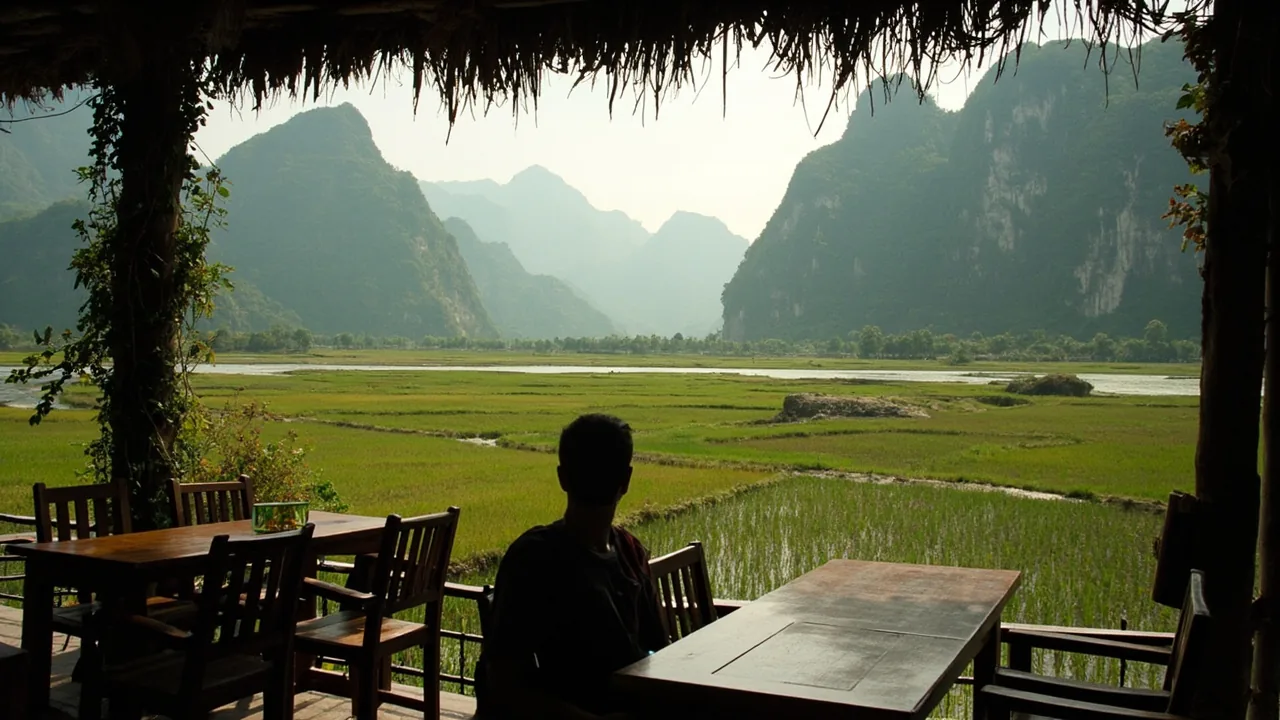
Quick honest answer: yes, Vang Vieng is worth two to three nights in 2026, but not for the reasons it used to be on every backpacker’s list. The tubing-and-mushroom-shake party scene is gone; what replaced it is a quieter, scenery-led stop between Vientiane and Luang Prabang, with karst cliffs, blue rivers, hot springs, and caves.
The question most Indian travellers arriving in Laos ask is whether Vang Vieng deserves the detour or whether the train straight through to Luang Prabang is smarter. Here is the unfiltered 2026 picture: what it costs, what is left of the party scene, what is genuinely beautiful, and the one scenario where I’d tell you to skip it entirely.
The 10-Second Overview
📍 Location: Central Laos, between Vientiane and Luang Prabang
⏱️ Stop needed: 2-3 nights (any longer and you run out of things to do)
💰 Daily budget: ₹1,188-₹2,074 (\~275,000-480,000 LAK or \~$12.31-$21.49)
✅ Best for: Scenery lovers, slow travellers, photographers, river-day drinkers
❌ Skip if: You came for the 2008 party scene
Quick Answers
| What | Answer | Price (INR) |
|---|---|---|
| Is Vang Vieng worth visiting in 2026? | Yes, for 2-3 nights. The scenery is real and the party scene is mostly gone. | ₹0 |
| How much does a dorm bed cost? | ₹350-₹600 (~$3.63-$6.22) per night | ₹350-600 (~90,000-160,000 LAK) |
| How do I get there from Vientiane? | Laos Railway train, 1h 15m, around ₹1,641 (~17 USD) | ₹1,641 (~17 USD) |
| Is there an Indian restaurant? | Yes, Mandala Restaurant | ₹350 (~80,000 LAK) for a thali |
| What is the party scene like now? | Quiet by old standards. Beer at riverside bars, not tubing-fueled chaos. | ₹200 (~46,000 LAK) for a Beerlao |
| Should I skip it for Luang Prabang? | Only if you came for the party scene | ₹0 |
What Changed in Vang Vieng
If you read older blogs (pre-2015), Vang Vieng was the cautionary tale of backpacker tourism: riverside bars blaring the TV show Friends on repeat, drunk tourists falling off rope swings, a UK FCO travel advisory, and a 2012 government crackdown that shut down most of the tubing operations. By the early post-crackdown years, the river tubes were banned, the rope swings had been removed, and the town felt like it was holding its breath, unsure what to become.
In 2026, what it became is a small adventure-tourism town that leans hard on the karst landscape and slow river days. The bars are still there, the Beerlao is still cheap, and you can still rent a tube and float the Nam Song, but the demographic has shifted. The average traveller here now is in their late twenties or older, with a mix of Korean and Chinese tour groups, French and German overlanders, and the residual backpacker trail doing the Vientiane to Luang Prabang corridor.
The party scene is not dead, it is just quieter. Beer towers and bucket drinks are gone. What replaced them is the riverside bar culture: a row of cafes along the Nam Song with cushions, speakers playing lo-fi, and ₹200 (~$2.07) Beerlaos. It is the kind of place where you sit, watch the sun drop behind the karst, and have a conversation. Whether that is a positive or a negative depends on what you came for.
Subodh’s Pro Tip: The 2012-era party reputation is still what most older travellers expect. Set your expectations accordingly: Vang Vieng 2026 is closer to a riverside Rishikesh than a full-moon Koh Phangan.
How to Get There (and Through)
Vang Vieng sits on the Laos Railway line between Vientiane and Luang Prabang, which makes it one of the easiest stops in Southeast Asia to slot in or skip.
Vientiane to Vang Vieng by Train
The Laos Railway express from Vientiane to Vang Vieng is the only sensible option in 2026. It runs multiple times a day, takes about 1 hour 15 minutes, costs around ₹1,641 (~17 USD) one way (around ₹1,641 (~$17)), and has air-conditioning that works. You can book on 12go the day before, and the seats are almost always available.
Subodh’s Pro Tip: Sit on the left side heading north from Vientiane. The karst cliffs appear in the last 20 minutes and are the best part of the journey.
Vientiane to Vang Vieng by Bus
The old local bus from Vientiane to Vang Vieng is still running and costs around ₹432-₹648 (~100,000-150,000 LAK or ~$4.48-$6.71). It takes 3.5 to 4.5 hours depending on the road, with a brief noodle stop at the halfway mark. Honestly, there is no reason to take this over the train anymore unless you are on a tight budget and enjoy slow coach rides.
Vang Vieng to Luang Prabang by Train
The Laos Railway from Vang Vieng to Luang Prabang takes around 2 hours, costs around ₹2,124-₹2,413 (~22-25 USD), and is the cleanest, fastest way up the corridor. Tickets sell out a day or two in advance during peak season (November to February), so book ahead on 12go.
Subodh’s Pro Tip: Subodh has done this corridor three times with Bananarchy groups, and the train is what we take every single time now. The old slow boat up the Mekong is a separate route from Huay Xai, not from Vang Vieng, so don’t conflate the two.
Vang Vieng to Vientiane by Bus
The return bus from Vang Vieng to Vientiane costs around ₹432-₹648 (~100,000-150,000 LAK or ~$4.48-$6.71) and runs every couple of hours from the main station. Four hours, not scenic, useful only if you cannot get a train ticket.
What to Do in Vang Vieng
Most travellers who complain about Vang Vieng being “boring” in 2026 made the mistake of treating it as a party town and being disappointed when it wasn’t. The activities here are quiet and outdoor-focused. If that is not your thing, two nights is plenty.
Hot Air Balloon at Sunrise
The single most photogenic thing you can do in Vang Vieng is a sunrise hot air balloon ride over the karst valley. Balloons launch around 5:30 AM (depending on weather) and float for about 30-40 minutes over the river and limestone cliffs. Local operators quote around ₹9,170 (~95 USD) per person, which is genuinely expensive for Southeast Asia. Worth doing once if your budget allows.
Blue Lagoon and Tham Phu Kham Cave
The Blue Lagoon 1 is the classic Vang Vieng day. It is a turquoise pool fed by a spring at the base of a karst cliff, with a rope swing, a few zip lines (extra ₹500-₹1,000 (~$5.18-$10.36)), and the Tham Phu Kham cave a 15-minute walk uphill from the parking area. Entry to the lagoon is ₹86 (~20,000 LAK or ~$0.90), cave is free but bring a torch. Get there before 10 AM to avoid the tour bus crowd that arrives around 11.
Tubing the Nam Song
The original activity. You can still rent a tube in town for around ₹259-₹346 (~60,000-80,000 LAK or ~$2.69-$3.58) and float 3-4 km down the Nam Song. There are no rope swings anymore, no riverside bars pumping out buckets, just you, the tube, and the scenery. It is pleasant, not wild. Most people finish in 90 minutes, walk back along the riverside path, and grab lunch.
Kayaking and Caving
Half-day kayak trips down the Nam Song with stops at smaller caves cost around ₹389-₹562 (~90,000-130,000 LAK or ~$4.03-$5.82). The caves worth seeing are Tham Nam (water cave you swim through), Tham Hoi, and the less-visited Tham Loup. Bring a headlamp, water shoes, and a dry bag.
Climbing and Bouldering
The karst around Vang Vieng has become one of Southeast Asia’s quieter climbing destinations. There are bolted routes for all levels, and a couple of local climbing outfits run half-day sessions for around ₹864 (~200,000 LAK or ~$8.95). If you climb already, you will enjoy this. If you don’t, the half-day intro is genuinely beginner-friendly.
Where to Stay
Vang Vieng’s hostel scene is smaller than Vientiane or Luang Prabang, but the quality is high. Most hostels cluster along the main road and the riverside strip north of town.
| Hostel | Price/Night | Vibe | Book |
|---|---|---|---|
| hostel-vang-vieng-1 | ₹350-600 (~90,000-160,000 LAK) | Riverside, social, young crowd | Check prices |
| hostel-vang-vieng-2 | ₹350-600 (~90,000-160,000 LAK) | Quieter, central, mixed ages | Check prices |
| hostel-vang-vieng-3 | ₹350-500 (~80,000-115,000 LAK) | Backpacker classic, central | Check prices |
What to Eat (Including for Strict Veg)
Vang Vieng is small enough that the food scene fits on two pages. The good news is the quality is consistent and prices are low.
Local and Western
Beats & Bites Restaurant Vangvieng is the standout spot in town for everything that is not specifically Lao or Indian. Travellers report consistently good breakfasts, sandwiches, and coffee, plus a proper range of vegetarian options. A breakfast set runs around ₹151-₹238 (~35,000-55,000 LAK or ~$1.57-$2.46). The vibe is friendly and the music is on point, which fits the name.
For Lao food specifically, look for the local khao soi-style noodle soups and lap (minced meat salad). Most small cafes along the main road serve these for ₹108-₹173 (~25,000-40,000 LAK or ~$1.12-$1.79).
Indian and Strict Veg
Mandala Restaurant is the only dedicated Indian spot in town and it does the job properly. The dal-chawal, paneer butter masala, and chapati are all around ₹259-₹389 (~60,000-90,000 LAK or ~$2.69-$4.03) per dish, and the thali is around ₹346 (~80,000 LAK or ~$3.58). Vegetarians will be fine here, and the owner understands the “no onion, no garlic, Jain options” requests if you ask.
For pure veg snacks (samosas, pakoras, chai), the small Indian-run cafes near the bus station and along the main road are your cheapest bet. Around ₹65-₹108 (~15,000-25,000 LAK or ~$0.67-$1.12) per snack plate.
Subodh’s Pro Tip: Do not expect a huge Indian food scene here. Mandala does the heavy lifting, and the rest of the time you are eating local. Veg travellers with serious restrictions should load up on nuts and fruit from the morning market.
Daily Budget Breakdown
Here is what a realistic day in Vang Vieng costs in 2026 for a budget backpacker, in LAK:
| Category | Budget | Mid-Range |
|---|---|---|
| Dorm bed | ₹389 (~90,000 LAK or ~$4.03) | ₹562 (~130,000 LAK or ~$5.82) |
| Three meals | ₹302 (~70,000 LAK or ~$3.13) | ₹562 (~130,000 LAK or ~$5.82) |
| One activity (lagoon, tubing, cave) | ₹216 (~50,000 LAK or ~$2.24) | ₹389 (~90,000 LAK or ~$4.03) |
| Transport (tuk-tuk, scooter) | ₹130 (~30,000 LAK or ~$1.34) | ₹259 (~60,000 LAK or ~$2.69) |
| Beerlao and sundown | ₹151 (~35,000 LAK or ~$1.57) | ₹302 (~70,000 LAK or ~$3.13) |
| Daily total | ₹1,188 (~275,000 LAK or ~$12.31) | ₹2,074 (~480,000 LAK or ~$21.49) |
Connectivity (SIMs and eSIMs)
Wi-Fi at hostels and cafes is good enough for most travellers, but if you want data on the move (for Grab alternatives, Google Maps, or just Instagram), get connected.
Lao Telecom and Unitel both sell tourist SIMs at the airport and in town. The standard 7-day package with 30 GB is around ₹216 (~50,000 LAK or ~$2.24). You will need your passport for registration. Coverage along the railway corridor is excellent, coverage in the karst valleys around Vang Vieng is patchy (which is part of the charm, honestly).
For an easier alternative, the Nomad eSIM lets you activate before you land and skip the airport SIM queue. Good option if you are arriving via Bangkok and want data from minute one.
Indian Passport Specifics for Laos
Indian passport holders get visa-on-arrival at Vientiane Airport, Luang Prabang Airport, and major land crossings including the Thai-Lao border at Huay Xai. The fee for Indian nationals is ₹2,896 (~30 USD), and you can pay in clean USD or Thai Baht (some land borders prefer THB). You get 30 days, single entry.
Have your hotel address and return flight ready, border officials sometimes ask. Visa extensions are possible at the immigration office in Vientiane for an additional 30 days, fee around ₹2,896 (~30 USD).
Subodh’s Pro Tip: Carry the visa fee in crisp, unmarked USD bills. Even a small tear or fold can get a bill rejected at the Laos border, and you do not want to be that person arguing at 11 PM at Huay Xai.
For the broader Laos trip planning (visa runs, multi-entry routes, and how it fits with Thailand and Vietnam), the Southeast Asia overland border crossing guide is the most full resource on this site. For a full Southeast Asia corridor that includes Laos, the SEA backpacking hub ties all the regional guides together.
When to Skip Vang Vieng Entirely
Three scenarios where I’d say skip it:
You have a tight schedule in Laos. Luang Prabang deserves at least three nights, and Vientiane is worth a day. If your itinerary is short, do those two cities and skip Vang Vieng. The train ride is scenic enough that you can appreciate the corridor without stopping.
You came specifically for the party scene. The tubing-and-bars chaos is gone. You will be disappointed if that was your main motivation. Thailand’s islands and Pai still serve that backpacker energy.
You are travelling in August or September. The rainy season turns the Nam Song brown, the Blue Lagoon is less photogenic, and the balloon flights get cancelled often. November to February is the right window for Vang Vieng. The Southeast Asia monsoon guide covers the broader picture.
The Verdict
Vang Vieng in 2026 is not the party town of the 2010s, and that is a feature, not a bug, for most travellers now. It is a small, scenic stop on the Vientiane to Luang Prabang corridor where you can kayak, swim in a turquoise lagoon, watch the sun set behind karst cliffs with a Beerlao, and move on the next morning. Two to three nights is the right window. Four nights and you are stretching.
For Indian backpackers doing the Laos corridor, slot Vang Vieng in if your schedule allows. Skip it if you are tight on time. The town has earned its second act as a quieter, scenery-led stop, and the train access makes it friction-free to add or remove.
For a fuller Laos route plan, the 2-week Laos itinerary for Indian backpackers covers this corridor plus everything from Luang Prabang down to the 4,000 Islands.
FAQ
Is Vang Vieng worth visiting in 2026? Yes, for 2-3 nights. The scenery is genuine, the railway access is easy, and the town has cleaned up significantly. Just do not expect the 2008 party scene.
Is Vang Vieng safe for Indian travellers? Generally yes. Standard Southeast Asia precautions apply (watch your bag, lock your scooter, avoid the late-night lone walks). The town is small, well-trodden, and tourists are common.
How many days in Vang Vieng is enough? Two to three nights. One full day for the Blue Lagoon and caves, one full day for the balloon or kayaking, and the third morning for a riverside breakfast before catching the train.
Can I use Indian Rupees in Vang Vieng? No. Bring USD or Thai Baht to exchange. Most places accept LAK cash only, with some accepting cards at higher-end spots. ATMs in town dispense LAK.
What is the best time to visit Vang Vieng? November to February. Cool, dry, clear skies, balloon flights running reliably. Avoid July-September monsoon.
Is Vang Vieng expensive? No. It is one of the cheaper stops in Southeast Asia. Budget around ₹1,188-₹2,074 (~275,000-480,000 LAK or ~$12.31-$21.49) per day including dorm, food, and one activity.
