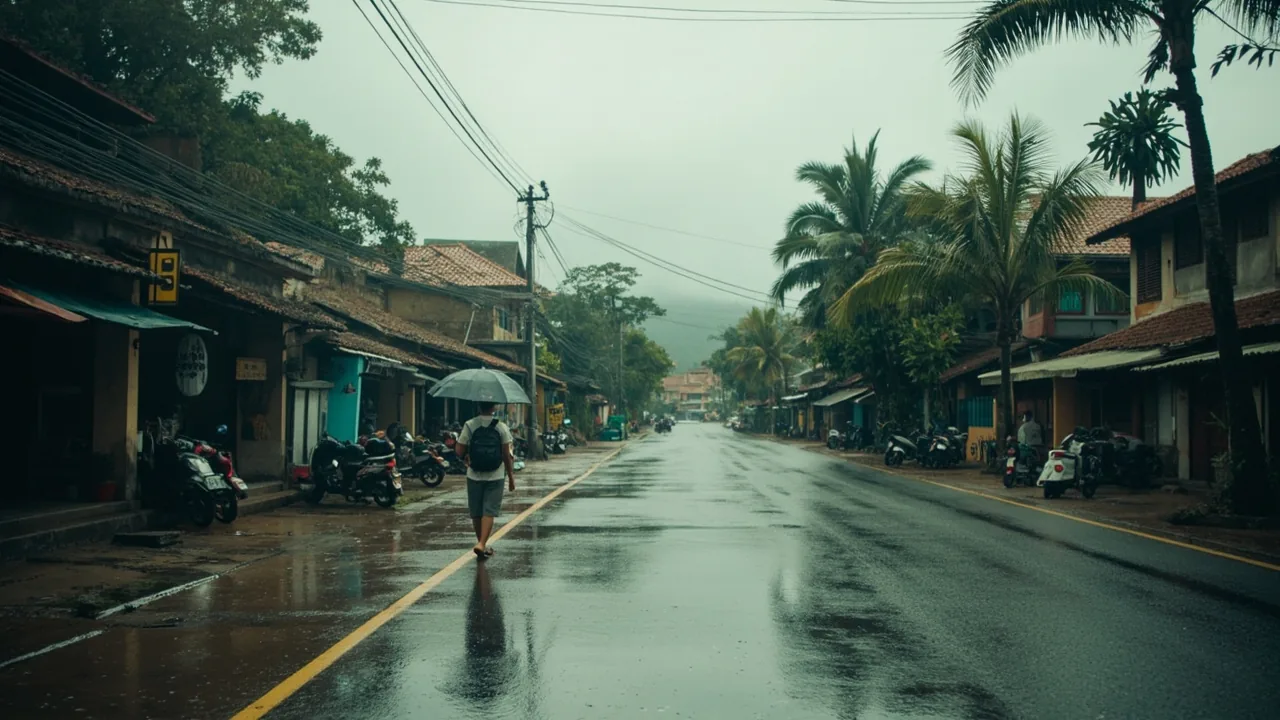
Best Places to Visit During Monsoon Season in Southeast Asia (Backpacker Edition)
📍 Region: Thailand, Vietnam, Cambodia, Laos, Indonesia, Malaysia ⏱️ Best window: Late May to early October (varies by country) 💰 Daily budget: ₹2,500 (~$25.95) to ₹4,500 (~$46.71) per day (lowest of the year) ✅ Best pick: Northern Vietnam + Central Vietnam coast + Bali’s dry season overlap For related planning, see our guide on Banana Pancake Trail 21 Days.
Most Indian travellers pick their Southeast Asia dates around Indian holidays, then worry about rain later. That’s backwards. The monsoon is the single biggest factor in what your trip costs, what it looks like, and whether the beach photos turn out. Pick the right country for the month you’re free, and rain becomes background music. Pick the wrong one, and you spend a week staring at a hostel wall while your itinerary falls apart. You may also find Ha Giang Loop Backpacking Guide useful for this trip.
This is the corridor-style read on where to go, what to skip, and what monsoon season means on the ground. For the broader month-by-month logic, see our full monsoon season in Southeast Asia guide. For the inverse logic, our dry season route covers November to May.
Quick Answers
| What | Answer | Price (INR) |
|---|---|---|
| When is monsoon season in SEA? | Roughly Jun to Oct, shifting by country | , |
| Which SEA country is best in monsoon? | Vietnam (north + central coast) and Bali (Apr-Oct is its dry season) | , |
| Cheapest country to visit during monsoon? | Laos (lowest prices of the year, green-season discounts) | ₹2,500/day |
| Worst country to visit in Jul-Sep? | Southern Thailand islands and the Thai Gulf coast (Phuket, Koh Samui, Koh Phangan) | , |
| Are flights to SEA cheaper in monsoon? | Yes, 20-40% off vs Dec-Feb peak | ₹18,000 to ₹28,000 round trip from India |
1 INR ≈ 0.35 THB, 270 VND, 232 IDR, 0.024 LAK at time of writing. Cambodia uses USD: 1 USD ≈ ₹96.53. See also: Southeast Asia 1 Month Backpacking Route the Best Itinerary for All Countries.
What “Monsoon Season” Means
Monsoon season isn’t one weather system. It’s several, and they peak in different months in different countries.
- Southwest monsoon (Jun-Sep): Hits Myanmar, Thailand, Cambodia, Laos, and the south of Vietnam. Heavy rain, humidity above 80%, frequent afternoon storms rather than all-day downpours.
- Northeast monsoon (Oct-Dec): A second wave that hits the east coast of Vietnam, the Philippines, and parts of Malaysia.
- Inter-monsoon: Apr-May and Oct-Nov. High humidity, short sharp storms, the worst of both worlds in some places.
The practical version: rain rarely lasts all day. Mornings are often dry, afternoons get a 1-3 hour downpour, evenings clear up. The exceptions are typhoon weeks (central Vietnam Aug-Sep, Philippines Jun-Dec) when it does rain nonstop for 3-5 days. Plan around those, and the rest is workable.
The other practical version: prices drop 20-40% across the region. Hostels that are ₹800 (~$8.30) a night in December are ₹450 (~$4.67) in July. Tours go half-price. Restaurants run green-season menus. If you’re budget-led, monsoon is the cheapest time to travel in Southeast Asia, full stop.
The Shortlist: Where Monsoon Is a Feature, Not a Bug
1. Northern Vietnam (Hanoi, Sapa, Ha Giang, Ninh Binh)
Monsoon window: May to Sep What it feels like: Warm, humid, green to the point of absurd. Rice terraces in Sapa flood with water and reflect the sky. Ha Giang loop is at its photogenic peak between Jul and early Sep. Hanoi gets hot, around 32-35°C, with late-afternoon thunderstorms that drop the temperature 5 degrees in 20 minutes.
Why it works:
- Rain is mostly evening and overnight. Daytime activities (trekking, motorbike loops, boat trips in Tam Coc) run on schedule.
- Accommodation prices drop 30-40% vs the Oct-Apr peak.
- The rice harvest in Sapa runs late Aug to early Oct, which means golden terraces plus misty mornings. Photographers plan trips around this.
- Fewer tourists. The Ha Giang loop in August feels like a different country than the Ha Giang loop in October.
What to skip: Halong Bay in Aug-Sep. Typhoon season, frequent cancellations, boats get stuck in port. If a typhoon warning goes up, the harbour closes.
Daily budget: ₹2,800 (~$29.06) to ₹4,200 (~$43.60).
2. Central Vietnam Coast (Da Nang, Hoi An, Hue, Quy Nhon)
Monsoon window: Aug to Nov, with a typhoon peak in Sep-Oct What it feels like: Hot, humid, and the rain is real. But the coast has a built-in rhythm: morning beach, afternoon storm, evening lanterns. Hoi An in the rain is one of those things that sounds bad and looks incredible. The old town reflects the lanterns twice over.
Why it works:
- Hoi An’s tailoring, cooking classes, and night market run rain or shine. The ancient town is partially covered.
- Da Nang’s beaches are swimmable even in light rain. Sea temperature stays at 27-29°C year-round.
- Hotel prices in Hoi An drop from ₹6,000/night to ₹2,500/night for decent rooms in Aug-Sep.
What to skip: Sep 15 to Oct 15 unless you have buffer days. Typhoon risk peaks here. The rest of Aug and late Oct onwards are workable.
Daily budget: ₹2,500 (~$25.95) to ₹4,000 (~$41.52).
3. Bali, Indonesia
Monsoon window: Nov to Mar Why it makes the list: Bali’s “monsoon” is the dry season for the rest of Southeast Asia. Apr to Oct is Bali’s dry season, which lines up perfectly with SEA monsoon. If you want beaches and sun while the rest of the region is wet, Bali is the obvious answer.
What it feels like: Dry season days are 28-31°C with low humidity. Rain probability drops below 15% from May to Sep. Ubud is cooler than the coast. Canggu has consistent surf.
Why it works:
- It’s the one place where you can have your beach trip AND save money vs Dec-Feb peak.
- Internal flights (Jakarta to Bali, Yogyakarta to Bali) are cheap on Lion Air and Citilink.
- Vegetarian and Indian food scene is genuinely good in Ubud and Canggu.
What to skip: The Bukit Peninsula in late Dec-Jan (peak rain), and Kuta entirely (it’s not worth the detour in any season).
Daily budget: ₹3,200 (~$33.22) to ₹5,000 (~$51.90).
4. Northern and Central Laos (Luang Prabang, Vang Vieng, Phonsavan)
Monsoon window: May to Sep What it feels like: Lush, misty, fewer tourists. Vang Vieng’s karst cliffs are at their greenest. Luang Prabang’s temples look better with low clouds behind them.
Why it works:
- Laos is the cheapest country in the region in monsoon. Hostels drop to ₹350-500/night.
- The slow boat on the Mekong from Huay Xai to Luang Prabang runs year-round and monsoon adds a moody atmosphere.
- Rain is usually afternoon, mornings are clear for the alms-giving ceremony in Luang Prabang and the morning market.
What to skip: Southern Laos (Bolaven Plateau, Si Phan Don) in Jun-Aug. Roads turn to mud, the 4000 Islands area floods.
Daily budget: ₹1,800 (~$18.68) to ₹2,800 (~$29.06). The lowest of the SEA monsoon list.
5. Cambodia (Siem Reap, Phnom Penh, Battambang)
Monsoon window: May to Oct What it feels like: Hot, sticky, dramatic skies over Angkor. The temples look better with cloud cover and rain pooling in the courtyards. Fewer tour buses at sunrise.
Why it works:
- Angkor Wat in the rain is a top-3 monsoon experience. Crowds thin out by 60-70% in Aug-Sep.
- Hotel rates in Siem Reap drop to half of peak season.
- The Tonle Sap floating villages are at their fullest in Aug-Sep, which is when the lake’s ecosystem is most active.
What to skip: Sihanoukville and the southern coast in monsoon. The construction town plus rain is a bad combination.
Daily budget: ₹2,500 (~$25.95) to ₹3,800 (~$39.44).
Where NOT to Go
Southern Thailand and the Gulf Islands
Koh Samui, Koh Phangan, Koh Tao, Phuket, Krabi. The Gulf coast has its own monsoon pattern that runs Nov-Jan, but the Andaman side (Phuket, Krabi, Koh Lanta) gets hammered Jun-Sep. Ferries get cancelled, dive shops close, beaches are murky. Koh Phangan’s full-moon party still runs but the vibe drops noticeably when it rains.
If you’ve already booked these for July, switch to Bangkok + Chiang Mai + Pai, which are inland and mostly fine.
Philippines (Jul-Sep)
Typhoon season peaks. Manila floods regularly. Palawan and Boracay see cancellations. Cebu is workable but inconsistent.
Malaysian Borneo
Brunei and Sabah see heavy rain in monsoon. Climbing Mount Kinabalu is closed periodically for weather.
Monsoon Activities That Aren’t “Stay Inside”
The stereotype of monsoon travel is that there’s nothing to do. Wrong. Here are the things monsoon is genuinely better for:
-
Rice terrace trekking. Sapa, Mu Cang Chai, and Banaue are at peak visual drama Jul-Sep. The terraces flood, the harvest starts in late August, and the morning light hits differently.
-
Cooking classes. Hoi An, Chiang Mai, Luang Prabang. Half-day courses in air-conditioned or covered spaces, often cheaper in monsoon. Travellers report that class sizes shrink, which means more one-on-one time with the chef.
-
Spa and wellness. Bali, Chiang Mai, Luang Prabang. The cooler, wetter weather is when locals go. Tourist spas drop prices by 30%.
-
Temple visits. Angkor, Bagan (if Myanmar reopens), Ayutthaya, Luang Prabang. Covered walkways and indoor sections make these work in rain. Bonus: no crowds.
-
Coffee culture. Vietnamese coffee, Lao coffee, Indonesian kopi. Sit-down cafe culture thrives in monsoon. Hanoi and Da Lat are the standout spots.
-
Surfing. Mentawai Islands (Indonesia) and certain parts of Bali have their peak swell in monsoon. Different crowd than the dry-season learner beaches.
-
Mekong slow boat. Huay Xai to Luang Prabang runs year-round. Monsoon adds fog, greenery, and 30% lower passenger counts. The two-day boat with a night in Pak Beng is one of the more memorable things you can do on a backpacker budget.
Daily Budget Comparison
| Country (city) | Dorm bed | Street meal | Beer | SIM (7 days) | Daily total |
|---|---|---|---|---|---|
| Vietnam (Hanoi) | ₹294-₹551 (~80,000-150,000 VND or ~$3.05-$5.72) | ₹92-₹147 (~25,000-40,000 VND or ~$0.95-$1.52) | ₹55 (~15,000 VND or ~$0.57) | ₹184 (~50,000 VND or ~$1.91) | ₹2,800-₹4,000 (~$29.06-$41.52) |
| Bali (Canggu) | ₹484-₹968 (~90,000-180,000 IDR or ~$5.03-$10.05) | ₹134-₹269 (~25,000-50,000 IDR or ~$1.40-$2.79) | ₹188 (~35,000 IDR or ~$1.95) | ₹269 (~50,000 IDR or ~$2.79) | ₹3,200-₹5,000 (~$33.22-$51.90) |
| Cambodia (Siem Reap) | ₹385-₹771 (~4-8 USD) | ₹193-₹385 (~2-4 USD) | ₹96-₹193 (~1-2 USD) | ₹482 (~5 USD) | ₹2,500-₹3,800 (~$25.95-$39.44) |
| Laos (LP) | ₹129-₹344 (~30,000-80,000 LAK or ~$1.34-$3.57) | ₹64-₹129 (~15,000-30,000 LAK or ~$0.67-$1.34) | ₹64 (~15,000 LAK or ~$0.67) | ₹129 (~30,000 LAK or ~$1.34) | ₹1,800-₹2,800 (~$18.68-$29.06) |
| Thailand (Chiang Mai) | ₹572-₹1,144 (~200-400 THB or ~$5.94-$11.87) | ₹114-₹229 (~40-80 THB or ~$1.19-$2.37) | ₹172-₹257 (~60-90 THB or ~$1.78-$2.67) | ₹569 (~199 THB or ~$5.91) | ₹3,000-₹4,500 (~$31.14-$46.71) |
| Thailand (Koh Samui) | ₹1,144-₹2,287 (~400-800 THB or ~$11.87-$23.74) | 100-200 THB | 120 THB | 299 THB | ₹4,500-7,000 |
1 INR ≈ 270 VND, 232 IDR, 0.024 LAK, 0.35 THB. Cambodia uses USD: 1 USD ≈ ₹96.53.
Getting Connected
Coverage drops in monsoon, especially in mountain regions and on boats. AIS and Viettel have the strongest rural networks in Thailand and Vietnam respectively. Smart Cambodia works for Angkor. In Laos, Unitel is the only reliable option outside Vientiane.
For an eSIM that works across all five countries on this list without swapping SIMs at every border, Get Nomad eSIM regional plans are the simplest option for a multi-country monsoon route.
When to Skip This Whole List
Three weeks a year, the entire region is genuinely bad:
- Late Sep to mid-Oct: Central Vietnam typhoon peak. Hue, Da Nang, Hoi An get hit. Flights cancelled.
- Mid-Aug if a tropical depression forms: Affects Philippines, Vietnam, sometimes Cambodia.
- Late Dec to early Jan: East Malaysia and the Philippines enter the NE monsoon. Bali enters its wet season.
Outside those windows, monsoon is a feature. Use it.
FAQ
Which is the cheapest country to visit in Southeast Asia during monsoon? Laos. Dorm beds drop to ₹350-500/night, meals are ₹50-₹100 (~$0.52-$1.04), and the country has the lowest fixed costs in SEA year-round. Monsoon makes it cheaper.
Is monsoon season good for Bali? Yes, opposite to the rest of SEA. Bali’s dry season is Apr-Oct, which overlaps with mainland monsoon. This is why Bali prices spike Jul-Aug while Thailand prices drop.
What should I avoid doing during monsoon in SEA? Trekking in remote mountain areas in Aug-Sep (landslide risk), booking island-hopping ferries without a buffer day, and renting motorbikes for the first time on wet roads. Travellers report that road accidents spike 30-40% in monsoon months.
Which country has the least rain in monsoon season? Bali, between May and September. Laos is second. Both have green-season storms but not the multi-day downpours of southern Thailand or central Vietnam.
Are flights to Southeast Asia cheaper during monsoon? Yes. Round-trip fares from India to Bangkok/Kuala Lumpur/Singapore drop to ₹18,000-₹28,000 (~$186.84-$290.64) in Jul-Sep, compared to ₹30,000-₹45,000 (~$311.40-$467.10) in Dec-Feb. Book 6-8 weeks out for the best fares.
Can I still go island-hopping in the Philippines or Thailand during monsoon? Thailand’s Andaman coast: skip Jul-Sep. Philippines: skip Aug-Oct. Cambodia’s coast: skip Jun-Aug. The viable island alternatives in monsoon are Bali (always), Vietnam’s Phu Quoc (mostly, check typhoon advisories), and Koh Chang on the Thai east coast (rain shadow, mostly dry).
What if I only have 2 weeks in July-August? Do Hanoi + Ha Giang loop + Hoi An, or Bali + Gili Islands. Skip everything south of Bangkok on the mainland.
Subodh’s Take
Monsoon is the discount rack of Southeast Asia, and most Indian travellers ignore it. The countries that work in monsoon are objectively better in some ways: greener, emptier, cheaper, and the food is the same. The countries that don’t work are genuinely bad. Pick the right one for the month you’re free, and rain becomes the cheapest upgrade of your trip.
