Koh Samui: Is It Worth It, How Crowded, and Where to Stay on a Budget (2026)
📍 Distance from Bangkok: \~700 km (combined bus + ferry)
⏱️ Fastest option: 11 hours (overnight train + ferry)
💰 Cheapest option: ₹1,721 (\~600 THB or \~$17.83)
✅ Best option: Sleeper train + ferry combo from Bangkok
Yes, Koh Samui is crowded during peak season, which is the main question travellers ask about “is Koh Samui crowded” before booking, but the island has rhythm. Pick the right two months, take the right ferry from the right pier, and you get the same beaches without the package-tour coach crowds. The mistake most budget travellers make is showing up in December or January and concluding the island is overrated. The second mistake is paying ₹4,304 (~1,500 THB or ~$44.58) for a minivan when the sleeper train plus Songserm ferry combination costs half that. You may also find our Southeast Asia backpacking hub useful for trip planning.
Quick Answers
| What | Answer | Price (INR) |
|---|---|---|
| Is Koh Samui crowded year-round? | No, but Dec-Feb and Jul-Aug are packed. Shoulder months (Mar-May, Sep-Nov) are far quieter. | , |
| Is it worth going for a backpacker? | Yes, if you pick the right base (Chaweng Noi, Lamai, Maenam instead of Chaweng Central). | , |
| How many days do you need? | 3 full days is the sweet spot. 2 if rushed, 5 if doing the inner-island day trips. | , |
| Cheapest way to reach from Bangkok? | State Railway train to Surat Thani + Songserm ferry, ~₹1,721 (~600 THB or ~$17.83) total. | ~1,720 |
| Cheapest dorm bed on the island? | ₹717-₹1,119 (~250-390 THB or ~$7.43-$11.59) in the shoulder season, 1,500+ THB during full-moon weeks (Koh Phangan ripple effect). | 700-1,120 |
H2: Is Koh Samui Worth Going to in 2026?
Worth it, with conditions. Koh Samui is bigger and more developed than Koh Phangan, slower and quieter than Phuket. It has proper roads, full-size 7-Elevens, an international airport, and a backpacker infrastructure that does not collapse when it rains. The trade-off is that you also get package tourists, beach clubs with ₹7,000 (~$72.52) day-pass minimums, and traffic on the ring road that crawls at 10 km/h near Chaweng at 6 pm.
It is worth going if you want a beach you can swim in without stepping on jellyfish or stepping over a rooster, plus reliable Wi-Fi and stable electricity (many smaller islands lose both during storms). It is not worth going if you want to save money first, isolate second, or party third. Koh Tao and Pai serve those travellers better. If you are budgeting your full Thailand leg, our how to travel Thailand cheap guide covers island-hopping costs in detail.
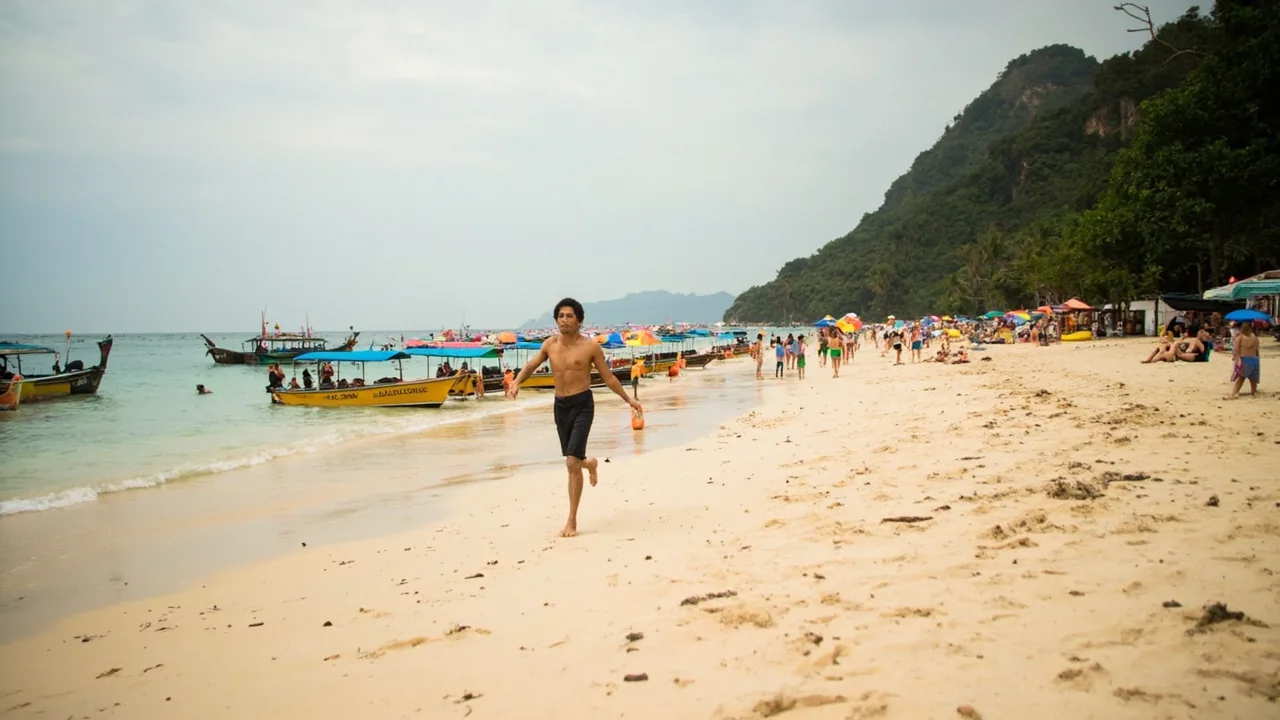
The “is Koh Samui crowded” question comes down to which 100 m of beach you stand on. Chaweng Beach main strip at 4 pm in January is a wall of sun loungers and souvenir shops. Chaweng Noi (a quieter stretch a short ride north of central Chaweng) is half-empty even at peak. Lamai is a middle-ground version of Chaweng, less manic, same convenience. Maenam and Bophut are noticeably quieter and have the better restaurants per square kilometre.
H2: How Crowded Does It Get?
Peak season runs December through February, with a secondary peak in July and August when European summer holidays collide with Thai school holidays. December and January are the worst, every decent guesthouse fills by mid-afternoon on weekends, and the ferries from Surat Thani run full.
The shoulder months that solve the crowding problem are March-May and September-November. March-April lands you in late dry season, temperatures climb, rains are mostly short showers after dark, and the island drops to about 60% of peak occupancy. You get the beaches, the restaurants, and the ferry seats without the queues. September-October is monsoon, but Koh Samui sits in a different weather pattern from the rest of Thailand, so the rain is intermittent rather than continuous (travellers report three rainy days in a row being unusual rather than typical). November is the genuine gamble month, getting clearer toward mid-month as the dry season returns.
November 1-10 is the worst of both worlds, transition weather, seaweed on the east-coast beaches, and ferry cancellations during squalls. The second half of November and the second half of March are the two sweet spots for a budget-conscious traveller who does not want to be the only person on the beach.
H2: Cheap Stays in Koh Samui (Hostel Picks)
Budget beds on Koh Samui sit in a tighter range than most Thai islands. The island has fewer 200-bed dorm towers than Bangkok or Chiang Mai, and a higher baseline from the resort economy bleeding into the backpacker zones. In shoulder season, expect dorm beds at ₹717-₹1,119 (~250-390 THB or ~$7.43-$11.59) and basic private rooms with fan and cold shower at ₹1,434-₹2,295 (~500-800 THB or ~$14.86-$23.78). In peak season those numbers climb to ₹1,721-₹2,582 (~600-900 THB or ~$17.83-$26.75) for dorms and ₹3,443-₹5,738 (~1,200-2,000 THB or ~$35.67-$59.44) for the same private room. Coconut-tier beachfront bungalows with attached bathroom hover around ₹2,295-₹4,304 (~800-1,500 THB or ~$23.78-$44.58) year-round when you book direct and walk in without a reservation.
Two areas matter most for budget stays. Chaweng and Lamai have the density of hostels, restaurants, and night buses within walking distance. Maenam and Bophut have quieter rooms, better value for money on the equivalent room type, and you trade a songthaew (Thai shared taxi) ride for the walk to nightlife. Most backpacker-tier travellers split the difference: stay two nights in Chaweng for the convenience, two nights in Maenam or Bophut for the quiet.
| Hostel | Area | Style | Bed Range | Book |
|---|
Subodh’s Pro Tip: The peak-week surge for Koh Samui dorms is usually ₹574-₹1,148 (~200-400 THB or ~$5.94-$11.89) above the shoulder baseline. If your dates flex even three days either side of a holiday weekend, you save enough to cover a day’s food.
H2: Cheap Way to Reach Koh Samui from Bangkok
The Bangkok-to-Koh Samui corridor has three reasonable options, and the right choice depends on whether you are improving for money, comfort, or time. If you are continuing north after the islands, our Bangkok to Chiang Mai guide covers the overland route up country.
Option 1. Cheapest: State Railway + Songserm Ferry Combo
This is the cheapest and most common route. Overnight sleeper train from Krung Thep Aphiwat Central Terminal (the new Bangkok terminal for long-distance State Railway routes, replacing the old Hua Lamphong station) to Surat Thani, then bus transfer from Surat Thani train station to the ferry pier, then the Songserm or Seatran ferry from Donsak pier to Nathon on Koh Samui. The whole combined ticket costs ₹1,721-₹2,439 (~600-850 THB or ~$17.83-$25.26) depending on class (fan vs air-con berth on the train), and takes 13-15 hours door-to-door. The class 2 fan berth on this route runs ₹1,721-₹2,008 (~600-700 THB or ~$17.83-$20.81), with a flat berth, a pillow and blanket, and air-con that runs cold enough for a second blanket.
Subodh’s Pro Tip: Book the train + ferry combo through your hostel or via the 12go aggregator. Buying each leg separately at the station usually costs the same but loses the connection guarantee when a ferry cancels in bad weather.
The ferry journey itself takes 1.5-2.5 hours depending on the operator and which pier on Koh Samui they dock. Songserm and Seatran both run large catamarans with indoor and outdoor seating, a small kiosk selling snacks and coffee, and toilets that you do not want to use.
Option 2. Best Experience: Sleeper Train (Class 2 A/C) + Lomprayah Ferry
Spending ₹574-₹861 (~200-300 THB or ~$5.94-$8.92) more per leg upgrades the experience meaningfully. Class 2 air-conditioned sleeper berths on Train 85 (Bangkok-Surat Thani) have proper bedding, reading lights, and a porter service. The Lomprayah ferry from Tapee Pier (closer to Surat Thani town than Donsak) is faster, the catamaran has wifi that sometimes works, and you arrive at Maenam Pier on the north coast rather than Nathon, cutting your onward songthaew across the island by half.
Total cost lands at ₹2,869-₹4,017 (~1,000-1,400 THB or ~$29.72-$41.61) depending on how far in advance you book, the time is 12 hours door-to-door, and you wake up closer to a beach than a railway platform. Verified Lomprayah departure times run 6:30 am and 8:00 am from Tapee Pier, both confirmed on the operator’s site as of July 2026.
Option 3. Fastest: Flight from Bangkok to Koh Samui (USM)
Bangkok Airways runs the 70-minute direct flight from Bangkok Suvarnabhumi (BKK) to Koh Samui (USM). Airfares start at ₹10,042-₹20,083 (~3,500-7,000 THB or ~$104.03-$208.05) one-way depending on how far ahead you book, with the cheapest seats appearing 3-4 weeks before departure. The flight costs 4-6x more than the train-ferry combo, and you also pay ₹287 (~100 THB or ~$2.97) for the songthaew from USM to Chaweng or ₹717-₹1,148 (~250-400 THB or ~$7.43-$11.89) for a private taxi.
It is worth paying the premium if: you only have 2 nights on the island, you are arriving after a long-haul flight and do not want to lose a full day in transit, or you are continuing on to Koh Phangan or Koh Tao the next morning and the schedule pressure is real. It is not worth it if you are doing a 4-night island stay, the time saved is one afternoon, and the money saved is two nights of hostel plus all your food.
Subodh’s Pro Tip: The flight option gets talked up because it sounds efficient, but the airport-to-ferry-to-songthaew-to-hostel chain eats the time saving. Factor in check-in, transfers, and luggage waits, and you are 4 hours door-to-door for the plane versus 12-13 for the train. You buy comfort, not time, at that price point.
H2: Getting Around the Island
Koh Samui has no BTS, no MRT, no public bus system. You have songthaews (shared pickups with benches in the back), private taxis, and rented scooters.
Songthaews are the budget option. Flag one down on the ring road, agree on a price before you get in, and pay ₹287-₹574 (~100-200 THB or ~$2.97-$5.94) for trips between Chaweng, Lamai, Bophut, and Maenam. Drivers will quote ₹861-₹1,434 (~300-500 THB or ~$8.92-$14.86) to tourists, walk away and the next one usually quotes 150. The songthaew becomes impractical after 9 pm when fewer of them run.
Renting a scooter costs ₹574-₹861 (~200-300 THB or ~$5.94-$8.92) per day from any of the dozens of shops in Chaweng or Lamai. You will need the passport as a deposit or a ₹5,738-₹8,607 (~2,000-3,000 THB or ~$59.44-$89.17) cash deposit. The ring road is paved and well-marked, the inner roads to beaches like Silver Beach and Coral Cove are steep but doable. The trickiest stretch is the uphill side of the Chaweng-Lamai hill, where scooters lose power with two people on them.
H2: Indian Passport Specifics
Thailand’s visa-free entry for Indian passport holders covers up to 60 days, which is more than enough for almost any Koh Samui trip. The TDAC digital arrival card is now mandatory and must be completed before boarding any flight or ferry into Thailand, the official portal is tdac.immigration.go.th. The form is free, takes 5 minutes, and generates a QR code you screenshot or print.
Vegetarians do fine on Koh Samui. Most Thai restaurants have a clear vegetable section on the menu. The northern and central Chaweng strips have pure-veg restaurants that serve Indian dishes for ₹230-₹430 (~80-150 THB or ~$2.38-$4.46) per plate, and several guesthouses report small prayer rooms in the back of their resorts for festival weeks.
The bigger India-specific headache is the road accident risk on scooters. Indian travellers are statistically over-represented in Koh Samui scooter accidents because they are first-time riders with no licence. The legal requirement is an International Driving Permit with motorcycle endorsement; the practical reality is that checkpoints on Koh Samui rarely enforce this. If you do rent, photograph the bike from every angle before riding off, and check the rental shop’s insurance terms in person.
H2: When NOT to Take This Route
The quiet months have a flip side. The southwest monsoon (roughly May through October) brings heavy rain, choppy seas, and ferry cancellations. The Songserm and Seatran boats will run in moderate rain but skip sailings when the Andaman Sea gets 2 m swells. The September-October period is the worst for cancellations; ferry sailings during the September-October monsoon window can see delays of 1-3 hours even on days that look clear from shore.
November is the genuine risk month. The weather is unstable, the seaweed blooms on the east-coast beaches turn the water murky, and the backpacker infrastructure thins out for 2-3 weeks as everyone waits for the December peak to start. If your only option is mid-November, fly in (Bangkok Airways adds extra flights for the transition weeks) and accept that the experience will be smaller and quieter than what you were picturing.
August is the second monsoon window to be aware of. European summer holidays push Koh Samui to a secondary peak, so accommodation is full but the weather is wet. You get the crowds without the sun.
H2: Getting Connected
AIS and TrueMove both cover Koh Samui with 4G, and 5G is active in Chaweng and parts of Bophut. The The AIS tourist SIM at 7-Eleven is usually cheaper than the airport counter; check the current package and price in-store before buying. Coverage is strong around the ring road and weakens on the inner-island hiking trails to waterfalls like Namuang and Hin Lat. If you are skipping the airport and want to stay online from your first train, Get Nomad eSIM loads on your phone before you land.
H2: What to Eat
Koh Samui does not have a famous single dish, it has a roster of good restaurants. For fresh Thai seafood, the fisherman’s villages on Bophut and Hua Thanon have evening stalls with grilled prawns, steamed fish with lime, and tom yum goong for ₹287-₹717 (~100-250 THB or ~$2.97-$7.43) per plate. The night market in Lamai (the Walking Street market on Sunday nights) is the most concentrated food court on the island.
One specific spot anchors the recommendation list. Clandestino Koh Samui sits in Bophut and runs a creative Thai-and-international menu with strong execution on the classics, expect to pay ₹861-₹1,721 (~300-600 THB or ~$8.92-$17.83) per main. It is the date-night option that does not feel touristy. For Indian or strict-vegetarian meals, Giant Summit Restaurant on the south side of the island serves Indian dishes with mountain views at ₹230-₹430 (~80-150 THB or ~$2.38-$4.46) per plate.
If you want strict-veg Indian food at hostel prices, the Jay restaurants clustered in north Chaweng and along the ring road near Lamai give you thali for ₹230-₹430 (~80-150 THB or ~$2.38-$4.46). None of them are fancy and none need to be.
H2: How Many Days You Need
Three full days is the right number for first-time visitors. Day 1 is arrival, beach, dinner, sleep. Day 2 is the Ang Thong Marine Park day trip (bookable through any hostel, ₹4,304-₹7,173 (~1,500-2,500 THB or ~$44.58-$74.30) including snorkel gear and lunch, the kayaking into the emerald lagoon is the highlight). Day 3 is a scooter loop around the ring road stopping at Hin Ta Hin Yai (the grandfather-grandmother rocks), a quiet southern beach, and a sunset drink on the west coast.
If you have four days, add the inland waterfall loop, Namuang 1 and 2 are the two best. Five days lets you add a half-day at Wat Phra Yai (the Big Buddha temple) and a slow morning at Chaweng Noi beach. Past five days the island starts repeating itself, and you should move on to Koh Phangan or Koh Tao rather than burning another night at the same hostel.
H2: Budget Breakdown Per Day (Shoulder Season)
| Category | Daily Cost (THB) |
|---|---|
| Dorm bed | ₹861 (~300 THB or ~$8.92) |
| Food (street + 1 restaurant) | ₹1,148-₹1,721 (~400-600 THB or ~$11.89-$17.83) |
| Local transport (songthaew, scooter fuel) | ₹430-₹717 (~150-250 THB or ~$4.46-$7.43) |
| One drink | ₹287-₹430 (~100-150 THB or ~$2.97-$4.46) |
| One attraction or activity | ₹861-₹1,721 (~300-600 THB or ~$8.92-$17.83) |
| Total | 1,250-1,900 THB/day |
The ₹861 (~300 THB or ~$8.92) dorm bed assumes shoulder season, Chaweng-adjacent but not Chaweng-central, and booking 1-2 days ahead through the hostel directly or via Hostelworld. In peak season, double the bed line.
FAQ
Is Koh Samui crowded in March? March is one of the best shoulder months. You get 60-70% of peak occupancy, full restaurant and ferry schedules, and water that is still clear. Late March starts turning humid.
Can I take the Indian passport sleeper train from Bangkok? Yes, the State Railway of Thailand does not restrict Indian travellers on overnight trains. Bring your passport, print your TDAC confirmation, and book the Bangkok-Surat Thani leg ahead online for the lower berth.
How much cash should I carry? Budget travellers get through 3-4 days on ₹8,607-₹14,345 (~3,000-5,000 THB or ~$89.17-$148.61) in cash, with the rest on a forex card. ATMs on Koh Samui add a foreign-card fee on top of your bank’s conversion; withdrawing in larger notes reduces the number of fee-charging transactions.
Is Koh Samui worth it vs Koh Phangan? Koh Samui is the more developed, more comfortable base. Koh Phangan (excluding Full Moon weeks) is the cheaper, quieter alternative. If your schedule is flexible and you want to save money, stay on Koh Phangan.
What is the cheapest way from Koh Samui to Phuket? An overnight ferry from Koh Samui to Phuket is one option, taking roughly 7 hours and running a few nights a week. From Phuket, the bus to Krabi and the ferry to Koh Lanta continue the route. Check a local booking portal for the current schedule and connection.
Do I need an international driving permit for a scooter? Legally, yes. Practically, no one checks. The bigger issue is having scooter accident insurance that includes medical evacuation, which most rental shops exclude from the basic 200 THB/day rate unless you pay up.
H2: Subodh’s Take
Koh Samui gets a bad reputation among budget backpackers who show up in high season expecting the Thailand of 10 years ago and instead find Italian package tourists paying ₹2,295 (~800 THB or ~$23.78) for a beach umbrella. The island is not what it was, but it is not what the backpacker forums claim either. The formula is simple: avoid December and January, base yourself 5 km north or south of central Chaweng, ride a songthaew instead of renting a scooter for the first day, and you get the best beaches in the Gulf of Thailand at ₹4,304 (~1,500 THB or ~$44.58) a day. That formula holds in 2026.
