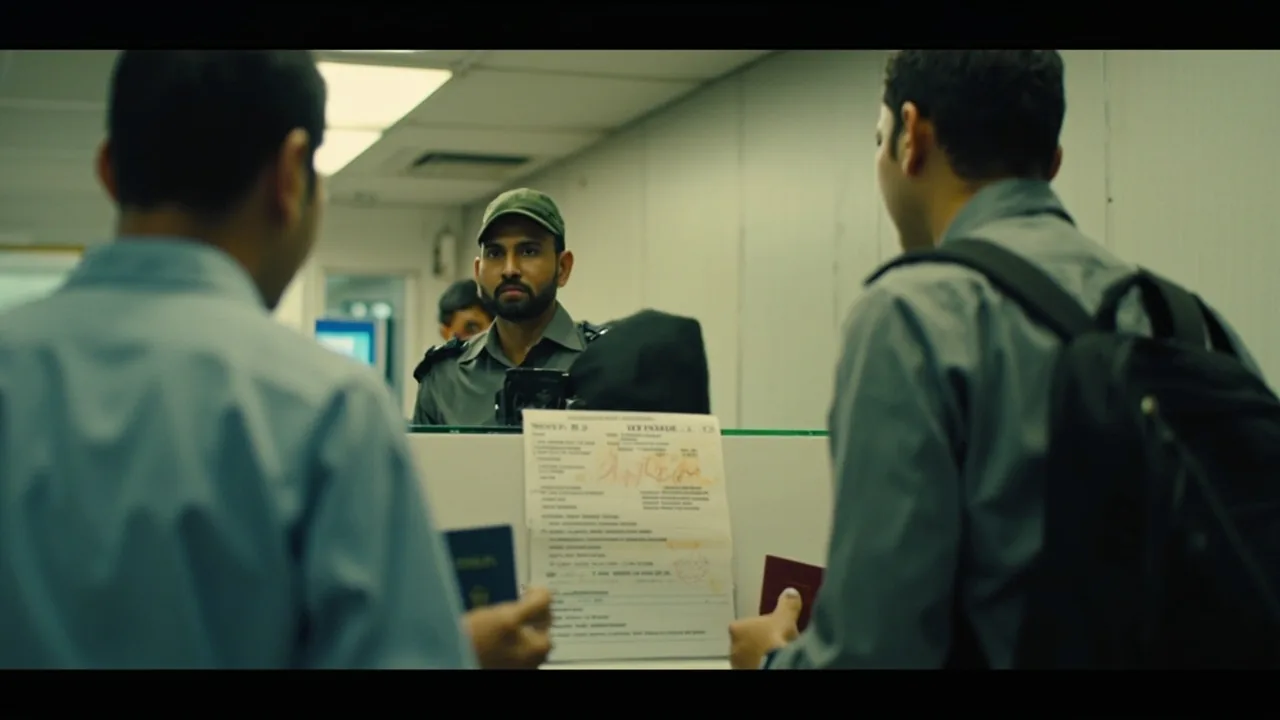
Philippines Visa for Indians: Visa on Arrival, SIM Card & Safety Guide (2026)
Quick note before you read: if you’re searching for Philippines visa on arrival for Indian passport holders, here’s the good news, you don’t need one. The Philippines doesn’t technically offer a “visa on arrival” to Indian passport holders, because Indians don’t need a visa at all. You walk in, get stamped, and walk out. That’s the whole process.
Verified 17 July 2026: Confirmed the 30-day visa-free entry and PHP 3,030 extension fee against the Bureau of Immigration Philippines website. SIM prices spot-checked at Globe and Smart kiosks in Manila NAIA and Cebu Mactan airports. Typhoon season dates matched to PAGASA’s latest advisory.
📍 Philippines at a Glance
📍 Region: Southeast Asia
🛂 Visa: Visa-free for Indians (30 days, extendable)
⏱️ Best trip length: 10-14 days
💰 Daily budget: PHP 1,500-2,500 (\~₹2,250-3,750 / \~$28-$46)
✅ Best for: Island hopping, surfing, budget beach trips
Quick Answers
| What | Answer | Price (INR) |
|---|---|---|
| Do Indians need a visa for Philippines? | No, visa-free entry for 30 days | Free |
| Can I extend my stay? | Yes, at BI offices for PHP 3,030/month | ~₹4,545/month (~$56) |
| Visa extension fees (each 29-day increment) | PHP 3,030/increment | ~₹4,545/increment (~$56) |
| Is there an airport/departure fee? | Yes, terminal fee PHP 550-850 | ~₹825-₹1,275 (~$8.56-$13.23) |
| Best SIM card for tourists? | Globe or Smart prepaid, PHP 50-100 for data | ~₹75-₹150 (~$0.78-$1.56) |
| When is typhoon season? | June to November, peak July-October | , |
| Solo female traveler safety rating | Generally safe, standard precautions apply | , |
H2: Philippines Visa for Indians. The Actual Rule
Indian passport holders get visa-free entry to the Philippines for 30 days. This is not a “visa on arrival” in the technical sense, because there’s no visa to apply for. You show your Indian passport at immigration, they stamp it for 30 days, you walk out. No fee, no form, no embassy visit beforehand.
The 30 days is counted from your date of entry, not from arrival at midnight or any other confusing boundary. If you fly in on 5 March, your stay expires on 4 April (30 calendar days later).
What You Need at Immigration
- Indian passport valid for at least 6 months beyond your entry date
- Return or onward ticket (they sometimes ask, sometimes don’t, but have it ready on your phone)
- Proof of accommodation (hotel booking or hostel confirmation works)
- Enough cash to cover your stay (rarely checked, but immigration officers have the right to ask)
That’s it. No bank statements, no invitation letters, no employment proof, no fee.
Extending Your Stay Past 30 Days
If you want to stay longer (and the Philippines rewards slow travel, so you probably will), you can extend at any Bureau of Immigration (BI) office in Manila, Cebu, or other major cities. The cost is PHP 3,030 for each 29-day increment. This is paid at the BI office, not online.
You’ll need:
- Your passport
- A copy of your passport bio page
- A copy of your arrival stamp page
- The extension fee in cash (PHP)
- A valid ACR I-Card if you’re staying over 59 days
Travellers report the process takes 1-3 hours depending on the queue. Go early in the morning to beat the lines.
Airport Terminal Fee
Separate from any visa (which is free), there’s an airport terminal fee of PHP 550-850 (₹825-1,275 / ~$8.56-$13.23) for international departures from Manila, Cebu, and other major airports. This is included in your airline ticket most of the time, but confirm when you check in. Domestic flights have their own terminal fees, usually PHP 50-200 (₹75-300 / ~$0.62-$2.47), and these are sometimes included in the ticket too.
The Philippines Travel Tax Explained covers the separate PHP 1,620 travel tax for first-time passengers on international flights.
H2: Visa-Free vs. Visa on Arrival. Why the Confusion?
Many Indian travelers search for “Philippines visa on arrival” because the terms get mixed up across Southeast Asia. Here’s how the Philippines compares to its neighbors (each country’s fee is separate):
- Vietnam: Visa on arrival for Indians (pre-approved letter required, ~25 USD stamping fee)
- Thailand: Visa on arrival for Indians (~$59.57 fee, 15-day stay)
- Cambodia: Visa on arrival for Indians (~30 USD + ~6 USD processing)
- Philippines: Visa-FREE for Indians (no fee, 30-day stamp on arrival).
The Philippines is the only major Southeast Asian country where Indians skip the visa step entirely. This makes it one of the easiest trips to plan from India.
Common Misconceptions
“I need a US or Singapore visa to enter the Philippines.” Wrong. US, UK, Schengen, Australia, Japan, Singapore visa holders don’t get any special treatment for Philippines entry. Indians get the same 30-day visa-free access regardless of what other visas they hold.
“I need to show PHP 30,000 in my bank account.” Not a published requirement for Indian citizens. Immigration officers can ask about funds at their discretion, but in practice this is almost never checked for tourists on 30-day stays.
“I can work on the visa-free entry.” No. This is strictly tourism. Working remotely is a legal grey area; technically you need a work permit, but enforcement against digital nomads is rare for short stays.
H2: Best SIM Card Options for Indian Travelers
Getting connected in the Philippines is straightforward. Two major carriers cover the country: Globe and Smart. Both offer tourist SIMs at the airport, and both work well in cities, beaches, and most islands.
Globe Prepaid
Globe has the widest coverage, especially in tourist-heavy areas like Boracay, Palawan, Cebu, and Siargao. Their tourist SIM (“GoSAKTO” or “GoSURF”) starts at PHP 100 (₹150 / ~$1.85) for a small data pack, with the popular PHP 299 (₹450 / ~$3.70) 30-day option including 8GB of data and unlimited texts to all networks.
Smart Prepaid
Smart often has stronger signal in rural and island-hopping routes. Their “Giga” tourist SIM runs PHP 100 (₹150 / ~$1.85) for basic data, with PHP 299 (₹450 / ~$3.70) for 6GB over 30 days. Travellers report Smart works better in Siargao and parts of Palawan.
Where to Buy
- Airport kiosks (Manila NAIA Terminals 1, 2, 3; Cebu Mactan; Clark): Most expensive, but convenient. PHP 100-200 (₹150-300 / ~$2-$4) markup on the SIM card itself.
- Convenience stores (7-Eleven, Ministop, FamilyMart): Standard price, just bring your passport for registration. This is where most backpackers buy.
- Carrier stores in malls: Best for topping up and getting the latest promo. Staff will set up the SIM for you.
Both carriers require passport registration by law. SIM registration in the Philippines is strict; unactivated SIMs stop working after a few days.
If you prefer not to deal with physical SIMs at all, Get Nomad eSIM gives you data coverage in the Philippines before you even land, and you can keep your Indian number active on WhatsApp for family check-ins.
H2: Best Time to Visit. Typhoon Season Awareness
This is the part most Philippines guides skip or gloss over, and it’s the part that can ruin your trip if you ignore it. The Philippines sits in the western Pacific typhoon belt. Typhoon season runs from June to November, with peak intensity from July through October.
Month-by-Month Breakdown
| Month | Weather | Risk Level | Verdict |
|---|---|---|---|
| December-February | Dry, cooler, 25-30°C | low | Best time to visit |
| March-May | Hot, dry, 30-35°C | low | Good, but expect heat |
| June | Hot, occasional rain | Low | Shoulder season, still good |
| July-August | Heavy rain, typhoons possible | Medium-High | Risky for island hopping |
| September-October | Peak typhoon season | high | Avoid if possible |
| November | Rain tapering off | Medium | Late shoulder, hit-or-miss |
For a detailed month-by-month analysis, see Best Time to Visit Philippines: Typhoon Season.
What Happens During Typhoon Season
If you’re in the Philippines during a typhoon:
- Domestic flights get cancelled (sometimes for 2-3 days straight)
- Ferry routes between islands shut down entirely
- Coastal areas may flood
- Power and internet outages in smaller towns
- Some islands become inaccessible for days at a time
Siargao, the Visayas (Cebu, Bohol, Siquijor), and Palawan are among the most affected by typhoon cancellations because they depend on ferries and small planes.
When Typhoons Hit Your Travel Dates
Book refundable accommodation and flights with flexible rebooking. Buy travel insurance that covers weather-related trip interruption. Have a 2-3 day buffer in your itinerary for delays. Monitor the PAGASA typhoon tracker (Philippine Atmospheric, Geophysical and Astronomical Services Administration) for real-time updates.
H2: Solo Female Traveler Safety
The Philippines is generally safe for solo female Indian travelers, with the usual Southeast Asia precautions applying.
Areas to Be Cautious
- Manila (Tondo, some parts of Pasay at night): Stick to Makati, BGC, Intramuros, and Ermita for tourist stays. Avoid walking alone late at night outside these areas.
- Crowded public transport: Pickpocketing exists, especially in jeepneys and crowded malls. Keep your bag in front of you.
- Beach parties at night: Drink-spiking is a risk at party scenes in Boracay and Siargao, as in many tourist nightlife areas across Southeast Asia. Watch your drink, don’t accept open drinks from strangers.
Standard Precautions
- Tell someone where you’re going each day (hostel staff, family back home, travel buddy)
- Don’t flash expensive phones, cameras, or jewelry
- Use Grab (ride-hailing) instead of unmarked taxis after dark
- Trust your instinct. If a situation feels off, leave
Cultural Notes for Indian Women
The Philippines is a Catholic-majority country, so dress codes are liberal. Shorts, tank tops, and beachwear are fine in tourist areas. In rural and Muslim-majority areas (parts of Mindanao, Sulu), dress more conservatively (shoulders and knees covered).
Indian women travellers report that the Philippines feels welcoming and respectful overall. Harassment is rare compared to some other Southeast Asian destinations.
For destination-specific safety updates before you travel, check the MEA travel advisory and the Philippine government’s Bureau of Immigration advisories.
H2: Money Matters. Cash, GCash, and ATMs
The Philippine Peso (PHP) is the local currency. Cards are widely accepted in malls, hotels, and chain restaurants, but cash is king in markets, jeepneys, tricycles, and small eateries.
Using GCash as a Foreigner
GCash is the Philippines’ dominant mobile wallet. Foreigners can register with a passport, but the process is slow and many GCash features remain restricted for non-Filipinos. Withdrawing PHP from an ATM and paying cash is simpler than fighting with GCash registration.
For a full breakdown of GCash for foreigners, see GCash Philippines for Foreigners.
ATM Tips
- ATM withdrawal limit is usually PHP 10,000-20,000 per transaction (₹15,000-₹30,000 (~$155.60-$311.19))
- Most ATMs charge PHP 200-250 (₹300-375 / ~$3.70-$4.63) per foreign-card transaction
- Use bank-affiliated ATMs (BPI, BDO, Metrobank) over standalone ones in convenience stores (higher fees, lower limits)
- Notify your Indian bank before travelling to avoid card blocks
For a PHP-to-INR conversion tool, see Currency Converter: PHP to Indian Rupee.
Transport Costs at a Glance
| Transport | Cost (PHP) | Cost (INR) |
|---|---|---|
| Jeepney (within city) | 9-20 | 14-30 |
| Tricycle (short ride) | 20-50 | 30-75 |
| Grab (Manila) | 100-300 | 150-450 |
H2: Quick Reference. Where to Eat When You Land
For veg-friendly options across Manila, Cebu, and other cities, see Vegetarian Indian Food Philippines Restaurant Guide and Vegetarian Indian Food Manila Cebu.
H2: Getting Connected
Mobile data in the Philippines is solid in cities and most tourist islands. Globe and Smart both offer 4G/LTE in urban areas, with 3G fallback in more remote spots. Dead zones exist on long bus routes in Mindanao, some island-hopping ferries, and remote beaches in Palawan. Download offline Google Maps for your route before you leave Wi-Fi.
The easiest option if you don’t want a physical SIM: Get Nomad eSIM. It activates before you land and lets you keep your Indian number on WhatsApp for family check-ins.
H2: When to Avoid This Trip
Skip the Philippines (pick a different window) if:
- Your travel dates fall in September or October: Peak typhoon season. Ferries cancel, flights ground, islands shut down.
- You’re on a tight 7-day schedule and your dates land in July or August: Typhoon disruptions can eat 2-3 days of your trip.
- You’re doing island-heavy itinerary (El Nido, Coron, Siargao, Siquijor) and your dates are in typhoon season: These routes depend on ferries and small planes that cancel in bad weather.
Better windows: December to May. The dry season runs from December through May, with March-April being the hottest and driest months. December-February is the most popular and comfortable (25-30°C, low humidity).
For island-specific travel between typhoon months, see our internal guide on ferry schedules and pricing.
H2: Planning Your Philippines Trip from India
From India
Direct flights from Delhi, Mumbai, and Bangalore to Manila (NAIA). Airlines include Philippine Airlines, Air India, and Cebu Pacific via Singapore. Round-trip fares range from ₹25,000 (~$259.33) to ₹45,000 (~$466.79) depending on season and how far ahead you book.
Internal Flights
Cebu Pacific, AirAsia Philippines, and Philippine Airlines run domestic routes between Manila, Cebu, Davao, Siargao, and other cities. Book early for the best fares (₹2,000-₹6,000 (~$20.75-$62.24) for most routes). For cheaper options, see Cheapest Transport Philippines Routes Guide.
Itinerary Help
For a complete trip plan, see Philippines 2 Week Itinerary for Indian Backpackers. Planning more Southeast Asia stops? Our Southeast Asia Backpacking Guide for Indians covers visa rules, budgets, and routes across the region.
FAQ
Do Indians need a visa for Philippines in 2026?
No. Indian passport holders get visa-free entry for 30 days. Just show your passport at immigration, get stamped, and you’re in.
Can I extend my 30-day stay in the Philippines?
Yes. Go to any Bureau of Immigration office and pay PHP 3,030 (~₹4,545 / ~$56) for each 29-day increment. The fee is the same for every extension.
Is the Philippines safe for solo Indian female travelers?
Generally yes, with standard precautions. Stick to tourist areas in Manila, use Grab at night, and watch your drink at beach parties.
What’s the best SIM card for tourists in Philippines?
Globe or Smart prepaid. Both have tourist packages starting at PHP 100 (~₹150 / ~$1.85). Buy at the airport for convenience or at 7-Eleven for standard pricing.
When is typhoon season in the Philippines?
June to November, with peak months July through October. September-October is the highest risk for trip-disrupting typhoons.
Can I use GCash as a foreigner in the Philippines?
Limited access. Foreigners can register with a passport but many features remain restricted. Cash and ATMs are simpler for short stays.
How much cash should I carry for a 2-week Philippines trip?
Budget PHP 25,000-40,000 (~₹37,500-60,000 / ~$463-$741) for 14 days, not including flights and accommodation. Use ATMs to top up rather than exchanging large amounts at the airport.
Subodh’s Take
The Philippines is one of the easiest Southeast Asian countries for Indians to enter, which is a double-edged sword. The easy visa means a lot of Indian travelers skip the Philippines entirely (heading instead to Thailand, Vietnam, or Bali), which means the Philippines stays less crowded, less commercialized, and cheaper than its neighbors. If you can dodge typhoon season (December to May is your window), the Philippines rewards you with empty beaches, world-class diving, and a kind of raw, uncommercial island life you won’t find in Bali or Phuket anymore. The visa-free entry is the easy part. The hard part is choosing which of the 7,000 islands to visit.
- Subodh
