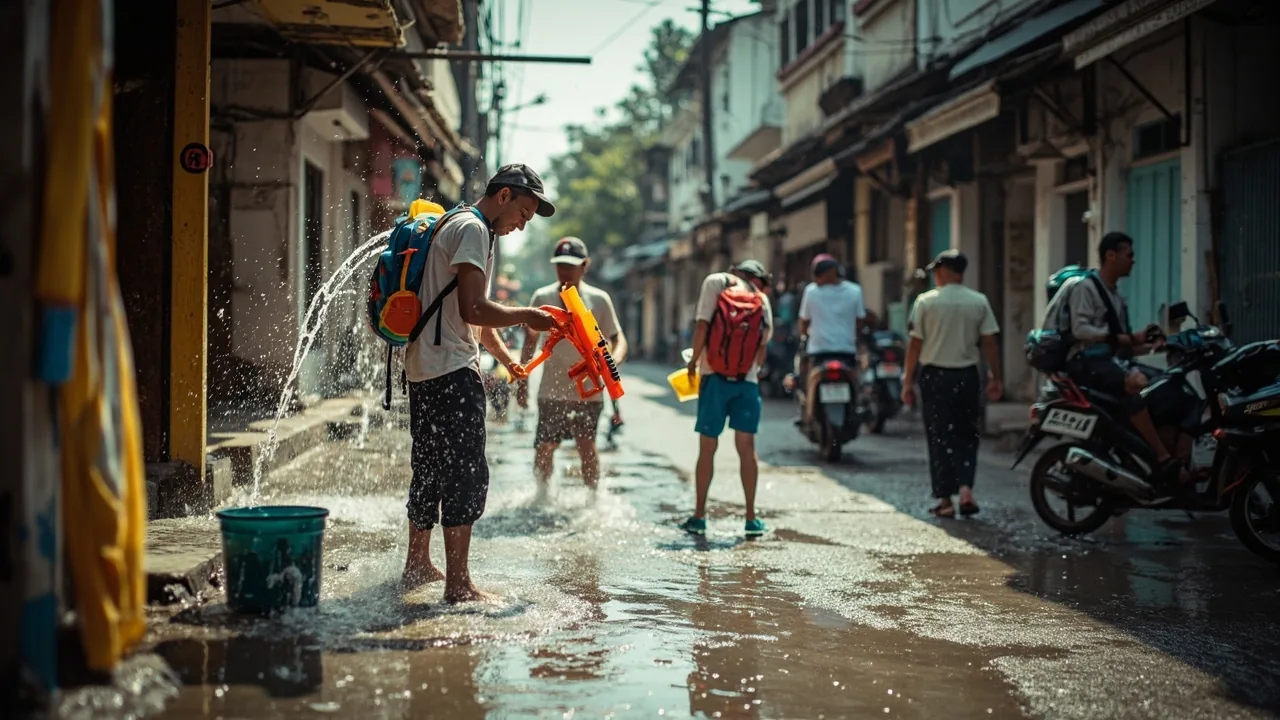
Songkran Festival Route (April): The Water Festival Itinerary for Indian Backpackers
Songkran is not a one-day event. For Indian travellers planning around Songkran in 2026, the Thai New Year runs roughly 13 to 15 April, but the wider water-festival window across mainland Southeast Asia stretches from early April through mid-May, and it pulls a route through Thailand, Laos, Cambodia, and (depending on the year) Myanmar’s smaller Thingyan celebrations. The trick is sequencing three countries on different visa clocks, in monsoon-edge weather, when hostels triple their prices and every bus is sold out. For related planning, see our guide on Sea Backpacking Hub.
This is the corridor-guide version: a point-to-point logistics briefing, not a vibe piece. If you want the festival-by-festival writeup, you want the Bangkok to Chiang Mai backbone and the Phnom Penh to Siem Reap distance guide for the second half. What follows is the route that ties them together.
Subodh’s Pro Tip: Book your Songkran week accommodation in Chiang Mai before 31 January. The city fills up by February every year, and walk-ins during 13 to 15 April pay 3x to 5x normal hostel rates.
Quick Answers
| What | Answer | Price (INR) |
|---|---|---|
| Official Thai Songkran dates 2026 | 13 to 15 April (some provinces extend to 17 April) | Free to attend |
| Lao New Year (Pi Mai) dates 2026 | 14 to 16 April nationwide, Vientiane runs 14 to 16 April | Free to attend |
| Cambodian Chol Chnam Thmey dates 2026 | 13 to 16 April (3 official days, plus public holidays through 16 April) | Free to attend |
| Cheapest Indian passport visa for the loop | Thailand visa exemption (60 days) + Cambodia e-visa | ₹0 (TH) + ~₹2,890 (~30 USD) |
| Best base for Songkran itself | Chiang Mai, then Bangkok for the closing weekend | ₹800 (~$8.30) to ₹1,500/night hostel peak |
The Route at a Glance
The most-used Songkran loop for Indian backpackers in 2026 runs:
Bangkok → Chiang Mai → Chiang Rai → Huay Xai (border) → slow boat to Luang Prabang → Vientiane → (optional fly) → Phnom Penh → Siem Reap → home
The Thailand leg is the festival itself. The Laos leg catches Pi Mai, which runs on similar dates and is far less crowded. The Cambodia leg catches the tail end of Chol Chnam Thmey and lines up with Cambodia visa runs from Thailand for anyone needing to reset their Thai exemption.
There is no single point-to-point corridor here because the loop covers 4,000+ km and 3 borders. Treat this as a sequenced corridor with three legs: Thailand internal (Chiang Mai focus), Thailand to Laos (slow boat from Huay Xai), and Laos/Cambodia (fly or overland via Stung Treng).
Option 1: The Cheapest Route
The cheapest 14-day Songkran loop for Indian passport holders is a Thai internal bus loop + slow boat + Cambodian e-visa on arrival.
- Bangkok to Chiang Mai: overnight sleeper train, 2nd class air-con, around ₹2,287-₹3,431 (~800-1,200 THB or ~$23.74-$35.61) depending on berth
- Chiang Mai to Chiang Rai: Greenbus public bus, around ₹572 (~200 THB or ~$5.94)
- Chiang Rai to Chiang Khong (for Huay Xai border): minivan, around ₹572 (~200 THB or ~$5.94)
- Huay Xai to Luang Prabang (slow boat): local boat, around ₹1,160 (~270,000 LAK or ~$12.04) including the pier tuk-tuk
- Luang Prabang to Vientiane: slow boat (2 days) or VIP bus (overnight), ₹1,074-₹1,503 (~250,000-350,000 LAK or ~$11.15-$15.60) for bus
- Vientiane to Phnom Penh: cheapest is a flight on Lao Airlines or AirAsia, often cheaper than overland once you count food and a night
- Phnom Penh to Siem Reap: bus or shared taxi, around ₹1,156 (~12 USD) to ₹1,445 (~15 USD) Add the visas: Thailand is free for Indians on exemption (60 days in 2026). Cambodia is a ₹2,890 (~30 USD) e-visa online plus a ₹193 (~2 USD) processing step. Laos needs a visa-on-arrival at Huay Xai for most nationalities; for Indians the current fee sits at ₹2,890 (~30 USD) to ₹3,854 (~40 USD) depending on length. Total cheapest land-and-bus route, end-to-end, roughly ₹17,341 (~180 USD) to ₹21,195 (~220 USD) per person outside of Songkran-week accommodation.
Safety Alert: Huay Xai’s slow boat pier has a long-standing issue with unmarked “tour operator” touts adding ₹482 (~5 USD) to ₹963 (~10 USD) in surprise fees. Walk to the official Lao government ticket counter, ignore anyone who walks with you, and confirm the price in writing before you board.
Option 2: The Best Experience
If you have 16 days and want to enjoy Songkran without sleeping on station floors, the version I would build for a friend looks like this:
- Days 1 to 3: arrive Bangkok 3 days before Songkran, recover, do Khao San prep
- Days 4 to 7: train to Chiang Mai, land 11 April, hit Songkran on the 13th, stay through the 15th. The Old City moat is the centre of gravity.
- Day 8: bus to Chiang Rai, then to Chiang Khong, cross to Huay Xai in the afternoon
- Days 9 to 10: slow boat to Luang Prabang, two days on the Mekong. This is the single best scenic travel day in mainland SEA.
- Days 11 to 12: Luang Prabang, catch Pi Mai on the 14th to 16th. Smaller crowds than Chiang Mai, more local, less drunk.
- Days 13 to 14: VIP bus or short flight to Phnom Penh, then bus to Siem Reap
- Day 15: Angkor sunrise, fly home from Siem Reap
Best-Experience budget: roughly ₹38,536 (~400 USD) to ₹52,986 (~550 USD) per person, including mid-range hostel accommodation, three internal flights, and the Cambodia e-visa. That is the sweet spot for comfort and price.
Subodh’s Pro Tip: Book the Chiang Mai hostel for the Songkran window 4 to 6 months out. The ₹3,431 (~1,200 THB or ~$35.61) dorm bed becomes ₹7,147-₹10,006 (~2,500-3,500 THB or ~$74.19-$103.86) during festival week, and the good hostels inside the moat sell out by February.
Option 3: The Fastest Route
If you have 8 to 10 days and want Songkran without the marathon, fly between cities:
- Bangkok to Chiang Mai: AirAsia, Nok Air, Thai Vietjet, 1h 15min, ₹4,288-₹10,006 (~1,500-3,500 THB or ~$44.51-$103.86) one way booked 30 days out
- Chiang Mai to Luang Prabang: Lao Airlines or Bangkok Air via BKK, 4 to 7 hours total with layover, ₹12,865-₹25,730 (~4,500-9,000 THB or ~$133.54-$267.08)
- Luang Prabang to Phnom Penh: Lao Airlines or AirAsia via VTE/BKK, ₹11,561 (~120 USD) to ₹21,195 (~220 USD)- Phnom Penh to Siem Reap: Cambodia Angkor Air or bus, ₹2,408 (~25 USD) to ₹7,707 (~80 USD) flight, ₹1,156 (~12 USD) to ₹1,445 (~15 USD) bus
The fast version lets you hit Chiang Mai Songkran + Luang Prabang Pi Mai + Angkor sunrise in 9 days. It costs roughly 1.4x to 1.8x the bus version once you add three internal flights, but you skip three overnight buses and the Chiang Khong-to-Huay Xai minivan scramble.
The honest call: if your total budget is under ₹48,170 (~500 USD) for the whole trip, take the bus and slow boat. If your total budget is ₹77,071 (~800 USD)+, fly Chiang Mai to Luang Prabang and bus the rest. The slow boat is non-negotiable; the overnight Chiang Mai to Luang Prabang bus is skippable.
Border Crossings (You Will Hit Three)
Chiang Khong (Thailand) to Huay Xai (Laos). The Mekong Friendship Bridge
This is the easy one. The 4th Friendship Bridge crosses the Mekong here, you walk across, and the Lao immigration post is 200 metres past the bridge on the right. For Indians in 2026:
- Lao visa-on-arrival is available at the airport and at this land border
- Bring a passport photo (4x6 cm is fine), ₹2,890 (~30 USD) to 40 in clean bills, and your Indian passport with at least 6 months validity
- The Thai exit stamp is fast, the Lao entry stamp with the visa window takes 30 to 60 minutes in peak Songkran traffic
- Money exchange: change THB to LAK at the official counter past immigration. Rates are 5 to 10% worse than Chiang Rai, but it is convenient
- Buses depart from Huay Xai pier to Luang Prabang twice daily in high season
Vientiane (Laos) to Thailand. The Nong Khai Friendship Bridge (Optional Loop Back)
If you finish in Vientiane and want to fly home from Bangkok overland, this is the return. Same drill, Lao exit + Thai entry, 200 metres of walking. Thai visa exemption applies on re-entry if your previous stamp is older than 30 days. For Indians in April 2026, you can repeat the exemption cycle once, but double-check the current Thai rules on consecutive exemptions before relying on it.
Cambodia Entry. Poipet (Thailand) or Stung Treng (Laos)
There are two real options:
- Poipet land border from Aranyaprathet (Thailand): the classic Poipet border crossing for Indian backpackers. Cambodia e-visa is required for Indians at this crossing; visa-on-arrival is no longer consistently issued to Indian passport holders here. Apply online before you go.
- Stung Treng (Laos) to Cambodia via Trapeang Kreal: a slower, less-used crossing that does still issue visa-on-arrival to Indians in most cases. Useful if you are coming from southern Laos.
Safety Alert: Read the official India MEA travel advisory at mea.gov.in before crossing any border. Country-level rules change without notice, and the Facebook and Reddit threads from 2024 are not a substitute.
Indian Passport Specifics
Three things Indian travellers hit on this route that other nationalities do not:
- Laos visa fee is higher for Indians: it has historically been set at ₹3,854 (~40 USD) for a 30-day visa for Indian passport holders, while ASEAN and most Western passports pay ₹2,890 (~30 USD) to ₹3,372 (~35 USD). Confirm on the Lao eVisa site before you fly, fees are revised periodically.
- Cambodia e-visa vs VOA: Indians are accepted on VOA at Phnom Penh and Siem Reap airports, and at most major land borders except Poipet. At Poipet, use the e-visa portal. The e-visa costs ₹2,890 (~30 USD) plus a ₹193 (~2 USD) processing fee.
- Thailand visa exemption double-check: Indian passport holders get a 60-day visa exemption in 2026 (down from the longer stays of earlier years). If you have used an exemption within the last 30 to 60 days, the re-entry stamp may be denied or shortened. Plan accordingly. Always cross-check the Thai MFA’s exemption list before booking flights.
You will also want:
- Two passport photos for Laos VOA, even if some counters say digital is fine
- USD cash in small clean bills (no folds, no marks) for border fees; Thai and Cambodian ATMs sometimes decline Indian debit cards, see the ATM fees in SE Asia guide
- Printed flight out of Cambodia or onward bus ticket. Immigration at Siem Reap airport occasionally asks.
When NOT to Take This Route
Two months to avoid:
- Mid-May to early October: monsoon season. The slow boat from Huay Xai gets cancelled or delayed, rural roads in Laos wash out, and Angkor’s temple approaches get muddy. If your trip flexibility is wide, push Songkran + Pi Mai to April and start Cambodia in mid-May.
- Late December to mid-January: high season is fine, but the Chiang Mai Lantern Festival crowds overlap with Songkran prep, and accommodation in Vientiane and Luang Prabang spikes.
The route is genuinely year-round-friendly otherwise. April is the busiest and the driest, with Songkran pulling the volume.
Getting Connected
Coverage on this route is generally strong. AIS and DTAC roam across the Mekong Friendship Bridge without dropping signal, and the slow boat itself has intermittent 4G from Laos Telecom towers along the riverbank. Dead zones exist on the Chiang Rai to Chiang Khong minivan (30 minutes of nothing) and on parts of the Laos internal bus network.
If you want zero hassle, the local SIM at Bangkok Suvarnabhumi is the easiest setup, and you can top up across the border in Laos with a Lao Telecom SIM for around ₹215 (~50,000 LAK or ~$2.23). Get Nomad eSIM if you want data working the moment you land without a SIM swap.
Compare prices on 12go for any leg of this loop, including the slow boat and the Bangkok to Chiang Mai sleeper train.
FAQ
Is Songkran safe for Indian travellers in 2026?
Yes, with the same caution as any large crowd. Petty theft goes up around Khao San and the Chiang Mai moat. Keep your phone in a zipped pocket, use a waterproof phone pouch, and do not carry your passport in your day bag during water fights. The festival itself is family-friendly in most cities.
How much cash should I carry for the Laos border?
Plan on ₹4,817 (~50 USD) to ₹7,707 (~80 USD) equivalent in small clean bills for the visa fee, the tuk-tuk to the pier, and the slow boat. ATMS in Huay Xai exist but they decline Indian debit cards roughly 30% of the time. Bring the cash.
Can I do the slow boat to Luang Prabang without a pre-booked hostel?
Yes. The boat lands in Luang Prabang around 4 to 5 PM, and the town has plenty of same-day hostels. During Pi Mai week (14 to 16 April) book at least 2 weeks ahead, it is the busiest backpacker weekend in Laos.
Is the Chiang Mai Songkran better than Bangkok Songkran?
Different. Bangkok’s Silom Road and Khao San are louder, wetter, and more touristy. Chiang Mai’s Old City moat is more local, with traditional alms-giving and family water fights. Most Indian backpackers prefer Chiang Mai; most Israeli and Australian groups prefer Bangkok.
Do I need a Cambodia visa if I am flying in from Laos?
Yes, for Indian passport holders. The Cambodia e-visa portal takes 3 business days, and visa-on-arrival is available at Phnom Penh and Siem Reap airports. Land crossings vary, see the Poipet note above.
Can I extend my Thai visa exemption during Songkran?
Extensions are available at Thai immigration offices in Bangkok and Chiang Mai, but the queue during Songkran week is brutal. If you know you need more than 60 days, apply before the festival window, not during.
Subodh’s Take
The Songkran loop is one of those trips where the festival is half the experience and the slow boat is the other half. Chiang Mai gets all the marketing, but Pi Mai in Luang Prabang is the same festival on a slower river, with fewer water guns and more smiles. If you are doing this route, give yourself at least one rest day between the Songkran madness and the border crossing into Laos. You will not regret it, and your body will thank you.
