Southeast Asia on ₹3,000 (~$31.14) a Day: A Real 2-Week Plan (2026)
📍 Distance: Whole region, your route ⏱️ Fastest loop: 14 days, no rest days 💰 Cheapest per day: ~₹2,400 (~$24.91)
Most “Southeast Asia on $X a day” articles rely on outdated prices, or one-week sprints that don’t match a real 14-day budget; this one is built from a real constraint: an Indian passport, a 14-day window (the typical first-timer’s annual leave), and a comfortable budget 2-week target of ₹3,000 (~$31.14) a day as the headline budget, including everything from the airport pickup to the last beer. That’s roughly 32 USD per day at current rates (1 USD = ₹96.5289, so ₹3,000 ≈ $31.08).” You may also find Ho Chi Minh City to Phnom Penh useful for this trip.
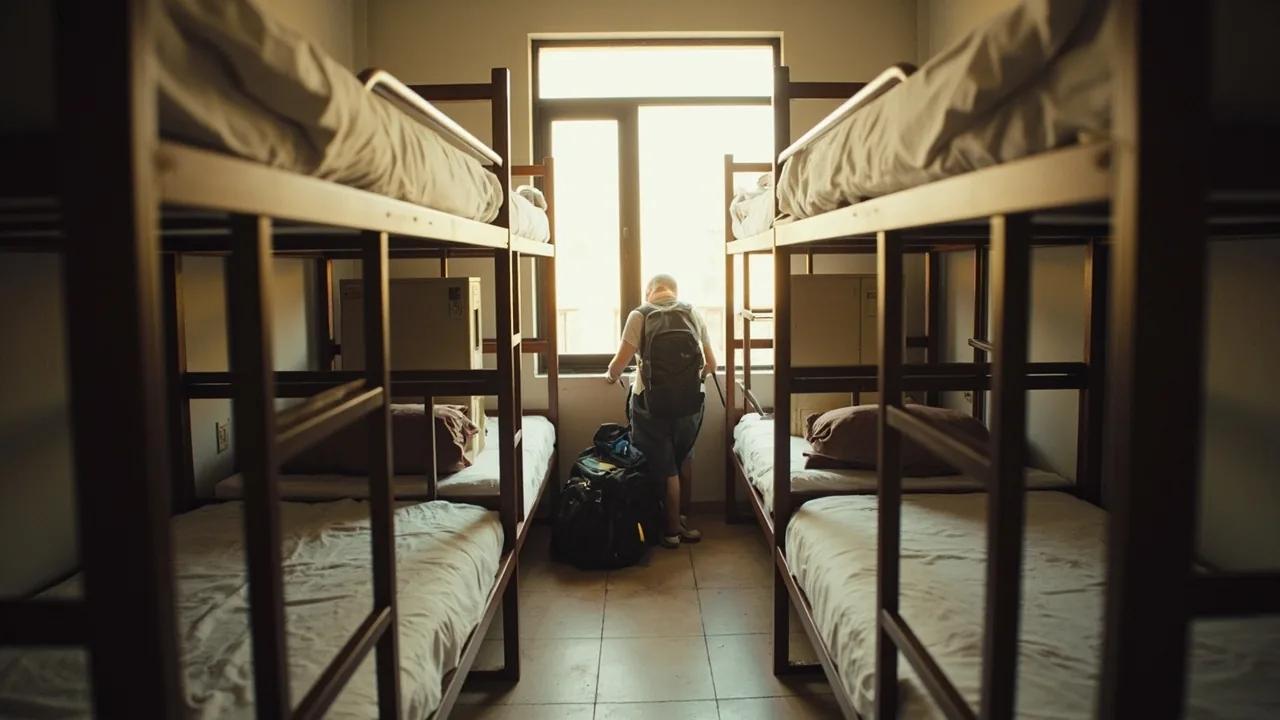
Spoiler: ₹3,000/day is comfortable. Not bare-bones backpacker-bunk-bed-on-the-floor comfortable, but real comfortable. Hostel dorm, street food, one or two paid attractions, a beer or two in the evening, the occasional tuk-tuk. You won’t be stressing at the end of each day, and you won’t be eating plain rice at every meal. Indian travelers usually come in expecting Southeast Asia to be dirt-cheap the way Goa is cheap, and they leave surprised that Bangkok or Hanoi feels like actual cities with actual prices. Both things are true at once, and ₹3,000/day threads that needle cleanly. See also: Hue to Hoi an.
This guide is a corridor, but it’s a regional corridor, the one that stitches together the most efficient 14-day loop for an Indian first-timer, hitting Thailand, Cambodia, and Vietnam in a single arc. It assumes you’re flying into Bangkok and out of Ho Chi Minh City (or the reverse), the standard open-jaw itinerary that wastes zero days on backtracking. For related planning, see our guide on Phnom Penh to Siem Reap Distance.
Subodh’s Pro Tip: ₹3,000/day is your average. Don’t try to hit that number on Day 1, when SIM cards and visa fees eat into the budget, and don’t try to hit it on Day 14 either, when you’ll want one nice dinner. Spread the variance across the whole trip. You may also find Siem Reap to Koh Rong useful for this trip.
Quick Answers
| What | Answer | Price (INR) |
|---|---|---|
| Realistic daily budget | Dorm + street food + transit + 1 beer | ₹3,000 (~$31.14) |
| Cheapest country per day | Laos or Cambodia (off Bangkok) | ₹1,800 (~$18.68) |
| Most expensive country per day | Singapore, then Vietnam’s big cities | ₹4,500 (~$46.71)+ |
| Visa fees total (Indian passport, 14 days) | Thailand free + Cambodia ~₹2,890 (~$30)+ Vietnam ~₹2,408 (~$25) | ₹4,800 (~$49.82) |
The Route: 14 Days, 3 Countries, No Wasted Days
Here’s the spine of the itinerary, the actual sequence that makes geographical sense rather than bouncing around the map. Day 1 starts in Bangkok because most direct flights from Indian metro airports land there (direct flights from Delhi, Mumbai, Bengaluru, and Kolkata, all under 5 hours, all ₹18,000 (~$186.84) to ₹26,000 (~$269.88) round trip if you book 3 to 4 weeks out).
Days 1 to 3: Bangkok. Two nights is the sweet spot for Bangkok on a first trip, with Day 1 as an arrival day and Day 3 as a half-day before the move on.
Days 4 to 5: Siem Reap. Fly Bangkok to Siem Reap direct. Cambodia’s visa-on-arrival is the published fee plus a passport photo, paid in clean USD bills at the counter. Two nights is enough to see Angkor Wat at sunrise (Day 5, 5:00 AM start, worth every minute), plus a half-day at Angkor Thom and Ta Prohm on Day 4 afternoon.
Days 6 to 7: Phnom Penh. Bus from Siem Reap, 6 to 7 hours, scenic once you’re out of the highway. One full day for the Killing Fields and S-21, then evening food and a riverside walk.
Days 8 to 9: Ho Chi Minh City. Fly Phnom Penh to HCMC, 1 hour. Two nights. War Remnants Museum is non-negotiable. Cu Chi Tunnels as a day trip on Day 9.
Days 10 to 11: Hoi An. Fly HCMC to Da Nang, 1.5 hours, then 45-minute taxi to Hoi An. Two nights minimum, this is the prettiest town in the itinerary. Old town at night, lantern walk, beach during the day.
Day 12: Hue. Day trip from Hoi An over the Hai Van Pass. Imperial city, half a day. Sleep in Hoi An again.
Day 13: Hanoi. Fly Da Nang to Hanoi, 1.5 hours. One full day. Old Quarter walking, pho, egg coffee, Hoan Kiem Lake at sunset.
Day 14: Fly home. Morning flight from Hanoi to Bangkok (1.5 hours) for the cheapest connection back to India, or direct from Hanoi if you can find one.
That’s the loop. Total ground transport: two international flights (Bangkok to Siem Reap, Phnom Penh to HCMC), two domestic flights (HCMC to Da Nang, Da Nang to Hanoi), and one short connection back. Five flights, two of them international, all on budget carriers. Total airfare inside Southeast Asia: ~₹12,000 (~$124.56) to ₹18,000 (~$186.84) if you book each leg separately.
Safety Alert: Check your government’s travel advisory before booking, especially for any current advisories on Bangkok, Phnom Penh, or Vietnam’s central coast. The Indian MEA travel advisory page at mea.gov.in is updated within hours of any new incident.
Option 1: Cheapest
The cheapest version of this loop cuts two of the internal flights and replaces them with buses and trains. Specifically: skip the Phnom Penh to HCMC flight (the bus from Phnom Penh to HCMC takes 6 to 7 hours and costs about ₹1,445 (~$15), around ₹1,448 (~$15.03)), and skip the Da Nang to Hanoi flight (the sleeper train from Da Nang to Hanoi is 16 hours, costs ₹2,408 (~$25) to ₹4,335 (~$45), around ₹2,414 (~$25.06) to ₹4,345 (~$45.10), and is one of the great train rides of the region).
That cuts your internal airfare from ~₹16,000 (~$166.08) down to ~₹8,000 (~$83.04). You save ₹8,000 (~$83.04). The cost is two extra days of travel time, which a 14-day itinerary does not have.
So the cheapest version of this 14-day plan is, in practice, almost the same plan. The real “cheapest” version is a 7-country slower route over 3 to 4 weeks, not a 14-day route. If you only have 14 days, the cheapest version of this loop is the same one above, just with dorm beds instead of private rooms and street food only, no rooftop drinks.
That version lands at roughly ₹2,400/day all-in, or about ₹33,600 (~$348.77) for 14 days on the ground. Add the open-jaw flights from India and you’re at ₹55,000 (~$570.90) to ₹60,000 (~$622.80) total.
For cross-border bus and ferry comparisons across this corridor, see our Mekong Delta to Cambodia overland guide.
Option 2: Best Experience
The version of this loop I’d book for myself if a friend asked. Same countries, same sequence, but with three adjustments:
One, swap Bangkok for Chiang Mai. Fly into Chiang Mai instead of Bangkok (still direct from India, ₹20,000 (~$207.60) to ₹28,000 (~$290.64)), spend Day 1 and 2 there instead, then fly Chiang Mai to Bangkok on Day 3 for the connection to Siem Reap. Chiang Mai’s Old City is calmer, the food is better, and the temples don’t have cruise-ship crowds.
Two, add one night in Luang Prabang between Siem Reap and Hanoi. Yes, that’s a detour. Yes, it’s worth it. Luang Prabang is the prettiest small town in Southeast Asia, the alms-giving ceremony at dawn is one of the most memorable things you can do on a 14-day trip, and the slow boat down the Mekong from the Laos-Thailand border is a once-in-a-lifetime day. The trade-off: skip Phnom Penh entirely (you can do the Killing Fields in HCMC if you want, but the experience is different). This version drops Cambodia and adds Laos, and it converts the trip from “full” to “memorable.”
Three, sleep in 4-bed dorms rather than 8-bed or 10-bed. The price difference is small (₹400 (~$4.15) to ₹600 (~$6.23) vs ₹300 (~$3.11) to ₹400 (~$4.15) per night) and the sleep difference is huge.
This version runs ~₹3,800/day, about 15% over the ₹3,000 (~$31.14) headline, but it gives you Chiang Mai, Luang Prabang, Hoi An, and Hanoi in 14 days, four of the five most beautiful towns in Southeast Asia.
Option 3: Fastest
The fastest version is the same as the standard version, just with one fewer rest day. Cut Hoi An to one night instead of two, and cut Hue entirely. Day 12 becomes a travel day from Hoi An to Hanoi via Da Nang flight. That gives you Bangkok (2 nights), Siem Reap (2), Phnom Penh (1), HCMC (2), Hoi An (1), Hanoi (2) plus travel days. Fourteen days, eight destination nights, six travel/buffer days.
Cost is roughly the same: ~₹3,000/day. You lose the slow afternoon in Hoi An and the Imperial City in Hue, which is a real loss, but if you’ve already done Hoi An on a previous trip, this is the way to compress.
The fastest version that also hits Hanoi from Bangkok without backtracking is the open-jaw air ticket itself: fly into Bangkok, fly out of Hanoi. Trying to fly into Bangkok and out of Bangkok on a one-way 14-day itinerary means either a long bus back to Bangkok at the end or an expensive positioning flight from Hanoi, neither of which is a good use of your last day.
Indian Passport Specifics
Three countries, three different visa situations for Indian passport holders.
Thailand. Visa-free entry for Indian passport holders for stays up to 60 days, as of the current rules. No fee, no paperwork at the border, no onward ticket required (though having one helps if you get a curious immigration officer). Just walk through.
Cambodia. Visa-on-arrival at Phnom Penh, Siem Reap, and all major land borders. ₹2,890 (~$30) cash, one passport photo, one form filled in at the counter. E-visa available online for ₹2,890 (~$30) plus a ₹578 (~$6) processing fee if you want to skip the queue, total ₹3,468 (~$36). The visa line at Siem Reap airport moves fast. At the land border from Thailand (Poipet, on the Bangkok to Siem Reap bus route), it moves slower, but you can buy a “VIP” fast-track for ₹482 (~$5) from the touts inside the terminal. Pay it. The savings in queue time is worth ₹482 (~$5).
Vietnam. E-visa required for Indian passport holders. Apply online at the official Vietnamese immigration portal, ₹2,408 (~$25), processing takes 3 working days. You can also apply for a visa-on-arrival but that requires a pre-approved letter, costs more, and is a relic of the pre-e-visa era. Get the e-visa.
Subodh’s Pro Tip: Don’t carry the visa fee cash in USD if you’re flying. Most major airports in the region have an ATM in the arrivals hall where you can pull out local currency at a better rate than the money-changer booths; see our ATM fees in Southeast Asia primer before you leave.
When NOT to Take This Route
July through September. Wet season across most of mainland Southeast Asia. Bangkok floods, Siem Reap becomes a slog, Hoi An gets typhoon warnings. The rain usually doesn’t last all day, but the humidity is oppressive and the Angkor sunrise is fogged out roughly half the mornings. If you can only travel in this window, swap Vietnam for northern Thailand (Chiang Mai, Pai, Chiang Rai) and skip Cambodia entirely. Vietnam in July is its own kind of wet, and not in a good way.
Vietnamese Tet (late January or early February, lunar calendar). The country shuts down for a week. Bus and train tickets sell out, hostels triple their prices, restaurants close. Avoid if you can.
Cambodian Khmer New Year (mid-April). Three-day shutdown, similar to Tet but smaller. Siem Reap is a ghost town.
The route works any other month. October to February is the dry season and the best window overall.
Getting Connected
Coverage is good along this entire loop. Thailand and Vietnam have reliable 4G almost everywhere, including on intercity buses and trains. Cambodia is patchier, especially on the Siem Reap to Phnom Penh highway. The slow boat on the Mekong (if you take the Luang Prabang detour) has zero signal for the full day, bring downloads.
Buy a local SIM at each airport on arrival. In Thailand, AIS or TrueMove at Bangkok Suvarnabhumi or Don Mueang, ~₹855 (~$8.87) for 8 days of unlimited data. In Cambodia, Smart or Cellcard at Siem Reap airport, ₹482 (~$5) for 7 days. In Vietnam, Viettel or Mobifone at HCMC or Da Nang airport, ~₹600 (~$6.23) to ₹800 (~$8.30) for 10 days of 4G. Total SIM spend across 14 days: ~₹2,200 (~$22.84).
If you’d rather skip the airport SIM counter, Get Nomad eSIM works across all three countries on a single QR code.
FAQ
Is ₹3,000 (~$31.14) a day realistic for two people travelling together? Yes, and it gets easier with two because you can split private rooms. A double room runs ~₹1,500 (~$15.57) to ₹2,000 (~$20.76), the same as two dorm beds, so the room costs stay flat and the food and transit costs go from two people to two people. Per-person daily drops to ~₹2,400 (~$24.91).
Do I need to book hostels in advance? For Hoi An in peak season (December to February) and for any night near a full moon in Pai or Koh Phangan (not on this itinerary, but worth knowing), yes. For everything else on this route, walk-ins work fine, and you’ll often get a lower rate than online.
Can I use Indian debit cards at ATMs in Southeast Asia? Yes, but watch the fees. Most Indian banks charge ₹200 (~$2.08) to ₹500 (~$5.19) per international ATM withdrawal plus a 3% currency conversion markup. Withdraw the maximum each time (typically ₹19,268 (~$200) to ₹28,902 (~$300) per pull, ~₹19,300 (~$200.33) to ₹28,960 (~$300.61)) to spread the fixed fee. Or use a forex card like Niyo or Fi to skip the markup.
Is it safe for solo Indian female travellers? Yes, with the same caveats as anywhere. Bangkok, Siem Reap, Hoi An, and Hanoi are solo-female-friendly. Phnom Penh after dark warrants a Grab (ride-hail) rather than a tuk-tuk. HCMC’s District 1 is fine. None of the cities on this route are unsafe, all are cities, treat them like cities.
What if I have only 10 days, not 14? Cut Luang Prabang (if you were adding it) and Hanoi. End at HCMC and fly home from there. Or cut Hoi An and Hue, do the central Vietnam leg as a single day from HCMC, and add a night in Bangkok at the end.
Subodh’s Take
Two weeks is enough to feel Southeast Asia, not enough to know it. That’s not a complaint, it’s the right framing. First-time travelers on ₹3,000/day who try to cram five countries into 14 days end up exhausted and unable to remember any of them. Three countries, done at a pace where you sit in a café for two hours without checking your phone, is the version of this trip you’ll still be talking about in five years.
