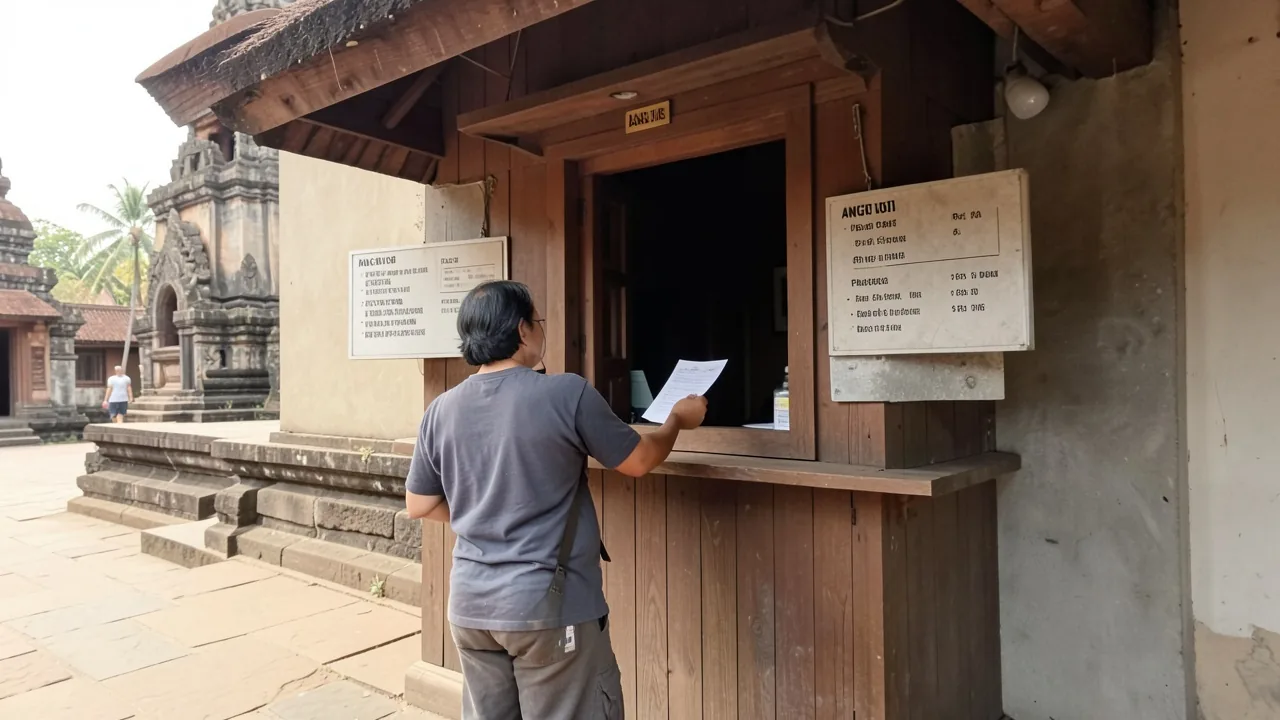
Angkor Wat Ticket Price 2026: Full Breakdown, Pass Options & Money-Saving Tips
The Angkor Wat entrance pass costs ₹1,928 (~20 USD) for 1 day, ₹3,856 (~40 USD) for 3 days, and ₹5,784 (~60 USD) for 7 days. Indian travellers should know three things before buying: the sunrise surcharge at Phnom Bakheng, the photo-pass add-on, and the rule that children under 12 enter free. Planning the wider region? Our Southeast Asia backpacking hub covers the full multi-country route.
This guide was cross-checked against the Angkor Enterprise official ticket portal on 18 July 2026.
Subodh’s Pro Tip: Buy the 3-day pass. The 1-day pass burns out your feet in 8 hours, the 7-day is overkill for most Indian itineraries, and 3 days is the sweet spot for Angkor Wat + Bayon + Ta Prohm + Banteay Srei without rushing.
Quick Answers
| What | Answer | Price (INR) |
|---|---|---|
| 1-day pass | Single day, all temples in Angkor Archaeological Park | ₹1,928 (~20 USD) |
| 3-day pass | Any 3 days within 10 days | ₹3,856 (~40 USD) |
| 7-day pass | Any 7 days within 30 days | ₹5,784 (~60 USD) |
| Children under 12 | Free with parents | $0 |
| Children 12 and above | Same as adult | ₹1,928 (~20 USD) |
| Phnom Bakheng sunrise/sunset surcharge | Per person, paid on-site at the mountain | ₹1,928 (~20 USD) |
| Photo pass (professional camera/video) | Optional add-on, same duration as main pass | ₹1,446 (~15 USD) |
| Where to buy | Main Angkor Enterprise ticket centre on the road to Angkor Wat | , |
| Payment | USD cash (small bills), or credit/debit card with passport | , |
| ID needed | Passport (the photo is scanned onto the pass) | , |
| Validity clock | Starts the moment of FIRST USE, not purchase | , |
Prices above are the base USD amounts published by Angkor Enterprise. Multiply by the current market rate to see the rupee figure on your card statement.
What Is the Angkor Pass?
The Angkor Pass is the only legal way to enter the Angkor Archaeological Park, the 400-square-kilometre UNESCO site north of Siem Reap that holds Angkor Wat, Angkor Thom, Bayon, Ta Prohm, Banteay Srei, Phnom Bakheng, and several hundred other Khmer-era temples. It is sold exclusively by Angkor Enterprise, the Cambodian government body that runs the Siem Reap area ticket sales. There is no e-voucher, no app, no online-only “skip the queue” option. You walk up to the ticket centre, show your passport, pay, and they print a plastic card with your photo on it. That card is checked at every major temple gate.
The Three Pass Options Explained
1-Day Pass (₹1,928 (~20 USD))
The single-day pass gives you access to the entire park for one calendar day. In practice, the day starts at the sunrise viewing pond in front of Angkor Wat (5:00 am) and ends when your legs give out, usually 4:00 to 5:00 pm. A single day can cover Angkor Wat + Bayon + Ta Prohm at a fast clip but skips Banteay Srei, Phnom Bakheng, and the smaller circuits. Worth it if you are passing through Siem Reap for under 48 hours and just need the “I’ve been to Angkor” stamp.
3-Day Pass (₹3,856 (~40 USD))
This is the pass the temple itself pushes. It gives you any 3 days within a 10-day window from first use, useful for a broader Cambodia itinerary. The flexibility matters: you don’t have to visit three days in a row, you can rest a day, go to Kompong Phluk floating village, then return. Realistic plan: Day 1 sunrise at Angkor Wat + Bayon + Ta Prohm in the Grand Circuit, Day 2 Banteay Srei + Banteay Samre + the smaller “jungle temples” (Ta Som, Preah Khan), Day 3 revisit favourites at a slow pace or chase sunrise elsewhere. If you have 3+ full days in Siem Reap, this is the buy.
7-Day Pass (₹5,784 (~60 USD))
The 7-day pass is the cheapest per-day ticket at about ₹819 (~8.50 USD) a day, but only worthwhile for serious temple marathoners, photographers doing dedicated sunrise/sunset runs, or people using Siem Reap as a base for 2+ weeks. The window is generous: any 7 days within 30 days of first use. For a typical 2-week Cambodia loop, you would only use 3 of those days, so you would have overpaid.
Safety Alert: Do not buy “discounted” Angkor passes from tuk-tuk drivers or hotel staff who offer to “handle the queue for you.” The pass is non-transferable (your face is printed on it), so the only way they can sell you one cheaper is to hand you a forged card. You will get caught at the temple gate, the pass will be confiscated, and you will have to buy a fresh one at full price.
Surcharges, Add-Ons, and Edge-Case Fees
Phnom Bakheng Sunrise/Sunset Surcharge (₹1,928 (~20 USD))
Phnom Bakheng is the hilltop temple above the plain, the original “sunrise spot” before everyone moved to the Angkor Wat reflection pond. The mountain has a separate quota: only 300 visitors are allowed up at a time. Angkor Enterprise charges a ₹1,928 (~20 USD) surcharge per person on top of your normal pass, paid in cash at the foot of the mountain, only on the day of climb. The surcharge is not included in the 1/3/7-day price.
Most Indian travellers skip this. The Angkor Wat reflection pond sunrise is free with your pass, the photo is just as good, and the crowd control is better.
Photo Pass (₹1,446 (~15 USD))
If you carry a “professional” camera (anything with a detachable lens, a video rig, a tripod, or a drone), you need a separate photo pass. Pricing matches the main pass duration: ₹1,446 (~15 USD) for 1 day, ₹2,410 (~25 USD) for 3 days, ₹4,338 (~45 USD) for 7 days. Phone cameras are fine. Point-and-shoots are fine. The gate guards make the call on what counts as “professional,” and it is a subjective call, so if you are carrying a mirrorless camera with a big lens, expect to pay.
Drones are a separate, much larger headache. They are effectively banned inside the park without a permit, and the permit process through the Ministry of Culture is not something you sort in 48 hours. Check current entry rules at the official gate before travelling.
Children, Seniors, and Disabled Travellers
- Under 12: Free, but the child must be present at the ticket counter so staff can verify age by sight.
- 12 and above: Full adult price. There is no student or youth rate for the main pass.
- Cambodian citizens: Different (lower) pricing, not relevant to Indian passport holders.
- Disability: The pass is free for disabled visitors, but bring documentation. Temple accessibility is poor, with most sites requiring stair climbing.
Step-by-Step: How to Buy the Pass
Step 1: Get to the Ticket Centre
The main official counter is the Angkor Enterprise Ticket Centre on National Road 6, about 4 km north of Siem Reap town centre, on the right side as you drive toward Angkor Wat. It is open 4:30 am to 5:30 pm daily, including all Cambodian holidays. From Pub Street area, a tuk-tuk is ₹193 (~2 USD) to ₹482 (~5 USD); budget the rest of the trip with the Cambodia backpacking budget guide. There is no online purchase, no mobile app, no QR code scan-in.
Step 2: Bring the Right Documents
- Passport (mandatory, the photo is scanned onto the pass).
- Cash in small USD bills ($1s, $5s, $10s, $20s are ideal). The counter accepts large bills but your change will come back in Cambodian riel at whatever the teller decides the rate is, and that rate will be worse than the market.
- Credit or debit card if you don’t have cash, Visa and Mastercard are accepted, with a small processing fee.
Step 3: Get Photographed
Walk up, hand over your passport, the staff take a webcam photo of your face, you pay, and they print a credit-card-sized plastic pass with your photo, name, passport number, and pass type on it. The process takes 5 to 10 minutes per person during peak season (November to February), 2 to 3 minutes in low season (June to September).
Step 4: Keep the Pass on You for the Entire Trip
You will be checked at every major temple. The pass is non-refundable, non-transferable, and cannot be reissued if lost (you will have to buy a new one). Treat it like your boarding pass.
Step 5: Plan Your Days
If you bought the 3-day pass, write the dates you plan to use on the back of the card with a marker. The “10-day window from first use” rule is enforced strictly, and you cannot extend it after the fact.
Subodh’s Pro Tip: Buy the pass the evening before your first temple day. The counter opens at 4:30 am for sunrise, and the queue at that hour is 30 to 60 minutes long. If you walk in at 5:00 pm the day before, there is no queue, the staff are relaxed, and you walk out with the pass in hand ready for an early start the next morning.
Common Mistakes Indians Make
Mistake 1: Paying in Rupees or Expecting INR Acceptance
The ticket centre only accepts USD cash or card. They will not accept Indian rupees, and they will not give you a fair exchange rate if you offer them INR. Bring USD from India (a forex card loaded in USD, or buy dollars at a Chennai/Mumbai airport counter before flying); see the Cambodia currency guide for tips.
Mistake 2: Showing Up Without a Passport
The pass is photo-linked to your passport, and the photo is taken on the spot. A driving licence, Aadhaar, or a photo of your passport on your phone will not work. You need the physical passport.
Mistake 3: Underestimating the Sunrise Crowd
The Angkor Wat reflection pond gates open at 5:00 am in high season. By 5:15 am, the front row is full of tripod-wielding photographers who queued from 4:00 am. If you want the front-row reflection shot, plan for 4:30 am arrival. Otherwise, just walk 50 metres down the pond and the crowd thins out.
Mistake 4: Treating the Pass Like a Hop-On-Hop-On Bus
You can’t pass your pass to a friend (your photo is on it), and you can’t skip a day and reset the clock. The 3-day pass means “any 3 days within 10 days of first scan.” Plan it before you start using it.
Mistake 5: Forgetting That Phnom Bakheng Is Separate
If you climb Phnom Bakheng for sunset without realising the ₹1,928 (~20 USD) surcharge exists, you are not going to climb back down without paying. The cash is collected at the foot of the mountain by a separate counter. The money is real, the rule is real, and the staff do not negotiate.
What Most Guides Don’t Tell You
The “Pass” Doesn’t Cover Everything
The Angkor Pass covers the Angkor Archaeological Park main area. It does not cover:
- Koh Ker and Beng Mealea (these are outside the main park, separate ₹482 (~5 USD) to ₹964 (~10 USD) tickets at each site)
- Phnom Kulen (waterfall and river-of-a-thousand-lingas, separate ₹1,928 (~20 USD) ticket at the mountain)
- Tonle Sap lake boat tours (separate operator pricing)
If you are planning 4+ days in Siem Reap, budget for at least one of these add-ons.
The Validity Window Is Calendar Days, Not 24-Hour Periods
Your first day starts when your pass is first scanned at Angkor Wat, Bayon, or another temple. The “3 days in 10” means 3 calendar days in a 10 calendar day window, not 72 hours. If you scan in at 4:00 pm on Monday, that is Day 1, and you have used one of your three days even though you only saw the sunset.
The Pass Lets You Re-Enter Same Day
You can leave the park at noon, swim in your hotel pool, and come back at 4:00 pm. Your pass is not a one-shot. This is how the 1-day pass is survivable: pace yourself, take a midday break, return for sunset.
Indian Rupee Notes Are Sometimes Accepted by Tuk-Tuk Drivers, But at a Brutal Rate
Tuk-tuk drivers to and from the temple complex often quote in USD but will accept INR. The rate they offer is usually 50-70 INR per USD worse than the market. If you must pay in INR, agree on the total fare in INR upfront and use a forex rate app to check you are within 10 percent of fair. Otherwise, bring small USD bills.
What to Do Once You Have the Pass
Day 1: Angkor Wat + Angkor Thom + Bayon + Ta Prohm
For the full temple rundown, dress code, and sunrise plan, see the Angkor Wat complete guide.
The classic “small circuit.” Start at the Angkor Wat reflection pond at sunrise, walk through Angkor Wat itself, drive 10 minutes to Angkor Thom’s South Gate, then on foot through Bayon (the face towers), Baphuon, Phimeanakas, the Terrace of the Elephants, and finish at Ta Prohm (the “Tomb Raider temple”). Most travellers finish by 2:00 pm. Have lunch near the park exit or back in Siem Reap. End with sunset at Pre Rup or Bakong if you have the energy.
Day 2: Banteay Srei + The Grand Circuit
Banteay Srei is 25 km from Siem Reap, the “pink temple” with the most intricate carvings in the park, easily half a day on its own. The Grand Circuit loop adds Preah Khan, Ta Som, Neak Pean, and the East Mebon. Long day, doable with a tuk-tuk driver who knows the route.
Day 3: Slow Morning, Revisit Favourites, or Add-On
If you have a third day, use it to revisit Bayon in softer morning light, spend time at Banteay Kdei (often skipped, gorgeous), or do a side trip to Phnom Kulen (the birthplace of the Khmer empire, separate ₹1,928 (~20 USD) fee, waterfalls and the river of lingas).
Where to Eat (and Where Not To) Near the Park
There are no decent restaurants inside the park. The food stalls at the temple gates serve overpriced, mid-quality meals. Do your eating back in Siem Reap town.
For Khmer Food
- MAOM Khmer Cuisine in town is the pick for traditional amok, lok lak, and samlor korko in a calm local setting.
- Tevy’s Place does Cambodian comfort food at backpacker-friendly prices.
- TRY ME Restaurant is the budget option for a one-plate meal that fills you up.
- Angkor Hand-Pulled Noodles & Dumplings is the cheap, fast option when you want something hot and ready in 10 minutes.
For Indian Food (and Veg Fallback)
- Paratha House & Academy Siem Reap is the safe pick for a paratha-plus-curry breakfast, mains between ₹289 (~3 USD) and ₹771 (~8 USD).
- Royal Indian is the sit-down North/South Indian option, around ₹964 (~10 USD) per person, with reliable garlic naan and paneer dishes. See the cost of food in Cambodia for typical meal prices.
- Madira Indian Tapas Bar is the modern fusion option if you want something other than the standard thali.
Getting Around
The Angkor complex is too spread out to walk between temples in any reasonable time. Your options:
- Tuk-tuk full-day hire: ₹1,446 (~15 USD) to ₹2,410 (~25 USD) for the full day, this is the standard Indian backpacker choice. Negotiate the route before you start the engine.
- Private driver/car: more comfortable, more expensive, ₹3,374 (~35 USD) to ₹4,820 (~50 USD). Worth it if you are 2+ people and want AC.
- Bicycle: ₹96 (~1 USD) to ₹289 (~3 USD) rental, feasible in the dry season, miserable in monsoon heat. Only the genuinely fit should try this; weigh this against the Siem Reap to Phnom Penh bus if you are continuing on.
- E-bike: ₹482 (~5 USD) to ₹771 (~8 USD) rental, faster than a bicycle, doesn’t require Tour de France legs.
Subodh’s Pro Tip: Hire the tuk-tuk driver for the whole day, not by the trip. Most drivers will wait at each temple and offer cold water and wet wipes. Agree the day’s route and fare in advance before starting the engine.
Money-Saving Summary
| Strategy | Saving | Trade-off |
|---|---|---|
| Buy the 3-day pass instead of three 1-day passes | ₹1,928 (~20 USD) total | Need 3 days in Siem Reap |
| Skip the Phnom Bakheng sunrise surcharge | ₹1,928 (~20 USD) | Miss the original “sunrise temple” |
| Skip the photo pass by using your phone | ₹1,446-₹4,338 (~15-45 USD) | Phone camera, not a mirrorless |
| Hire a tuk-tuk for the full day instead of 2 half-days | ₹482-₹964 (~5-10 USD) | You commit to one driver |
| Eat in Siem Reap town, not at the park gates | ₹482-₹964 (~5-10 USD) a meal | Need a packed lunch to avoid wasting temple time |
| Bring USD cash from India, don’t pay in INR | ₹193-₹482 (~2-5 USD) per exchange | Slight forex card fees |
| Visit in low season (June-September) | $0 on tickets, but cheaper hotels | Rain, fewer temple photos at sunrise |
Subodh’s Take
The Angkor pass is one of the few tourist tickets in Southeast Asia that is priced fairly. ₹1,928 (~20 USD) for a single day in the world’s largest religious monument, run by a government body that reinvests the revenue into temple conservation, is a deal. The 3-day pass is the only one most Indian backpackers need. The trap to avoid is the up-sold add-ons (photo pass, Phnom Bakheng surcharge, the tuk-tuk driver’s “let me handle the queue” offer). Pay the official price at the official counter, keep your pass safe, and the rest of the visit takes care of itself.
FAQ
Can I buy the Angkor pass online?
No. The official Angkor Enterprise counter is the only place to buy it. There is no e-voucher, no app, no third-party booking site. Any website offering “skip the line” or “e-ticket” is either selling a scam or a tour package that still requires you to physically pick up the pass.
Is the pass price the same for Indian passport holders as for everyone else?
Yes. There is no separate foreigner-vs-local rate structure for Indian tourists. Indians pay the same ₹1,928 (~20 USD) as Americans, Europeans, or Japanese visitors. The lower local rate applies only to Cambodian citizens.
Does my Angkor pass also cover Phnom Kulen and Koh Ker?
No. Phnom Kulen has a separate ₹1,928 (~20 USD) fee at the mountain entrance. Koh Ker and Beng Mealea have their own small ₹482 (~5 USD) to ₹964 (~10 USD) fees at the site. The main Angkor pass only covers the Angkor Archaeological Park core area.
What happens if I lose my Angkor pass?
You have to buy a new one at full price. There is no replacement policy, no lost-pass refund, and the gate staff will not let you argue. Take a phone photo of both sides of the pass the moment you receive it, and keep the physical card in the same pocket as your passport.
Can I pay in Indian rupees at the ticket counter?
No. The counter accepts USD cash (preferred) and Visa/Mastercard. Indian rupees are not accepted. Bring small USD bills from India, or load your forex card in USD before flying.
Is the Angkor pass checked at every temple?
Yes, at the major temples (Angkor Wat, Bayon, Ta Prohm, Banteay Srei, Phnom Bakheng). The smaller jungle temples often have no gate check, but if you are caught inside the park without a valid pass, the fine is steep and you will be asked to leave immediately.
When is the cheapest time of year to visit Angkor Wat?
The pass price is the same year-round, so the “cheapest” angle is on hotels and flights, not tickets. June to September is low season, hotel rates drop 30 to 50 percent, and the temples are quieter. The trade-off is monsoon rain, mostly in short afternoon bursts, and lower-quality sunrise photos due to cloud cover.
Staying connected: Grab a local SIM on arrival, or skip the airport counter queue with Get Nomad eSIM (see the official Nomad eSIM site) set up before you fly.
