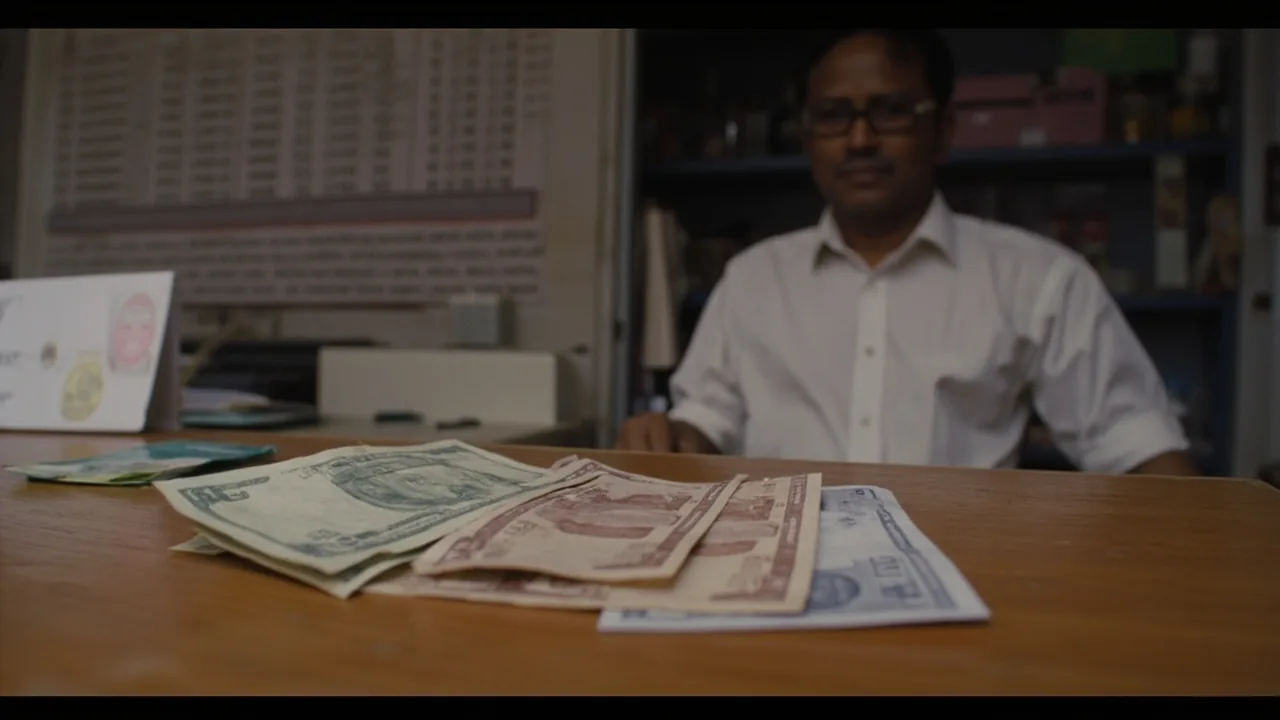
Cambodia Currency Guide for Indian Travelers: Exchange Rates, Fees & Where to Convert INR to Riel (2026)
Bring US dollars for Cambodia. This Cambodia Indian money guide covers how to convert INR to KHR and USD, what fees to expect, and where to change cash on the ground. Plan your cash in USD, keep a small KHR stash, and use your debit card for ATM top-ups. Start with our Southeast Asia backpacking hub for the broader picture.
What Is the Cambodian Riel (KHR)?
The Cambodian Riel (KHR) is the official currency of Cambodia, issued by the National Bank of Cambodia. Coins are rare in circulation. Bills come in 100, 500, 1,000, 2,000, 5,000, 10,000, 20,000, and 50,000 KHR denominations. Cambodia is one of the few countries in Southeast Asia where the US dollar circulates as legal tender alongside the local currency, a holdover from the UNTAC period in the early 1990s. In practice, almost every price quoted above a few dollars is in USD, and the riel shows up as change when you pay a dollar for something that costs less. You’ll typically get back a few thousand riel in small bills.
Quick Answers
| What | Answer | Price (INR) |
|---|---|---|
| Local currency | Cambodian Riel (KHR) | , |
| Secondary currency | US Dollar (USD), legal tender | , |
| 1 INR to KHR | ~42 KHR | , |
| 1 USD to INR | ₹96.53 | , |
| 1 USD to KHR | ~4,000 KHR | , |
| Are Indian Rupees accepted? | No, except inside Indian restaurants or by special request at a few money changers | , |
| Best way to carry money | USD cash + Visa/Mastercard debit for ATMs | , |
| ATM withdrawal fee (Indian cards) | ₹482 (~5 USD) flat per transaction, charged by the Cambodian bank | ~₹480 (~$4.98) |
| Typical daily budget | ₹2,408-₹3,854 (~25-40 USD) | ~₹2,400-₹3,860 (~$24.91-$40.07) |
| Recommended cash to carry | ₹28,902-₹48,170 (~300-500 USD) for a 7-day trip | ~₹29,000-₹48,000 (~$301.02-$498.24) |
| Visa fee (e-visa) | ₹3,468 (~36 USD) | ~₹3,475 (~$36.07) |
| Visa fee (on arrival) | ₹2,896 (~30 USD) | ~₹2,900 (~$30.10) |
| SIM (Cellcard/Smart tourist, 7 days) | ₹289 (~3 USD) | ~₹250 (~$2.60) |
| Tuk-tuk in town | ₹193-₹482 (~2-5 USD) | ~₹170-₹420 (~$1.76-$4.36) |
Step-by-Step: Getting Your Money Right for Cambodia
Step 1: Convert INR to USD Before You Fly
Don’t try to convert rupees to riel in India. The KHR is almost impossible to source in Indian forex counters, and the rates they quote are worse than what you’ll get in Phnom Penh anyway. Instead:
- Buy US dollars at any RBI-authorized forex counter in your city (Thomas Cook, Muthoot, or your bank’s forex branch).
- Current rate: 1 USD = ₹96.53.
- Bring the full amount of cash you plan to spend, minus what you’ll draw from ATMs.
Subodh’s Pro Tip: Ask for ₹4,817 (~50 USD) and ₹9,634 (~100 USD) bills, not $20s. Cambodia gives better rates for crisp, untorn $100s. Folded, marked, or damaged bills get rejected at hotels and money changers.
Step 2: Decide How Much USD to Carry
For a 7-day backpacking trip (Phnom Penh, Siem Reap, maybe Sihanoukville):
- Budget traveler: ₹28,902-₹38,536 (~300-400 USD)
- Mid-range: ₹48,170-₹67,437 (~500-700 USD)
- Comfortable: ₹77,071 (~800 USD)+ USD (~₹77,000+)
Keep the rest on a forex card or your regular Visa/Mastercard debit for ATM withdrawals.
Step 3: Understand How USD and KHR Work Together
Everything priced under ₹96 (~1 USD) is in riel. Everything priced ₹96 (~1 USD) and above is in dollars, but you’ll often get change back in a mix of dollars and riel. The standard rule on the street:
- 1 USD ≈ 4,000 KHR, so a 1,000 KHR note is worth about ₹24 (~$0.25)
- A 10,000 KHR note is worth about ₹240 (~$2.47)
- A 50,000 KHR note is worth about ₹1,200 (~$12.42)
Don’t get confused by the big zeros. The highest bill in circulation is 50,000 KHR, which is only about ₹1,200 (~$12.42).
Step 4: Get a Visa/Mastercard Debit Card That Works in Cambodia
Indian banks charge a per-transaction fee on every ATM withdrawal abroad. The flat fee is usually ₹350-₹500 (~$3.63-$5.19) per transaction, regardless of how much you withdraw.
- HDFC, ICICI, SBI: All work. ICICI has the lowest forex markup (around 3.5%) plus a flat ₹350 (~$3.63) ATM fee per transaction.
- Federal Bank, Axis: Also work, similar fees.
- PNB, Bank of Baroda: Have higher markups, around 4-4.5%.
Subodh’s Pro Tip: Always choose “without conversion” at the ATM if it asks. The ATM will offer to convert USD to INR at its own rate. Decline. Let your home bank do the conversion, the rate is almost always better.
Step 5: At the Airport, Skip the Money Changer and Hit the ATM
Phnom Penh and Siem Reap airports both have ATMs in the arrivals hall. They dispense USD, not KHR, which is exactly what you want for your first few days. ABA Bank and Canadia Bank ATMs are the most reliable. For more detail on fees and limits, see our ATM guide for Indian cards in Cambodia. Withdrawal limit is usually ₹38,536-₹48,170 (~400-500 USD) per transaction.
Cambodian banks typically charge their own fee on top of your home bank’s fee. So a ₹19,268 (~200 USD) withdrawal may cost you about ₹480 (~$4.98) in Cambodian fees plus whatever your Indian bank charges. Withdraw ₹38,536-₹48,170 (~400-500 USD) at a time to minimize the per-transaction hit.
Step 6: In Town, Use the Right Place to Exchange
Once in Phnom Penh or Siem Reap, you’ll find plenty of money changers. Our currency exchange in Phnom Penh airport guide covers the airport options in detail. Stick to these:
- Official money changers (look for a green or blue “Money Exchange” sign with a registered license number on the wall)
- Hotel front desks (worse rate but safer for small amounts)
- Gold shops (often give the best rate, common around Phnom Penh’s Central Market and BKK1 area)
Avoid:
- Random street-side guys offering “good rate, my friend”
- Anyone who wants to count your money away from your view
- Anyone who claims to “not have change” for a ₹9,634 (~100 USD) bill
For a deeper look at what daily life costs, the Cambodia backpacking budget guide breaks it down by city.
Common Mistakes Indians Make with Cambodia Money
Mistake 1: Bringing Indian Rupees and Trying to Exchange Them in Cambodia
What people do: Pack ₹20,000-₹50,000 (~$207.60-$519) in cash expecting to change it on arrival.
What happens: No licensed money changer in Cambodia will touch INR. They’ll point you to a shady guy on the street who’ll offer ₹1-₹2 (~60-70 KHR or ~$0.01-$0.02) per rupee, less than half the fair rate. You’ll end up at an Indian restaurant or jewelry shop paying someone off the books.
How to avoid: Convert INR to USD in India before flying. KHR you can pick up on the ground for small-change expenses.
Mistake 2: Carrying Torn or Old USD Bills
What people do: Bring whatever dollars they have lying around.
What happens: Cambodian money changers, hotels, and tour operators reject bills that are torn, marked, stamped, or pre-2006 series. You’ll be stuck with unusable cash and have to find a less-fussy vendor to swap them.
How to avoid: Get fresh bills from a bank or RBI-authorized forex counter. Any 2006-series or newer, no folds, no stamps, no writing.
Mistake 3: Letting the ATM Convert to INR
What people do: Hit “yes” when the ATM asks “would you like the transaction in INR?” because it sounds convenient.
What happens: The ATM applies its own terrible rate, often 4-6% worse than your bank’s. On a ₹38,536 (~400 USD) withdrawal, that’s ₹1,500-2,500 lost to bad conversion.
How to avoid: Always choose “without conversion” or “in USD.” Your home bank will do the math at the wholesale rate.
Mistake 4: Paying for Everything in USD Without Carrying Small KHR
What people do: Hand over a ₹1,927 (~20 USD) for a ₹193 (~2 USD) coconut and wait for change.
What happens: Some vendors don’t have KHR change and will short-change you in dollars, or hand back crumpled ₹24 (~1,000 KHR or ~$0.25) notes at a worse-than-fair rate.
How to avoid: Keep a small stack of 1,000, 2,000, and ₹119 (~5,000 KHR or ~$1.24) notes for street food, tuk-tuks, and small markets. Pay small things in riel exactly.
Mistake 5: Assuming UPI or PhonePe Works
What people do: Try to scan QR codes for payments.
What happens: UPI doesn’t work in Cambodia. Most Cambodian shops and restaurants don’t accept Indian QR-based payments. Some larger hotels accept Visa/Mastercard contactless, but don’t count on it.
How to avoid: Treat Cambodia as a cash-and-card country, just like Thailand or Vietnam, not a UPI country.
KHR to INR: The Real Exchange Rate and How It’s Moved
As of July 2026, 1 USD = roughly 4,000 KHR and 1 USD = ₹96.53, which means 1 INR ≈ 41 KHR. The KHR-INR rate has been remarkably stable for the last five years because the riel itself is pegged loosely to the US dollar. When the rupee weakens against the dollar, KHR-INR drops with it. When the rupee strengthens, KHR-INR rises.
Looking at the broader KHR-INR history chart:
- 2021: 1 INR ≈ 52 KHR (rupee stronger vs dollar)
- 2023: 1 INR ≈ 48 KHR
- 2025: 1 INR ≈ 44 KHR
- 2026: 1 INR ≈ 42 KHR
The trend over the last three years has been a slow weakening of the rupee against the dollar, which means the same amount of INR buys you slightly less KHR each year. Don’t expect the KHR-INR rate to move dramatically within a 2-week trip. A 1-2% swing is normal; a 5% swing would be unusual.
For the most up-to-the-minute rate before you fly, check Xe or Google’s currency converter. Wise also publishes a live mid-market rate that you can use as a baseline to judge whether a money changer is offering a fair deal.
Where Most Guides Go Wrong
Most Cambodia currency guides assume you’re carrying a Visa or Mastercard from a US, UK, or Australian bank. Indian cards work in Cambodia, but the fee structure is different:
- Most Indian banks add a 3.5-4% forex markup on every international transaction, plus a standard ₹350-₹500 (~$3.63-$5.19) fee per use.
- Some Indian bank apps (ICICI, HDFC) lock foreign transactions by default. You have to enable “international usage” on the card before you leave.
- UPI does not work. Don’t expect Google Pay or PhonePe to function anywhere outside India.
Another gap: most guides don’t warn you that Cambodian ATMs dispense USD, not KHR, by default. First-time visitors are often surprised when ₹38,536 (~400 USD) comes out of the slot instead of riel. That’s the correct behavior. You’re meant to use the USD directly for most purchases, and exchange a small amount to KHR at licensed changers for street-food and tuk-tuk change.
What to Eat (and Where the Money Goes)
Food in Cambodia is one of the cheaper parts of your trip. A meal at a local Cambodian restaurant runs ₹193-₹482 (~2-5 USD). For Cambodian cooking, spots like Smokin’ Pot Authentic Cambodian Restaurant and Cooking School, Cambodia Kitchen, and HoubHoub Cambodian Restaurant (BKK1) in Phnom Penh serve classics like fish amok, lok lak, and Khmer red curry at proper local prices. If you want to see how the food is made, Smokin’ Pot runs cooking classes too.
When you need a dal-chawal fix, head to Indian restaurants. Galaxy Indian Restaurant in Poipet and Saffron Indian Restaurant Poipet are popular on the border route. Phnom Penh has several Indian restaurants clustered around BKK1 and the riverside.
For an evening that’s more than a meal, Phare, The Cambodian Circus in Siem Reap puts on a show that supports local youth artists. Tickets are around ₹1,734-₹3,661 (~18-38 USD) depending on the tier, and the dinner-show combo adds another ₹1,445-₹2,408 (~15-25 USD). It’s one of the few tourist experiences in Cambodia that genuinely earns its ticket price.
For tuk-tuks around town, expect ₹193-₹482 (~2-5 USD) within Phnom Penh or Siem Reap. A full-day Angkor tuk-tuk circuit runs ₹1,445-₹2,408 (~15-25 USD). Buses between Phnom Penh and Siem Reap go for ₹771-₹1,445 (~8-15 USD).
Staying Connected: SIM and eSIM
A 7-day tourist SIM from Smart or Cellcard runs ₹289 (~3 USD) with about 10GB of data. Available at the airport kiosks and any 7-Eleven. Bring your passport, the SIM registration is mandatory.
For eSIM users, you can skip the airport counter entirely and activate a regional data plan before you land. Get Nomad eSIM covers Cambodia under its Southeast Asia regional plans, usually ₹482-₹867 (~5-9 USD) for 5-10 GB over 7-15 days. Phone stays dual-SIM, you keep your Indian number active on WhatsApp.
If you travel onwards to Vietnam or Thailand, the same regional eSIM covers all three countries. Helpful on the Bangkok-Phnom Penh-Ho Chi Minh City backpacker corridor.
ATM Withdrawal Limits and Fees: Indian Debit Cards
Standard limits for Indian cards at Cambodian ATMs:
- Per-transaction max: ₹38,536-₹48,170 (~400-500 USD)
- Per-day max: Depends on your bank, usually ₹96,339-₹192,678 (~1,000-2,000 USD)
- Cambodian bank fee: ₹482 (~5 USD) flat (~₹480)
- Indian bank fee: ₹350-₹500 (~$3.63-$5.19) flat + 3.5-4% forex markup
Net cost of withdrawing ₹38,536 (~400 USD) from an ATM in Cambodia:
- You get: ₹38,536 (~400 USD)
- Indian bank fee: ₹350-₹500 (~$3.63-$5.19)
- Cambodian bank fee: ₹482 (~5 USD)
- Forex markup (3.5-4% of ₹38,600 (~$400.67)): ₹1,350-₹1,540 (~$14.01-$15.99)
- Total effective cost: ~₹40,780-₹41,120 (~$423.30-$426.83) for ₹38,536 (~400 USD)
Compare that to bringing ₹38,536 (~400 USD) cash from India at the bank rate (₹96.53 per dollar = ₹38,612). The ATM costs you an extra ₹2,000-2,500. Not catastrophic, but worth knowing.
Subodh’s Pro Tip: Withdraw the maximum allowed per transaction to amortize the flat ₹482 (~5 USD) fee. Four ₹9,634 (~100 USD) transactions cost you ₹1,927 (~20 USD) in fees. One ₹38,536 (~400 USD) withdrawal costs you ₹482 (~5 USD). Same total cash, way less fee.
Typical Cambodia Trip: How Much Pocket Cash?
For a 7-day backpacking trip covering Phnom Penh (2 nights), Siem Reap (3 nights), and one beach stop:
| Expense | Amount (USD) | Amount (INR) |
|---|---|---|
| Hostels (7 nights) | ₹4,817-₹7,707 (~50-80 USD) | ₹4,800-₹7,700 (~$49.82-$79.93) |
| Food (street + restaurants) | ₹5,780-₹8,671 (~60-90 USD) | ₹5,800-₹8,700 (~$60.20-$90.31) |
| Transport (tuk-tuks, buses, intra-city) | ₹3,854-₹5,780 (~40-60 USD) | ₹3,900-₹5,800 (~$40.48-$60.20) |
| Angkor Wat pass (1-day or 3-day) | ₹3,565-₹5,973 (~37-62 USD) | ₹3,570-₹5,985 (~$37.06-$62.12) |
| Activities (circus, cooking class, etc.) | ₹2,890-₹4,817 (~30-50 USD) | ₹2,900-₹4,800 (~$30.10-$49.82) |
| Visa fee (on arrival) | ₹2,896 (~30 USD) | ₹2,900 (~$30.10) |
| SIM card | ₹289 (~3 USD) | ₹250 (~$2.60) |
| Misc (water, snacks, tips) | ₹1,927-₹2,890 (~20-30 USD) | ₹1,930-₹2,900 (~$20.03-$30.10) |
| Total | ₹26,012-₹39,499 (~270-410 USD) | ₹26,000-₹39,600 (~$269.88-$411.05) |
Add 10-15% buffer for unexpected expenses (sick day, missed bus, laundry, souvenirs).
Safety: Scams and Currency-Specific Risks
Cambodia is generally safe for Indian travelers, but a few currency-related scams come up often. The Cambodia scams and safety guide covers the full picture.
The classic money-switch scam: A vendor takes your bill, makes a show of inspecting it, and hands it back claiming it’s torn or fake. The bill they hand back is a different (lower) denomination than the one you handed over. Count your change before you walk away, every time.
The “no change” scam: You hand over a ₹1,927 (~20 USD) for a ₹289 (~3 USD) tuk-tuk. The driver claims he has no change. If you don’t have riel to make up the difference, he pockets the ₹1,638 (~17 USD). Always carry small KHR bills for exactly this situation.
The counterfeit USD scam: Fake USD bills do circulate in Cambodia, particularly through informal money changers. Stick to ATMs and banks for your dollars. If you use a money changer, check the bill for the security strip and the color-shifting ink before walking away.
The taxi/tuk-tuk cartel at airports: At some airports, informal taxi groups may crowd out ride-hailing pickups. Book a tuk-tuk through your hostel in advance, or insist on a metered Grab.
For broader safety context, check the Indian Ministry of External Affairs travel advisory for Cambodia on mea.gov.in before you fly. The advisory gets updated more often than any blog post.
FAQ
Can I use Indian Rupees in Cambodia?
No. Indian rupees are not accepted by any licensed money changer, hotel, or restaurant in Cambodia. Bring USD or use ATMs. If you’re stuck with leftover INR at the end of your trip, you can sometimes exchange small amounts at Indian restaurants or jewelry shops in Phnom Penh, but at terrible rates.
What is the best currency to take to Cambodia?
US dollars. Carry a mix of ₹963 (~10 USD), and ₹9,634 (~100 USD) bills, all 2006-series or newer, all crisp and unmarked. Convert small amounts to KHR at licensed money changers for street-food and tuk-tuk change. Plan to use ATMs for top-ups once your initial cash runs low.
Are credit and debit cards widely accepted in Cambodia?
In Phnom Penh and Siem Reap, yes for hotels, restaurants, and tour operators. Outside major cities, cash is king. Visa and Mastercard both work. American Express and RuPay are mostly useless. Always carry backup cash, ATMs and card machines go down.
How much cash should I carry for a week in Cambodia?
₹28,902-₹38,536 (~300-400 USD) for a budget backpacker, ₹48,170-₹67,437 (~500-700 USD) for mid-range. Don’t carry more than ₹67,437 (~700 USD) at a time; that’s more than enough for a week and reduces your loss if anything goes wrong. Top up via ATM as needed.
Will my Indian debit card work in Cambodian ATMs?
Yes, if your bank supports international transactions and you’ve enabled “international usage” on the card before flying. Most international credit and debit cards are accepted. Expect a ₹482 (~5 USD) Cambodian bank fee plus your home bank’s ₹350-₹500 (~$3.63-$5.19) fee plus 3.5-4% forex markup. Use ATMs in bank branches (ABA, Canadia) over standalone machines in tourist areas, which have higher fees.
Can I pay with UPI or PhonePe in Cambodia?
No. UPI, PhonePe, Google Pay, and other Indian QR-payment systems do not work outside India. Treat Cambodia as a cash-and-card country.
Should I convert money at the airport in Cambodia?
Skip the airport money changer. Their rates are 2-3% worse than in-town changers, and they often don’t have KHR. Go straight to an ATM in the arrivals hall, or wait until you’re in the city.
Is Cambodia cheaper than Thailand for Indian travelers?
Roughly the same, sometimes cheaper. Street food and hostels cost about the same in Bangkok and Phnom Penh. Angkor Wat is a big-ticket item unique to Cambodia, while Thailand has more paid-entry national parks and temples. Transport between cities is slightly cheaper in Cambodia.
Subodh’s Take
Cambodia is one of the easiest Southeast Asia countries for Indian travelers on the money side, because USD is universal and almost every ATM dispenses dollars. Bring ₹38,536 (~400 USD) in clean bills, plan to draw more from ATMs as you go, and keep a small KHR stash for street food. Don’t overthink the KHR-INR chart; the rate barely moves within a 2-week trip. The only thing that matters is having enough clean USD cash to walk in with, and an international debit card that works abroad. Sort those two before you board the flight and the rest takes care of itself.
