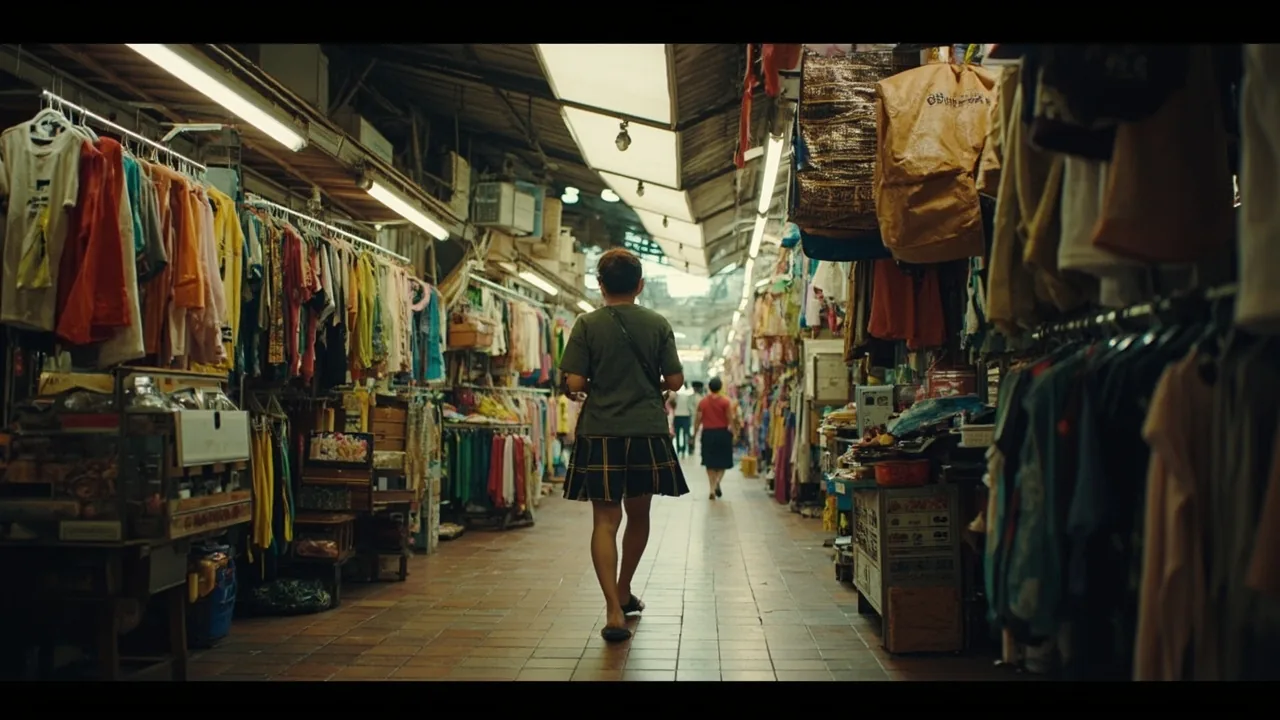
Best Shopping in Southeast Asia: Complete Guide (2026)
The four best shopping southeast asia destinations for Indian backpackers are Thailand, Vietnam, Cambodia, and Laos. For related planning, see our guide on Sea Backpacking Hub.
This guide is built for the India to Thailand, Vietnam, Laos, Cambodia loop. Every price below is in the local currency you’ll pay at the stall, plus the rate you need to convert it back to rupees. The current exchange rate at time of writing: 1 THB ≈ ₹2.87, 1 VND ≈ ₹0.0037, 1 LAK ≈ ₹0.0043, 1 KHR ≈ ₹0.024, 1 USD ≈ ₹96.53.
Quick Answers
| What | Answer | Price (INR) |
|---|---|---|
| Best overall destination | Bangkok (Chatuchak + night markets) | Largest single market in SEA |
| Best for tailored clothes | Hoi An, Vietnam | Same-day or 24-hour tailoring |
| Best for vintage/handmade | Chiang Mai, Thailand | Sunday Walking Street |
| Best for budget souvenirs | Luang Prabang, Laos | Night market, every night |
| Best for electronics | Bangkok, MBK Center | Buy at mall prices, not airport |
| Average daily shopping spend | ₹1,715-₹4,288 (~600-1,500 THB or ~$17.81-$44.51) | For Indian backpackers, mid-range |
The Four Shopping Capitals
Bangkok, Thailand
Bangkok has three shopping layers: weekend markets (Chatuchak), night bazaars (Rot Fai, Asiatique, Khao San area), and malls (MBK, Siam Paragon, EmQuartier). For Indian backpackers on a budget of around 5,000 rupees a day, Chatuchak is the single most efficient shopping day. The market is open Saturday and Sunday, 9 AM to 6 PM, and you need at least four hours. A few specifics to plan around:
- Chatuchak has its own MRT station (Chatuchak Park, exit 1). Do not drive, do not take a tuk-tuk. Parking is a nightmare and tuk-tuks will quote ₹858 (~300 THB or ~$8.90) for a 10-minute ride.
- Bring a crossbody bag, not a backpack. Pickpockets target the stalls where people stop to photograph things.
- Most vendors will quote ₹572-₹1,144 (~200-400 THB or ~$5.94-$11.87) for a graphic tee, ₹229-₹429 (~80-150 THB or ~$2.37-$4.45) for a printed singlet, ₹286-₹572 (~100-200 THB or ~$2.97-$5.94) for a wallet, ₹1,144-₹2,287 (~400-800 THB or ~$11.87-$23.74) for a leather belt. Bargaining is expected. Start at 40 percent of the asking price and meet in the middle.
- Cash only at the smaller stalls. The big shops at the edges of the market take cards but add 3 percent.
For night shopping, Rot Fai Market 2 (near the Esplanade Cineplex) is a long-running favourite with vintage motorcycles, retro clothes, and a strong food court. Khao San Road has a small night market with cheap clothes, fake vintage band tees, and the usual tourist items, but the tuk-tuk drivers will try to “help” you find specific shops for a commission, so just walk.
Hanoi and Ho Chi Minh City, Vietnam
Vietnam shopping splits cleanly into two cities. Hanoi is for textiles, lacquerware, propaganda posters, and Old Quarter street-shopping where every block has a category (silk on Hang Gai, lacquer on To Tich, toys on Ma May). Ho Chi Minh City is for malls, electronics, and the large Ben Thanh Market.
In Hanoi’s Old Quarter, the prices are written down. You do not bargain hard, but you do ask. A typical exchange: the tag says ₹918 (~250,000 VND or ~$9.53), you ask “150,000 okay?” and you end up at ₹661 (~180,000 VND or ~$6.86). The souvenir sweet spot in Hanoi is silk scarves (₹294-₹551 (~80,000-150,000 VND or ~$3.05-$5.72) for a small one, ₹734-₹1,285 (~200,000-350,000 VND or ~$7.62-$13.34) for a wrap), embroidered table runners (₹441-₹918 (~120,000-250,000 VND or ~$4.57-$9.53)), and prop posters (₹110-₹294 (~30,000-80,000 VND or ~$1.14-$3.05), much cheaper than what you’ll see online).
Ben Thanh Market in District 1, Ho Chi Minh City, is a market-with-walls and stays open day and night (the night section is the famous one, 6 PM to 10 PM). T-shirts run ₹367-₹734 (~100,000-200,000 VND or ~$3.81-$7.62), conical hats (non la) ₹110-₹220 (~30,000-60,000 VND or ~$1.14-$2.29), dried fruit and coffee ₹184-₹551 (~50,000-150,000 VND or ~$1.91-$5.72) per bag. Bargaining is required here, where in Hanoi it’s optional.
Hoi An, Vietnam
Hoi An is the tailor city. You walk in, you pick fabric, you get measured, you come back the next day. Or the same day if you need something simple. A custom two-piece suit runs ₹6,610-₹16,524 (~1,800,000-4,500,000 VND or ~$68.61-$171.52) depending on fabric. A custom dress runs ₹2,203-₹5,508 (~600,000-1,500,000 VND or ~$22.87-$57.17). A winter coat (light, packable) runs ₹4,406-₹9,180 (~1,200,000-2,500,000 VND or ~$45.74-$95.29).
The cluster of tailors in the old town is dense. A few honest rules from travellers who have used them:
- Walk the strip first, look at the fabrics on display, then pick three shops to go back to.
- Ask for photos of finished work, not just fabric samples.
- The shop offering “two suits for the price of one” is the same fabric as the shop offering one, the price of which is a third. It is not a deal.
- Pay 50 percent at the first fitting, 50 percent at pickup. Never 100 percent upfront.
For non-tailoring shopping, Hoi An has a Lantern Street (cheap paper lanterns, ₹184-₹367 (~50,000-100,000 VND or ~$1.91-$3.81) each, flat-packable in your bag) and a small silk village a few kilometres out where you can see the looms.
Luang Prabang, Laos
Luang Prabang’s night market runs every evening, 5 PM to around 10 PM, on the main street between Mount Phousi and the Mekong. The sellers are mostly Hmong and Khmu women from surrounding villages. Prices are fixed and printed on small paper tags. The standout items: hand-embroidered wall hangings, scarf-and-shawl sets in hemp and silk, wooden toys, small lacquer bowls.
A typical Luang Prabang haul for a backpacker doing a loop: one scarf (₹215-₹344 (~50,000-80,000 LAK or ~$2.23-$3.57)), one tea set (six small cups plus a pot, ₹644-₹1,074 (~150,000-250,000 LAK or ~$6.69-$11.15)), one embroidered pouch (₹129-₹258 (~30,000-60,000 LAK or ~$1.34-$2.67)), and a small bag of local coffee (₹172-₹344 (~40,000-80,000 LAK or ~$1.78-$3.57)). Total: usually under ₹2,148 (~500,000 LAK or ~$22.29) for a full set of souvenirs.
A practical note: Luang Prabang is the cleanest, calmest shopping in the region. If Bangkok and Hanoi feel like a lot, this is the slow lane. Check Luang Prabang weather by month before going, as the night market shrinks in the heavy-rain months.
Siem Reap and Phnom Penh, Cambodia
Cambodia uses the US dollar alongside the riel, which makes the math easier. Most tourist prices are quoted in dollars.
Siem Reap’s Psar Chaa (Old Market) is a day and night market. The night version is busier and more touristy. Best buys: krama (the traditional checkered scarf, ₹193-₹482 (~2-5 USD) each, useful as a towel, a wrap, or a souvenir), silver jewellery (₹482-₹2,890 (~5-30 USD) per piece depending on weight), and small stone carvings (₹482-₹2,408 (~5-25 USD)). The Pub Street area around the old market is where you’ll find the higher-end souvenir shops with fixed prices, good if you want to skip the bargaining.
Phnom Penh has the Central Market (Phsar Thmei), the Russian Market (Psar Toul Tom Poung), and BKK1 district for boutique shops. The Russian Market has the best mix of clothing, fabrics, and crafts. Phnom Penh is also the place to pick up a tailored shirt in 24 hours, at slightly higher prices than Hoi An but with no overnight bus to get there.
Subodh’s Pro Tip: Pack a foldable tote bag from India itself. Markets in SEA are all about “I will just put it in my backpack,” and within 30 minutes you have a backpack full of small bags. The tote is also a useful place to put damp laundry, dirty shoes, and a folded jacket.
What to Buy in Each Country
Thailand
- Graphic tees and streetwear: Chatuchak has the largest selection in SEA. Expect ₹429-₹1,144 (~150-400 THB or ~$4.45-$11.87) per shirt.
- Muay Thai shorts: Slightly looser than running shorts, hand-stitched, the real ones are ₹1,001-₹2,001 (~350-700 THB or ~$10.39-$20.77). The Bangkok malls have branded pairs for 1,200+ THB.
- Thai silk: Real Thai silk (Jim Thompson-style) is sold in dedicated shops, not market stalls. The market version is a blend. If the price is under ₹1,429 (~500 THB or ~$14.84), it is not pure silk.
- Herbal products: Tiger balm, inhalers, and soaps are widely counterfeited. The Boots stores in malls are the only chain you can trust.
Vietnam
- Conical hats (non la): The palm-leaf hats, ₹110-₹220 (~30,000-60,000 VND or ~$1.14-$2.29) in Hanoi, ₹184-₹367 (~50,000-100,000 VND or ~$1.91-$3.81) in HCMC.
- Lacquerware: Real lacquer takes 100+ days to make and costs ₹918 (~250,000 VND or ~$9.53) and up. Cheap versions at ₹294 (~80,000 VND or ~$3.05) are painted wood and will chip.
- Coffee: Vietnam is the second-largest coffee exporter in the world. Buy at the source. ₹294-₹734 (~80,000-200,000 VND or ~$3.05-$7.62) for 500g of robusta. Buy whole bean, not ground, unless you have a Vietnamese coffee filter at home.
- Tailored clothes: Hoi An, see above.
Laos
- Hand-woven textiles: Hemp, silk, and cotton, with traditional Hmong patterns. ₹215-₹1,074 (~50,000-250,000 LAK or ~$2.23-$11.15) for a scarf, ₹859-₹2,148 (~200,000-500,000 LAK or ~$8.92-$22.29) for a wall hanging.
- Lao coffee: Bolaven Plateau beans, similar to Vietnamese robusta but with a slightly different roast. ₹215-₹430 (~50,000-100,000 LAK or ~$2.23-$4.46) for 250g.
- Wood and lacquer: Small bowls and boxes, ₹215-₹1,288 (~50,000-300,000 LAK or ~$2.23-$13.37).
Cambodia
- Krama: The multipurpose scarf. ₹193-₹482 (~2-5 USD). The cheap ones are rough, the better ones are soft enough to use as a sarong.
- Stone carvings: Small soapstone and sandstone, ₹482-₹2,408 (~5-25 USD).
- Silver jewellery: Cambodia has a long silver tradition. Real silver is 925 or marked, and the price scales with weight.
- Pepper and palm sugar: Kampot pepper and palm sugar are a strong flavour combo. ₹482-₹963 (~5-10 USD) for a small bundle.
Money, Bargaining, and Scams
Bargaining, the Indian Backpacker Way
Markets in Bangkok, Ho Chi Minh City, and Phnom Penh are the ones where bargaining is required. Hanoi and Luang Prabang are tagged-price, where you might ask for 10 to 20 percent off but you are not playing the long game.
A few rules of thumb:
- Offer 40 percent of the first quote. This sounds rude. It is normal.
- Walk away. Nine out of ten times you get called back, often at 60 to 70 percent of the asking price.
- If you do not want to buy it, do not pick it up. Putting something down after 5 minutes of negotiation is awkward for both sides.
- Pay in local currency. You can pay in dollars in Cambodia, but the change will come in riel at a bad rate.
- Carry small notes. A ₹2,859 (~1,000 THB or ~$29.68) note is useless at a stall that takes ₹572 (~200 THB or ~$5.94). Break large notes at the nearest 7-Eleven or Lotus’s.
Avoiding the Common Scams
The shopping scams that hit Indian backpackers in SEA fall into three categories:
- “Today is a special holiday, the shop is closed, but I can take you somewhere”: Tuk-tuk drivers in Bangkok say this to redirect you to a gem shop or a tailor where they get a 30 percent commission. Walk. The real shop is open.
- “Quality is real, this is 18k”: Every “gold” chain sold on Khao San or in Phnom Penh markets is gold-plated brass, 18k or not. If you want real gold, go to a mall jeweller.
- “The price is X per kilo”: Dried fruit, coffee, nuts, and saffron are often sold by weight with no scale visible. Ask to see the scale zeroed, or buy the pre-bagged 100g or 250g versions.
For deeper coverage of the tuk-tuk problem specifically, the tuk-tuk scam guide goes through the Bangkok version in detail.
What to Skip
A few things are not worth buying in Southeast Asia even though they are sold:
- Branded sneakers: Counterfeits at markets are obvious and many are glued, not stitched. The real ones are at malls at 80 to 90 percent of US prices. Either pay real, or wait for home.
- Electronics: Camera gear and laptops are usually 5 to 10 percent more than online. A GoPro on Khao San is 30 to 50 percent more than the same unit on Amazon India. Buy at home.
- Antique Buddha statues: Laos and Cambodia have laws against exporting antique Buddhist artefacts. A 200-year-old stone Buddha at a ₹1,927 (~20 USD) price tag is either fake or illegal. The fines at the border are real.
- Ivory, snakeskin, and any animal product: Same legal problem, plus the ethical problem.
Shopping with a Foreign Currency Card
If you are using a forex card (the Wise, Niyo, or HDFC ones) for the bigger buys like tailored suits or electronics, the maths work out. For day-to-day market shopping, you want cash. Most Thai, Vietnamese, Lao, and Cambodian market stalls do not take cards.
The practical way to handle it: bring out 50 percent of the budget in cash, and keep the rest on a forex card for malls, hostels, and the bigger purchases. The 12go buses and the hostels are the kinds of things you book online, so they pair well with the card. Markets, tuk-tuks, and small food stalls are cash.
For the full breakdown on how to carry money from India abroad without losing 5 to 8 percent in conversion, that guide is worth a read before you fly.
Shopping and the Pack
A common rookie mistake: the budget is for the trip, the shopping is for the trip, and somehow you have a 12 kg backpack on the way home with a wooden elephant, three scarves, a kilogram of coffee, a tailored jacket, and a conical hat. The packing list for Southeast Asia covers the 7 to 10 kg carry-on rule, which is what you want. If you can keep your main bag under 10 kg going in, you have 5 kg of room for shopping on the way out. Plan accordingly.
A practical rule: one major item per country. Thailand: a tailored shirt or two. Vietnam: the suit or dress from Hoi An. Laos: a wall hanging, flat-rolled. Cambodia: a silver piece or a krama. This keeps the haul under 4 to 5 kg total and the customs form at the Indian airport simple.
Customs, GST Refund, and Bringing It Home
Indian customs allows ₹50,000 (~$519) of duty-free personal imports per adult. Beyond that, you can bring in goods but they are dutiable at 30 to 40 percent. For most backpackers, the total haul is under that limit, so the question is paperwork, not duty.
The practical issue: the conical hat, the wall hanging, the krama, and the scarf do not need declarations. The tailored suit, the silver bracelet, and the lacquerware are technically dutiable. Customs is unlikely to open your bag for a ₹4,288 (~1,500 THB or ~$44.51) scarf, but if you have a 4,500,000 VND suit, declare it.
For duty-free refunds inside the destination (the “VAT refund” shops in Bangkok malls), you need a passport and the original receipt. The minimum spend is usually ₹14,295 (~5,000 THB or ~$148.38) at a single store, with the same store on the same day. The refund is roughly 5 to 7 percent, taken out of the VAT in the price. The catch: the refund is processed at the airport when you leave, takes 15 to 30 minutes, and you must show the goods at the customs desk. It is worth it for 10,000+ THB purchases and a hassle below that.
Shopping by Budget Tier
If your Southeast Asia trip budget is tight, here is the shopping per country at three tiers. All numbers in local currency.
Tier 1: ₹1,000-₹2,500 (~$10.38-$25.95) per country in shopping
- Thailand: ₹1,429 (~500 THB or ~$14.84) for a tee, ₹572 (~200 THB or ~$5.94) for a krama-style scarf, ₹572 (~200 THB or ~$5.94) for a soap set. ~₹2,573 (~900 THB or ~$26.71).
- Vietnam: ₹367 (~100,000 VND or ~$3.81) for a coffee bag, ₹294 (~80,000 VND or ~$3.05) for a conical hat, ₹367 (~100,000 VND or ~$3.81) for a prop poster. ~₹1,028 (~280,000 VND or ~$10.67).
- Laos: ₹430 (~100,000 LAK or ~$4.46) for a scarf, ₹215 (~50,000 LAK or ~$2.23) for a coffee bag. ~₹644 (~150,000 LAK or ~$6.69).
- Cambodia: ₹482 (~5 USD) for a krama, ₹289 (~3 USD) for a small carving, ₹385 (~4 USD) for a 100g of pepper. ~₹1,156 (~12 USD).
Tier 2: ₹2,500-₹5,000 (~$25.95-$51.90) per country in shopping
- Thailand: ₹4,288 (~1,500 THB or ~$44.51) for a tailored shirt at a basic Bangkok tailor, ₹1,715 (~600 THB or ~$17.81) for three tees, ₹572 (~200 THB or ~$5.94) for a wallet. ~₹6,575 (~2,300 THB or ~$68.25).
- Vietnam: ₹5,508 (~1,500,000 VND or ~$57.17) for a tailored dress in Hoi An, ₹918 (~250,000 VND or ~$9.53) for a silk scarf, ₹367 (~100,000 VND or ~$3.81) for lacquer coasters. ~₹6,793 (~1,850,000 VND or ~$70.51).
- Laos: ₹859 (~200,000 LAK or ~$8.92) for a wall hanging, ₹644 (~150,000 LAK or ~$6.69) for a tea set, ₹430 (~100,000 LAK or ~$4.46) for a hemp scarf. ~₹1,933 (~450,000 LAK or ~$20.06).
- Cambodia: ₹2,408 (~25 USD) for a silver bracelet, ₹963 (~10 USD) for a stone carving, ₹482 (~5 USD) for a krama. ~₹3,854 (~40 USD).
Tier 3: ₹5,000-₹10,000 (~$51.90-$103.80) per country in shopping
- Thailand: ₹14,295 (~5,000 THB or ~$148.38) for a custom suit, ₹4,288 (~1,500 THB or ~$44.51) for a pair of leather shoes, ₹1,429 (~500 THB or ~$14.84) for premium herbal balms. ~₹20,012 (~7,000 THB or ~$207.73).
- Vietnam: ₹12,852 (~3,500,000 VND or ~$133.40) for a tailored suit in Hoi An, ₹1,836 (~500,000 VND or ~$19.06) for a silk set, ₹734 (~200,000 VND or ~$7.62) for a coffee sampler. ~₹15,422 (~4,200,000 VND or ~$160.08).
- Laos: ₹1,718 (~400,000 LAK or ~$17.83) for a large wall hanging, ₹859 (~200,000 LAK or ~$8.92) for a lacquer box, ₹644 (~150,000 LAK or ~$6.69) for a scarf set. ~₹3,221 (~750,000 LAK or ~$33.44).
- Cambodia: ₹5,780 (~60 USD) for a silver necklace, ₹2,890 (~30 USD) for a stone carving, ₹963 (~10 USD) for a krama set. ~₹9,634 (~100 USD).
FAQ
Is it cheaper to shop in Bangkok or Ho Chi Minh City?
For clothing and souvenirs, Bangkok and Ho Chi Minh City are roughly the same. For tailored clothes, Vietnam (especially Hoi An) is 30 to 50 percent cheaper than Bangkok. For coffee and textiles, Vietnam wins. For streetwear and graphic tees, Bangkok has the larger selection at Chatuchak.
Can I bargain in Luang Prabang night market?
The Luang Prabang night market is the exception. Most stalls are run by the women who made the goods, prices are printed, and bargaining is unusual. The general rule: 10 percent off is fine, walking away is not the game it is in Bangkok.
Is it safe to ship a tailored suit home from Hoi An?
Hoi An tailors will ship internationally for an extra ₹1,927-₹3,854 (~20-40 USD), but for most backpackers, the simpler solution is to wear the suit on the flight home or fold it into a flat pack. A good tailor will press and fold the suit in tissue paper, and the suit will arrive in your bag without a wrinkle.
Should I buy electronics in Bangkok?
Bangkok is one of the better places in SEA to buy electronics, mostly because of MBK Center and Pantip Plaza. The catch: prices are similar to or slightly above what you would pay in India, and warranty is usually Thai-only. For most backpackers, the answer is to buy electronics at home and spend the Bangkok shopping budget on clothes and souvenirs.
What is the single best thing to bring home from Southeast Asia?
For most Indian backpackers, the answer is a tailored suit from Hoi An or a tailored shirt from a Bangkok tailor. It is unique, well-made, far cheaper than Indian tailoring for the same fabric, and you will wear it. Souvenirs are nice, but the tailored piece is the one that gets used.
How do I know if silk is real in Vietnam and Thailand?
The burn test: pull a thread from a hidden seam and light it. Real silk burns slowly, smells like hair, and leaves a small black ash ball. Synthetic silk burns fast, smells like plastic, and leaves a hard bead. Market silk that is priced under ₹367 (~100,000 VND or ~$3.81) in Vietnam or ₹572 (~200 THB or ~$5.94) in Thailand is almost always synthetic.
Are the prices the same online for souvenirs?
For the major items (silk scarves, lacquerware, krama), the answer is no. Markets in SEA are still 30 to 50 percent cheaper than Etsy or Amazon India for the same goods, even before you account for shipping. The exception is the well-known brands (Jim Thompson, Alex Crane, etc.), which are flat-priced everywhere.
Subodh’s Take
The honest version: shopping in Southeast Asia is half the fun of the trip, and the way to do it well is to slow down. Two or three good pieces from a small market in Hanoi or Luang Prabang beats a hundred things from Chatuchak that you’ll never use. Bring a foldable tote, carry cash in small notes, and leave room in the bag on the way out. The single best buy in the region is still a tailored piece from Hoi An, and if you do nothing else, do that.
