How to Negotiate Tuk-Tuks Without Getting Scammed (2026)
Tuk-tuk scam bangkok travellers hit most often: a fair Bangkok tuk-tuk ride (2-5 km) costs ₹172-₹431 (~60-150 THB or ~$1.79-$4.47). If anyone quotes ₹861 (~300 THB or ~$8.94) or “500 for the day”, they’re running one of the standard traps. This guide gives you the exact phrases, the exact scams, and the exact moment to walk away. For related planning, see our guide on Sea Backpacking Hub.
What Is a Tuk-Tuk and Why Are They Famous in Bangkok?
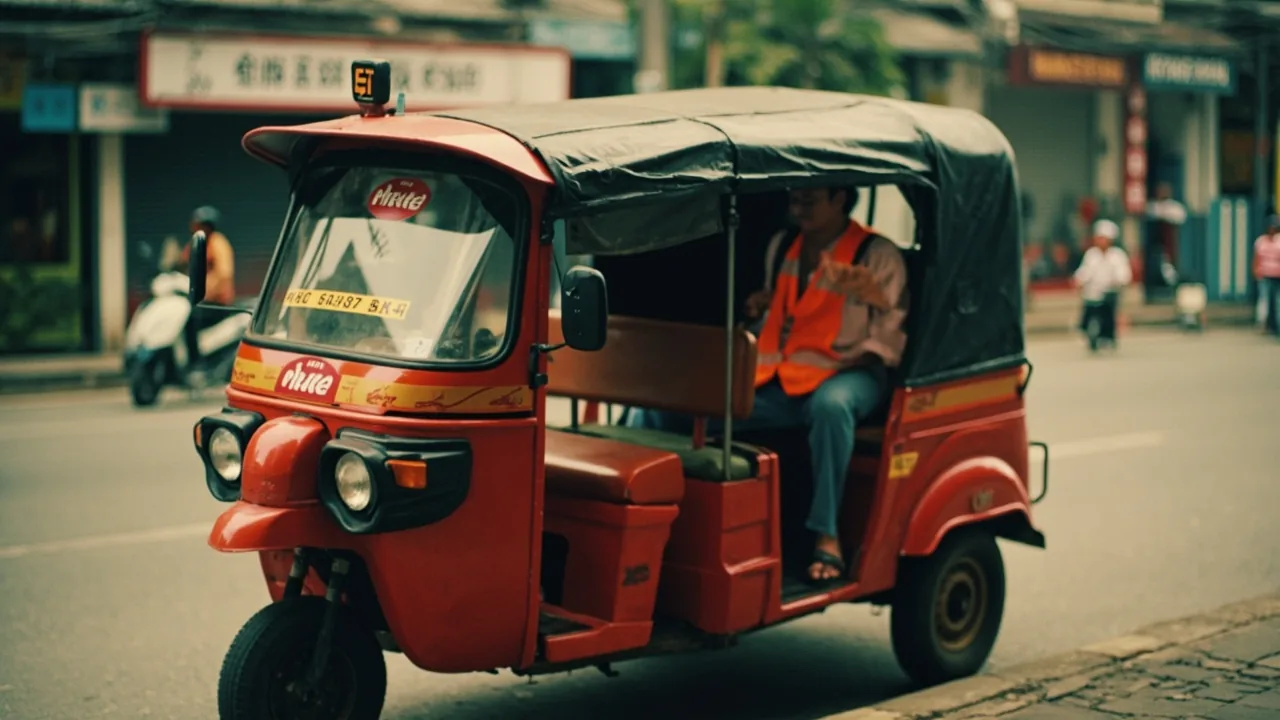
A tuk-tuk is a three-wheeled motorised rickshaw with a small bench seat in the back and no doors. In Bangkok they’re a tourist icon. The Thai word is “rot tu” (รถตุ๊กตุ๊ก). Drivers cluster around temples, BTS exits, and backpacker streets like Khao San. The scam culture exists because drivers earn a commission (₹574-₹1,436 (~200-500 THB or ~$5.96-$14.89)) for every tourist they deliver to specific gem shops, tailors, and “tourism information centres.” The rides are loss-leaders for that referral. You may also find 7 Days Thailand Tour Package Price useful for this trip.
A fair Bangkok ride runs ₹172-₹431 (~60-150 THB or ~$1.79-$4.47). Anything quoted without haggling, anything that mentions a “tour”, and anything starting at ₹861 (~300 THB or ~$8.94) or more is a flag.
Quick Answers
| What | Answer | Price (INR) |
|---|---|---|
| Fair Bangkok tuk-tuk price (2-5 km) | Always haggle first | ₹172-₹431 (~60-150 THB or ~$1.79-$4.47) |
| Common scam opening quote | Driver’s first price | ₹861-₹1,436 (~300-500 THB or ~$8.94-$14.89) |
| Flag: “500 for the day” | Never agree | Reject outright |
| Safer alternative | Grab app, fixed price shown upfront | ₹230-₹632 (~80-220 THB or ~$2.38-$6.55) |
| Bolt | Same model as Grab, fewer drivers in Bangkok | ₹201-₹574 (~70-200 THB or ~$2.09-$5.96) |
| Airport to Khao San (official) | Public taxi by meter only | ₹718 (~250 THB or ~$7.45) + ₹144 (~50 THB or ~$1.49) airport fee |
| Tourist police hotline | English/Thai | 1155 |
Exchange rate at time of writing: 1 INR ≈ 0.3485 THB, so 100 THB ≈ ₹287. A fake “₹1,436 (~500 THB or ~$14.89) day tour” is a real money loss if you don’t know the rate.
The 5 Tuk-Tuk Scams That Run in Bangkok Right Now
Tuk tuk scams bangkok travellers hit most often.
1. The ₹57 (~20 THB or ~$0.60) “City Tour” Scam
The driver leans out: “Today is big holiday! Only 20 baht, I show you Bangkok.” You get in. Ten minutes in, the tuk-tuk pulls into a gem shop or tailor. The “driver’s friend” does a 30-minute sales pitch. When you leave, the driver gets ₹574-₹1,436 (~200-500 THB or ~$5.96-$14.89) from the shop and disappears. If you insist on leaving mid-pitch, some drivers become hostile or demand ₹574-₹861 (~200-300 THB or ~$5.96-$8.94).
How to avoid: any price under ₹144 (~50 THB or ~$1.49) for a “tour” is impossible. Real motorbike taxis cost ₹115-₹172 (~40-60 THB or ~$1.19-$1.79) for a 2 km hop. If it sounds too good, it’s a kickback scheme.
2. The Temple-Closing Day Lie
A driver tells you the famous temple you’ve been planning to visit is closed today for a Buddhist holiday. He’ll offer an “alternative route” that conveniently stops at three shops. The temple is almost always open.
How to avoid: check the temple’s official Facebook page the night before, or ask the Thai Tourist Police (1155). Don’t take a tuk-tuk driver’s word on closures.
3. The Fake “Grand Palace” Detour
Driver says Grand Palace entry is “free today” or “closed today, but I take you somewhere better.” You arrive at a junk shop or knock-off tailor with a similar-sounding Thai name (e.g. “Wat Pho” vs a fake “Wat Pho Massage Centre”). The driver’s cut is ₹861-₹1,723 (~300-600 THB or ~$8.94-$17.87).
How to avoid: Grand Palace entry is ₹1,436 (~500 THB or ~$14.89) every day. It’s almost always open. Go straight. If a driver argues, get out and Grab it.
4. The Meter Tampering (for Official Taxis, Not Tuk-Tuks)
Tuk-tuks don’t have meters, so this one mainly hits metered taxis. A driver will flip a switch or claim the meter “broke” before starting. If they won’t release luggage until you pay an inflated amount, note the plate number and call 1155.
How to avoid: photograph the plate before getting in any taxi/tuk-tuk. For metered taxis, insist the meter runs from ₹101 (~35 THB or ~$1.04) starting fare.
5. The “Special Tourist Price” Line
Even for a 500-metre hop, the driver might quote ₹574-₹861 (~200-300 THB or ~$5.96-$8.94) and act offended when you counter. The “farang price” (foreigner price) is real, but it should max out at 2x the local rate, not 5-10x.
How to avoid: never accept the first quote. State a number first. If they refuse, walk to the next driver or open Grab.
Step-by-Step: How to Negotiate a Tuk-Tuk Without Getting Scammed
Step 1: Decide If You Even Need a Tuk-Tuk
Open Grab first. See the actual price to your destination. If Grab shows ₹230-₹345 (~80-120 THB or ~$2.38-$3.57) and is available, take it. Tuk-tuks are useful for short, scenic hops and when Grab is surging, but they’re never safer than an app-tracked ride.
If you’re inside a temple complex with no Grab access (Wat Pho, Grand Palace rear exits), or you genuinely want the experience, proceed to Step 2. (For temple-hopping logistics beyond Bangkok, see our 7 days in Thailand itinerary guide.)
Step 2: State Your Price First
Before the driver asks, you name a number. For a 2 km Bangkok hop that’s ₹172-₹287 (~60-100 THB or ~$1.79-$2.98). For 5 km, ₹287-₹431 (~100-150 THB or ~$2.98-$4.47). Say it confidently: “Siam Paragon, tao roi baht.” This flips the script. Drivers respect someone who opens with a price.
Step 3: Push Back to ₹431 (~150 THB or ~$4.47) Max
If the driver counters at ₹574-₹861 (~200-300 THB or ~$5.96-$8.94), you say: “Lor sin thao, tao roi ha sip (one-fifty). Pa chalai dai mai? (Can you go or not?)” Translation: “Too expensive, 150. Can you go or not?” Don’t be rude, just firm. Most drivers will accept ₹431 (~150 THB or ~$4.47) for a 3-4 km ride.
If they insist on 300+, walk away. There are 200 tuk-tuks nearby. Another one will take 150.
Step 4: Confirm the Destination Before Getting In
Repeat the destination with the landmark, not just the address. “Wat Pho, chao phraya express boat pier.” Don’t say “the temple” generically, because the driver can claim he took you to a different one and demand extra.
Step 5: Pay the Agreed Amount Exactly
Hand over ₹287-₹431 (~100-150 THB or ~$2.98-$4.47). Don’t tip generously on the first ride, drivers expect ₹57-₹86 (~20-30 THB or ~$0.60-$0.89) on top and bait you into it. If you want to tip, do it on the second ride once you know the route was clean.
Step 6: Photograph the Plate
A 2-second habit that pays off. Drivers behave better when they know you can identify them, and if anything goes wrong, the Thai Tourist Police (1155) pursues complaints with a clear plate photo.
Common Mistakes Indians Make in Bangkok Tuk-Tuks
Mistake 1: Believing “It’s Closed Today”
The temples are open 95% of the year. Only one or two closure days per temple per year. Drivers use this lie to redirect you to commission shops. Always check official temple Facebook pages or the Tourist Police hotline (1155) before believing a stranger on the street.
Mistake 2: Saying Yes to “20 Baht All-Day Bangkok”
There is no such thing. A single short ride costs ₹172-₹431 (~60-150 THB or ~$1.79-$4.47). “All day for 20 baht” means a referral drive. You will spend 3 hours in 3 different shops and end up at your hotel by 5pm with no Bangkok seen.
Mistake 3: Carrying ₹2,872 (~1,000 THB or ~$29.79) Notes and Showing Them
If a driver sees you flashing a ₹2,872 (~1,000 THB or ~$29.79) note while paying for a ₹172 (~60 THB or ~$1.79) ride, his next quote for any future trip doubles. Break your notes at 7-Eleven or a convenience store before getting in any tuk-tuk. Keep ₹287 (~100 THB or ~$2.98) and small coins in your hand, the rest in a money belt under your shirt.
Mistake 4: Letting the Driver Choose Your Route
For a hop between two specific points, the route should be the same. If a driver suddenly turns into a soi (side street) far from your destination and says “shortcut”, stop the ride. Pay only what you agreed, get out, and Grab to your actual destination.
Mistake 5: Not Asking Your Hotel Front Desk for the Real Price
Every Bangkok hotel concierge knows the current fair prices. Ask before you leave. If you’re budgeting for the whole trip, our how much for 5 days in Thailand piece covers transport costs inside the full-day total. “Siam Paragon from here, how much by tuk-tuk?” They’ll say ₹287-₹431 (~100-150 THB or ~$2.98-$4.47). Now you’re armed.
Grab vs Tuk-Tuk: The Real Comparison for 2026
| Factor | Tuk-Tuk | Grab (car/bike) | Bolt |
|---|---|---|---|
| Price shown upfront | No, haggling required | Yes | Yes |
| Route tracking | No | Yes, real-time GPS | Yes |
| Driver ID/plate | Hidden, must photograph | Visible in app | Visible in app |
| Driver rating system | No | Yes | Yes |
| Surge pricing | None, but fixed scams | Yes, 1.2-2x at peak | Yes, 1.2-2x at peak |
| Air-conditioning | No | Yes | Yes |
| Experience value | High (cultural) | Low | Low |
| Safety in 2026 | Low, scam risk | High | High |
| Average Bangkok ride | ₹172-₹574 (~60-200 THB or ~$1.79-$5.96) | ₹230-₹632 (~80-220 THB or ~$2.38-$6.55) | ₹201-₹574 (~70-200 THB or ~$2.09-$5.96) |
The honest trade-off: tuk-tuks are a thing you’ll want to try once in Bangkok, for the experience. They are not the daily transport layer. Grab is the daily transport layer.
One Bangkok-specific note: if your driver can’t find you, walk 50 metres down the soi and try again.
Thai Phrases That Work in a Tuk-Tuk Negotiation
Use these with a calm, slightly-smiling face. Thais read politeness from tone, not vocabulary.
- “Tao roi baht, pa chai mai?” → ₹287 (~100 THB or ~$2.98), can you go?
- “Lor sin!” → Too expensive!
- “Pa yang ngarn, tao roi ha sip” → Take me to [place], ₹431 (~150 THB or ~$4.47)
- “Mai ow, khop khun” → Don’t want, thanks (use to end and walk away)
- “Nee pom ow pai [place]” → I want to go to [place] (practise the destination in Thai to show you’re not a first-timer)
If you say the destination in Thai with the right tone, drivers tend to drop the “farang price” model and quote closer to local rates. They figure you’ll spot the lies more easily.
What Most Guides Don’t Tell You
Tuk-tuks in Phnom Penh and Hanoi are different from Bangkok. A tuk-tuk in Phnom Penh is a motorbike with a carriage attached, and most of them use a meter or a fixed route (especially airport runs at ₹868-₹1,157 (~9-12 USD)). A tuk-tuk in Hanoi refers to the cyclos (bicycle rickshaws) now mostly in Old Quarter tourist loops. Bangkok and Chiang Mai are where the scam culture is most concentrated. If you’re comparing the wet season impact on tuk-tuk availability versus other transport, our Thailand rainy season guide breaks down the monthly picture.
Chiang Mai has a songthaew (red truck) instead of a tuk-tuk. The red songthaews in Chiang Mai run ₹57-₹172 (~20-60 THB or ~$0.60-$1.79) per person on fixed routes or by short negotiation. The scam profile is lower than Bangkok because there’s no temple/tailor referral game. Just say your destination and ask “Pai [place] dai mai?” (Can you go to [place]?).
Thai Tourist Police (1155) responds. If a driver tries to extort you or won’t let you out, call 1155 from your phone. They have English-speaking operators. The call itself de-escalates 90% of the situations because the driver knows the plate is logged.
The scam commission system is real. Drivers get ₹574-₹1,436 (~200-500 THB or ~$5.96-$14.89) from gem shops and tailors per tourist delivered. The kickback is why so many drivers push tours. The Tourist Police and Bangkok Post have both reported on this scheme openly. Knowing it’s a system, not just a one-off rip-off, helps you stay calm and walk away cleanly.
Frequently Asked Questions
Are tuk-tuks safe in Bangkok in 2026?
Mechanically, mostly yes (they’re loud, open, and slow). As a transaction, no, they’re the highest scam-risk transport in the city. Treat them as a paid cultural experience, not as transport. Use Grab for actual commuting.
Is Grab cheaper than a tuk-tuk in Bangkok?
Sometimes. A Grab car is usually ₹230-₹632 (~80-220 THB or ~$2.38-$6.55), while a tuk-tuk is ₹172-₹431 (~60-150 THB or ~$1.79-$4.47), so tuk-tuks are often 20-30% cheaper. But with Grab you pay the app-stated price with no haggling or scam risk, plus GPS tracking and an ID-visible driver.
Can tuk-tuk drivers refuse to take you somewhere?
Yes. They often refuse short rides (1 km) because the commission is too low. They may also refuse Grab-priced trips. If a driver refuses, the polite move is “mai ow, khop khun” and walk to the next driver.
What if I already paid ₹1,436 (~500 THB or ~$14.89) to a scam tuk-tuk?
You can’t get the money back at the moment, but you can call 1155 (Thai Tourist Police) and file a report. Some travel insurance policies cover tourist scam losses for Indian travellers, but the typical reclaim process requires a police report and the receipt. Document the plate and driver details.
Should I tip tuk-tuk drivers in Thailand?
Yes, if the ride was clean and at the agreed price, ₹57-₹86 (~20-30 THB or ~$0.60-$0.89) on top is a normal local tip. If the driver tried to scam you, no tip. The tip is for service, not silence.
Is it rude to haggle aggressively with tuk-tuk drivers?
Slight haggling is fine and expected. Aggressive bargaining (“₹574 (~200 THB or ~$5.96)! Now!”) is bad form. The phrases above are polite but firm, which is the correct tone. Drivers will read you as a foreigner who’s done this before and respond more honestly.
Subodh’s Line
After talking to Bangkok drivers, hotel concierges, and checking Grab app prices on the ground, the only real “hack” is: state your price, walk when they refuse, and use Grab whenever you can. Tuk-tuks in Bangkok are a 30-minute paid cultural experience, not the daily transport layer. Get the ride once for the photos, then put your phone down and open the Grab app like every Bangkok local does.