Halal Food in Malaysia: Complete Guide for Muslim Travelers (Where, How Easy & What to Skip)
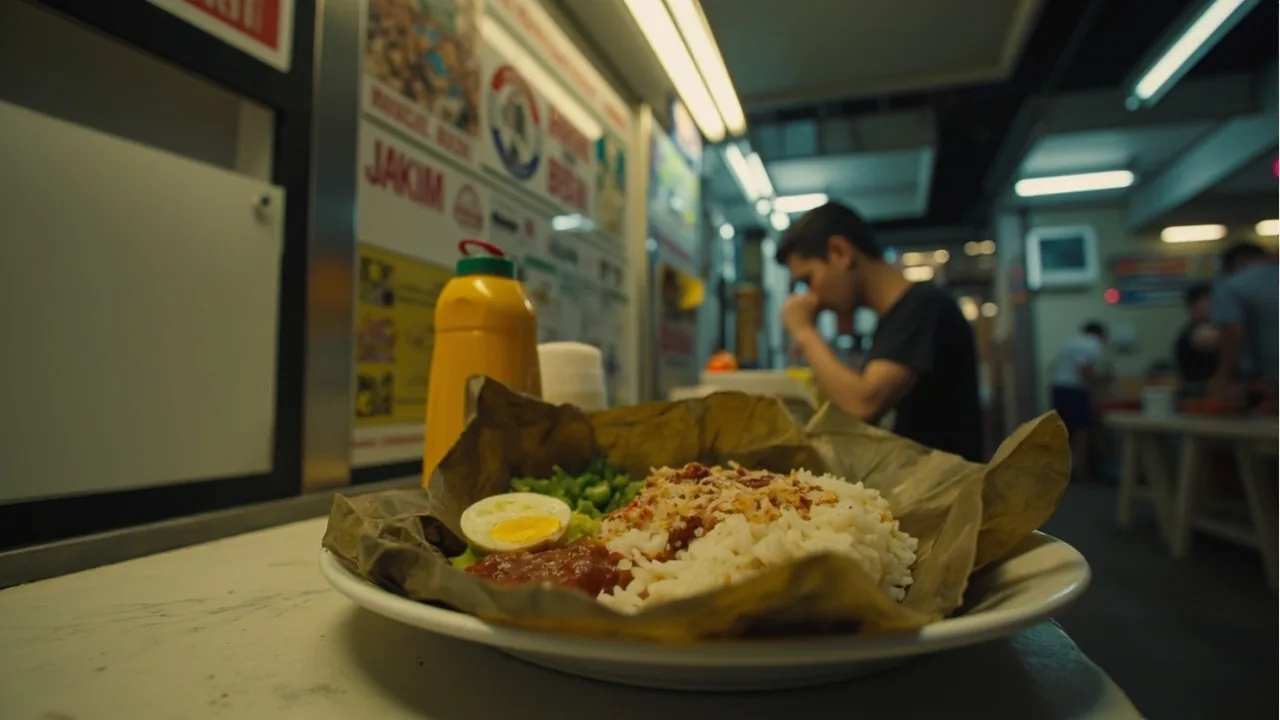
Halal food in Malaysia is it easy for Muslim travelers? Yes, it is one of the easier destinations in Southeast Asia for halal food. Malaysia is the only country in the region where JAKIM runs a federal halal certification system. If you know what to look for, you will eat well here.
Quick Answers
| What | Answer | Price (INR) |
|---|---|---|
| Is Malaysia halal-friendly for Muslim travelers? | Yes, one of the easiest in SEA. Most restaurants, food courts, and street stalls are halal by default. | — |
| Who certifies halal food in Malaysia? | JAKIM (Department of Islamic Development Malaysia), under the Prime Minister’s Department. | — |
| Is alcohol easy to avoid? | Yes. Alcohol is sold in dedicated bars, some Chinese restaurants, and at convenience stores; the rest of the food scene is alcohol-free. | — |
| Can I find Indian halal food? | Yes, easy. Look for “Restoran Mamak” or “Mughlai” signs in Brickfields (KL), Penang Road, and Johor Bahru. | ₹ |
| What is the local currency exchange rate? | 1 MYR is roughly ₹24 right now, so 10 MYR is roughly ₹236 (~$2.45). | — |
Why Malaysia is Different from the Rest of Southeast Asia
Thailand, Vietnam, Laos, and Cambodia have halal-friendly pockets (Chiang Mai’s Muslim Quarter, Phnom Penh’s Cham districts, parts of Hanoi near the mosques), but it is patchy. Malaysia is the only country in the region where halal is the default for the majority Muslim population and where the certification system has legal teeth. That changes how you travel here as a Muslim visitor.
You can walk into almost any food court, any roadside stall, any restaurant that does not visibly advertise pork or alcohol, and trust that the food is halal. That does not happen in Bangkok or Hanoi. It also means you do not need to ask about every plate the way you would in Thailand. The trust is built in, not negotiated.
Subodh’s Pro Tip: Before you leave, screenshot the JAKIM halal logo and the official list on their portal. If a stall has a faded sticker, you can cross-check the certificate number against JAKIM’s online database on the spot. Takes 20 seconds, removes all doubt.
How JAKIM Certification Works
JAKIM is short for Jabatan Kemajuan Islam Malaysia, the federal body that issues halal certificates to food producers, restaurants, abattoirs, and ingredient suppliers. A valid JAKIM certificate has to be renewed every 1 to 2 years and the certificate number is searchable online.
What JAKIM checks:
- Source of meat (must come from a JAKIM-certified slaughterhouse, animals killed by a Muslim with proper invocation)
- Cleanliness and cross-contamination controls (separate storage, utensils, prep areas for halal and non-halal items)
- Ingredients (no pork, no alcohol, no non-halal animal derivatives like pork gelatin or wine vinegar in cooking)
- Premises hygiene and staff training
The JAKIM logo is a green circle with the word “HALAL” in white and a checkmark. You will see it on shopfronts, food court stall boards, packaged food, and even some tourist-facing hotel restaurants. There is also a “Malaysia Halal” logo on food exports, which is the international version of the same certification.
Safety Alert: A sticker alone is not proof. JAKIM allows some restaurants to display a temporary “Memohon” (Applying) status while their certification is being processed, which is not the same as a valid certificate. Always check for the actual certificate number and expiry, especially in newer or smaller establishments.
Spotting the Halal Logo and What It Means
When you walk into a Malaysian restaurant or food court, look up. Halal status is almost always posted at the front of the stall or on a wall sticker near the register. Three signs to know:
- Valid JAKIM certificate (green circle with certificate number and expiry date): full halal, certified, trustworthy.
- “Muslim-Friendly” or “No Pork No Lard” signs: still a good sign. These restaurants don’t carry halal certification but commit to no pork and no lard in cooking. Often Chinese or mixed-cuisine spots.
- No signage at all: not necessarily a problem at food courts where everyone is halal, but in independent restaurants ask before ordering.
For packaged food and supermarket snacks, the JAKIM logo on the label is your guarantee. This matters more than you would think. Malaysia imports a lot of products from Thailand, China, and Indonesia, and not all of them are halal even when they look the same as the local version. Always check the label, especially for instant noodles, sauces, and snacks.
Where Halal Food is the Default
Some parts of Malaysia make halal eating easy. You can show up, eat anything on the menu, and not think about it.
Kuala Lumpur: The capital is majority Muslim and the food scene reflects that. Almost every food court (the air-conditioned “kedai makan” type), every mamak (Indian-Muslim) restaurant, and every Malay restaurant is halal by default. Chow Kit, Bangsar, and the KLCC area have dense halal options. Chinatown (Petaling Street) is the main exception; some Chinese-run stalls serve pork. The halal ones are signed.
Penang: George Town is more mixed than KL because of its Chinese heritage. The northern half of Penang Island and the Malay side across the bridge are solidly halal. Within George Town, look for the Little India / Kapitan Keling Mosque area for Indian Muslim food, and the Campbell Street market for hawker stalls. Penang’s northern half and the Malay side across the bridge have a high share of Muslim-owned hawker stalls.
Langkawi: Duty-free island, almost entirely halal by default. Most restaurants, beach cafes, and hotel restaurants are certified.
Cameron Highlands: Hill country with a significant Indian and Malay population. Tea houses and Indian restaurants in Brinchang and Tanah Rata are predominantly halal.
Sabah and Sarawak (Borneo): Mixed. Kota Kinabalu and Kuching have large Muslim populations (especially in KK), but the indigenous Dayak and Chinese communities mean some restaurants serve pork. Stick to Malay and Indian Muslim spots and you are fine.
Subodh’s Pro Tip: When in doubt, eat where the locals queue. A packed mamak at 8 pm in KL is a better signal than any sticker. Locals know which stalls are reliable.
What to Eat in Malaysia (Halal Edition)
You are not short on options. Malaysia has one of the most diverse halal food scenes in the world because Malay, Indian Muslim, Chinese Muslim, and Middle Eastern traditions all live side by side.
Local / Regional Halal Spots
These are the on-the-ground places to eat well without thinking about halal at all. They are all Muslim-friendly or halal-certified and have strong ratings from travellers.
KOKO Cafe Langkawi in Langkawi is a cozy vegetarian cafe that caters to a Muslim-friendly menu, so even dishes without meat are guaranteed pork-free and alcohol-free. Worth a stop if you are on the island and need a quiet, clean meal.
niàn Cafe focuses on plant-based food and is a good option for vegetarian travellers who still want assurance on halal sourcing. It is the kind of place where the menu is small but everything is thought through.
Armani Food Garden is a local Malay restaurant with a garden setting, doing traditional dishes like nasi lemak, rendang, and grilled fish. Good for a sit-down Malay meal at reasonable prices.
Seeds Origin in Kuala Lumpur is a healthy cafe doing salads, grain bowls, and light Malay fusion. Useful when you want a break from heavy hawker food.
De Telang Cafe in Cameron Highlands sits in Kea Farm and gives you a hill-country break with local flavours. The scones and tea are reportedly the standout here, and the menu accommodates Muslim dietary needs easily.
Indian / Veg-Friendly Halal Spots 🌶️
If you are a Muslim Indian traveller craving a dal-chawal fix, Malaysia’s mamak scene is your friend. Three standouts:
Ponmalar Indian Stall (Kedai Ponmalar) in the Cameron Highlands is a family-run South Indian spot doing dosas, idli, vada, and banana leaf rice. The sambar and chutney are reportedly the real deal.
Food Paradise Restaurant & Bistro does Pakistani and Indian cuisine in a lively setting. Biryani, tandoori, and curries that lean Pakistani in style, which means the meat handling is halal as a baseline.
Solh Restaurant & Bar in Kuala Lumpur specialises in modern Middle Eastern cuisine, with the lamb shawarma and saffron-infused biryani being standout dishes that travellers report keep them coming back. The “bar” in the name is more about the evening atmosphere than alcohol; the kitchen is fully halal.
What to Skip (and Why)
Malaysia is not uniformly halal. Some areas and establishments serve pork, alcohol, or both, and you should know where they cluster so you do not walk in by accident.
Chinese-only restaurants: Most Chinese restaurants in Malaysia are not halal, even when they are spotlessly clean. The default in Chinese cooking is lard, pork-based broths, and oyster sauce. The exception is “Chinese Muslim” restaurants (run by ethnic Chinese converts, common in KL and Penang). Look for a halal sign or ask.
Chinatowns: Petaling Street in KL and parts of George Town in Penang have non-halal Chinese stalls. The halal options exist (look for the green sticker), but they are mixed in with pork-serving neighbours. Eat confidently but pick the right stall.
Some bars and Western restaurants: International chains and themed bars often serve alcohol as a primary product. The food itself is usually fine, but if you are uncomfortable with the environment (want zero ambiguity about alcohol in sauces), skip them.
Certain hawker dishes without checking: Char siu (Chinese BBQ pork), bak kut teh (pork rib soup), and siu mei (roast meats hanging in windows) are the obvious non-halal flags. If you see them on display, the stall is likely not halal.
“No Pork No Lard” only, not “Halal”: Some Chinese restaurants commit to no pork and no lard but still serve alcohol or use non-halal animal stock. This is fine for many Muslim travellers, but if you require full halal certification, look for the JAKIM logo specifically, not the informal “no pork” sign.
Alcohol and Nightlife: What Muslim Travelers Should Know
Malaysia is not a dry country, but alcohol is heavily concentrated in specific zones and venues. You can avoid it entirely by following a simple rule: eat at mamak stalls, Malay restaurants, food courts, and JAKIM-certified establishments. Alcohol is rare to absent in all of these.
Where alcohol is concentrated:
- Hotel bars and upscale Western restaurants in KLCC, Bukit Bintang
- Changkat Bukit Bintang (KL’s bar street)
- Some Chinese seafood restaurants
- Commercial breweries’ tap rooms (Carlsberg, Tiger)
- Duty-free zones in Langkawi
Outside those zones, you can go days without seeing alcohol served at a meal. The social pressure around not drinking is low; Malaysians are used to Muslim friends not drinking and you will not be pushed.
Practicalities for Muslim Travelers
For a broader overview of Southeast Asia backpacking, see the SE Asia backpacking hub. Here is what matters specifically for Muslim travelers in Malaysia.
Prayer spaces: Every Malaysian state has mosques (surau for smaller prayer halls), and the call to prayer is audible in most Muslim-majority neighbourhoods. In malls, airports, and major transport hubs, look for the “Surau” sign. Prayer rooms are common and clean. For what to pack, including modest clothing for mosque visits, see the Malaysia packing list.
Halal hotels: Most Malaysian hotels cater to Muslim guests. Look for the JAKIM-certified “Muslim-Friendly” rating if you want it explicit. Many hotels offer Qibla direction markers in rooms and provide prayer mats on request.
Ramadan timing: If you travel during Ramadan, most halal restaurants close during daylight hours and reopen for iftar (sunset breaking of fast). Street food markets come alive after sunset. Plan around this.
Mosque visits: Major mosques welcome non-Muslim visitors outside prayer times. The National Mosque (Masjid Negara) in KL and the Masjid Kristal in KLCC Park are visitor-friendly. Dress modestly (cover shoulders and knees).
Travel Logistics That Matter for Your Food Choices
Before you can worry about halal food, you need to get into the country. Here is the practical side of your Malaysia trip.
Visa: Indian passport holders need an eVisa before arrival. There is no visa on arrival for Indians. Use the official portal at https://entri.petra.gov.my. The eNTRI option is free for 15 days (single entry), the paid eVISA runs about ₹2,119 (~22 USD) for 30 days. ENTRI is instant and works for most backpackers; apply at least 3-4 days before flight.
Flight: Direct flights from major Indian cities (Bengaluru, Chennai, Mumbai, Hyderabad, Delhi) to KL or Penang run 4-5 hours. Budget carriers like AirAsia, IndiGo, and Batik Air do the route from ₹8,000 (~$83.04) one-way. Full-service options on Malaysia Airlines, Malindo Air, and Singapore Airlines (with a stop in Singapore) run ₹15,000-₹25,000 (~$155.70-$259.50). Booking 4-6 weeks ahead is the sweet spot.
Currency: The Malaysian Ringgit (MYR or RM) is your on-the-ground currency. At current rates, 1 MYR is roughly ₹24 right now, so a 10 MYR meal is roughly ₹236 (~$2.45). ATMs are everywhere in KL and Penang and most accept international cards. Maybank, CIMB, and Public Bank have the lowest foreign card withdrawal fees.
SIM card on arrival: Hotlink and Celcom tourist SIMs at KLIA airport counters run ₹353 (~15 MYR or ~$3.67) for 7 days with about 5GB of data. Buying the same SIM at a 7-Eleven or Celcom store in the city is noticeably cheaper. Have your passport ready for registration. For a deeper comparison of plans and where to buy, see the Malaysia SIM card guide.
For travellers who want data the moment the plane lands, Get Nomad eSIM is the alternative to a physical SIM.
Local transport: Grab works in all major Malaysian cities and is the easiest way to get around. Short city rides run ₹118-₹353 (~5-15 MYR or ~$1.22-$3.67), airport runs run ₹1,178-₹2,120 (~50-90 MYR or ~$12.23-$22.01). The LRT, MRT, and monorail in KL are cheap at ₹24-₹118 (~1-5 MYR or ~$0.24-$1.22) per trip (~₹24-118) and cover the main backpacker areas. Buses to Penang from KL run ₹825-₹1,296 (~35-55 MYR or ~$8.56-$13.45) on operators like KKKL, Aeroline, with bookings available on KKKL or Aeroline directly.
Subodh’s Pro Tip: If you are coming from Thailand, Laos, or Vietnam overland, you will arrive at the Bukit Kayu Hitam border in Kedah or at Padang Besar. The eVisa must be applied for in advance, and the border does not issue visa-on-arrival to Indians. Don’t plan to sort this at the border.
Subodh’s Take
Malaysians have been cooking halal food longer than any of us have been alive, and the food culture reflects that. Unlike places where halal is an afterthought for tourists, here it is the baseline. You can eat at a packed roadside stall in KL at 11 pm, get a proper nasi lemak with sambal, fried anchovies, cucumber, and boiled egg for ₹118-₹188 (~5-8 MYR or ~$1.22-$1.96), and never once wonder about the meat. That is rare in this region. The one thing to do is ignore any place that has visible pork on the menu or a “we also serve alcohol” sign. Otherwise, you eat well here by default.
For a wider view of Malaysia as a backpacker destination, see the Malaysia 5-day itinerary guide. For Indian veg and halal specifically in KL and Penang, the Indian restaurants in KL and Penang piece has more spots.
For the full Malaysia food breakdown beyond halal, the Malaysia food guide covers must-try dishes and street food across the country.
FAQ
Is halal food in Malaysia easy to find for Muslim travelers?
Yes, easy. Malaysia’s majority Muslim population means most food courts, mamak restaurants, Malay restaurants, and street food stalls are halal by default. JAKIM certification gives you a federal-level guarantee on top of that. You can eat confidently at most establishments outside of Chinese restaurants and bars.
How do I recognise the JAKIM halal logo?
Look for a green circle with the word “HALAL” in white and a checkmark. It will be displayed at the entrance of certified restaurants, on food court stall boards, and on packaged food labels. The certificate number and expiry date are usually printed on the same sign and are searchable on the JAKIM portal.
Can Indian Muslim travelers find familiar halal Indian food in Malaysia?
Yes, easily. Mamak restaurants (Indian Muslim-run eateries) are everywhere in KL, Penang, Johor Bahru, and most major cities. They serve biryani, dosa, roti canai, tandoori, and curries that lean South Indian in style. Brickfields in KL and Little India in Penang are the densest areas.
What Malaysian dishes should Muslim travelers try first?
Nasi lemak (coconut rice with sambal, anchovies, egg, cucumber), roti canai (flaky flatbread with curry), satay (grilled skewered meat with peanut sauce), rendang (slow-cooked spiced beef), and nasi kandar (rice with a choice of curries, originally from Penang). All are halal at certified and mamak restaurants.
Is alcohol easy to avoid in Malaysia?
Yes. Eat at mamak stalls, Malay restaurants, food courts, and JAKIM-certified spots, and you will rarely see alcohol on the menu or in the dining area. Alcohol is concentrated in hotel bars, certain Chinese restaurants, Western bars, and duty-free zones like Langkawi. Outside those, it is absent from the food scene.
Do I need an eVisa for Malaysia as an Indian traveler?
Yes. Indians must apply for an eVisa before travel, either the free eNTRI (15 days, single entry) or the paid eVISA (~22 USD, 30 days, single entry). Apply at https://entri.petra.gov.my. There is no visa-on-arrival option for Indian passport holders. For details on visa extensions and overstay rules, see that guide.
Is Malaysia safe for solo Muslim travelers?
Yes, generally. Solo female Muslim travelers from India generally report feeling safe in KL, Penang, and Langkawi. Modest dress is appreciated but not required outside mosques. Petty theft (bag-snatching, phone theft) is the main concern in crowded areas like Bukit Bintang and Petaling Street. Use common sense and a crossbody bag with zips. For the full safety breakdown, see the Malaysia safety guide.
