Best Yoga Retreats in Southeast Asia for Indian Backpackers (2026)
✅ Last verified on-the-ground: 2026-07-17
A good yoga retreat in Southeast Asia costs between ₹38,561 (~400 USD) and ₹134,965 (~1,400 USD) per week, including accommodation, two daily yoga sessions, three vegetarian meals, and optional excursions. Top picks include Bali, Thailand, Vietnam, and Cambodia.
This guide ranks four Southeast Asia destinations, Thailand, Bali, Vietnam, and Cambodia, by cost, style, and suitability for Indian travellers, with prices verified against published 2026 operator rates and traveller reports from January and June 2026.
What Is a Yoga Retreat in Southeast Asia?
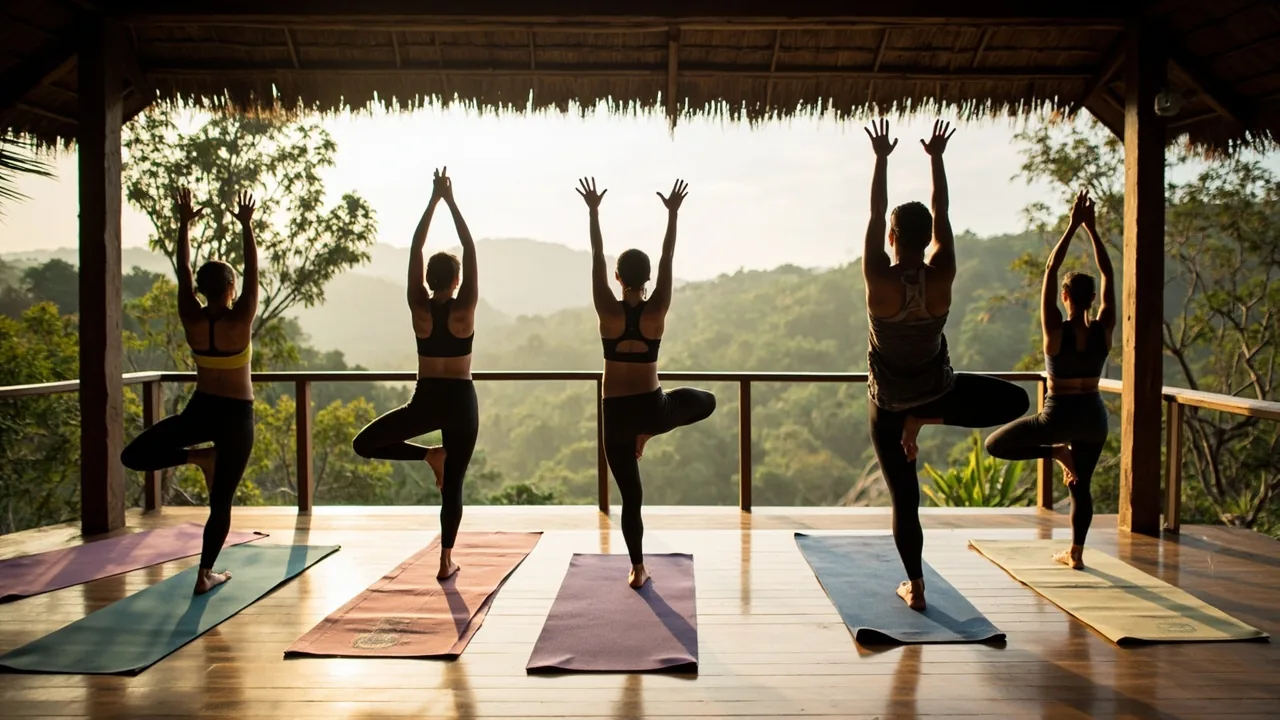
A yoga retreat in Southeast Asia is a multi-day stay (usually 5-7 days, sometimes longer) at a purpose-built venue, ashram, or guesthouse where daily yoga classes, meditation sessions, and vegetarian meals are bundled into one inclusive price. The format differs from a yoga class drop-in (which costs ₹1,446-₹2,410 (~15-25 USD) per session at a studio). Retreats include accommodation, full board, and at least two group sessions per day. Teacher training (YTT) is a separate, more structured 200-hour or 300-hour program lasting 3-6 weeks, certified by Yoga Alliance.
Quick Answers: Yoga Retreat Costs in SEA (2026)
| What | Answer | Price (INR) | YTT 200hr (USD) | Best For |
|---|---|---|---|---|
| Koh Phangan, Thailand | 417-536 | 40,200-51,700 | 1,200-2,500 | Beginner-friendly, beach vibes |
| Chiang Mai / Pai, Thailand | 500-900 | 48,200-86,700 | 1,400-3,500 | Ashram-style, Indian food, detox |
| Ubud, Bali, Indonesia | 700-1,400 | 67,400-134,900 | 800-2,800 | Yoga capital, all levels |
| Hoi An, Vietnam | 350-600 | 33,700-57,800 | 900-1,800 | Budget pick, less crowded |
| Kampot, Cambodia | 300-550 | 28,900-52,900 | Not common | Cheapest, slow travel |
Conversion verified at 1 USD = ₹96.33 (17 July 2026). Local-currency costs are detailed in each section below.
Step 1: Pick the Right Country for Your Style
Southeast Asia’s yoga scene splits into three categories. Choose by what you want from the retreat, not by which country looks best on Instagram.
Ashram-style, Indian-friendly (Thailand: Chiang Mai, Pai, Koh Phangan)
These centres run structured detox, fasting, and traditional Hatha programs. Multiple centres in these areas serve Indian vegetarian food and follow classical Indian yoga lineages. Expect 6 AM meditation, sattvic meals, no alcohol on-site, and a 5-10 day minimum stay. Best for Indians who want the Rishikesh experience without the India flight.
Bali-style, modern wellness (Indonesia: Ubud, Canggu)
The Yoga Barn (Ubud) is the regional benchmark. Daily drop-in classes start at ₹1,735 (~18 USD), week-long retreats from ₹67,483 (~700 USD). Expect Western vegetarian food, smoothie bowls, sound healing, and English-speaking instructors trained in India, Australia, or the US. Canggu has a heavier surf-and-yoga crossover. Best for first-time retreat-goers who want a softer intro.
Budget, slow travel (Vietnam: Hoi An, Da Lat; Cambodia: Kampot)
These spots have fewer dedicated retreat centres but more boutique guesthouses that offer yoga packages. Prices are 20-30% lower than Thailand and Bali. The trade-off is fewer Indian travellers, less Indian food, and instructors with more variable training. Best for backpackers already on a regional loop who want to add a week of yoga without breaking the route.
Step 2: Understand What Your Money Gets You
A typical 7-day retreat at a mid-range centre includes:
- Private or shared room (sometimes dorm)
- Two yoga sessions per day (90 min each, usually 7 AM and 5 PM)
- Three vegetarian meals, plus tea and fruit
- One or two excursions (temple visit, waterfall hike, sound bath)
- Airport or bus station transfer (Bali and Thailand only)
- WiFi (variable quality)
What’s NOT included: flights from India, travel insurance, visa fees (Indian passport holders get visa-free entry to Thailand, 30-day visa-free entry to Indonesia, and e-visa for Vietnam at ₹2,410 (~25 USD)), and any extra spa treatments or one-on-one sessions.
Subodh’s Pro Tip: Book a 5-day retreat before committing to a 21-day YTT. The longer format is cheaper per day, but if the teaching style doesn’t suit you, you are locked in. Five days is the minimum to know if you vibe with the place.
Step 3: Destination-by-Destination Breakdown
Koh Phangan, Thailand (Beginner-Friendly, Beach)
Koh Phangan’s reputation from the Full Moon Party decades still colours perceptions, but the north and west coasts have quietly become one of the best yoga hubs in Southeast Asia. Retreat centres on Srithanu beach and in the south run 7-day programs including dorm or private room, three vegetarian meals, two daily yoga sessions, and weekly excursions. Weekly packages typically range from ₹40,201 (~$417.01) to ₹51,687 (~$536.15) depending on the centre and room type.
How to get there: Fly Bangkok to Koh Samui (1 hour, from ₹7,179 (~2,500 THB or ~$74.47) on Bangkok Airways or Nok Air), then ferry from Samui to Phangan (30 min, ₹574 (~200 THB or ~$5.96)). Book on 12go
Indian food: Both centres serve Indian vegetarian meals daily. Samma Karuna has a North Indian thali twice a week.
Verified against published 2026 pricing from centres in the area, accessed 17 July 2026.
Chiang Mai and Pai, Thailand (Ashram, Detox)
Chiang Mai’s Old City has around 15 yoga studios and at least 5 dedicated retreat centres. Week-long Hatha and Vinyasa retreats in Chiang Mai start from ₹63,173 (~$655.30), including a private room and vegetarian meals. Pai, 4 hours north by minivan, is where you go for the Ashram-style, off-grid experience. 10-day yoga and detox retreats in Pai run from ₹80,402 (~$834.01), including juice fast, steam room, and accommodation in a bamboo hut.
How to get there: Fly Bangkok to Chiang Mai (1 hour 15 min, from ₹5,169 (~1,800 THB or ~$53.62) on AirAsia, Nok Air, or Thai Vietjet). Pai is 135 km north of Chiang Mai. Minivan from Chiang Mai to Pai: ₹718 (~250 THB or ~$7.45), 4 hours. Book on 12go
Indian food: Chiang Mai has at least 20 Indian restaurants. Pai has fewer, but The Ashram cooks Indian vegetarian meals on request. For broader Pai food options, see our Pai packing and food guide.
Ubud, Bali, Indonesia (The Yoga Capital)
The Yoga Barn is the most famous yoga venue in Southeast Asia, running daily drop-in classes (from ₹1,340 (~250,000 IDR or ~$13.89), ~₹1,325 (~$13.74)), week-long retreats (from ₹56,259 (~10,500,000 IDR or ~$583.58) for a dorm bed, ~₹55,650 (~$577.26)), and full 200-hour YTTs (from ₹509,010 (~95,000,000 IDR or ~$5,279.98), ~₹503,500 (~$5,222.83)). Surrounding centres each have their own retreats, usually cheaper and less crowded than The Yoga Barn. Canggu, an hour’s drive west, has more of a surf-and-fitness crossover with surf-and-yoga studios.
How to get there: Fly Delhi or Mumbai to Denpasar (DPS) direct on Air India, IndiGo, or Singapore Airlines via SIN. Return fares start at ₹28,000 (~$290.45) from Mumbai. Indonesian visa-on-arrival for Indians costs ₹2,679 (~500,000 IDR or ~$27.79) for 30 days, extendable once. E-visa is now available at ₹2,679 (~500,000 IDR or ~$27.79) and is recommended to skip the on-arrival queue.
Indian food: Ubud has dozens of Indian restaurants. Bali is the easiest SEA destination for Indian food outside Thailand.
Verified against The Yoga Barn’s published 2026 retreat calendar and Booking.com listings, accessed 17 July 2026.
Hoi An, Vietnam (Budget Pick)
Hoi An’s Ancient Town is UNESCO-protected and 30 minutes from Cua Dai or An Bang beach. Yoga centres here are smaller, family-run, and 20-30% cheaper than Thailand or Bali. Centre-run 6-day yoga packages start from ₹31,306 (~$324.74), including dorm bed, vegetarian meals, and two daily classes. Smaller studios offer drop-in classes from ₹737 (~$7.64).
How to get there: Fly Ho Chi Minh City or Hanoi to Da Nang (1 hour 30 min, from ₹2,946 (~800,000 VND or ~$30.56) on VietJet or Vietnam Airlines). Hoi An is 30 km south of Da Nang. Taxi or Grab: ₹1,289 (~350,000 VND or ~$13.37), 45 minutes. Book on 12go
Indian food: Limited in Hoi An. Two Indian restaurants operate in the Old Town area. Most travellers report eating at the retreat’s vegetarian kitchen instead.
Kampot, Cambodia (Cheapest, Slowest)
Kampot is a small riverside town 3 hours south of Phnom Penh. Yoga options are limited but cheap. Retreat centres in Kampot offer weekly packages from ₹19,281 (~200 USD) including private room, two meals, and one daily class. Cambodia’s retreat prices are commonly quoted in USD alongside the Cambodian riel.
How to get there: Bus or minivan from Phnom Penh to Kampot: ₹771 (~8 USD), 3 hours. Book on 12go
Indian food: Almost none. The retreat centres handle this by including all meals in the package. If you are vegan or have strict dietary requirements, confirm this before booking.
Step 4: Book the Right Retreat at the Right Time
When to go:
- Thailand (Koh Phangan, Chiang Mai, Pai): November to February. Cool, dry season. Avoid March-May (burning season in Chiang Mai, air quality bad).
- Bali (Ubud, Canggu): April to October is dry season. November-March sees daily rain but lower prices.
- Vietnam (Hoi An): February to April or September to November. Avoid typhoon season (July-November).
- Cambodia (Kampot): November to March.
How to book:
- Check the retreat’s official website first. Third-party sites (BookYogaRetreats, YogaRetreatsInAsia) sometimes mark up by 10-15%.
- Email the centre directly. Most offer a 5-10% discount for stays over 14 days or for early bookings (60+ days out).
- Read recent reviews on Google Maps and Trustpilot. Filter for reviews from the last 6 months, since staff and quality change fast.
- Pay a deposit (usually 30-50%) via bank transfer or Wise. Avoid paying 100% upfront unless it is a well-known centre.
Safety Alert: There is no formal regulatory body for yoga retreats in SEA. Centres can claim “Yoga Alliance registered” without verification. Check the instructor’s 200-hour certification directly on the Yoga Alliance directory before booking a YTT.
Step 5: Getting Connected (SIM and WiFi)
Most retreats include WiFi, but it is often slow (5-10 Mbps) and shared. For reliable connection, especially in Bali and Thailand, get a local SIM or eSIM on arrival.
Thailand: AIS, TrueMove, and DTAC all sell 7-day tourist SIMs with 15-30 GB for ₹859-₹1,433 (~299-499 THB or ~$8.91-$14.86). Buy at 7-Eleven or the airport.
Indonesia (Bali): Telkomsel and XL Axiata sell tourist SIMs at the airport for ₹536-₹1,072 (~100,000-200,000 IDR or ~$5.56-$11.12) with 10-25 GB valid for 30 days.
Vietnam: Viettel and Mobifone sell tourist SIMs at the airport for ₹552-₹737 (~150,000-200,000 VND or ~$5.73-$7.64) with 3-5 GB/day.
Cambodia: Cellcard and Smart sell SIMs at Phnom Penh airport for ₹482 (~5 USD) with 10 GB valid for 7 days.
If you want to skip airport queues, Get Nomad eSIM covers all four countries with a single regional plan from ₹578 (~6 USD). Data-only, no phone number.
Common Mistakes Indians Make
Mistake 1: Booking a YTT because it is “cheaper than India.” A 200-hour YTT in Bali starts at ₹77,123 (~800 USD), but the equivalent in Rishikesh is ₹57,842-₹86,763 (~600-900 USD). The savings are smaller than they look once you add flights (₹28,000 (~$290.45)+ round trip) and visa fees (₹2,679 (~500,000 IDR or ~$27.79)). Bali’s value is the weather, food, and lifestyle, not the price.
Mistake 2: Assuming “vegetarian” means Indian-friendly. Western yoga retreats serve vegetarian food, but it is often Western-vegetarian (cheese, eggs, Italian, raw). If you want Indian vegetarian (dal, roti, sabzi), confirm in writing before booking. Several centres in Thailand and Bali explicitly cater to Indian dietary needs.
Mistake 3: Booking a “silent retreat” without practising silence before. Silent retreats ban talking, phone use, and sometimes eye contact. If you have never done a 24-hour silence practice, a 7-day silent retreat is brutal. Start with a regular retreat first.
Mistake 4: Not factoring the visa and travel days. A “7-day retreat” becomes a 10-day trip once you add airport transfers, jet lag, and orientation. For Bali and Thailand, budget 10-11 days total.
Mistake 5: Paying in cash without getting a receipt. Some smaller centres in Vietnam and Cambodia operate informally and prefer cash. Always ask for a written receipt or confirmation email. If they refuse, choose another centre.
What Most Guides Don’t Tell You
Edge case 1: Indian passport holders need a separate visa for Bali even if transiting through Singapore or Kuala Lumpur. Most Indians get visa-free or visa-on-arrival for Thailand, Indonesia, and Cambodia, but you must apply for a separate visa for any transit country that requires one. Singapore requires a pre-approved visa even for transit. Apply at least 7 days before departure.
Edge case 2: Thailand’s yoga industry is not regulated, and “registered” means nothing. Thailand has no government accreditation for yoga schools. “Yoga Alliance registered” is the only meaningful check, and even that is voluntary. Read instructor bios and check their personal certification.
Edge case 3: Bali’s “yoga tax” appears on some retreats as a 5-10% surcharge. Some centres add an “energy alignment fee” or “yoga sustainability tax” to the bill. This is not standard, not regulated, and is sometimes negotiable. Ask for a full price breakdown before paying the deposit.
Edge case 4: Pai, Thailand closes for burning season (Feb-April). Chiang Mai and Pai experience severe air pollution from agricultural burning, with PM2.5 often above 300. If you have asthma or respiratory issues, skip Pai between February and April. Koh Phangan and Bali are safer during this window.
FAQ
Q: What is the cheapest yoga retreat in Southeast Asia for Indian backpackers? A: Kampot, Cambodia is the cheapest, with week-long retreats from ₹28,921 (~300 USD). Hoi An, Vietnam is second at ₹33,741 (~350 USD). Both include accommodation and meals.
Q: Do I need a visa for a yoga retreat in Bali or Thailand? A: Indian passport holders get 30-day visa-free entry to Thailand. Indonesia (Bali) offers visa-on-arrival at ₹2,679 (~$27.79) or e-visa at ₹2,679 (~$27.79). Vietnam requires an e-visa at ₹2,410 (~25 USD). Cambodia requires an e-visa at ₹2,892 (~30 USD) or visa-on-arrival at the airport (also ~$30).
Q: Can I do a 200-hour yoga teacher training in Southeast Asia without prior yoga experience? A: Most centres require at least 6 months of regular practice. Some accept complete beginners, but the dropout rate is high. Try a week-long retreat first.
Q: Which SEA yoga retreat is best for vegetarian Indian food? A: Several centres in Koh Phangan, Chiang Mai, and Pai serve Indian vegetarian meals daily. Bali’s options are more international.
Q: Are yoga retreats in Southeast Asia safe for solo female travellers? A: Yes. Most centres are set up for solo travellers, with single-occupancy rooms and group meals. Read our solo female travel guide for broader SEA safety tips.
Q: How do I verify a yoga retreat is legitimate? A: Check the instructor’s Yoga Alliance profile (yogaalliance.org), read Google Maps reviews from the last 6 months, and confirm the centre has a registered business address. Avoid retreats that only communicate via Instagram DM.
Q: When is the best month to book a yoga retreat in SEA? A: November to February for Thailand and Cambodia. April to October for Bali. Avoid March-April in northern Thailand due to burning season.
Subodh’s Take
Yogis ask me which is best: Bali, Thailand, or India. Wrong question. Each offers something different. Bali is the polished, drop-in-anytime yoga capital with the best infrastructure and the highest prices. Thailand has Indian-friendly ashrams at half the price of Bali and is easier to reach from India. Vietnam and Cambodia are 30% cheaper again, but the instruction quality is more variable. If you are doing a one-off week, go to Koh Phangan or The Yoga Barn in Ubud. If you are doing a 21-day YTT, Pai or Chiang Mai gives you the Indian-style seriousness at a price India no longer matches. Whatever you pick, book a 5-day retreat first, not a YTT, and bring a copy of your passport and a printed insurance policy. The retreat can wait until you arrive.
, Subodh