Border Crossing Step-by-Step: Documents, Checks, and What Happens (2026)
If you want to know how to cross an international border in Southeast Asia, this guide walks through documents, checks, fees, and what officials actually ask Indian passport holders, based on current visa rules, embassy-confirmed requirements, and traveller reports from 2026 crossings at Aranyaprathet-Poipet, Chiang Khong-Huay Xai, and Bavet-Moc Bai.
What Is a Land Border Crossing?
A land border crossing is the physical checkpoint where one country ends and another begins, operated by the immigration authority of each side. You clear the exit immigration of the country you are leaving, then walk or take a shared vehicle across a no-man’s-land zone (a bridge, a road, or a fenced walkway that is technically neither country), then clear the entry immigration of the country you are entering. Each side has its own queue, its own officers, its own fee structure, and sometimes its own currency. The crossing itself can take anywhere from 20 minutes on a quiet weekday morning to 3 hours on a Saturday morning at Aranyaprathet. Both countries must let you in: an exit stamp from country A does not guarantee an entry stamp from country B. You may also find Solo in Thailand a First Timer S Safety Itinerary Budget Guide for Indian Travellers useful for this trip.
Quick Answers
| What | Answer | Price (INR) |
|---|---|---|
| Documents you must carry | Passport (6+ months validity), valid visa or e-visa, 1-2 passport photos, proof of onward travel, USD cash for fees | , |
| Standard visa-on-arrival fee (Cambodia) | ₹3,083 (~32 USD) including photo fee | ₹3,083 (~$32) |
| Standard visa-on-arrival fee (Laos) | ₹3,083-₹3,854 (~32-40 USD) depending on nationality | ₹3,083-₹3,900 (~$32-$40.48) |
| E-visa fee (Vietnam) | ₹2,408 (~25 USD) single entry | ₹2,408 (~$25) |
| Thailand exit fee (airport only, land borders waived) | 0 THB at land crossings | , |
| Currency declaration threshold | USD 3,000 or equivalent | , |
| Average total time at a busy land border | 45-90 minutes | , |
| Cheapest border run from Bangkok | Aranyaprathet to Poipet (Cambodia) | , |
FX rate used in this article: 1 INR ≈ 0.3486 THB, and 1 USD ≈ ₹96.5289. At current rates, 30 USD ≈ ₹2,900. See also: 7 Honest Reasons Not to Visit Thailand and Who Should Still Go.
Step-by-Step: What Happens at the Crossing
Step 1: Prepare your documents the night before
Before you leave the guesthouse, lay out four things on the bed:
- Passport with at least 6 months validity beyond your entry date. Border officers reject passports with under 6 months remaining, even though the official Thai and Lao rules say 3 months. Cambodia requires 6 months strictly. Vietnam requires 6 months validity regardless of visa type.
- Visa or e-visa approval letter, printed on paper. Screenshots on your phone work as backup but printed copies clear faster. Cambodia’s visa-on-arrival requires a physical form, which you can fill in at the border or in advance.
- One or two passport-sized photos (4cm x 6cm is the ASEAN standard, but 2x2 inch works). Cambodia’s VOA asks for one. Vietnam’s e-visa does not ask for photos at the border if you uploaded one online.
- Proof of onward travel. A flight out within 30 days, a bus ticket to the next country, or a printed itinerary. Hostel bookings count but flight confirmations work better. For related planning, see our guide on Is Thailand More Expensive Than India a Real Budget Breakdown for Indian Travelers.
Carry your cash in small USD bills. Cambodia and Laos both prefer USD for VOA fees and give change in local currency. Torn, marked, or pre-2006 USD bills get refused at rural borders.
Step 2: Reach the border crossing before noon
Land borders between Thailand, Cambodia, Laos, and Vietnam technically operate from 7 AM to 8 PM, but queues thin out after 11 AM and most travellers report the smoothest processing between 9 AM and 11 AM. After 3 PM, officers start turning people away if they think processing will run past close. The Aranyaprathet to Poipet crossing is the exception: it stays busy from sunrise to mid-afternoon because it’s the cheapest border run from Bangkok and day-trippers saturate it.
Take a direct minivan or bus to the border town. Do not take a “door-to-door” bus that promises to “handle the border” for you unless you have done this route before: these operators sometimes hand your passport to a fixer who charges a commission on top of the official fee.
Step 3: Exit immigration of the country you are leaving
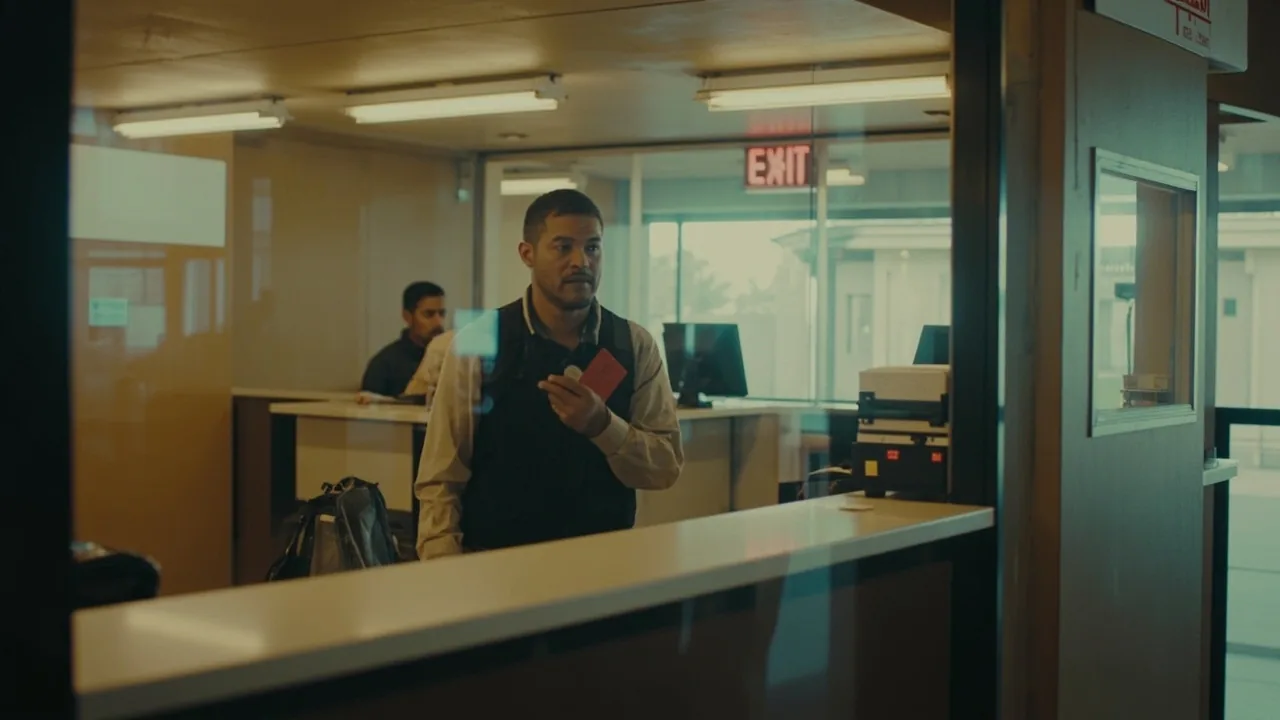
Walk into the departure-side immigration hall. You will see a queue for “Foreigners” and sometimes a queue for “ASEAN.” Take the Foreigners queue.
Hand over your passport. The officer will:
- Scan or type your passport number
- Stamp your exit
- Ask one of three questions: “Where are you going?” “How long?” or “Do you have [next country’s] visa?”
Answer briefly. “Cambodia, two weeks, yes I have a visa.” The exit stamp goes on a blank page or near your entry stamp. Take your passport back and walk toward the bridge or no-man’s-land zone.
Step 4: Walk the no-man’s-land zone
This is the 50-800 metre stretch between the two immigration halls. At Aranyaprathet-Poipet, it’s a covered walkway lined with casinos on the Cambodian side. At Chiang Khong-Huay Xai, it’s a Mekong riverboat. At Bavet-Moc Bai, it’s a fenced road shared with trucks.
Expect to be approached by money changers, sim card sellers, and “helpers” offering to speed up your visa. Ignore all of them at this stage. If you need Cambodian riel or Lao kip in cash, change USD at the official counter just past immigration on the entry side, never with a street changer.
Step 5: Enter immigration of the country you are entering
Walk into the arrival-side immigration hall. The sequence here depends on whether you have an e-visa, a visa-on-arrival, or a visa exemption.
If you have an e-visa (Vietnam): Go straight to the Foreigners queue. Hand over your passport and the printed e-visa. The officer verifies the code in the system, stamps you in for the number of days granted (usually 30 for single-entry e-visa), and returns your passport. Processing time: 2-5 minutes per person if the system is up.
If you are getting visa-on-arrival (Cambodia or Laos): Go to the VOA counter first, fill in the form, hand over your passport + photo + USD fee. The officer takes your passport, types your details, returns it with a stamped visa inside. Then you queue at the entry immigration counter for the entry stamp. Processing time: 15-45 minutes.
If you are visa-exempt (Thai passport holders at most borders, or Indians at some Thai borders for short stays): Go straight to the entry immigration queue. Officer stamps you in.
Step 6: Customs and currency declaration
After immigration, you walk past the customs counters. At most Southeast Asian land borders, customs is a wave-through. Officers do not open bags unless something looks off. The currency declaration form matters only if you are carrying over ₹289,017 (~3,000 USD) in cash. Below that threshold, walk through the green “Nothing to Declare” channel.
Electronics (laptops, cameras, drones) do not need to be declared for personal use. Two new laptops in the bag is a different matter and gets taxed.
Step 7: Step into the new country
You walk out of the arrival hall. You are now in Cambodia, Laos, or Vietnam. There is usually a transport scrum immediately outside: tuk-tuks, motorbike taxis, shared minivans, and occasionally scam artists. Pre-book your onward transport through a platform like 12go.asia before you reach the border so you know what the official price is.
Common Mistakes Indians Make
Mistake 1: Arriving at Aranyaprathet with no USD cash. The Thai side has ATMs, but the Cambodian side at Poipet has unreliable ATMs and the VOA fee is USD cash only. If your debit card declines at the Thai ATM, you are stuck. Travellers report this happens often with Indian bank cards at rural Cambodian ATMs. Fix: carry ₹4,817-₹9,634 (~50-100 USD) in small bills for the VOA and onward transport.
Mistake 2: Believing “visa-on-arrival is available” without checking nationality. Vietnam’s VOA used to be open to Indian passport holders but was suspended years ago. Indians must use the e-visa system, applied for in advance. Cambodia and Laos still offer VOA to Indians. Travellers report losing a day at the border because they assumed Vietnam’s VOA was available.
Mistake 3: Skipping the printed onward ticket. Officers at Bavet (Cambodia-Vietnam border) routinely ask Indian passport holders to show a flight out of Vietnam within 30 days. A hostel booking in Hanoi does not satisfy this. A screenshot of a return flight from Ho Chi Minh City does. Fix: book a cheap refundable AirAsia or VietJet ticket before crossing, screenshot it, and cancel after entry.
Mistake 4: Getting a “border helper” who disappears with your passport. The fixer at Poipet offers to “skip the queue” for ₹572 (~200 THB or ~$5.94). Sometimes they skip the queue. Sometimes they take your passport, VOA form, and money to the counter themselves and return 90 minutes later. Fix: walk the queue yourself, it costs nothing extra.
Mistake 5: Not checking passport blank pages. Indian passports have 46 pages. A heavy traveller stamps out in 2-3 years. If you have fewer than 4 blank pages left, immigration at some borders will refuse to stamp you. Fix: apply for a new passport before the trip if you’re down to your last 10 pages.
What Most Guides Don’t Tell You
The Chiang Khong to Huay Xai crossing requires a boat, not a bridge. This is the only Mekong River crossing in the Chiang Rai region. You exit Thai immigration in Chiang Khong, walk 200 metres to the Mekong pier, board a slow boat (20-30 minutes, included in the bus ticket if you bought a combined Chiang Rai to Luang Prabang ticket), and arrive at the Lao immigration hall in Huay Xai. The boat ride itself is not a customs zone but your passport stays with you, not the boat operator.
Cambodia charges an extra ₹193 (~2 USD) “photo fee” on top of the VOA. The Cambodia visa-on-arrival totals ₹3,083 (~32 USD): ₹2,890 (~30 USD) for the visa and ₹193 (~2 USD) for photo/processing. Budget ₹3,372 (~35 USD) to be safe.
Vietnam’s e-visa system accepts Indian applicants with 30-day single-entry only at most borders. Multi-entry e-visas exist but the land border immigration system often rejects them on technical glitches. Travellers report being turned away at Cau Treo with a multi-entry e-visa printed from the official portal, while the same e-visa worked at the airport. Fix: apply for single-entry unless you specifically need multi-entry and have confirmed your border accepts it.
Travellers commonly report losing phone signal in the no-man’s-land zone, with duration varying by border and carrier. Both sides of the border have weak coverage in the no-man’s-land zone. Download offline Google Maps for the arrival town before crossing. This is also the moment to switch to your new country’s eSIM profile if you’re using an eSIM instead of swapping physical SIMs at the border.
The “Thai exit fee” does not apply at land borders. Thailand charges ₹572 (~200 THB or ~$5.94) at Suvarnabhumi and Don Mueang airports for an outbound departure fee. This fee has never been charged at a land border crossing. Travellers report being asked for it at overland crossings by touts posing as officials. It is a scam.
Safety and Document Checks
At a Southeast Asian land border in 2026, the most common things officers check are: passport validity and blank pages, visa validity and dates, proof of onward travel, and the matching of your face to your passport photo. They do not routinely check proof of funds, return flight tickets (unless you claim a short transit visa), accommodation bookings, or vaccination records. Yellow fever vaccination matters only if you are arriving from a country with active yellow fever transmission, which India is not.
The genuinely risky zones for overland travel in 2026 are outside the Thailand-Cambodia-Laos-Vietnam quadrilateral. Myanmar’s land borders with Thailand (Mae Sot, Ranong) are officially closed or restricted, and travellers report periodic closures at the Laos-Myanmar crossings near the Golden Triangle. Before any overland trip, check your government’s current travel advisory: Indian travellers should look at mea.gov.in for India-specific advisories, and check the destination country’s own government advisory site for the current ground situation. Avoid relying on travel blogs from more than 6 months ago for safety verdicts.
FAQ
How many blank pages do I need in my passport for a border crossing?
Four blank pages is the safe minimum, but two consecutive blank pages is what most officers look for, since the entry stamp and exit stamp sit side by side. If you have fewer than 2 consecutive blank pages, renew your passport before the trip. Some travellers report getting through with 2 pages left, but it’s officer-dependent.
Do I need to show proof of funds at a Southeast Asian border?
Not routinely. Officers at Thailand, Cambodia, Laos, and Vietnam land borders rarely ask for bank statements or cash counts. They may ask “how much money are you carrying” verbally and your answer of “enough” usually satisfies them. Travellers report being asked for proof of funds only at airport immigration or when the officer suspects an overstay.
Can I get a visa-on-arrival at the Vietnam land border as an Indian citizen?
No. Vietnam suspended visa-on-arrival for Indian passport holders several years ago. You must apply for an e-visa online at the official government portal before crossing. The e-visa costs ₹2,408 (~25 USD) and takes 3 business days. Flying into Vietnam on an e-visa and exiting overland to Cambodia or Laos is straightforward.
What happens if I get refused entry at the border?
The immigration authority turns you around and you re-cross into the country you just left. You do not get a stamp, you do not get detained, but you do lose the bus fare and the day’s time. Travellers report that common reasons for refusal at Southeast Asian land borders include passport validity, missing visa, or insufficient onward travel documentation. Fix the issue, re-attempt the next day.
Can I cross multiple land borders in one day, like Thailand to Laos to China?
No. The Thailand-Laos-China land crossings (Boten to Mohan, Chiang Khong to Chiang Saen) require a separate Chinese visa, which Indian passport holders must obtain in advance from the Chinese embassy in Bangkok or Delhi. Most Indian backpackers fly into China rather than cross overland because the visa process is the same and flights are cheap.
Is the Cambodia VOA ₹2,890 (~30 USD) or ₹3,083 (~32 USD)?
It’s ₹3,083 (~32 USD) total: ₹2,890 (~30 USD) for the visa and ₹193 (~2 USD) for the photo/processing fee. Budget ₹3,372 (~35 USD) to cover the official fees plus a small buffer for the officer’s rounding.
Do children need their own visa to cross a land border?
Yes. Children of any age need their own passport and their own visa. The visa fee is the same as an adult’s. Indian minors travelling with one parent need a notarised consent letter from the absent parent, though border officers rarely enforce this at ASEAN land borders.
