Cambodia Customs, Temple Dress Code & Cannabis Laws: What Indian Tourists Get Wrong
Cambodia temple dress code local customs catch Indian tourists off guard in three predictable places. This guide covers each one: how to dress, how to behave around monks, and how to handle cannabis. For related planning, see our guides on Sea Backpacking Hub and What Not to Eat in Cambodia.
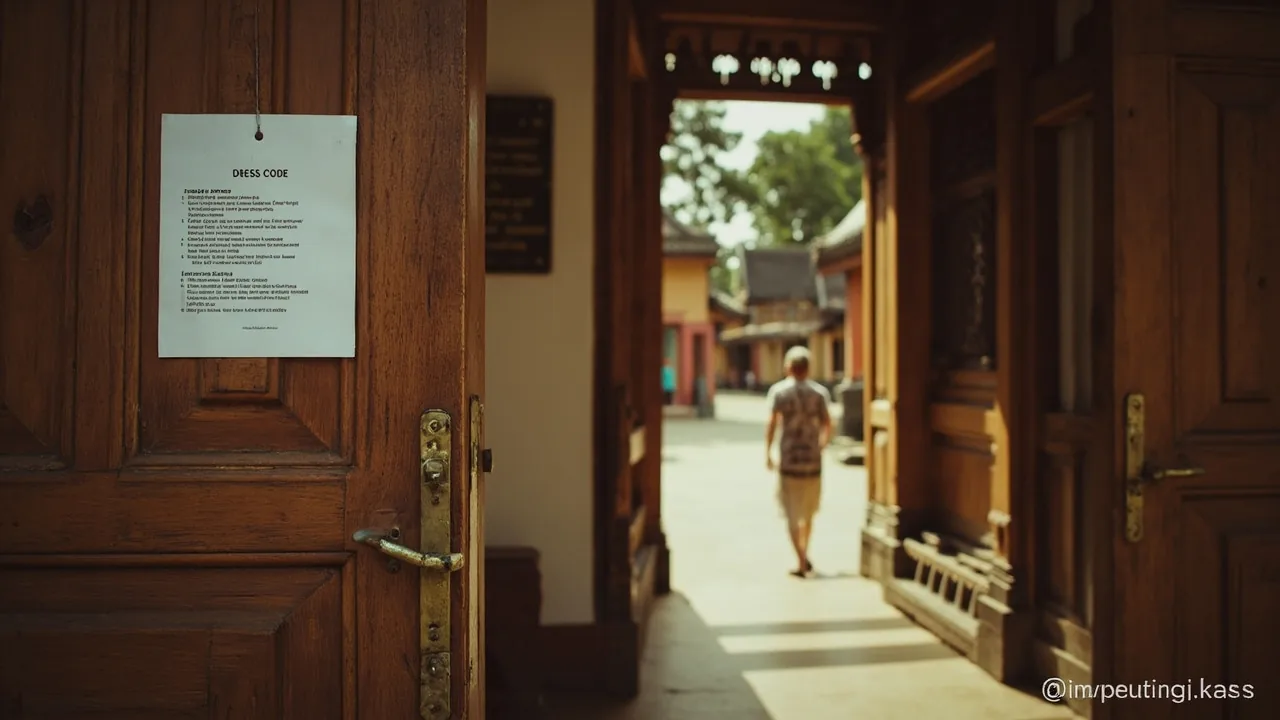
Subodh’s Pro Tip: Every Cambodian temple, regardless of how small or remote, has a “dress code” sign at the entrance, usually in English. Read it. The rules below are the floor, not the ceiling. Some remote pagodas enforce stricter standards than Angkor itself. You may also find Is There a Travel Ban to Cambodia useful for this trip.
Quick Answers
| What | Answer | Price (INR) |
|---|---|---|
| Can I wear shorts at Angkor Wat? | No. Shoulders and knees must be covered. No exceptions for “quick photo” stops. | Free to enter if dressed wrong, but you won’t get in |
| Is cannabis legal in Cambodia for tourists? | Sort of. Recreational use is tolerated in licensed venues; public smoking, sales to minors, and driving high are still offenses. | Fines up to ₹240,848 (~2,500 USD) |
| Can a woman touch or hand something to a monk? | Strictly no. Women must not make physical contact with monks or hand objects directly to them. | Zero, this is a religious rule |
| Do I need to remove my shoes inside temples? | Yes, at every sacred building. At Angkor the rule applies to the inner sanctuaries, not the outer gallery. | Free, but you’ll be turned around |
| What happens if I break temple rules? | Asked to leave, refused entry, or, in serious cases, fined under Cambodia’s public order laws. | ₹4,817-₹48,170 (~50-500 USD) |
Subodh’s Safety Alert: Cambodia’s cannabis tolerance is a recent legal experiment, not a settled tourist right. Don’t buy from street touts, don’t assume a shop with a green leaf sign is licensed, and never combine it with driving. A cannabis-related offense can also complicate entry on a future visit; check current rules with your embassy before travel. See also: Cambodia Medical Emergency Hospitals Pharmacies Guide.
The Real Risks (What to Worry About)
Cambodia is, by Southeast Asian standards, low-risk for violent crime against tourists. The trouble Indian travelers run into here is almost entirely cultural and procedural. Ranked by how often travellers report problems: For related planning, see our guide on Cambodia Transport Safety Tuk Tuk Road Accidents.
| Risk | Likelihood | Impact | How to Avoid |
|---|---|---|---|
| Being refused temple entry for dress code | High | Low (embarrassing, costs time) | Carry a sarong or long scarf in your daypack. Always. |
| Offending a monk by accident (touching, pointing feet, offering with left hand) | High | Medium (social, sometimes legal) | Keep a 1-meter distance. Use right hand. Women: do not touch. |
| Buying unregulated cannabis and getting caught with it in public | Moderate | High (fine, deportation, entry ban) | Buy only from licensed venues. Don’t carry it on you. |
| Public disorder issues (loud drunkenness near temples) | Moderate | Medium (police fine, deported) | Treat temples and their immediate surroundings as alcohol-free zones. |
| Religious or royal disrespect (photographing monks without permission, mocking Buddha statues) | Low but serious | Severe (police, immigration) | Ask before photographing monks. Don’t pose playfully with sacred objects. |
| Violent crime against tourists | Low | Severe | Standard city awareness. Avoid isolated areas after dark. |
The single most common mistake Indian travellers make is treating Angkor Wat like the Taj Mahal. It is not. The Taj Mahal is a monument; Angkor is an active Buddhist temple complex. The dress code is enforced at the door, and the rules are not symbolic, they are the actual rules of the place.
Temple Dress Code: The Actual Rules
The temple dress code is the most concrete and the easiest to follow. Cambodian temples require that you cover your shoulders and your knees. This applies to every sacred site in the country, including Angkor Wat, Bayon, Banteay Srei, the Royal Palace in Phnom Penh, and any small pagoda in a village.
What this looks like in practice for Indian travellers:
Acceptable:
- Long trousers or jeans (any color)
- Long skirts that pass the knee
- T-shirts with sleeves that cover the shoulder
- Shirts with capped or full sleeves
- A scarf or shawl draped over tank tops or sleeveless kurtis
Not acceptable, no matter how hot it is:
- Shorts above the knee, including “modest” mid-thigh shorts
- Sleeveless tops, including sleeveless kurtis and kurtis cut short at the arm
- Spaghetti straps, off-shoulder tops, halter necks
- T-shirts with offensive prints or slogans in English (this applies to any Cambodian religious site)
- Tight leggings or yoga pants worn without a long shirt covering the hips and knees
The temples sell or rent scarps at the gate, usually for ₹96-₹193 (~1-2 USD), but the selection is limited, the cloth is often thin, and you will be at the back of a queue of every other tourist who forgot. Carry your own.
For Angkor specifically, the rule is enforced strictly at Baphuon and the inner sanctuary of Angkor Wat itself. The outer galleries are more relaxed, but don’t test this, you will be asked to leave or cover up. At the Royal Palace in Phnom Penh, the same dress code applies and is sometimes enforced with an actual clothing check at the entrance gate.
Subodh’s Pro Tip: Buy a cheap cotton sarong in Phnom Penh or Siem Reap for ₹193-₹289 (~2-3 USD) and leave it folded at the bottom of your daypack. You will use it every single temple visit. It also folds small enough to be a pillow on long bus rides.
If you are travelling as a couple and your partner is a man, be aware that temple dress codes apply equally to men and women. The “men can wear shorts” myth is exactly that, a myth. Long trousers are expected for everyone at the most sacred sites.
Monk Etiquette: What Most Indians Don’t Realize
Theravada Buddhism in Cambodia follows strict gender and seniority rules that are not obvious if you come from a Hindu cultural background where mutual touch between men and women is not governed by religion in the same way. The most important rules:
1. Women must not touch monks. This is the single biggest mistake. If a woman offers a monk a glass of water, a donation, or anything else, she places it on a cloth or on the ground for the monk to pick up. Direct hand-to-hand contact is forbidden. This applies even in a casual tuk-tuk, even in a market, even if the monk initiates it.
2. Women must not sit next to monks on public transport. On some Cambodian buses, the front rows are reserved for monks and male passengers may be asked to give up seats for them. Women should not take these seats. Don’t argue. Move.
3. Don’t point your feet at anyone, especially at a monk or a Buddha image. Feet are considered the lowest, dirtiest part of the body. If you sit cross-legged on a temple floor, keep your feet tucked under or beside you, not stretched out toward the shrine.
4. Use your right hand for everything. Offerings, money, food, business cards. The left hand is reserved for bodily cleaning in traditional Khmer culture and using it to give something is mildly offensive.
5. Don’t turn your back to a Buddha image. If you are photographing and need to back up, sidestep, don’t reverse. This is most relevant at the Royal Palace and at the Emerald Buddha.
6. Don’t pose with monks for photos without asking. Many monks, especially older ones, refuse. Younger monks in tourist areas are more relaxed but still expect you to ask. Holding a baby up next to a monk for a photo is a specific annoyance in Siem Reap; please don’t.
7. Heads are sacred. Don’t pat a monk on the head, including a small child who happens to be a novice. Don’t reach over a monk’s head to take or pass something.
The consequences of breaking these rules are social, not legal. You will not be arrested for touching a monk’s hand. But you will cause genuine offense, and in a country where the Buddhist clergy is held in high regard, the social cost is real. The golden rule: when in doubt, treat every monk like a member of a strict religious order, not like a tourist attraction.
Cannabis: Cambodia’s Confusing Middle Ground
Cambodia legalized the cultivation, sale, and consumption of cannabis in 2022, but it did not become the Amsterdam of Southeast Asia. The law is permissive at the retail level and restrictive at the public level, and this gap is where Indian tourists get caught.
What is legal:
- Possession of small amounts of cannabis for personal use by adults 18+
- Purchase from licensed dispensaries (they have visible signage, usually green, and they ask for ID)
- Consumption on private property or in licensed venues
- Cultivation for personal use at home
What is not legal:
- Public smoking outside of designated venues
- Driving under the influence (this is enforced, with checkpoints around Phnom Penh and Siem Reap)
- Selling to minors (harsh penalties)
- Crossing borders with it (even into Thailand or Vietnam, both of which have stricter rules)
- Working or operating a business under the influence
What gets Indian tourists in trouble specifically:
-
Buying from street touts. The “cannabis” sold on Pub Street in Siem Reap by people who are not behind a counter with a license is sometimes not cannabis at all. Adulterated product sold as cannabis is a known risk in tourist areas; assume anything sold off-license could be something else.
-
Treating it like alcohol in public. Smoking a joint on the steps of a temple, in a park, or on a beach is a public order offense. The fine can be up to ₹240,848 (~2,500 USD).
-
Crossing into Thailand with it. Thailand’s cannabis rules have tightened since 2024, and possession without proper documentation can lead to detention at the border. Don’t assume you can carry it across the Poipet or Koh Kong checkpoints.
-
Immigration consequences. A cannabis-related arrest in Cambodia, even a small one, can show up on your record and complicate future visa applications to other countries. Entry at the border is at the discretion of Cambodian immigration, and a prior cannabis offense is a documented risk factor.
The safe approach: if you want to try it, go to a licensed dispensary, consume on the premises, do not carry it out, do not drive afterward, and do not cross a border with it. Treat it like alcohol in a strict Muslim country, not like cannabis in Amsterdam.
Subodh’s Safety Alert: If you are asked to take a drug test at a police checkpoint, decline politely but firmly and ask for the embassy. The Royal Embassy of Cambodia’s consular section handles these cases regularly and can intervene. Do not sign anything in Khmer without a translator.
Other Local Customs Worth Knowing
Beyond temples and monks, a few smaller customs catch Indian travellers off guard:
The King is respected, do not criticize. The Cambodian monarchy is held in high regard. Negative comments about the King or the Royal Family are illegal under the lèse-majesté laws, with serious penalties. This is enforced and not just theoretical.
Touching someone’s head is rude. This includes children. Don’t ruffle a kid’s hair as a friendly gesture. Use a wave or a nod instead.
Public displays of anger are a loss of face. Cambodians handle conflict by withdrawing, not by arguing back. If something goes wrong (a tuk-tuk overcharge, a market dispute), stay calm, lower your voice, and wait. Escalating to shouting loses you every negotiation.
Tipping is appreciated but not mandatory. In restaurants, 5–10% is enough. Tuk-tuk drivers round up the fare. Hotel staff appreciate a small tip.
Bargaining is normal at markets but not in shops with fixed prices. Tourist-area restaurants, supermarkets, and shops with marked prices do not bargain. Don’t ask.
Cambodian time is real. If someone says “I will be there at 7,” expect 7:15 to 7:30. Don’t take it personally. Plan buffer time into bus and tour schedules.
Prevention and Preparation: Before You Land
Three things to sort before you fly:
1. Travel insurance that covers Cambodia specifically. Most Indian policies exclude Cambodia or cover it only with an add-on. SafetyWing’s nomad insurance covers Cambodia as standard. Confirm that yours includes medical evacuation to Bangkok (the nearest high-quality hospital for serious cases), not just evacuation to India. A medical evacuation flight from Phnom Penh to Bangkok runs ₹1,445,085-₹2,890,170 (~15,000-30,000 USD) without insurance.
2. Vaccines. Cambodia requires yellow fever vaccination only if you are arriving from an endemic country. India is not on that list, so no yellow fever shot is required. Recommended: Hepatitis A and B, typhoid, Japanese encephalitis (if visiting rural areas), and routine boosters (MMR, tetanus). Get these at least 4 weeks before departure.
3. Documents on your phone. Photograph your passport (front and back), visa, vaccination card, and insurance policy. Save them in a Google Drive folder and WhatsApp them to a family member. If your passport is stolen in Phnom Penh, having the photo copy speeds up the emergency travel document process at the Indian embassy by days.
Get SafetyWing travel insurance before you fly. The medical evacuation coverage alone justifies the cost for Cambodia.
What to Do If It Happens
You are refused entry to a temple for dress code. Stay polite. Ask if they have a wrap you can rent or buy. If not, accept the refusal, do not argue, do not try to sneak in, and return the next day properly dressed. Most temples enforce the rule at the door, not on the way out, so if you are inside already you can usually finish your visit.
You accidentally touch a monk. Apologize immediately and step back. Most monks will brush it off with a smile. Don’t make a scene.
You are stopped by police for cannabis. Stay calm. Have your embassy number on speed dial. The Indian Embassy in Phnom Penh is at No. 50, Street 214, and the consular number is reachable 24/7 through the embassy switchboard. Do not pay any “fine” on the spot without a receipt. Ask for the police station, not the street settlement.
You are asked for a bribe. This is common. The polite response is to ask for a receipt. In most cases, the officer will back off. If they don’t, ask to go to the station. The whole point is the negotiation, and “I want a receipt” ends it.
Your passport is stolen. File a police report at the local station (your hotel can send someone to translate). Bring the report and your photo copies to the Indian Embassy in Phnom Penh. Emergency travel documents take 1–3 working days.
Severe food poisoning. ORS is available at any pharmacy as “ORS” or branded versions. If symptoms persist beyond 24 hours, go to a clinic. Royal Phnom Penh Hospital and the International SOS clinic in Phnom Penh handle Indian travellers regularly.
Indian-Specific Considerations
Indian embassy in Cambodia:
- Royal Embassy of India, Phnom Penh
- Address: No. 50, Street 214, Sangkat Phsar Doeum Thkov, Khan Chamkarmon, Phnom Penh
- Phone: +855 23 218 290 / 210 912
- Emergency consular help available through the main line
Honorary Consulate of India, Siem Reap:
- Limited hours, helps with tourist emergencies
- Located near the Old Market area
- Phone via the Phnom Penh embassy switchboard
Indian medicine equivalents: Most branded Indian medicines (Paracetamol, Cetirizine, Pantoprazole, ORS, Metformin) are available at Phnom Penh pharmacies, but the brand names differ. Carry a small personal kit from India: Paracetamol 500mg, an ORS sachet pack, Electral, Cetirizine 10mg, Pantoprazole 40mg, and any personal prescription medicine for the full trip duration plus a week. If you take Metformin or other chronic-disease medicine, bring the prescription and a doctor’s letter.
Hospital costs: A private hospital consultation in Phnom Penh runs ₹4,817-₹14,451 (~50-150 USD). A clinic visit for food poisoning with IV fluids runs ₹9,634-₹28,902 (~100-300 USD). The deposit requested before admission at the larger private hospitals is usually ₹48,170-₹96,339 (~500-1,000 USD). SafetyWing or a similar policy covers these up to the policy limit.
Getting Connected
Smartphone access is essential in Cambodia, both for emergency calls and for Google Maps (where the tuk-tuk driver wants to take you). A Cambodian SIM is cheap and fast to set up at the airport. The main operators are Cellcard, Smart, and Metfone. A 7-day tourist SIM with 5–10 GB of data runs ₹289-₹482 (~3-5 USD). Bring your passport for registration.
If you’d rather not swap SIMs, an eSIM works just as well and you can activate it before you land. Get Nomad eSIM before you fly and you’ll have data the moment the plane touches down.
Cambodia uses the Cambodian riel (KHR) and the US dollar interchangeably. Most prices you’ll see for tourists are in USD. At current rates, 1 USD = ₹96.5. The local KHR rate is 1 KHR ≈ ₹0.024 right now, but for tourist-facing prices USD is what you’ll pay.
Indian Restaurants When You Need a Dal-Chawal Fix
Even on a short trip, the body sometimes craves familiar food. Cambodia’s Indian restaurant scene is concentrated in Phnom Penh, Siem Reap, and the border town of Poipet.
Phnom Penh area has the densest cluster of full-service Indian restaurants.
Poipet (the Thai border crossing) has a small Indian-food strip near the market for travelers arriving from or returning to Thailand. Both Galaxy Indian Restaurant and Saffron Indian Restaurant, in Poipet, are commonly recommended. Saffron has the more comfortable setting; Galaxy is the casual option.
Siem Reap has a smaller Indian scene but there are several basic places serving dal, rice, and the usual North Indian staples. Ask your guesthouse for the nearest option.
Border area meal timing: If you arrive at the Poipet border late in the day, eat at one of these before crossing back into Thailand. The Thai side has fewer Indian options close to the border.
Most Indian restaurants in Cambodia serve both veg and non-veg. If you are strictly vegetarian, ask explicitly. “Pure veg” is the phrase they recognize.
FAQ
1. Can I wear a sleeveless kurti at Angkor Wat if I bring a shawl? No. A shawl draped over the shoulders works in theory, but in practice, the guards want sleeves that are sewn in. If you can keep the shawl from sliding off, you might pass. If you cannot, wear a sleeved kurti or a T-shirt underneath. The most reliable rule: wear something with sleeves in the first place.
2. Is cannabis legal in Cambodia? Yes, for adults, with limits. Public smoking, sales to minors, and driving under the influence remain offenses. Buy only from licensed dispensaries. Do not cross borders with it.
3. Do monks ever speak English? Younger monks often do. Older monks usually don’t. If you need to talk to a monk for any reason, approach through a layperson or a temple attendant first.
4. What happens if I get caught with cannabis at the Thai border? Thailand has tightened its cannabis rules since 2024. Possession of small amounts is decriminalized in Thai law, but crossing an international border with it can still lead to detention and confiscation. Leave it behind.
5. Can I photograph monks without asking? No. Always ask, especially for close-ups. Many monks will say no. Accept it and move on.
6. Is Cambodia safe for solo female Indian travellers? Generally yes. The main risks are the same as anywhere: scams, drink-spiking in tourist bars, and being alone late at night in unfamiliar areas. The dress code and monk rules above apply to women specifically and should be respected, not for safety but for religious reasons.
7. Do I need a visa for Cambodia? Yes. Indian passport holders can get a visa on arrival at the airport (₹2,890 (~30 USD), ~₹2,895 (~$30.05)) or apply online for an e-visa (₹3,468 (~36 USD), ~₹3,475 (~$36.07)). Both give 30 days single entry. Apply through the official portal: https://www.evisa.gov.kh
Subodh’s Take
Cambodia is one of the easiest Southeast Asian countries to travel in if you remember one thing: it is a Buddhist country first, a tourist economy second. The temple dress code, the monk rules, the cannabis confusion, the respect for the monarchy, these are not obstacles to your trip, they are the trip. Indian travellers who go in expecting something closer to Goa or Phuket usually end up writing blog posts about how “rude” the guards were. The guards were doing their job. The cleanest fix is the cheapest: pack a long-sleeved shirt, a pair of long trousers, and a sarong. That alone takes you past ninety percent of the friction.
The other ten percent is knowing that cannabis is a recent experiment, not a settled right, and that the monks are not props for your Instagram. Treat both with the same caution you’d want shown to your own grandmother at your own temple, and Cambodia will be one of the most rewarding stops on the whole trip.
