Sick in Cambodia? Best Hospitals in Phnom Penh, Pharmacies & What to Do in an Emergency
Cambodia’s private healthcare in Phnom Penh is genuinely good. Two of the big private hospitals have international accreditation, English-speaking doctors trained in Australia, the US, and France, and pharmacy stocks that cover 90% of what a traveller might need. Outside Phnom Penh and Siem Reap, things thin out fast. Rural clinics speak Khmer, accept cash in USD or riel, and you’ll be glad you packed that ORS strip from Mumbai. This guide covers what to do before anything happens, where to go if it does, and the two scenarios where a calm head matters most: rabies (dog bite) and snake bite. For related planning, see our guides on Sea Backpacking Hub and Is There a Travel Ban to Cambodia.
Quick Answers
| What | Answer | Price (INR) |
|---|---|---|
| Best hospital in Phnom Penh for tourists | Royal Phnom Penh Hospital (private, international accreditation) | Consultation ~₹4,817-₹7,707 (~50-80 USD) |
| Emergency ambulance number in Cambodia | 119 (national) / private hospital direct lines (faster) | Free on 119 |
| Rabies vaccine course (post-exposure) | 4 doses over 14 days; stock reliable in Phnom Penh | Per dose ~₹2,890-₹4,817 (~30-50 USD) |
| Antivenom availability | Royal Phnom Penh Hospital and a few private clinics; treat as urgent referral | Treatment ~₹14,451-₹48,170 (~150-500 USD) |
| Pharmacy basics (ORS, paracetamol, pantoprazole) | U Care, Pharmalink, Pharma Plus in central Phnom Penh | Most items ₹96-₹482 (~1-5 USD) |
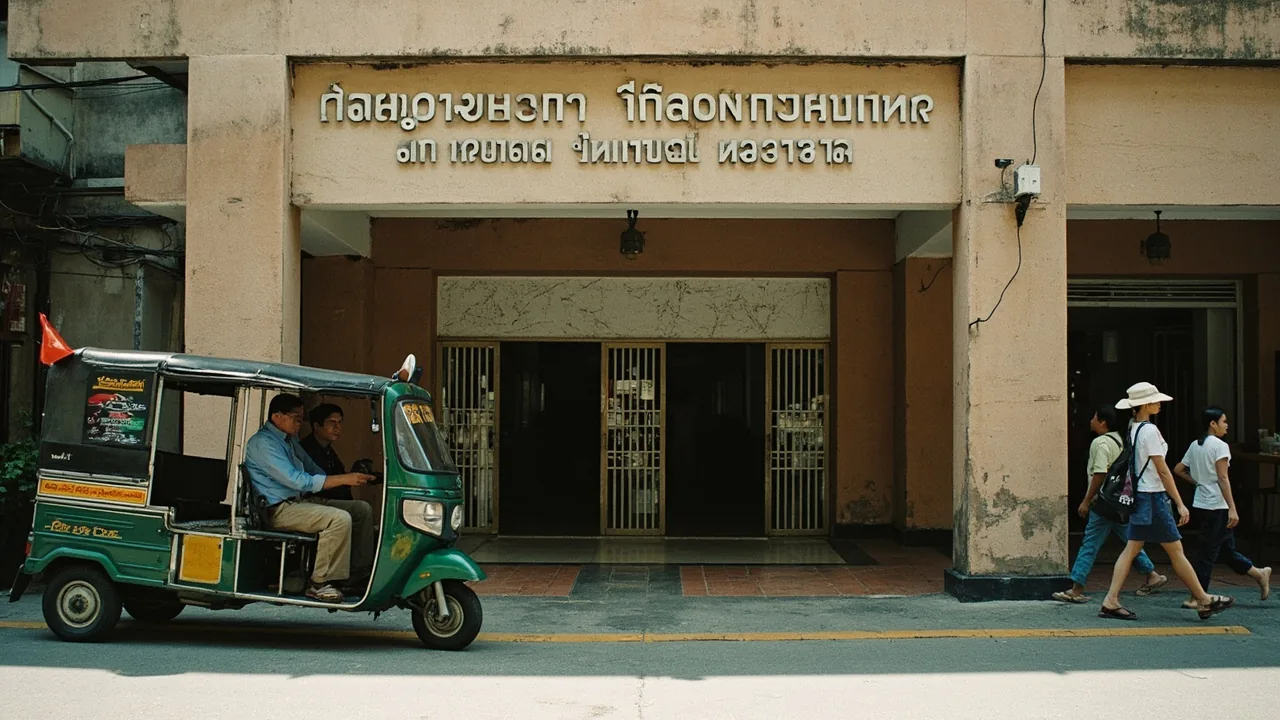
You may also find Cambodia Transport Safety Tuk Tuk Road Accidents useful for this trip.
The Real Risks (What to Worry About)
| Risk | Likelihood | Impact | How to Avoid |
|---|---|---|---|
| Food poisoning (“Phnom Penh belly”) | High | Low to moderate | Bottled water, busy street stalls, hand sanitiser before meals |
| Road traffic accident (tuk-tuk, scooter) | High | Severe | Insist on seatbelts in cars; never ride a scooter without an IDP; cross streets slowly and predictably |
| Dog bite / rabies exposure | Moderate | Severe (fatal without vaccine) | Avoid stray dogs, especially in temple areas and beach islands; don’t pet dogs sleeping in shade |
| Snake bite | Low | Severe | Watch your step on jungle paths, rice paddies, and at night on grass; closed shoes for any trek |
| Dengue / mosquito-borne illness | Moderate (rainy season) | Moderate | DEET 30%+ repellent daily from dawn to dusk; long sleeves at dusk |
| Heatstroke / dehydration | Moderate | Moderate | 3+ litres water/day, electrolyte sachets (ORS or Electral), break under shade 12–3pm |
Prevention and Preparation
Before you fly, sort these out. Most take 10 minutes online and save you a 4am panic in a tuk-tuk.
Vaccines to get before leaving India:
- Routine: MMR, DPT, Hep A and B (most Indians already have these)
- Strongly recommended: Typhoid (single shot, lasts 2 years)
- Rabies pre-exposure: two doses, day 0 and day 7. Worth it if you plan to touch any dog, monkey, or cat abroad. After a bite, you still need two booster doses, not the full four-dose course, which can save 48 hours of scrambling.
Pharmacy kit to carry from India (in original packaging for customs):
- ORS / Electral sachets (6–8 strips). Rehydration is half the cure for most travel sickness.
- Paracetamol 500mg and a stronger NSAID like Combiflam
- Pantoprazole 40mg (travel reflux + doubles as cheap stomach settler)
- Metrogyl / metronidazole 400mg (treats giardia and amoebic dysentery; ask a doctor before using)
- Loperamide (only for sudden transit emergencies, never if you have fever)
- A course of azithromycin 500mg (single-shot travel diarrhoea rescue; doctor consult before use)
- Doxycycline 100mg (covers both bacterial infection and malaria prophylaxis if heading to forested border regions)
- Antihistamine (Cetirizine), and one strong antihistamine cream for bites
- DEET 30%+ repellent
- Closed trekking shoes for any jungle, rice paddy, or dark-garden walks
- Sterile syringe set (3 of each: needle + syringe in sealed packs) for emergencies
- Photocopy of passport, insurance card, vaccination record. Keep one in your backpack and one on your phone.
Travel insurance, get this before you fly: This is the one time I’ll nag. A tuk-tuk accident with a fractured tibia in Cambodia runs ₹385,356-₹770,712 (~4,000-8,000 USD) including surgery, hospital stay, and rehab. Without insurance, you’re either paying out of pocket or flying home on a stretcher.
Confirm in writing that your policy covers: scooter accidents (some exclude them), medical evacuation to Bangkok or Singapore, and treatment for rabies / anti-venom. Most policies assume you have a valid Indian licence + IDP if you ride.
Digital document backups:
- Scan passport, visa, insurance card, vaccination record, and one headshot photo of yourself.
- Email them to yourself, store in Google Drive, send to a family member, and WhatsApp them to yourself. Four copies in four places means at least one survives a lost phone.
Where to Go in Phnom Penh (Hospitals & Clinics)
Phnom Penh has three tiers of healthcare. Knowing which one to walk into saves both time and money.
Tier 1: International-standard private hospitals (where most tourists go)
- Royal Phnom Penh Hospital (RPH) on Street 254, behind the Independence Monument. The current benchmark. Has 24/7 emergency, ICU, English-speaking doctors, an in-house pharmacy that stocks anti-venom and rabies immunoglobulin, and direct billing agreements with most international insurers (BUPA, Cigna, Aetna, SafetyWing reimbursements). Their ambulance is faster than dialing 119.
- Calmette Hospital (public, French-funded) on Monivong Boulevard. The best public option in the city; specialists and surgeons are French-trained and Khmer-speaking. Cheaper than RPH but slower to process insurance and the emergency department queue can stretch to 90 minutes at night.
Tier 2: Mid-range private clinics Sihanouk Hospital Center of Hope (public charity-funded) is excellent for children’s emergencies, surgeries, and paediatrics, with English, French, and Khmer doctors.
Tier 3: Public hospitals Calmette again, or Khmer-Soviet Friendship Hospital. Public means ₹482-₹1,927 (~5-20 USD) per consultation vs. ₹4,817-₹7,707 (~50-80 USD) at RPH. Downside: limited English, slower triage, you pay everything up front in cash, then claim later.
Where to go:
- Hit-and-run / scooter accident → Royal Phnom Penh Hospital emergency
- Severe diarrhoea, dengue, pneumonia, severe dehydration → Royal Phnom Penh Hospital
- Broken bone, deep cut → Royal Phnom Penh Hospital
- Mild stomach upset, sinus infection, refill prescription → a private clinic like Tropical Health Clinic or Central Clinic
Expect to pay a deposit up front (typically ₹28,902-₹48,170 (~300-500 USD)) at private hospitals before treatment. Insurance later reimburses you, or the hospital will bill the insurer directly if they have a tie-up. Always keep receipts; claim later otherwise.
Pharmacies in Phnom Penh
Cambodia’s pharmacy shops are everywhere and most sell without prescription. Stock isn’t as tightly regulated as India, so the same drug brand can be from Thailand, Vietnam, France, or India depending on who imported it.
Reliable chain pharmacies in central Phnom Penh:
- U Care Pharmacy (multiple branches, good for prescription refills)
- Pharmalink (Souvernier / BKK1 area)
- Pharma Plus (Russian-run, sometimes has Indian and European brands)
Cambodian brand equivalents of common Indian medicines:
- Paracetamol 500mg: Dolo, Calpol, Panadol, all available, ₹29-₹48 (~0.30-0.50 USD) per strip of 10
- Pantoprazole 40mg: Pantosec, Pantop, Controloc, about ₹96 (~1 USD) per strip
- Metrogyl 400mg: Flagyl, same drug, same dose, ₹96-₹193 (~1-2 USD) per strip
- ORS / Electral: sold as Electral, ORS, Rehydral, or imported WHO ORS sachets. Universal worldwide, ~₹29 (~0.30 USD) per sachet
- Cetirizine: Zyrtec, Cetzine, Aller-Tec, ₹48 (~0.50 USD) per strip
- Loperamide: Imodium, ₹96-₹193 (~1-2 USD) per strip
- Azithromycin 500mg: Azithral, Zithromax, ₹193-₹289 (~2-3 USD) per strip
- Doxycycline 100mg: Doxy, Vibramycin, ₹96-₹193 (~1-2 USD) per strip
Subodh’s Pro Tip: Take a 5-minute photo of your own prescriptions on your phone before leaving India. If you lose your medicine bag, you can show any Cambodian pharmacist exactly which brand and dose you need.
Indian-Specific Considerations
Indian Embassy and Consular in Cambodia: The Embassy of India in Phnom Penh is at No. 5, Street 466, Phnom Penh. They are the right people to contact for: lost passport (they issue emergency travel documents), legal trouble, and arranging transfers to Indian hospitals for serious cases. Keep their number saved offline: +855-23-210-440 / 411-083. Their weekday hours are 9am to 5pm; outside hours, the duty officer answers calls.
Hospital deposit and consultation costs:
| Service | Cost (USD) | Cost (INR, at $1 = ₹96.5289) |
|---|---|---|
| Royal Phnom Penh Hospital, initial consultation | ₹4,817-₹7,707 (~50-80 USD) | ₹4,800-₹7,700 (~$49.82-$79.93) |
| Royal Phnom Penh Hospital, emergency deposit | ₹28,902-₹48,170 (~300-500 USD) | ₹29,000-₹48,300 (~$301.02-$501.35) |
| Royal Phnom Penh Hospital, minor inpatient day (private room) | ₹14,451-₹24,085 (~150-250 USD) | ₹14,500-₹24,100 (~$150.51-$250.16) |
| Calmette Hospital, consultation (public) | ₹963-₹2,408 (~10-25 USD) | ₹1,000-₹2,400 (~$10.38-$24.91) |
| Antivenom (per vial) | ₹4,817-₹9,634 (~50-100 USD) | ₹4,800-₹9,700 (~$49.82-$100.69) |
| Rabies immunoglobulin (per dose) | ₹7,707-₹14,451 (~80-150 USD) | ₹7,700-₹14,500 (~$79.93-$150.51) |
| Pharmacy ORS sachet | ₹29 (~0.30 USD) | ₹29 (~$0.30) |
| Pharmacy paracetamol strip (10) | ₹29-₹48 (~0.30-0.50 USD) | ₹30-₹50 (~$0.31-$0.52) |
These are typical rates; final invoices at private hospitals include itemised room, lab, drug, and doctor charges, often totalling 30–40% above estimates.
Indian food scene in Phnom Penh (for the post-recovery cravings):
Strict veg / Indian food options that work in Phnom Penh:
- MDSK is the city’s go-to for vada pav, masala dosa, and south-Indian snacks. Plates run about ₹595 (~25,000 KHR or ~$6.18) and the kitchen is fully vegetarian.
- Gorkha Palace serves Indian and Nepalese dishes with veg options across the menu.
- Indian Royal Halal Food Restaurant on the riverside has veg Punjabi and Mughlai plates around ₹952 (~40,000 KHR or ~$9.88).
What to Do If It Happens
Most Cambodian travellers’ scares fall into one of these six buckets. Here’s the exact playbook for each.
1. You get hit by a tuk-tuk / have a scooter fall. Don’t move if you suspect a spinal injury. Get the driver’s tuk-tuk number plate and a photo of the scene. Ask any bystander to call Royal Phnom Penh Hospital direct on +855-23-991-000, or the national ambulance service on 119. Even a small hospital visit means X-rays and a wound clean-up; head straight to a private hospital rather than waiting in Calmette’s queue.
2. You get a dog bite (especially a stray on the street). Wash the wound under running tap water for 15 minutes with soap. Apply povidone-iodine or any antiseptic you have (savlon, dettol, even a strong alcoholic drink, alcohol is the least effective but better than nothing). Go to Royal Phnom Penh Hospital the same day. They’ll assess the wound: a small bite with a healthy-looking dog might get you on the 4-dose post-exposure course (days 0, 3, 7, 14). If the dog looked sick, was acting strangely, or you can’t verify it for 10 days, you also get rabies immunoglobulin (RIG), expensive (₹7,707-₹14,451 (~80-150 USD), ₹7,700-₹14,500 (~$79.93-$150.51) per dose), only effective if given within 7 days. Don’t wait, and don’t fly domestically until the first dose is in your arm: some airlines won’t board you with an untreated bite wound.
3. You get bitten by a snake. Move away from the snake first. Take a photo from a safe distance for hospital identification. Remove rings, watches, and tight clothing near the bite site. Keep the bitten limb below heart level. Do NOT cut, suck, tourniquet, or apply ice, these make things worse. Walk calmly, don’t run. Get to Royal Phnom Penh Hospital or any Tier-1 hospital with an emergency line. Antivenom is only effective in the hospital and only administered when indicated (most Cambodia snakebites are non-venomous or “dry” venomous bites). Useful Cambodian snakebite numbers:
- Royal Phnom Penh Hospital emergency: +855-23-991-000
- Calmette Hospital: +855-23-426-948
- National ambulance: 119 (English support is uneven, ask your hotel to call if you can’t)
4. You have a severe bout of food poisoning (high fever + bloody stool + can’t keep water down). Stop eating. Start sipping ORS every 5 minutes. If you can’t hold water for more than 6 hours or the fever goes above 102°F, head to a hospital for IV rehydration and a stool test. Private clinics in Phnom Penh handle this routinely.
5. Your passport is stolen. File a police report at the local district police station within 24 hours. Carry the report, two passport photos, and any ID copy to the Indian Embassy at Street 466. They’ll issue an emergency certificate allowing you to fly home. Most travellers are in and out in 2 working days.
6. You break a bone / get a deep cut. Private hospital ER. Don’t compress-pack a deep cut yourself. Royal Phnom Penh Hospital handles orthopaedics and stitches within 1–2 hours.
Subodh’s Pro Tip: Save the Indian Embassy number (+855-23-210-440) and Royal Phnom Penh Hospital (+855-23-991-000) on your phone now, before anything happens. There’s no 30-second Google search when you’re bleeding.
Getting Connected
Working data on your phone is the fastest way to call an ambulance, pull up a hospital’s location on Google Maps, or send your parents an “I’m fine” from inside an emergency room. SIMs are cheap, registration is light, and signal in Phnom Penh and Siem Reap is reliable.
Physical SIM (recommended for long stays):
- Cellcard, Smart, or Metfone at the airport counters or any downtown shop. A 30-day tourist plan with 4G data is around ₹482-₹963 (~5-10 USD).
eSIM option (fastest, no airport queue): Get Nomad eSIM. Indian-friendly payment via UPI works, the 5GB / 30-day SEA plan at time of writing is $9 USD (1 USD = ₹96.5289).
Either gets you 4G in Phnom Penh, Siem Reap, Sihanoukville, and most of the coast within minutes of landing.
FAQ
1. Do I need a yellow fever vaccine for Cambodia? Only if you’re arriving from a country with risk of yellow fever transmission (most of sub-Saharan Africa, parts of South America). India is not on that list, so a direct flight from India does not require it. Carry your yellow fever card if you’ve travelled through a risk country recently.
2. Is tap water safe to drink in Cambodia? No. Boil it, filter it, or drink bottled / sealed water only. Ice in tourist restaurants is generally fine (factory-made), but for street stalls, skip the ice.
3. Do Cambodian hospitals accept Indian rupees? No. They accept USD cash, credit cards (Visa / Mastercard mostly), and the local riel. Carry ₹19,268-₹48,170 (~200-500 USD) in small USD bills as a safety deposit stash in your wallet.
4. What’s the medical evacuation protocol to Bangkok / Singapore? Most private hospitals in Phnom Penh have direct arrangements with Bangkok Hospital and Bumrungrad in Bangkok for evacuation. SafetyWing and most travel policies cover evacuation; pre-authorise by calling the insurer’s emergency number on the back of your card.
5. Do I need the rabies vaccine before I travel? Pre-exposure rabies is recommended for anyone touching dogs, monkeys, or cats abroad. Two doses (days 0 and 7) cost ₹500-₹1,500 (~$5.19-$15.57) each at most Indian travel clinics. After a bite, you still need two boosters, which dramatically compresses the post-exposure window.
6. Can I use my UPI app (Google Pay, PhonePe) at Cambodia hospitals? No. UPI doesn’t work internationally. Carry a forex card or USD cash as backup.
7. What happens if I need a doctor at 2am in Phnom Penh? Royal Phnom Penh Hospital has 24/7 emergency. Their direct line is faster than 119.
Subodh’s Line
The honest truth about Cambodia and health: when Indian travellers end up in a real mess, it’s almost always either a scooter, a stray dog, or a glass of something they shouldn’t have drunk. Get insurance, take a pre-exposure rabies shot if your trip is more than a week, keep ₹28,902 (~300 USD) in small USD bills in your wallet, and learn to say “Orr-res” in Khmer (ORS). The single biggest factor in any medical scare is how calm you stay in the first five minutes. Slow your breath, wash the wound, call the right number, and trust the hospital you’ll land in. Nine in ten things you’ll face are fixable.
Sources & Travel Advisories
Before departure, check the Indian Ministry of External Affairs travel advisory for Cambodia at mea.gov.in, and the Royal Government of Cambodia’s Ministry of Health portal. For India-specific updates on embassy contact numbers and consular services, follow the Embassy of India in Phnom Penh’s official channels.
Subodh’s Pro Tip: For more on related safety planning, see our Cambodia travel insurance guide and what not to eat in Cambodia.
