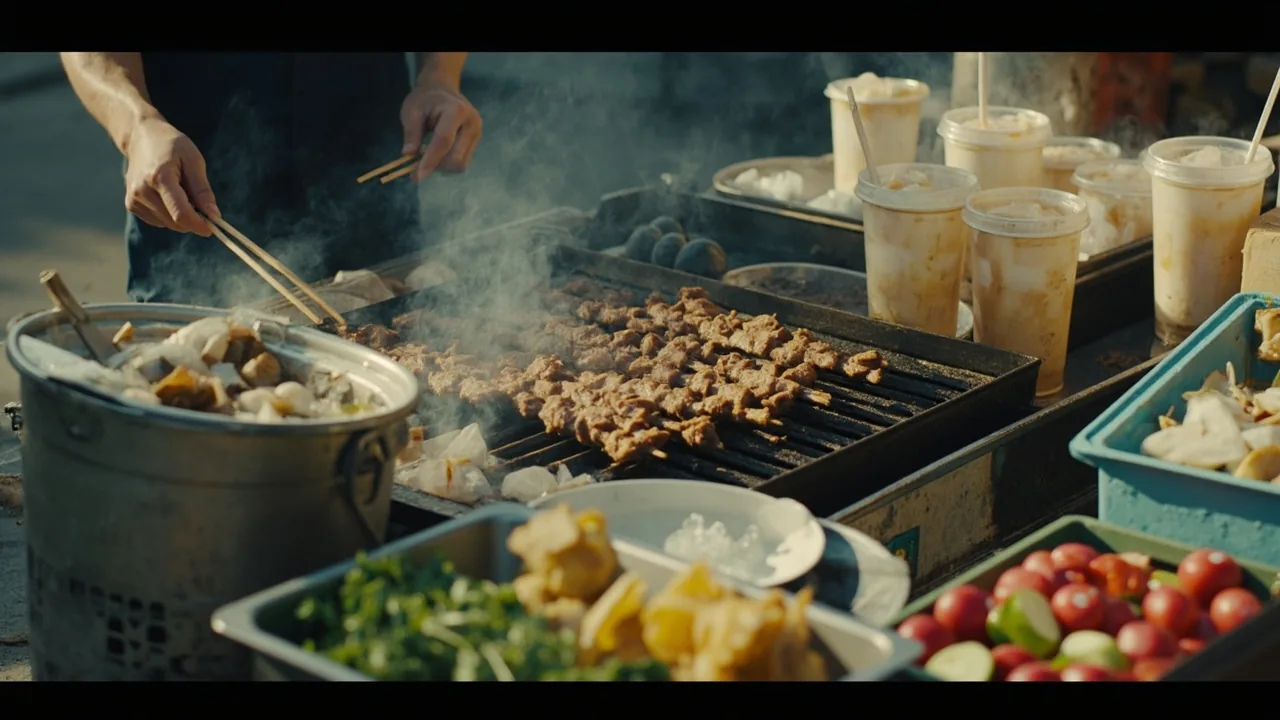
What NOT to Eat in Cambodia: A Street-Smart Food Survival Guide for Indian Travellers
Cambodian food is one of Southeast Asia’s quieter pleasures: fish amok, beef lok lak, kuy teav noodle soup at dawn. The bad news: the same stalls that serve the best meals also cut corners. This guide covers what to skip, what to spot, and what to do when things go wrong. For related planning, see Sea Backpacking Hub.
Quick Answers
| What | Answer | Price (INR) |
|---|---|---|
| Is tap water safe in Cambodia? | No. Drink bottled or filtered only. | ₹71 (~3,000 KHR or ~$0.74) for 1.5L |
| Can I eat raw vegetables from a street cart? | Skip them. Salads at sit-down places are fine. | free |
| Is it safe to eat the famous fried spiders/tarantulas? | Risky. Vendors rarely refrigerate them. | ₹24 (~1,000 KHR or ~$0.25) each |
| What if I get food poisoning? | ORS + see a clinic. Most clear in 24 hrs. | ~₹715 (~30,000 KHR or ~$7.42) clinic fee |
| Should I peel my own fruit? | Yes. Pre-cut fruit on ice is the #1 traveller trap. | free |
At current rates (1 USD ≈ ₹96.33, 1,000 KHR ≈ ₹24), 1,000 KHR ≈ ₹24, 30,000 KHR ≈ ₹720 (~$7.46). You may also find Is There a Travel Ban to Cambodia useful for this trip.
The Real Risks (What to Worry About)
Food sickness in Cambodia is less dramatic than your WhatsApp family group thinks, and more common than guidebooks admit. Ranked by what Indian backpackers report: See also: Cambodia Transport Safety Tuk Tuk Road Accidents.
| Risk | Likelihood | Impact | How to Avoid |
|---|---|---|---|
| Traveller’s diarrhoea from tap water / ice | High | Low. Moderate | Bottled water only, refuse ice at sketchy stalls |
| Pre-cut fruit on melting ice | High | Moderate | Buy whole fruit, peel it yourself |
| Undercooked pork / chicken at small stalls | Moderate | Moderate. High | Stick to busy, high-turnover vendors; pork should be fully cooked |
| Shellfish (especially raw oysters in Sihanoukville) | Moderate | High | Skip raw shellfish entirely |
| Exotic items (fried spiders, raw snake blood) | Low. Moderate | Variable | Pick reputable stalls; never buy from a roadside tarantula bucket |
| Tap-water coffee / smoothies with crushed ice | Moderate | Low | Order drinks with no ice or with sealed-tube ice |
Subodh’s Pro Tip: The first 72 hours in Cambodia determine your gut’s calibration. Go slow. One cooked, hot meal at a busy restaurant on day one. Then build up.
What to Skip (The Detailed List)
1. Tap water, in every form
This is non-negotiable. Cambodian municipal water is not treated to the standard your stomach expects. That includes ice made from tap water, which most small stall vendors do use, even when they smile and say “clean ice.” Drink only sealed bottled water (the ₹71 (~3,000 KHR or ~$0.74) for 1.5L bottles are everywhere), or carry a LifeStraw / filtered bottle. If you are at a nice restaurant like Smokin’ Pot Authentic Cambodian Restaurant and Cooking School in Phnom Penh, their ice is from a filtered supplier and fine. At a roadside cart, pass.
2. Pre-cut fruit sold on ice trays
A single cut watermelon, sitting on coloured ice at 32°C, shared by a hundred flies and a hundred hands, is the single most common trigger for traveller diarrhoea in this part of the world. The fix is simple: buy whole bananas, mangoes, watermelons, and pineapples, and peel them yourself with a fruit knife from your hostel. The vendor does not wash the cutting board between customers, and the ice is recycled.
3. Salads and raw herbs from street carts
Larb-style raw beef salads, green papaya salads, and herb platters from a roadside cart are tasty but unsafe for the same reason: wash water is tap water. At HoubHoub Cambodian Restaurant (BKK1) or Cambodia Kitchen, salads are washed in filtered water and the risk is much lower. At a cart: skip.
4. Undercooked pork
Cambodian cuisine loves pork, and not all of it is cooked through. Pork should look fully opaque, no pink in the middle. Sticky rice BBQ skewers are usually safe because they cook long on the grill. Sushi-grade pork, tartare-style preparations, and “just-seared” pork are risks.
5. Chicken that is not piping hot
Cambodian chicken is often paler than Indian chicken at the same cook level, and small stalls hold cooked chicken for hours before serving. If the chicken on your plate is not steaming or at least hot to the touch, skip it. This is the #1 traveller trap behind meat dishes specifically.
6. Raw shellfish and oysters
Sihanoukville and the coast have raw oyster vendors that look idyllic. Skip. Vibrio bacteria are not your friend. Always order shellfish fully cooked, ideally in a sit-down place.
7. Fried spiders and tarantulas (the famous weird stuff)
This is the gap your Google results don’t fill. Skuon (a small town on the Phnom Penh to Siem Reap bus route) is famous for fried tarantulas, water bugs, and silk worms. They are a cultural experience and the spiders are typically deep-fried in oil that reaches 180°C+. But: the vendors hold the cooked spiders in open trays at room temperature for hours, sometimes all day. The cooked spider itself is often fine the moment it comes out of the oil. The same spider sitting in a roadside bucket for 4 hours at 35°C is not.
Safety Alert: If you try the spiders, watch them come out of the wok fresh. If the vendor is reheating yesterday’s catch from a basket, skip. Travellers report mild stomach upset from the reheated version more than the fresh.
8. Snake, frog, and raw blood dishes
In some regional markets and at Tonle Sap floating villages, you can find raw snake blood, raw frog, and similar. These are not safe for a foreigner’s gut, full stop. Culturally interesting, photograph them, do not eat them.
9. The “empty restaurant” rule
If you are the only customer in a Cambodian restaurant at lunch hour, walk out. High turnover in food stalls = fresh food. Zero turnover means the food has been sitting, and the oil in the wok has been recycled through a dozen half-cooked orders. This is one of the simplest signals you have, and one of the most reliable.
10. Ice in coffee and smoothies (at the wrong places)
This trips up even experienced travellers. Sealed-tube ice (the long hollow tube you see at cafés) is factory-cleaned. Crushed cube ice at small stalls is usually made with tap water. Coffee at Mekong Authentic Indian Restaurant (pure Indian food) in Phnom Penh uses safe ice; coffee at a ₹119 (~5,000 KHR or ~$1.24) roadside cart: ask for “no ice” or “no tuk.”
What to Eat Instead (The Good News)
Cambodian food is mostly safe when cooked fresh and hot. Here is what to lean on:
- Fish amok at Smokin’ Pot Authentic Cambodian Restaurant and Cooking School: steamed fish curry, fully cooked, served hot, from a high-turnover kitchen. One of the most underrated dishes in Southeast Asia.
- Beef lok lak at Cambodia kitchen: stir-fried beef with Kampot pepper, served with a lime dipping sauce. Cooking kills the bugs, the dish is built around hot pan-frying.
- Kuy teav (the breakfast noodle soup): Cambodia’s answer to pho, served at 6 a.m. At every wet market. Always cooked-to-order broth, freshly blanched noodles. Pick a vendor with a queue.
- Num pang (Cambodian baguette sandwiches): freshly baked baguettes with grilled pork or pate. Skip the raw veggie-heavy versions, pick the all-cooked fillings.
- Indian food at Indian Restaurant (Phnom Penh), Mekong Authentic Indian Restaurant (pure Indian food), or Don’s Mumbai Chaat - Best Indian Homecooking and Street Food Kitchen when your stomach wants a backstop. All three have full vegetarian and even Jain-friendly menus and use filtered water in the kitchen.
Prevention and Preparation (Before You Fly)
Vaccines recommended for Indian travellers
- Hepatitis A (always)
- Hepatitis B (always)
- Typhoid (highly recommended, food and waterborne)
- Tetanus-diphtheria (booster)
- Rabies (consider, given stray dogs around temples and rural night markets)
- Japanese Encephalitis (if extending to rural wet-rice areas)
For the deep dive on mosquito-borne illness beyond food, see our Cambodia mosquito diseases guide.
Insurance that pays for stomach issues
A standard Indian domestic policy will not cover you abroad. Make sure your international plan covers:
- Outpatient treatment for gastroenteritis and food poisoning
- Hospital admission (rare but possible with severe E. Coli or salmonella)
- Emergency medical evacuation (motorbike-to-clinic transport in rural Cambodia can mean a tuk-tuk to Phnom Penh)
- Trip interruption if you need to extend your stay due to illness
Most backpacker-friendly policies cover all of this above $5/day tier. More detail is in our Cambodia travel insurance guide.
Subodh’s Pro Tip: The morning-bus-puke is a rite of passage here, but it doesn’t have to be. Pack ORS sachets (Electral ORS, commonly available at Indian pharmacies for ~₹20 (~$0.21) a strip, four strips per traveller), your own paracetamol, and a 5-day course of Metrogyl (metronidazole) as a backup. Pharmacists in Cambodia will hand you anything without a prescription, but your gut is calibrated to Indian pharma quality. Carry from home.
What to Do When It Goes Wrong
The first sign of trouble is usually a gurgle around the 4-hour mark after the bad meal. Do this in order:
- Stop eating for 6 hours, only sip bottled water or weak ORS.
- One sachet of ORS in 200ml of bottled water, drink slow.
- Imodium (loperamide) 2mg: one tablet to slow the gut. Travellers often skip this because they think it’s “trapping the bug in.” It isn’t, it’s giving you time to rehydrate. Take it if you need to be on a bus or flight within 4 hours.
- Pantocid (pantoprazole) 40mg once daily if you have acid reflux or upper-stomach pain on top of the lower-gut symptoms.
- If symptoms last past 24 hours, or you see blood, or fever above 101°F: stop self-treating and go to a clinic. Cambodia has decent private clinics in Phnom Penh and Siem Reap that will see you for ~₹715 (~30,000 KHR or ~$7.42). Most accept travel insurance direct billing.
Safety Alert: Dehydration is the actual killer here, not the bug. Symptoms to watch: dark urine, dizziness on standing, dry mouth, no tears when crying. If you hit any of these, the clinic is non-negotiable.
For clinic-by-clinic breakdown of the best hospitals in Phnom Penh and Siem Reap (with addresses and what they charge Indians), see our Cambodia medical emergency guide.
Indian-Specific Considerations
- Pharma shelf names: ORS works the same as Electral or ORS-W from your Indian kitchen. Metrogyl from Cipla sold in Cambodia is the same drug. Pantocid by Sun Pharma is widely available.
- Vegetarian / Jain travellers: The Indian spots listed above are your safest bet. Most Cambodian Buddhist restaurants will do egg-only or fish-only, which is not great for strict veg. Most street vendors will not understand your request for “no fish sauce” because fish sauce is in everything.
- Drinking-water discipline: Phnom Penh tap water has been documented to contain E. Coli at 20x safe levels. Siem Reap tap is worse. Always buy sealed bottles or use a SteriPen / LifeStraw.
- Embassy: The Indian Embassy in Phnom Penh is at 22D, Preah Suramarith Blvd (Sangkat Wat Koh, Khan Daun Penh). Emergency number +855 12 801 240. Save it before you land.
Spotting a Bad Stall (The 30-Second Rule)
Walk past any food stall and ask yourself these questions in order:
- Is there a queue? Even 3-4 locals in line = good sign.
- Is the food cooked to order, or sitting under a glass dome? Cooked-to-order = safe. Sitting-displayed = risky.
- Is the vendor’s hand in the money, then in the food? A two-spoon-and-gloves setup is the gold standard.
- Is the wok oil clear, or black and thick? Clear = good. Black tar = recycled oil, risk of stomach upset.
- Are flies clustered on the displayed food? Walk away.
- Does the vendor have a refrigerated display or open trays? Refrigerated is safer. Open trays at 30°C+ are 4-hour food.
One or two “no” answers is fine. Three or more “no”s: walk to the next stall.
Getting Connected
A working phone means a working Google Maps (for finding the nearest clinic), a working Grab (for getting there without arguing with a tuk-tuk driver about a fare), and a working WhatsApp (for calling your embassy and your family back home). Pick up a local SIM at the airport (Smart, Cellcard, or Metfone are the three big networks) or get an eSIM before you fly, which lands you connected before the immigration queue.
For SIM-by-SIM detail (which network has the best 4G in Siem Reap, what data pack to pick), see our Cambodia travel essentials guide.
Subodh’s Take
Cambodian street food is genuinely one of the best in Southeast Asia, and the worst-kept secret of the trip. The reason Indian travellers get sick is not the food, it’s the water. Nail the water rule (bottled or filtered only, every single time, including brushing teeth), skip the pre-cut fruit on ice, watch your pork cook all the way through, and you’ll eat your way through Phnom Penh and Siem Reap without a single toilet emergency. The fried spiders are a fun photo, but eat them only when they come fresh out of the wok. Everything else on this list, the empty-restaurant rule and the seal-tube ice check, is just pattern-matching. You already know how to do this from your home cities in India.
FAQ
Is the tap water in Cambodia that bad? Yes. Travel-health authorities consistently list Cambodia’s municipal tap water as unsafe for travellers. Stick to sealed bottled water, even for brushing teeth.
Should I avoid Cambodian street food entirely? No, the opposite. The busier the stall, the safer the food. Empty stalls and pre-cooked food sitting on trays are the higher risk.
Are the fried spiders in Skuon safe to eat? Fresh out of the oil, yes. Sitting in a roadside basket for hours, no. Watch the vendor pull them from the wok.
Can I get hepatitis A from Cambodian food? Yes, hepatitis A is the most common vaccine-preventable foodborne risk for Indian travellers. Vaccinate before you fly.
What medicine should I bring from India for stomach issues? ORS sachets, paracetamol, loperamide (Imodium), and a small backup course of metronidazole (Metrogyl) for stubborn cases. All are available over the counter in Cambodia, but Indian brands are calibrated to your gut.
Is it safe to drink cocktails with ice in Cambodia? At a bar with sealed-tube ice, yes. At a roadside cart, ask for “no ice.”
Do I need to worry about malaria from food? No, malaria is mosquito-borne, not foodborne. For that risk, see our Cambodia mosquito-borne disease guide.
