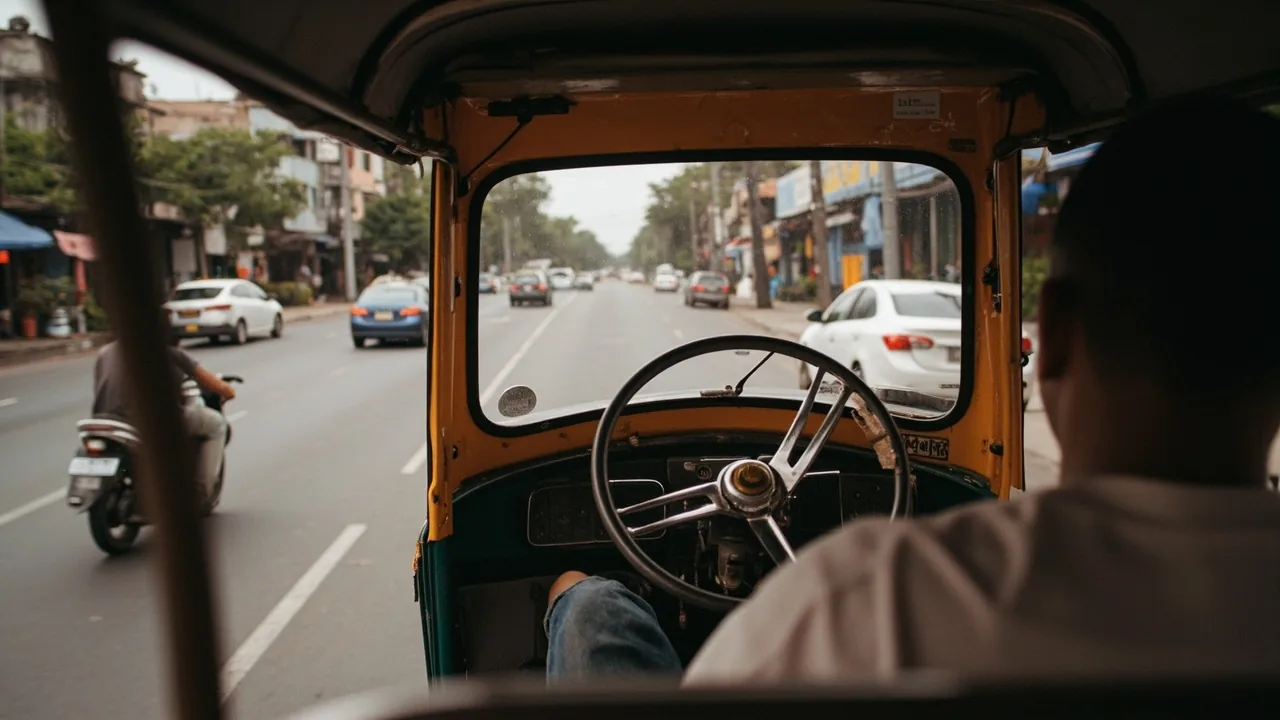
Cambodia Tuk-Tuks & Road Safety: How to Avoid the #1 Cause of Tourist Deaths
Cambodia is a wonderful country to travel through, but I want to be straight with you before you read another word: road traffic injuries are the leading cause of death for foreign visitors here, and the humble tuk-tuk sits right at the centre of that risk. This is not a scaremongering pitch. It is a calm, factual breakdown of what happens on Cambodian roads, what to do about your luggage, how to negotiate a fare without ending up in an argument on Pub Street, and what to do if the worst happens. Read it once before you board your first remorque. For related planning, see our guide on Sea Backpacking Hub.
Quick Answers
| What | Answer | Price (INR) |
|---|---|---|
| Is Cambodia road safety that bad? | WHO data puts Cambodia among the highest road-fatality-per-capita countries in Southeast Asia, and most tourist incidents involve two or three-wheeled vehicles. | ₹0 (no cost) |
| Are tuk-tuks safe in Cambodia? | Safer than scooters, riskier than a metered taxi or Grab car. The vehicle is fine. The driver behaviour, the road surface, and your decision not to wear a helmet are where things go wrong. | ₹0 (no cost) |
| What does a typical in-town tuk-tuk ride cost? | Short hops run ₹193 (~2 USD), full temple circuits ₹1,445-₹2,408 (~15-25 USD). Confirm in dollars or riel before you sit down. | ~₹170 (~$1.76) to ~₹2,100 (~$21.80) |
| Is helmet use legally required? | Yes. In practice enforcement is patchy, so bring your own. | ₹0 (no cost) |
| What is the most underrated safety step? | Keep your daypack strapped to your body, never on the seat beside you. Most “lost luggage” cases in Cambodia are scatter, not theft. | ₹0 (no cost) |
The Real Risks (What to Worry About)
Road safety in Cambodia is dominated by the same handful of factors, and once you see the pattern you can plan around it. Below is the ranked list of what sends tourists to a clinic in Phnom Penh or Siem Reap.
| Risk | Likelihood | Impact | How to Avoid |
|---|---|---|---|
| Tuk-tuk crash (passenger) | Moderate to high during peak tourist season | Severe (head injury, road rash, broken bones) | Choose drivers who go slow, refuse to board visibly drunk drivers, wear a helmet even if local passengers don’t, hold on to the grab bar with both hands on bad road. |
| Pedestrian knock-down at a crossing | Moderate | Moderate to severe | Cross at marked crossings, make eye contact with the driver before stepping out, never trust a green light in Phnom Penh. |
| Luggage scatter or snatch from open tuk-tuk | High on overloaded bikes | Low (annoying) to high (passport gone) | Daypack on your lap, strap across chest, valuables in a hidden money belt. |
| Uninsured driver fare dispute after minor bump | Moderate | Moderate (you pay inflated repair) | Photograph the tuk-tuk before boarding, agree price in writing (text on WhatsApp works), keep small notes separate for the negotiated fare. |
| Drunk driver, late evening | High around Pub Street after 11pm | Severe | Walk back to your hostel, take a PassApp or Grab car instead. |
| Helmetless two-wheeler hire | high if you self-drive | Catastrophic | Don’t self-ride unless you have a valid IDP and full insurance that covers motorbikes. |
Why Cambodia specifically
Cambodia recorded a road traffic fatality rate of around 17.9 per 100,000 people in recent WHO data, well above the regional average. The pattern that produces that number is simple: a young motorbike-riding population, mixed traffic (cars, tuk-tuks, scooters, cyclos, pedestrians, livestock) sharing narrow roads, weak enforcement of helmet and drink-driving laws, and poor street lighting outside the main tourist towns. As a tourist you are not the highest-risk person on that road, a local motorbike commuter is, but you are more visible, more likely to be carrying a phone and a wallet, and less likely to know which intersections to avoid.
Subodh’s Pro Tip: Treat every tuk-tuk ride as if you are getting into a vehicle that does not have seatbelts, airbags, or insurance that covers you. That mental model is accurate. Once you accept it, you take different decisions about which rides you say yes to.
Prevention and Preparation
Most of the safety work happens before you leave India. Five concrete things to do this week:
1. Get the right insurance. A standard Indian domestic policy will not cover a scooter accident in Siem Reap. You need a travel insurance policy that explicitly includes medical evacuation, motorbike riding as a passenger (not as a rider unless you have a valid IDP), and covers the country you are visiting. Get SafetyWing travel insurance from ~$62/month (~₹5,900). It includes trip interruption, COVID cover, and medical evacuation across Southeast Asia. Read the small print about motorbikes before you assume you are covered.
2. Pre-book at least your first night of accommodation and arrange a hotel transfer. Phnom Penh International Airport and Siem Reap Airport both have official taxi counters just past customs. Fixed-price, signed voucher, no haggling. Around ₹1,156-₹1,445 (~12-15 USD) to central Phnom Penh, around ₹674 (~7 USD) to Siem Reap town. The marginal cost is worth the certainty at 1am when you have just landed.
3. Photocopy your passport and visa. Two paper copies, one photo on your phone, one email to yourself. If your passport does walk away from a tuk-tuk you will still be able to get to the Indian embassy in Phnom Penh (No. 10, Street 352, Beoung Keng Kang I, +855-23-210-912, [email protected]) and start a replacement.
4. Download PassApp and Grab before you board your flight. PassApp is the local Cambodian ride-hailing app, similar to Grab, and it shows the route, driver name, plate number, and fare upfront. Both work in Phnom Penh and Siem Reap. If a tuk-tuk driver tries to take you off-route, a tuk-tuk ride booked on the app gives you a paper trail.
5. Carry a small first-aid kit. One packet of ORS (Indian brand: Electral), paracetamol, a strip of Pantocid (acid reflux from spicy food), a course of Metrogyl (food poisoning), a few plasters, and one compression bandage. Pharmacies in Phnom Penh and Siem Reap stock most of these under local names but if you can carry them from India you save a clinic visit. Our Cambodia medical and pharmacy guide covers the local equivalents in detail.
City-by-City Tuk-Tuk Realities
Different Cambodian cities have different tuk-tuk cultures. What works in Phnom Penh will not work in Sihanoukville.
Phnom Penh: Tuk-tuks here are usually auto-rickshaw style (covered, three wheels, two-stroke or electric). Drivers cluster around markets, the riverfront, and major hotels. Short hops run ₹96-₹193 (~1-2 USD), cross-town rides ₹289-₹385 (~3-4 USD). Do not pay more than ₹385 (~4 USD) for any ride inside the city. The “tour” drivers at the Riverside will offer a multi-stop city tour for ₹963-₹1,445 (~10-15 USD), which is fine if you have agreed the stops in advance. Refuse the gem market, refuse the “rice paper workshop,” refuse any detour.
Siem Reap: This is where you spend the most tuk-tuk time. The standard offering is a full-day Angkor tuk-tuk tour for ₹1,445-₹2,408 (~15-25 USD). Three temples at sunrise (Angkor Wat, Bayon, Ta Prohm) plus a few smaller stops is the usual route. Confirm before you sit down whether sunrise means 4:30am pickup or 5am pickup, and whether the driver waits or drops you off. See Angkor Wat tours on GetYourGuide if you want a fixed-price operator rather than a freelance driver. Freelance is cheaper, operator-tour is more predictable.
Sihanoukville: Much of the original beach town has been redeveloped for Chinese investment. Tuk-tuks are still around but the casino-chic vibe is different. Stick to PassApp here, freelance drivers have been known to overcharge badly.
Battambang: Smaller, friendlier, mostly bicycle-rickshaw (cyclo) rather than motor tuk-tuk. Perfectly safe. You will pay ₹193-₹289 (~2-3 USD) for a half-day loop.
How to negotiate a fare without the awkwardness
The two rules that solve 95% of fare disputes:
- Agree the price before you get in. State the destination, state the price in US dollars, wait for the driver to say yes or counter. Once they have agreed, that is the price.
- Walk away if they hesitate. Genuine drivers will accept your offer within five seconds. Drivers who want to play will keep you talking. Walk to the next tuk-tuk. The fare will magically become the number you originally said.
Subodh’s Pro Tip: Always carry small US dollar notes. Drivers will claim they have no change for your ₹963 (~10 USD) and try to round the fare up to ₹963 (~10 USD). Five ones and two fives in your front pocket ends that conversation instantly.
The Luggage Question Nobody Else Covers Well
Most tuk-tuk safety guides focus on the crash risk. The actual experience that ruins a tourist’s day in Cambodia is more mundane: your daypack slides off the seat when the driver brakes hard at a roundabout, your phone falls out of the open side, or your passport pocket gets snipped by someone on a passing scooter.
The mechanics of the problem: A tuk-tuk seat is a flat bench, usually vinyl or wood, with no seatbelts and no cargo net. When the driver brakes hard (and they will, several times per kilometre in Phnom Penh), anything on the seat slides forward. When they take a turn, anything not held slides sideways. When they accelerate, anything light lifts off.
Practical fixes that work:
- Wear your daypack. Strap it on your chest, both straps, sternum strap if it has one. This single decision eliminates 90% of “my bag fell off the tuk-tuk” stories.
- Put valuables in a money belt under your shirt. Passport, spare cash, both debit cards. The money belt is for the scatter scenario, not just the theft scenario.
- Keep one hand on your daypack strap and one hand on the grab rail. Looks awkward. Works.
- Refuse to sit three-abreast on a two-person bench. If the driver loads four tourists into a tuk-tuk built for two, your bag has nowhere safe to go. Decline, wait for a second tuk-tuk.
- At night, keep your phone in your front pocket, not your jacket pocket. Phone-snatching by passing motorbike is rare but not zero in Phnom Penh after dark.
If something does fall off, do not chase the tuk-tuk. Note the plate number (every licensed tuk-tuk in Phnom Penh and Siem Reap has one), and call the tourist police. In Siem Reap: 012-402-424. In Phnom Penh: 012-999-999. They do help recover dropped items.
What to Do If It Happens
A real emergency in Cambodia is more bureaucratic than dramatic. Here is the exact sequence.
If you are in a tuk-tuk crash
- Get off the road. The next vehicle will not be watching for you.
- Photograph the tuk-tuk, the driver, the plate, the road, and any visible injury on your body. Do this before you discuss money.
- Call your insurance emergency line. SafetyWing’s number is on the back of your card.
- Get to a clinic. In Phnom Penh the most reliable option for foreigners is the Royal Rattanak Hospital or the International SOS clinic. In Siem Reap, the Royal Angkor International Hospital. Both have 24-hour A&E and English-speaking staff.
- The driver will likely offer to settle cash. Do not accept cash settlement until you have been cleared by a doctor. The “minor” head injury that turns out to be a concussion is the most expensive mistake travellers make in Cambodia.
- Police report within 24 hours if there is any injury or property damage over ₹4,817 (~50 USD). Your embassy can translate.
If your passport is lost or stolen
- File a police report at the local police station. They will give you a stamped letter in Khmer. Keep it.
- Take the letter, two passport photos, your Indian embassy contact card, and any copy of your passport to the Indian Embassy in Phnom Penh. They issue emergency certificates that let you exit the country.
- Apply for a full replacement passport once you are back in India.
If you get severe food poisoning
- ORS immediately. Two sachets in a litre of bottled water. Sip slowly.
- Pantocid if the vomiting is acidic. Metrogyl 400 if diarrhoea persists beyond 12 hours.
- Get to a clinic if you cannot keep water down for six hours. Intravenous rehydration in Cambodia costs around ₹2,890-₹5,780 (~30-60 USD) at a tourist clinic, and your travel insurance covers it.
Emergency numbers to save in your phone before you leave India:
- Cambodia general emergency: 117 (police), 118 (ambulance), 119 (fire)
- Tourist police Phnom Penh: 012-999-999
- Tourist police Siem Reap: 012-402-424
- Indian Embassy Phnom Penh: +855-23-210-912
Indian-Specific Considerations
Indian travellers tend to have a slightly different risk profile in Cambodia than Western tourists. A few notes worth flagging:
Dress and skin visibility. Indian skin tone stands out less than a pale European face, which is good for not being singled out as a tourist. But it also means locals may assume you are a Khmer returnee from France or the US and speak to you in Khmer or French. A short Khmer greeting (“awkun” for hello, “liey” for thank you) defuses most situations.
Indian medicine availability. Most Indian pharmacy brands are available in Phnom Penh and Siem Reap pharmacies at 1.5x-2x the Indian MRP. Bring what you can from India. The Cambodia medical and pharmacy guide has a full brand-by-brand comparison.
Indian embassy location. The Indian Embassy in Phnom Penh is the only Indian diplomatic mission in Cambodia. There is no consulate in Siem Reap. If you have an emergency outside Phnom Penh, the embassy can sometimes send a representative to Siem Reap but the standard practice is for you to travel to Phnom Penh.
Cultural dress at temples. Cambodia is stricter than Thailand about temple dress code. Knees and shoulders covered, shoes off, no pointing at Buddha statues. Our Cambodia etiquette guide has the full breakdown including the specific rules at Angkor Wat.
Getting Connected
You cannot call any of the numbers above if your phone does not work. Two options: a physical SIM at the airport (Cellcard, Smart, or Metfone, ₹482-₹963 (~5-10 USD) for a tourist pack with 5-10GB) or an eSIM you activate before you board. Get Nomad eSIM for Cambodia before you fly and you have data the moment the plane lands. Working data is also the fastest way to call an Uber-style ride when you don’t want to negotiate with a freelance driver.
Common Scams That Involve Tuk-Tuks
A few specific scams worth knowing. None of these are dangerous, all of them cost you money.
- The “Grand Palace is closed today” scam (Phnom Penh): A tuk-tuk driver tells you the Royal Palace is closed for a Buddhist holiday and offers to take you to “another temple” instead, where his cousin sells overpriced silver. Verify opening hours on the official Royal Palace Facebook page or the entrance gate before you accept.
- The overcharged day rate (Siem Reap): A driver quotes ₹2,890 (~30 USD) for the day, halfway through adds a “fuel surcharge.” Confirm total in writing in the morning.
- The broken meter excuse: There is no meter. Agree price before boarding.
- The “I will be your friend all week” loyalty pitch: Fine if you want a full-time driver, expensive if you just needed one ride. Decline politely.
None of these are unique to Cambodia, but they cluster around tuk-tuk culture because the freelance-driver economy is so visible.
FAQ
Are tuk-tuks safe in Cambodia for tourists? Safer than self-driving a scooter, riskier than a metered taxi or Grab car. The vehicle is mechanically simple and stable at low speed. The risk comes from driver behaviour, road conditions, and the absence of seatbelts or airbags. Choose your driver, wear a helmet where possible, and refuse visibly drunk drivers.
Do I need a helmet in a tuk-tuk? Cambodian law technically requires helmets on all motorised two and three-wheelers. Enforcement against passengers is patchy. Bring a half-shell helmet if you plan to do serious Angkor touring, especially for sunrise runs at 4:30am when visibility is poor.
How much should a tuk-tuk cost in Cambodia? In-town rides run ₹193-₹482 (~2-5 USD). A full-day Angkor tour runs ₹1,445-₹2,408 (~15-25 USD). Anything above that you are being overcharged or getting a fixed-price operator with hotel pickup, which is a different product.
What is the safest way to travel between Cambodian cities? Giant Ibis or Mekong Express buses for Phnom Penh to Siem Reap (₹771-₹1,445 (~8-15 USD)). These are the two operators with the best safety record and on-board toilets. Avoid minivan shuffles booked through freelance agents. Our Cambodia transit and entry guide covers the border crossings in detail.
Is Cambodia safe to visit in 2026? For tourists, yes. The standard advisory applies: check your government’s travel page (for Indian citizens, the MEA travel advisory at mea.gov.in) before departure, and check the Cambodian Ministry of Tourism’s own advisory. Avoid the provinces bordering Thailand if there is specific unrest at the time of your trip. Standard travel-safety hygiene covers 99% of situations.
Do I need travel insurance for Cambodia? Yes, and it must specifically include Cambodia and medical evacuation. The Indian government does not pay for overseas medical evacuation. Get SafetyWing travel insurance from ~$62/month (~₹5,900) and read the motorbike passenger clause before assuming any scooter accident is covered.
What about the tuk-tuk drivers in Poipet at the Thai border? The border-town drivers at Poipet are a specific ecosystem. They cluster around the casino zone and the border crossing. Agree fares before you walk, refuse any “free ride” to a guesthouse that ends with a commission pitch, and walk the 200 metres to the casino shuttle if your hotel offers one. Our Cambodia transit visa guide covers the Poipet crossing in more detail.
Subodh’s Take
Cambodia is a safe country to travel through if you treat tuk-tuk safety as a system, not a vibe. The system is: agree the fare before boarding, wear your backpack on your chest, refuse drunk drivers, use PassApp or Grab when you don’t want to negotiate, and carry travel insurance that covers medical evacuation. Do those five things and the actual road statistics stop mattering for you personally. Skip any one of them and you are rolling dice. Cambodia rewards the traveller who plans the boring parts and then relaxes into the beautiful parts.
