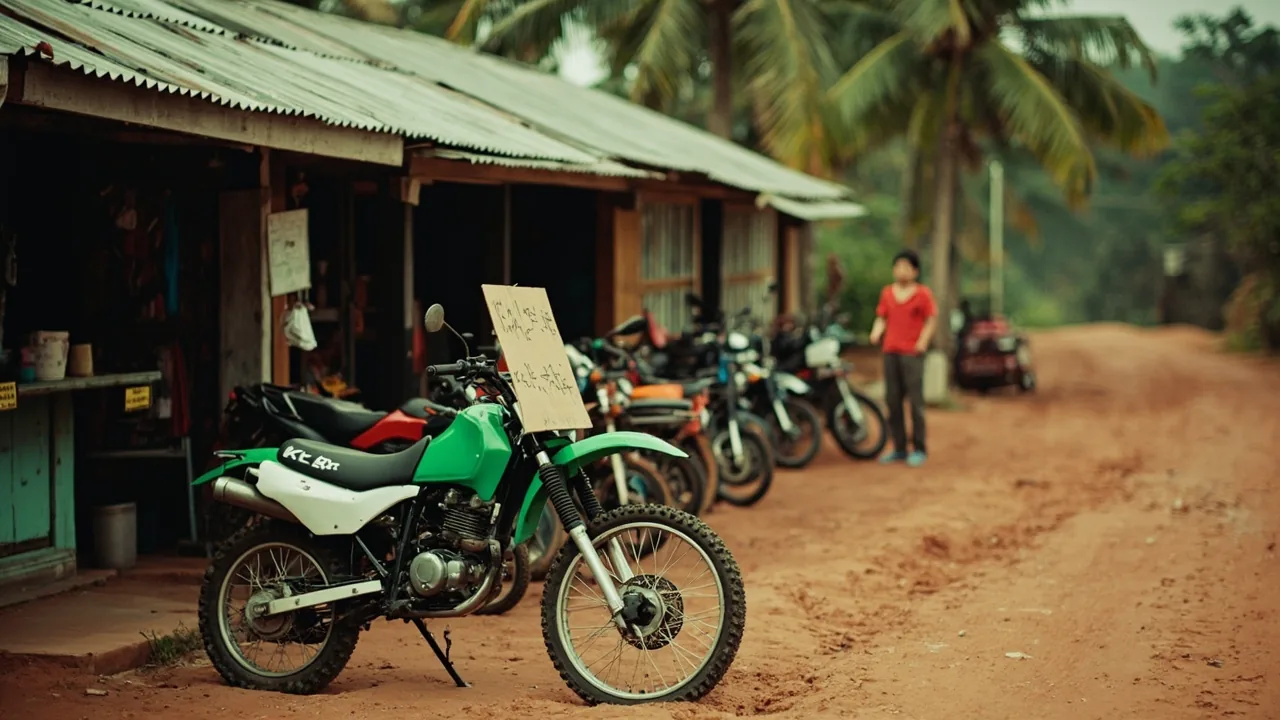
Cambodia Dirt Bike Rental: Where to Find Real Off-Road Bikes
Cambodia dirt bike rental is harder than in neighbouring Thailand or Vietnam. Most shops stock Honda CRF 250s and Kawasaki KLX 150/250s for roughly ₹3,372-₹6,744 (~35-70 USD) per day from Phnom Penh. The trick is knowing who owns off-road machines versus who’ll hand you a street scooter with knobby tyres. See our Southeast Asia backpacking hub for broader transport context.
This guide is written for Indian adventure riders (think: Royal Enfield Himalayan owners, Pune-Bangalore weekend trail crowd) thinking about a Cambodia trip. I’ll cover what bikes are realistically available, where to find them outside Phnom Penh, what the rental and tour packages cost, and the small handful of things that catch Indian riders off guard, from licence rules to monsoon mud.
Subodh’s Pro Tip: Most “dirt bike tours” you’ll find on Instagram are guided street-bike loops with one or two dirt sections. If you want actual off-road riding, ask specifically about suspension travel, tyre type, and whether the route includes single-track. The honest operators will answer all three in detail.
Quick Answers
| What | Answer | Price (INR) |
|---|---|---|
| Typical dirt bike rental (CRF 250, KLX 150) | ₹3,372-₹6,744 (~35-70 USD) per day from Phnom Penh | ₹3,380-₹6,760 (~$35.08-$70.17) |
| Multi-day guided off-road expedition (5-7 days) | ₹115,607-₹240,848 (~1,200-2,500 USD) all-inclusive | ₹115,830-₹241,320 (~$1,202.32-$2,504.90) |
| Honda XR 250 availability | Rare; book ahead 2-4 weeks | — |
| IDP with motorcycle endorsement needed? | Yes, technically; rarely enforced outside Phnom Penh | — |
| Best season for off-road | Nov-Feb (dry, cool); avoid Jul-Sep monsoon | — |
Safety Alert: Off-road riding in Cambodia is genuinely remote. Distances between fuel stops, mechanics, and clinics stretch past 100 km in Mondulkiri and the Cardamoms. Make sure your travel insurance covers motorcycle riding, both on-road and off-road, before you leave Phnom Penh.
What “Dirt Bike” Means in Cambodia
Here’s the first honest filter: most places advertising “dirt bike rental” in Cambodia are renting you a Honda CRF 250L or a Kawasaki KLX 150. Both are dual-sport machines, not pure motocross. The CRF 250L is the Honda CB500X’s smaller, off-road-tinged sibling: 250cc, around 140 kg, road-legal, decent on graded trails, out of its depth in deep mud or rock gardens. The KLX 150 is lighter, more off-road capable, and worse on the highway because it’s small.
Subodh’s Pro Tip: Ask the shop the bike’s dry weight. Anything over 150 kg is a street bike with a tall seat. Anything under 130 kg with knobblies is the real thing.
Pure motocross bikes (CRF 450R, KTM EXC, Husqvarna FE) are almost impossible to rent. Insurance exposure is too high, and the bikes wear out fast in rental hands. If a shop claims to have a 450 EXC available, double-check the registration, insurance, and whether they ride it themselves before committing.
For Indian riders coming from Royal Enfield Himalayan territory, the CRF 250L feels familiar in weight and seat height, but the engine is much more responsive and less torquey low-down. The KLX 150 is closer to a small two-stroke in feel, light, revvy, easy to drop.
Where to Find Real Off-Road Bikes
Phnom Penh (the only reliable source)
Phnom Penh is the hub. Almost every legitimate Cambodia dirt bike rental operation is based here, even when tours launch from Sen Monorom, Banlung, or Koh Kong. Most shops cluster in the BKK1 district near Street 51 and the riverside, with a couple of outfitters in Tuol Tom Poung (Russian Market) area. Drop-offs to guesthouses in BKK1 or pick-ups near the Independence Monument are common arrangements. A small handful of shops stock actual off-road-capable machines. Expect to find CRF 250L, KLX 150, KLX 250, and occasionally XR 250 or older XR 400s. Daily rates run ₹3,372-₹6,744 (~35-70 USD) depending on bike condition and duration. After picking up your bike, grab a meal at HoubHoub Cambodian Restaurant in BKK1 (rated 4.8) for authentic Cambodian cuisine before you head out of the city.
Subodh’s Pro Tip: If you’re flying into Siem Reap to ride, expect to take a bus to Phnom Penh first (around ₹771-₹1,445 (~8-15 USD), 6-7 hours) or pay ₹19,268 (~200 USD)+ to have a bike trucked up. Most rental shops are in or near the BKK1 district of Phnom Penh. For general scooter and street-bike rental guidance in Phnom Penh, see Phnom Penh motorbike rental and Cambodia motorcycle rental and repair.
Sen Monorom (Mondulkiri Province)
Sen Monorom, the capital of Mondulkiri and home to the famous Bou Sra Waterfall (one of Cambodia’s largest), has a couple of small operators renting 250cc dual-sports to tourists heading for the Bousra Waterfall area and the Bou Sra-Chhlor Pregsai forest trails. Stock is thin, often just 2-4 bikes. From Sen Monorom town, riders typically stage rides out to the Bousra Waterfall, the Sen Monorom plateau viewpoint, and the Bou Sra-Chhlor Pregsai forest trails along the elephant corridor that runs toward the Vietnamese border. If you have your heart set on riding this corridor, book at least 2 weeks ahead and email the operator with your height, weight, and experience level. A bike that fits a 5’10” rider is not the same seat height as one for someone under 5’6”.
Banlung (Ratanakiri Province)
Banlung, near the Vietnamese border and gateway to Yeak Laom crater lake (a circular volcanic lake popular for swimming), has a few CRF 150s and KLX 140s floating around for tourists wanting to ride out to Yeak Laom crater lake and the hill-tribe villages beyond. The bikes here tend to be older and more beat-up. Daily rates are ₹2,408-₹3,854 (~25-40 USD), sometimes negotiable for multi-day. Mechanics are scarce; if a bike breaks, you’re looking at a ₹4,817-₹14,451 (~50-150 USD) tow or a long wait for parts.
Koh Kong and the Cardamom Mountains
Koh Kong town, gateway to the Cardamom foothills and a launch point for the Tatai Waterfall river trips on the Tatai River, has the most adventurous riding in Cambodia. Dirt-road networks wind through former logging concessions, around Tatai waterfalls, and into the southern Areng Valley (site of the proposed Areng Valley dam controversy). Rental options are limited to one or two operators with 3-5 bikes each, mostly CRF 250L and KLX 150. Expect to pay ₹4,335-₹6,262 (~45-65 USD) per day, plus a refundable ₹19,268-₹48,170 (~200-500 USD) deposit for off-road machines.
Safety Alert: The Cardamom region sees occasional military checkpoints. Have your passport and rental agreement ready. Travellers report these stops are usually quick, but in remote stretches without phone signal, a 30-minute delay can mean running out of daylight on unfamiliar trails.
Pricing and What’s Included
Here’s the realistic breakdown of what you’ll pay in 2026:
| Item | Typical Range | Notes |
|---|---|---|
| Daily rental (CRF 250L / KLX 150) | ₹3,372-₹6,744 (~35-70 USD) | Includes basic insurance, helmet, top-box |
| Weekly rental (5-7 days) | ₹24,085-₹43,353 (~250-450 USD) | Often negotiable, includes helmet |
| Refundable deposit | ₹19,268-₹48,170 (~200-500 USD) | Cash or passport hold; passport hold is risky in Cambodia |
| Helmet (included or extra) | Included or $5-10/day | Always inspect the strap before riding |
| Riding gear (boots, gloves, jacket) | Rarely included | Most operators expect you to bring your own |
| Basic insurance (third-party liability) | Included | Does NOT cover rider injury |
| Off-road riding surcharge | $10-20/day | Some operators charge extra for trail use |
The deposit question trips up most Indian riders. A lot of shops will ask for your passport as collateral. Politely refuse and offer ₹28,902-₹48,170 (~300-500 USD) cash instead. Losing your passport in Cambodia, even temporarily, can derail your entire trip.
Subodh’s Pro Tip: At current rates (1 USD = ₹96.53), a $50 daily rental works out to roughly ₹4,826 (~$50.09) per day. A full week at the upper end (around ₹43,353 (~450 USD)) lands near ₹43,440 (~$450.91), which is comparable to what you’d pay renting a Himalayan for a week in India, with the trade-off that the Cambodian bikes are usually newer and road-legal out of the box.
Dirt Bike Tours and Multi-Day Expeditions
This is where Cambodia’s off-road scene genuinely shines, and where competitors cover ground I want to address directly. A handful of Phnom Penh-based outfits run guided multi-day expeditions into the country’s most remote terrain. These aren’t your average “half-day countryside loop” packages; they’re full logistics operations with support vehicles, mechanics, fuel caches, and route leaders who’ve ridden these trails for 15-20 years.
The most common expedition formats:
3-day Mondulkiri sampler: Phnom Penh to Sen Monorom by support vehicle, two full days of trail riding through Bou Sra forest, the Sen Monorom plateau, and indigenous Bunong village tracks. Roughly ₹86,705-₹134,875 (~900-1,400 USD) per rider, twin-share accommodation in basic guesthouses, all meals, bike, fuel, and guide included.
5-7 day Cardamom expedition: Truck the bikes to Koh Kong, ride 5-7 days of dirt-road and single-track loops through the southern Cardamoms, including the Areng Valley and Tatai River sections. ₹144,508-₹240,848 (~1,500-2,500 USD) per rider depending on group size and accommodation level. Support 4x4 follows the group with spare parts, water, and camp gear.
Cross-border Vietnam-Cambodia ride: 7-10 days from Ho Chi Minh City into Ratanakiri, across to Mondulkiri, down to Phnom Penh, and ending in Koh Kong. ₹211,946-₹337,186 (~2,200-3,500 USD) per rider. These require a Vietnamese temporary import permit for the bike and a Cambodian visa on arrival; see our Cambodia transport guide for visa logistics.
Most tour operators prefer groups of 4-8 riders. Solo travellers can usually join an existing departure. Lead times vary; the dry-season (November through February) expeditions often book out 4-6 weeks ahead.
Subodh’s Pro Tip: Ask whether the guide carries a satellite communicator (Garmin inReach, SPOT). In Mondulkiri and the deeper Cardamoms, mobile signal disappears for hours at a time. A guide without one is a red flag for any multi-day expedition.
For Indian riders used to Spiti, Leh, or the Western Ghats, the Cambodian off-road terrain is technically easier, mostly red-dirt and laterite with the occasional rocky river crossing, but logistically harder. Fuel stops are further apart, mechanics are scarcer, and English-speaking support is patchy outside the main operators. The reward is genuine solitude: trails where you’ll see one pickup truck per day instead of forty Royal Enfields. Back in Phnom Penh, celebrate a multi-day expedition with dinner at Smokin’ Pot Authentic Cambodian Restaurant and Cooking School (rated 4.9), which also runs cooking classes if you want to learn Khmer dishes before your next ride. If you’re craving familiar flavours after weeks of Southeast Asian food, Indian Restaurant in Phnom Penh serves basic Indian dishes. And if you’ve got a rest day in Siem Reap, catch Phare, The Cambodian Circus (rated 4.8), a contemporary performance blending theatre, music, and circus that supports local youth artists.
Licensing, Insurance, and the IDP Question
Cambodia technically requires an International Driving Permit with motorcycle endorsement for any rider above 110cc. An Indian licence alone is not sufficient. IDPs are issued by the Regional Transport Authority in India on the basis of your existing licence; the process costs ₹4,500-₹5,500 (~$46.71-$57.09) and takes 2-7 working days, or 1-2 days through agents like Allianz or VIP Processing.
The reality on the ground: outside Phnom Penh, Siem Reap, and Sihanoukville, traffic police checkpoints rarely inspect motorcycle licences in detail. What they will check is your passport, visa status, and whether your bike has a valid registration sticker. If you’re on a rented dirt bike, the rental shop handles the registration question; carry the rental agreement at all times.
The bigger insurance question: most travel insurance policies, including SafetyWing’s standard nomad plan, do NOT cover motorcycle riding above 150cc unless you buy the adventure sports rider. Off-road riding is often excluded entirely, even on smaller bikes. Check the fine print. A single off-road accident in Mondulkiri requiring evacuation can run ₹481,695-₹1,445,085 (~5,000-15,000 USD) out of pocket without proper cover.
Safety Alert: Before you ride, check your government’s official travel advisory for Cambodia. For Indian travellers, the Ministry of External Affairs advisory page (mea.gov.in) is updated regularly. Conditions in border provinces shift faster than any blog post can keep up with.
Packing and Gear for Off-Road Cambodia
Most rental shops provide a helmet (inspect it, don’t trust it), but little else. Bring:
- Boots: Proper motocross or ADV boots, not trainers. The trail riding in Mondulkiri and the Cardamoms has sharp laterite edges and the occasional river crossing.
- Gloves: Light motocross gloves. Heavy ADV gauntlets get too hot in the dry season.
- Jersey / hydration pack: December to February is cool (20-28°C) but humid. March to May hits 38°C+. Carry at least 2 litres of water per ride day.
- Eye protection: Goggles for dusty trails, clear lenses for the dusty dry season.
- Spare tubes and tyre levers: For KLX and CRF sizes, available at the larger Phnom Penh shops but not in Sen Monorom or Banlung.
- First-aid kit: Travel insurance covers the hospital; it doesn’t cover the 60 km dirt-road ride to get there.
Travellers report that the dust in dry-season Cardamom riding is the bigger hazard than the terrain itself. A buff over the nose and a clear-lens goggle save you from the worst of it.
When Not to Ride
Three months a year, Cambodia is genuinely not a dirt bike destination:
- July to September (peak monsoon): Trails turn to axle-deep mud. Single-track becomes impassable. River crossings can wash bikes downstream. Most operators shut their expeditions down entirely.
- First two weeks of October (late monsoon): Ground is saturated, rivers still high. Some operators run tours but trails are technical and slow.
- Late March to early May (peak dry heat): 38°C+ is the norm. Riding mid-day becomes heat-stroke territory. Early-morning starts are mandatory.
November through February is the sweet spot: cool, dry, clear trails, all operators running, guides available. December and January book out fastest for guided expeditions.
Common Mistakes Indian Riders Make
Leaving the passport as a deposit. The rental shop insists, you give in, then they “lose” it the day you want to leave. Always insist on a cash deposit or, better, a credit-card pre-authorisation. If the shop refuses anything except the passport, walk away.
Underestimating the heat. March-May riding in Mondulkiri at noon can cause heat exhaustion in 90 minutes. Indian riders used to cooler Himalayan weather often forget how humid Southeast Asian heat compounds with full gear on. Start at 6 AM, finish by 11 AM, hide from 11 to 3, ride again if you must.
Bringing a Himalayan and expecting spares. Royal Enfield mechanics exist in Phnom Penh, mostly for the small expat community, but Enfield-specific parts (Carburettor rebuilds, RE350 pushrod tubes, the usual) are not stocked in Cambodia. If you’re set on a Himalayan, ship the spares you’ll need in advance, or stick to Honda or Kawasaki platforms where parts are universal.
Riding alone in the Cardamoms. Phone signal is patchy, fuel is 100+ km apart, and if you bin the bike in a remote valley, you could be waiting a long time. Always ride with at least one buddy in the deeper Cardamoms and carry a satellite communicator.
Trusting the helmet. Helmet condition in Cambodia is inconsistent. Check the EPS foam by pressing firmly on the inside; if it feels hard or brittle, ask for another one. A $5-10/day helmet upgrade at a better shop is worth it.
FAQ
Can I rent a proper dirt bike in Cambodia without an IDP?
Technically, no. Practically, outside the main cities, traffic police rarely check motorcycle endorsements. Carry your Indian licence and an IDP anyway; the IDP is useful if you’re asked and the fine for riding without one is ₹963-₹1,927 (~10-20 USD) on the spot, paid at the station (not to the officer). Get the official receipt.
How much does a multi-day guided dirt bike tour cost?
A 5-7 day guided Cardamom or Mondulkiri expedition runs ₹144,508-₹240,848 (~1,500-2,500 USD) per rider, all-inclusive (bike, fuel, support vehicle, guide, accommodation, meals). Shorter 2-3 day samplers are ₹67,437-₹115,607 (~700-1,200 USD). Solo riders can usually join a group departure.
Is it safe to ride a dirt bike in Cambodia as a tourist?
Safer than Vietnam’s traffic, more remote than Thailand’s. The main risks are: (a) the heat, (b) the dust, (c) genuine remoteness if something goes wrong, and (d) muddy trails in the monsoon. With proper gear, a guide on multi-day trips, and travel insurance that covers motorcycle riding, it’s manageable for experienced riders.
Which is better for Cambodia, KLX or CRF?
Both are excellent choices. The Honda CRF 250L is more road-friendly for the highway stretches between trail sections. The Kawasaki KLX 150 is lighter and more nimble on tight single-track but struggles above 80 km/h. If most of your riding is trail, KLX. If it’s 50/50 trail and road, CRF.
Do rental shops provide riding gear?
Helmet usually yes; boots, gloves, body armour, and proper jerseys almost always no. Plan to bring your own boots and gloves at minimum. Some Phnom Penh shops have a small rental locker of ADV gear at ₹963-₹1,927 (~10-20 USD) per day.
What about monsoon season riding?
Avoid it. The trails in Mondulkiri and the Cardamoms become axle-deep mud. Most tour operators cancel expeditions from mid-July through September. River crossings can be impassable or genuinely dangerous. Stick to November-February if you can.
Can I take a Cambodian rental bike across the border to Thailand or Vietnam?
No. Rental bikes are registered in Cambodia and cannot legally cross international borders without a temporary import permit, which rental shops almost never arrange. If you want a cross-border ride, you’ll need to rent on each side separately or join a guided tour that handles the logistics.
Subodh’s Take
If you’ve already done Spiti, Ladakh, or the Western Ghats on a Himalayan, Cambodia is going to feel both easier and weirder than you expect. The terrain is technically simpler, but the remoteness is real, the support infrastructure is thinner, and the bikes on offer are mostly older and rougher than what you’d rent in Manali or Bengaluru. Go with a guided expedition rather than DIY’ing it on your first trip. The operators who do this well run small groups with full support, charge honestly, and will tell you in advance whether the trails are rideable in any given week. That’s worth the ₹192,678 (~2,000 USD) over rolling the dice alone. And if you’re set on bringing your own bike, ship it to Phnom Penh via a freight forwarder, get a Cambodian temporary import permit (₹4,817-₹9,634 (~50-100 USD), valid 30 days), and enjoy the roads. Just don’t expect to find a KTM 500 EXC waiting at the airport.
- Subodh
