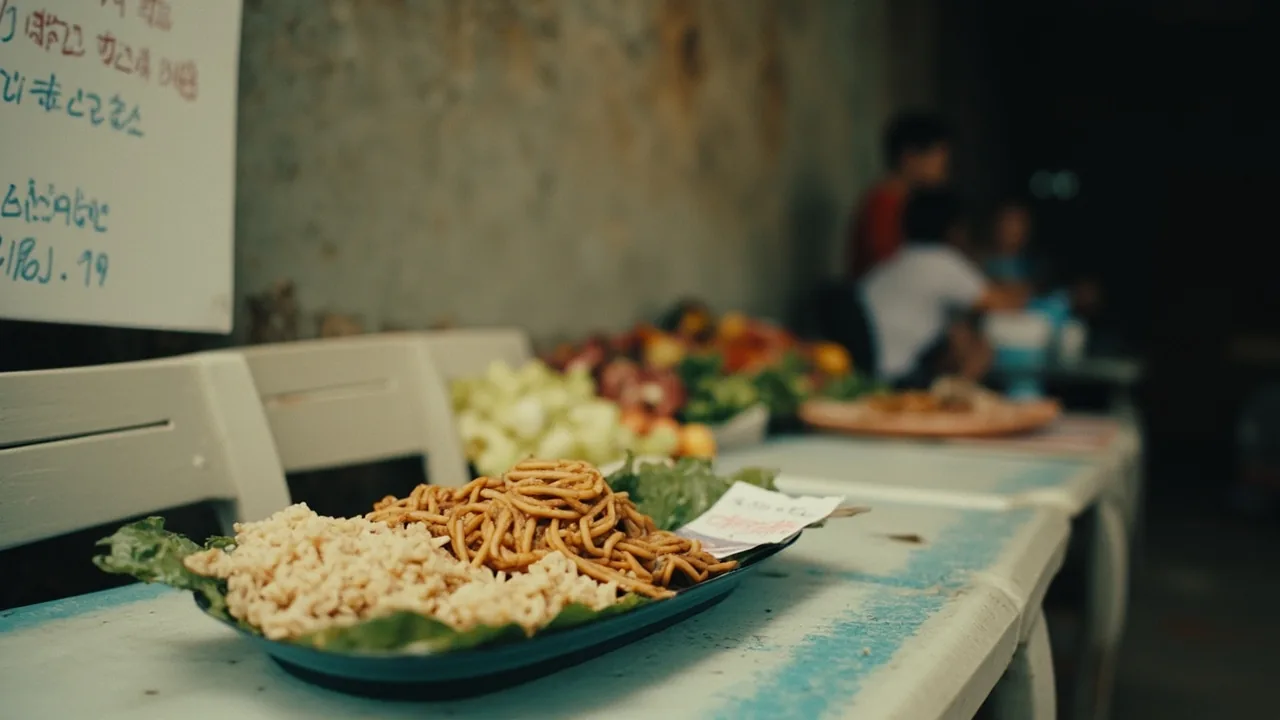
Tummy Trouble in Cambodia? How Common Food Poisoning Is & The Khmer Allergy Card Every Indian Traveler Needs
Wondering about food poisoning in Cambodia how to avoid it? Traveller diarrhea hits between 30 and 70 percent of visitors to Southeast Asia, and Cambodia sits in the higher end. This guide covers the habits, phrases, and printed card that close the gap. For related planning, see our guide on Sea Backpacking Hub.
Subodh’s Pro Tip: The single biggest food-safety upgrade you can make in Cambodia is to drink only sealed bottled water, including for brushing your teeth, and skip ice unless you saw it come out of a clean bag. The second biggest is using the Khmer phrases in this article so a vendor with limited English doesn’t fall back on fish sauce, oyster sauce, or pork stock by default. You may also find Cambodia Street Food Insects useful for this trip.
Quick Answers
| What | Answer | Price (INR) |
|---|---|---|
| How common is food poisoning in Cambodia for visitors? | 30 to 70 percent of travellers experience some form of diarrhoea; most cases clear in 24 to 48 hours | ₹0 |
| What is the #1 cause of traveller diarrhoea here? | Contaminated drinking water (tap, ice from unknown source, salad washed in tap water) | ₹0 |
| What is the most underrated food-poisoning culprit for Indians? | Cross-contamination at high-turnover woks; one shared spoon between a fish dish and your stir-fry | ₹0 |
| Cost of a Khmer allergy translation card printed in Cambodia? | About ₹193 (~2 USD) to ₹482 (~5 USD) at any print shop near Phnom Penh markets | ₹190 (~$1.97) to ₹480 (~2-5 USD or ~8,000 to ~20,000 KHR) |
| Should you still see a doctor if it lasts more than 48 hours? | Yes, head to the nearest Royal Rattanak or International SOS clinic; the visit runs around ₹2,890 (~30 USD) to ₹5,780 (~60 USD) | ₹2,890 (~$30) to ₹5,780 (~30-60 USD or ~120,000 to ~240,000 KHR) |
Cambodia prices use Cambodian riel (KHR) and US dollars (USD). At current rates (1 USD = ₹96.3294, 1 KHR = ₹0.0238), 1 USD ≈ 4,050 KHR, and rounded numbers are normal in markets. See also: Where to Eat Lunch Near Angkor Wat Temples.
Why Cambodia Tummy Trouble Is So Common (And What Your Stomach Faces)
Here’s the part your relative WhatsApp group never believes: the food in Cambodia is mostly fine, the water is the problem, and the in-between is a long stretch of habits built around cooking hot, fast, and fresh. Most cases of traveller diarrhoea in Cambodia come from one of three sources, not “the food.”
Number one is water. Tap water in Phnom Penh, Siem Reap, and Sihanoukville is not safe to drink straight. It’s fine for showers, but drinking it, brushing your teeth with it, or using ice made from it is the single largest risk. This is not unique to Cambodia, but Cambodia is a country where ice often comes from independent roadside plants rather than a traceable municipal supply.
Number two is the wok. Stir-fry is the Cambodian default for breakfast, lunch, and dinner, and a busy stall clears a wok in 90 seconds. The risk is cross-contamination: a vendor cooks a fish dish, the spoon goes back into the sauce bowl, your vegetable stir-fry hits the same pan. The vegetables are safe, the spoon is the problem.
Number three is raw vegetables and leaves. Lettuce, mint, cilantro, and morning glory are routinely washed in tap water. Restaurants in tourist areas usually have a rinse system, but stalls in regional towns don’t.
So when I tell you “Cambodia has a high stomach-bug rate,” I don’t mean the food is sketchy. I mean the basic plumbing isn’t always trustworthy, and Indian stomachs, used to a different microbial baseline, react more strongly to unfamiliar strains of E. Coli and Shigella than locals do. You build up tolerance. Your first week is the danger zone.
Worth noting: of the ~9.5 million international visitors Cambodia received in recent reporting years, more than half arrived in Siem Reap or Phnom Penh, and Phnom Penh alone accounts for the largest share of traveller health complaints because that’s where most people start. You’re not imagining it; you’re just in the place where everyone else’s stomach got tested first.
The Khmer Allergy Card: What It Is, Why Indians Need It, And How To Get One
A “Khmer allergy card” is a wallet-sized, printed card you hand to a vendor or a waiter. It lists your dietary restrictions in both English and Khmer script, with pronunciation next to the Khmer, so the person reading it doesn’t have to guess. For Indian vegetarians, Jains, vegans, and anyone with a dairy or gluten issue, this card replaces a 5-minute conversation in a language you don’t speak.
The reason Indians specifically need one is that “vegetarian” in Cambodia often defaults to “no big chunks of pork or beef, but the broth was made with fish bones.” A vendor who nods along when you say “no meat” may still plate you a dish that started with a spoonful of tuk trei (fish sauce) or prahok (fermented fish paste). The only way to stop this is to show the restrictions, written in Khmer, before the cooking starts.
A good Khmer allergy card for Indian travellers covers:
- Vegetarian, vegan, or Jain
- No meat of any kind, including fish, shrimp, pork, beef, chicken
- No eggs
- No dairy (if applicable)
- No onion and no garlic (if Jain)
- No fish sauce, no oyster sauce, no shrimp paste, no chicken stock
- No peanut (if applicable; peanuts are common in Khmer sauces)
- Please use bottled water and clean oil
You can build one by hand, then take a photo and have it printed at any print shop near Phnom Penh’s Central Market (Psar Thmei) or Siem Reap’s Pub Street area for about ₹193 (~2 USD) to ₹482 (~5 USD). If you’d rather not DIY, traveller-card services like the one run by Select Wisely sell printed allergy translation cards for Cambodia in multiple languages, including Hindi and English-to-Khmer pairs, and ship worldwide. Either path is fine. The point is that the card exists in your wallet before you sit down to your first meal in Phnom Penh.
Key Khmer Phrases: Speak The Language Of No-Fish-Sauce
Print the card, but also learn five phrases. Vendors respond much better when they hear you try, and the card becomes backup rather than the only line of defence.
| English Phrase | What It Means | Local Script | Pronunciation |
|---|---|---|---|
| I am vegetarian | No meat, no fish | ខ្ញុំជាអ្នកញ៉ាំបន្លែ | Khnhom chial neak nham bonle |
| No fish sauce | No tuk trei | គ្មានទឹកត្រី | Kmean tuk trei |
| No shrimp paste | No prahok | គ្មានផ្អក | Kmean prahok |
| No egg | No pong | គ្មានពង | Kmean pong |
| No meat, no seafood, no chicken | All animal products out | គ្មានសាច់ គ្មានគ្រឿងសមុទ្រ គ្មានមាន់ | Kmean sach kmean kroeung samot kmean moan |
| No onion, no garlic (Jain) | Allium-free | គ្មានខ្ទឹមស គ្មានខ្ទឹមបារាំង | Kmean khtuom sa kmean khtuom barang |
| Bottled water only, please | Sealed bottle, no refills | សុំទឹកដបប៉ុណ្ណោះ | Som tuk dop ponhah |
Don’t worry about perfect pronunciation. Get the khmean (no, or គ្មាន) right, because it’s the negation that does the heavy lifting, and let the rest be approximate. Vendors will correct you gently. That’s a feature.
What Causes Indian Tummies To Flip In Cambodia
A few specific ingredients and habits trip Indians up more than other visitors, because the home-cooking default in India makes us overconfident about a few things.
Fish sauce is the silent default. Almost every Cambodian stir-fry, including ones that look fully vegetarian, starts with a splash of tuk trei in the hot wok. A vendor who hears “no meat” will assume the sauce is fine. The phrase kmean tuk trei (no fish sauce) closes that gap.
Prahok is a flavour base. Fermented fish paste shows up in dips, fried rice, and even some soups. It looks like mud. It smells like concentrated umami. If your dish tastes “too savoury” without a clear source, that’s your prahok clue.
Chicken broth is the “vegetable soup” problem. Cambodians often simmer vegetables in chicken stock the way Indians simmer dal. The soup looks vegetarian. The base isn’t. Always ask before you order soup.
Peanut is everywhere. Peanuts are common in sauces and as garnish. Travellers with severe peanut allergies should add a “no peanut” line to the card.
Ice is a coin flip. If the ice is hollow-cylinder, hand-cracked, and sold by a street vendor, it’s usually fine because it’s factory-made. If it’s bag ice from an unknown source at a highway stall, treat it as tap water. The first rule applies: drink bottled water, and tell the vendor “no ice” until you trust the source.
Fruit is safe, but cut fruit on display isn’t. Whole fruit from a market is fine; cut fruit sitting out uncovered for hours picks up dust and flies. Get it sliced in front of you.
The “Phnom Penh Belly Prevention” Routine: What Works
Forget bubble-blowing about “strong stomachs.” There is no genetic trick. Travellers who avoid food poisoning in Cambodia follow a routine, and the routine is the same five moves:
1. Bottled water, including for brushing teeth. Buy by the case at any minimart; a 1.5 L bottle is around ₹36 (~1,500 KHR or ~$0.37). Carry one in your daypack for refills.
2. Eat at stalls with high turnover and visible fire. A busy, smoky stall has turnover that kills most surface bacteria. A quiet stall with lukewarm oil is where trouble sits.
3. Skip raw vegetables unless you washed them yourself. Salads at sit-down restaurants in Phnom Penh are safer than salads at roadside stalls in Battambang.
4. Skip unpasteurised dairy. The sweet Khmer iced coffee with condensed milk is beloved and mostly safe, but a “fresh milk” smoothie at a random café is a gamble.
5. Wash hands or use sanitiser before eating. Sounds obvious, but 70 percent of food-poisoning cases are traceable to hand-to-mouth transfer, not the food itself.
If you start feeling off, the move is oral rehydration salts (ORS), the same sachets sold at every Indian pharmacy, plus a strict rice-and-banana diet for 24 hours. Travellers report that loperamide (Imodium) helps you travel on a bus, but it doesn’t cure the infection and shouldn’t be used for more than 48 hours. If symptoms include blood, persistent fever above 38.5 °C, or severe dehydration, skip the self-treatment and head to a clinic.
Staying Connected For Emergencies
You don’t want to be fumbling with no signal when a clinic address needs Googling at 11 pm. Pick up a local SIM (Smart or Cellcard, both have airport counters) or pre-buy a regional eSIM for Southeast Asia. Get Nomad eSIM is a solid pick if you’d rather not queue at the airport on arrival. Either way, make sure you have data before you leave the airport, because the most useful translation apps and Google Maps work a lot better when they’re online.
Common Food Mistakes Indians Make In Cambodia
Mistake 1: Ordering “vegetable fried rice” and assuming it’s safe. Reality: prahok and fish sauce are stir-fried into the rice by default. Order bai cha (stir-fried) vegetable and add the kmean tuk trei phrase explicitly.
Mistake 2: Trusting “no meat” without specifying seafood. Reality: fish is considered a side flavour, not a meat, in local parlance. Always say “no meat, no seafood, no fish sauce” together. The card helps.
Mistake 3: Drinking the welcome fruit shake. Reality: most fruit shakes are milk-and-ice-based, and the ice may be fine but the milk may not be pasteurised. Say “no milk, no ice” if you want a fruit-water-only version, or pick the bottled or canned juice instead.
Mistake 4: Picking the cleanest-looking hotel buffet over the smoky street stall. Reality: a high-end hotel’s buffet with a steam table that’s been sitting out for two hours can be riskier than a smoky street stall that just cooked your dish to order. Heat and turnover matter more than ambience.
Mistake 5: Taking Imodium at the first rumble and pushing through a temple day. Reality: Imodium is fine for a one-time bus ride, but if the symptoms continue past 12 hours, you’re trapping the bug inside. Switch to ORS and stop solid food for a few hours. Your body is doing its job.
The Indian Restaurants To Fall Back On (When Your Stomach Is Already Angry)
Sometimes your stomach has had enough of the experimental phase, and that’s the moment to switch to an Indian restaurant where you know exactly what’s in the dal and how the rice was washed. The usual pattern in Cambodia is to live on Khmer food for the first two days, then crave a dal-chawal by day three. Plan for that.
- Mekong Authentic Indian Restaurant (pure Indian food, rating 4.9): North Indian curries and tandoori in a casual setting; one of the safer defaults in Phnom Penh.
- Don’s Mumbai Chaat (rating 4.9): Mumbai street-food style snacks and home cooking; travellers report the vada pav lands close to a Mumbai version.
- Indian Royal Halal Food Restaurant-Phnom Penh Riverside (rating 4.8): Punjabi and Mughlai halal dishes; riverside seating, slightly fancier for a family outing.
- MDSK - Best Vegan Masala Dosa & Indian Street Food Phnom Penh (rating 4.7): South Indian vegan dishes including vada pav and masala dosa; minimalist setting and traveller-friendly pricing.
- Vegetarian Foods Restaurant: A simple vegetarian stop with local flavour influences; good for a thali when you want rice-dal-sabzi and done.
- Indian Restaurant (rating 4.9): Plain-curry basics in a no-frills setting.
When your stomach is mid-rebellion, these are the places you want in your saved Google Maps list before you ever need them.
Recommended Khmer Spots To Eat At (When Your Stomach Is Strong)
These local and regional spots earn mention because they cook hot, fresh, and high-turnover, which is also your food-safety friend.
- Smokin’ Pot Authentic Cambodian Restaurant and Cooking School (rating 4.9) in Siem Reap: known for amok and other Khmer staples, and the cooking class teaches you which ingredients you’d usually miss on the menu.
- Cambodia kitchen (rating 4.9): rustic Cambodian dishes cooked to order, useful when you want to see exactly how your stir-fry is built.
- Mongkol (rating 4.7): mix of Asian and Western, traveller-friendly, generally confident in handling “no fish sauce” requests.
- Lok Ov Pok Restaurant (rating 4.9): traditional Cambodian food in a family setting, good for pork-free and seafood-free orders if you talk to the staff.
- Bakan Restaurant & Coffee (rating 5): local spot for Khmer food plus coffee, popular with travellers who want familiar dishes done with care.
- Barracuda Seafood Restaurant (rating 4.9): coastal seafood, useful if you’re in Kep or Kampot for the coast; the cooking style is high-heat and quick.
- Kampot Seafood & Pepper / cooking class (rating 4.6): food and class combo, pepper-forward sauces often dairy- and nut-free if you say so.
- At the beach kitchen (rating 4.8): beachside seafood, fresh catch cooked to order, travellers report strong turnover on weekends.
- M’Pai Bay Restaurant (rating 4.5): bay-view seafood spot, good for sunset, slow turnaround is the only flag for food safety so go earlier in service.
Also worth a look: related Cambodian food and health guides from our archive, including the vegetarian food guide for Cambodia and the what not to eat in Cambodia rundown.
Subodh’s Take
The honest answer to “is food poisoning common in Cambodia?” is “more common than Goa, less scary than it feels.” Most cases are 24 hours of inconvenience, not a hospital trip. Travellers who use bottled water, eat at high-turnover stalls, and carry a printed Khmer allergy card are a different category entirely, and most Indian backpackers I hear from fall into that group. Don’t let the fear stop you from eating Khmer food. The same five habits that keep you safe also open you up to the best meals of the trip.
FAQ
Is Cambodia food safe for Indians? Generally yes, especially if you stick to bottled water, cooked-to-order stir-fries, and busy stalls with visible flame. Most traveller complaints come from water and ice, not the food itself.
What is the Khmer allergy card and do I need one? It’s a printed card listing your dietary restrictions in Khmer and English. If you’re vegetarian, vegan, Jain, or have any allergy, yes, you need one. It replaces a 5-minute conversation in a language you don’t speak, and it’s the difference between “safe plate” and “fish-sauce surprise.”
How long does food poisoning from Cambodia usually last? Most cases run 24 to 48 hours. If it lasts longer, especially with blood in stool or persistent fever, get to a clinic.
Should I take Imodium or antibiotics as a precaution? Don’t pre-dose with either. Carry ORS sachets, drink plenty of bottled water, and consult a doctor if symptoms persist. A clinic can prescribe azithromycin or ciprofloxacin if needed.
Is the ice in drinks safe in Cambodia? Often yes, especially at tourist-area cafés and restaurants that buy hollow-cylinder factory ice. If the ice source is unknown, ask for “no ice” until you’re sure.
Where do I get medical help fast in Phnom Penh or Siem Reap? Phnom Penh has Royal Rattanak Hospital and International SOS; Siem Reap has Royal Angkor International Hospital and the Angkor Hospital for Children (paediatric). Most accept travel insurance direct billing.
