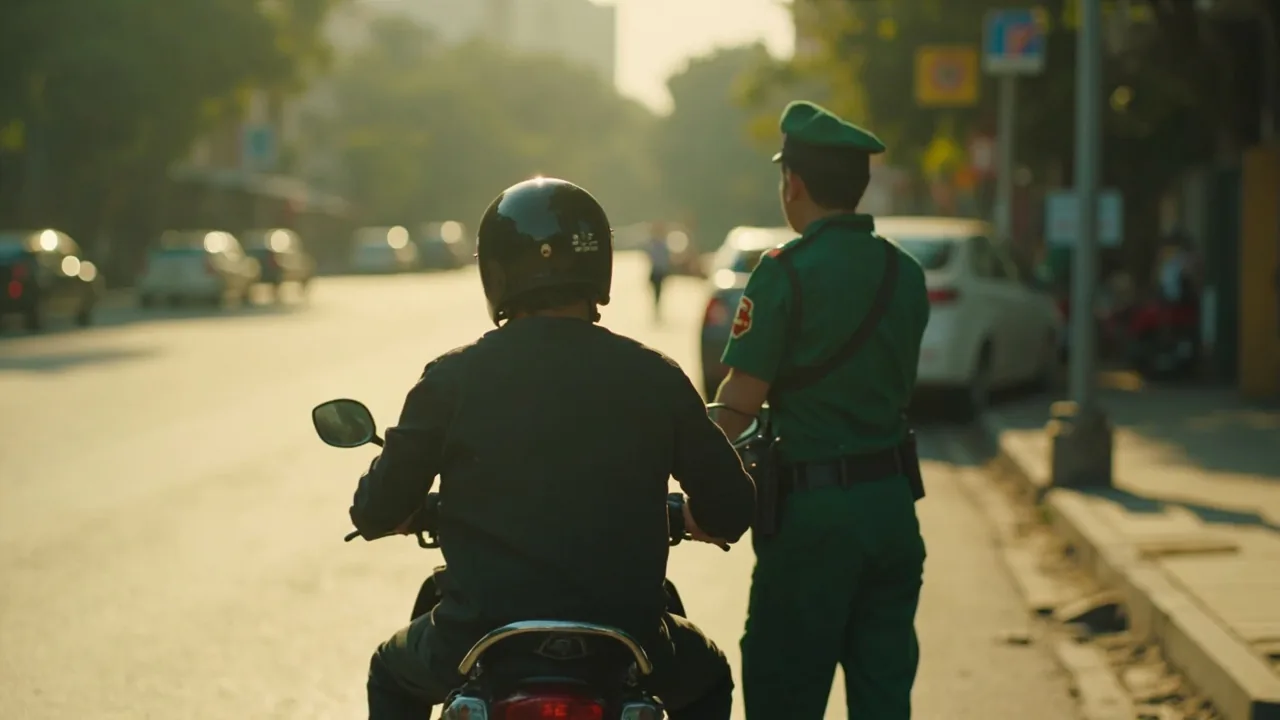
Can You Ride a Motorbike in Vietnam Without a License? Honest Answer
Can I ride a motorbike in Vietnam without a license? Here is the honest answer. This is one of the most googled Vietnam questions for Indian backpackers, and one where what you read on travel forums and what is written in the law can be two different things. For related planning, see our guide on Sea Backpacking Hub.
The short version: technically no, you need a license. In practice, hundreds of thousands of tourists a year ride without one, get pulled over occasionally, pay something, and keep going. Whether that gamble is worth it depends on how much risk you personally can stomach, and what kind of motorbike you are renting. The 50cc exception everyone quotes is real, but it does not cover most of the bikes you will see for rent in Hoi An, Da Nang, or Ho Chi Minh City. More on that in a minute. You may also find Hanoi useful for this trip.
Quick Answers
| What | Answer | Price (INR) |
|---|---|---|
| Is it legal to ride without a license? | No. Vietnam requires a valid Vietnamese license or a properly-converted foreign one for any motorbike over 50cc. | 0 |
| Can I ride on my Indian license alone? | No. India is not in Vietnam’s list of countries whose licenses are accepted without conversion. | 0 |
| What about under-50cc scooters (no license needed)? | Legally, yes, under 50cc you do not need a license. Practically, almost no rental shop stocks bikes that small. | 0 |
| Typical on-the-spot “fine” at a checkpoint | ₹736-₹1,840 (~200,000-500,000 VND or ~$7.63-$19.07), paid cash, no receipt, kept by the officer | 200000-500000 |
| Real official fine (if they write it up) | ₹2,945-₹4,417 (~800,000-1,200,000 VND or ~$30.51-$45.76), plus bike impound | 800000-1200000 |
| Will rental shops ask for a license? | Almost never. Cash + passport copy or deposit is the standard. | 0 |
Subodh’s Pro Tip: The 50cc exception is real Vietnamese law, not a tourist myth. If you genuinely ride a sub-50cc moped, you cannot be fined for riding without a license. The catch is finding one to rent, which we cover below. See also: Vietnam Motorbike License Guide for Indians.
The Law vs The Road: Two Different Things
Vietnamese traffic law (specifically Law on Road Traffic 2008, amended) is fairly clear on this: For related planning, see our guide on International Driving Permit Vietnam Indian License.
- You need a Vietnamese motorbike license to ride any two-wheeler with an engine displacement above 50cc.
- For 50cc and below, no license is required. The bike does not even need to be registered.
- Foreigners staying in Vietnam for more than three months must convert their home license to a Vietnamese one. Under three months, you can ride on an International Driving Permit (IDP), but only if your home country has a reciprocal agreement with Vietnam.
- India is not on that reciprocal list. Your Indian license, with or without an IDP, is not recognized for riding a motorbike in Vietnam. You may also find Hidden Gems in Vang Vieng Spots Most Travelers Miss useful for this trip.
So if you ride a real motorbike (anything from a 110cc Honda Wave to a 150cc scooter, which is the standard rental fleet), you are breaking the law. Period.
What happens on the road is more specific, and this is where traveller reports diverge from legal text.
What Happens at Police Checkpoints
Travellers report (and this lines up with every report I have cross-checked from the Hoi An, Da Nang, Nha Trang, and Ho Chi Minh City corridors in 2025-2026):
Scenario 1: You have nothing, the officer is in a mood. The officer asks for your license. You don’t have one. They quote a fine somewhere between ₹736 (~$7.62) and ₹4,417 (~200,000-1,200,000 VND or ~$7.63-$45.76). If you push back or don’t have cash, they may impound the bike. Bike impound fees add another ₹1,840-₹5,522 (~500,000-1,500,000 VND or ~$19.07-$57.20) and you usually cannot get the bike back same-day. Your passport can also be held temporarily until the fine is paid. This is the worst case but it is real, especially during big holidays like Tet or Reunification Day when police run stricter checkpoints.
Scenario 2: You have nothing, the officer is not in a mood. The officer asks for your license. You play dumb (polite, depending on your style). They ask for ₹736-₹1,840 (~200,000-500,000 VND or ~$7.63-$19.07) “on the spot.” You pay, they wave you on. No receipt, no paper trail, the money goes in their pocket. This is by far the most common outcome for tourists.
Scenario 3: You have an IDP from India. This is where travellers get confused. You CAN get an IDP from the Automobile Association in India (for a fee of around ₹1,000 (~$10.36) through the regional transport authority process), and it looks like an international permit. But Vietnamese police, especially the tourist-corridor traffic police, generally do not recognize Indian IDPs as valid for motorbikes, because India and Vietnam have no reciprocal agreement. In practice, an Indian IDP does not protect you at a checkpoint.
Scenario 4: You have a Vietnamese license. You show it, you get waved through. Simple. The only legal way out.
The 50cc Exception (And Why It Almost Doesn’t Matter)
Here is the part competitors skip, and where this article tries to help.
Vietnamese law treats sub-50cc two-wheelers more like bicycles than motorbikes. No license, no registration, no helmet legally required (though still wear one). If you rented a genuine 50cc moped, you would be legal to ride with no paperwork at all.
The problem: the Vietnamese rental market is geared toward 110cc to 150cc bikes because that is what locals ride and what the scooter manufacturers (Honda, Yamaha, SYM) sell into the country. Genuine sub-50cc options exist, but they are niche:
- Honda Super Cub 50: real 50cc bike, rare in Vietnamese rental fleets. Tourist towns sometimes have one or two.
- Electric scooters under 50cc equivalent: these are increasingly available in Da Nang, Hoi An, and parts of HCMC. They sit in a legal grey zone (technically governed by different rules than combustion 50cc), but on the street they are treated like bicycles and not flagged at checkpoints.
- The “50cc” scooters at rental shops: read the spec sheet. Many shops advertise “automatic scooters” or “50cc” but hand you a 110cc or 125cc Honda Vision. That is the most common scam-by-default in the rental market. You think you are legal because the sticker says 50cc, but the engine is bigger.
If finding a sub-50cc option is important to you, ask the rental shop to show you the registration document (giay dang ky xe) before paying. The displacement is printed there.
Insurance: The Part Nobody Reads
This is the real risk, not the fine.
Vietnam’s mandatory motorbike insurance (baohiem) is third-party only and does not cover the rider. Most rental shops offer optional damage waiver for ₹184-₹368 (~50,000-100,000 VND or ~$1.91-$3.81) per day, which covers the bike, not you.
Your travel insurance is where this gets nasty. Most Indian travel insurance policies (and most Western policies too) exclude cover if you were riding without a valid local license. SafetyWing’s nomad insurance, which is what I usually recommend to travellers, has this exclusion written in. So does every policy I have ever read carefully.
What this means concretely:
- You crash, you break your leg. Hospital bills in Vietnam for a serious fracture can hit ₹184,050-₹552,150 (~50,000,000-150,000,000 VND or ~$1,906.68-$5,720.05). You pay out of pocket.
- You crash into a local pedestrian or another bike. The third-party claim goes to the bike’s mandatory insurance, which is capped at ₹552,150 (~150,000,000 VND or ~$5,720.05). Anything above that, you pay.
- You crash, you damage the rental bike. The shop’s damage waiver (if you bought it) covers the bike. Without it, you pay full repair or replacement cost.
If you are riding without a license in Vietnam, you are riding uninsured. That is the bigger risk than the ₹1,840 (~500,000 VND or ~$19.07) bribe.
Do Rental Shops Care?
Almost universally, no. The standard rental process anywhere from Hanoi to Phu Quoc:
- Show your passport (they photocopy it)
- Leave a cash deposit (usually ₹7,362-₹18,405 (~2,000,000-5,000,000 VND or ~$76.27-$190.67), or your passport as deposit)
- Sign a one-page rental agreement that is mostly in Vietnamese
- Pay ₹368-₹736 (~100,000-200,000 VND or ~$3.81-$7.63) per day for a 110-125cc automatic scooter, or ₹552-₹920 (~150,000-250,000 VND or ~$5.72-$9.53) per day for a semi-automatic 125-150cc
- They hand you a helmet, sometimes two if you ask
They will not ask for a license. They will not ask for an IDP. They will not ask if you have ever ridden a motorbike before. The bikes are not insured in any meaningful way beyond the shop’s damage waiver, so from their perspective, your license status is irrelevant.
Some shops in Hoi An have started asking after a few high-profile accidents involving tourists (mostly Western, a few Korean). A few will refuse Indian or Chinese passport holders specifically, but this is rare and a red flag about the shop’s own practices, not about you.
The Honest Risk Math
If you ride without a license for a typical two-week Vietnam trip:
- Probability of being stopped at a checkpoint: moderate, especially in Hoi An, Da Nang, Nha Trang, and around Ho Chi Minh City District 1. Lower in Hanoi (more locals on bikes, tourists blend in) and rural areas (almost no checkpoints).
- Probability of being asked for a bribe vs formal fine: bribes are more common, formal fines are rare but happen, especially during holiday weeks.
- Total expected “cost” of riding without a license across a two-week trip: ₹736-₹1,840 (~200,000-500,000 VND or ~$7.63-$19.07) if you get stopped once, 0 if you don’t.
- Expected cost if you have a serious accident without insurance: ₹184,050-₹736,200 (~50,000,000-200,000,000 VND or ~$1,906.68-$7,626.73), or worse.
The math is obvious. The fine is annoying. The accident is the part that ruins trips and lives.
Safety Alert: Before you ride in Vietnam, check the Indian Ministry of External Affairs travel advisory at mea.gov.in for any current road-safety notices specific to motorbike travel. Conditions and enforcement change; this article is dated and your decision should be based on the latest advisory.
What Indian Travelers Do
Based on what travellers report from the Hanoi to HCMC corridor in 2026:
- The “convert my license properly” group: small but growing. You go to the Indian RTO, get a fresh license (apostille the existing one), then apply for a Vietnamese license conversion through a licensed agent. Result: fully legal, fully insured. This is the right answer but it requires planning before you fly.
- The “IDP and hope” group: gets an IDP from AA India before flying. Gets stopped occasionally, sometimes the IDP helps, sometimes it doesn’t. The fact that India is not on Vietnam’s reciprocal list means the IDP’s value is mostly psychological, both for you and for the officer.
- The “no license, no plan” group: the majority. Rents a bike, rides, accepts the ₹736-₹1,840 (~200,000-500,000 VND or ~$7.63-$19.07) hit if they get stopped. Buys the rental shop’s damage waiver. Skips personal medical cover. This works most of the time. It does not work the day it doesn’t.
- The “no motorbike at all” group: rides Grab bikes (motorbike taxis) for short trips, takes buses and trains between cities. Zero risk, zero fun, zero cost beyond the fare.
How to Get Your Vietnamese License (The Legal Route)
If you are coming from India and want to do this properly:
Step 1: Before leaving India, get a fresh Indian driving license with motorbike category marked. If your current one says “MCWG” or “MCWOG” you are fine. If it says only “LMV” you are not, and you need to add the motorbike category first.
Step 2: Get the license apostilled by the Ministry of External Affairs. Cost is small, processing is 7 to 15 days.
Step 3: In Vietnam, take the apostilled license, passport, and visa to a licensed driving school. The two main options for English-speaking tourists are:
- Licensed driving schools in HCMC (English-speaking, foreigner-friendly)
- Licensed driving schools in Hanoi
Step 4: Take a short theory test (50 questions, 30-minutes, available in English) and a practical riding test on a small circuit. Practical test is genuinely easy if you can balance a scooter and turn left.
Step 5: Receive a Vietnamese motorbike license card, valid 10 years, recognized everywhere.
Total time in Vietnam: 3 to 5 days. Total cost: ₹14,724-₹22,086 (~4,000,000-6,000,000 VND or ~$152.53-$228.80) including the school, test, and license card. This is cheaper than a single serious checkpoint fine and means you are properly insured for the rest of your trip.
Getting Connected (SIM and eSIM)
Your phone is also your map, your Grab app, your translator, and your emergency contact. Get connected on day one.
The cheapest option is a tourist SIM from Viettel or Mobifone, both sold at the airport kiosks in Hanoi, Da Nang, and HCMC for 130,000 VND. That gets you around 6GB of data for 14 days, which is enough for two weeks of motorbike GPS, Grab, and translation. You can also buy at any Viettel/Mobifone shop in the city with the same price.
If you want to land connected without hunting for a kiosk, an eSIM works before you even take off. Several eSIM providers cover Vietnam on the major local networks, activate by QR code, and are a good fallback if your flight lands late and the airport SIM counter is closed. Compare current options on your provider’s site before you fly.
Subodh’s Pro Tip: Keep your Vietnamese SIM active even when you cross into Cambodia, Laos, or Thailand. Most Viettel and Mobifone tourist SIMs include cheap regional roaming for a small daily add-on, far cheaper than buying a new SIM at every border.
Where to Stay
You are not going to be in one city for this article. You are on the road, and the hostel districts in HCMC, Hoi An, Hanoi, and Da Nang are where most riders base themselves, in the cities where checkpoints are most common. Booking platforms like Hostelworld and Booking.com list the current top-rated hostels in each of those areas with up-to-date prices and motorbike parking availability.
Common Mistakes Indian Backpackers Make on Vietnamese Roads
Mistake 1: Trusting the “50cc” sticker. Most scooters advertised as 50cc in Vietnam are 110cc or 125cc. Read the engine number on the bike or the registration card before you ride. If you genuinely want to be license-free, you need a real sub-50cc bike, which means an electric scooter or a rare Honda Super Cub.
Mistake 2: Riding on the highway without experience. National Route 1 (the main north-south highway) has speed limits up to 90 km/h and truck traffic that does not forgive mistakes. If you have never been on a motorbike before, do your first 200 km on back roads between Hoi An and Hue, not on the highway.
Mistake 3: Assuming one bribe covers all checkpoints. Each checkpoint has different officers. Paying ₹1,104 (~300,000 VND or ~$11.44) at one does not mean the next one will let you through.
Mistake 4: Buying the rental shop’s cheapest “insurance.” It covers the bike. It does not cover you. Your Indian travel insurance almost excludes unlicensed riding. Read the policy.
Mistake 5: Riding at night in the rain without waterproof gear. Vietnamese rain is short and intense. Roads become slippery, visibility drops, and the truck drivers do not slow down. If it starts raining, pull over for 20 minutes.
FAQ
Is it illegal to ride a motorbike in Vietnam without a license as a tourist?
Yes. Vietnamese traffic law requires a valid Vietnamese license, an IDP from a country with a reciprocal agreement, or a properly-converted foreign license. India is not on the reciprocal list, so an Indian license (with or without IDP) is not accepted.
Can I ride a 50cc scooter in Vietnam without a license?
Legally, yes. Vietnamese law treats any two-wheeler under 50cc as not requiring a license or registration. The challenge is finding one to rent, since most shops only stock 110cc and above. Look for electric scooters or specifically ask for a Honda Super Cub 50.
What happens if I get caught riding without a license in Vietnam?
Usually, the officer asks for a cash payment of ₹736-₹1,840 (~200,000-500,000 VND or ~$7.63-$19.07) and lets you go. Less commonly, they write up the official fine of ₹2,945-₹4,417 (~800,000-1,200,000 VND or ~$30.51-$45.76), and in the worst case (especially during Tet) they impound the bike at a cost of ₹1,840-₹5,522 (~500,000-1,500,000 VND or ~$19.07-$57.20).
Do I need an International Driving Permit for Vietnam?
You need one if your home country is on Vietnam’s reciprocal list. India is not. So an IDP from AA India will not be recognized, although some officers will accept it, and it is worth carrying for the rare cooperative checkpoint.
Will my Indian travel insurance cover me if I ride without a license?
Almost no. Most Indian policies, and most international nomad policies including SafetyWing, explicitly exclude accidents that occur while riding without a valid local license. Read your policy document carefully, specifically the section on exclusions for “operating a vehicle without proper licensing.”
Should I convert my Indian license to a Vietnamese one?
If you are riding for more than a week, yes. The conversion costs 4,000,000-6,000,000 VND and takes 3 to 5 days in Vietnam through a licensed driving school. It makes you fully legal, fully insurable, and removes the constant low-grade anxiety of every checkpoint.
What is the safest way to travel Vietnam without a motorbike license?
Grab bikes (motorbike taxis booked through the app) for short trips, sleeper buses for long distances, and trains (the Reunification Express between Hanoi and HCMC is one of the great rail journeys) for the cross-country stretch. You will miss the open-road freedom, but you will not miss the 2 a.m. Police checkpoint outside Da Nang.
Subodh’s Take
The honest answer is that thousands of Indian backpackers ride without a license every year and most of them are fine. The fine math works out to about ₹736 (~200,000 VND or ~$7.63) per checkpoint, which is the price of two banh mi. The insurance math is the part that keeps me up at night, and the part nobody talks about on Facebook groups. If you ride without a license and you crash without insurance, your family is paying 50 to 200 lakh INR out of pocket. That is not a vacation risk, that is a life-plan risk. Do what you want, but do it with your eyes open about which part of the math matters.
