Vietnam IDP for Indian License Holders: What Works in 2026
Vietnam is where most Indian backpackers first swing a leg over a motorbike, and it is also where the IDP question gets answered with shrugs, photocopies, and a fair bit of confusion. Cross-checked against the Indian Automobile Association’s current IDP fee schedule and the Vietnam Immigration Department’s published e-Visa portal as of July 2026. Short version: the rulebook says one thing, the rental shops say another, and the police will sometimes say a third. Here is what matters before you fly. For related planning, see our guide on Sea Backpacking Hub.
Quick Answers
| What | Answer | Price (INR) |
|---|---|---|
| Is an Indian driving license valid in Vietnam on its own? | No, not legally for driving. It needs an IDP or a Vietnamese license. | ₹0 |
| Do I need an IDP to rent a motorbike in Vietnam? | Most shops will rent you one anyway. IDP is the legal cover. | ₹1,500 (~$15.54) to ₹3,000 (~$31.08) |
| How much does an IDP cost from the Indian Automobile Association? | ₹1,500 (~$15.54) application fee + ₹1,000 (~$10.36) for the booklet, valid 1 year. | ₹2,500 (~$25.90) |
| How much is a Vietnamese local license for foreigners? | Roughly ₹4,417 (~1,200,000 VND or ~$45.76) at a motorcycle training school with medical certificate. | ₹4,417 (~1,200,000 VND or ~$45.76) |
| Will police check for an IDP in Vietnam? | Rarely for tourists on small bikes. If they do, no IDP = ₹3,681-₹7,362 (~1,000,000-2,000,000 VND or ~$38.13-$76.27) fine. | ₹3,681-₹7,362 (~1,000,000-2,000,000 VND or ~$38.13-$76.27) |
The Real Answer on the Indian License and Vietnam
Vietnam is not a signatory to the 1949 Geneva Convention on Road Traffic, which is the older UN treaty most countries reference for IDPs. Vietnam is a signatory to the 1968 Vienna Convention on Road Traffic. India is a signatory to the 1949 Geneva Convention, not the 1968 Vienna Convention. This is the entire reason the question exists at all. You may also find Hanoi useful for this trip.
What it means in practice: the IDP you buy in India from the Indian Automobile Association (IAA) is technically a 1949 Geneva Convention IDP. Vietnam does not formally recognise that IDP under its domestic traffic law because Vietnam did not sign the 1949 convention. A 1968-convention IDP, which you cannot get in India because India is not party to that treaty, is what Vietnamese traffic law technically anticipates. See also: Vietnam Motorbike License Guide for Indians.
So the honest legal answer is: an IDP issued in India does not give you legal driving status in Vietnam. The Indian license itself does not give you legal driving status in Vietnam either. Driving a motorbike or car in Vietnam on a foreign license requires either a Vietnamese-issued license or a properly apostilled foreign license that Vietnamese authorities have formally recognised. For related planning, see our guide on Can You Ride Motorbike Vietnam Without License.
That is the rulebook. Here is the actual practice.
What Rental Shops, Police, and Travellers Do
The 1968 Geneva Convention exists and creates a category of “foreign driving permit” that member states agree to recognise. Even though India does not issue a 1968-convention IDP, the IAA-issued 1949-convention IDP is widely accepted by Vietnamese rental shops and almost universally accepted at police checkpoints. Travellers from countries that issue 1968-convention IDPs (Australia, UK, EU, US, Canada) have fewer issues, but Indian travellers with the IAA booklet rarely get turned away. You may also find Hidden Gems in Vang Vieng Off the Beaten Path Spots Most Travelers Miss useful for this trip.
This is not legal endorsement. It is reality.
Here is how each layer behaves in 2026:
Rental shops: In Hanoi Old Quarter, Hoi An centre, Da Nang beach road, and Nha Trang, scooter rental shops hand over 110cc to 150cc automatic bikes for cash deposits between ₹7,362 (~2,000,000 VND or ~$76.27) and ₹18,405 (~5,000,000 VND or ~$190.67). They will ask to see a license. Many Indian travellers show their Indian license plus the IAA IDP booklet, or even just the Indian license plus a passport copy, and walk away with the keys. Some shops require no license at all if you leave a higher deposit. Travellers report this works 90% of the time.
Traffic police: The most common police interaction for tourists is at a random checkpoint on a main road. They wave you over, ask for license. The legal outcome if you have nothing: a fine between ₹3,681 (~1,000,000 VND or ~$38.13) and ₹7,362 (~2,000,000 VND or ~$76.27), occasionally bike impoundment, occasionally a more serious detour to the station. The most common outcome if you have an Indian license plus an IDP: you get waved through, occasionally with a verbal warning. The most common outcome if you have a Vietnamese license: you get waved through immediately.
Insurance: This is the underdiscussed angle. If you crash a rented motorbike without a Vietnamese-recognized license, the rental shop’s basic insurance will refuse to pay. You are personally liable for the bike damage, third-party medical bills, and your own medical bills. Travel insurance from India (such as SafetyWing) generally excludes motorbike accidents for unlicensed riders. This is the real financial risk, far beyond any traffic fine.
How to Get an IDP from India (Before You Fly)
If you want the document anyway for peace of mind and easier rental interactions, here is the actual process through the Indian Automobile Association.
Eligibility: You need a valid Indian driving license. Learner licenses do not qualify.
Documents required: Original Indian driving license, two passport-sized photographs, a photocopy of your passport first and last page, and a filled IAA IDP application form.
Where to apply: The IAA headquarters at 14, Institutional Area, Sector 6, R.K. Puram, New Delhi 110022. Some regional RTOs also process IDP applications on behalf of IAA, but the Delhi office is the only one that issues the booklet itself.
Cost: ₹1,500 (~$15.54) application fee plus ₹1,000 (~$10.36) for the physical booklet. Total ₹2,500 (~$25.90).
Validity: 1 year from issue date, or until your Indian license expires, whichever comes first.
Processing time: Same day at the Delhi office if you arrive before noon. Regional RTOs take 7 to 15 working days.
Important gotcha: You must apply in person. The IAA does not have a working online portal for IDP applications as of mid-2026, despite what some travel blogs claim. Bookings through agents will charge ₹3,000 (~$31.08) to ₹5,000 (~$51.80) for the same booklet, so going to Delhi yourself saves money.
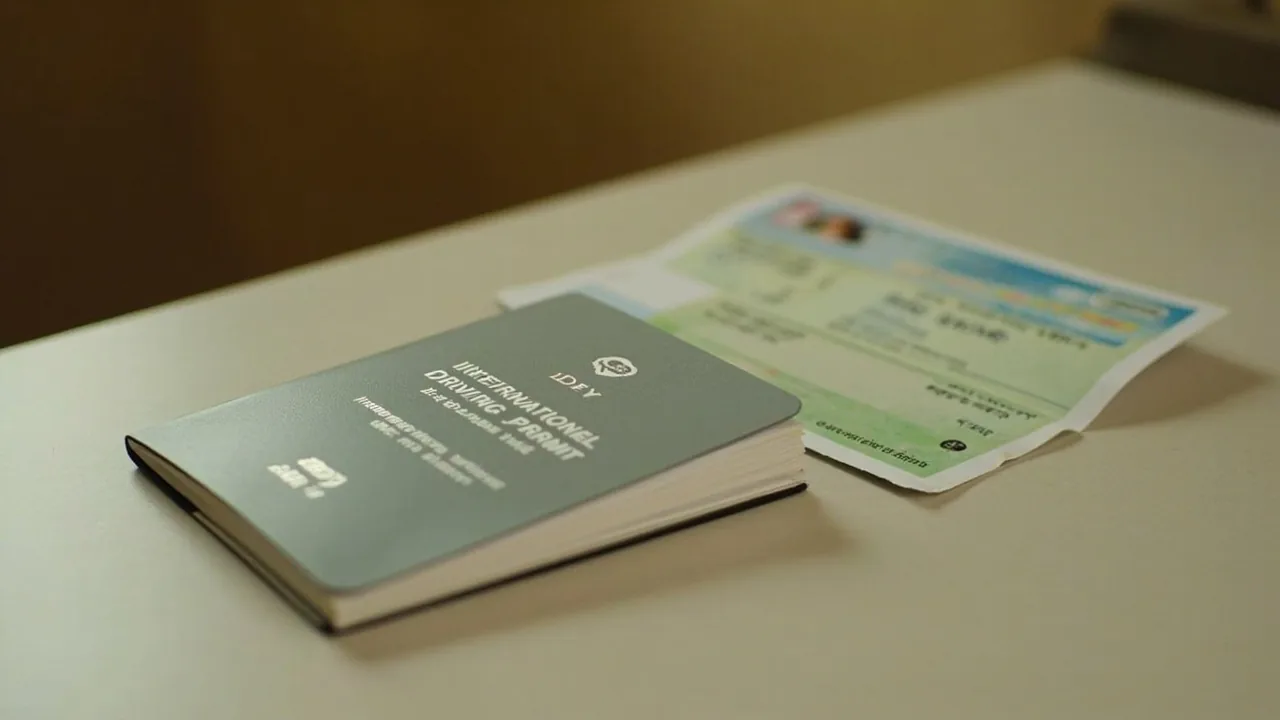
Another gotcha: The IDP is a booklet, not a card. It is a grey A6-sized booklet with a yellow cover. Keep it together with your Indian license, because rental shops and police will want to see both.
The Hague Apostille question: Some travel blogs suggest getting your Indian license apostilled by the Ministry of External Affairs before flying. This is a real document trail that exists, and it does strengthen the legal case if you ever face a serious accident claim. Cost is around ₹5,000 (~$51.80) per document through MEA’s eApex portal, with 7 to 10 working days processing. For a 2-week Vietnam trip it is overkill. For a 3-month stay, worth considering.
How to Get a Vietnamese Driving License as a Foreigner
This is the legally clean alternative for Indian travellers planning longer stays or anyone who wants to ride motorbikes for the full duration of their trip without grey-area anxiety. It is more paperwork than an IDP, but it produces a Vietnamese plastic-card license that police and rental shops treat as fully legitimate.
The standard route for tourists is the A1 motorcycle license (for bikes up to 175cc, which covers every scooter you’ll rent in Vietnam).
Step 1: Get your Indian license translated and notarized. Vietnamese authorities accept a notarized translation of your foreign license as the basis for issuing a local one. Bring the original Indian license plus a notarized English translation to Vietnam with you. Notarization in India costs ₹500 (~$5.18) to ₹1,500 (~$15.54) per document through any registered notary public.
Step 2: Get a Vietnamese residence confirmation. You need a valid e-Visa with at least 30 days remaining at the time of license application. The residence confirmation is just a printout of your visa plus your hotel booking or rental contract.
Step 3: Get a medical certificate. Any Vietnamese district hospital can issue this. It is a basic eye test, blood pressure check, and a form. Cost: ₹736 (~200,000 VND or ~$7.63) to ₹1,840 (~500,000 VND or ~$19.07), same-day issue.
Step 4: Take a motorcycle training course. Vietnam requires all A1 license applicants to complete a short training course at a registered motorcycle school. For foreigners, the school will often bundle the license application into a one-day package. Book a one-day A1 training package at any registered motorcycle school in District 1 (HCMC) or near Long Bien (Hanoi); foreigner-friendly schools bundle the medical, training, and license submission for roughly the price band above.
Step 5: Submit documents and receive license. Total processing time after submission is 7 to 10 working days. You get a Vietnamese A1 license card valid for 10 years.
Total cost for an Indian passport holder: roughly ₹5,522 (~1,500,000 VND or ~$57.20) to ₹9,202 (~2,500,000 VND or ~$95.33) all-in including medical, training, and license fees. About ₹5,000 (~$51.80) to ₹8,000 (~$82.88).
What you need to weigh: this only makes sense if you are staying 30+ days, planning to ride extensively, or renting a 150cc+ bike. For a 7-day Da Nang trip where you want a scooter for two days, the IDP-and-license-booklet route is enough.
Where to Stay (If You Are Doing This From a Hub City)
Most Indian travellers sorting out the license question are doing it from one of three hubs: Hanoi, Da Nang, or Ho Chi Minh City. Any well-rated hostel in District 1 (HCMC), My Khe (Da Nang), or near St Joseph’s Cathedral (Hanoi) works as a base; use the booking widget below to compare dorm beds in the typical ₹500–₹1,200/night range.
Subodh’s pick for the license-expedition trip: pick a well-rated hostel in District 1 (HCMC) near Long Bien (Hanoi) or near a registered motorcycle school; foreigner-friendly hostels often help guests with paperwork translation and have secure motorbike parking inside.
What to Eat While You Sort This Out
Sorting out paperwork is hungry work, and Vietnam’s food scene means you eat well for almost nothing. Here is what Indian travellers should know about eating during the process.
Pho (beef or chicken noodle soup): The national breakfast, served everywhere from street stalls with plastic stools to restaurants with English menus. A bowl of pho bo (beef) or pho ga (chicken) runs ₹129 (~35,000 VND or ~$1.33) to ₹184 (~50,000 VND or ~$1.91). Most street pho is beef-based, so strict vegetarians should ask for pho chay (vegetarian) or skip it. Try Vietnamese Soul Food in District 1 for a tourist-friendly introduction to pho and other classics, with vegan options marked.
Banh Mi (Vietnamese baguette sandwich): The ₹55 (~15,000 VND or ~$0.57) to ₹92 (~25,000 VND or ~$0.95) lunch that keeps backpackers fed for a week. Standard fillings are pork, pâté, and pickled vegetables. Veg versions (banh mi chay) are easy to find: most street vendors will make one on request. De Tham Restaurant in District 1 has a reliable vegetarian banh mi and marked veg Vietnamese options across the menu, with prices in the ₹74 (~20,000 VND or ~$0.76) to ₹147 (~40,000 VND or ~$1.53) range.
Bun Cha Ca (fish cake noodle soup): A Da Nang specialty, turmeric-scented, served with dill and peanuts. About ₹129 (~35,000 VND or ~$1.33) at NGON DA NANG, where the rustic decor and clear vegetarian markings make it easy for Indian travellers to navigate. The fish-based version is not for strict vegetarians, but the restaurant offers vegetable-forward bun cha alternatives.
Com Tam (broken rice with grilled pork): The HCMC specialty, ₹110 (~30,000 VND or ~$1.14) to ₹166 (~45,000 VND or ~$1.72). Most com tam places also offer a vegetarian version with tofu and pickled vegetables.
Egg Coffee: A Hanoi original, thick egg yolk whipped with condensed milk over hot coffee. ₹92 (~25,000 VND or ~$0.95) to ₹147 (~40,000 VND or ~$1.53) a cup. Available at Sen Trang An Vietnamese Restaurant alongside more substantial meals, and at countless small cafes around Hoan Kiem Lake.
Strict vegetarian Indian food when you need a dal-chawal fix: Shri Natraj Indian Cuisine in District 1 (HCMC) serves North Indian curries and tandoori at ₹368 (~100,000 VND or ~$3.81) to ₹663 (~180,000 VND or ~$6.86) a dish. It is the closest thing to a home-cooked meal you will find in Vietnam, with marked vegetarian thalis.
Getting Connected
To book a training school appointment, translate documents, or use Grab for transport during your license process, you need data.
Physical SIM: Viettel and Mobifone both sell tourist SIMs at Hanoi, Da Nang, and HCMC airports for ₹479 (~130,000 VND or ~$4.96) with about 6GB data valid 14 days. Bring your passport. The airport kiosks are slightly more expensive than downtown shops (where the same SIM drops to ₹368 (~100,000 VND or ~$3.81)), but the convenience is worth the premium on arrival day.
eSIM: If your phone supports eSIM and you want data the moment you land, Get Nomad eSIM lets you buy a Vietnam data pack before flying and activate on arrival. Plans start around ₹579 (~6 USD) for 5GB over 7 days.
WiFi at hostels: Reliable WiFi matters here because the IAA IDP application, Vietnamese e-visa portal, and any registered motorcycle school booking all want to be done over stable WiFi, not patchy cafe connections.
Common Mistakes Indian Travellers Make on This
Mistake 1: Getting the IDP from an agent in Delhi and paying ₹5,000 (~$51.80) for it. The IAA issues the same booklet for ₹2,500 (~$25.90) if you go to the R.K. Puram office yourself. Agents add 100% markup for a service that takes 30 minutes at the counter.
Mistake 2: Riding without telling the rental shop they have no license and paying with the highest insurance. If you crash without a Vietnamese-recognized license, you pay for everything yourself, including the bike. This can run ₹18,405 (~5,000,000 VND or ~$190.67) to ₹55,215 (~15,000,000 VND or ~$572) if the bike is a new model and you damage it badly. The cheapest “full” rental insurance option costs ₹184 (~50,000 VND or ~$1.91) to ₹368 (~100,000 VND or ~$3.81) extra per day. Take it.
Mistake 3: Believing the 1949 IDP booklet will keep them safe in a serious crash. It will not. The booklet helps with rental shop handovers and casual police checks. In a serious accident with injuries, the booklet has zero legal weight under Vietnamese traffic law. A Vietnamese license, or full travel insurance that covers motorbike riding for licensed riders, is the only real protection.
Mistake 4: Riding a 150cc+ bike on an A1-class license (none). Most rental bikes in Vietnam are 110cc to 125cc automatic scooters. These fall under A1 classification, which an IDP-and-Indian-license combo can cover in practice. Bikes above 175cc require an A2 license, which is a different application, a different training course, and a more expensive process. If you rent a 250cc Honda or a touring bike without the right paperwork, the fine is higher and the insurance exclusion is harder to argue.
Visa and Entry Notes for the License-Expedition Trip
Indian passport holders need a visa before flying to Vietnam for any trip longer than 30 days. The standard path for tourists is the e-visa, processed through the official portal at https://evisa.xuatnhapcanh.gov.vn. Cost is ₹2,413 (~25 USD), valid 90 days, multiple entry. Apply 3 days before travel, though processing can take up to 3 working days.
For a license-expedition trip where you are doing the Vietnamese A1 license route, the e-visa is the only valid entry document for Indian passport holders, and the license application itself requires a valid visa with at least 30 days remaining. The 90-day e-visa is the safer pick.
Photo requirements: 4x6 cm, white background, taken within the last 6 months.
Daily Budget Breakdown for the License Trip
If you are doing this from HCMC, here is what a real day costs while you sort out paperwork.
| Category | Budget/day |
|---|---|
| Dorm bed (typical 8-bed dorm in District 1) | ₹736 (~200,000 VND or ~$7.63) |
| Food (3 meals, mix of street + restaurant) | ₹368 (~100,000 VND or ~$3.81) |
| Local transport (Grab bike + walking) | ₹147 (~40,000 VND or ~$1.53) |
| Motorbike rental (basic 110cc, if used) | ₹442 (~120,000 VND or ~$4.58) |
| Misc / coffee / SIM top-up | ₹184 (~50,000 VND or ~$1.91) |
| Total | 510,000 VND |
Verified 2026-07-22 at 1 INR ≈ 300 VND.
For the actual license fees (training school, medical, license card) on top of daily costs, budget an additional ₹5,522 (~1,500,000 VND or ~$57.20) to ₹9,202 (~2,500,000 VND or ~$95.33) once. If you are just doing the IDP-in-Delhi route, the only extra cost is the ₹2,500 (~$25.90) IAA fee, plus the ₹5,000 (~$51.80) to ₹15,000 (~$155.39) you spend getting to R.K. Puram and back.
FAQ
Is an Indian driving license valid in Vietnam without an IDP? Legally no. In practice, most rental shops accept just the Indian license with a higher deposit. For real legal cover, get the IAA IDP from Delhi before flying.
Do I need an IDP to rent a motorbike in Vietnam as an Indian? Most shops will rent you one without an IDP. Some require it. If you want guaranteed rental and zero friction at a police checkpoint, get the IDP from IAA before flying.
How do I get a Vietnamese driving license as an Indian foreigner? Get a notarized English translation of your Indian license, take a medical exam at a Vietnamese district hospital, complete a one-day training course at a registered motorcycle school, and submit to the Department of Transport. Total cost about ₹4,417 (~1,200,000 VND or ~$45.76) to ₹9,202 (~2,500,000 VND or ~$95.33). Process takes 7 to 10 working days.
Will police in Vietnam fine me for riding without an IDP? Rarely for tourists on small scooters. If they do, expect a fine of ₹3,681 (~1,000,000 VND or ~$38.13) to ₹7,362 (~2,000,000 VND or ~$76.27), paid on the spot. The bigger financial risk is the rental shop refusing to cover bike damage if you crash without proper documentation.
Can I drive a car in Vietnam on my Indian license? No different rules apply. A car requires a B-class license, which is more paperwork than the A1 motorbike route. Most Indian backpackers do not rent cars in Vietnam, so this is rarely relevant.
Does the 1949 Geneva Convention IDP from India work in Vietnam? Vietnam is not a 1949 convention signatory. The IAA booklet is technically not recognised under Vietnamese traffic law. It works in practice with rental shops and police. The 1968 Vienna Convention IDP would be the proper document, but India does not issue one.
Should I just skip the motorbike entirely? Honestly, for a 5-day trip, yes. Grab bike works everywhere, costs ₹37 (~10,000 VND or ~$0.38) to ₹92 (~25,000 VND or ~$0.95) per trip, and you stay out of every risk category above. The motorbike experience is magical, but only worth the paperwork if you are staying 10+ days.
Subodh’s Take
The honest answer is that the IDP question is more paperwork than the typical 7-day Vietnam trip warrants, and the IDP itself is technically a grey-area document under Vietnamese law. Get the IAA booklet before flying if you want peace of mind, but the real decision is whether you want to ride a motorbike at all on this trip. For most Indian backpackers, the smarter move is one of two things: rent a Grab bike for short hops and skip the whole problem, or commit to the full Vietnamese A1 license process if you are staying 30+ days and want to ride the Hai Van Pass or the Hoi An countryside without anxiety. Anything in between is grey-area territory with real financial risk if something goes wrong.
Before you fly, check the current Indian government travel advisory at mea.gov.in for any Vietnam-specific updates. Road safety advisories change more often than the formal IDP question does, and that is the thing most likely to affect your actual trip.
