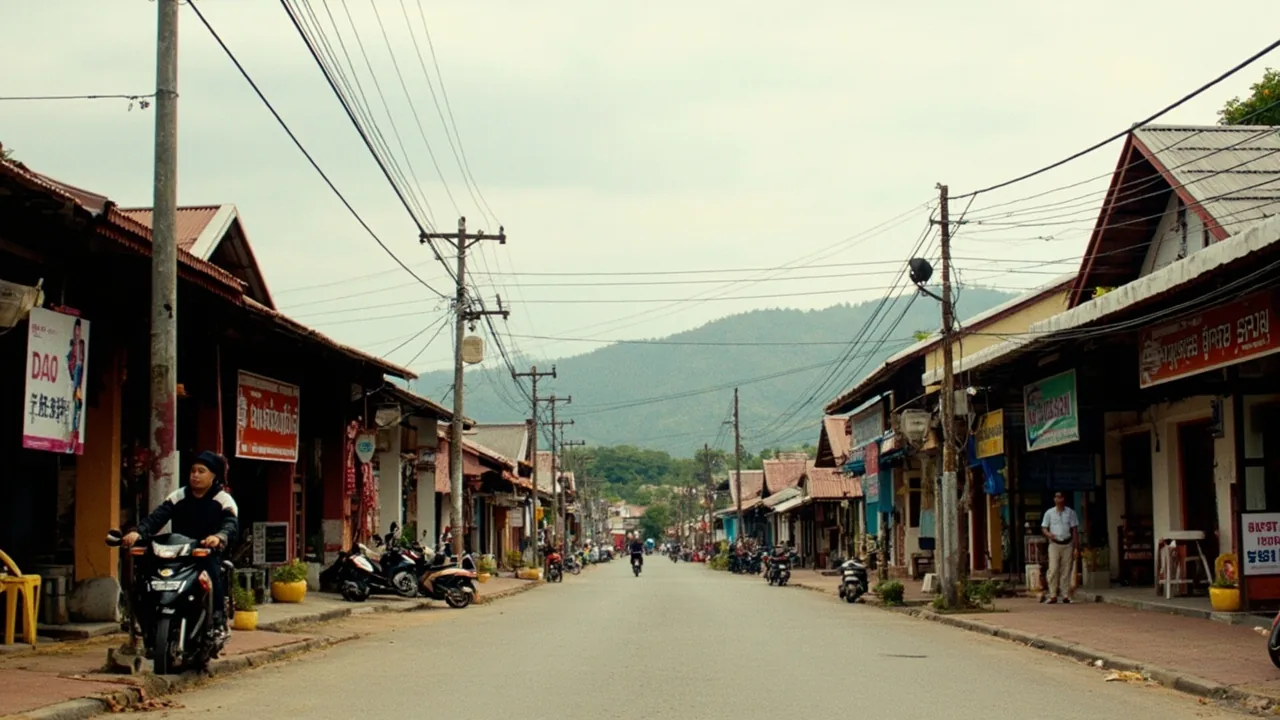
Chiang Dao on ₹1,500/Day: The Indian Backpacker’s Guide (2026)
Chiang Dao is Thailand’s quietest mountain town, three hours north of Chiang Mai. For budget Chiang Mai downtown travellers wanting something quieter, this alternative delivers Northern Thai charm at half the price. Indian backpackers come here when Pai gets crowded, for caves instead of clubs, and because ₹4,307 (~1,500 THB or ~$44.68) a day covers everything. Most skip it. They shouldn’t.
Quick Answers
| What | Answer | Price (INR) |
|---|---|---|
| Daily budget (tight) | Dorm + street food + scooter split + cave | ₹4,307 (~1,500 THB or ~$44.68) |
| Chiang Dao Cave entry | Cave + temple complex | ₹115 (~40 THB or ~$1.19) |
| Chiang Mai → Chiang Dao minivan | A/C minivan, ~3 hours | ₹431 (~150 THB or ~$4.47) |
| Dorm bed (central) | Pod or 6-bed dorm | ₹718-₹1,149 (~250-400 THB or ~$7.45-$11.91) |
| Best SIM for 7 days | AIS Traveller SIM | ₹869 (~299 THB or ~$9.18) |
FX rate used: 1 THB ≈ ₹2.87 (1 INR = 0.3485 THB), verified 2026-07-17. At current rates, ₹4,307 (~1,500 THB or ~$44.68) ≈ ₹4,304 (~$44.65).
Planning the wider region? Our Southeast Asia backpacking hub covers the full multi-country route.
For nearby Thai stops, see Bangkok and Pai.
Ayutthaya is also worth a day trip from the capital.
How to Get There
Chiang Dao sits 70 km north of Chiang Mai on Highway 107, and the A/C minivan from Chiang Mai Arcade Bus Terminal is the standard move. Buses leave roughly hourly between 7:00 and 17:00, take about three hours, and drop you in the centre of town near the 7-Eleven. Tickets cost ₹431 (~150 THB or ~$4.47) and you can book them on the day, but during November to February high season seats fill up the morning of, so an afternoon booking the day before is safer.
The other option is a songthaew (red truck) from Chiang Mai’s Chang Phueak gate, around ₹287-₹345 (~100-120 THB or ~$2.98-$3.57), but these are slower, less comfortable, and only leave when full. Not worth it unless you’re on a tight budget and have half a day to spare.
Where to Stay
Chiang Dao has two accommodation scenes: backpacker dorms in the village centre and farm-stay bungalows 5 to 10 km out. For Indian backpackers watching every baht, the village dorms are the move. You’re walking distance to the morning market, the night food stalls, and the motorbike rental shops, and the caves are a 10-minute ride north.
| Hostel / Guesthouse | Cost/night | Vibe | Book Here |
|---|---|---|---|
| non@Chiang Mai Hostel | ₹1,005 (~350 THB or ~$10.43) | Quiet dorm, clean | Check prices |
| Chiang Dao Hostel | ₹861 (~300 THB or ~$8.94) | Social, central | Check prices |
| Baboo Guesthouse & Studio | ₹1,149 (~400 THB or ~$11.91) | Mountain view, chill | Check prices |
| Soda HosteL | ₹1,005 (~350 THB or ~$10.43) | Pod beds, rooftop | Check prices |
| Doo - Dao - Doi Farm & Stay | ₹1,292 (~450 THB or ~$13.40) | Jungle farmstay | Check prices |
| The Common Hostel | ₹861 (~300 THB or ~$8.94) | Communal, backpacker vibe | Check prices |
| Subodh’s pick: Soda HosteL for the rooftop view and pod beds, The Common Hostel if you’re solo and want to meet people. Skip the farmstays unless you’ve booked two or three nights, the 5 km ride back at night is awkward on a scooter you’ve never ridden before. |
What to Eat
Chiang Dao is Northern Thai food country, which means khao soi, sai ua sausage, and nam prik dips show up everywhere. For context on Northern Thai meal pricing, see our Chiang Mai food prices guide. The morning market near the main road is where locals eat breakfast: khao kha moo (braised pork leg rice, ₹115-₹172 (~40-60 THB or ~$1.19-$1.79), ~₹115 (~$1.19) to ₹172 (~$1.78)) and khao soi gai (chicken curry noodles, ₹101-₹144 (~35-50 THB or ~$1.04-$1.49), ~₹100 (~$1.04) to ₹143 (~$1.48)). Pork-heavy, so non-veg-only eaters will be happy; strict vegetarians should look elsewhere.
For veg-friendly and Indian food, you have to ride or drive 70 km south to Chiang Mai. There is no proper Indian restaurant in Chiang Dao village itself. The honest fix: stock up at the morning market on steamed rice, vegetable dishes, and fresh fruit, then eat at the small cafes around town. TATA Chiang Dao Cafe and Farm does a solid farm-to-plate set with rice, stir-fried greens, and an egg, usually ₹345-₹517 (~120-180 THB or ~$3.57-$5.36). El Chiringuito Chiang Dao is your morning coffee-and-toast stop, MonMo Cafe’ @Chiangdao is the afternoon smoothie-and-cake place.
Subodh’s Pro Tip: Carry a few Maggi packets and a tube of MDH pickle from Chiang Mai before you head up. On day two of Chiang Dao’s pork-heavy menu, Maggi with an egg becomes the best meal of your trip.
If you need a proper dal-chawal or chapati fix, Chada Vegetarian Restaurant in Chiang Mai (4.8 rating) is fully vegetarian and runs an Indian-leaning menu, while Coconuts N Cocktails Indian Restaurant and Little Indian Kitchen at Chiang Mai Night Bazaar are among the strongest Indian spots within a one-hour minivan ride.
What to Do
1. Chiang Dao Cave (Tham Chiang Dao)
This is the main event: a 5-km network of limestone caverns filled with stalactites, Buddhist shrines, and several chambers you can only reach with a guide. Entry is ₹115 (~40 THB or ~$1.19) for the base ticket plus ₹287-₹574 (~100-200 THB or ~$2.98-$5.96) for a guide with a lantern, which is the only way to see the deeper chambers. Allow three hours. The cave is genuinely impressive, cooler than anything else in the region, and far less crowded than Chiang Mai’s tourist caves. Check Chiang Dao Cave tours on GetYourGuide
2. Wat Tham Chiang Dao Temple Complex
Right outside the cave entrance, this serene forest temple has multiple meditation halls, a giant reclining Buddha, and free-roaming monks who’ll wave you into the courtyard. Free entry, donations welcome. Pair it with the cave on the same afternoon. Check Wat Tham Chiang Dao tours on GetYourGuide
3. Doi Luang Chiang Dao Hike
The mountain itself, 2,225 m, is the third-highest peak in Thailand. The lower Pha Dok Siew trail is a 6-km half-day loop through rice terraces, hill-tribe villages, and waterfalls, with no technical climbing. Most operators charge ₹2,297-₹3,446 (~800-1,200 THB or ~$23.83-$35.74) including a guide, lunch, and transfers. You can also rent a scooter (250 THB/day, ~₹717 (~$7.44)) and do the trailhead yourself. Check Doi Luang Chiang Dao tours on GetYourGuide
4. Chiang Dao Mountain Viewpoint
A short ride west of town gives you a panoramic shot of the mountain range framed by rice paddies. Most riders do this on the same scooter day as the cave. Free, no entry fee. Check Chiang Dao Mountain View tours on GetYourGuide
5. SunSetScene chiangdao
A short uphill viewpoint about 4 km from the village centre. Locals run it for free or for a small drink purchase. Best at golden hour, 6:00 to 6:30 PM in dry season. Skip it in rainy season, the cloud cover kills the sunset. Check SunSetScene chiangdao tours on GetYourGuide
Bonus: Kayak the Jungle River of Chiang Dao Valley
A full-day paddle down the Mae Ping River jungle waterways. Guides help you portage around two weirs. Costs around ₹6,317 (~2,200 THB or ~$65.53) including lunch and transfers. Worth it on day two if you want a slow river day rather than another hike. Check Kayak the Jungle River of Chiang Dao Valley tours on GetYourGuide
Subodh’s Pro Tip: Rent the scooter for two consecutive days, not one. Day one covers the cave, temple, and viewpoint. Day two covers the mountain trail and the sunset. Splitting it across two days at 250 THB/day is the same as a guided tour and you set your own pace.
Getting Connected
Chiang Dao village has solid 4G on AIS and TrueMove. Most cafes and all the hostels on our list have working WiFi, but it’s patchy during rain. Buy an AIS Traveller data plan at Chiang Mai airport on arrival for ₹859 (~299 THB or ~$8.91) for 7 days of unlimited data, or skip the airport queue and grab a Nomad Asia plan before you fly — it covers Thailand for 7 days from around ₹482 (~5 USD) and activates the moment you land. Get Nomad plan
DTAC and TrueMove shops exist in town but don’t bother comparing, AIS has the strongest mountain coverage here.
Daily Budget Breakdown
Here’s what ₹4,307 (~1,500 THB or ~$44.68) buys on the ground in Chiang Dao, verified against traveller reports from June 2026:
| Category | Budget/day |
|---|---|
| Dorm bed | ₹1,005 (~350 THB or ~$10.43) |
| Food (3 meals) | ₹1,005 (~350 THB or ~$10.43) |
| Local transport (scooter share) | ₹574 (~200 THB or ~$5.96) |
| Activities | ₹1,149 (~400 THB or ~$11.91) |
| Misc / drinks | ₹574 (~200 THB or ~$5.96) |
| Total | ₹4,307 (~1,500 THB or ~$44.68) |
Notes on the budget: Dorm beds run ₹718-₹1,149 (~250-400 THB or ~$7.45-$11.91) depending on the season. Food assumes a mix of market stalls (40-60 THB/meal) and one cafe sit-down per day (₹345-₹517 (~120-180 THB or ~$3.57-$5.36)). Scooter rental at 250 THB/day split between two travellers works out to ₹359 (~125 THB or ~$3.72) each, but if you’re solo, budget the full ₹718 (~250 THB or ~$7.45). Activities assumes one paid site per day (cave entry + guide, viewpoint entry, or half-day hike). Misc covers water, a beer, and a coffee.
This is what travellers spend, not what blogs say. At current rates (1 THB ≈ ₹2.87, verified 2026-07-17), 1,500 THB ≈ ₹4,304, well under the ₹6,000 (~$62.24) most guides quote for Northern Thailand.
Visa / Entry Notes
Chiang Dao isn’t a border town, so the visa question is about Thailand as a whole. Indian passport holders get visa-free entry for 60 days (extended from 30 days in mid-2024), and the rules are the same whether you arrive in Bangkok, Phuket, or Chiang Mai. You need a passport valid for 6 more months, a confirmed return ticket, and a hotel address for the immigration form. No photos, no fee.
If you’re flying into Chiang Mai from Bangkok, the domestic flight is the standard entry point, and from there it’s a minivan up to Chiang Dao. For the full Thailand visa walkthrough, including the TDAC form and the 60-day rule, see our Thailand entry guide.
Common Mistakes
Mistake 1: Trying to do Chiang Dao as a day trip from Chiang Mai.
It’s three hours each way. You’ll spend six hours on a minivan for two hours of cave time. Stay at least two nights, three if you want to hike Doi Luang.
Mistake 2: Renting a scooter without checking the brakes and tyres.
The road north from Chiang Dao to the mountain trailhead is steep, winding, and gets slippery in the wet season. Scooter crashes on the mountain road happen every month, mostly on the descent. Spend five minutes checking brake pressure, tyre tread, and that the headlight works before you ride off.
Mistake 3: Assuming there’s an Indian restaurant in town.
There isn’t. Strict vegetarians should bring supplies from Chiang Mai or commit to market-stall rice and vegetable dishes for the duration. Don’t trust Google Maps listings, they’re often closed permanently or open only in high season.
FAQ
Is Chiang Dao safe for solo Indian women?
Yes. It’s one of the safest small towns in Northern Thailand, with almost no late-night street crime and a respectful local culture. The main risk is scooter accidents, not crime. Ride conservatively.
Can I get Indian food in Chiang Dao?
Not within the village itself. The closest Indian food is a 70-km minivan ride south to Chiang Mai, where Chada Vegetarian, Coconuts N Cocktails, and Little Indian Kitchen all serve solid veg and Indian-leaning dishes.
How many days do I need in Chiang Dao?
Two full days covers the cave, temple, viewpoint, and either the mountain hike or the sunset spot. Three days lets you add the kayak day and a slow morning at the cafe. Anything more than that is fine, you’ll just be reading a book by the rice paddies, which is also a valid plan.
Is Chiang Dao cheaper than Pai?
Roughly the same on dorms and food, both around 250-400 THB/night for a dorm. Chiang Dao wins on activities, the cave is ₹115 (~40 THB or ~$1.19) vs Pai’s canyon being free but a 7-km scooter ride each way. Pai wins on evening food market energy. Pick Chiang Dao if you want quiet, Pai if you want a backpacker scene.
Do I need a guide for Chiang Dao Cave?
For the first 800 metres or so, no. Past the main entrance chamber, the deeper passages get dark and twisty, and you’ll want a guide with a lantern. 100-200 THB gets you a 90-minute deeper tour.
What is the best time to visit Chiang Dao?
November to February for cool weather and clear mountain views. March to May is hot and hazy, the burning season hits Northern Thailand hard and the Doi Luang views vanish behind smoke. June to October is green and lush, but rain cuts the sunset views roughly half the evenings.
Subodh’s Take
Chiang Dao is the Northern Thailand stop I’d send any backpacker who felt Pai was too much and Chiang Mai was too little. It’s quiet without being dead, cheap without feeling grim, and the cave alone is worth the three-hour minivan from Chiang Mai. Stay three nights, ride a scooter slowly, and don’t chase a sunset you can’t see in rainy season.
