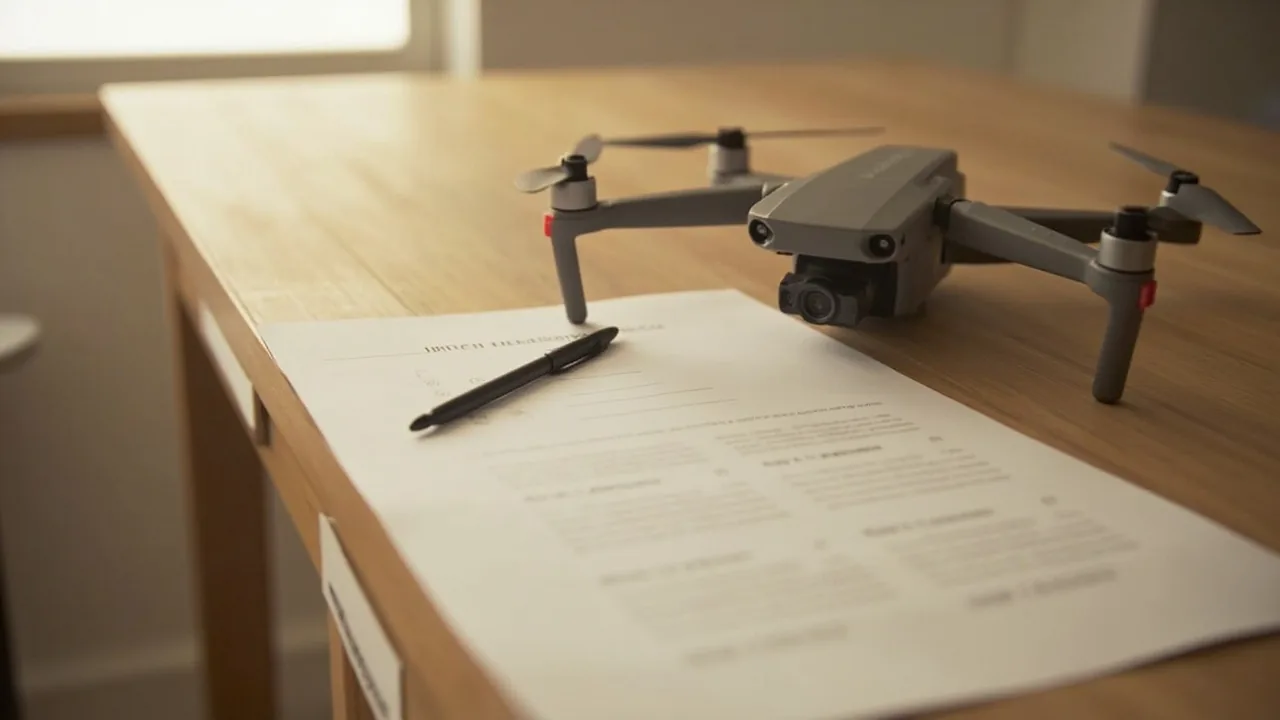
Drone Rules Philippines 2026: CAAP Registration Guide for Tourists
If you’re flying to the Philippines with a drone in your bag, the short version on drone rules Philippines tourist registration: yes, you can fly as a tourist, but only after registering with CAAP and securing a Drone Operator’s Permit. This guide was cross-checked against the official CAAP website on 18 July 2026 and against recent traveller reports from El Nido and Batanes. Miss the registration step, and you risk having the drone confiscated at Manila or Cebu airport, a fine, or worse, a criminal complaint for operating an unregistered aircraft. Planning the wider region? Our Southeast Asia backpacking hub covers the full multi-country route.
The Philippines treats drones as manned aircraft for registration purposes. That puts the country in a stricter bucket than Bali (where the rules are looser) but on par with Thailand and Vietnam. For Indian vloggers planning a Palawan shoot or a Batanes landscape reel, the process is bureaucratic but doable in about 5 to 7 working days if you start before you fly.
Quick Answers
| What | Answer | Price (INR) |
|---|---|---|
| Do tourists need a drone permit in the Philippines? | Yes, every drone, even sub-250g, must be registered with CAAP and the operator must hold a valid Drone Operator’s Permit. | PHP 1,500 (one-time) |
| How much does CAAP drone registration cost? | PHP 1,500 for the Aircraft Registration Certificate (ARC), valid for 2 years. | PHP 1,500 |
| How much does the Drone Operator’s Permit cost? | PHP 1,500 for a 2-year permit for non-commercial/recreational use. | PHP 1,500 |
| Are sub-250g drones (DJI Mini) exempt? | No. All drones regardless of weight must be registered. | PHP 1,500 + PHP 1,500 |
| Can I fly in El Nido, Batanes, or Boracay? | Yes, but only with a permit, and many of these areas are near restricted zones. Always check NOTAMs and national park rules before flying. | Permit required |
The exact fee structure was verified against the official CAAP Advisory Circular AC-ANM-OPS-2024-001 and the CAAP website on 18 July 2026. Always re-check on caap.gov.ph before you fly, fee revisions happen without much notice.
Is Your Drone Even Legal to Bring?
Before you worry about CAAP paperwork, check if your drone can even enter the Philippines.
Banned outright:
- Drones over 55 lbs / 25 kg (none of the consumer models)
- Drones with payload capacity above 30 kg (industrial)
- Any drone classified as a weaponized UAS
Allowed but must be registered:
- DJI Mini 4 Pro, Mini 3, Air 3, Mavic 3, Avata 2
- Autel Evo Lite+
- Skydio 2+
- Any sub-25 kg drone used for recreation or content creation
Indian travellers flying in via Manila (NAIA), Cebu (Mactan-Cebu), Clark, or Davao report that DJI Mini 3 and Mini 4 Pro are the most common models at the registration counter. If you have one of these, the process is well-trodden. If you’re carrying something unusual, expect the customs officer to Google it.
The CAAP Registration Process (Step by Step)
Here’s the actual workflow, verified against CAAP’s published procedure and traveller reports from 2025-2026.
Step 1: Get a CAAP Customer Account
Register on the CAAP e-Services portal (eservices.caap.gov.ph) and create a customer profile. You will need:
- Passport (valid for at least 6 months beyond your stay)
- Return flight ticket
- Philippine arrival details (hotel address, dates)
- Credit or debit card for fees
The portal sometimes has scheduled downtime on Philippine holidays. Apply on a weekday morning Manila time for the fastest turnaround.
Step 2: Apply for the Aircraft Registration Certificate (ARC)
This is the drone’s GCash-friendly registration receipt “licence plate.” It links the airframe’s serial number to your name and is valid for 2 years. Cost: PHP 1,500. You’ll upload:
- Drone serial number (find it in the DJI app under Aircraft Info)
- Drone make, model, weight
- Photo of the drone showing the serial number
- Proof of ownership (receipt, Amazon order PDF, customs declaration)
Step 3: Apply for the Drone Operator’s Permit (DOP)
This is YOUR licence to fly. Also PHP 1,500, also valid for 2 years, also non-refundable if rejected. Required documents:
- Valid passport bio page
- Visa or visa-free entry stamp
- Insurance certificate (yes, even tourists are asked for this, a DJI Care Refresh or generic drone liability policy)
- Flight plan summary (just a paragraph of where and when you intend to fly)
- Drone training certificate (if you have one, not mandatory but speeds up approval)
Subodh’s Pro Tip: Apply for both the ARC and the DOP at the same time through the e-Services portal. The two applications reference each other, and processing them sequentially adds 3-4 days. Combined, expect 5-7 working days from upload to approval email.
Step 4: Print Everything and Carry It
CAAP issues a soft copy permit (PDF). Print two copies. Carry them with your passport when flying. Travellers report airport security asking for drone permits at NAIA Terminal 3 (the main international terminal) more often than at Mactan-Cebu.
Banned and Restricted Airspace
The Philippines has a long list of no-fly zones, similar to other Philippines airport departure procedures checkpoints. Flying here without a special waiver is a criminal offence, not just a fine.
Always restricted (no tourist exceptions):
- Within 10 km of any military or police installation
- Within 5 km of NAIA, Mactan-Cebu, Clark, and Davao airports
- Over Malacañang Palace, Batasang Pambansa, Camp Aguinaldo
- Over national security sites, including all AFP (Armed Forces of the Philippines) camps
Common tourist areas with restrictions:
- El Nido: Much of Bacuit Bay is near the El Nido-Taytay Managed Resource Protected Area. Permission from the local DENR (Department of Environment and Natural Resources) office is required on top of your CAAP permit.
- Batanes: Batan Island and Sabtang Island are near military radar sites. Expect on-the-ground denial from local tourism officers even with a valid permit.
- Boracay: The island is under rehabilitation restrictions. Flying over the White Beach and Bulabog Beach areas needs barangay (village) clearance.
Check the best time to visit Philippines typhoon season guide and always check before flying:
- NOTAMs (Notices to Airmen): Issued by CAAP for temporary restrictions
- Active typhoon season: June to November, see the best time to visit Philippines typhoon season guide. Drones cannot be flown in heavy rain or winds above 25 knots.
Safety Alert: Flying over populated beaches, festivals, or crowd gatherings (Ati-Atihan, Sinulog) without a special permit is treated as a public safety violation. Fines range from PHP 5,000 to PHP 50,000, and the drone can be seized. When in doubt, land and ask.
Costs in Full
Here is the realistic all-in cost, calculated at the current rate of 1 PHP ≈ ₹1.92 (1 INR = 0.5208 PHP, 18 July 2026).
| Item | Cost (PHP) | Validity |
|---|---|---|
| Aircraft Registration Certificate (ARC) | 1,500 | 2 years |
| Drone Operator’s Permit (DOP) | 1,500 | 2 years |
| DENR clearance (El Nido, etc., if required) | 500-1,000 | Per shoot |
| Insurance (DJI Care Refresh or third party) | 1,500-3,000 | 1 year |
| Local SIM for registration portal (data) | 50 | 7 days |
| Total typical spend | 5,050-7,050 | , |
A physical SIM helps because the CAAP portal occasionally requires SMS
Pre-Flight Checklist for Indian Travellers
Print this, tick every box, then head to the airport.
Before leaving India:
- Apply for ARC and DOP via eservices.caap.gov.ph (allow 5-7 working days); review the packing list for the Philippines guide for battery transport
- Download and print both PDF permits (2 copies each)
- Carry proof of drone ownership (invoice, customs declaration)
- Take a clear photo of the drone serial number, save it offline
- Pack the drone in carry-on, never checked luggage (lithium battery rules)
- Bring DJI Care Refresh or proof of third-party liability insurance
- Save CAAP’s 24/7 contact: [email protected]
At Manila / Cebu airport:
- Declare the drone at the customs red channel if asked
- Show ARC and DOP if security stops you
- Have your flight plan printout ready
On location:
- Check NOTAMs on the day of flight
- Confirm you’re not within 5 km of any airport
- Get barangay clearance for El Nido, Batanes, Boracay
- Fly only in daylight, max 400 ft altitude, VLOS (visual line of sight)
- Never fly over people, vehicles, or moving traffic
For power and connectivity on location, see the Philippines VPN, WiFi, charging & brownout survival guide.
What Happens If You Skip Registration?
Travellers who flew without permits report three common outcomes:
- Confiscation at the airport. The drone is held at the customs office until you can produce a permit or exit the country. You lose the gear and the shoot.
- On-the-spot fine. CAAP inspectors and PNP (Philippine National Police) can issue fines ranging from PHP 5,000 for a first offence to PHP 50,000 for repeat or commercial violations.
- Criminal case. Operating an unregistered aircraft can be charged under Philippine civil aviation rules. Cases are rare for tourists but they do happen, especially near military sites.
The cheapest insurance is the PHP 3,000 in permit fees. Compared to losing a DJI Mini 4 Pro (₹75,000 (~$777.35)+) or facing a fine, it’s a no-brainer.
Flying for Vloggers: What Else You Need
If you’re flying a drone for a YouTube channel or Instagram reel monetisation, CAAP requires a different permit class (commercial aerial work). The cost jumps to PHP 5,000-10,000 and you’ll need:
- SEC (Securities and Exchange Commission) registration or DTI (Department of Trade and Industry) business name
- Filipino counterparty or local fixer
- Per-shoot flight plan filed 7 days in advance
For most Indian travel vloggers doing a one-off Palawan or Batanes shoot, the recreational permit is enough. Don’t lie about commercial use. CAAP checks.
Insurance: The Part Most People Skip
CAAP does not strictly require insurance for the recreational permit, but having it speeds up approval and covers you if your drone damages property or injures someone. Options:
- DJI Care Refresh (covers your drone, ~₹9,000-15,000/year)
- Third-party liability (Verifly, Coverdrone, ~₹5,000/year for ₹10 lakh cover)
Note: SafetyWing covers YOU, not your drone. Pair it with DJI Care Refresh for full coverage.
Subodh’s Take
Here’s the honest version: CAAP registration is a hassle, but it’s a predictable, one-time hassle that protects your gear and keeps you out of jail. Set aside a week before departure, pay the PHP 3,000 in fees, print everything twice, and your drone is legal for two years across the Philippines. Skipping the permit to save a few thousand rupees is the kind of decision that ends with a confiscated drone at NAIA and a missed El Nido sunrise shoot. Start the application the day you book your flights, not the week you fly. If you do, the process is a checkbox, not a roadblock.
FAQ
Do I need a CAAP permit for a sub-250g drone like the DJI Mini 4 Pro?
Yes. The Philippines does not have a weight-based exemption for tourists. Every drone, including sub-250g models, must be registered. Cost is the same: PHP 1,500 for the ARC and PHP 1,500 for the DOP.
Can I fly my drone in El Nido or Batanes?
Yes, with a valid CAAP permit AND additional clearance from the local DENR office (El Nido) or barangay tourism office (Batanes). Many parts of these areas are also near military radar, so always check NOTAMs before flying.
How long does CAAP approval take?
5-7 working days if all documents are clean. Apply on a weekday morning Manila time. Philippine holidays add delays. There is no express processing.
Can I apply for the permit after I land in the Philippines?
Technically yes, but the e-Services portal requires a Philippine address and sometimes a local SIM for SMS What if I lose my drone in the Philippines? Is it covered by my travel insurance?
Standard travel insurance (including SafetyWing) does not cover personal electronics like drones. You need DJI Care Refresh or a separate drone-specific policy. SafetyWing covers medical, trip interruption, and evacuation, not your gear.
Are drones allowed in Boracay?
Yes, with a CAAP permit and barangay clearance. The Boracay Inter-Agency Task Force has additional rules, including no flying over White Beach between 8 AM and 6 PM without a special permit.
Can I bring drone batteries in my carry-on?
Yes, in carry-on luggage. Spare lithium batteries must be under 100 Wh each (most DJI batteries are well under this). Carry them in a fireproof pouch, not loose in your bag. The Philippines packing list guide covers battery transport in more detail.
Is the permit valid across the whole Philippines?
Yes, the CAAP ARC and DOP are national permits. They’re valid for 2 years from issuance, regardless of which airport you fly into. You do not need a separate permit per island.
What about flying over water? Specifically, drone shots of El Nido’s lagoons?
Flying over water is allowed under the recreational permit, but only if you’re not within restricted airspace. The El Nido lagoons (Big Lagoon, Small Lagoon) are inside the protected area and require DENR clearance. Get it from the El Nido tourism office before you shoot.
Where can I confirm the latest rules before I fly?
The official source is caap.gov.ph, specifically the Aircraft Operations and Air Navigation Services page. Always cross-check the fee structure against the current published advisory circular. Advisories update without much press coverage, so a 30-second check before you fly saves a 5-day refund headache.
