Haggling Guide for Southeast Asia: Real Prices for Common Things (2026)
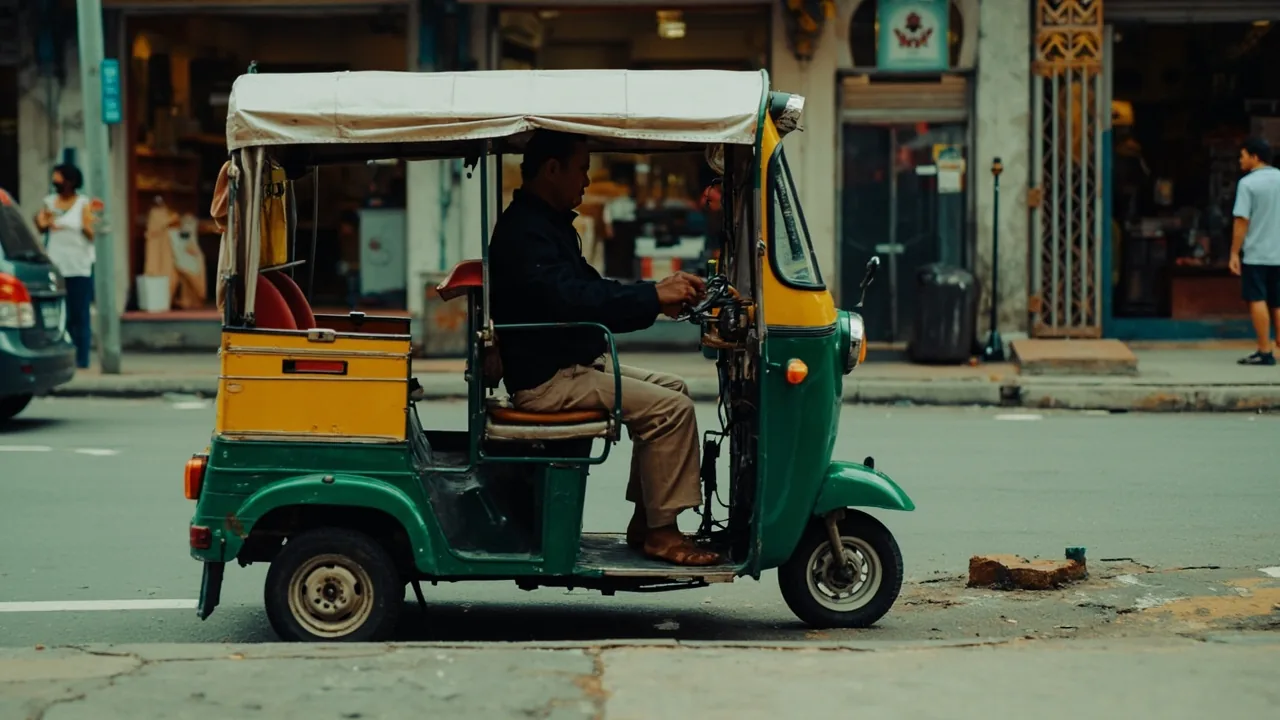
How much tuk tuk cost bangkok in 2026: quickest way to overspend in Southeast Asia is paying first price a driver, market stall, or boat operator quotes. This guide gives you 2026 ground figures for things Indian travellers get quoted: tuk-tuks in Bangkok, songthaews in Chiang Mai, airport taxis, souvenirs in Luang Prabang. SE Asia backpacking hub for full route.
Before we get into numbers, one anchor: 1 INR = 0.349 THB right now, which means 1,000 THB ≈ ₹2,870 (~$29.79), and that 2,869 rate is what we use for every Thai baht number on this page. Vietnam runs at 1 INR ≈ 270 VND, so 100,000 VND ≈ ₹370. Laos and Cambodia are dollar-pegged in practice, so those tables are in USD with INR added. All four rates live in the currency converter tool if you want to double-check mid-trip.
Quick Answers
| What | Answer | Price (INR) |
|---|---|---|
| Bangkok tuk-tuk, short hop | Meter taxi ₹172-₹229 (~60-80 THB or ~$1.78-$2.37); tuk-tuk ₹286-₹429 (~100-150 THB or ~$2.97-$4.45) if you haggle | ~₹340 (~$3.53) |
| Bangkok tuk-tuk, “tour” scam | Skip it. Quote ₹1,429-₹2,859 (~500-1,000 THB or ~$14.84-$29.68), ends at a tailor shop | ~₹2,870 (~$29.79) |
| Airport rail link (Suvarnabhumi to city) | ₹129 (~45 THB or ~$1.34), fixed, no haggling | ~₹130 (~$1.35) |
| Grab/Bolt from Suvarnabhumi to Khao San | ₹715-₹1,001 (~250-350 THB or ~$7.42-$10.39) | ~₹1,000 (~$10.38) |
| Songthaew in Chiang Mai | ₹86-₹143 (~30-50 THB or ~$0.89-$1.48) per person on shared route | ~₹140 (~$1.45) |
| Bangkok to Pattaya fixed-price taxi | ₹3,431 (~1,200 THB or ~$35.61) official, ₹2,287 (~800 THB or ~$23.74) if you walk to the meter line | ~₹3,440 (~$35.71) |
| Vietnam xe ôm (motorbike taxi) | ₹73-₹147 (~20,000-40,000 VND or ~$0.76-$1.52) short hop | ~₹150 (~$1.56) |
| Hanoi taxi scam zone (Old Quarter) | App-only. Mai Linh or Grab. Never street hail | ~₹370 (~$3.84) |
| Luang Prabang tuk-tuk within town | ₹86-₹172 (~20,000-40,000 LAK or ~$0.89-$1.78) | ~₹140 (~$1.45) |
| Phnom Penh tuk-tuk, short hop | ₹193-₹385 (~2-4 USD); tourist day rate ₹1,445-₹2,408 (~15-25 USD) | ~₹1,930 (~$20.03) |
| Massage, 1 hr Thai-style | ₹715-₹1,144 (~250-400 THB or ~$7.42-$11.87) local shop, ₹1,715-₹2,859 (~600-1,000 THB or ~$17.81-$29.68) tourist area | ~₹1,440 (~$14.95) |
| Coconut water from cart | ₹86-₹172 (~30-60 THB or ~$0.89-$1.78) Bangkok, ₹114 (~40 THB or ~$1.19) Chiang Mai | ~₹140 (~$1.45) |
| Tailored suit, Bangkok 3-day turnaround | ₹17,153-₹34,307 (~6,000-12,000 THB or ~$178.05-$356.11) for two-piece | ~₹28,690 (~$297.80) |
The takeaway in one line: app-based pricing (Grab, Bolt, Be, Gojek) is the single most effective anti-scam tool available, because the price is fixed before you get in, the route is GPS-tracked, and the driver can’t renegotiate at the destination. Use the app any time your phone has data. Haggle only when you have no app option.
Subodh’s Pro Tip: Download Grab before you land. In Bangkok, set Phayathai or your hotel as the destination before you walk out of arrivals. Drivers see you have the app running and don’t bother quoting inflated prices.
How Pricing Works (the Real Mechanics)
Haggling isn’t a cultural ritual you have to perform. It’s a price discovery mechanism that runs on one rule: the first quote is never the real price, and the gap between the first quote and the real price equals the seller’s estimate of how uninformed you are.
Three mechanics drive that gap:
1. Tourist zone markup is structural, not personal. The same tuk-tuk driver who charges a foreigner ₹572 (~200 THB or ~$5.94) will turn around and charge the local sitting next to you ₹172 (~60 THB or ~$1.78) for the same trip. Drivers near Khao San, Patpong, Pub Street in Siem Reap, and Hoan Kiem Lake in Hanoi pay a premium for their parking spot and recover it through inflated quotes. Walk three blocks out of any tourist zone and the same trip costs 40-50% less, often at the meter rate.
2. The “tour” pitch is the most expensive scam in the region. In Bangkok you’ll hear “500 baht, I show you temples, you come, cheap” from drivers around the Grand Palace, Khao San, and Erawan Shrine. You pay ₹1,429-₹2,859 (~500-1,000 THB or ~$14.84-$29.68), visit two random temples the driver gets a commission from, get dropped at a suit shop, and end up nowhere near where you wanted to go. Real cost: a ₹172 (~60 THB or ~$1.78) meter taxi plus your time. If anyone says “I show you something special today,” it’s the same suit shop.
3. Currency confusion is the silent markup. Many Indian travellers convert baht mentally to rupees using “1 baht = ₹3,” which overstates by about 5%. That 1,000 THB quote sounds like ₹3,000 (~$31.14) in your head and you accept without thinking. At the actual rate of 1 INR ≈ 0.349 THB, 1,000 THB is closer to ₹2,870. Run the number before you say yes.
Country-by-Country Real Prices
Thailand (THB)
Thailand is the most “fixed-price” country in the region for the two things that matter most: airport transfers and city taxis. Use the meter, use the app, get out of haggling entirely.
| Service | Real price (THB) | Notes |
|---|---|---|
| Bangkok taxi, meter, 5 km | ₹172-₹286 (~60-100 THB or ~$1.78-$2.97) | Insist on the meter. “Taxi meter” = turn it on. |
| Bangkok tuk-tuk, short hop, fair quote | ₹286-₹429 (~100-150 THB or ~$2.97-$4.45) | Cash only. No meter. Drivers will quote 300-500. |
| Grab from Suvarnabhumi to Sukhumvit | ₹715-₹1,001 (~250-350 THB or ~$7.42-$10.39) | Surcharge included. Beats the public taxi queue. |
| Airport Rail Link, Suvarnabhumi → Phaya Thai | ₹129 (~45 THB or ~$1.34) | 30 min, fixed, no haggling, no scam surface. |
| Suvarnabhumi official public taxi | ₹2,001-₹2,573 (~700-900 THB or ~$20.77-$26.71) | Add ₹143 (~50 THB or ~$1.48) motorway toll + ₹143 (~50 THB or ~$1.48) airport surcharge. |
| Songthaew, Chiang Mai, shared | ₹86-₹143 (~30-50 THB or ~$0.89-$1.48) | Tell driver destination, hop in back, pay at drop. |
| Songthaew, Chiang Mai, private charter | ₹429-₹572 (~150-200 THB or ~$4.45-$5.94) | Same songthaew, just exclusive. |
| Bangkok to Pattaya, public bus | ₹715 (~250 THB or ~$7.42) | From Ekkamai. 2.5 hr. |
| Bangkok to Pattaya, fixed taxi, haggled | ₹2,287 (~800 THB or ~$23.74) | Negotiate at the taxi stand outside Suvarnabhumi arrivals; not a meter rate. |
| Ferry, Koh Samui, foot passenger | ₹429 (~150 THB or ~$4.45) | Songserm/Lomprayah. Check on 12go. |
| Scooter rental, Phuket per day | ₹715-₹1,001 (~250-350 THB or ~$7.42-$10.39) | Passport required. Helmet ₹143 (~50 THB or ~$1.48) extra. |
Safety Alert: For Bangkok taxis at night, ride only in the meter-confirmed taxi queue or use Grab. Drivers who approach you in the arrivals hall quoting a flat rate are running the “no meter, broken” scam.
Vietnam (VND)
Vietnam hands you the trickiest currency in the region: ₹370 (~100,000 VND or ~$3.84) sounds rich but is closer to ₹370 at the real rate (1 INR = 270 VND). Drivers know this and quote “high” VND numbers to tourists who can’t read the zeros.
| Service | Real price (VND) | Notes |
|---|---|---|
| Hanoi xe ôm (motorbike taxi), short hop | ₹73-₹147 (~20,000-40,000 VND or ~$0.76-$1.52) | Have your destination written in Vietnamese. |
| Hanoi Grab Bike | ₹92-₹184 (~25,000-50,000 VND or ~$0.95-$1.91) | Beats xe ôm on safety. Helmet included. |
| HCMC taxi, Mai Linh/Vinasun, 5 km | ₹294-₹441 (~80,000-120,000 VND or ~$3.05-$4.57) | Mai Linh and Vinasun are the two honest companies. |
| HCMC airport taxi (official stand) | ₹734-₹918 (~200,000-250,000 VND or ~$7.62-$9.53) to District 1 | Add ₹73 (~20,000 VND or ~$0.76) airport surcharge. |
| Saigon airport → District 1 bus 109 | ₹73 (~20,000 VND or ~$0.76) | 45 min. Cheapest, slowest. |
| Hoi An lantern walk, evening | Free | Don’t pay anyone to “guide” you. |
| Mekong Delta day boat from Cai Rang | ₹551-₹734 (~150,000-200,000 VND or ~$5.72-$7.62) pp | All-inclusive, 3 hr. |
| Da Nang to Hoi An, fixed taxi | ₹918-₹1,285 (~250,000-350,000 VND or ~$9.53-$13.34) | Grab is consistent. |
Subodh’s Pro Tip: HCMC has a notorious taxi scam where drivers quote “₹9,634 (~100 USD)” for a ₹441 (~120,000 VND or ~$4.57) trip. Stick to established liveries and avoid unmarked cabs. Grab is the cleanest answer.
Laos (LAK / USD)
Luang Prabang operates in LAK. Vientiane and the Gibbon Experience corridor accept USD cash widely, often preferred to LAK for bigger purchases.
| Service | Real price (LAK) | Notes |
|---|---|---|
| Luang Prabang tuk-tuk, within town | ₹86-₹172 (~20,000-40,000 LAK or ~$0.89-$1.78) | Most within Wat Xieng Thong zone. |
| Luang Prabang tuk-tuk to Kuang Si | ₹258-₹344 (~60,000-80,000 LAK or ~$2.67-$3.57) pp shared; ₹644-₹859 (~150,000-200,000 LAK or ~$6.69-$8.92) private | The shared rate is per person. |
| Vientiane tuk-tuk city loop | ₹129-₹215 (~30,000-50,000 LAK or ~$1.34-$2.23) | Drivers cluster at Talaat Sao morning market. |
| Vientiane taxi airport to city | ₹344-₹430 (~80,000-100,000 LAK or ~$3.57-$4.46) or ₹385-₹482 (~4-5 USD) | Use official taxi, walk past touts. |
| Slow boat, Huay Xai to Luang Prabang | ₹1,074 (~250,000 LAK or ~$11.15) pp | Multi-day, includes Pak Beng stop. Check on 12go. |
| Night market food, per dish | ₹43-₹107 (~10,000-25,000 LAK or ~$0.45-$1.11) | All sticky rice and larb spots. |
| Beer Lao at a restaurant | ₹64-₹107 (~15,000-25,000 LAK or ~$0.67-$1.11) | Local price. Tourist bars up to 35,000. |
| Souvenirs, night market | Start at 50% of first quote | ”Luang Prabang” textiles are embroidered in villages; ₹129 (~30,000 LAK or ~$1.34) for a scarf, not 100,000. |
USD is king in Laos for anything over ~₹215 (~50,000 LAK or ~$2.23). Torn, written-on, or pre-2003-series bills get refused at most places, so check your notes. This is one of the few places where carrying clean USD cash saves you money on the spread.
Cambodia (USD / KHR)
Cambodia is the only country in the region with a primary foreign-currency circulation. USD cash is the default in Phnom Penh and Siem Reap. KHR exists for small change below ₹96 (~1 USD).
| Service | Real price | Notes |
|---|---|---|
| Phnom Penh tuk-tuk, short hop | ₹193-₹385 (~2-4 USD) | |
| Phnom Penh tuk-tuk, full day | ₹1,445-₹2,408 (~15-25 USD) | Avoid tour-day bookings above ₹2,408 (~25 USD). |
| Phnom Penh airport → city, official tuk-tuk | ₹867-₹1,156 (~9-12 USD) fixed | Walk past the first kiosk for the genuine counter. |
| Siem Reap tuk-tuk to Angkor Wat sunrise | ₹1,445-₹1,927 (~15-20 USD) | Pre-dawn. Drivers cluster at Pub Street. |
| Siem Reap tuk-tuk full day, Angkor pass | ₹2,408-₹2,890 (~25-30 USD) + ₹3,565 (~37 USD) pass | Pass is 1, 3, or 7 days. The 3-day is the value play at ₹5,973 (~62 USD). |
| Phnom Penh bus, Giant Ibis, to Siem Reap | ₹1,156-₹1,445 (~12-15 USD) | Check on 12go. ~6 hr. |
| Phnom Penh bus to Sihanoukville | ₹963-₹1,156 (~10-12 USD) | Check on 12go. 4-5 hr. |
| Sihanoukville to Koh Rong ferry | ₹578-₹963 (~6-10 USD) | Speed boat. Check on 12go. |
| Pub Street draft beer, Siem Reap | ₹96-₹145 (~1-1.50 USD) | Tap on Pub Street; small street 0.50 less. |
| Fish massage, Siem Reap | ₹48-₹96 (~0.50-1 USD) | The tank of small fish. Tourist ritual. |
USD notes in Cambodia must be clean and unwritten. Taped, stamped, or torn bills get refused. Carry 1s, 5s, 10s, and 20s in clean condition; break larger notes at supermarkets or the few official money-change booths.
When to App, When to Haggle
App-based pricing (Grab in Thailand, Vietnam, Cambodia; Bolt in Thailand; Be in Vietnam; PassApp in Cambodia for Phnom Penh and Siem Reap) is the cleanest answer for nearly every ride in cities and tourist areas. Use them when you have data. The only times apps fail you are the genuinely remote or rural cases where there’s no driver within range.
| Situation | App? | Haggle? | Why |
|---|---|---|---|
| Airport → city, anywhere | Yes | No | Fixed price, tracked, no dispute. |
| Bangkok metro area hops | Yes | No | Grab beats 99% of quotes. |
| Bangkok tuk-tuk “tour” trap | No | Yes | Walk away entirely. |
| Songthaew Chiang Mai shared | No | Yes | ₹86-₹143 (~30-50 THB or ~$0.89-$1.48), no app on shared routes. |
| Hoi An out to beach | Yes | No | ₹294 (~80,000 VND or ~$3.05) app vs 150,000 quoted. |
| Mekong Delta boats | No | Yes | Day-boat operator, no app. |
| Luang Prabang airport | No | Yes | ₹385-₹482 (~4-5 USD) fixed, no app coverage. |
| Pub Street Siem Reap | No | Yes | No tuk-tuk coverage after 11 pm. |
Souvenirs and Markets
Same rule, same mechanic, every country: first quote is 2-3x the closing price.
| Market | Item | First quote | Real closing |
|---|---|---|---|
| Bangkok Chatuchak | T-shirt | ₹715 (~250 THB or ~$7.42) | ₹286-₹429 (~100-150 THB or ~$2.97-$4.45) |
| Bangkok Pratunam | Tailored suit (2-piece) | ₹22,871-₹42,884 (~8,000-15,000 THB or ~$237.40-$445.13) | ₹17,153-₹34,307 (~6,000-12,000 THB or ~$178.05-$356.11) |
| Chiang Mai Sunday Walking Street | Wooden crafts | ₹572 (~200 THB or ~$5.94) | ₹229-₹343 (~80-120 THB or ~$2.37-$3.56) |
| Chiang Mai Night Bazaar | Pashmina/scarves | ₹429 (~150 THB or ~$4.45) | ₹172-₹286 (~60-100 THB or ~$1.78-$2.97) |
| Hanoi Old Quarter | Lacquerware bowls | ₹734 (~200,000 VND or ~$7.62) | ₹294-₹441 (~80,000-120,000 VND or ~$3.05-$4.57) |
| Hoi An tailor-made shoes | 1 pair | ₹5,780-₹9,634 (~60-100 USD) | ₹3,372-₹4,817 (~35-50 USD) |
| Luang Prabang night market | Embroidered scarf | ₹215 (~50,000 LAK or ~$2.23) | ₹86-₹129 (~20,000-30,000 LAK or ~$0.89-$1.34) |
| Siem Reap Pub Street | Khmer silk scarf | ₹482-₹963 (~5-10 USD) | ₹193-₹385 (~2-4 USD) |
| Phnom Penh Russian Market | Stone carvings | ₹1,927-₹3,854 (~20-40 USD) | ₹771-₹1,445 (~8-15 USD) |
Three scripts that work everywhere:
- Counter at half. “Two hundred, ok?” on a ₹1,144 (~400 THB or ~$11.87) first quote. They counter at ₹429-₹515 (~150-180 THB or ~$4.45-$5.34). Settle at 150.
- Walk away once. The moment you turn and step, the price drops 30%. If it doesn’t, the price was that.
- Bundle and discount. Three items at once, ask for a single bundle price. They give 30-40% off the bundle that they wouldn’t on individual pieces.
Street Food: Don’t Haggle, Just Pick the Right Stall
Street food in this region has fixed prices. You don’t haggle over a ₹114 (~40 THB or ~$1.19) pad thai at a Bangkok stall. Picking the right stall is more impactful than any negotiation: stalls inside food courts run 30-50% higher than street carts. In Hanoi, the bun cha spot with a queue of locals and no English menu is 2-3x cheaper than the one with a laminated English menu. Same dish, location matters.
For Bangkok specifically, the Indian-traveller standby is finding a Jay (J) sign for pure-veg Thai or going to one of the dedicated Indian spots clustered around Phaya Thai and Sukhumvit. The shortlist for this region includes Indique for upscale Indian fine dining around ₹1,349 (~14 USD) per person, Shree Gangour Pure Veg Restaurant Bangkok for the budget pure-veg plate, and Amritsr Restaurant Sukhumvit Soi 22 for North Indian and stuffed parathas around ₹2,859-₹5,718 (~1,000-2,000 THB or ~$29.68-$59.35) per person. Stuffed parathas are a common post-arrival meal when the street food gets too spicy.
For pure Thai, Aonchorn Thai restaurant ออนชอน ราชดำเนิน near Ratchadamnoen is a long-running local spot, Jim Thompson, A Thai Restaurant serves classic dishes in a traditional setting, and The Island Bangkok mixes Thai and bar in a Sukhumvit-area evening. CRU Champagne is the upscale night out, Medici Playhouse Italian Restaurant & Bar Bangkok for a non-Thai change.
Tipping, UPI, and Indian-Budget-Specific Tactics
Tipping: Thailand, Vietnam, Cambodia, and Laos are not tip-on-top cultures. Rounding up the taxi fare (₹858 (~300 THB or ~$8.90) to a ₹715 (~250 THB or ~$7.42) fare, payment ₹858 (~300 THB or ~$8.90)) is the standard. Restaurants in tourist zones add a 10% service charge in the bill; check before tipping again. In Cambodia, ₹48-₹96 (~0.50-1 USD) on top of a ₹1,156 (~12 USD) restaurant bill is plenty. Bargaining is the more important interaction.
UPI acceptance: Real answer, end of 2026: UPI works at some Bangkok merchants via QR codes, including 7-Eleven and most mall food courts. It does not work for tuk-tuks, songthaews, night markets, or rural areas. Treat UPI as a coffee-shop-backup, not a primary tool. Carry cash for the first day until you’ve tested at least one local ATM.
Quick reference: If you want the deeper UPI-by-country breakdown, our UPI abroad Southeast Asia guide has the merchant list and QR mechanics.
Forex carries: Indians still lose 5-8% on cash exchanged in India before departure compared to withdrawing at a local ATM with a forex card or zero-markup debit card. The full breakdown is in our Thailand ATM withdrawal guide and the Cambodia ATM guide. Laos specifically is the one country where USD cash beats ATM (notes must be clean and unwritten).
VND math: Get used to “100,000 VND = ₹370” before you arrive. Drivers quote big numbers in VND precisely because the zeros confuse travellers. ₹370 (~100,000 VND or ~$3.84) is not ₹100 (~$1.04); it’s ₹370 (~$3.84) at the current rate.
Safety Alert: TCS at 20% applies to international travel spend above the ₹7 lakh LRS exemption per financial year. Track every forex-card and ATM load using the bank statement; exceeding the threshold without declaring triggers a 20% tax collected at source that becomes a refund only after filing an ITR. Full mechanics in our TCS guide and LRS limits explainer.
Getting Connected
Working data is half this guide’s value: you’ll need it to run Grab/Bolt, compare exchange rates on the go, and get bank transaction alerts. At Bangkok’s Suvarnabhumi airport, the AIS and TrueMove tourist SIM counters cost ₹855 (~299 THB or ~$8.87) for 8 days of unlimited data; the same SKU at any 7-Eleven in town is about ₹800 (~280 THB or ~$8.31). For shorter trips an eSIM is faster and skips the kiosk line; check provider compatibility with Indian-issued phones before purchasing.
Subodh’s Take
The honest version: the real anti-scam tool isn’t haggling skill, it’s having data on your phone and using Grab/Bolt for every priced ride. Haggling is the fallback for the places apps don’t reach (Luang Prabang night, slow boats, full-day Mekong). When you do haggle, the closing price is usually the first quoted price divided by three, rounded to whatever note is convenient in that country’s smallest denomination. Don’t let anyone tell you otherwise.
FAQ
How much does a tuk-tuk cost in Bangkok in 2026? A short hop (under 3 km) haggled rate is ₹286-₹429 (~100-150 THB or ~$2.97-$4.45). A meter taxi covers the same distance in ₹172-₹229 (~60-80 THB or ~$1.78-$2.37). The ₹1,429-₹2,859 (~500-1,000 THB or ~$14.84-$29.68) “tour” pitches are scam-priced. Use Grab for fixed pricing at ₹715-₹1,001 (~250-350 THB or ~$7.42-$10.39) across town.
What is the real tuk-tuk price in baht for Indian travellers? Same as anyone else: ₹286-₹429 (~100-150 THB or ~$2.97-$4.45) short-hop, never accept the first quote. Drivers quote high to foreigners regardless of passport. Watch the maths: ₹2,859 (~1,000 THB or ~$29.68) is roughly ₹2,870 (~$29.79), not ₹3,000 (~$31.14); the slight overestimate nudges you toward “yes” without thinking.
Where can Indian travellers use UPI in Southeast Asia? UPI QR works at Bangkok 7-Eleven, mall food courts, and a handful of Phnom Penh merchants. It does not work for tuk-tuks, songthaews, night markets, or rural Cambodia/Laos/Vietnam. Carry cash for the first day. Full merchant list in our UPI abroad SE Asia guide.
How much should I budget per day across all four countries? A backpacker baseline of hostels + street food + public transport runs USD 25-35/day across the four. Bangkok is at the upper end (hostels ₹1,001-₹1,429 (~350-500 THB or ~$10.39-$14.84)), Cambodia lower (USD 15-20/day possible). Full Thailand/Vietnam/Laos/Cambodia budget breakdowns linked in our Vietnam budget guide.
Is it rude to haggle? No. In markets it’s expected. In official taxi queues or restaurants with printed menus it’s wrong. The rule: if the price is on a sign, you pay it. If it’s quoted, you counter.
What’s the most common tuk-tuk scam in Bangkok? The “500 baht, I show you temples” pitch near the Grand Palace, Khao San, and Erawan Shrine. You pay ₹1,429-₹2,859 (~500-1,000 THB or ~$14.84-$29.68), end up at a suit shop, and lose your whole morning. The real price for the same temples: ₹172 (~60 THB or ~$1.78) on the meter.
Do I need USD cash for Laos and Cambodia? Yes. Laos prefers clean, unwritten USD bills above ₹482 (~5 USD) for most transactions. Cambodia runs almost entirely on USD; torn or stamped notes are refused. Bring clean ₹96 (~1 USD), 5, 10, 20 denominations from an Indian bank’s forex counter, as the smaller notes work in Cambodia while Laos uses them only for small change. Check our Laos tipping guide for the rules.