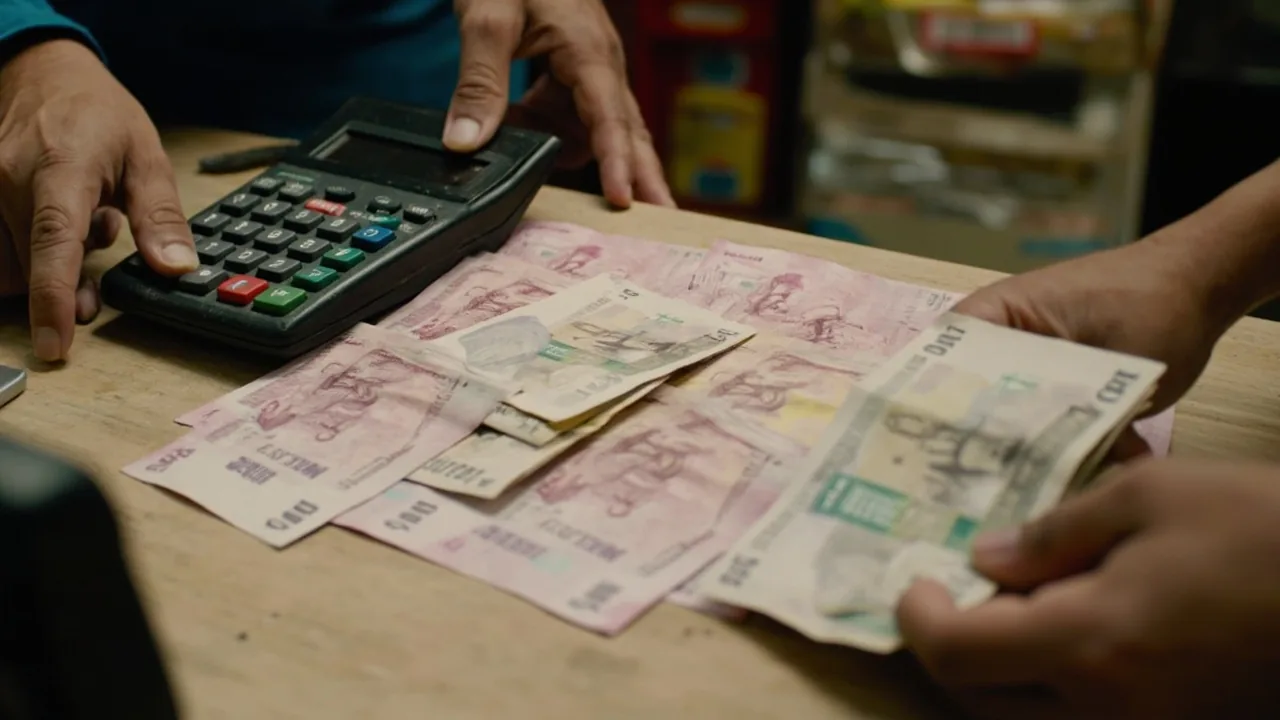
Tipping & Bargaining in Laos: Money Etiquette Every Indian Traveler Should Know
Laos runs on two informal rules that catch most Indian travellers off guard. First, tipping is not expected at most places, but rounding up or leaving small change in restaurants and for tuk-tuk drivers is appreciated and increasingly common in tourist hubs like Luang Prabang and Vang Vieng. Second, bargaining is reserved for markets, tuk-tuks without meters, and small stalls. Supermarkets, restaurants with printed menus, and anything with a price tag are fixed price. Get either wrong and you either look cheap or offend someone. For related planning, see our guide on Sea Backpacking Hub.
This guide, verified against traveller reports from July 2026 and cross-checked with the official Lao PDR tourism portal, covers both sides. You will get the exact kip amounts to anchor your bargaining, scripts in Lao that locals respond to, and a clear breakdown of when to tip, when not to, and how much. The FX rate used throughout is 1 INR = 233 LAK (1 LAK ≈ ₹0.0043 at current rates). You may also find Laos Trip Package From India useful for this trip.
Quick Answers
| What | Answer | Price (INR) |
|---|---|---|
| Is tipping expected in Laos? | No, but rounding up is appreciated in tourist areas | ₹43-₹86 (~10,000-20,000 LAK or ~$0.45-$0.90) for good restaurant service |
| When should I bargain? | Markets, tuk-tuks, small stalls only | Aim for 30%-50% off the first quote |
| When is bargaining rude? | Supermarkets, fixed-menu restaurants, with a price tag | Don’t even try |
| Best currency to carry? | Lao Kip (LAK) in cash + a forex card for ATMs | Mix of both |
| Worst mistake? | Paying in USD for small items (no change given) | Loses you 10%-15% in value |
| ATM fee in Laos | BCEL, LDB, JDB banks, AED 35,000-40,000 per withdrawal | ~₹150-175 ATM fee |
Note: 1 INR = 233 LAK at the rate used in this article. Always verify on the day using a reliable converter; rates drift by 1%-2% monthly.
How Tipping Works in Laos
Tipping in Laos is not a fixed part of the economy the way it is in the US. Most Lao service workers earn modest wages, and the cultural expectation is that prices are quoted inclusive. That said, tourism has shifted things in two specific places: Luang Prabang and Vang Prabang, the country’s main backpacker trail towns, where restaurant staff, tuk-tuk drivers, and tour guides now see regular tips from Western visitors.
The practical rules, based on what travellers report:
- Restaurants with table service: Round up the bill or leave ₹43-₹86 (~10,000-20,000 LAK or ~$0.45-$0.90). Anything above ₹216 (~50,000 LAK or ~$2.24) is generous.
- Street food stalls: No tip. The price is the price.
- Tuk-tuk drivers: Round up to the nearest ₹43 (~10,000 LAK or ~$0.45). For a ₹130 (~30,000 LAK or ~$1.34) fare, paying ₹173 (~40,000 LAK or ~$1.79) is standard.
- Tour guides (full day): ₹216-₹432 (~50,000-100,000 LAK or ~$2.24-$4.48) per person per day is fair.
- Spas and massage: ₹86-₹130 (~20,000-30,000 LAK or ~$0.90-$1.34) for a one-hour session.
- Hotel housekeeping: Not common. Some upscale properties in Luang Prabang leave envelopes; ignore otherwise.
The cleanest way to handle it: ask yourself, “Did this person go out of their way?” If yes, tip. If no, don’t force it. Lao staff will sometimes refuse a tip out of politeness. Insisting makes it awkward. A simple “khob chai” (thank you) and a small note left on the table works better than a verbal exchange.
Bargaining: Where It’s Real and Where It Isn’t
Bargaining is part of the morning market and night market culture, but it has clear boundaries. Trying to haggle at a restaurant with a printed menu marks you as either ignorant or disrespectful. Here is the breakdown of where bargaining is real:
Bargain here:
- Night markets (Luang Prabang, Vientiane): Souvenirs, textiles, paintings, lacquerware. First quote is usually 2-3x what locals pay.
- Morning markets (Talat Sao in Vientiane, Phosi Market in Luang Prabang): Food, produce, household items. Less aggressive haggling; 10%-15% off is realistic.
- Tuk-tuks without meters: Always agree on a price before getting in.
- Small stalls selling handicrafts: Especially around tourist sites.
- Slow boat ticket resellers: Yes, these are still a thing at Huay Xai.
Don’t bargain here:
- Supermarkets (Mini Mart, Big C)
- Restaurants with printed menus
- Anything with a visible price tag
- Government-run attractions (Kuang Si Falls entrance, national museum tickets)
- Convenience stores
- Anything in a mall
The Lao bargaining style is softer than Vietnam or Thailand. You are not supposed to have a loud, theatrical back-and-forth. A quiet smile, a counter-offer, and a walk-away gesture work best. If the seller doesn’t drop the price, walk away slowly. They will often call you back with a better price.
Bargaining Scripts That Work
These are the phrases that locals and experienced travellers report using. Pronunciation is approximate; Lao is tonal, but most sellers are used to butchered attempts from tourists.
- “Lao bor?” (How much?). Universal opener.
- “Too expensive, can you lower the price?”. English works in tourist markets.
- “Luean dai bor?” (Can it be cheaper?). A bit of Lao goes a long way.
- “Tohm lai lai” (A lot, a lot). When the price is too high.
- “Bor bo dai” (I can’t afford it). Polite refusal.
- “Sabai sabai” (Relaxed, easy). Used to keep the mood calm.
- “Khob chai” (Thank you). End every interaction, bought or not.
A real bargaining exchange at a Luang Prabang night market, as travellers describe it:
Vendor: “500,000 kip.” You: “Too expensive. 200,000 kip.” Vendor: “400,000 kip.” You: “250,000 kip, final price.” Vendor: “300,000 kip, last price.” You: Smile, walk 5 steps away. Vendor: “OK, 250,000 kip for you.”
That last step, the walk-away, is what gets you the actual fair price in 70% of cases. Skipping it means you pay the first-counter price, which is still 20%-30% above what locals pay.
Kip Conversion: The Math Most Indian Travellers Get Wrong
Laos is one of the few countries where the local currency has a lot of zeros. ₹43 (~10,000 LAK or ~$0.45) is about ₹43 (~$0.45). The number on the bill looks enormous to Indian eyes, which leads to two errors: tipping way too much, or paying in USD and losing value on exchange.
The clean way to think about it: drop the last three zeros and roughly halve the result. So ₹216 (~50,000 LAK or ~$2.24) ≈ 50 ÷ 2 = ~₹25 (~$0.26) in your head. It’s not exact (the actual rate gives ~₹215 (~$2.23) for ₹216 (~50,000 LAK or ~$2.24), so the mental math is off by a factor of 10), but the trick helps you avoid panic when you see a 150,000 LAK bill. For exact conversions, use an app or the currency converter tool. Always carry small notes. 10,000 and ₹86 (~20,000 LAK or ~$0.90) notes are common and useful. ₹432 (~100,000 LAK or ~$4.48) notes exist but smaller vendors sometimes can’t break them.
If you are using an ATM, understanding Laos ATM limits and fees saves you a chunk of change. BCEL charges ₹151-₹173 (~35,000-40,000 LAK or ~$1.57-$1.79) per withdrawal on foreign cards, which is ~₹150-₹175 (~$1.55-$1.81) per hit.
India-Specific Gotchas
A few things that trip up Indian travellers specifically:
- No UPI in Laos. Don’t expect Google Pay or PhonePe to work anywhere outside maybe high-end hotels. Carry cash or a forex card.
- Paying in USD is fine, but get change in LAK. If you hand over a ₹1,931 (~20 USD) for a ₹346 (~80,000 LAK or ~$3.58) meal, the vendor will likely short-change you in the math. Ask for kip change.
- No bargaining at Indian restaurants. Even though you’re used to haggling back home, restaurants like My kitchen Indian Authentic food have fixed prices. Don’t try.
- Veg food doesn’t cost less. At spots like Vegetarian Food in Vientiane, prices are the same as non-veg. Don’t expect a discount for ordering veg.
- Forex card markup. Most Indian bank forex cards charge 2%-3.5% markup. Niyo and Fi cards are closer to zero. Check before you fly.
- RBI’s LRS limit. The 20% TCS rule applies above ₹7 lakh per financial year spent abroad. For a 10-day Laos trip, you won’t hit this, but if you’re doing a longer SEA loop, tracking your TCS exposure matters.
Where to Eat (And When to Tip)
Food in Laos is cheap. A full meal at a local spot like Ma Maison Restaurant in Luang Prabang runs ₹130-₹259 (~30,000-60,000 LAK or ~$1.34-$2.69). Akhin Restaurant is similar, more of a street-side local feel. Go & new restaurant caters to a mix, slightly higher prices. Ping moo is the place for pork-heavy Lao dishes at budget rates.
For Indian food, My kitchen Indian Authentic food and Namlin Restaurant in Vientiane both serve familiar flavours at ₹173-₹346 (~40,000-80,000 LAK or ~$1.79-$3.58) per dish. Vegetarian Food is your go-to if you need a fully veg meal with no onion/garlic fuss.
The tipping rule for these: tip at Ma Maison or Akhin if the service was good (₹43-₹86 (~10,000-20,000 LAK or ~$0.45-$0.90)). Skip it at street stalls. At Indian restaurants, tip the same as you would back home, around 10% of the bill, since the staff are often Indian and the tipping norm travels with them.
When Bargaining Crosses the Line
Three scenarios where you should back off even if the price feels high:
- Artisans and craft sellers. If you are buying handwoven textiles from a Hmong or Khmu seller, the price reflects hours of labour. Bargaining them down to near-cost is exploitative. A 15%-20% discount from the first quote is fair. More than that is pushing it.
- Food vendors at morning markets. These are often elderly women selling what they grew. A 10% discount is the polite ceiling.
- Tour guides offering day rates. If a guide quotes ₹1,728 (~400,000 LAK or ~$17.91) for a full-day Kuang Si Falls tour, that’s already a fair rate. Trying to haggle it down to ₹1,080 (~250,000 LAK or ~$11.19) undercuts their labour.
The general principle: the more “Western” the seller (souvenir shops in the main tourist drag, tuk-tuk drivers at airports), the harder you can bargain. The more “local” the seller (morning market aunties, family-run noodle stalls), the softer you go.
Getting Connected
You will want data on your phone to check kip conversion rates, verify bank alerts from your forex card, and pull up maps in places where tuk-tuk drivers quote a price. The two main options:
- Physical SIM: Buy a Unitel or Lao Telecom SIM at the airport or any official store. Costs around ₹216 (~50,000 LAK or ~$2.24) for a week of data. Bring your passport.
- eSIM: If you want to skip the airport queue, Get Nomad eSIM and activate before you land. Coverage is solid in Luang Prabang, Vientiane, and Vang Vieng. Patchy in rural areas.
Either way, don’t rely on hotel Wi-Fi. Most guesthouses have weak signals, and you will want offline access to the Laos night market prices guide when bargaining.
FAQ
Is tipping mandatory in Laos restaurants? No. Tipping is appreciated but not expected. Round up the bill or leave ₹43-₹86 (~10,000-20,000 LAK or ~$0.45-$0.90) at sit-down places in tourist areas. Skip it at street stalls.
How much should I tip a tuk-tuk driver in Laos? Round up to the nearest ₹43 (~10,000 LAK or ~$0.45). If the fare is ₹151 (~35,000 LAK or ~$1.57), pay 40,000. If the driver helped with luggage or waited while you shopped, add another ₹43-₹86 (~10,000-20,000 LAK or ~$0.45-$0.90).
Can I pay in US dollars everywhere in Laos? Most tourist-facing places accept USD, but you’ll get kip change. Rates are usually worse than official. Use LAK for anything under ₹432 (~100,000 LAK or ~$4.48) and save USD for bigger purchases or border crossings.
What’s a reasonable discount to ask for at night markets? Aim for 40%-50% off the first quote. Vendors expect this. Starting lower is rude; landing higher means you paid near-tourist price.
Do I need to bargain at restaurants in Laos? No. Printed menus are fixed price. Trying to haggle is rude. This includes Indian restaurants like My kitchen Indian Authentic food and Namlin Restaurant.
Should I tip tour guides in Laos? Yes, if the service was good. ₹216-₹432 (~50,000-100,000 LAK or ~$2.24-$4.48) per person per day for a full-day guide is standard.
Can I use UPI in Laos? No. UPI doesn’t work in Laos. Carry a forex card (Niyo or Fi for lowest markup) and Lao Kip cash for daily expenses.
Subodh’s Take
Laos is the most laid-back country on the typical SEA backpacker trail, and the money etiquette reflects that. The biggest mistake I see Indian travellers make is over-thinking it. Most Lao vendors aren’t trying to scam you; they quote a fair tourist price and leave room for polite haggling. A smile, a “khob chai,” and a willingness to walk away get you further than aggressive bargaining. As for tipping, think of it as a small bonus, not an obligation. Round up when the service was good, don’t when it wasn’t. The country rewards relaxed travellers and punishes the uptight ones.
