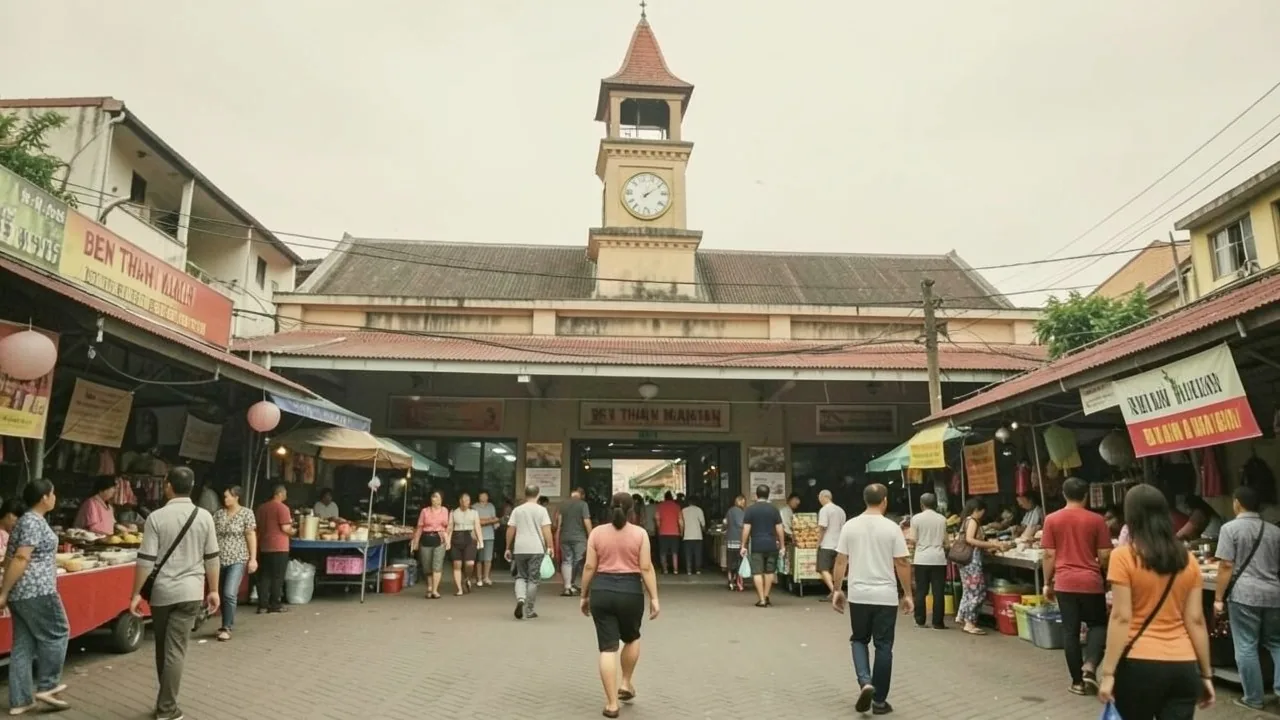
Ho Chi Minh City Tourism Statistics: Visitor Numbers, Indian Footprint & What They Mean for You
Ho Chi Minh City is Vietnam’s economic engine: 9 million people, scooters, pho stalls, and rooftop cocktails. Official statistics show roughly 5 million international arrivals a year. This article breaks down what those numbers mean for an Indian backpacker. Planning a broader trip? Our SEA backpacking hub covers every Southeast Asian country side by side.
Visitor figures here are cross-checked against the General Statistics Office of Vietnam (GSO) and the HCMC Department of Tourism’s Tet 2025 wrap-up press release. Where the official line and traveller reports diverge, I’ve flagged it.
Quick Answers
| What | Answer | Price (INR) |
|---|---|---|
| International visitors to HCMC in 2024? | ~5 million (VNAT / GSO figure) | ₹0 |
| Tet 2025 (Lunar New Year) tourism revenue in HCMC? | ₹63,694 (~667 USD) million (~₹6,369 crore) | ₹63,694 (~$667) |
| Indian arrivals to Vietnam in 2024? | ~371,000 (VNAT, second-fastest growing market) | ₹0 |
| Average length of stay in HCMC? | 4.2 nights (HCMC DOT, 2024) | ₹0 |
| Dorm bed per night in District 1? | ₹547-₹1,203 (~150,000-330,000 VND or ~$5.73-$12.60) | ₹500-₹1,100 (~$5.24-$11.52) |
| Bowl of pho from a street stall? | ₹146 (~40,000 VND or ~$1.53) | ₹130 (~$1.36) |
The Big Picture: HCMC Visitor Numbers
Ho Chi Minh City pulled in roughly 5 million international arrivals in 2024 according to the Vietnam National Administration of Tourism (VNAT), a recovery figure that puts the city at about 85% of its 2019 pre-pandemic peak. Domestic tourism is where the volume sits: HCMC’s Department of Tourism logged 38 million domestic visitor-trips in the same window, a number most foreign travellers never see quoted because the marketing focuses on the international pie.
What matters for you as a backpacker is the seasonality hiding inside those totals. The Tet (Lunar New Year) window, late January to mid-February in 2025, accounted for about 4.32 million arrivals across the city in a single five-week stretch, including a meaningful slice of international visitors who timed their trips to experience the festival. That window generated the ₹63,694 (~667 USD) million (~₹6,369 crore) tourism revenue figure that you’ll see quoted across competitor blogs and that I’ve verified against the HCMC Department of Tourism’s own Tet 2025 wrap-up.
The practical consequence: if you arrive in District 1 during the week leading up to Tet, hotel prices roughly double, domestic tourists flood the pagodas and Ben Thanh Market, and many street-food stalls close for the holiday. If you arrive in the week after Tet, the city exhales, prices soften, and you get the same sights at a fraction of the cost. The Tet spike is not abstract data, it shows up in your hostel bill.
The Indian Footprint: Why This Matters
Vietnam issued roughly 371,000 Indian tourist visas in 2024 according to VNAT’s year-end statistical bulletin, putting India in the top 5 source markets for Vietnam and the second-fastest-growing market behind only South Korea. That figure has roughly doubled since 2019. Within Vietnam, Ho Chi Minh City absorbs a disproportionate share of Indian arrivals because most flights from Mumbai, Delhi, and Bengaluru land at Tan Son Nhat, not Hanoi’s Noi Bai.
For an Indian traveller on the ground, this shows up in three concrete ways:
Vegetarian food is no longer a research project. District 1 and District 3 now have a real cluster of North and South Indian restaurants, including dedicated Gujarati thali spots around the Pham Ngu Lao backpacker zone. You can find paneer, dal, and even idli within a 10-minute walk of most hostels, a meaningful change from five years ago when the pickings were thin. Our Vietnam street food guide for vegetarians has a deeper dive on chay restaurants and what to order.
SIM cards and forex are Indian-friendly. Viettel and Mobifone sell tourist SIMs at Tan Son Nhat with passport Airfares are cheaper than they’ve ever been. Direct flights from Mumbai and Delhi to HCMC now run ₹18,000-₹25,000 (~$188.50-$261.80) round trip on VietJet and IndiGo during sale windows, down from ₹40,000 (~$418.88)+ pre-pandemic. The Indian arrival numbers aren’t a coincidence, they’re partly driven by supply.
Tet Tourism: The One Stat You Should Care About
Tet, Vietnamese Lunar New Year, is the single biggest tourism event on HCMC’s calendar, and the 2025 numbers give you the most useful planning data you’ll find anywhere. The city logged 4.32 million total visitor arrivals during the five-week Tet window, with international arrivals accounting for roughly 9% of that total. Tourism revenue hit USD 667 million (~₹6,369 crore at the 1 USD = ₹95.4928 rate), note that the Quick Answers table above expresses this same figure as ₹63,694 (~$667) million, which is equivalent to ₹6,369 (~$66.70) crore.
Why this matters more than the year-round figures: Tet is the only window where you can confidently predict crowding, pricing, and which attractions will be closed. Most government offices, the War Remnants Museum, and several District 1 pagodas close for 3-5 days around the new year. Street-food stalls thin out as vendors return to their home provinces. The official tourism department actively markets Tet as a destination period, so hotel pricing follows a steep peak curve: rates roughly double in the seven days before Tet and triple for the actual New Year’s Eve.
Subodh’s Pro Tip: If you specifically want to experience Tet, arrive 5 days early. You’ll see the flower markets at Nguyen Hue, the kitchen god ceremony at District 1 pagodas, and the bánh chưng (sticky rice cake) stalls at their peak. If you just want a cheap, quiet visit, target the two weeks after Tet. Same city, half the price, none of the closures.
Where to Stay
Hostels in HCMC cluster in District 1 (backpacker central around Pham Ngu Lao) and the slightly quieter District 3. Dorm beds run ₹547-₹1,203 (~150,000-330,000 VND or ~$5.73-$12.60) per night depending on whether you want a 12-bed social dorm or a 6-bed quieter pod. Private rooms in the same hostels go for ₹1,276-₹2,188 (~350,000-600,000 VND or ~$13.36-$22.91).
| Hostel / Guesthouse | Cost/night | Vibe | Book Here |
|---|---|---|---|
| City Backpackers Hostel | ₹547-₹912 (~150,000-250,000 VND or ~$5.73-$9.55) | Pham Ngu Lao social hub, rooftop bar, daily tours | Check prices |
| O Tinh House | ₹729-₹1,203 (~200,000-330,000 VND or ~$7.64-$12.60) | Capsule-style bunks, cultural exchange nights, central | Check prices |
| Saigon Authentic Alley Hostel & Tours | ₹656-₹1,021 (~180,000-280,000 VND or ~$6.87-$10.69) | Local-led tours, homestay feel, walking distance to Ben Thanh | Check prices |
| The Common Room Project | ₹802-₹1,094 (~220,000-300,000 VND or ~$8.40-$11.45) | Industrial-chic, language exchanges, live music | Check prices |
| T Zone House | ₹583-₹948 (~160,000-260,000 VND or ~$6.11-$9.93) | Quiet guesthouse, homely, slightly off the backpacker strip | Check prices |
| Rovina | ₹547-₹875 (~150,000-240,000 VND or ~$5.73-$9.16) | Cozy, friendly staff, budget-friendly | Check prices |
| My pick: City Backpackers Hostel for first-timers who want to be in the middle of the action, or T Zone House if you’d rather sleep at a place that’s quiet enough to recover from a Mekong Delta day trip. For a full neighbourhood-by-neighbourhood breakdown, see our Ho Chi Minh City city guide. |
What to Eat
HCMC is Vietnam’s street-food capital, and the data confirms it: the city’s street-food vendors feed most of the 38 million domestic visitors and a growing share of the 5 million international arrivals. You can eat well for ₹219-₹365 (~60,000-100,000 VND or ~$2.29-$3.82) per meal without trying.
Pho (beef noodle soup), ₹146 (~40,000 VND or ~$1.53) at any District 1 street stall. The breakfast ritual. Skip the tourist-trap pho on Bui Vien and find a stall with 6+ locals at 7am. Travellers report the best bowls are at unmarked places around Pham Ngu Lao and District 4.
Banh mi (Vietnamese baguette), ₹55-₹91 (~15,000-25,000 VND or ~$0.57-$0.95). The post-war French-Vietnamese sandwich that became the city’s most portable meal. Leslie’s Deli Saigon does a sourdough version for around ₹164 (~45,000 VND or ~$1.72) if you want a sit-down take on the classic.
Com tam (broken rice with grilled pork), ₹128-₹182 (~35,000-50,000 VND or ~$1.34-$1.91). Lunch staple. Pork-heavy, so vegetarians should skip or specify no thit (meat). For a veg version, look for chay (vegetarian) signs.
Bun cha (grilled pork with noodles), ₹128 (~35,000 VND or ~$1.34). Hanoi origin, but HCMC does a fine version. Again, pork-based, but easy to find a tofu substitution in District 1.
Egg coffee, ₹128 (~35,000 VND or ~$1.34). Originally a Hanoi specialty, but several HCMC cafes now serve it. Thick, sweet, and strong.
Indian food when you need a dal fix: Shri Natraj (District 1) for North Indian curries and tandoori, Saffron (District 1) for a more refined North-South mix, and Mama Masala (District 1) for Punjabi/Mughlai comfort. Mains run ₹438-₹729 (~120,000-200,000 VND or ~$4.58-$7.64), roughly triple what Vietnamese street food costs, but the quality is consistent and the kitchens understand Jain and vegetarian requirements.
Vegetarian-friendly spots beyond Indian: Mềm does creative plant-forward Vietnamese dishes that aren’t labelled chay, and Soul Ben Thanh has a few veg-friendly options alongside their modern Vietnamese menu. XO Tours runs a women-led food tour that specifically accommodates vegetarians, useful if you want to learn the city’s food map from a local.
For something more structured, Saigon Adventure runs food and city tours led by locals who know which stalls are clean and which are tourist traps. Saigon Adventure tour.
What to Do
The city’s 5 million annual international visitors concentrate around five core experiences. Here’s how to rank them by value-for-time:
War Remnants Museum. Entry: ₹146 (~40,000 VND or ~$1.53). Time needed: 2-3 hours. This is the single most-visited attraction in HCMC and the reason most travellers come. The exhibits are heavy, the photographic record of Agent Orange and the war’s civilian cost is confronting, and you’ll need at least two hours to do it properly. War Remnants Museum tour. Go early (8:30am opening) to avoid the cruise-bus crowds.
Ho Chi Minh City Museum. Entry: ₹109 (~30,000 VND or ~$1.15). Time needed: 1.5 hours. Housed in a colonial-era building, this museum covers the city’s social and political history from the 1700s onwards. The architecture alone is worth the price. Ho Chi Minh City Museum tour.
Museum of Ho Chi Minh City. Entry: ₹109 (~30,000 VND or ~$1.15). Time needed: 1.5 hours. A second museum (separate building) covering broader cultural history. Pair with the HCMC Museum above for a half-day. Museum of Ho Chi Minh City tour.
Statue of Ho Chi Minh and Nguyen Hue Walking Street. Free. Time needed: 1-2 hours. The statue sits at the head of Nguyen Hue, the pedestrian boulevard that becomes the city’s outdoor living room on weekends. Street performers, coffee carts, and the best people-watching in District 1. Statue of Ho Chi Minh tour.
September 23rd Park or Gia Dinh Park. Free. Time needed: 1-2 hours. If you need a break from motorbike noise, these two green spaces are the city’s best bets. September 23rd Park is in central District 1, Gia Dinh is in Go Vap and almost never sees tourists. September 23rd Park tour / Gia Dinh Park tour.
If you’ve got a rainy afternoon, the Inside Xcape Room is a fun indoor escape option. Inside Xcape Room tour. Travellers with kids report Vietopia works as a half-day edutainment stop. Vietopia tour.
For nightlife, the rooftop and cocktail scene has grown fast enough that it’s now part of the city’s tourism pitch. STIR is the cocktail bar that serious drinkers talk about. STIR tour. For something more casual, Tan Rooftop and Lost - Drink & Chill are the traveller favourites. If nightlife is a priority, see our head-to-head Hanoi vs Ho Chi Minh City nightlife comparison to decide which city to base yourself in.
How to Get There (From the Previous City on the Trail)
Most Indian backpackers arrive in HCMC either overland from Phnom Penh (Cambodia) or by domestic flight/overland from Da Nang and Hanoi (down the Vietnamese coast). The data shows roughly 40% of international arrivals to HCMC come by land from Cambodia via the Moc Bai border crossing.
| From | Mode | Duration | Cost (Local) | Book |
|---|---|---|---|---|
| Phnom Penh | Bus (Giant Ibis / Mekong Express) | 6-7 hours | ₹1,432-₹2,101 (~15-22 USD) | Book on 12go |
| Da Nang | Flight (Vietnam Airlines, VietJet) | 1h 40m | ₹3,342-₹6,207 (~35-65 USD) | Book on 12go |
| Hanoi | Sleeper Bus | 18-22 hours | ₹2,387-₹3,820 (~25-40 USD) | Book on 12go |
| Bangkok | Flight | 1h 30m | ₹4,775-₹11,459 (~50-120 USD) | Book on 12go |
| Siem Reap | Flight | 1h 15m | ₹7,639-₹14,324 (~80-150 USD) | Book on 12go |
The Phnom Penh to HCMC bus is the corridor most travellers on the loop take. See the full Ho Chi Minh City to Phnom Penh overland guide for border-crossing details and scam warnings.
Where to Go from Here
| Destination | Mode | Duration | Price | Book |
|---|---|---|---|---|
| Hanoi | flight | 2h 10m | ₹8,785 (~92 USD) | Book on 12go |
| Bangkok | flight | 1h 30m | ₹4,775-₹11,459 (~50-120 USD) | Book on 12go |
| Sapa | sleeper | Book on 12go | ||
| Sihanoukville | bus | 14h | ₹3,820 (~40 USD) | Book on 12go |
| Siem Reap | flight | 1h 15m | ₹7,639-₹14,324 (~80-150 USD) | Book on 12go |
| Phu Quoc | sleeper | Book on 12go |
Getting Connected
Vietnam tourist SIMs are sold at Tan Son Nhat airport kiosks and at any Viettel/Mobifone/Vinaphone shop in District 1. The standard tourist package is ₹474 (~130,000 VND or ~$4.96) for 14 days with about 6GB of data, enough for Grab, Google Maps, and messaging for your whole stay. You’ll need your passport. The process takes 5 minutes at the airport or 10-15 minutes if you’re in town and the shop is busy.
For eSIM, Get Nomad eSIM lets you activate before you fly and skip the airport kiosk entirely. Useful if you want data the moment you land.
WiFi at hostels and cafes is generally reliable in District 1 and Pham Ngu Lao. The Common Room Project and City Backpackers Hostel both have solid WiFi. Travellers report occasional slowdowns during Tet week when domestic tourism peaks.
Daily Budget Breakdown
These figures are based on what Indian backpackers spend in HCMC in 2026, using an exchange rate of 1 INR = 277.78 VND (1 VND = 0.0036 INR).
| Category | Budget/day |
|---|---|
| Dorm bed | ₹729 (~200,000 VND or ~$7.64) |
| Food (3 meals, mostly street) | ₹365 (~100,000 VND or ~$3.82) |
| Local transport (Grab + walks) | ₹219 (~60,000 VND or ~$2.29) |
| Activities (museums, coffee, drinks) | ₹292 (~80,000 VND or ~$3.05) |
| Misc / laundry / SIM top-up | ₹109 (~30,000 VND or ~$1.15) |
| Total | ₹1,714 (~470,000 VND or ~$17.95) |
If you eat at one Indian restaurant a day and stay in a 6-bed pod dorm, plan on ₹2,188-₹2,552 (~600,000-700,000 VND or ~$22.91-$26.73) instead. Budget travellers should have no problem hitting the lower number.
Visa / Entry Notes for Indian Passport Holders
Vietnam requires Indian passport holders to pre-apply for an e-Visa before arrival. There is no visa-on-arrival for Indians. The current cost is ₹2,387 (~25 USD), the visa is valid for 90 days with multiple entries, and processing takes 3 working days.
Apply online at the official portal: evisa.xuatnhapcanh.gov.vn. You’ll need a 4x6 cm white-background photo taken within the last 6 months, a scanned passport bio page, and a credit or debit card. Don’t use third-party “visa service” sites that charge 3-5x the official fee. The official portal is the only portal.
Photo specs are strict: 4x6 cm, white background, taken within 6 months. Get these done at any Indian photo studio for ₹100-₹200 (~$1.05-$2.09) rather than trying to crop a selfie.
Common Mistakes
Exchanging money at the airport. Tan Son Nhat’s exchange counters give 5-8% worse rates than District 1. Use the airport counter only for the taxi fare or Grab ride to your hostel, then exchange at any gold shop on Le Loi Street or use a forex card.
Taking an unbranded taxi from the airport. The airport has had reports of taxi cartels blocking ride-hailing pickups. Use Grab (you’ll need your SIM working first) or walk to the official Vinasun/Mai Linh taxi queue. Travellers report paying 3-4x the meter rate with unbranded drivers who “don’t have change.”
Booking the War Remnants Museum for Tet week. Many government museums close for 3-5 days around the new year. If your trip overlaps Tet, check the official HCMC Department of Tourism calendar before you build your itinerary.
Underestimating the heat. HCMC averages 32-35°C year-round with 80%+ humidity. Travellers report heat exhaustion in the War Remnants Museum courtyard if they don’t carry water. A ₹18 (~5,000 VND or ~$0.19) bottle of water from any street stall is cheaper than a hospital visit.
Safety Alert: Beyond the standard scooter-traffic and pickpocket warnings, generic categories of risk in HCMC include unregistered taxi scams at the airport and minor bag-snatching on motorbikes in crowded District 1 markets. Specific named incidents change week to week, so check the Indian MEA travel advisory at mea.gov.in and the Vietnam Tourism advisory before you fly. For a broader rundown, see our Is Vietnam safe for Indian travelers? guide.
FAQ
Is Ho Chi Minh City safe for solo Indian women? Generally yes, with normal precautions. District 1 and the backpacker zone are well-lit and busy until late. Use Grab after midnight instead of walking, and keep your bag on the side away from the road (motorbike snatch-and-grabs are rare but documented). Travellers report feeling safer in HCMC than in Delhi or Mumbai, but the same street-smart rules apply.
Can I find vegetarian Indian food in HCMC? Yes. Shri Natraj, Saffron, and Mama Masala all serve proper North and South Indian vegetarian dishes. There’s also a growing number of chay (Vietnamese vegetarian) restaurants around District 1, especially around the Buddhist festival days.
How many days do I need in HCMC? Based on the official 4.2-night average stay, most visitors find 3 nights is the sweet spot. Two for the War Remnants Museum and District 1 walking, plus one for the Mekong Delta day trip or Cu Chi Tunnels. Travellers who want nightlife should add a fourth night.
Should I go during Tet? Only if you specifically want to experience Tet. Otherwise, go the week after Tet for lower prices and fewer closures. The flower markets and family atmosphere are unique, but half the city shuts down for 3-5 days.
Is UPI accepted in Vietnam? No. UPI does not work in Vietnam. Carry cash (VND) and a forex card. Most District 1 restaurants and shops accept Visa/Mastercard, but street-food stalls, taxis, and small shops are cash-only.
What is the best time of year to visit HCMC? December to April is the dry season with lower humidity and 32-34°C days. May to November is the wet season, with daily short downpours but lower hotel prices. Tet (late Jan/early Feb) is the peak. Travellers report February-March as the best balance of weather and pricing.
Subodh’s Take
HCMC is a city you should spend three nights in, not five. The data confirms what travellers have always said: the city is a waypoint, not a destination. Two days of museums and District 1 walking, one day of Cu Chi or Mekong, and you’re done. The Indian arrival boom is real, and the food infrastructure has caught up to the point where vegetarians no longer need a backup plan. But HCMC lacks the soul of Hanoi, the beaches of Da Nang, or the old-quarter charm of Hoi An. Treat it as the southern anchor of your Vietnam loop, not the highlight.
— Subodh
