Hoi An Lantern Festival Guide: Dates, Meaning & Prices
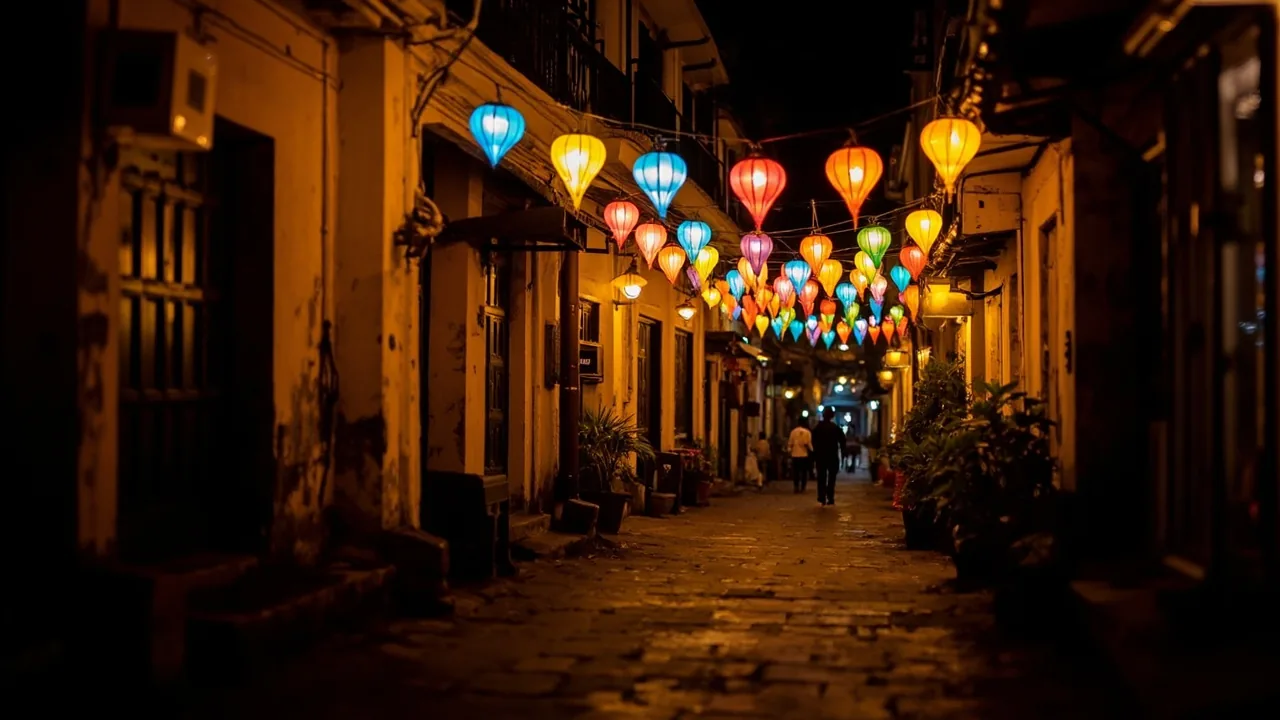
Hoi An’s Ancient Town turns into a candlelit, silk-coloured postcard every full-moon night. Below are the hoi an lantern festival dates, the cultural meaning, the real prices for lanterns and river boats, and the Old Town spots worth queuing for. For related planning, see our guide on Sea Backpacking Hub.
Subodh’s Pro Tip: Do not buy your lantern from the first vendor you see inside the Old Town ticket gate. Walk two streets back toward the river-side tailors and you will pay roughly a third less for the same silk-and-bamboo product, and the sellers there will show you how to fold it without it catching fire mid-release.
Quick Answers
| What | Answer | Price (INR) |
|---|---|---|
| Hoi An Lantern Festival annual date 2026 | 28 September 2026 (15th day of 8th lunar month) | ₹0 |
| Monthly full-moon lantern night | Every 14th day of the lunar month | ₹0 |
| Old Town entry ticket | Required after 5pm most nights (~120,000 VND or ~$4.57) | ₹441 (~$4.58) |
| Paper lantern (small silk, river-release size) | ~₹110-₹294 (~30,000-80,000 VND or ~$1.14-$3.05) | ₹110-₹294 (~$1.14-$3.05) |
| Hoai River boat ride with lantern release | ~₹551-₹918 (~150,000-250,000 VND or ~$5.72-$9.53) per boat | ₹551-₹918 (~$5.72-$9.53) |
| Hoi An to Da Nang sleeper bus | ~₹441 (~120,000 VND or ~$4.57) | ₹441 (~$4.58) |
What the Hoi An Lantern Festival Means
The Hoi An Lantern Festival is not the Chinese Lantern Festival, despite what a lot of English-language blog posts claim. It is a local Vietnamese celebration rooted in two things: the Hoi An merchant town’s centuries-old trading culture with Chinese and Japanese sailors, and the folk belief that lanterns carry prayers, regrets, and wishes downriver.
The annual big night falls on the 15th day of the eighth lunar month, which is the same night as the Mid-Autumn Festival (Tết Trung Thu). In 2026 that day is 28 September, and the entire Ancient Town switches off its electric lights from roughly 6pm until late. Local families set up altars by the Hoai River, kids carry star-shaped lanterns in parades, and thousands of paper lanterns float down the river at the same moment.
The monthly version, which is what most backpackers see, happens on the 14th day of each lunar month. Compare this with our Hoi An nightlife guide for what else is on after dark. The Ancient Town is vehicle-free, electric lights are dimmed, coloured silk lanterns line every street, and you can release a lantern on the river for a small fee. The dates shift each month, so check a lunar calendar before booking your flight. In 2026 the monthly dates fall roughly on: 22 February, 23 March, 22 April, 22 May, 20 June, 20 July, 18 August, 16 October, 15 November, and 15 December. The annual festival is 28 September.
Subodh’s Pro Tip: The 14th-day monthly version is what most travellers experience, and the atmosphere is roughly 80% of the big September night without the overwhelming crowd. If your schedule is flexible, hit two monthly nights back-to-back rather than fight the September crowds.
When to Go and How Long to Stay
Two nights in Hoi An is the right amount: one for the Old Town walking loop during the day, one for the full-moon lantern night. Three nights lets you add the beach at An Bang or a cooking class without rushing.
October to February is the sweet spot weather-wise, with cooler temperatures, less rain, and river lanterns that do not wilt in the humidity. April to August is hotter and wetter, but the monthly full-moon nights still run. Tet (late January or early February, depending on the lunar calendar) means many lantern shops close for a week, so check the dates before booking.
Where to See the Lanterns in the Old Town
The whole Ancient Town lights up on full-moon night, but a few spots are worth staking out:
The Japanese Covered Bridge is the most photographed lantern spot, and for good reason. The 18th-century bridge glows red under silk lanterns, and the river reflection doubles the photo. Arrive by 6pm or expect a queue.
Bach Dang Street along the Hoai River is where the lantern boats launch. The north end near the bridge is the busiest, the south end near the night market is more relaxed and usually has a few boats free even at peak.
Tran Phu Street, the main walking street, runs parallel to the river and has the densest concentration of hanging lanterns. The tailors here compete for the best displays, so walking the full length is worth it.
An Hoi Bridge, just across the river from the main Old Town, gives you a different angle, looking back at the lit-up Ancient Town. Less crowded, easier photos.
Where to Stay: Hostels in Hoi An
Hoi An does not have a strong “party hostel” scene the way Hanoi Old Quarter or Da Nang does. Most backpacker hostels here lean toward chill garden courtyards, swimming pools, and cycling tours. Pick based on proximity to the Old Town, since you will walk there every evening anyway.
Dorm beds in Hoi An run ₹386-₹881 (~105,000-240,000 VND or ~$4-$9.15) per night depending on season and whether the hostel has a pool, which is cheaper than Hanoi or HCMC.
Look for hostels with a garden courtyard, free bicycle hire, and walking distance to the Old Town. Social hostels with communal dinners are common in Hoi An and a good way to meet other travellers.
If you are travelling with a partner and want a private room, expect ₹1,469-₹2,938 (~400,000-800,000 VND or ~$15.25-$30.49) for a decent double outside peak festival week.
Lantern Prices and Where to Buy
A proper silk-and-bamboo lantern, the kind you can float on the river without it sinking in ten seconds, runs ₹110-₹294 (~30,000-80,000 VND or ~$1.14-$3.05) for a small one and ₹294-₹551 (~80,000-150,000 VND or ~$3.05-$5.72) for a large painted one.
Cheaper plastic-and-paper lanterns are ₹37-₹73 (~10,000-20,000 VND or ~$0.38-$0.76), but they often sink or catch fire mid-release, and you will see locals fishing them out of the river for the next two days. Spend the extra ₹73 (~20,000 VND or ~$0.76).
Where to buy:
- Inside the Old Town ticket gate: convenient but pricier, expect ₹184-₹294 (~50,000-80,000 VND or ~$1.91-$3.05) for the same lantern you would get for ₹110-₹184 (~30,000-50,000 VND or ~$1.14-$1.91) outside.
- Nguyen Hoang Street and the riverside tailors: the wholesale side, where the lantern-makers live and work.
- The night market on Bach Dang: tourist-friendly, fixed prices, open from roughly 5pm.
Most vendors will sell you a small candle for ₹18-₹37 (~5,000-10,000 VND or ~$0.19-$0.38). You light it, set the lantern on the water, and let it drift.
Subodh’s Pro Tip: If the vendor tries to sell you a “lucky” red lantern for ₹734 (~200,000 VND or ~$7.62), walk away. The colour does not change the luck, only the markup.
Hoai River Boat Ride and Lantern Release
The full experience is a small sampan boat, lit with a couple of lanterns itself, taking you out for 20-30 minutes while you release your lantern. The going rate is ₹551-₹918 (~150,000-250,000 VND or ~$5.72-$9.53) per boat, which fits two people comfortably, or ₹277-₹462 (~$2.88-$4.80) per person if you split with a friend.
Boats queue up on the south side of Bach Dang Street near the night market. You can also book through your hostel for ₹734-₹1,102 (~200,000-300,000 VND or ~$7.62-$11.43) including pickup, which is worth it if you are staying 2km outside the Old Town.
The Hoai River Boat Trip by Night with Release Lantern is the standard product offered in Hoi An. See Hoai River Boat Trip tours on GetYourGuide. Most tour operators include the lantern in the price; some charge an extra ₹110-₹184 (~30,000-50,000 VND or ~$1.14-$1.91) for it. Ask before you board.
What to Eat Around the Festival
The Old Town food scene does not stop for full-moon nights. In fact, the riverside restaurants get busier. For local Hoi An dishes, Cao Lau (the town’s signature pork-and-noodle dish), white-rose dumplings, and banh mi from a corner stall are the three things you should not leave without trying.
For a sit-down Vietnamese dinner, Nhan’s Kitchen, The Soul Restaurant, and Le Petit Bistro Hội An are well-rated local spots, with Cao Lau and other regional dishes done properly. Grandma Kitchen and A Little Kitchen Restaurant are family-run and cheaper, with portions that fill you up after a long walking day.
For Indian or strict-veg food, MẸT Hội An has a dedicated vegetarian Vietnamese menu in a restored colonial building, with the Cao Lau done vegetarian for around ₹220-₹330 (~60,000-90,000 VND or ~$2.29-$3.43). They have two branches in town, both rated 4.9, and the staff are used to Indian dietary requirements.
A typical meal runs ₹147-₹330 (~40,000-90,000 VND or ~$1.52-$3.43) at a local place, ₹367-₹734 (~100,000-200,000 VND or ~$3.81-$7.62) at a mid-range spot.
Getting Around Hoi An
The Old Town is closed to motorbikes from around 9am to 11pm most days, with full closure on the 14th lunar nights. Walking is the answer for the Ancient Town itself.
Grab bike (motorbike taxi) for short hops to An Bang beach or the tailors’ district: ₹37-₹92 (~10,000-25,000 VND or ~$0.38-$0.95). Grab car for groups or luggage runs: ₹147-₹294 (~40,000-80,000 VND or ~$1.52-$3.05). Bicycle: most hostels lend them free. The ride from An Bang beach to the Old Town is 10 minutes.
Hoi An does not have a train station or an airport. The nearest airport is Da Nang (DAD), 30km north. From Da Nang, the easiest onward options are:
- Sleeper bus to Hoi An: ₹441 (~120,000 VND or ~$4.57), about ₹444 (~$4.61), 60-90 minutes. Book a few days ahead for full-moon nights since demand spikes.
- Private car from Da Nang: ₹1,285-₹1,836 (~350,000-500,000 VND or ~$13.34-$19.06), about ₹1,295-₹1,850 (~$13.44-$19.20).
Where to Go from Here
Most backpackers pair Hoi An with Da Nang (30km north) and then push inland toward Hanoi or south to HCMC. The Da Nang to Hoi An run is one of the cheapest and easiest hops in Vietnam.
From Hoi An to Da Nang: Book on 12go (₹55-₹110 (~15,000-30,000 VND or ~$0.57-$1.14) local bus). From Hoi An to Hue (a popular two-day add-on): Book on 12go (₹661-₹918 (~180,000-250,000 VND or ~$6.86-$9.53)). From Da Nang to Hanoi by sleeper train: Book on 12go (₹1,285-₹2,570 (~350,000-700,000 VND or ~$13.34-$26.68)).
Getting Connected
Buy a Vietnamese SIM at the airport (Viettel or Mobifone both work well, ₹367-₹551 (~100,000-150,000 VND or ~$3.81-$5.72) for a month with 3-5GB/day). Inside Hoi An, any travel agent on Phan Chau Trinh Street sells the same packages for the same price. If you would rather skip the airport queue, Get Nomad eSIM lets you activate before you land.
Night Safety in Hoi An
Hoi An is one of the safest towns in Vietnam for night walks, but a few things to know:
The Old Town ticket scam: From 5pm onwards, you need a valid entry ticket (₹441 (~120,000 VND or ~$4.57) for the standard pass, free for kids under 15). Some touts at the gates offer “cheaper” tickets, which turn out to be expired or fake. Buy direct at the official ticket booths.
Boat overcharging: If the boatman quotes ₹1,469 (~400,000 VND or ~$15.25), walk ten steps to the next boat. The standard rate is ₹551-₹918 (~150,000-250,000 VND or ~$5.72-$9.53) per boat.
Pickpocketing in lantern crowds: The Japanese Covered Bridge area and the riverside launch points get shoulder-to-shoulder packed on the September festival night. Front-pocket your phone and passport.
Lantern fire hazard: Cheap lanterns leak wax and the flame can catch your shirt on fire, especially when you lean over the boat to set it down. Burn the candle down halfway before you launch.
Safety Alert: For any current advisory updates, check the Indian Ministry of External Affairs travel page at mea.gov.in before you fly. Vietnam is generally low-risk, but advisories update around elections, typhoon season, and Tet.
Festival Etiquette
A few things worth knowing so you do not embarrass yourself in front of the locals:
The lanterns are for wishes, not photo props. If you see locals writing a note inside the lantern before releasing it, that is the actual tradition. Tourists who chuck an empty lantern in for the photo miss the point entirely.
Dress modestly at temples. The full-moon lantern night coincides with active prayers at assembly halls like Fujian and Cantonese. Cover shoulders and knees if you walk in.
The electric lights will come back on around 9-9:30pm. The “no electric lights” phase is roughly 6pm-9pm. Plan your best photos for that window.
Tip the boatman ₹73-₹184 (~20,000-50,000 VND or ~$0.76-$1.91) if the ride was good. It is not mandatory but it is the right thing to do.
Common Mistakes Indians Make in Hoi An
Booking the September festival and only staying one night. The annual festival is one night. If your flight is off by a day, you have just spent a September flight for a normal Old Town evening. Either arrive two nights before or build your trip around a monthly full-moon night.
Confusing the monthly full-moon night with the annual festival. They are different things. The monthly is the 14th, the annual is the 15th of the eighth lunar month. The annual one is bigger but the monthly is 80% of the atmosphere with 30% of the crowd.
Skipping the Old Town ticket because “I will only walk through”. Ticket booths check at every gate from 5pm. The ₹441 (~120,000 VND or ~$4.57) ticket also covers entry to five museums and heritage houses, so use it for daytime visits too.
Buying the first lantern inside the gate. Walk outside the ticket zone for the same product at a third off.
Drinking tap water on lantern boats. The river is not clean. Stick to bottled water and ask your boat operator for a sealed bottle.
FAQ
Is the Hoi An Lantern Festival safe for solo female travellers?
Yes. Hoi An is consistently rated one of the safer towns in Vietnam for solo female travellers, and the lantern nights are family-friendly with most crowds staying until around 9-10pm. Standard precautions: front-pocket your phone, do not walk alone down dim alleyways past midnight, and use Grab if you are staying outside the Old Town.
Do I need the Old Town ticket on full-moon night?
Yes. The ₹441 (~120,000 VND or ~$4.57) ticket is required from 5pm on full-moon nights, and the gates are staffed. The same ticket gets you into five heritage houses and museums during the day, so it is worth the cost.
Can I bring kids to the lantern release?
Absolutely. The full-moon night is family-friendly and you will see Vietnamese kids in traditional ao dai carrying star lanterns. The boat ride is fine for older kids; skip it if you have a toddler since the river edge is not fenced.
What is the legal drinking age in Vietnam?
18, and the bars in Hoi An follow this loosely. You will not be carded at most spots, but bring your passport if you look under 25. Some bars refuse entry on full-moon nights if you do not have ID.
Do I need to book the boat in advance?
For the September annual festival, yes, 2-3 days ahead. For monthly full-moon nights, walk-up is fine on weekdays, but Friday and Saturday monthly nights in October-December get busy. Your hostel can usually book for you at no markup.
Is Hoi An worth visiting outside full-moon nights?
Yes. The day-time Old Town, the tailoring shops, the cooking classes, the beach at An Bang, and the riverside restaurants are worth three nights on their own. The full-moon lantern night is the cherry on top, not the whole sundae.
Can I launch my own lantern without a boat?
Technically yes. You can kneel by the river edge and set a small lantern on the water. In practice, the river bank is fenced in most spots during full-moon nights, and the boat operators do not love you releasing from the wall because it tangles with their paying customers. Pay for the boat, it is part of the experience.
Subodh’s Take
Hoi An is the one town in Vietnam where you should plan your whole trip around a lunar calendar, not a flight schedule. The monthly full-moon lantern night is genuinely one of the most atmospheric experiences in Southeast Asia, and unlike the bigger festivals in Thailand or Bali, it is not overrun with a single nationality of tourist. The September annual lantern festival is bigger, but the monthly version is the move for most backpackers, less crowded, cheaper, and the same lanterns floating down the same river. Spend two nights, walk the Old Town once in daylight and once at night, eat a Cao Lau at MẸT, and book the boat.
