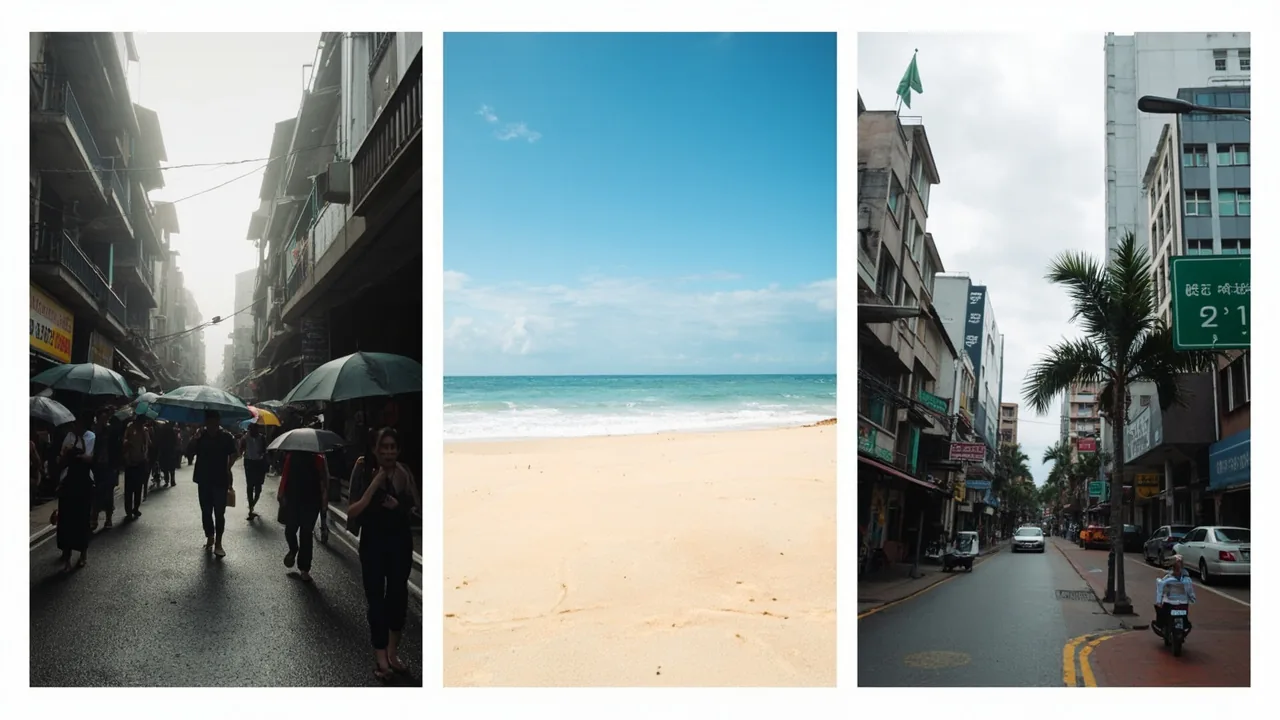
Vietnam Weather by Month and Region: North vs Central vs South (Stop Getting Confused)
Vietnam is the most confusing country in Southeast Asia for Indian backpackers planning around weather. The reason is simple: Vietnam has three distinct climates. Hanoi, Da Nang, and Ho Chi Minh City can all be having completely different seasons on the same week in October. The pattern is consistent enough to plan around.
The rule of thumb:
- North Vietnam (Hanoi, Sapa, Ha Giang, Ninh Binh, Ha Long Bay): cool-dry from November to March, hot-humid with typhoons from June to September.
- Central Vietnam (Da Nang, Hoi An, Hue, Nha Trang): rainy from September to February (typhoon season peaks October-November), dry and hot from March to August.
- South Vietnam (Ho Chi Minh City, Mekong Delta, Phu Quoc): dry from December to April, wet from May to November with daily afternoon downpours.
If you’re doing a multi-city loop (Hanoi → Da Nang → HCMC or similar), the three regions will likely fight you at least once. This guide maps it month by month so you don’t book a Hue beach trip during typhoon week or a Phu Quoc beach week during Mekong flooding. For a broader overview of Southeast Asia weather patterns, check our SEA backpacking hub.
Subodh’s Pro Tip: If your dates are fixed and you must hit all three regions, do North first (Nov-Feb is its peak), then fly south to HCMC, then loop up the coast through Da Nang and Hoi An from March onward when Central dries out. This routing dodges both the northern summer monsoon and the central typhoon peak.
Quick Answers
| What | Answer | Price (INR) |
|---|---|---|
| Best month overall for all three regions | Late December to early February | Free to plan around |
| Worst month for typhoons in Central Vietnam | October (peak) | Flights spike ₹11,049-₹29,464 (~3,000,000-8,000,000 VND or ~$114.61-$305.63) |
| When is the North coolest? | December and January (10-18°C in Hanoi, near 0°C in Sapa) | Jacket costs ₹737-₹1,842 (~200,000-500,000 VND or ~$7.64-$19.10) |
| When is the South wettest? | July to September (daily afternoon downpours) | Mekong tours drop 30-50% |
| Cheapest month to fly into Vietnam | May, June, September | Round trip from India ~₹18,000 (~$186.71) |
Why Vietnam Has Three Climates
Vietnam stretches over 1,650 km from north to south, with the Truong Son mountain range cutting Central Vietnam off from the monsoon flows that hit the North and the South differently. The North faces the Gulf of Tonkin and gets the East Asian winter monsoon (cold, dry) and the summer typhoon belt. The Central coast sits in the rain shadow of those mountains and gets its own typhoon season, offset by about two months from the North. The South sits in the Mekong Delta and gets the southwest monsoon (wet from May to November) but never sees the winter cold, so temperatures stay 25-35°C year-round.
This is why a Hanoi December (12°C, foggy, sweater weather) and a Ho Chi Minh City December (32°C, sunny, no jacket needed) feel like two different countries. They are, weather-wise.
Month-by-Month Breakdown (All Three Regions)
The table below maps what each region is doing in each month. Read it vertically for any single month across all three regions, and read it horizontally to plan a multi-city trip.
| Month | North (Hanoi, Sapa) | Central (Da Nang, Hoi An, Hue) | South (HCMC, Mekong, Phu Quoc) |
|---|---|---|---|
| January | Cool & dry, 10-18°C, fog in Hanoi, possible snow/ice in Sapa. Peak season. | Cool & wet, 18-22°C, ongoing drizzle, typhoon risk low but possible. | Dry & sunny, 25-32°C. Peak season for beach trips. |
| February | Cool & dry, 12-20°C. Tet (Lunar New Year) crowds and price spikes. | Cool & wet, drizzle continuing, occasional cold snap. | Dry & sunny, 26-33°C. Best beach month. |
| March | Warming up, 18-24°C, drizzles end. Pleasant. | Warming up, 22-26°C, rain easing. Good window opening. | Hot & dry, 28-34°C. Hottest month. |
| April | Warm & humid, 22-28°C. Pleasant. | Dry season begins, 24-30°C. Excellent window. | Hot & dry, 28-35°C. Stay hydrated in Mekong. |
| May | Hot & humid, 26-32°C, pre-monsoon. | Dry & hot, 26-34°C. Beach weather peaks. | Wet season starts, daily short showers. |
| June | Hot & rainy, 28-34°C, afternoon storms. | Dry & hot, 28-36°C. Peak beach crowds. | Wet & humid, 27-33°C, afternoon rain. |
| July | Hot & rainy, 28-35°C. Typhoon risk starts. | Dry & hot, 29-36°C. Best beach month. | Wet, heavy afternoon rain, flooding risk in HCMC. |
| August | Hot & rainy, 28-34°C. Peak typhoon risk. | Dry & hot, 29-35°C. Still good. | Wet, heavy rain, Mekong flooding. |
| September | Cooling, rain easing, 26-30°C. | Rainy season starts, typhoon risk begins late month. | Wet, daily rain, but easing late month. |
| October | Cool & dry, 22-28°C. Best month of the year. | Peak typhoon & flood season, 22-28°C. Worst month. | Wet & easing, 26-31°C. Mekong tours resume. |
| November | Cool & dry, 18-24°C. Excellent month. | Rain continues, typhoon risk drops late month. | Wet season ends, 25-30°C. |
| December | Cool & dry, 12-20°C. Fog in Hanoi. Peak season. | Cool & wet, 18-23°C. Rain ongoing. | Dry & sunny, 25-32°C. Peak season begins. |
The single most useful planning insight from this table: April and October are the best months to do a Hanoi → Da Nang → HCMC loop, because April is the only month all three regions are pleasant, and October is the only month when the South is wet but bearable while the North is at its best. August is the worst month to plan a multi-city trip, since the North is in typhoon peak, the Central is hot but tolerable, and the South is flooding.
Vietnam Weather in Detail
North Vietnam (Hanoi, Sapa, Ha Giang, Ninh Binh, Ha Long Bay)
The North has four real seasons, which is unusual for Southeast Asia.
- Winter (Dec-Feb): 10-18°C in Hanoi, often colder with wind chill. Sapa and Ha Giang can drop to 0-5°C with ice on the road and the rare snow flurry. Fog in Hanoi disrupts flights in and out of Noi Bai occasionally. This is peak tourist season: hostels in Hanoi’s Old Quarter fill up around Tet (Lunar New Year, late Jan or early Feb depending on the lunar calendar), and prices double. Book dorm beds 2-3 weeks ahead for Tet week.
- Spring (Mar-Apr): 18-28°C, low humidity, occasional drizzle. Pleasant and quiet. The best window for the Ha Giang Loop motorbike route.
- Summer (May-Aug): 28-35°C, humid, daily afternoon thunderstorms. Typhoon season peaks August. This is when the North becomes genuinely hard to travel: roads in Ha Giang and Sapa get washed out, ferries to Cat Ba and Ha Long Bay cancel for 2-3 day stretches, and Hanoi itself sweats at 90% humidity.
- Autumn (Sep-Nov): The reward for surviving summer. 20-28°C, dry, clear skies. October is widely considered the best month in the North for weather alone. November cools toward winter.
Safety Alert: If you’re doing the Ha Giang Loop in June, July, or August, check the road report the morning of departure. Travellers report landslides closing the Dong Van plateau road for 1-3 days at a stretch during heavy rain weeks. The loop is still doable, just slower.
Central Vietnam (Da Nang, Hoi An, Hue, Nha Trang, Quy Nhon)
Central Vietnam has the country’s typhoon season, which is offset from the North’s by about two months. The mountains along the Laos border block most typhoons from hitting the North directly, but Central Vietnam’s coast faces the South China Sea head-on.
- Wet season (Sep-Feb): 18-26°C, persistent drizzle, typhoon risk peaking October-November. Hue floods every year during typhoon season, sometimes badly (the 2020 floods were catastrophic, and 2024 saw serious flooding again). Hoi An’s UNESCO old town floods when the Thu Bon River overtops its banks, usually 2-4 times a year between October and December.
- Dry season (Mar-Aug): 24-36°C, low humidity, mostly clear. June, July, and August are the hottest months, but they’re also beach-perfect and the sea is calm. This is the peak window for Da Nang, Hoi An, and Nha Trang.
- Shoulder (Mar & Aug-Sep): April and September are shoulder months where one end of the season overlaps with the other, but they’re usually pleasant.
The single best week for Central Vietnam weather is usually mid-March to mid-April, when the rain has stopped, the summer heat hasn’t peaked, and the beaches are quiet before European summer holidays start.
South Vietnam (Ho Chi Minh City, Mekong Delta, Phu Quoc, Dalat)
The South has two seasons, not four, and the temperatures barely change year-round (25-35°C almost always).
- Dry season (Dec-Apr): 25-35°C, low humidity by Vietnam standards (still 60-70%, but better than the North), almost no rain. Peak tourist season, especially December and January when Russian and European tourists flee winter. Phu Quoc beaches are at their best.
- Wet season (May-Nov): 26-33°C, high humidity (80%+), heavy afternoon downpours lasting 1-2 hours. The rain is predictable: morning sun, afternoon storm, evening clears. Flooding in HCMC and the Mekong Delta is a real problem in July, August, and September, with streets going under 30-50 cm of water for hours. Phu Quoc’s waters get rough and some boat tours cancel.
- Shoulder (May & Nov): Late May and November are the shoulder windows where the rain is lighter and prices are lower.
Subodh’s Pro Tip: Don’t write off the South’s wet season. The rain is short and predictable. You can plan tours for the morning and you’ll usually be fine. And hostels in HCMC drop to their lowest prices in July and August. The Mekong Delta floating markets (Cai Rang, Cai Be) run year-round, but they’re quieter and easier to photograph in the wet season.
Best and Worst Months to Visit Vietnam (Summary)
Pros of visiting Vietnam:
- November to February is the peak dry-cool window across the North and South. Central is wet but still visitable.
- April to August is the dry window across Central and South. North is wet but still travelable.
- April and October are the only two months where a North-Central-South loop works in a single trip.
- Shoulder months (May, September) offer 30-40% lower hostel and flight prices.
Cons of visiting Vietnam:
- Typhoon season in Central (September-November) causes flight cancellations, road closures, and Hue flooding. See our Vietnam monsoon season guide for more details.
- Northern summer (June-August) brings daily thunderstorms, landslides on mountain roads, and 90% humidity.
- Southern wet season (July-September) floods HCMC streets and disrupts Mekong Delta tours.
- Tet (Lunar New Year, late Jan or early Feb) shuts down most of Vietnam for a week. Many shops, restaurants, and tourist sites close. Book ahead or avoid.
The single biggest weather mistake Indian backpackers make is planning a North-South trip assuming both regions share a season. They don’t. The second biggest mistake is booking Hoi An for October expecting dry weather. The third is assuming the South’s wet season means it rains all day. It doesn’t, but the rain plus flooding can derail day trips.
What to Pack by Region and Season
| Region/Season | Packing list |
|---|---|
| North (Dec-Feb) | Warm jacket (₹737-₹1,842 (~200,000-500,000 VND or ~$7.64-$19.10) at local markets), long pants, scarf for Hanoi fog, fleece for Sapa nights below 5°C |
| North (May-Sep) | Quick-dry shirts, rain poncho (₹184-₹368 (~50,000-100,000 VND or ~$1.91-$3.82)), dry bag for electronics, anti-fungal powder for humidity |
| Central (Mar-Aug) | Sunscreen, light breathable fabrics, swimwear, sunglasses, light rain jacket for evening showers |
| Central (Sep-Nov) | Rain jacket, waterproof shoes, dry bag, quick-dry everything, expect 2-3 wet days in a week |
| South (year-round) | Light breathable clothing, sunscreen, compact umbrella for afternoon showers, sandals that handle flooded streets |
Season Costs Comparison
The table below shows how flight and accommodation prices change across seasons. Note that the South and Central have opposite peak seasons from each other, which is useful for routing.
| Item | Peak Season (Dec-Feb, Jul-Aug) | Shoulder Season (Mar-May, Sep-Oct) | Low Season (Jun, Nov) |
|---|---|---|---|
| Flight from India (round trip) | ₹25,000 (~$259.33) to 35,000 | ₹18,000 (~$186.71) to 25,000 | ₹15,000 (~$155.60) to 20,000 |
| Dorm bed, Hanoi | ₹1,326 (~360,000 VND or ~$13.75) | ₹994 (~270,000 VND or ~$10.32) | ₹663 (~180,000 VND or ~$6.88) |
| Dorm bed, Hoi An | ₹884 (~240,000 VND or ~$9.17) | ₹663 (~180,000 VND or ~$6.88) | ₹387 (~105,000 VND or ~$4.01) |
| Dorm bed, HCMC | ₹1,215 (~330,000 VND or ~$12.61) | ₹884 (~240,000 VND or ~$9.17) | ₹552 (~150,000 VND or ~$5.73) |
| Dorm bed, Da Nang | ₹994 (~270,000 VND or ~$10.32) | ₹773 (~210,000 VND or ~$8.02) | ₹442 (~120,000 VND or ~$4.58) |
| Beach hotel, Phu Quoc (average range) | 4,500,000-9,000,000 VND/night | 2,500,000-5,000,000 VND/night | 1,500,000-3,000,000 VND/night |
Getting Connected
You’ll want real-time weather data, especially during typhoon season in Central or monsoon weeks in the North. A local SIM with data is the most reliable option, and check Nomad eSIM plans for affordable data before landing as a backup if your physical SIM fails or you can’t find a Viettel/Mobifone store. Both let you check radar and flood alerts on the go.
For more detail on what to expect month by month, see our guides on visiting Vietnam in October (typhoon peak) and visiting Vietnam in February (Tet crowds and North winter).
FAQ
Is it safe to visit Central Vietnam during typhoon season? Yes, with planning. Most typhoons are forecast 3-5 days out. The risk is being stuck in Hue or Hoi An during a 2-day flood event. Travellers report that November and early December are usually calmer than October’s peak. Check forecasts daily and have flexible bookings.
When is the cheapest time to fly to Vietnam from India? May, June, and September are the cheapest, with round-trip fares around ₹18,000 (~$186.71). December and January are the most expensive at ₹30,000 (~$311.19) to 35,000 because of Tet and peak weather demand.
Can I do a North-Central-South loop in one trip? Yes, but pick April or October. These are the two months where all three regions are at least tolerable. April has the South getting hot and the North still pleasant, October has the South getting wet but the North at its best.
Does it rain all day during the South’s wet season? No. The pattern is morning sun, afternoon downpour for 1-2 hours, evening clear. You’ll lose half a day per week to rain at most. Flooding in HCMC is a separate issue and mostly affects street-level transport.
What’s the best month for Phu Quoc and the Mekong Delta? December to March. The sea is calm, the rain is minimal, and the floating markets are at their liveliest before the Mekong floods. Avoid July to September when the Mekong floods and Phu Quoc’s waters get rough.
Should I avoid Tet (Lunar New Year)? For most backpackers, yes. Many shops and restaurants close for a week, hostels in Hanoi triple their prices, and domestic travel becomes a nightmare. If you want the cultural experience, book 2-3 months ahead and stay in HCMC where the closure is shorter than in Hanoi.
Subodh’s Take
Vietnam’s weather is the single biggest reason Indian travellers either love or hate their trip. The trick is to stop thinking of it as one country. Plan each region for its own season: do the North in October-November for cool dry weather, do the Central in April-May for beach season, do the South in January-February for sun. If you have only one trip and one window, April or October are the only two months where you can do a full loop without weather disasters. October has the better North weather but worse Central typhoon risk, so if you’re skipping Central, October is your month. If Central is your priority, April wins. Many Indian backpackers regret either Tet week (everything closed, prices spiked) or October in Hue (flooded out). Avoid both, and the rest of Vietnam is genuinely manageable.
For a deeper dive into the South’s weather patterns, check our Mui Ne weather and sand dunes guide, and for the North’s mountain regions, our Hanoi weather guide covers the capital’s specific patterns in detail.
