How Much to Get a Dress Made in Hoi An: Real 2026 Prices from Someone Who Tried
If you’re asking how much to get a dress made in Hoi An, here is what an Indian traveller should budget for a custom dress in 2026, with the FX math shown so you can sanity-check every quote. Hoi An’s Old Town has hundreds of tailoring shops packed into a few hundred metres of lantern-lit street, and the prices on offer would make a Defence Colony boutique cry.
At a typical reference rate of roughly ₹3,700 per 1,000,000 VND (verify on the day), ₹3,683 (~1,000,000 VND or ~$38.20) works out near ₹3,700 (~$38.38), which is roughly what a fitted cotton dress costs. The dresses here run cheaper than anything you’d find in Delhi’s Lajpat Nagar market, often by 60 to 70 percent, and the turnaround is 24 hours for simple cuts.
Quick Answers
| What | Answer | Price (INR) |
|---|---|---|
| Basic cotton summer dress | Standard pattern, two fittings | ₹2,946-₹4,420 (~800,000-1,200,000 VND or ~$30.56-$45.84) |
| Silk áo dài or evening dress | Vietnamese silk, lined, fitted | ₹7,366-₹16,574 (~2,000,000-4,500,000 VND or ~$76.41-$171.92) |
| Complicated bridal or couture design | Beading, multiple layers, hand work | ₹22,098 (~6,000,000 VND or ~$229.22) and up |
| Express 24-hour turnaround fee | On top of base price | ₹737-₹1,842 (~200,000-500,000 VND or ~$7.64-$19.10) |
| Shipping a finished dress home to India | DHL Hoi An, 2 to 4 kg box | ₹4,420-₹7,366 (~1,200,000-2,000,000 VND or ~$45.84-$76.41) |
Why Hoi An, and Why Now
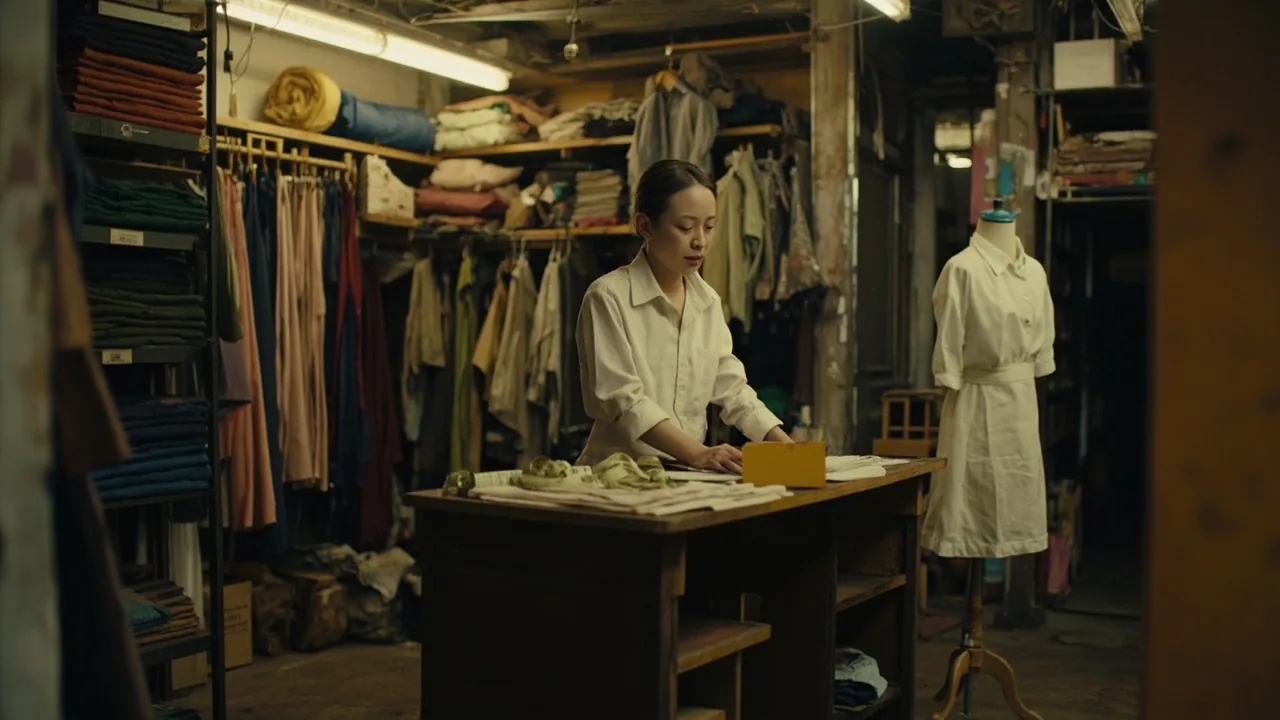
Hoi An has been Vietnam’s tailoring capital since the 17th century, when the port city’s traders had clothes made for long sea voyages. The skill never left. Walk down Tran Phu or Nguyen Thai Hoc after sunset and you’ll see shopfronts lined with mannequins wearing cocktail dresses, suits, and áo dài, all made-to-measure in 24 to 48 hours.
For Indian travellers, the pitch is simple. A custom cotton dress that costs ₹6,000 (~$62.24) to ₹9,000 (~$93.36) in Khan Market or Linking Road costs the equivalent of ₹3,000 (~$31.12) to ₹4,500 (~$46.68) here, and the silk work that would run ₹25,000 (~$259.33) in Varanasi runs ₹7,500 (~$77.80) to ₹16,500 (~$171.16) in Hoi An. The catch is that the absolute cheapest shops cut corners on fabric and finishing. Spend an extra ₹1,000 (~$10.37) to ₹1,500 (~$15.56) and you land somewhere genuinely good.
What Different Dresses Cost in 2026
These prices are compiled from traveller reports on Hoi An Facebook groups and r/VietNam, cross-referenced across multiple menus as of mid-2026. Always get the final quote in writing before you leave fabric with anyone, and always confirm whether the quote includes lining.
Cotton and linen everyday dresses
The bread and butter of Hoi An tailoring. A sleeveless or short-sleeve shift dress, A-line, or wrap style in cotton or cotton-linen runs ₹2,946-₹4,420 (~800,000-1,200,000 VND or ~$30.56-$45.84). At current rates that’s ₹2,960 (~$30.70) to ₹4,440 (~$46.06). You’ll get two fittings, basic lining if you ask, and the dress in your hands within 48 hours.
If you want a more complex cut, a button-front midi dress, a tiered skirt, or a fitted bodice with a flared hem, expect ₹4,420-₹6,629 (~1,200,000-1,800,000 VND or ~$45.84-$68.77). That’s still cheaper than most Indian boutiques before you even add tailoring on top.
Silk dresses and áo dài
This is where Hoi An earns its reputation. Vietnamese silk costs roughly half what Indian silk costs, partly because you’re buying closer to the source and partly because the weavers are local. A fitted silk dress, including lining and a proper zip, runs ₹7,366-₹16,574 (~2,000,000-4,500,000 VND or ~$76.41-$171.92) depending on the silk grade.
A full áo dài, the traditional Vietnamese two-piece dress with trousers and a long tunic, runs ₹9,208-₹18,415 (~2,500,000-5,000,000 VND or ~$95.51-$191.02). Travellers report that even the top-end áo dài here are 40 to 50 percent cheaper than what you’d pay in Saigon or Hanoi.
Complicated designs, beading, and bridal work
The shop windows make it tempting to order a beaded evening gown. Be careful. A heavily beaded or layered dress costs ₹22,098 (~6,000,000 VND or ~$229.22) and up (₹22,200 (~$230.28)+), and the 24-hour turnaround evaporates. Beading alone takes 3 to 5 days even in the best shops. Travellers report that the heavy-work pricing here is still cheaper than Mumbai’s Kala Ghoda area, but only by 20 to 30 percent, not by 60 percent like the basic dresses.
If you’re set on bridal or couture work, plan 5 to 7 days in Hoi An, not the typical 48 hours, and budget ₹29,464-₹55,245 (~8,000,000-15,000,000 VND or ~$305.63-$573.06) for a proper job.
The 24-Hour Myth, Explained
Every shop advertises 24-hour turnaround. For a basic cotton dress, this is real. You walk in on day one, get measured, pick fabric, leave a deposit (usually 50 percent), come back the next morning for a first fitting with the unfinished garment pinned on you, then return in the afternoon for pickup. Two fittings, one dress, one day.
The myth breaks down with anything complicated. Silk dresses need 2 to 3 days because the fabric is slippery and the seams have to be hand-finished. Beaded work needs 3 to 5 days. Wedding dresses need a week. And every shop charges an express fee of ₹737-₹1,842 (~200,000-500,000 VND or ~$7.64-$19.10) if you try to compress the timeline further. Travellers report that pushing for same-day pickup on a silk dress almost always produces a rushed result.
How to Pick a Shop: Recommended vs Overrated
Hoi An has more tailor shops per square metre than any other place I know, which means the quality spread is huge. Here is the traveller consensus as of mid-2026.
Shops with consistent good reviews
Shops to skip
The shops on the main tourist strip with aggressive English-speaking touts who wave menus at you, the ones offering “3 suits for ₹9,640 (~100 USD)” deals, are the ones travellers complain about most. The fabric is thin, the finishing is rushed, and the alterations after pickup are a fight. If a shop is chasing you on the street, walk past.
What to Bring From India
This is the part most guides skip, and it matters more than picking the right shop.
Reference photos. Bring 3 to 5 photos of dresses you like, on a real body, from multiple angles. Pinterest mood boards don’t translate well. Screenshots from Myntra or Ajio work better because the cuts are already calibrated for South Asian body types.
Exact measurements. Get measured at your local tailor in India before you fly. Shoulder width, bust, waist, hip, and the dress length from shoulder to hem. Vietnamese tailors will measure you again, but having your own numbers means you can sanity-check what they write down.
A specific undergarment. Bring the bra and shoes you plan to wear with the dress. Neckline and hem change with heel height, and dress fit changes with bra shape. Travellers report that dresses made with the wrong undergarment in mind are the single most common alteration issue.
Fabric samples if you’re picky. If you have leftover fabric at home that you want matched, bring a 10cm by 10cm swatch. The colour matching is otherwise a guessing game on a shop floor.
Bargaining Without Being Rude
Hoi An prices are more negotiable than they look, but the etiquette is different from Delhi’s Lajpat Nagar.
The first quote is always 20 to 40 percent above what the shop will accept. The trick is to compare two or three shops on the same design before you commit. Show shop B shop A’s quote. They’ll usually match or beat it.
Don’t haggle on silk. The fabric has a fixed cost and the shops know it. A 10 percent discount on silk is realistic, 30 percent is not. Do haggle on cotton and on express turnaround fees. Travellers report that the express fee drops from ₹1,842 (~500,000 VND or ~$19.10) to ₹737 (~200,000 VND or ~$7.64) with even a token pushback.
Never haggle after the first fitting. Once the dress is half-made, the shop has the use. Negotiate the price, leave the deposit, and accept the result.
Subodh’s Pro Tip: Get every quote in writing on the shop’s own paper with a sketch attached. Vietnamese tailors are honest by reputation, but a written quote means the shop can’t suddenly “remember” a different price when you come back.
Fittings: What to Expect
Two fittings is the standard for a basic dress. Three for anything silk or fitted. Here’s how it plays out.
First visit: 15 to 30 minutes of measuring, fabric selection, and design discussion. You leave a 50 percent deposit.
First fitting (next day, 24 hours later): The dress is pinned on you, unfinished at the seams. The tailor marks adjustments with chalk. This is where you speak up about fit. If the waist feels loose, say so now. If the neckline is too high, say so now. Travellers report that 90 percent of fit problems come from staying quiet at this fitting.
Second fitting (4 to 6 hours after the first): The dress is mostly finished. You try it on, walk around, sit down. The tailor does final adjustments. For a basic cotton dress, this is the pickup.
Pickup: Final inspection, final payment, dress in a bag. Some shops photograph the dress on you for their portfolio. Accept the photo, it creates accountability.
Should You Ship the Dress Home?
This is the question Indian travellers ask me most, and the answer depends on what you’re making.
When shipping is worth it
Silk áo dài, heavy beaded work, or anything genuinely special. A silk dress that cost you ₹10,000 (~$103.73) here is worth the ₹4,500 (~$46.68) to ₹7,500 (~$77.80) shipping cost because replacement value in India is ₹25,000 (~$259.33)+. Use DHL from their Hoi An office (they’ll pack it for you). A 2 to 4 kg box to Mumbai or Delhi runs ₹4,420-₹7,366 (~1,200,000-2,000,000 VND or ~$45.84-$76.41) and arrives in 4 to 6 business days.
When shipping isn’t worth it
Cotton and linen everyday dresses. The shipping cost approaches the dress cost, and you can always make more later. Travellers report that the dresses that get worn once and then sit in a cupboard are always the ones they shipped.
Customs and baggage rules
Indian customs allows duty-free import of personal used clothing up to the passenger’s normal baggage allowance, but new clothing above ₹50,000 in declared value attracts duty. If you’re carrying three or four new dresses back as personal baggage, declare them honestly and pay the 10 to 20 percent duty if asked. Travellers report that Customs at Delhi and Mumbai is hit-or-miss on this, and the penalty for underdeclaring is steeper than the duty itself.
Air India’s economy baggage allowance is 25 kg checked plus 7 kg cabin. Four to five dresses weigh 3 to 5 kg, well within limits. Pack them between layers of clothing in your suitcase, not loose.
Fabric Quality: What You’re Getting
The cheapest shops use Chinese-sourced polyester that masquerades as silk. You can spot it by rubbing: real silk warms in your hand, polyester stays cool. Real silk also tears cleanly along the grain, polyester tears messily.
Vietnamese silk comes in three grades you’ll see on shop floors. Habotai is the lightest, best for summer dresses and linings. Dupioni has a textured slub finish, good for structured dresses. Jacquard has woven patterns, best for formal áo dài and evening wear. Prices roughly double between habotai and jacquard. A habotai silk dress runs ₹7,366 (~2,000,000 VND or ~$76.41); the same cut in jacquard runs ₹12,890 (~3,500,000 VND or ~$133.71).
Cotton quality varies more than silk quality. The best shops stock 100 percent Vietnamese cotton or cotton-linen blends that soften with washing. The cheap shops use cotton-polyester blends that pill after three washes. Ask to see the fabric bolt before you commit. If it looks shiny under shop lighting, it’s blended.
Common Mistakes Indians Make at Hoi An Tailors
Ordering too many dresses. The adrenaline of cheap prices leads to 8-dress orders. Travellers report that most people wear 2 to 3 of the 8 regularly, and the rest sit in a cupboard. Pick 3 to 4 pieces you’ll wear.
Skipping the first fitting to save time. This is where every adjustment happens. Missing it means living with a dress that doesn’t fit.
Paying in USD. Every shop accepts VND at a better rate. Pay in local currency and you’ll save 5 to 10 percent on the total bill.
Not photographing the dress at pickup. Shops photograph for their portfolio. Ask them to send you the photo on WhatsApp. If there’s a quality dispute later, you have evidence.
Booking a flight the same day as pickup. Anything that needs a final tweak needs 2 to 4 hours. Build slack into your schedule.
Where to Eat While You Wait
Tailoring appointments take 30 minutes to 2 hours, so plan meals around them. For a quick lunch between fittings, Nhan’s kitchen is the local favourite for authentic cao lầu and white rose dumplings, both under ₹184 (~50,000 VND or ~$1.91) a plate. If you need a quiet sit-down meal before your second fitting, The Soul Restaurant does a ₹331 (~90,000 VND or ~$3.44) set menu that pairs well with the fitting-day nerves.
For vegetarians, MẸT Hội An has an extensive Vietnamese vegetarian menu including a vegetarian cao lầu that’s genuinely good, not the usual boiled-veg fallback. Dinner runs ₹295-₹552 (~80,000-150,000 VND or ~$3.06-$5.73) per dish.
FAQ
Is it cheaper than Indian tailors? For cotton and basic silk dresses, yes, by 50 to 70 percent. For heavy bridal work, only by 20 to 30 percent. The bigger saving on Indian-made dresses is usually the silk itself, not the labour.
Do I need to speak Vietnamese? No. Every shop in the Old Town has English-speaking staff, and many have Hindi or Urdu speakers because of the steady Indian tourist flow. Tran Phu, Nguyen Thai Hoc, and Le Loi are the most foreigner-friendly streets.
Can I get a dress made in 24 hours? Cotton and linen, yes, with two fittings. Silk, no, plan 2 to 3 days. Beaded or layered work, plan 5 to 7 days. Travellers report that the 24-hour promise on silk always produces a rushed result.
What if the dress doesn’t fit at pickup? Every reputable shop does free alterations within 7 days of pickup. Tell them on the spot, leave the dress, pick it up the next day. Don’t accept a dress you’re not happy with.
Should I bring my own fabric? Possible but not worth it for cotton. For silk, if you have a specific Indian silk you want tailored to a Hoi An cut, bring 2 to 3 metres. Shops charge a cutting fee of ₹1,105-₹1,842 (~300,000-500,000 VND or ~$11.46-$19.10) but waive it for silk orders over ₹11,049 (~3,000,000 VND or ~$114.61).
Is it safe to ship a silk dress home via DHL? Yes. Pack the dress in a box (the shop will do this), declare the value at the actual cost, and pay the shipping fee. DHL Hoi An regularly handles dress shipments for tourists. Indian customs duty is 10 to 20 percent of declared value if it exceeds the personal exemption.
What’s the one thing you’d never order here? A wedding dress. The time pressure, the absolute cost, and the fit risk are all stacked against you. Save the wedding dress for the tailor in Delhi who knows your body’s quirks, and use Hoi An for the silk reception outfit.
Subodh’s Take
The honest truth about Hoi An tailoring is that the prices you see quoted on Shop A’s window are not the prices Shop A will charge you. The first quote is theatre, the second quote is the real one, and the dress you get at the end is somewhere between what you imagined and what the shop interpreted. Go in with a budget, a clear design, and 2 to 3 days of slack. Spend an extra ₹1,000 (~$10.37) to ₹1,500 (~$15.56) on a shop with a 4.7-plus rating on Google Maps. Skip the 8-dress order and pick the three pieces you’ll wear back home.
