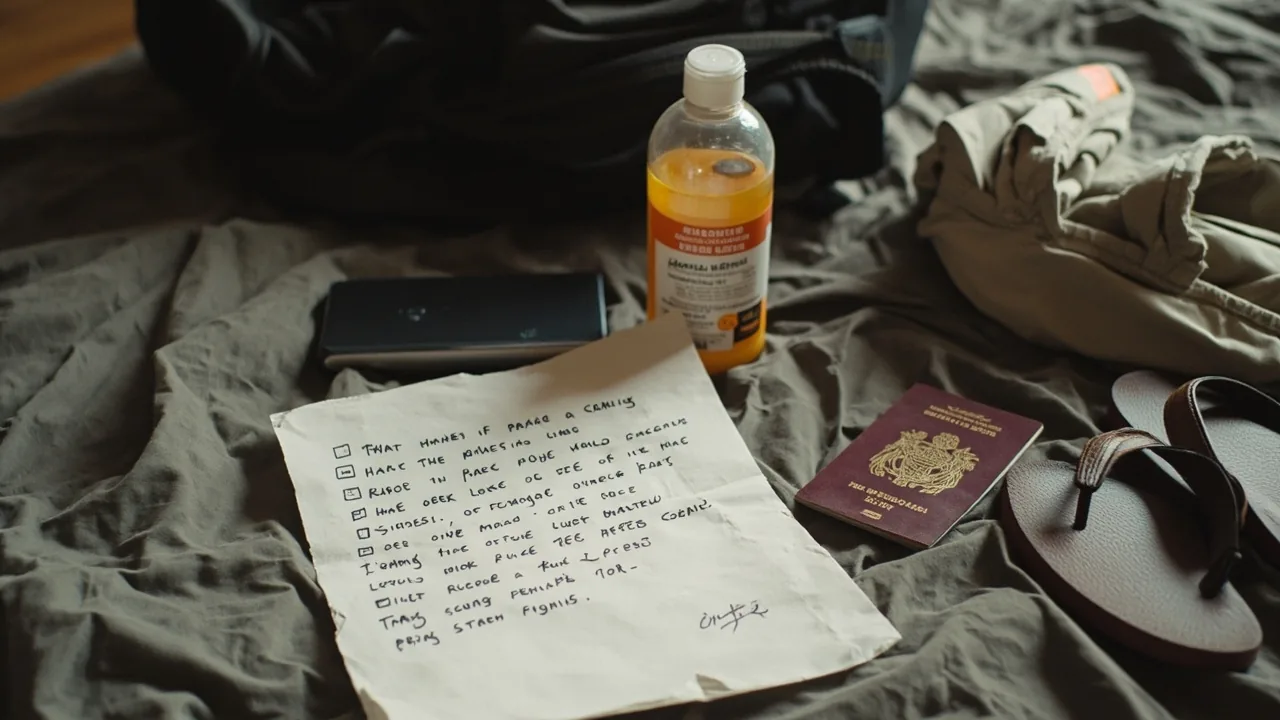
Vietnam Packing List: Month-by-Month Guide for Indian Backpackers
Packing light is the rule that decides whether a Vietnam trip feels like freedom or like dragging a brick through Hanoi traffic. A 40L-50L backpack is the sweet spot for most Indian backpackers doing 2-4 weeks. Verified against current Viettel/Mobifone tourist SIM rates and Hanoi airport customs rules on 17 July 2026.
The list below is built for the Vietnam + Cambodia loop, with month-by-month tweaks for January, April, July, and October (the four months that drive most search queries). One caveat for first-timers: weather in Vietnam shifts hard between north, central, and south, so a single fixed list for the whole country is mostly fantasy. Build the base list, then layer in month-specific gear.
Quick Answers
| What | Answer | Price (INR) |
|---|---|---|
| Best backpack size | 40L-50L with rain cover, no suitcase | ₹3,000-₹8,000 (~$31.12-$82.98) |
| Vietnam SIM (14 days, ~6GB) | Viettel or Mobifone tourist pack | ₹479 (~130,000 VND or ~$4.97) |
| Power bank limit (cabin baggage) | Under 20,000 mAh / 100 Wh | Free in cabin |
| Sunscreen in Vietnam | 3-5x costlier than India, bring from home | ₹300-₹500 (~$3.11-$5.19) |
| January layer (Hanoi/Sapa) | Fleece + light jacket for 8-15°C | ₹1,500-₹2,500 (~$15.56-$25.93) |
The Ultimate Packing Checklist
The base list below works for any month except July-September, when monsoon swaps a few items. Aim for under 7 kg.
Clothing (5-7 days of outfit + laundry rotation)
- 4 quick-dry tees (polyester or merino, not cotton)
- 1 long-sleeve shirt for sun and temples
- 2 pairs of shorts, 1 pair of quick-dry travel trousers
- 5 sets of undergarments, 5 pairs of socks
- 1 light fleece or packable down jacket (October-March north only)
- 1 rain-resistant outer shell or poncho
- Sarong/scarf (temples, beaches, and improvise as blanket on sleeper buses)
Footwear
- 1 pair of broken-in walking shoes or trail runners
- 1 pair of sturdy sandals (Tevas, Decathlon Quechuas) for hostels, beaches, and rainy-day water crossings
Toiletries
- Sunscreen SPF 50 (Vietnam-imported sunscreen is 3-5x costlier than Indian brands)
- Travel-size shampoo/soap (also buy at any Circle K or 7-Eleven for ₹110-₹221 (~30,000-60,000 VND or ~$1.15-$2.29))
- Toothbrush, toothpaste, quick-dry towel, razor
- Mosquito repellent (DEET-based; dengue is present year-round, especially south)
First Aid
- Paracetamol, Ibuprofen, ORS sachets, Electral
- Loperamide (for traveller’s diarrhoea emergencies)
- Antihistamine, motion-sickness tablets (for Vietnam sleeper buses)
- Your regular prescription medicines + a copy of the prescription
- Band-aids, small roll of gauze, antiseptic cream
Documents
- Passport (6+ months validity)
- Vietnam e-Visa printout (apply at evisa.xuatnhapcanh.gov.vn, ₹2,410 (~25 USD)+ bank fees)
- 4x6 cm white-background photos (carry 2 spares for extensions and SIM registration)
- Travel insurance (recommend SafetyWing, covers Indian travellers from ~$62/month, ~₹5,900 (~$61.20))
- Photocopies of passport + visa, stored separately in cloud + paper
Month-by-Month Packing Adjustments
January, February (Northern winter + dry south)
North Vietnam (Hanoi, Sapa, Ha Long Bay, Ninh Binh) drops to 8-15°C in January and can hit 6°C overnight in Sapa. Most Indian backpackers underestimate this because they picture “Southeast Asia = hot.” Pack:
- A real fleece or packable down jacket (not a hoodie)
- Long trousers for evenings
- Beanie and light gloves if you’re heading into the mountains
South Vietnam (Ho Chi Minh City, Mekong Delta, Phu Quoc) sits at 25-32°C with dry, low-humidity days. The dry-season packing list works fine here.
Subodh’s Pro Tip: If you’re bouncing Hanoi to HCMC in January, pack layers you can add and shed on the same flight. The thermal swing between Noi Bai airport and Tan Son Nhat can be 15°C.
March, April, May (Best all-round, but hotter in the south)
The most-searched window for Indians. North is warming up (18-28°C), central Vietnam (Da Nang, Hoi An, Hue) is in the sweet spot of 22-30°C, and the south starts climbing into 33-38°C with humidity.
- Standard base list, plus a wide-brim hat
- An extra quick-dry tee for sweat-heavy days in HCMC
- Cooling towel for the Mekong region
June, July, August, September (Monsoon)
Vietnam splits into two monsoon patterns. The southwest monsoon dumps rain on the central coast and south from May to October. The north gets rain from June to August, then dries out. October-November is typhoon season in central Vietnam, with flooding in Hue and Hoi An.
Packing swaps for monsoon months:
- Add a packable rain jacket or a proper poncho (cheap ones die in 2 weeks)
- Add a 10-20L dry bag for electronics and documents
- Swap canvas/cotton shoes for sandals or quick-dry trail shoes
- Carry a small microfibre towel; humidity means nothing dries overnight
Subodh’s Pro Tip: July and September are the wettest months in central Vietnam. If your itinerary is Hoi An to Hue, waterproof your bag before you board the train, not after.
October, November, December (Cooling north, dry south, typhoon risk central)
A reasonable shoulder-season packing list works, with one twist: central Vietnam sees typhoons and flooding in October and November. Bring the wet-weather kit from the monsoon section even though the calendar says “autumn.”
December is peak tourist season, and prices rise 15-25% for hostels around Christmas and New Year. Book Hanoi and Hoi An accommodation 4-6 weeks ahead.
Monsoon vs. Dry Season Packing
The single biggest packing choice for Vietnam is fabric. Quick-dry synthetics win in every season for one reason: hostel laundry turns clothes around in 6-12 hours, and cotton sits damp in 90% humidity until it smells. A polyester tee and a merino tee both dry on a hanger by morning.
Dry season (December-August, except central Vietnam) lets you get away with one cotton layer for sleepwear or lounging. Monsoon season (May-October in the south and central coast, June-August in the north) needs:
- Quick-dry everything except the rain shell
- Waterproof sandals (Crocs-style sandals beat trainers in flooded streets)
- Dry bag for passport, wallet, phone
- A second plastic ziplock inside the backpack for redundancy
Sunscreen is the one item that is genuinely expensive in Vietnam compared to India. Indian brands (Lotus, La Shield, Minimalist SPF 50) cost ₹300-₹500 (~$3.11-$5.19) in a Mumbai pharmacy; the same SPF in a HCMC Circle K runs ₹1,289-₹1,842 (~350,000-500,000 VND or ~$13.37-$19.10). Pack two tubes.
Electronics & Tech Setup
Vietnam uses Type A, Type C, and Type G sockets. A universal adapter from an Indian electronics shop covers all three for ₹300-₹600 (~$3.11-$6.22). Type G (the British three-pin) shows up in older Hanoi hotels, so don’t buy a cheap Type-A-only adapter.
Power bank rules at Indian airports and on flights: under 20,000 mAh (100 Wh) goes in cabin baggage with no questions. 20,000-27,000 mAh (100-160 Wh) needs airline approval. Above that, it gets confiscated. Most Indian backpackers only need 10,000 mAh for a phone, which is half the size of a brick and weighs 200g.
For SIM and data, grab a Viettel or Mobifone tourist SIM at Noi Bai or Tan Son Nhat airport for ₹479 (~130,000 VND or ~$4.97) with about 6GB of data on a 14-day plan. Activation takes 5 minutes with your passport. If you’d rather skip the airport queue, an eSIM from Nomad covers you from the moment the plane lands, useful if your Vietnam SIM details are covered in the SIM cost guide for Indian travellers.
Other tech to pack:
- Charging cables: 1 USB-C, 1 lightning (iPhone), 1 short multi-cable as backup
- Phone tripod/mount for sleeper buses and content
- Offline maps (Maps.me or Google offline regions for Hanoi, HCMC, Da Nang)
- Headphones and a small Bluetooth speaker for hostels
Cultural Dress Codes (Temples vs Beaches)
Temple dress code in Vietnam is real, even though most backpackers treat it casually. For pagodas (Tran Quoc, Linh Ung), the Imperial City in Hue, and any royal tomb, the rule is shoulders covered and knees covered. For the thousands of small roadside shrines you’ll walk past, full coverage isn’t expected, but a T-shirt and shorts past mid-thigh covers 95% of situations.
Carry one sarong or large scarf (₹200-₹400 (~$2.07-$4.15) at any D-Mart in India). It doubles as a blanket on a cold sleeper bus, a beach cover-up, and a temple wrap. For more on temple etiquette, see the Hanoi guide for notes on Tran Quoc Pagoda and the Temple of Literature.
Beaches (Da Nang, Nha Trang, Mui Ne, Phu Quoc) have no dress code, but Vietnamese law (and most Vietnamese locals) prefer swimwear only on the sand and at the resort pool. Walking into a beach-side café in a bikini draws stares.
For a Vietnam + Cambodia trip, the dress code tightens. Angkor Wat and the Bayon temple require shoulders and knees fully covered, and guards will turn you away at the gate. The same sarong covers every situation. Phnom Penh’s pagodas follow the same rule.
Laundry & Toiletries on the Trail
Every Vietnam hostel offers laundry service for ₹110-₹221 (~30,000-60,000 VND or ~$1.15-$2.29) per kg, with same-day turnaround. Drop the bag at reception before breakfast, pick it up after dinner. This single service is why you don’t pack 14 t-shirts for a 14-day trip. Pack 4, wash every second day, rotate.
Circle K, 7-Eleven, FamilyMart, and Bach Hoa Xanh stock everything from shampoo to sunscreen to mosquito coils to umbrellas. You do not need to pack a 200ml shampoo bottle from India. Buy it on day one in Vietnam, recycle the bottle when empty.
Subodh’s Pro Tip: Carry a small cloth bag for dirty laundry. Mixed in with clean clothes, sweaty shirts turn everything into a smell by day three.
Common Packing Mistakes Indians Make
Mistake 1: Bringing a hardshell suitcase. Vietnam pavements are rough, stairs at homestays in Sapa are narrow, and sleeper buses have shallow luggage bays. A suitcase is a daily struggle.
What happens: a broken wheel on day three, a scratched shell, exhaustion from dragging 18 kg of luggage up three flights at a Hanoi Old Quarter hostel.
Fix: a 40L-50L backpack with a padded hip belt. Osprey Farpoint 40, Decathlon Forclaz Travel 100, and Quechua MH500 are common Indian-friendly picks.
Mistake 2: Packing jeans and heavy cotton hoodies. Cotton stays damp, jeans weigh 700g each, and a hoodie weighs 400g for 8°C warmth you may not need.
What happens: mildewed jeans in monsoon, a stinky hoodie by day five, and a backpack that hits 12 kg instead of 7.
Fix: one pair of quick-dry travel trousers (Decathlon Forclaz or a polyester blend), a packable down jacket for January-March north only, no jeans.
Mistake 3: Forgetting the power bank capacity rule.
What happens: airport security at Mumbai or Delhi confiscates the 30,000 mAh power bank on return, or you scramble for airline approval at the gate.
Fix: keep the power bank under 20,000 mAh. Charge it and your phone nightly at the hostel.
Mistake 4: Skipping the photocopy and digital backup.
What happens: a lost passport in Hoi An means 3-5 working days stuck in the city waiting for the Indian Embassy in Hanoi to issue an emergency document.
Fix: store a passport scan + visa scan in Google Drive, WhatsApp to yourself, and email to a family member.
Mistake 5: Packing “just in case” items.
What happens: by day seven, every Indian backpacker leaves half a backpack of unused clothes, shoes, and toiletries at a hostel or donates them.
Fix: lay out everything on the bed, then remove one third of it. The remaining two thirds is closer to what you need.
Vietnam + Cambodia Packing Adjustments
If your plan is the full Vietnam-Cambodia loop (the standard Southeast Asia backpacking route), add these items:
- One extra set of modest temple clothes for Angkor Wat (long trousers and a covered-shoulder top)
- A mosquito repellent with DEET above 20% (dengue and malaria risk in the Cambodia border regions)
- US dollars in small denominations (Cambodia uses USD for most transactions above ₹482 (~5 USD); see the Vietnam + Cambodia money guide for budget splits)
- Two passport photos for Cambodia visa-on-arrival (separate fee)
The Vietnam SIM works in Cambodia only at the border for short periods. Buy a local Smart or Cellcard SIM in Phnom Penh for ₹482 (~5 USD).
If you’re flying out of Phnom Penh, plan airport transit with the Phnom Penh airport guide (rules are similar, but Cambodia has stricter customs on drone equipment).
FAQ
Can I bring a suitcase instead of a backpack?
Technically yes, but Vietnam isn’t suitcase-friendly. Old Quarter hostels have steep stairs without lifts, sleeper buses have shallow luggage bays, and pavements are uneven. A 40L backpack is the right call.
Are power banks allowed in cabin baggage?
Yes, under 20,000 mAh (100 Wh) without airline approval. 20,000-27,000 mAh needs airline confirmation, and anything larger is confiscated. Indian airport security follows the same rule.
Can I buy sunscreen cheap in Vietnam?
No. Sunscreen in Vietnam is 3-5x more expensive than in India. Pack two tubes from home (Lotus, La Shield, Minimalist SPF 50 all work). Insect repellent is also worth bringing since imported DEET brands in Vietnam run ₹368-₹552 (~100,000-150,000 VND or ~$3.82-$5.73).
What about trekking in Sapa, do I need special gear?
Yes, if you’re doing a Sapa multi-day trek (September to December rice terraces, or January-March cloud views), add: lightweight waterproof hiking shoes, a 30L daypack, trekking poles, and a real rain jacket. Most hostels in Sapa rent trekking gear for ₹184-₹368 (~50,000-100,000 VND or ~$1.91-$3.82) per day.
Do I need a visa for Vietnam from India?
Yes, an e-Visa is mandatory. Apply 3 days before travel at the official e-Visa portal for ₹2,410 (~25 USD), valid 90 days, multiple entry. Visa-on-arrival is not available for Indian passport holders. See the Vietnam visa approval letter guide for the full process.
Subodh’s Take
Pack half what you think you need, then cut it down by one more shirt. Vietnam hostel laundry is cheap, Circle K is everywhere, and the weather shifts every few hundred kilometres. The two items that genuinely matter for Indian backpackers are a real rain shell (not the ₹300 (~$3.11) poncho from D-Mart) and a fleece that compresses to a fist for those 8°C Hanoi nights. Everything else, you’ll thank yourself for leaving at home.
