How to Eat Cheap in Singapore Without Living on Instant Noodles
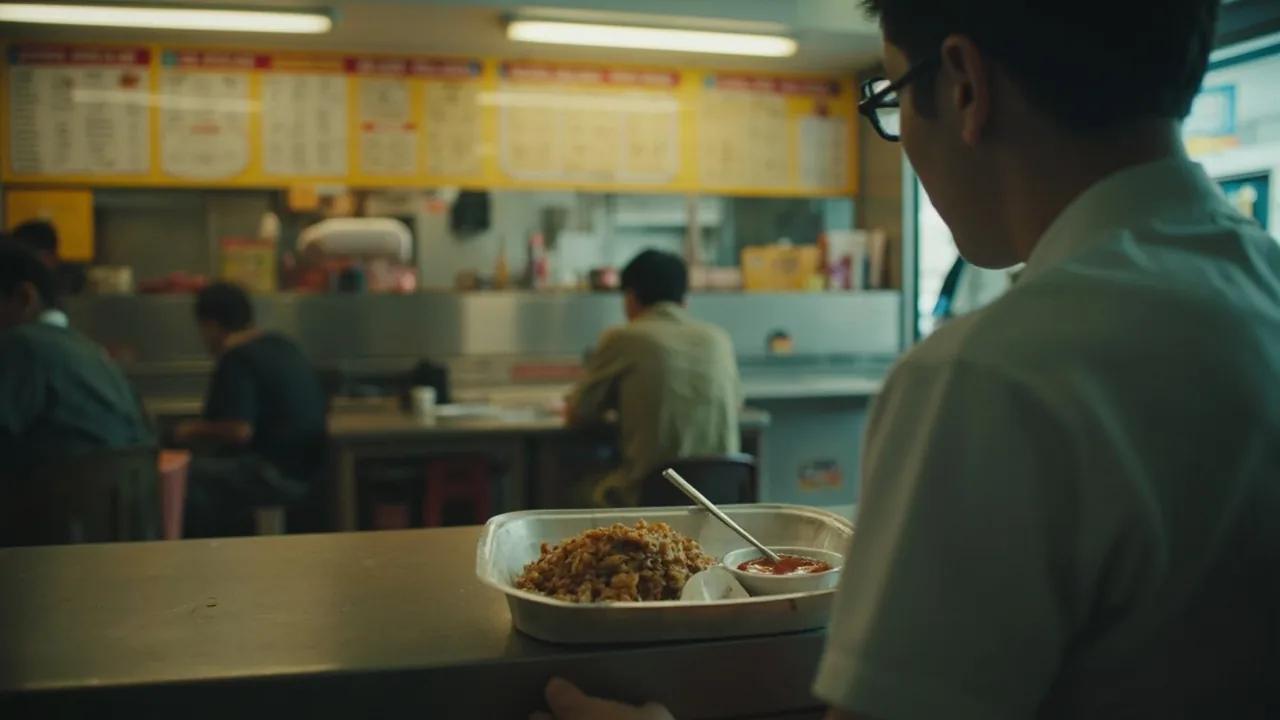
Singapore has a reputation for being expensive. But hawker centres and kopitiams feed the city at S ₹385-₹771 (~4-8 USD) a meal. Knowing which stalls and neighbourhoods deliver is how to eat cheap in Singapore. For Indian veg spots, head to Little India and Tekka.
Quick Answers
| What | Answer | Price (INR) |
|---|---|---|
| Average hawker centre meal | S ₹385-₹771 (~4-8 USD) at most stalls, varies by dish | ₹300-₹600 (~$3.11-$6.23) |
| Cheapest full meal (kopitiam set) | S ₹337-₹482 (~3.50-5 USD) for rice + veg + drink | ₹260-₹375 (~$2.70-$3.89) |
| MRT single trip | S ₹96-₹241 (~1-2.50 USD) depending on distance | ₹75-₹185 (~$0.78-$1.92) |
| Bottled water | S ₹145 (~1.50 USD) at convenience stores | ₹110 (~$1.14) |
| Indian veg thali in Little India | S ₹963-₹1,734 (~10-18 USD) | ₹750-₹1,350 (~$7.79-$14.01) |
The Singapore Hawker Reality
Hawker centres are not tourist attractions. They are working-class canteens, government-regulated, hygienically graded (look for the A or B grade sticker), and priced for Singaporeans who eat there six days a week. Most stalls offer a “mixed rice” or “economy rice” option where you point at three or four vegetables and a curry, they ladle it over rice, and you pay by what you took. A full plate with two veg and a tofu dish lands at S ₹337 (~3.50 USD) to S ₹482 (~5 USD). Add a S ₹125 (~1.30 USD) barley drink or iced tea and you’ve had a complete meal for under S ₹578 (~6 USD).
The catch for Indian vegetarians: many of those economy-rice vegetables are cooked in shrimp paste (heh ko), fish sauce, or pork lard. It is not malicious, it is the default flavour base. You have to ask. More on that in the phrases section below.
Subodh’s Pro Tip: Go to hawker centres during lunch peak (12:00-13:30) and dinner peak (18:00-19:30). High turnover means fresher food and almost zero sitting time for your plate. Stalls that look quiet at 1pm are quiet for a reason.
Where the Cheap Meals Live
Hawker centres are your workhorse. Maxwell, Lau Pa Sat, Chinatown Complex, Tekka Centre, and Tiong Bahru all have stalls under S ₹578 (~6 USD). Lau Pa Sat in the CBD is touristy but the satay street after 19:00 is genuinely good and reasonably priced. Tekka Centre doubles as the Little India hawker hub, which is where you’ll find the highest concentration of South Indian veg food in the city.
Kopitiams (traditional coffee shops) are cheaper than cafes and serve proper set meals. A typical set is rice, one meat or veg dish, veg sides, soup, and a drink for S ₹385-₹578 (~4-6 USD). Toast Box and Ya Kun Kaya Toast are the chains, but every HDB estate has independent ones that are half the price.
MRT-connected food courts are the move when you’re sightseeing. ION Orchard basement, Junction 8, Tampines Mall, and Bugis Junction all have food courts (called “kopitiams” inside malls) with S ₹482-₹771 (~5-8 USD) meals. The trick is to skip level 1 and 2 of any mall and head straight to basement or level 4.
Food courts at NUS, NTU, SMU, and polytechnics are technically open to visitors. These campus canteens keep prices low, with subsidised student meals from S ₹289-₹385 (~3-4 USD). Walk in, order at the stall, and pay - the setup is the same as any hawker centre. For budget Thai food near campus areas, Sanook Kitchen - Square 2 is a reliable option with meals under S ₹578 (~6 USD).
Indian Vegetarian Food: The Real Situation
This is where most “cheap eats Singapore” guides fall flat. They assume you’ll eat chicken rice forever and never once crave dal-chawal. The reality is that Singapore has a deep Indian vegetarian infrastructure, but it is geographically clustered and price-stratified in ways that matter.
Little India (Tekka, Serangoon, Race Course Road) is the highest concentration of pure-veg and Jain-friendly food in the city. A South Indian thali at most places runs S ₹771-₹1,156 (~8-12 USD) and includes rice, sambar, rasam, two veg curries, curd, pickle, and a papad. Banana leaf meals at places along Race Course Road can be cheaper, around S ₹578-₹867 (~6-9 USD), but portion sizes vary wildly.
Subodh’s Pro Tip: For a “I’m tired of rice and want a real protein meal” day, head to Tekka Centre. The South Indian stalls there will feed you a full banana-leaf meal for less than a Western chain charges for a sandwich. Ask for “no egg in the briyani” even at South Indian stalls, as egg is a common add-on.
For a deeper dive into Little India’s specific spots and food-safety realities, the Little India Singapore food safety & authenticity guide is worth a read before you go.
Five Hawker Dishes That Are Veg or Easy to Make So
-
Economic Rice (菜饭/ nasi campur). Point at 2-3 veg dishes (avoid anything labelled “sambal” unless you confirm no shrimp paste), they go over rice, you pay S ₹337-₹482 (~3.50-5 USD). Always specify “no heh ko, no lard” when ordering.
-
Vegetable Bee Hoon / Mee Sua (rice/noodle soup). Most stalls will make this veg if you ask. Verify no egg, no shrimp, no lard in the broth. Around S ₹337-₹482 (~3.50-5 USD).
-
Thosai / Plain Dosa. Available at almost every Indian stall in Tekka, Little India, and most hawker centres with a South Indian stall. S ₹193-₹385 (~2-4 USD) plain, S ₹385-₹674 (~4-7 USD) with masala filling. Pure-veg by default.
-
Yong Tau Foo (酿豆腐). Pick tofu, vegetables, and fish-free items from the display, they get cooked in clear soup or fried. Specify “no fish paste, no shrimp” and stick to tofu, eggplant, bitter gourd, lady’s fingers. Around S ₹385-₹578 (~4-6 USD) for a full bowl.
-
Chwee Kueh (水粿). Steamed rice cakes topped with preserved radish (chai poh). Veg, around S ₹193-₹289 (~2-3 USD) for a plate of 4-5 pieces. Available at most major hawker centres.
For Indian travellers specifically, see the vegetarian food in Singapore guide for a more detailed dish-by-dish breakdown.
Phrases That Save You From Accidental Meat
Singaporean hawker staff are used to dietary requests, especially from Indian and Muslim customers. Mandarin is the most common working language at hawker stalls, but Tamil and English work everywhere. Here is what to say:
| English Phrase | Local Phrase | Pronunciation |
|---|---|---|
| I am vegetarian | 我吃素 | wǒ chī sù |
| No meat | 不要肉 | bú yào ròu |
| No seafood | 不要海鲜 | bú yào hǎi xiān |
| No fish sauce | 不要鱼露 | bú yào yú lù |
| No egg | 不要蛋 | bú yào dàn |
| No onion / no garlic | 不要洋葱 / 不要蒜 | bú yào yáng cōng / bú yào suàn |
| Pure veg only | 全素 | quán sù |
At Indian-run stalls just say “no egg, no meat, no seafood” in English and you’re covered. At Chinese stalls, the Mandarin phrase helps more than you’d expect. Most stallholders in Singapore are multilingual and will switch to English on request.
The Daily Food Budget That Works
Here is a realistic daily budget for a budget-conscious Indian traveller who wants to eat proper meals, not survive:
| Meal | What | Cost |
|---|---|---|
| Breakfast | Kaya toast set + kopi at kopitiam | S ₹337-₹482 (~3.50-5 USD) |
| Lunch | Hawker mixed rice or thali | S ₹385-₹771 (~4-8 USD) |
| Snacks | Cut fruit or Indian sweets | S ₹193-₹385 (~2-4 USD) |
| Dinner | Indian restaurant or hawker | S ₹771-₹1,445 (~8-15 USD) |
| Drinks | Barley, tea, water | S ₹193-₹289 (~2-3 USD) |
| Total | S $20-35 per day |
At current rates (1 SGD ≈ ₹75), that’s roughly ₹1,500-2,600 per day for food, which is cheaper than a fancy Mumbai lunch alone if you’re not careful. Singapore food can be tight if you’re disciplined. More on budgeting in the broader Singapore food guide for Indian travellers.
If you want to go lower: skip the sit-down Indian restaurants (S ₹1,445-₹2,408 (~15-25 USD) minimum per meal), cook nothing (hawker food is cheaper than groceries in Singapore, the imported-ingredient math is brutal), and stick to hawker centres with self-serve water.
MRT-Connected Cheap Eats
The single most useful hack in Singapore is to plan your sightseeing around MRT stations that have killer food options at the exits. Five of the best:
- Little India MRT (NE7/DT12): Tekka Centre is 2 minutes’ walk. Cheapest Indian veg in the city.
- Chinatown MRT (NE4/DT19): Chinatown Complex Food Centre is a 5-minute walk. Famous for S ₹337 (~3.50 USD) chicken rice, but plenty of veg stalls too.
- Tiong Bahru MRT (EW17): Tiong Bahru Market has a Michelin-approved cheap hawker centre, with chwee kueh and other veg dishes.
- Lavender MRT (EW11): Walk 10 minutes to Tekka Centre or any of the Jalan Besar kopitiams.
- Bugis MRT (EW12/DT14): Bugis Junction and the surrounding food courts feed the budget traveller well. Cross-check our Indian food by neighbourhood in Singapore map for the best stops between these stations.
Each MRT ride is S ₹96-₹241 (~1-2.50 USD) depending on distance, so moving between these food stops costs less than a single meal at most restaurants.
Common Food Mistakes Indians Make in Singapore
Mistake 1: Assuming “vegetarian fried rice” is fully vegetarian. Many Chinese hawker stalls use lard in their fried rice base. The rice itself is veg, the cooking medium is not. Ask for “no lard” or skip fried rice entirely.
Mistake 2: Ordering “veg” without specifying egg. Most Indian stalls will skip egg, but Chinese kopitiams and dim sum places treat egg as default in any dough or batter. Always say “no egg.”
Mistake 3: Eating only at Indian restaurants. A S ₹1,445 (~15 USD) Indian thali every meal is the most expensive way to eat in Singapore. Mix in hawker food and you’ll halve your food budget. See the Indian food by neighbourhood in Singapore breakdown for where Indian restaurants are the right call.
Mistake 4: Drinking only bottled water but skipping ice. Singapore tap water is safe and drinkable, so don’t overthink this. Bottled water at convenience stores is S ₹145 (~1.50 USD), which adds up. Drink tap water at hawker centres.
Mistake 5: Skipping breakfast because hotel doesn’t include it. Kaya toast at any kopitiam is S ₹289-₹482 (~3-5 USD), comes with two soft-boiled eggs (skip if veg, ask for extra toast), kopi or tea, and fills you until lunch. It’s one of the best food bargains in the city.
Getting Connected
You’ll need data to navigate hawker centres, check opening hours, and translate Mandarin menus on the fly. The local SIM options are Singtel, StarHub, and M1, with tourist SIMs starting around S ₹963-₹1,445 (~10-15 USD) for 7 days of data. If you want to skip the airport queue, Get Nomad eSIM works in Singapore the moment you land and uses the same networks.
FAQ
Is McDonald’s or Burger King safe for veg in Singapore? Yes. McDonald’s has a McVeggie burger (S ₹482-₹578 (~5-6 USD)) and their sides are largely veg. Burger King has limited veg options. Subway is also reliable for custom veg sandwiches at around S ₹674-₹867 (~7-9 USD).
Can I get Jain food (no onion, no garlic) in Singapore? Yes, but you have to ask. Indian restaurants like Chola Cafe - Biryani House - “Best Biryani in Singapore” or Zaffron Tandoori Restaurant @ Boat Quay Singapore will accommodate Jain requests if you ask before ordering. Most South Indian stalls will also skip onion and garlic if you ask, but it’s not the default. The phrases section above covers how to ask.
Is fish sauce in everything? No, but it’s in a lot. Vegetable stir-fries, fried rice, soups, and dim sum are the high-risk categories. Always specify no fish sauce at Chinese-run stalls.
How do I know if a hawker stall is hygienic? Look for the NEA (National Environment Agency) grading sticker. A-grade is best, B-grade is fine, C-grade stalls are rare in tourist areas. High turnover and visible queues are also good signs.
Are there any pay-what-you-want veg meals? Some Little India pure-veg buffets run on this model for lunch. Pay what you feel is fair, typically S ₹963-₹1,445 (~10-15 USD). Check current listings before you go.
Subodh’s Take
Eating cheap in Singapore isn’t about discipline, it’s about knowing the right doors to walk through. Hawker centres and kopitiams feed Singaporeans at S ₹385-₹578 (~4-6 USD) a meal, and you can eat at the same stalls for the same prices. Combine one hawker meal, one Indian restaurant meal, and one breakfast toast set per day, and you’ll spend around S ₹1,927-₹2,408 (~20-25 USD) on food, less than what most tourists spend on a single restaurant dinner. The Indian veg infrastructure here is real, especially around Little India and Tekka, and you don’t have to compromise on taste or variety to stay within budget. Plan your day around MRT stations with food courts nearby, and you’ll eat well without ever feeling the Singapore price shock.
— Subodh
