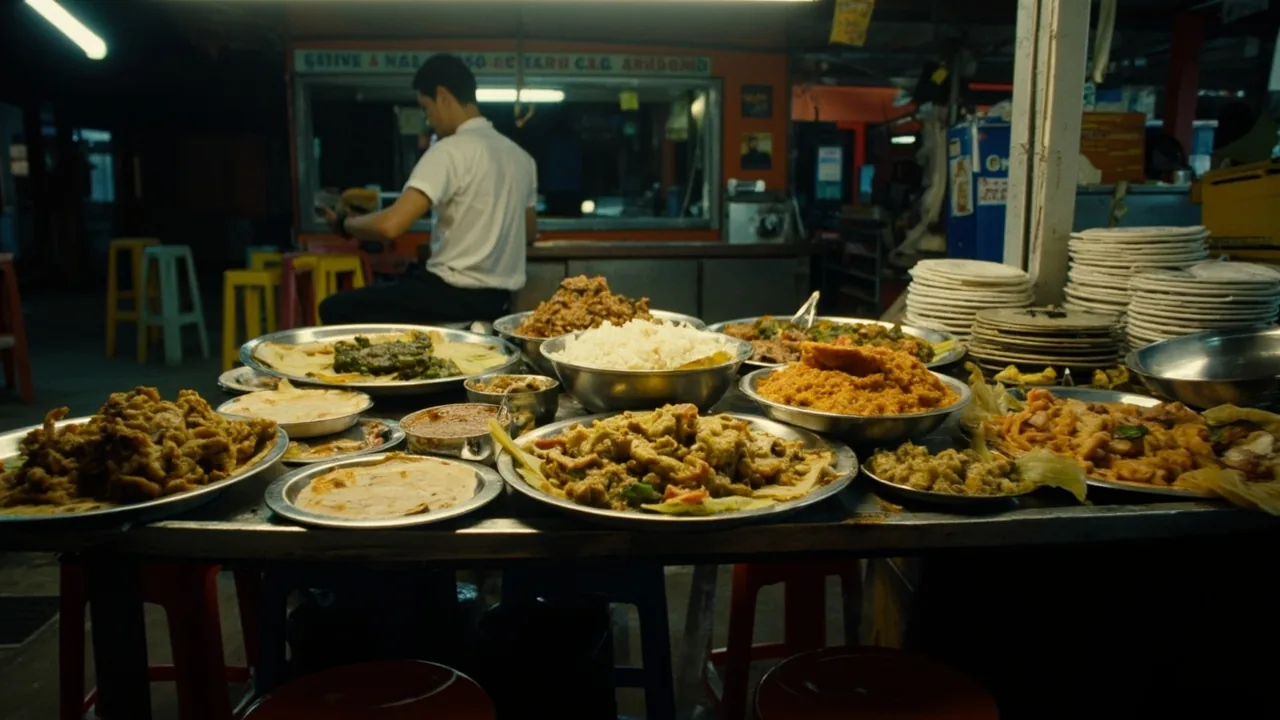
Vegetarian Food in Singapore: Where Indians Eat
Singapore is the easiest city in Southeast Asia to eat vegetarian and not feel like a burden. One in five residents here is Indian, the hawker culture treats “veg only” as a normal order, and you will find pure-veg Indian restaurants inside MRT-linked malls within walking distance of almost every hotel cluster. The catch: fish sauce, shrimp paste, and oyster sauce are still the default flavour carriers in Chinese and Malay cooking, and many “veg” hawker stalls sneak in a small piece of seafood stock to deepen flavour. If you know where to go and which words to use, you eat well on 6-12 SGD a meal. Planning a wider Southeast Asia trip? Our Southeast Asia backpacking hub covers country-by-country budgets, routes, and food guides for Indian travellers.
Verified 2026-07-17 at 1 INR = 0.01339 SGD (1 SGD ≈ ₹74.69). All prices below are in Singapore dollars.
Quick Answers
| What | Answer | Price (INR) |
|---|---|---|
| Is Singapore safe for vegetarians? | Yes, very. About 8 to 10 percent of hawker stalls are pure-veg and marked. | ₹448-₹598 (~6-8 SGD or ~$4.65-$6.20) for a hawker meal |
| Where do Indians go for vegetarian food? | Little India (Tekka Market, Annalakshmi), and almost every MRT mall has a Saravanaa Bhavan or Komala’s. | ₹598-₹1,345 (~8-18 SGD or ~$6.20-$13.95) for a thali |
| Best neighbourhood for veg variety? | Little India. Chinatown has fewer pure-veg options but strong Buddhist vegetarian stalls. | ₹374-₹897 (~5-12 SGD or ~$3.88-$9.30) per dish |
| Can I get Jain food (no onion, no garlic)? | Yes, but only at dedicated Indian restaurants. Ask specifically for “no onion, no garlic” or “Jain”. | ₹897-₹1,868 (~12-25 SGD or ~$9.30-$19.38) for a Jain thali |
| Vegetarian food at Changi Airport? | Yes, multiple options across all four terminals including Pure Veg at T2 and T3. | ₹598-₹1,345 (~8-18 SGD or ~$6.20-$13.95) |
| Singapore Zoo vegetarian food? | Limited on-site. Eat at eateries near the entrance (Mount Faber / Seletar area) before going in. | ₹448-₹897 (~6-12 SGD or ~$4.65-$9.30) |
| Average veg hawker meal? | Mixed rice, veg bee hoon, or thosai at any hawker centre. | ₹448-₹598 (~6-8 SGD or ~$4.65-$6.20) |
| Most underrated veg spot? | People’s Park Food Centre Blk 32 (Chinatown), where Buddhist stalls do amazing mock meat. | ₹374-₹673 (~5-9 SGD or ~$3.88-$6.98) |
The Local Culinary Landscape
Singapore’s food culture is a three-way split: Chinese (Hokkien, Teochew, Cantonese, Hakka), Malay (halal, often spicy), and Indian (Tamil, Punjabi, Bengali). On top of that, a growing layer of Peranakan, Japanese, Korean, and Western spots. For vegetarians this split is good news: the Indian and Chinese Buddhist traditions both produce genuinely meat-free food daily, and the government labels stalls clearly.
The trap is in the broths. Chinese vegetable noodles, claypot tofu, and even “veg” fried rice are often cooked in stock that started with pork bones or anchovies. Malay and Indonesian stalls lean on sambal belacan (shrimp paste), which is non-veg by any Indian vegetarian standard. “Veg” at a hawker stall means “no meat chunks”, not “no animal product.” You need to say it out loud.
Locals consider seafood and eggs as “not meat” in casual conversation. A Singaporean might honestly tell you “yes, it’s vegetarian” about a dish fried in shrimp-paste chilli. Don’t trust that label. The gold-standard confirmation is a stall with a green sign from the Singapore Vegetarian Society, or a dedicated Indian restaurant.
Subodh’s Pro Tip: Look for the green “Vegetarian” logo on the stall front. It’s an audited mark. Hawker stalls with that sign have been inspected and keep separate utensils. If you see only a “Veg” word on the signboard, ask before ordering.
Key Phrases in Local Script
| English Phrase | What it Means | Local Script | Pronunciation |
|---|---|---|---|
| I am vegetarian | Use this everywhere | 我吃素 (Chinese) / Saya vegetarian (Malay) / Naan vegetarian (Tamil) | “wuh chi-soo” / “sah-yah veh-jeh-teh-ree-an” / “naan veh-jeh-teh-ree-an” |
| No meat | Basic instruction | 不要肉 | ”buh yao row” |
| No seafood, no fish sauce | Critical at Chinese stalls | 不要海鲜,不要鱼露 | ”buh yao hai-sian, buh yao hee-loo” |
| No egg | For Jains or strict vegans | 不要蛋 | ”buh yao dan” |
| No onion, no garlic | For Jains | 不要洋葱,不要蒜 | ”buh yao yang-cong, buh yao suan” |
| Is there shrimp paste? | The single most useful question | 有虾酱吗? | “yow hah-jiang ma?” |
| Pure vegetarian only | Strong phrasing | 全素 | ”chwan-soo” |
| Cook in separate pan | For strict cases | 请分开煮 | ”ching fen-kai joo” |
The two phrases that save the most meals: “no fish sauce, no shrimp paste” and “vegetarian only, separate utensils please.” The first one is what stops 80 percent of accidental non-veg hits.
Safe Local Street Food Dishes
Singapore hawker centres are some of the cleanest in Southeast Asia. Most are rated by the National Environment Agency, and the better ones have free seating, decent toilets, and a hawker-style cash card you can top up at the counter. Vegetarian-friendly dishes you can order without much risk:
Vegetable Bee Hoon (菜头米粉). Rice vermicelli stir-fried with shredded carrot, cabbage, and mushrooms. It’s the cheapest complete meal on most menus. Order it at stalls with the green vegetarian logo. Around ₹299-₹448 (~4-6 SGD or ~$3.10-$4.65).
Thosai / Prata. South Indian flatbread or crispy crepe, served with dhal and sambar. Found at almost every hawker centre, especially around Little India and Tekka Market. Plain thosai is ₹149-₹224 (~2-3 SGD or ~$1.55-$2.33), masala thosai (with potato filling) is ₹224-₹374 (~3-5 SGD or ~$2.33-$3.88). Confirm sambar is veg, which it almost always is.
Mixed Vegetable Rice (菜饭). Pick-and-mix rice stall where you scoop three or four veg dishes onto a plate. One of the best values in the city. Around ₹374-₹598 (~5-8 SGD or ~$3.88-$6.20) per plate. Stick to vegetable dishes (curry, stir-fried greens, tofu) and skip anything with prawn or sambal belacan on the label.
Mee Goreng (Veg version). Indian-Muslim style fried noodles, yellow from turmeric. Most stalls will do a veg version on request. ₹374-₹598 (~5-8 SGD or ~$3.88-$6.20).
Popiah (薄饼). Fresh spring roll stuffed with shredded turnip, carrot, bean sprouts, and crushed peanuts. Vegetarian. ₹224-₹374 (~3-5 SGD or ~$2.33-$3.88) per roll. Found at People’s Park Food Centre and most hawker centres.
Subodh’s Pro Tip: People’s Park Food Centre in Chinatown has at least three vegetarian stalls on the second floor serving Buddhist-style mock meat (mock char siu, mock duck, veg bee hoon). The prices run ₹374-₹673 (~5-9 SGD or ~$3.88-$6.98), and the food is among the cheapest in central Singapore. Worth a lunch stop even if you’re staying elsewhere.
For booking hawker centre stops into a longer itinerary, the Bananarchy trip runs fixed-cost routes through Southeast Asia with hawker meals built in.
For a deeper dive into how Indian vegetarians navigate hawker centres by neighbourhood, the Little India food safety guide is worth reading before you go.
Recommended Vegetarian Restaurants
This is the section where Singapore beats every other Southeast Asian city for Indian vegetarians. You have more dedicated veg restaurants per square kilometre here than in Bangkok or Kuala Lumpur.
Pure Indian Vegetarian
Annalakshmi Restaurant (Little India / Boat Quay). Temple-run vegetarian Indian restaurant with a pay-what-you-wish model (suggested ₹1,121 (~15 SGD or ~$11.63)). South Indian thali with unlimited refills. The Boat Quay location has river views. Travellers report it’s calmer than the Little India branch.
Saravanaa Bhavan. Singapore’s most reliable Indian vegetarian chain. Locations in Little India, Chinatown, Mustafa Centre, and most major malls. Filter coffee, paper thosai, ghee roast, and full North Indian thalis. Around ₹598-₹1,345 (~8-18 SGD or ~$6.20-$13.95) per person.
Komala Vilas. One of the oldest South Indian vegetarian restaurants in Singapore, near Farrer Park MRT. Banana leaf meals, masala thosai, filter coffee. Closed on Mondays. Around ₹598-₹1,121 (~8-15 SGD or ~$6.20-$11.63) per person.
Bismillah Biryani (vegetarian option). Famous for biryani, but they do a veg version using soya chunks. Near Little India MRT. Around ₹598-₹897 (~8-12 SGD or ~$6.20-$9.30).
Indian Vegetarian by Neighbourhood
The Indian restaurants in the shortlist cover Orchard Road, Boat Quay, and City Gate Mall, all tourist-friendly locations with strong North Indian menus:
Sahebs (Orchard Road). Punjabi and North Indian fine dining. Travellers rate the dal makhani and paneer tikka. Budget ₹1,868-₹2,989 (~25-40 SGD or ~$19.38-$31.01) per person for a proper meal with drinks.
Zaffron Tandoori (Boat Quay). Riverside setting with a strong tandoori menu. The vegetarian section is solid: paneer tikka, hariyali kebab, dal makhani. Around ₹1,868-₹3,363 (~25-45 SGD or ~$19.38-$34.88) per person.
Black Pepper Multicuisine Restaurant Singapore. Modern setting with both North and South Indian options. Good for groups with mixed preferences. Around ₹1,495-₹2,616 (~20-35 SGD or ~$15.50-$27.13).
Chola Cafe (Biryani House). Casual Hyderabadi biryani spot. They do a veg dum biryani with mushrooms. Around ₹1,121-₹1,868 (~15-25 SGD or ~$11.63-$19.38) per person.
We Desi - Indian Bistro (City Gate Mall, near Lavender MRT). North Indian street food and fusion. Their tandoori momos are around ₹1,495 (~20 SGD or ~$15.50) for a portion, and the chole bhature is solid. Around ₹1,121-₹2,092 (~15-28 SGD or ~$11.63-$21.70).
Shahi Maharaja (Boat Quay). North Indian with riverside seating. Paneer dishes and dal makhani are the consistent recommendations. Budget around ₹2,242 (~30 SGD or ~$23.26) per person with a drink.
Chinese Buddhist Vegetarian
Loving Hut. Singapore has multiple branches. Pure vegan, no onion, no garlic. Good for Jains. Around ₹747-₹1,345 (~10-18 SGD or ~$7.75-$13.95) per person.
Eight Treasures Vegetarian. Located near Bugis. Mock meat dishes, claypot tofu, and yam ring. Travellers rate the crispy duck mock. Around ₹897-₹1,644 (~12-22 SGD or ~$9.30-$17.05).
Ci Yan Organic Vegetarian. Health-focused, no MSG. Near Novena. Around ₹1,121-₹1,868 (~15-25 SGD or ~$11.63-$19.38).
For a wider list of Indian restaurants by neighbourhood, the Indian food by neighbourhood guide covers Geylang, Clementi, Tampines, and the other residential hubs where Singapore’s Indian community lives.
Vegetarian Food in Singapore Chinatown
Chinatown is mostly Chinese in its food culture, and most hawker stalls default to Chinese flavour profiles (which include oyster sauce, fish sauce, and lard in many dishes). But you will find pure-veg options:
- People’s Park Food Centre Blk 32: The second floor has three dedicated vegetarian stalls. Mock char siu rice, vegetable bee hoon, and claypot tofu. ₹374-₹673 (~5-9 SGD or ~$3.88-$6.98) per dish.
- Chinatown Complex Food Centre: A few veg stalls on the second floor, including one serving Teochew-style vegetarian. ₹299-₹523 (~4-7 SGD or ~$3.10-$5.43).
- Loving Hut Chinatown Point: Full vegan menu, no MSG. Around ₹897-₹1,345 (~12-18 SGD or ~$9.30-$13.95).
- Sri Vadapathra Kaliamman Temple (in the area): Free vegetarian meal on certain festival days. Worth checking if your dates line up with Thaipusam or a temple celebration.
The honest read on Chinatown: it has fewer pure-veg options per square metre than Little India. If you’re a strict vegetarian staying in Chinatown, plan one of your daily meals around Little India (10 minutes by MRT on the Downtown Line).
Vegetarian Food at Changi Airport
Changi Airport is one of the most vegetarian-friendly airports in Asia. All four terminals have dedicated veg stalls or Indian restaurants:
- Terminal 1: Swensen’s (veg options), Indian Express (North Indian), Delifrance (veg sandwiches).
- Terminal 2: Pure Veg Restaurant (the gold standard), Indian cuisine stalls, Subway (veggie patty available).
- Terminal 3: Sushi chain options, Indian restaurant in the public area, and several halal-veg Malay stalls.
- Terminal 4: Limited but functional. Indian stall and a salad bar in the public area.
If you have a long layover, the Changi Airport transit hotel guide covers the airport’s rest pods and day rooms, and the MRT operating hours explains when the last train downtown runs.
Subodh’s Pro Tip: Pure Veg at Terminal 2 is the most reliable veg option for transit passengers. They do proper North Indian thali with paneer, dal, rice, roti, and pickle. Around ₹1,046-₹1,345 (~14-18 SGD or ~$10.85-$13.95), enough to fill you for 4 to 5 hours of travel.
Vegetarian Food at the Singapore Zoo
The Singapore Zoo (Mandai area) has limited vegetarian on-site options. The food court at the main entrance has a couple of stalls with rice and noodles, but the variety is thin and prices are inflated (around ₹897-₹1,345 (~12-18 SGD or ~$9.30-$13.95) for a basic veg meal).
The better play: eat before you go. Springleaf Garden (near Springleaf MRT) and Casuarina Curry (Sembawang) are 15 to 20 minutes away by car or Grab and serve proper vegetarian Indian meals for ₹598-₹897 (~8-12 SGD or ~$6.20-$9.30). Alternatively, the Mandai Wildlife West eatery has expanded its veg menu since 2024; travellers report a passable vegetable briyani around ₹897 (~12 SGD or ~$9.30).
If you’re doing the full Mandai day trip (Zoo, Night Safari, River Wonders), plan a lunch stop at Marsiling Mall Food Centre or Woodlands Civic Centre, both 10 minutes from Mandai by MRT.
Food Safety & Hygiene
Singapore has some of the strictest food safety rules in the region. Hawker stalls are graded A/B/C by the National Environment Agency, and the grades are posted on the stall front. Stick to A and B graded stalls and you will almost never get sick.
- Bottled water is safe everywhere. Tap water is also safe in Singapore, but stick to bottled if your stomach is sensitive on day one. A 1.5-litre bottle costs ₹112 (~1.50 SGD or ~$1.16) at any convenience store.
- Eat at busy stalls. High turnover means the food hasn’t been sitting.
- Carry hand sanitiser. Hawker centres have shared trays and benches. A small bottle saves you a lot of trouble.
- Avoid raw seafood and undercooked eggs. Even at clean places, your gut isn’t acclimated yet.
- Bring ORS packets from India. Pharmacies in Singapore charge ₹598-₹897 (~8-12 SGD or ~$6.20-$9.30) for similar products. The Guardian and Watsons chains stock them.
- Skip ice at pushcarts. Ice in restaurants and hawker centres is fine, but roadside pushcart drinks sometimes use non-food-grade ice.
For a full safety overview, the Singapore safety guide covers scams, transport safety, and emergency contacts.
Getting Connected
You will want data on your phone the moment you land, mostly for Grab (to get to your hotel), Google Maps (to find the nearest hawker centre), and a translation app for menu items. The two practical options:
- Physical SIM: Singtel and StarHub both sell tourist SIMs at Changi for ₹1,121-₹1,495 (~15-20 SGD or ~$11.63-$15.50) with 7 days of data, 100 minutes of talk time, and 4G coverage islandwide. Buy at the counter after customs, ask for the tourist pack specifically, and bring your passport.
- eSIM (buy before you fly): Get Nomad eSIM, data-only eSIM that activates on landing. Plans start at around ₹675 (~7 USD) for 5 GB / 7 days. Useful if you don’t want to queue at the SIM counter.
If you’re transiting through Changi and want to know whether the MRT is still running before you head into the city, the Changi Airport MRT operating hours article has the answer.
Common Food Mistakes Indians Make
1. Ordering “veg fried rice” without specifying no fish sauce or oyster sauce. What happens: the dish comes back tasting fine but contains oyster sauce (made from oysters) or fish sauce in the wok base. Not technically meat, but not vegetarian by Indian standards. How to avoid: Say “no fish sauce, no oyster sauce, no shrimp paste” before they start cooking. The phrase “全素” (chwan-soo) also helps.
2. Assuming chicken rice or fish broth is vegetarian because the stall said “veg”. What happens: “Veg” at hawker stalls usually means “no meat chunks,” not “no animal product.” Vegetable soups often start with chicken or anchovy stock. How to avoid: Eat at stalls with the green Vegetarian Society mark, or at dedicated Indian restaurants.
3. Ordering sambal without asking. What happens: Sambal belacan contains shrimp paste. Sambal at Malay and Indonesian stalls is almost never pure-veg. How to avoid: Ask “is this sambal vegetarian?” or order the sambal at Indian stalls instead, which is usually tomato-based.
4. Trusting “vegetarian” labels at Peranakan and Nyonya stalls. What happens: Many traditional Nyonya dishes use dried shrimp, shrimp paste, or pork fat in the base. How to avoid: Skip Peranakan for vegetarian meals unless you’ve confirmed ingredients. Indian, Chinese Buddhist, and modern vegan are safer categories.
5. Skipping breakfast because “we’ll find something later”. What happens: Most Indian vegetarian restaurants don’t open for breakfast in hotel districts. You end up eating bread and jam. How to avoid: Head to a hawker centre with a South Indian stall (any Mustafa Centre food court, Tekka Market, or Little India Arcade) for idli, thosai, or puttu from 7 AM onwards.
For a budget breakdown of how much a vegetarian day in Singapore costs, the how to eat cheap in Singapore article walks through realistic per-meal prices.
FAQ
Is McDonald’s or Burger King safe for vegetarians in Singapore? McDonald’s does a Veggie Burger and a corn cup, but the fries are cooked in the same oil as chicken and fish. Burger King has a Long Veg (veggie patty) but the buns are toasted on shared surfaces. Strict vegetarians usually skip both. Subway is the safer fast-food option: veggie delite with separate handling.
Can I get Jain food (no onion, no garlic) in Singapore? Yes, at Saravanaa Bhavan and Annalakshmi. Ask for the “Jain menu” or specify “no onion, no garlic.” Loving Hut is also Jain-friendly. Most North Indian restaurants will accommodate if you ask.
Is fish sauce used in everything? Not everything, but a lot. Especially at Chinese stalls (any “vegetable” noodle or fried rice), Malay stalls (sambal), and Vietnamese spots. Vietnamese pho in Singapore almost always has beef or chicken stock. Indian and Japanese veg spots are the safest.
Do I need to tip? No. Tipping is not customary in Singapore, and service charge (10 percent) is already added at most mid-range and high-end restaurants. Hawker stalls don’t take tips.
Can I bring Indian snacks into Singapore? Yes, in checked luggage. Avoid bringing fresh meat, dairy, or fresh fruit. Packaged Indian snacks (mixture, murukku, biscuits, instant noodles) are fine.
Is Singapore vegetarian food expensive? Mid-range Indian meals run ₹1,121-₹2,242 (~15-30 SGD or ~$11.63-$23.26) per person. Hawker meals are ₹448-₹598 (~6-8 SGD or ~$4.65-$6.20). Pure Indian thali at a dedicated veg restaurant is ₹598-₹1,345 (~8-18 SGD or ~$6.20-$13.95). Singapore is more expensive than Bangkok or Kuala Lumpur for daily eating, but cheaper than Hong Kong or Tokyo.
Subodh’s Take
Singapore is the one city in Southeast Asia where I tell nervous vegetarian travellers to relax. You’ll eat well, you’ll find pure-veg food within 10 minutes of wherever you are, and the food safety infrastructure means your stomach is safer here than almost anywhere else in the region. The only habit worth building: say “no fish sauce, no oyster sauce, no shrimp paste” out loud every time you order Chinese or Malay food. After your third meal, you’ll have the muscle memory down.
