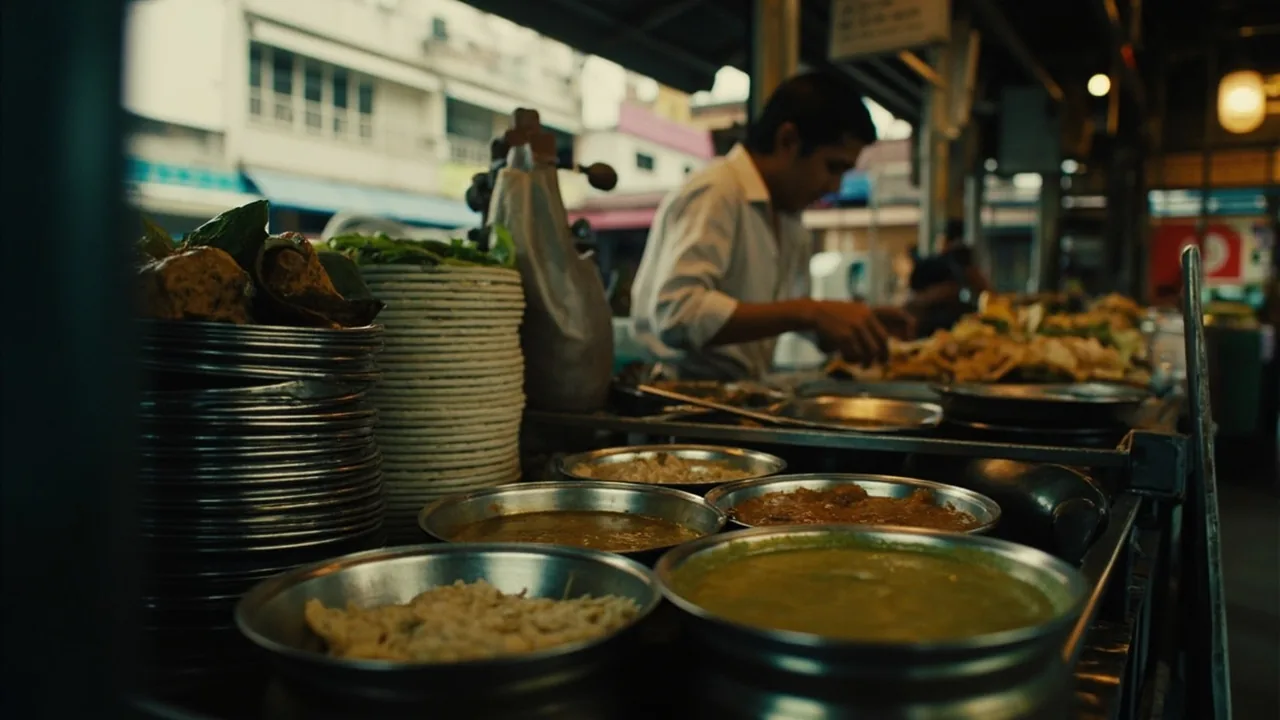
Is Little India Singapore Food Safety Authentic? Honest Guide for Indian Travelers
Short answer: yes, Little India Singapore food safety authentic checks out. Singapore runs the strictest hawker hygiene regime in Southeast Asia, and Little India’s Tamil-Muslim food culture goes back to 1819. You will eat dosai, murtabak, fish head curry, and teh tarik within a 400-metre walk. The catch is price: biryani costs ₹895-₹1,343 (~12-18 SGD or ~$9.29-$13.94), not 120 rupees.
Quick Answers
| What | Answer | Price (INR) |
|---|---|---|
| Is Little India street food safe to eat? | Yes, Singapore’s NEA grades every stall (A/B/C) and shuts down D-graders | A hawker meal: ₹298-₹597 (~4-8 SGD or ~$3.10-$6.19) |
| Is the Indian food in Little India authentic? | Mostly yes, especially at People’s Park Food Centre Blk 32 and Race Course Road | A chicken rice: ₹373 (~5 SGD or ~$3.87) |
| What’s the defining Little India dish? | Murtabak (stuffed prata), best at any hawker stall | A laksa: ₹448 (~6 SGD or ~$4.65) |
| Can vegetarians find safe food there? | Yes, tons of pure-veg South Indian options and Jain-friendly spots | Bottle water: ₹112 (~1.50 SGD or ~$1.16) |
| What should Indians avoid ordering? | ”Vegetarian” Chinese or Malay dishes (often contain anchovies/lard) | MRT single ride: ₹75-₹186 (~1-2.50 SGD or ~$0.77-$1.94) |
The Local Culinary Landscape
Little India sits on the southern edge of the Indian diaspora in Singapore, anchored by Serangoon Road, Race Course Road, and Buffalo Road. The dominant food cultures here are Tamil Muslim (Indian Muslim, also called Mamak), Tamil Hindu, Sikh, and Bengali. What that means at the table is a heavier emphasis on roti, biryani, mutton curry, and dosa than you’d find in a Mumbai neighbourhood, with the Mams (Mamak) stalls running 24 hours and feeding the night-shift crowd.
Singapore enforces hygiene through the National Environment Agency (NEA) under the Environmental Public Health Act. Every cooked-food stall and restaurant gets an A, B, C, or D grade based on a 100-point inspection covering cockroach activity, food handling, and dishwashing. A “C” is rare and triggers a mandatory re-inspection; a “D” shuts the stall. You will see these letter grades on a colour-coded card on the front of every hawker stall, and they are enforced by ₹3,729 (~50 SGD or ~$38.71) on-the-spot fines for non-display. This system is the reason you can eat from a street stall in Little India at 1 AM without a second thought.
What you should still watch for: oil. Singapore Indian food tends to run heavier on ghee and oil than what you’d get at home, so first-time visitors sometimes feel the difference in their stomach even when the stall is hygienic. Drink water, pace yourself on day one.
Key Phrases and Ordering Scripts
Most Singapore Indians speak English at the counter, but a few phrases will help when the cook is older Tamil or when you’re at a hawker stall.
| English Phrase | What It Means | Local Script | Pronunciation |
|---|---|---|---|
| I am vegetarian | No meat, no seafood, no egg | நான் சைவம் | Naan saivam |
| No egg | No egg added | முட்டை வேண்டாம் | Mutta vendam |
| No onion, no garlic | Jain-friendly | வெங்காயம், பூண்டு வேண்டாம் | Vengayam, poondu vendam |
| Less spicy | Mild chili | காரம் குறைவு | Kaaram kuraiyu |
| Plain prata | No egg, no stuffing | பிளைன் பிரட்டா | Plain prata |
| Teh tarik | Pulled milk tea | தே தாரிக் | Teh ta-rik |
If you want a full reference for what Indian travellers eat across the city, see the Singapore food guide for Indian travelers. For Little India specifically, the best Little India restaurants guide lists 30+ spots with prices.
Safe and Authentic Dishes to Eat
Here are six dishes that are both authentic to the Little India scene and safe to eat from any NEA-graded stall.
Murtabak at any hawker stall. Stuffed pan-fried flatbread with minced mutton, egg, onion, and spices, served with a thin dhal and lime pickle. This is the defining Little India street food. Order one to share, it is heavy. The hawker stall version is around ₹448-₹671 (~6-9 SGD or ~$4.65-$6.97) depending on filling. Skip the chicken murtabak if you want the real deal; the mutton is the point.
Thosai (Dosa) at any South Indian coffee shop. A thin fermented rice-and-lentil crepe, served with coconut chutney and sambar. Most stalls in Little India do a paper thosai, masala thosai, or ghee roast. Thosai is one of the cleanest things you can eat at a hawker centre because the griddle is dry and the batter is pre-cooked. A plain thosai runs ₹149-₹224 (~2-3 SGD or ~$1.55-$2.32), masala thosai ₹261-₹373 (~3.50-5 SGD or ~$2.71-$3.87). Pure-veg by default.
Fish Head Curry, but skip if vegetarian. A Singapore-Indian original: fish head simmered in a tangy curry with okra, tomatoes, and tamarind. Invented by an Indian-Mamak cook in the 1960s. If you eat fish, this is the dish to try once. Around ₹1,492-₹2,611 (~20-35 SGD or ~$15.48-$27.10) at a proper restaurant.
Roti John. Ate every night in Little India. It is a folded omelette sandwich loaded with minced mutton, onion, and chilli, then cut into squares. Cheap, filling, and street-food safe. ₹298-₹448 (~4-6 SGD or ~$3.10-$4.65).
Rojak (Indian rojak, not the fruit kind). Fried fritters, tofu, boiled egg, cucumber, and pineapple drowned in a sweet-spicy shrimp-paste sauce. The Chinese version (called Pasembur here) is different, do not confuse them. This one is Indian-style and Little India. Around ₹373-₹522 (~5-7 SGD or ~$3.87-$5.42).
Keema (minced meat) prata. Stuffed roti with spiced minced mutton. Often sold next to plain prata stalls from 6 PM onward. Around ₹373-₹522 (~5-7 SGD or ~$3.87-$5.42). Vegetarians should order the plain or egg prata.
A standard hawker meal in Singapore runs ₹298-₹597 (~4-8 SGD or ~$3.10-$6.19); if you want to budget it out, the cheap eating in Singapore guide walks through the daily math.
Subodh’s Pro Tip: If you only have one meal in Little India, head to People’s Park Food Centre Blk 32 in Chinatown (a short MRT ride away — included here because Little India’s hawker centres close earlier than Chinatown’s), consistently graded A or B, with all six dishes above under one roof for under ₹1,119 (~15 SGD or ~$11.61) total.
Recommended Vegetarian and Indian Restaurants
When you want a sit-down meal or a guaranteed pure-veg kitchen, these spots are the reliable Indian-leaning choices in central Singapore. The Little India cluster is famous for it, but if you are staying near Orchard or Boat Quay, these are your best bets.
People’s Park Food Centre Blk 32, Chinatown. The ground floor is a solid option for cheap, authentic, NEA-graded Tamil and Mamak food. Look for the Long Queue at the corner South Indian stalls; that is where the locals eat. A thali here runs ₹448-₹746 (~6-10 SGD or ~$4.65-$7.74).
Sahebs - The Indian Restaurant | Orchard Road | Indian Cuisine | Singapore. A fine-dining North Indian and Punjabi restaurant on Orchard Road. The kind of place you go when you want dal makhani, butter chicken, and naan that tastes like Delhi. Around ₹2,238-₹4,475 (~30-60 SGD or ~$23.23-$46.45) per person with drinks.
We Desi - Indian Bistro. A casual bistro inside City Gate Mall focused on Indian street food and fusion, including their signature tandoori momos at around ₹1,492 (~20 SGD or ~$15.48) per person. Great when you want Indian flavours in a modern setting near Little India MRT.
Shahi Maharaja, Boat Quay. North Indian restaurant and bar, with tandoori chicken at roughly ₹2,238 (~30 SGD or ~$23.23) per person. Right by the river, good for a slightly upscale evening.
KUBES Indian Restobar. Contemporary Indian street food with a bar. Better for groups than solo diners, and a popular dinner spot.
Black Pepper Multicuisine Restaurant Singapore. North and South Indian menu in a modern upscale setting. Good for a date or a family meal when you want variety.
Zaffron Tandoori, Boat Quay. Punjabi tandoori in a lively riverside setting. Heavier on the meat dishes but has paneer options.
Food Safety and Hygiene
Singapore’s hawker hygiene is the best in Southeast Asia, but Little India is also one of the busiest eating zones in the country, which means mistakes are rare and corrected fast. Here is what keeps you safe.
Check the NEA grade card. Every cooked-food stall must display it. A or B is what you want; C is fine but uncommon; D is absent. If you see no card at all, the stall is unlicensed and you should skip it.
Eat at busy stalls, not empty ones. High turnover means fresh food. If the roti man has a queue, that is your sign. If the stall has zero customers at 8 PM, ask yourself why.
Drink bottled or filtered water. Tap water in Singapore is technically potable but most Indians prefer bottled to avoid any adjustment period. A 1.5-litre bottle is ₹112 (~1.50 SGD or ~$1.16) at any 7-Eleven.
Wash your hands or use sanitizer. Most hawker centres have sinks at the entrance. Use them.
Be cautious with cut fruit on trays. Cut watermelon and pineapple sitting out for hours can be a problem even in clean centres. Buy whole fruit and peel it yourself.
For a broader view on what to avoid across the region, the street food safety guide for Southeast Asia is worth a read before your flight.
Safety Alert: Little India is safe to walk around in, including late at night. Like any busy commercial district, watch for pickpockets around the MRT and during festivals like Deepavali when the crowd swells.
Getting Connected
You’ll want data on your phone for Google Maps, Grab, and the MyTransport.SG app, especially since Little India MRT is on three lines and you’ll want real-time train arrivals. For most Indian travellers, the cheapest option is to skip the airport SIM counter and grab a local SIM at Changi or an eSIM from any major provider before you fly. It activates the moment you land, no passport handover, no queue, and works across Singapore, Malaysia, and Thailand if you continue your trip.
Common Mistakes Indians Make in Little India
Assuming “vegetarian Chinese” dishes are safe. Most are not. Mixed rice stalls that do Chinese-style vegetables often use oyster sauce, lard, or anchovies for flavour. Stick to the Indian stalls or ask directly about oyster sauce and shrimp paste.
Ordering “veg” without specifying no egg. In Singapore, “vegetarian” at many coffee shops means lacto-vegetarian but still includes egg. If you want egg-free, say “no egg” or ask for “pure veg.”
Walking into the first prata shop you see. The classic prata-thosai shops at the edge of Little India are often tourist traps with B- or C-grade stalls. Walk deeper in for better food and better grades.
Drinking teh tarik on an empty stomach first day. The pulled milk tea is heavy with condensed milk and can upset a stomach that is not used to it. Start with water or lime juice.
Tipping when not needed. Most hawker stalls in Little India have no tipping culture. Service charge (10%) is added at sit-down restaurants only. Don’t leave cash on the counter at a hawker stall.
Paying in SGD cash only. Most stalls now take PayNow, NETS, and sometimes GrabPay. But keep ₹1,492-₹3,729 (~20-50 SGD or ~$15.48-$38.71) in small notes for the smaller stalls. Cards work at restaurants.
Daily Budget and Currency Context
A typical Indian traveller in Little India will spend about ₹1,865-₹3,357 (~25-45 SGD or ~$19.36-$34.84) per day on food and local transport, including a hawker breakfast, a sit-down Indian lunch, and a hawker dinner with drinks. With 1 INR ≈ 0.0134 SGD right now (1 SGD ≈ 74.76 INR), that comes out to roughly 1,870-3,365 INR per day. MRT rides within Little India cost ₹75-₹112 (~1-1.50 SGD or ~$0.77-$1.16) each way. A bottle of water is ₹112 (~1.50 SGD or ~$1.16).
For a fuller budget breakdown, see the budget calculator and the Singapore veg food guide if you want to lean fully vegetarian.
Where to Stay in Little India
Little India has the cheapest hostels and budget hotels in central Singapore. Most are within walking distance of the MRT. Expect ₹1,492-₹2,985 (~20-40 SGD or ~$15.48-$30.97) per night for a dorm bed, and ₹3,729-₹7,458 (~50-100 SGD or ~$38.71-$77.42) for a private room. The Singapore Indian traveller hub has current hostel reviews and booking links.
Visa and Entry for Indian Travellers
Indian passport holders need a Singapore tourist visa in advance. The current fee is ₹2,119 (~22 USD) through the ICA portal or authorised agents, processed in 3-5 working days. The visa is single-entry and valid for 30 days. You will need a confirmed onward ticket, hotel booking, and proof of funds. Common rejection reasons: insufficient funds shown, no clear itinerary, or a passport under 6 months validity.
For the full visa process and current rules, the Singapore Indian traveller hub is kept updated. You can also apply through our partner at https://singaporeevisa.sg/c/bananarchy.
FAQ
Is Little India safe at night for solo female travellers? Yes. The area is busy until midnight and well-lit. Standard city precautions apply; the bigger risk is pickpockets around the MRT.
Do Singapore Indians speak Hindi or Tamil? Mostly Tamil, plus English. Most stall owners are Tamil Muslim or Tamil Hindu. Mandarin is common in the older generation too. Hindi is rarer but understood by many.
Can I find Jain food (no onion, no garlic) in Little India? Yes. Several South Indian coffee shops offer “no onion no garlic” thalis on request. Phrase it as “no onion, no garlic” or use the Tamil line above.
Is teh tarik halal? Almost always, yes. Singapore’s Indian-Muslim (Mamak) stalls serve halal meat by default. Look for the halal certification displayed at the stall.
What is the cheapest meal in Little India? A plain thosai at a hawker stall runs ₹149-₹224 (~2-3 SGD or ~$1.55-$2.32). That is the floor price for a filling meal.
Is Little India worth a day trip from other parts of Singapore? Absolutely. Take the MRT to Little India or Farrer Park, eat at People’s Park Food Centre Blk 32, walk through the temples, browse the shops on Serangoon Road, and finish with a boat-quay dinner. One full day is perfect.
Are there any must-eat sweets in Little India? Yes. The Indian sweets and chai Diwali guide covers murukku, ladoo, jalebi, and teh halia. Several sweet shops along Serangoon Road have a strong selection year-round.
Subodh’s Take
The honest answer to “is Little India food safe and authentic” is yes on both counts, and I say that without any Singapore tourism-board tint. Singapore runs a tight ship on hawker hygiene, the Indian community here has had 200 years to refine its food, and the prices are higher than Mumbai or Chennai but still affordable by Singapore standards. Eat at People’s Park Food Centre Blk 32, drink teh tarik at 11 PM, and don’t overthink it.
- Subodh
