How To Get Around Siquijor Like A Local: Transport Options For Indian Travelers
Siquijor is small enough to circle in a day, but the transport options look nothing like what you’ve seen in Bangkok or Hanoi. No Grab, no metro, no real taxi rank. Just scooters, tricycles, habal-habal, multicabs, and the occasional jeepney lumbering along the coastal road. Planning the wider region? Our Southeast Asia backpacking hub covers the full multi-country route.
This guide gives you every option on the island, plus the one thing most articles miss: how to get to Siquijor from Cebu in the first place. If you’re still planning the broader Cebu leg of your trip, the Cebu Bohol backpacker guide for Indian travelers covers the ferry and bus options that connect into this route.
Quick Answers
| What | Answer | Price (INR) |
|---|---|---|
| Cheapest way to get around Siquijor | Habal-habal (motorbike taxi) for solo trips, jeepney for coastal hops | ₹34-₹253 (~20-150 PHP or ~$0.36-$2.67) |
| Best option for couples | Self-drive scooter rental from Das Traum or any San Juan shop | ₹590-₹842 (~350-500 PHP or ~$6.23-$8.90)/day |
| How to reach Siquijor from Cebu | Ceres bus Cebu South → Liloan Port (3.5 hrs), then fast craft to Sibulan, then another ferry to Siquijor | ₹674-₹1,179 (~400-700 PHP or ~$7.12-$12.46) total |
| Most direct route to Siquijor | Fly Cebu → Dumaguete, then 30-min fast craft to Siquijor | ₹2,021-₹3,032 (~1,200-1,800 PHP or ~$21.35-$32.03) |
| Local SIM for maps and Grab-free navigation | Globe or Smart physical SIM at Siquijor port | ₹253 (~150 PHP or ~$2.67) |
Getting To Siquijor First: Cebu And Dumaguete Routes
Most Indian backpackers arrive in Siquijor from Cebu, not Manila. There is no airport on the island, so the trip always ends with a ferry. Two routes work, and the choice comes down to time versus money.
Route 1, via Dumaguete (the fast one): Fly Cebu Pacific or Philippine Airlines from Mactan-Cebu (CEB) to Dumaguete (DGT). Flights take 35 minutes and run 3,000-5,500 PHP depending on the day. From Dumaguete airport, a tricycle to the port is 100-150 PHP, then Oceanjet or Montenegro fast craft to Siquijor takes 30-45 minutes and costs 250-350 PHP. Total door-to-door: about 4 hours including waits, 1,200-1,800 PHP.
Route 2, overland via Liloan (the cheap one): Take a Ceres bus from Cebu South Bus Terminal to Liloan Port. The bus is air-conditioned, takes 3.5 hours, and costs 150-200 PHP. At Liloan, you walk onto the Lite Ferries RoRo (roll-on, roll-off) to Sibulan, Negros Oriental. That ferry takes 30 minutes and costs around 60-80 PHP. From Sibulan, another tricycle takes you to Dumaguete Port (50-80 PHP), then the same Siquijor fast craft as Route 1 (250-350 PHP). Total: 7-8 hours, 400-700 PHP. It’s a long day, but if you’re already in Moalboal or Oslob doing whale sharks, this is the natural add-on.
Subodh’s Pro Tip: Travellers report that the Liloan-Sibulan RoRo closes for maintenance every few months. Check Lite Ferries’ Facebook page the day before you travel, because there’s no schedule posted anywhere else.
The Six Ways To Get Around Siquijor
Once you’re off the ferry at Siquijor Port, these are your real options. I’ve ordered them from cheapest solo option to most comfortable couples option.
1. Habal-habal (Motorbike Taxi, Best For Solo Travellers)
The habal-habal is the Honda Dream or underbone taxi of the Philippine countryside. One driver, one passenger behind, you hold a handlebar welded to the rear rack. It’s how locals commute, and at 20-50 PHP for a short hop and 100-150 PHP for a cross-island ride, it’s the cheapest door-to-door option.
You don’t flag a habal-habal like a tuk-tuk in Bangkok. You stand at the side of the road near a sari-sari store or the port gate, and the drivers find you within a minute. They’ll ask “Saan?” (where?). State your destination agree on the price before you sit down, and hand over the cash at the end. Some drivers wear helmets, most don’t. Always ask for the helmet even if it’s a half-shell with a cracked visor. It’s still better than a coconut.
For solo Indian travellers, this is the easiest first-day option while you scope scooter rental shops. For couples, it’s awkward, the bike is built for one.
2. Tricycles (Short Town Hops)
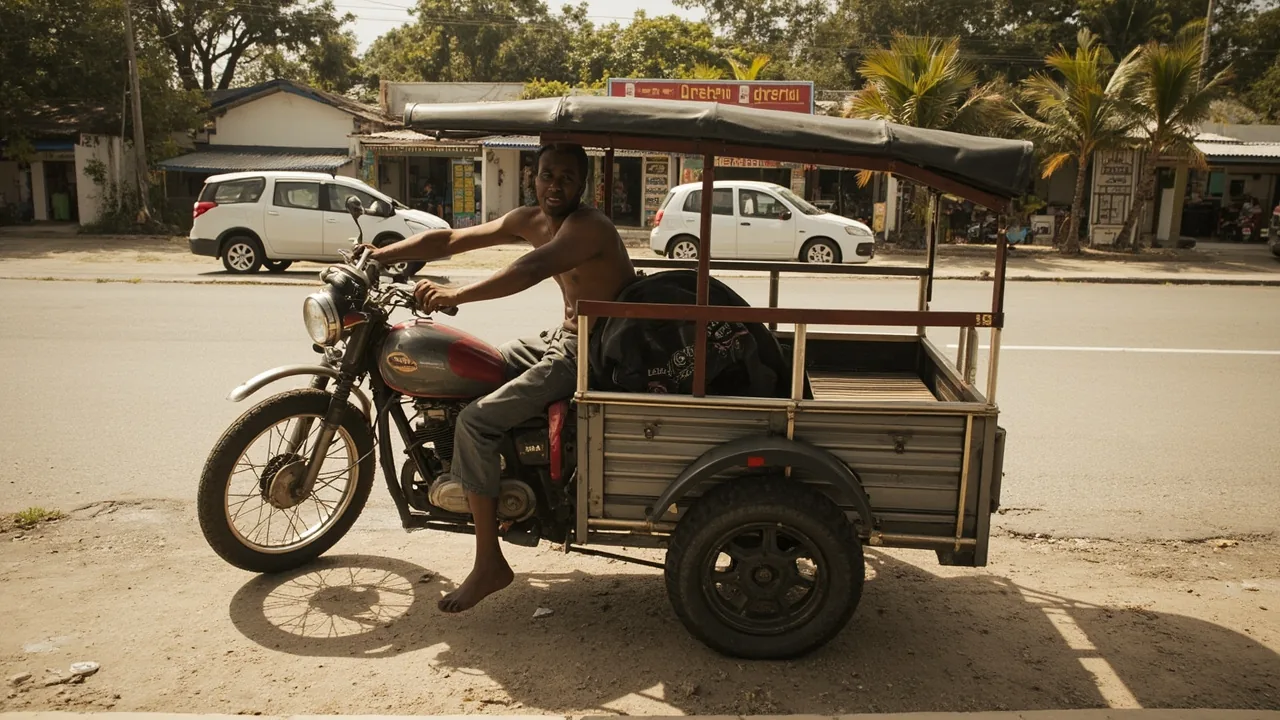
Siquijor’s version of the tricycle is a motorcycle with a covered sidecar welded on. They cluster at the port, the public market in San Juan, and outside major resorts. Within the same municipality (say, from the port to your hostel in San Juan), 50-100 PHP. Cross-municipality trips cost more, 150-300 PHP, and you have to negotiate.
The same flagging rule applies. There’s no Grab. There’s no meter. You agree on the fare in advance or you walk. Indian travellers who are used to haggling in Bangkok or Hanoi do fine here. Travellers who pay the first number quoted overpay by 30-50%.
For a full breakdown of how jeepneys, tricycles, and habal-habal work across the country, see the jeepney tricycle habal-habal Philippines guide.
3. Jeepneys (Coastal Hops, Cheapest Of All)
If your hostel is on the main circumferential road, jeepneys are the most local, cheapest option. They’re the colourfully painted ex-US military buses with bench seating along the sides. Route is fixed, mostly running the San Juan to Larena to Lazi loop. Fare is 9-20 PHP within a town, up to 50 PHP for a half-island trip.
You flag a jeepney by raising your hand when you see one approaching. Pay the driver or the “barker” (the guy hanging off the back) when you board, then say “para po” (stop here please) when you want to get off. He’ll bang the side of the bus and you’ll hop out. This is the only transport option that operates on something close to a schedule, and the only one where you’ll sit next to a Filipino grandmother with a basket of live chickens.
Indian vegetarians should not eat in front of jeepney passengers carrying food, by the way. Not because anyone will be rude, but because you’ll get offered a piece of lechon every 15 minutes. Politely decline, smile, and offer “salamat po” (thank you).
4. Multicabs (Mini Jeepneys)
A multicab is what happens when a jeepney gets shrunk down to a 12-seater van. Same flagging system, same fixed-ish routes, similar fares at 15-40 PHP. They’re faster than jeepneys because they don’t stop every 100 metres, and they cover the inland roads that jeepneys skip. If you’re staying near a non-coastal guesthouse, multicabs are your best bet.
5. Self-Drive Scooter Rental (Best For Couples, Real Freedom)
This is how 80% of Siquijor backpackers get around. You rent a Honda Click or Suzuki Address 110-125cc for 350-500 PHP/day from shops in San Juan and the port area. Das Traum restaurant and Siquijor motorbike and car rental in particular is a one-stop shop if you want to eat and pick up wheels at the same place. Petrol is sold by the litre at roadside sari-sari stores in Coke bottles, around 70-80 PHP per litre, and one tank lasts a full day of island looping.
To rent, you need a valid driver’s licence. Indian licences are accepted in the Philippines for short stays, but bring your international driving permit (IDP) anyway, because police checkpoints do happen and the fine is 500-1,000 PHP on the spot. Wear a helmet. The road around the island has blind corners, drunk locals on underbones, and the occasional dog that decides to cross at the worst possible moment.
Read Philippines scooter motorbike rental safety tips before you sign anything. Most rental shops will charge you for scratches and dents that were already there. Photograph the bike top-to-bottom before riding off, in daylight, with the shop owner watching.
6. Island-Loop Tours With A Driver
If you’ve never ridden a scooter and don’t want to learn on Siquijor’s hilly interior, hire a driver with a multicab or van for a full island loop. This runs 1,500-2,500 PHP for the vehicle plus 500-800 PHP for the driver-guide, split 4-6 ways. You stop at Cambugahay Falls, the old balete tree, Salagdoong Beach, Kagusuan Beach, and the centuries-old Lazi Church at your own pace.
This is the most expensive option but the safest if you’re travelling with parents or a partner who refuses to get on a scooter. Negotiate the stops and total time in advance, not per-stop.
Subodh’s Pro Tip: Don’t rent the cheapest scooter on offer. The 250 PHP/day bikes from random roadside stalls have bald tyres and worn brake pads. Spend the extra 100-150 PHP for a maintained bike from Das Traum or the established San Juan shops. Your life is worth the difference.
Getting Between Municipalities Without Your Own Wheels
Siquijor has six municipalities arranged around a single ring road: Siquijor (the capital), San Juan, Maria, Lazi, Enrique Villanueva, and Larena. The ring road is about 70 km total and can be covered in a full day at a relaxed pace. Between towns, your options are:
| Route | Cheapest option | Typical fare | Time |
|---|---|---|---|
| Port (Siquijor town) to San Juan | Jeepney or tricycle | 30-100 PHP | 20-40 min |
| San Juan to Salagdoong Beach | Habal-habal or tricycle | 100-150 PHP | 20 min |
| San Juan to Cambugahay Falls | Habal-habal | 80-120 PHP | 15 min |
| San Juan to Lazi Church | Jeepney | 50-80 PHP | 30 min |
| San Juan to Kagusuan Beach | Habal-habal | 150-200 PHP | 30 min |
| San Juan to Larena Pier (for Dumaguete ferry) | Jeepney | 50-80 PHP | 25 min |
The trick: jeepneys don’t run on a published schedule. They leave when they’re full, which means anywhere from every 20 minutes at peak times to “wait an hour and pray” in the late afternoon. If you’ve got a ferry to catch from Larena, leave San Juan at least 90 minutes early.
Local Scams To Watch Out For
Siquijor is safer than Manila for scams, but a few specific tricks target tourists fresh off the ferry.
-
The “beach is closed” motorcycle tax. A habal-habal driver at the port tells you your destination beach is closed for a festival or private event, then offers to take you to a different (often worse) beach where his friend runs a paid entry. The beaches are almost never closed. Ignore and find a different driver.
-
Scooter scratch charges on return. You return the bike, the shop points to three new scratches, charges you 2,000-5,000 PHP for “repainting.” This is the most common scam in Siquijor. The fix: photograph the bike on departure with timestamps, and ideally bring the shop owner into the frame.
-
Ferry ticket touts at Cebu South Bus Terminal. As you exit the bus at Liloan, locals will tell you the ferry is full and sell you a “VIP” ticket for 500 PHP. Walk to the ferry terminal window yourself, ask for the next ferry, and buy at the counter. Standard fare is 60-80 PHP.
-
The wrong-change habit. Small denomination confusion because your 1,000 PHP note looks similar to 100 PHP under stress. Always count your change in front of the driver before dismounting. For more on transport scams across the country, see Philippines tourist scams Indian travelers guide.
SIM Cards And Connectivity
You will need data. There’s no Grab, no offline map is detailed enough, and the habal-habal driver needs to be able to call you when he arrives. Two physical SIM brands cover Siquijor: Globe and Smart. Both have booths at the Siquijor Port arrivals hall.
A 7-day tourist SIM with 5-8 GB of data runs 50 PHP for the SIM plus a 100 PHP data add-on. That’s 150 PHP total for a week of reliable 4G. Coverage drops to 3G or nothing in the interior near Cambugahay Falls and the southern coast, so don’t rely on streaming music while riding.
For the eSIM option, Get Nomad eSIM lets you buy a Philippines data plan before you fly and activates on landing. Useful if you’re bouncing Manila, Cebu, and Siquijor in one trip, because you don’t swap SIMs at each port.
Full brand comparison and registration process in the best SIM card Philippines guide for Indian travelers.
Cultural Notes And Local Language
A few phrases will get you everywhere on Siquijor:
- Saan? (Where?), what drivers ask when you hop on a habal-habal.
- Magkano? (How much?), your haggling opener.
- Para po (Stop here please), what you say on a jeepney when you want off.
- Salamat po (Thank you, polite form), the polite suffix “po” matters, use it with anyone over 50.
- Kuya (older brother) / Ate (older sister), how to address habal-habal drivers and jeepney barkers.
Cultural rules specific to Siquijor:
- The island has a folk reputation as a centre of witchcraft and mangkukulam (sorcery). Locals take this seriously. Don’t joke about witchcraft even after a few San Miguel beers.
- Sunsets face west, so book a west-facing beach bar for sunset. Mai Tai Siquijor Beach Bar & Restaurant has the best west-facing deck on the south coast, and CocoRico Siquijor Bar and Restaurant does beachfront seafood dinners with a strong cocktail list.
- Touching anyone’s head, even a child’s, is rude. Same rule as Thailand.
- When entering a church (Lazi Church, San Isidro Labrador), shoulders covered, no shorts above the knee. Sarongs are usually available at the door.
Common Mistakes Indian Travellers Make On Siquijor
-
Trusting the first scooter price. Tourist-facing shops quote 600-800 PHP/day. Two streets behind the main road, locals pay 350 PHP. Walk five minutes past the port before you sign anything.
-
Skipping travel insurance because “it’s a small island.” Siquijor’s roads produce a steady stream of scooter accidents. Coconut trees and coral pavement do not forgive mistakes. Get covered before you fly. The standard option we recommend: Get SafetyWing travel insurance, $62/month (~₹5,900), includes medical evacuation, which matters on an island with one small clinic.
-
Not bringing cash. Siquijor has maybe six ATMs across the entire island, and they run out of cash on weekends. Withdraw PHP 5,000-8,000 in Cebu or Dumaguete before you board the ferry. Most habal-habal drivers and tricycle drivers don’t have change for a 1,000 PHP note, so carry 50s and 100s.
-
Riding at night without a helmet. The ring road is unlit between towns. Mopeds without headlights are common. Take a tricycle after sunset, not a self-driven scooter.
-
Planning only one day on the island. Siquijor rewards three to four nights. You can scooter the full ring road in a day, but you’ll miss the waterfalls at sunrise and the empty beaches at low tide. Most travellers regret rushing through. Don’t be most travellers.
FAQ
Is Grab available on Siquijor? No. Grab does not operate outside major cities. Use habal-habal, tricycles, and jeepneys. There is no ride-hailing app that works on the island.
Do I need an international driving permit for a scooter? Strongly recommended. Indian licences are technically valid for short stays, but police checkpoints happen and IDP gets you through faster. Get one before you fly from India.
Can I pay for transport with UPI or forex card? No. Siquijor is cash-only for all transport. Pay in Philippine pesos.
Is one day on Siquijor enough for the island loop? Yes, if you rent a scooter and leave by 8 AM. You’ll cover the ring road, hit Cambugahay Falls, Salagdoong Beach, the old balete tree, and Kagusuan Beach. Three to four nights is better, but one day works.
What’s the cheapest way to reach Siquijor from Cebu? Ceres bus Cebu South to Liloan (150-200 PHP), Lite Ferry to Sibulan (60-80 PHP), tricycle to Dumaguete Port (50-80 PHP), fast craft to Siquijor (250-350 PHP). Total around 500-700 PHP, 7-8 hours.
Are there vegetarian food options on Siquijor? Limited but workable. Mae’s Kitchenette Siquijor Branch does Filipino vegetable dishes like pinakbet and ginataang gulay. For full Indian vegetarian food, the cooking gap is real, see Indian vegetarian food Philippines guide for workarounds.
Is Siquijor safe at night for solo travellers? Generally yes, far safer than Manila or Cebu City. Use common sense: don’t walk alone on the ring road after dark, take a tricycle, and keep valuables in the hostel’s lockers. For broader urban safety context, the Manila night safety for Indian tourists article covers Makati and Quiapo patterns.
Subodh’s Take
Siquijor’s transport is a window into the Philippines most tourists never see. The habal-habal driver who calls you “boss,” the jeepney banger who knows every stop by sound, the scooter rental uncle at Das Traum who hands you a helmet and a free tupperware of pancit canton. None of it is efficient by Grab standards. All of it is real. Rent the scooter, ride slow on the wet days, learn five phrases in Tagalog, and you’ll leave the island with a better story than anyone who flew in for the day-trip selfie at the old balete tree.
