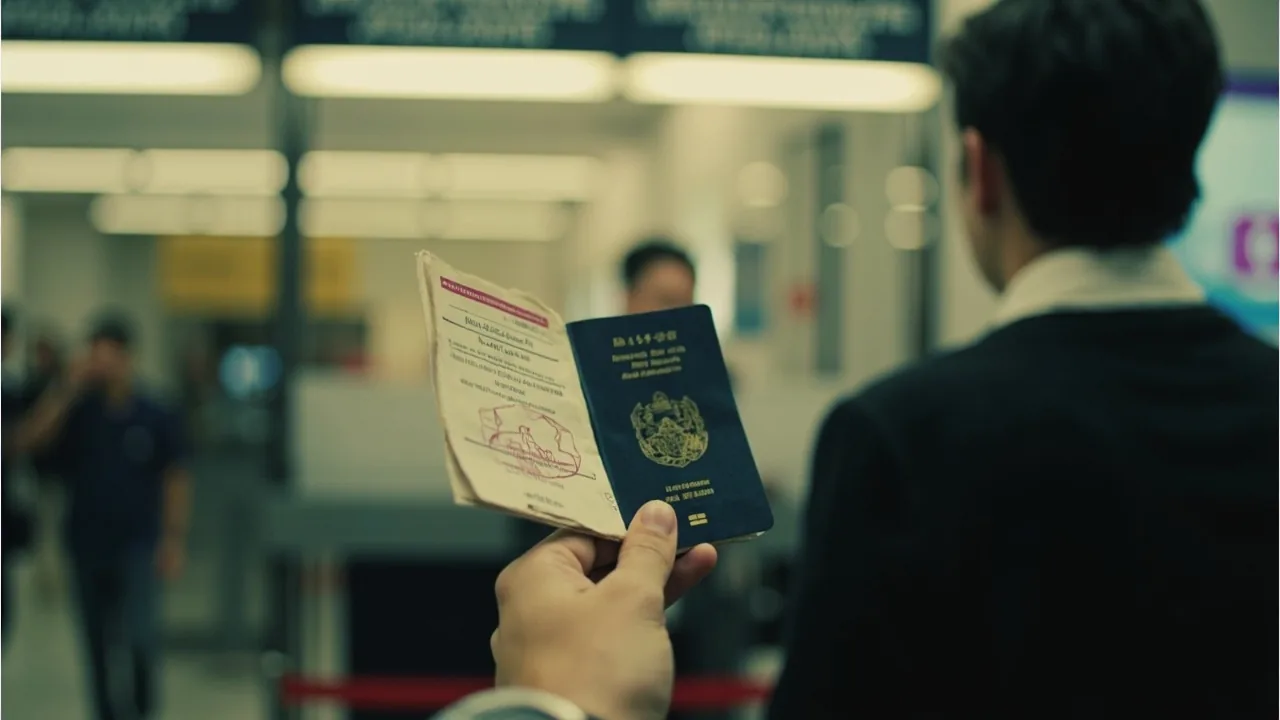
India to Thailand Travel Rules 2026: Visa, Documents & Entry
If you’re an Indian planning a trip from India to Thailand in 2026, the short answer is: yes, you can travel visa-free for 60 days, but a few details matter. You walk off the plane, scan your passport, fill in a digital arrival card, and you’re in.
This guide walks through every restriction that can trip you up: before you fly, at Thai immigration, inside Thailand, and on the return flight to India.
Subodh’s Pro Tip: Thailand is visa-free for Indians in 2026, but the TDAC digital arrival card is mandatory for every arrival type. Fill it in before you board, not at the airport. The QR code at boarding is the single most common reason Indian travellers get sent to the secondary inspection queue.
Where to Stay
Need a base for your Thailand trip? Browse hostels and hotels across Bangkok, Chiang Mai, Phuket, and Pai on Hostelworld. Filter by Indian-friendly kitchens, long-stay discounts, and verified reviews from other Indian backpackers.
Quick Answers
| What | Answer | Price (INR) |
|---|---|---|
| Do Indians need a visa for Thailand in 2026? | No, bilateral visa-free entry, 60 days | Free |
| Is the Thailand Digital Arrival Card (TDAC) required? | Yes, for all arrival types, complete before boarding | Free |
| Thailand visa-on-arrival fee for Indians | ₹5,730 (~2,000 THB or ~$59.36), 15-day stay only, rarely needed | ₹5,730 (~2,000 THB or ~$59.36) |
| Minimum passport validity for Thailand entry | 6 months beyond your travel date | , |
| Indian customs cash limit on return | USD 3,000 or equivalent without declaration | USD 3,000 |
| Thailand extension fee (if you overstay the 60 days) | ₹5,395 (~56 USD), paid at immigration | ₹5,395 (~56 USD) |
Before You Fly: Documents Indian Travellers Need
Three documents matter: passport, TDAC, and proof of onward travel. Here’s what each one requires.
Passport validity: Thai immigration wants at least six months of validity left on your passport beyond your date of entry. They will sometimes wave you through with five months, but don’t bank on it. If your passport expires in January 2027 and you’re flying in July 2026, you’re fine. If it expires in December 2026, renew first. Two blank pages for the entry stamp is the standard ask, though Thai immigration rarely checks that closely for Indians on visa-free entry.
Thailand Digital Arrival Card (TDAC): This is the form Thailand introduced to replace the old paper TDAC card. It’s free, takes about three minutes, and you complete it at https://tdac.immigration.go.th. You’ll need your passport, your flight number, your first night’s address in Thailand (hostel name is fine), and a working email. The system emails you a QR code. Screenshot it. Screenshot the email. Save the PDF. Thai immigration scans the QR at the booth, and a dead phone screen means you wait in the slow line.
Travellers report that the TDAC portal opens exactly 72 hours before arrival, no earlier. If you try to fill it in three days before, you’ll get a “not yet available” message. Most travellers do it on the plane using the airport Wi-Fi, which works about 60% of the time, or at the gate before boarding, which is the safe option. Skipping the TDAC entirely is not possible: even visa-on-arrival travellers need it.
Proof of onward travel: Thailand technically requires you to hold a confirmed ticket out of the country before the 60-day visa-free stay expires. In practice, this is checked maybe 1 in 20 entries at Bangkok Suvarnabhumi, more often at smaller airports like Chiang Mai or Krabi. A printout of a refundable onward bus ticket to Laos counts. A screenshot of a return flight to India counts. An “I’m flying to Vietnam next week” with no ticket does not.
Proof of funds: Officially, Thai immigration can ask you to show ₹57,178 (~20,000 THB or ~$593.51) per person or ₹114,356 (~40,000 THB or ~$1,187.02) per family in cash. This rule exists on paper. In 2026, with visa-free entry being the default for Indians, almost no one gets asked. If you do get asked, a forex card statement showing equivalent balance, an active bank app, or even a UPI screenshot showing recent inflows works. Carrying the full amount in cash is unnecessary.
Travel insurance: Not mandatory for Thai entry, but strongly recommended for medical evacuation. The standard backpacker policy runs about ₹5,973 (~62 USD) a month. If you’re doing anything beyond Bangkok beach holidays, motorbike rentals, diving, treks, get it. Thai private hospitals are excellent and will not treat you without payment up front.
Safety Alert: If your passport has an Israeli visa stamp, a Turkish entry stamp near a border region, or any visible cancellation or amendment marks, expect extra questions at Thai immigration. Not a ban, just slower. Same for OCI (Overseas Citizen of India) cardholders: OCI is not dual citizenship and does not include an Indian passport, so the bilateral 60-day visa-free scheme between India and Thailand doesn’t apply to them. OCI holders travel on their foreign passport under that country’s Thailand visa rules, and only need the OCI booklet if they separately plan to visit India.
At Thai Immigration: What Happens
You land, you walk to the immigration hall, you find the “Foreign Passport” line. At Bangkok Suvarnabhumi and Phuket, there are now separate lines for “Visa-Free” travellers. The TDAC QR gets scanned first, usually at a self-service kiosk before you reach the officer. The officer then checks your passport, asks one or two questions, stamps you in.
The standard questions in 2026 are “How long will you stay?” and “Where are you staying?” Answer in days, not weeks. “Ten days” is better than “About a week and a half.” For the second question, give the name of a hostel or a city. “Chiang Mai” works. “A hostel near Khao San Road” works. “Around” does not.
Common reasons Indians get pulled into secondary inspection (the room with the chairs, a long wait, and slightly worried faces): passport validity under six months, no TDAC QR, no onward ticket when asked, return ticket booked more than 60 days out, previous overstay stamp from any country, name mismatch with your booking (if your flight is booked under a slightly different spelling). None of these are denials. They’re just delays, 30 minutes to two hours, and almost always end with entry granted.
The 60-day stamp: Look at your entry stamp. It will say “60 days, visa-free” or similar. Count 60 days from your entry date, not from your arrival in the country. If you entered on July 22, your stay expires September 20. If you entered July 22 and plan to leave August 30, you have 21 days of slack, which is plenty. Leave Thailand before the 60-day stamp expires, or extend it.
Visa on Arrival vs Visa-Free: Why Most Indians Don’t Need VoA
This is where a lot of confusion happens, so let me lay it out clearly.
| Option | Stay | Fee | Who uses it |
|---|---|---|---|
| Visa-free (bilateral) | 60 days | Free | 95% of Indian travellers |
| Visa-on-arrival (VoA) | 15 days | ₹5,730 (~2,000 THB or ~$59.36) | Travellers who forgot TDAC, or who need a fresh 60 days after using their first |
| TR Tourist Visa (embassy) | 60 days, single entry | ₹7,225 (~75 USD) | OCI holders, METV for frequent flyers |
| METV Multiple Entry Visa | 60 days per entry, 6 months validity | ₹19,268 (~200 USD) equivalent (₹17,153 (~6,000 THB or ~$178.05)) | Business travellers, repeat visitors |
The bilateral visa-free scheme has been in place between India and Thailand since 2018 and remains active in 2026. There is no quota, no minimum income requirement, no invitation letter. You show up, you get stamped in, you stay 60 days.
The visa-on-arrival exists mainly for non-eligible nationalities, but Indians can technically use it. Why would you? If you entered visa-free, used your 60 days, did a border run to Myanmar or Laos, came back, and want another 60 days, you’re not eligible for a second visa-free stamp consecutively, you’ll need to apply for a VoA or a TR visa. VoA gives you 15 days for ₹5,730 (~2,000 THB or ~$59.36). Most Indians skip this entirely and just plan their trip within the 60-day window.
If you’re staying longer than 60 days, you have two options: extend your stay at a Thai immigration office for 30 days (₹5,395 (~56 USD) fee), or leave and re-enter. Extensions are processed same-day at Bangkok immigration (Chaeng Watthana) and take about two hours. You’ll need passport, TM7 form, passport photos (4x6 cm, white background), and the fee.
Subodh’s Pro Tip: If you’re using the visa-free 60 days, take a photo of your entry stamp on day one. Burglaries, lost passports, and simple stamp-fading happen. If you lose your passport or the stamp fades, a day-one photo of the entry stamp is the easiest way to prove your entry date to hostel staff or immigration.
Inside Thailand: What Indian Travellers Should Know
Once you’re in, Thailand has few restrictions on what Indian passport holders can do. You can travel anywhere tourists are allowed, rent motorbikes, take domestic flights, stay in hostels or hotels, no special permits required for the standard tourist trail.
Places Indians sometimes need a permit or a guide: If you want to climb certain peaks in northern Thailand (Doi Luang in Chiang Rai province has restricted zones), or do certain border-area treks, you’ll need a permit from Thai national parks. This is not an India-specific rule. It’s a Thai rule for everyone. Most popular treks (Doi Inthanon, Pai, Mae Hong Son loop) need nothing more than a national park entry fee, ₹286-₹858 (~100-300 THB or ~$2.97-$8.90).
Restricted zones for Indian passport holders: There are a few military-sensitive areas along the Thai-Myanmar and Thai-Cambodia borders that require a special permit regardless of nationality. Pai’s Mae Hong Son loop is fine. Some villages in Mae Sot district near Myanmar are restricted. If you’re planning to stay overnight near an actual border, ask your hostel. For 95% of travellers this never comes up.
SIM card: Buy a tourist SIM at the airport (AIS, TrueMove, dtac) or at any 7-Eleven. The 15-day AIS tourist SIM with 15GB runs ₹1,141 (~399 THB or ~$11.84) at the airport counter and roughly ₹855 (~299 THB or ~$8.87) at 7-Eleven for the same SKU. Identical data, different counter price. The eSIM alternative is Get Nomad eSIM, which lets you activate before you fly and skip the airport counter entirely. Useful if you’re arriving at 2am and the SIM counter is closed. For everything else, see our Thailand SIM and eSIM guide.
Currency: 1 INR = 0.349 THB at current rates. So ₹1,000 is about 349 THB (~$10.36). The post office and SuperRich exchange counters in Bangkok give the best rates, roughly 0.5% better than airport counters. Avoid exchanging at your hotel. For ATM withdrawals, use a forex card from HDFC, ICICI, or Niyo, and check our ATM fee comparison guide to find which Indian bank cards don’t slap on a ₹1,429 (~500 THB or ~$14.84) foreign ATM fee.
Royal family respect: Thailand has strict lèse-majesté laws. Don’t step on Thai currency (the King’s image is on every coin and note), don’t make jokes about the royal family even in private WhatsApp groups, don’t deface any portrait. If a film or play has a royal anthem, stand up. This isn’t paranoia, Thai authorities have arrested foreigners for social media posts.
Temple dress code: Shoulders and knees covered, shoes off at every temple entrance. Most major temples (Wat Pho, Wat Arun, Wat Phra Kaew) have sarong rentals for ₹57-₹114 (~20-40 THB or ~$0.59-$1.19) if you forget. See our temple dress code guide for specifics.
Street scams to watch for: The classic Bangkok tuk-tuk “temple is closed today” scam (which sends you to gem shops that pay the driver commission), jet ski damage scams in Phuket and Pattaya, and the overcharging tailor scam near Khao San Road. Full list in our Thailand scams guide.
Returning to India: Customs, Cash, and Customs Duty
On your way back, Indian customs at Mumbai, Delhi, or Bangalore will check your baggage allowance and ask about goods purchased abroad. Here’s what matters.
Indian customs duty-free allowance: For an adult returning after more than 24 hours abroad, you can bring in goods worth up to ₹50,000 (~$519) without paying duty. Used personal effects (clothes, laptop, phone you already owned) don’t count. New purchases do. If you spent more than ₹50,000 on foreign goods, declare it at the red channel and pay duty on the excess.
Alcohol allowance: 2 litres of wine or 2 litres of beer per adult. Hard liquor is restricted, technically allowed but with high duty. Most travellers skip this and bring wine or beer.
Cash declaration: If you’re carrying more than USD 3,000 (equivalent) in cash, you must declare it on the Indian customs form. This is a hard rule, enforced at the green/red channel decision point. Forgetting this and getting caught can result in seizure of the undeclared amount. Forex cards and bank transfers have no such limit, which is another reason to use a card over carrying cash.
Gold: Indian customs allows 20 grams of gold for a male passenger, 40 grams for a female, duty-free if worn (not in baggage). Anything beyond that attracts duty plus penalty. The “I bought this in Dubai” excuse doesn’t work in Thailand either, the rule applies to all arrivals.
Currency: You can bring back up to ₹25,000 (~$259.50) in Indian currency notes. More than that gets seized.
Subodh’s Pro Tip: Save your Thai receipts (especially for electronics, gold, and high-value goods) for the return trip. If customs pulls you aside, having the receipt proves the price you paid and stops officers from inflating the “assessed value” to charge you more duty.
FAQ
Q: Do I need a visa for Thailand if I’m holding an OCI card? A: OCI is not dual citizenship, so OCI cardholders travel on their foreign passport, not an Indian one. The bilateral India-Thailand 60-day visa-free scheme doesn’t apply to them, since that scheme is for Indian passport holders. Use your foreign passport’s Thailand visa rules instead. The OCI booklet is irrelevant for Thailand entry.
Q: Can I extend my 60-day visa-free stay in Thailand? A: Yes, at any Thai immigration office (Chaeng Watthana in Bangkok is the main one). 30-day extension, ₹5,395 (~56 USD) fee, same-day processing. Bring passport, a TM7 form (available at the office), and a 4x6 cm photo.
Q: What happens if I overstay my visa-free entry? A: Overstay fines are ₹1,433 (~500 THB or ~$14.84) per day, capped at ₹57,307 (~20,000 THB or ~$593.51). You pay at the airport before checking in for your flight. The airline will refuse boarding if you haven’t paid the fine. Overstays also get recorded in Thai immigration records and can affect future Thai visa applications.
Q: Is the TDAC required for transit passengers? A: Yes, since 2025, even transit passengers must complete the TDAC if they pass through Thai immigration. If you stay in the international transit area without passing through Thai immigration (just a connecting flight), you do not need it. Most Indian travellers connecting through Bangkok on separate tickets will pass through immigration to collect bags and re-check in, so TDAC applies.
Q: Can I enter Thailand on a one-way ticket if I plan to overland out? A: Technically yes, and Thai immigration rarely checks. But if asked, a bus booking to Laos or a train ticket to Malaysia is the standard proof. Keep the printout.
Q: Do Indian passport holders need any specific vaccinations to enter Thailand? A: No vaccinations are mandatory for entry. Yellow fever vaccination is required only if you’re arriving from a country with risk of yellow fever transmission. For recommended vaccines (Hep A, Typhoid, Tetanus booster), see our Thailand health guide and travel vaccinations guide.
Q: What’s the difference between visa-free and visa-on-arrival fees for Indians in 2026? A: Visa-free is free, 60-day stay. Visa-on-arrival is ₹5,730 (~2,000 THB or ~$59.36), 15-day stay. For most Indians, visa-free is the obvious choice. VoA only makes sense if you’ve used your 60 days, left, and need a short re-entry window.
Subodh’s Take
Thailand in 2026 is the easiest Southeast Asia entry for Indians by a wide margin. The bilateral visa-free scheme means no embassy fees, no appointment slots, no paperwork beyond a digital arrival card. The rules are simple: passport with six months validity, TDAC filled in before boarding, stay under 60 days, and don’t run out of cash declaration paperwork on the way back. The mistakes I see most often are skipping the TDAC until arrival at the gate (which works, but only because airport Wi-Fi cooperates), overstaying by accident because travellers confuse entry date with arrival date, and bringing back more than ₹50,000 in goods without declaring. Sort those three out before you fly and your trip will be smooth end-to-end.
— Subodh---
