Dress Code for Southeast Asia Temples: Indian Packing Guide
Dress code rules verified against current entry rules on the official sites for Wat Phra Kaew (Grand Palace, Bangkok), Angkor Wat (APSARA), and the Ministry of Religious Affairs Bali. Planning the wider region? Our Southeast Asia backpacking hub covers the full multi-country route.
You will get turned away at temple gates more often than anywhere else in Southeast Asia, and almost always for the same reason: shoulders showing, knees showing, or the wrong shoes. This dress code temple guide covers what to wear, what to buy locally, what NOT to wear, and the specific gates where rules are strictest. It covers what to wear, what to buy locally, what NOT to wear, and the specific gates where rules are strictest.
Subodh’s Pro Tip: A cheap sarong is your single best investment. Buy one within 24 hours of landing (Bangkok’s Khao San Road has them from ₹287 (~100 THB or ~$2.98), Phnom Penh’s markets from ₹289 (~3 USD)) and carry it in your daypack for every temple visit. It doubles as a scarf, a bedsheet on hot sleeper buses, and a prayer-rug if you find a mosque.
Quick Answers
| What | Answer | Price (INR) |
|---|---|---|
| Do I need to cover my shoulders at temples? | Yes, in nearly every major temple in Thailand, Cambodia, Bali and Myanmar | ₹0 (pack the right top) |
| Do I need to cover my knees? | Yes, long pants or a long skirt are required at the strict gates | ₹0 (pack long bottoms) |
| Can I wear shoes inside? | No, you’ll remove them at most temples; some require socks | ₹0 |
| What if I show up in shorts and a tank top? | You’ll be offered a rental sarong (₹574-₹1,436 (~200-500 THB or ~$5.96-$14.89)) or turned away | ₹0-₹500 (~$0-$5.18) |
| What’s the cheapest “temple-safe” outfit to buy locally? | Sarong + plain t-shirt from any market | ₹287-₹718 (~100-250 THB or ~$2.98-$7.45) |
The Universal Southeast Asia Temple Rules
Three rules apply at roughly 90% of temples across Thailand, Cambodia, Bali and Myanmar. Print them on a mental card before you go.
Rule 1: Shoulders covered. A short-sleeve t-shirt is fine at most places, but sleeveless tops, tank tops and anything with thin spaghetti straps will get you stopped. Even wide-strapped sports tops can fail at the strictest sites (Wat Phra Kaew in Bangkok and Angkor Wat’s Bakan tower being the worst offenders).
Rule 2: Knees covered. Shorts above the knee are the single most common reason Indian travellers are turned away at the gate. Long pants, long skirts, or a sarong wrapped around your shorts all work. Capri-length cropped pants that end mid-calf are accepted almost everywhere.
Rule 3: Shoes off at the door. This is universal at prayer halls and inner sanctuaries. Outer courtyards usually allow shoes. Socks are technically allowed in some places but culturally odd at outdoor temples, and at the Grand Palace in Bangkok you’ll often walk on burning-hot stone, so thin socks save your feet.
Two more rules that catch people:
- No pointing feet at Buddha statues. Don’t sit with your feet pointing toward a Buddha image. Tuck them behind you or sit cross-legged.
- No climbing on statues or sacred structures, even for photos. Travellers get fined at Angkor and Bali for this.
Safety Alert: At the Grand Palace Bangkok and Wat Phra Kaew, the rental sarongs are ₹574 (~200 THB or ~$5.96) deposit (refundable) plus ₹574 (~200 THB or ~$5.96) “rental fee” (not refunded) = ₹1,149 (~400 THB or ~$11.91) gone. Staff at the rental counter have been observed pushing the deposit-only option that forfeits your money. Buying your own sarong for ₹287 (~100 THB or ~$2.98) upstream is cheaper after your second visit.
Country-by-Country Breakdown
Thailand (the strictest)
Thailand is where Indian travellers get caught out most often, because the rules are enforced at the gate by actual staff, not just a polite sign. If you’re weighing the safety side of the trip, our Thailand safety scams guide covers the usual gate-area hustles around the Grand Palace, and our Cambodia scams and safety guide covers similar issues at Angkor.
Wat Phra Kaew / Grand Palace, Bangkok is the strictest site in the country. No shorts above the knee for anyone, no sleeveless tops, no see-through fabric, no tight leggings (even if they cover the knee), no torn jeans. The rules are posted at the entrance in English and Thai. Sarongs are available for rent, but the line moves slowly during peak hours (10:00-12:00).
Wat Pho and Wat Arun, Bangkok are more relaxed. A t-shirt with sleeves down to mid-bicep and long cropped pants will pass. Sarongs are recommended but not always enforced.
Doi Suthep, Chiang Mai enforces shoulder and knee coverage at the main staircase. Travellers in shorts are turned back at the bottom of the steps and directed to a sarong-rental counter.
Wat Phra Singh, Chiang Mai is the most lenient major temple. Plain t-shirts and long shorts (just below the knee) usually pass.
Cambodia
Angkor Wat has tiered enforcement. The outer galleries are open to anyone dressed modestly. First-timers planning a few days around the temples should pair this with our one-week Cambodia backpacker itinerary and our India to Cambodia first steps guide so the dress code fits into a route that already handles the entry logistics. The Bakan tower (the famous central spire) has a strict dress code at the entrance checkpoint: covered shoulders, long pants or ankle-length skirt, and shoes that come off easily. Indian travellers report that the staff at the Bakan tower checkpoint will turn away anyone in shorts or a sleeveless top, with no rental option at that specific gate.
Bayon, Ta Prohm, Banteay Srei are far more relaxed. Knee-length shorts and a t-shirt pass at most of these. Closed shoes that come off easily are easier than lace-up boots.
Royal Palace, Phnom Penh enforces a strict dress code similar to the Grand Palace in Bangkok. Shoulders and knees fully covered. Sarongs available for ₹193 (~2 USD) deposit.
Bali, Indonesia
Bali is mixed. The rules depend on whether the temple is a “Pura Kahyangan Tiga” (village temple, sometimes open to visitors with a sarong rental) or a major tourist site.
Tanah Lot and Uluwatu enforce a sarong rental (typically included in the entry fee) and shoulder coverage. Knee-length shorts are fine once you have the sarong wrapped.
Besakih (Mother Temple) and Tirta Empul are stricter. Sarongs and sash belts are required (the sash is the part most tourists miss, you tie it around the waist over the sarong). These are provided at the entrance.
Ulun Danu Beratan is the most relaxed major temple, a t-shirt and knee-length shorts with the rental sarong usually pass.
Myanmar
Shwedagon Pagoda, Yangon is the strictest site in Myanmar. No shoes above the ground floor, no shorts for men, no sleeveless tops for women, and you must walk barefoot through long sun-heated marble corridors. Travellers report socks being confiscated at the entry checkpoint to enforce barefoot walking. Long pants and a t-shirt are the minimum.
Mahamuni Pagoda, Mandalay applies similar rules and additionally prohibits men from entering the inner sanctum where the gold-leaf Buddha is being applied by devotees.
Bagan temples are individually managed and rules vary. Most charge a small sarong-rental fee (₹96-₹193 (~1-2 USD)) but otherwise enforce modest dress.
What to Pack from India (The Temple-Outfit Kit)
You don’t need much. Here is the minimal kit that covers every major temple gate across the region:
For everyone:
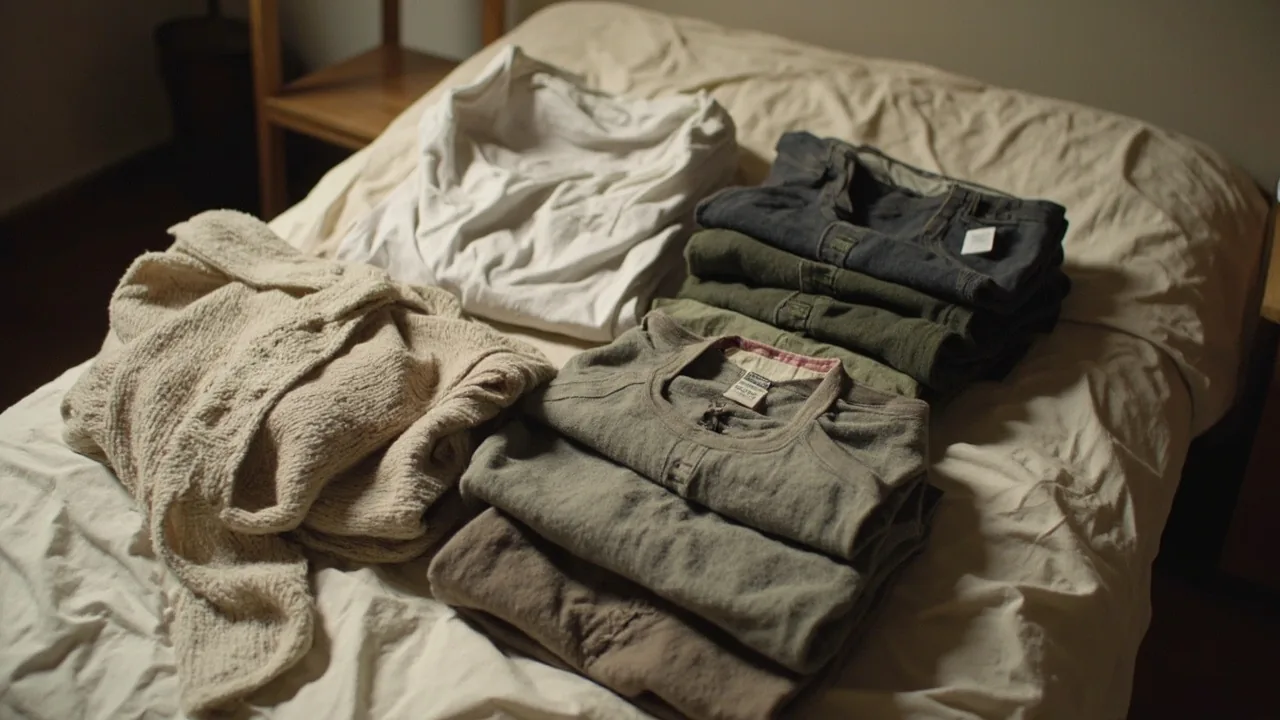
- 2 light cotton t-shirts with at least mid-bicep sleeves (linen works best in the heat)
- 1 pair of full-length lightweight pants (zip-off pants are the traveller’s best friend here, you can convert to shorts for non-temple days)
- 1 long cotton skirt or loose harem pants (works for all genders at any gate)
- Slip-on shoes or sandals with a heel strap (laces mean 5-minute shoe-removal at every temple)
- 2 sarongs (one for temple days, one as a backup or beach use)
For women specifically:
- A light scarf or dupatta (covers shoulders for temples that catch you in a sleeveless top)
- Full-length leggings work at most sites, but are flagged at Wat Phra Kaew and the Grand Palace Bangkok because they are too “form-fitting”
For men specifically:
- Avoid sleeveless tops entirely, even at the most relaxed temples, because signs often say “no sleeveless” even when staff don’t enforce
- Closed shoes are required at a handful of mosques and a few pagodas, but at Hindu and Buddhist sites sandals are fine
Subodh’s Pro Tip: Indian travellers often assume “I’m brown-skinned, they won’t single me out.” Wrong. The dress code applies to everyone, locals included. Locals wear temple-appropriate clothing as everyday wear, so their t-shirts have sleeves and their pants are ankle-length. Showing up as a tourist in shorts and a tank top is the visible marker, not the skin tone.
Buying Temple Gear On the Road
If you forget to pack the kit, every backpacker hub has you covered.
- Bangkok: Khao San Road has sarongs from ₹287 (~100 THB or ~$2.98), basic temple pants from ₹431 (~150 THB or ~$4.47). MBK mall has temple-appropriate clothing from ₹574 (~200 THB or ~$5.96) if you want something sturdier.
- Chiang Mai: Sunday Walking Market and Night Bazaar have lightweight temple pants from ₹287 (~100 THB or ~$2.98).
- Phnom Penh: Central Market (Phsar Thmei) has the best variety, sarongs from ₹193 (~2 USD), temple pants from ₹289 (~3 USD).
- Siem Reap: Pub Street area has multiple shops selling “Angkor-appropriate” sarongs and pants for ₹193-₹482 (~2-5 USD).
- Ubud (Bali): Market stalls along Jalan Raya Ubud have sarongs from ₹268 (~50,000 IDR or ~$2.78), and the official temple sashes from ₹107 (~20,000 IDR or ~$1.11).
The cheapest option is almost always a Thai or Cambodian market. Don’t buy a “temple-appropriate” outfit at the Grand Palace entrance, the markup is 3-5x.
Common Mistakes That Get You Turned Away
Wearing “shorts” that are knee-length. Knee-length is borderline. Strict sites like the Bakan tower at Angkor Wat or the Shwedagon Pagoda in Yangon want ankle-length. Mid-calf is the safe compromise.
Wearing leggings or yoga pants at the Grand Palace Bangkok. Form-fitting fabric, even if it covers the knee, fails. Form-fitting fabric, even if it covers the knee, can fail. Loose cotton pants pass.
Going barefoot at sites with broken glass or hot stone. Shwedagon Pagoda is famous for this. The marble corridors can hit 50°C by midday. The marble corridors can reach high temperatures by midday, so thin cotton socks or soft slip-on shoes that can be worn inside are practical options where rules permit (check site rules beforehand).
Wearing a hat inside the prayer hall. Once you cross the threshold into the indoor prayer area, hats come off, just like at a gurudwara or mosque at home. This catches Western tourists more than Indians, but it does happen.
Photographing monks without permission. At temples in Thailand and Myanmar, this is a real offence. The polite move: ask first, or photograph only the architecture. Most monks will say yes if you gesture politely.
Pointing your feet at a Buddha statue. A hard rule at every temple in Thailand and Myanmar. Indian travellers familiar with gurudwara etiquette already know this, but for those who don’t: tuck your feet behind you when sitting on the floor.
Subodh’s Pro Tip: Indian travellers sometimes get refused entry at the Bali or Thailand gates because of body-piercing, tattoos of Hindu deities (sometimes considered disrespectful), or visible tattoos with religious imagery. Cover visible religious tattoos with a light long-sleeve shirt if your itinerary includes conservative temples.
Photos: Can You Take Them?
Temple photo rules differ sharply across the region.
- Wat Phra Kaew, Bangkok: No photos inside the main chapel. Photography of the architecture in the outer courtyards is fine.
- Angkor Wat: Photos allowed throughout except in a handful of marked inner sanctuaries. The famous sunrise shot from the reflection pond is fully permitted.
- Shwedagon Pagoda, Yangon: Photography allowed in the outdoor areas, banned inside the four main prayer halls.
- Borobudur, Indonesia: Photography allowed throughout, drone use requires a permit from the management office.
- Tanah Lot, Bali: Photography allowed throughout, tripods banned during peak hours.
The single biggest rule: never photograph monks without permission, never use flash on Buddha statues, and never pose for a “fun” photo with a sacred statue. The last one gets travellers fined at Angkor and removed from sites in Myanmar.
FAQ
Do I need a sarong at every temple, or just the big ones? Every temple where you’d remove your shoes to enter the inner area. Outer courtyards at most sites don’t require a sarong if you’re wearing long pants.
Can I wear my long Indian kurta-pyjama instead of separate temple clothes? Yes, and it works at every gate. A simple kurta-pajama or salwar-kameez passes dress codes at Hindu, Buddhist and even Muslim-heritage sites across the region. It’s the easiest temple outfit Indian travellers already own.
Are shoes banned everywhere? What about socks? Shoes off at the prayer hall, yes. Socks are a grey area, accepted at most outdoor temples, banned at Shwedagon Pagoda (where barefoot is enforced) and at some pagodas in Bagan. Carry thin socks and be ready to take them off too.
What if I’m on my period? Are there any rules? Buddhist temples in Thailand and Cambodia don’t have menstrual restrictions. Hindu temples in Bali follow local rules, which generally permit entry during menstruation but ban entry during active bleeding or postpartum recovery. Some pagodas in Myanmar have traditionally barred women of menstruating age from certain inner chambers; this is rarely enforced at tourist sites but check signs.
Can I bring water inside the temple grounds? Yes, but don’t carry open plastic bottles into prayer halls. Most temples have a “no food, no drink” rule inside the inner buildings, water is fine in the outer courtyards.
What about Indian temples in the region, like the Mariamman Temple in Bangkok? Dress code is the same as a temple in India: shoulders and knees covered, shoes off at the door, no leather items in some shrines. Far less enforcement than at Thai Buddhist temples, but the etiquette is the same.
Will I get turned away at the gate if I show up in a t-shirt and capri pants? At the most relaxed sites (Bayon, Besakih, Wat Phra Singh Chiang Mai), no. At the strict gates (Grand Palace Bangkok, Shwedagon, Angkor Wat Bakan tower), possibly. Capri pants that end mid-calf pass at most sites, but to be safe, ankle-length is the universal answer.
Subodh’s Take
Honestly, the dress code sounds intimidating on paper but it’s a non-issue if you pack two sarongs and one pair of long pants. Most “temple outfit” disasters are first-timer mistakes that get sorted in 24 hours: you get turned away once, you spend ₹287 (~100 THB or ~$2.98) on a sarong, and the rest of the trip is smooth. Indian travellers have an advantage here, we already own kurta-pajamas and dupattas that pass every gate in the region without buying anything new. Use it.
Connectivity Note
You’ll want Google Maps loaded for finding these temple gates, plus offline Google Maps of Bangkok, Siem Reap and Bali downloaded before you land. The cheapest way is a local SIM, but if your phone is locked or you don’t want to swap SIMs three times across the region, an eSIM works too: Get Nomad eSIM covers Thailand, Cambodia, Indonesia and Myanmar on regional plans. For more detail on which network works best, see our Southeast Asia SIM setup guide and Thailand SIM comparison.
