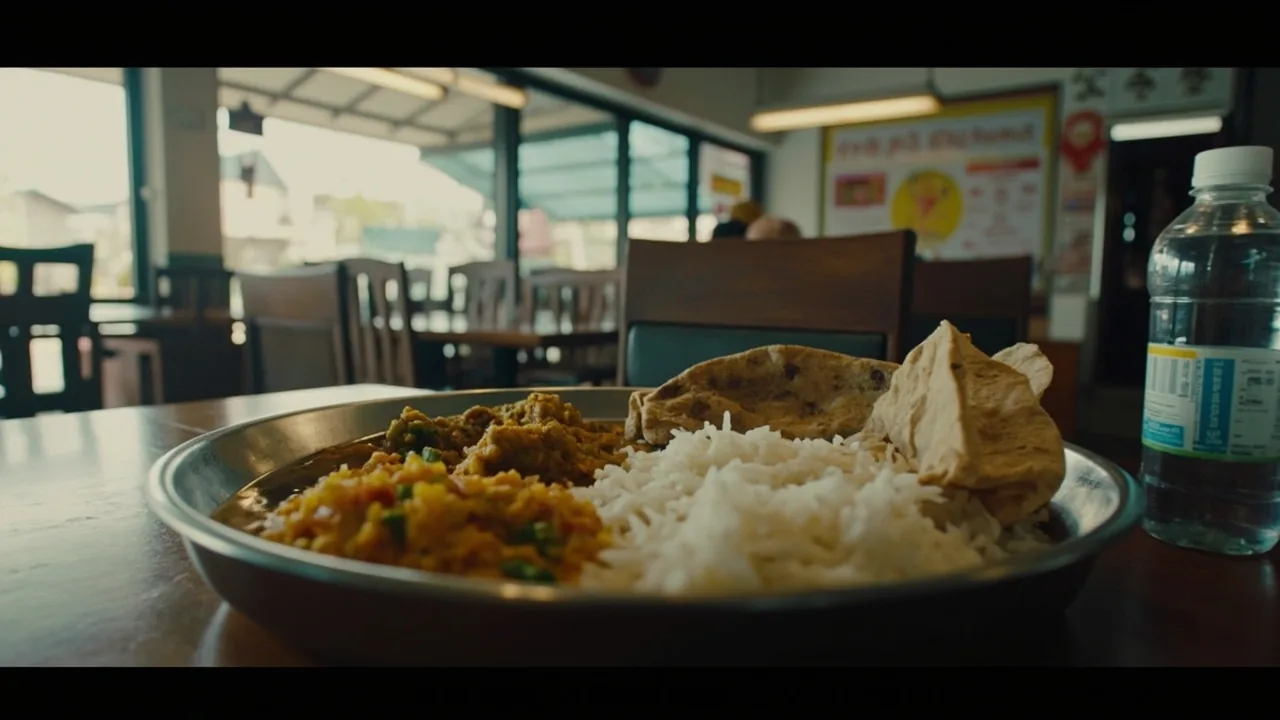
Pure Veg & Indian Food in Thailand: Where to Eat in Bangkok, Phuket & the Islands
Indian vegetarian food Thailand has to offer is easier to find than most Indian travellers expect, especially in Bangkok and Phuket, though it gets sparse on the smaller islands. The trick is knowing which Thai dishes are already vegetarian by default. Cross-checked against Google Maps ratings and traveller reports from June 2026. If you’re backpacking the full region, the SEA Backpacking Hub has country-by-country breakdowns for every food culture in Southeast Asia.
Here is what is covered: where to find a real dal-chawal fix in Bangkok and Phuket, which Thai dishes are safe for vegetarians (and Jain travellers) without a single conversation, and the one Thai phrase that solves 80% of “no onion no garlic” situations at any street stall.
Subodh’s Pro Tip: Thailand has had vegetarian Thai-Chinese restaurants for decades, especially around Bangkok’s Chinatown and around temples. They’re not on Google as “Indian food,” they’re on Google as “เจ” (jay) restaurants, and they’re often cheaper and more authentic than the Indian restaurants catering to tourists. For the full night-market food crawl (including where the jay stalls cluster), see our Bangkok night market street food guide.
Quick Answers
| What | Answer | Price (INR) |
|---|---|---|
| Best pure veg Indian near Khao San, Bangkok | Smaller Indian spots on Soi Rambuttri (walkable from Khao San) | ₹350-₹800 (~$3.63-$8.30) |
| Cheapest Indian thali in Bangkok | Smaller Indian spots on Soi Rambuttri | ₹250-₹500 (~$2.59-$5.19) |
| Pure veg Indian in Phuket (Patong) | Vrindavan Indian Restaurant | ₹500-₹900 (~$5.19-$9.34) |
| Best veg-friendly Thai street food | Pad thai (request no egg), som tam, mango sticky rice, kao soi (vegetarian days) | ₹80-₹200 (~$0.83-$2.07) |
| Thai word that gets you vegetarian food everywhere | ”เจ” (jay), pronounced like English “Jay” | Free |
All in-article prices below are in Thai Baht (THB) only; conversions to ₹ and USD are shown for reference. Verified 2026-07-17 at 1 INR ≈ 0.349 THB.
Pure Veg & Indian Food in Bangkok
Bangkok is the easiest city in Southeast Asia for Indian vegetarians outside of Singapore. For the full restaurant-level breakdown with delivery app options, see our Indian food in Bangkok guide. Khao San Road is the backpacker hub and has the densest cluster of Indian restaurants in the country, but the actual quality ranges from genuinely good to microwaved leftovers. Here’s the honest map.
Near Khao San Road
The Indian restaurants clustered along Soi Rambuttri (the smaller parallel street just off Khao San Road) are the closest option, a 5-minute walk from Khao San. Quality varies: some serve genuinely good North Indian curries, dal, and a daily veg thali in the ₹431-₹718 (~150-250 THB or ~$4.47-$7.45) range with straightforward menus (paneer butter masala, dal makhani, jeera rice, naan), while others lean on reheated buffet trays aimed at the backpacker crowd. The cluster is walkable in 10 minutes: turn left out of Khao San Road onto Rambuttri Lane and the Indian spots are spread along the first 200-300 metres.
Across Bangkok (worth the BTS ride)
Indique in the Thonglor area serves Indian fine dining at around ₹1,350 (~14 USD) per person, with reviewers praising the butter chicken. It’s overkill for a Tuesday dinner but the right call if you’re celebrating or hosting family visiting from India.
For pure veg specifically, Bangkok’s Chinatown (Yaowarat) has several Thai-Chinese เจ (jay) restaurants that turn fully vegetarian during the annual Vegetarian Festival (Tesagan Gin Jay) in late September or October, when the entire neighbourhood goes veg for nine days. If you’re comparing costs across cities, our Thailand vegetarian food prices breakdown has the exact per-meal numbers for Bangkok, Chiang Mai, and Phuket.
Pure Veg & Indian Food in Phuket
Phuket is the second-strongest city for Indian vegetarian food in Thailand because of the large Indian wedding and tourist trade. Patong has the most options, Phuket Old Town has the most character, and both have at least one reliable pure veg restaurant.
Patong
Vrindavan Indian Restaurant is the standout pure veg option in Patong, North Indian thalis and South Indian dosa, around ₹718-₹1,149 (~250-400 THB or ~$7.45-$11.91) for a thali. Travellers consistently rate it the most consistent Indian food on the island, and it stays open late for post-beach dinners.
Phuket Old Town
Sultaan Baba Indian Food on the 2nd floor of a Sino-Portuguese shophouse serves rich North Indian curries and tandoori in a casual setting, around ₹574-₹1,005 (~200-350 THB or ~$5.96-$10.43) per dish. Old Town is a 20-minute drive from Patong but worth it for the walk-around-the-shophouses atmosphere before dinner.
Beyond Patong
On the smaller islands (Koh Samui, Koh Phangan, Koh Tao), Indian vegetarian food exists but is limited to one or two restaurants per island, mostly catering to the Full Moon Party crowd. Quality varies wildly and prices run 30 to 50% higher than Bangkok for the same dish. If you’re a strict vegetarian, eat Indian on those islands only as a backup, plan your Thai-veg adventures as the main meals.
Thai Dishes Indian Vegetarians Can Eat Without Asking Twice
This is the gap most “Indian food in Thailand” guides miss: Thai food itself is full of dishes that are accidentally vegetarian, and knowing them saves you from eating Indian food three meals a day for two weeks. The Thai-Chinese เจ (jay) tradition means many Thai cooks already know what “vegetarian, no egg” means when you ask, you just have to know the dishes first.
Safe vegetarian Thai dishes (with no animal products by default)
- Pad Pak Ruam, stir-fried mixed vegetables in soy or oyster sauce. Ask for “no oyster sauce, use soy instead” and you get a fully vegan dish. Order it with jasmine rice.
- Pad Pak Boong, stir-fried morning glory with garlic, soy, and a hint of chilli. One of the most common dishes on Thai menus.
- Tom Yum Hed, the mushroom version of Thailand’s most famous soup. Hot, sour, lemongrass-heavy, with straw mushrooms. Skip the shrimp version.
- Som Tam, green papaya salad, vegetarian by default, often with peanuts. The street version is often made with fish sauce and dried shrimp, so ask for “no fish sauce” or look for Thai-Chinese stalls that already make it fully veg.
- Mango Sticky Rice (Khao Niao Mamuang). Thailand’s most famous dessert, sweet sticky rice with coconut milk and fresh mango. Always vegetarian, often accidentally vegan. Found at every market.
- Pad Thai Jay, the vegetarian version of pad thai, request it specifically. Comes with tofu, bean sprouts, and peanuts, no egg. Most Thai street stalls can do this.
- Kao Soi. Northern Thai coconut-curry noodle soup, vegetarian version available at most Northern Thai restaurants. Chiang Mai is the home base for this dish.
- Gaeng Keow Wan Jay, green curry made vegetarian with tofu and Thai eggplant instead of meat. Request “no fish sauce.”
- Laab Jay, the Northeastern Thai minced “meat” salad, but made with mushrooms or tofu instead. Spicy, herby, and a good intro to Isaan food.
- Pak Boong Fai Daeng, stir-fried morning glory with chilli and garlic, a Thai-Chinese classic that’s vegetarian by default.
These dishes will keep you eating Thai food for two weeks without a single Indian restaurant visit, which is the cheaper and more interesting path. For a deeper dive into every vegetarian option across the country, our vegetarian food in Thailand guide covers street-level ordering and market-by-market tips.
Dishes to avoid or ask carefully about
- Tom Kha Gai, the chicken coconut soup version. Order the mushroom (hed) variant instead.
- Pad See Ew, wide rice noodles, usually with egg. Request “no egg” and confirm the sauce is vegetarian.
- Curry dishes with fish sauce base, most Thai curries have fish sauce or shrimp paste. Always ask.
Pro Tip: The single most useful Thai phrase for an Indian vegetarian is “เจ” (jay), pronounced like the English name Jay. It means Buddhist-vegetarian, no meat, no fish sauce, no egg, no dairy. Most Thai street cooks know the word and will adjust the dish on the spot. For Jain travellers, follow it with “ไม่ใส่หัวหอม ไม่ใส่กระเทียม” (mai sai hua hom, mai sai kratiem), meaning “no onion, no garlic.” Both phrases together solve 90% of ordering situations at any Thai street stall.
Thai Phrase Card for Vegetarian Travellers
Save this on your phone before you fly. Most Thai cooks will understand at least the first phrase.
| Thai | Pronunciation | English |
|---|---|---|
| เจ | Jay | I’m vegetarian (Buddhist-style, no meat, no fish sauce, no egg) |
| อาหารเจ | Ah-han Jay | Vegetarian food |
| ไม่ใส่หัวหอม | Mai sai hua hom | No onion |
| ไม่ใส่กระเทียม | Mai sai kratiem | No garlic |
| ไม่ใส่น้ำปลา | Mai sai nam pla | No fish sauce |
| ไม่ใส่ไข่ | Mai sai khai | No egg |
| ขอแบบเจได้ไหม | Kor baep Jay dai mai | Can you make it vegetarian? |
| เผ็ดน้อย | Phed noi | Less spicy |
Street Food Safety for Indian Stomachs
“Is street food in Bangkok safe for Indian stomachs” is one of the most-Googled questions by Indian travellers to Thailand. For the broader picture on scams and safety, check our Thailand safety guide for Indian travellers. The honest answer: Bangkok street food has the best hygiene standards of any Southeast Asian capital, but Indian stomachs still react to a few specific things that locals don’t.
What’s safe to eat off the street
- Freshly grilled satay skewers from a stall where you can see the coals still smoking
- Mango sticky rice from covered market stalls (cooked that morning, kept covered)
- Som tam pounded to order in front of you (the pounding motion is your freshness signal)
- Pad thai from a busy stall (high turnover = fresh ingredients)
What to skip
- Pre-cut fruit sitting out for hours (the #1 culprit for Delhi-belly among Indian travellers)
- Ice from unknown sources (though Bangkok’s municipal ice is generally safe, avoid it if your stomach is sensitive)
- Seafood from stalls where it’s been sitting unrefrigerated
- Anything reheated from a steam tray that’s been sitting more than 2 hours
Safety Alert: If you have a genuinely sensitive stomach, eat your first two days in Thailand at restaurants, not stalls, and let your gut adjust. Travellers report that the first 48 hours are when most food-related issues hit, after that most Indian stomachs settle in and handle street food fine.
Daily Budget for an Indian Vegetarian in Thailand
For an Indian vegetarian eating a mix of Thai-veg dishes and Indian meals, the daily food cost lands around ₹1,723-₹3,446 (~600-1,200 THB or ~$17.87-$35.74) in Bangkok and ₹2,297-₹4,307 (~800-1,500 THB or ~$23.83-$44.68) on the islands. Add ₹574 (~200 THB or ~$5.96) for transport and ₹1,149 (~400 THB or ~$11.91) for a hostel dorm bed and you’re at a realistic backpacker daily cost of 1,200-1,800 THB. Verified 2026-07-17 at 1 INR ≈ 0.349 THB.
Subodh’s Take
Here’s the honest version most Indian guides skip: you do not need to eat Indian food three meals a day in Thailand. The Thai-Chinese เจ tradition has produced a genuinely vegetarian Thai food culture that’s older than most Indian restaurants in Bangkok, and learning the 10 dishes above will save you money, expand what you eat, and stop you from spending your whole trip in a dal-chawal bubble. Eat Indian once a day if you miss it, but give the green curry, the morning glory, and the mango sticky rice a real shot. You’ll eat better, cheaper, and closer to what Thai people eat at home.
That said: several of the Indian restaurants along Soi Rambuttri near Khao San are genuinely good, Vrindavan in Patong is genuinely good, and there’s no shame in a Friday-night paneer butter masala after a week of som tam. Mix it up, learn the phrase “เจ” (jay), and you’ll eat like a local, not like a tourist.
FAQ
Is vegetarian food available in Thailand?
Yes, easily in Bangkok and Phuket, with more limited options on the islands. Thai-Chinese เจ (jay) restaurants have existed for decades, and most Thai dishes have a vegetarian variant you can request.
Is Indian vegetarian food available in Thailand?
Yes, in every major tourist area. Bangkok has the highest density, with three solid pure veg options near Khao San Road alone. Phuket has fewer but reliable options in Patong and Old Town.
Is Bangkok street food safe for Indian stomachs?
Bangkok has the best street food hygiene in Southeast Asia, but Indian stomachs still react to pre-cut fruit, reheated food, and sudden spice-level changes. Eat at busy stalls with high turnover and skip the fruit that’s been sitting out.
What is the cheapest pure veg Indian meal in Bangkok?
Around ₹431-₹574 (~150-200 THB or ~$4.47-$5.96) for a thali at the smaller Indian spots on Rambuttri Lane near Khao San.
Can Jain travellers (no onion, no garlic) eat at Thai restaurants?
Yes, if you use the phrase “mai sai hua hom, mai sai kratiem” (no onion, no garlic). Most Thai cooks understand it, and many เจ restaurants already cook without both.
Is vegetarian food expensive in Thailand?
No, it’s the cheapest in Southeast Asia outside of Laos. A veg Thai meal at a market stall runs ₹144-₹287 (~50-100 THB or ~$1.49-$2.98), and an Indian thali in Bangkok runs ₹574-₹1,005 (~200-350 THB or ~$5.96-$10.43).
Should I bring Indian snacks from home?
A small pack of your favourite bhujia or pickle is fine, but you don’t need to stock up. Indian food is widely available, and you’ll find Maggi, instant noodles, and chai at every 7-Eleven for the late-night hostel cravings.
